
What Is a HAM Radio? 2026 October
What is a ham radio? Plain-English guide to amateur radio, licenses, bands, gear, modes, and why 750,000+ U.S. operators still love this hobby. 🔎
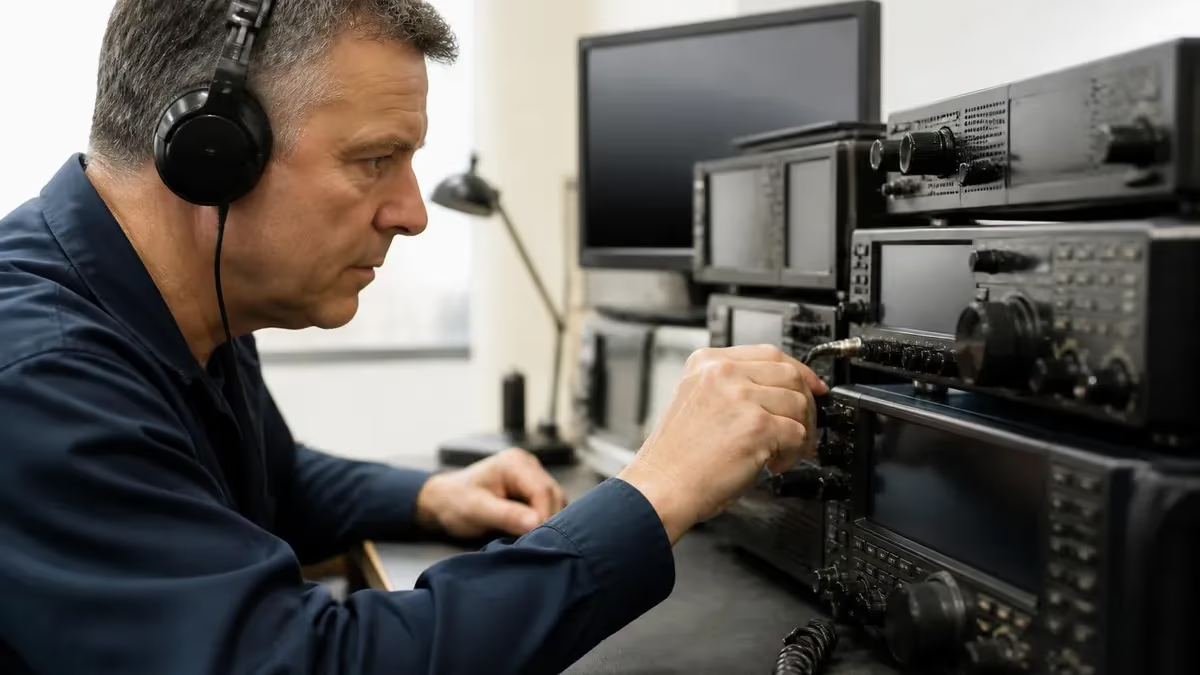
What Is a Ham Radio?
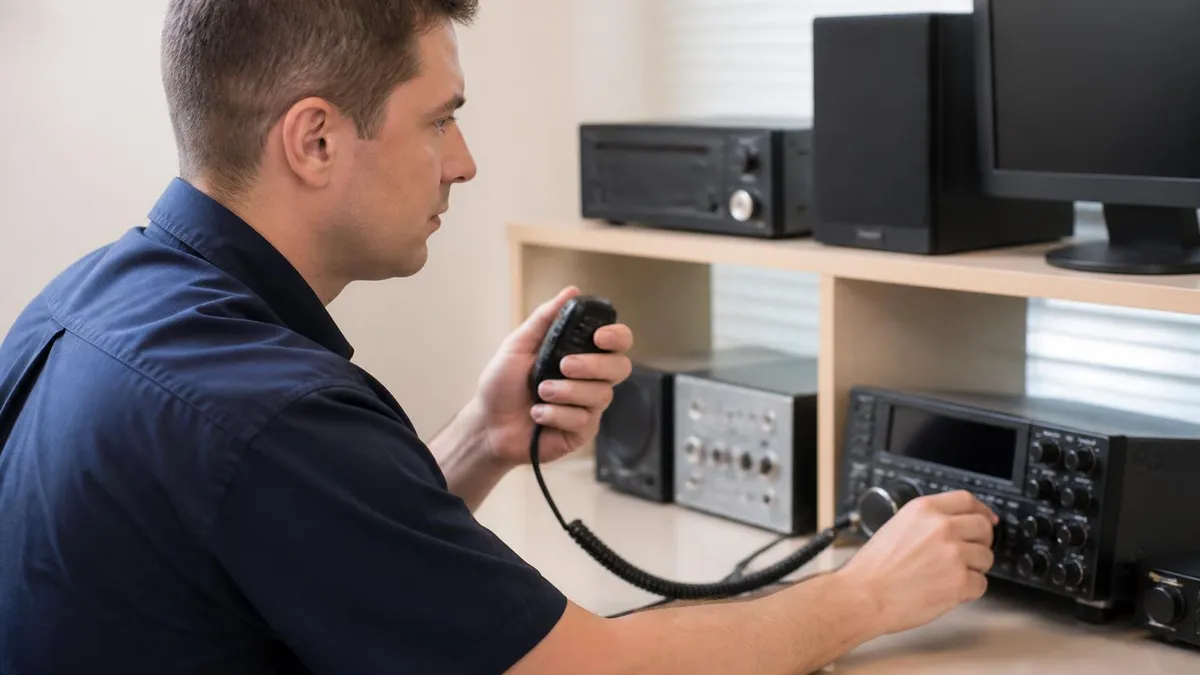
A ham radio is a two-way radio used by licensed hobbyists to talk across the street, across the country, or around the world without relying on cell towers or the internet. "Ham radio" and "amateur radio" mean the same thing. In the United States the hobby is licensed by the FCC under Part 97 rules, and operators use it for personal communication, emergency backup, contests, technical experimentation, and public service.
The nickname "ham" has a fuzzy origin. The most repeated story traces it back to 1908, when professional wire operators used "ham" as a mild insult for clumsy amateurs. Hobbyists picked the word up, wore it as a badge of honor, and it stuck. Today nobody finds it insulting, and the FCC itself uses "amateur radio" in its rule book while the rest of us say ham.
To get on the air you need a license, and the entry-level ham radio license can be earned in a single afternoon of testing after a few weeks of study. Once you pass, the FCC issues you a unique callsign that is yours for life. From that moment you can transmit on dozens of frequency bands stretching from the high-frequency shortwave range up through microwaves used for moon-bounce contacts.
This guide explains what ham radio is in plain language. You will see how the signals travel, what the three FCC license classes unlock, which modes operators use, what a starter station costs in 2026, and why a hobby invented before World War I still pulls in new operators every single week.
The Short Definition
Ham radio is non-commercial, licensed, two-way radio communication. Three details matter in that sentence. Non-commercial means you cannot sell anything over the air or run a business on it. Licensed means every operator passes a written exam and receives a callsign from the FCC. Two-way means hams transmit and receive — they are not just listening to AM stations or scanning police channels.
That definition separates ham radio from CB, GMRS, FRS, and the Marine band. CB radio is unlicensed, capped at four watts, locked to 27 MHz, and rarely reaches more than 20 miles. Marine VHF is licensed in some countries but tied to ships. Ham radio sits in a different universe: more frequencies, more power, more privileges, and a written exam to keep things tidy.
Ham radio in one breath
Ham radio is a hobby where licensed operators use two-way radios to communicate locally, nationally, and worldwide on dedicated frequencies set aside by the FCC. It is used for emergency communication, technical experimentation, and recreation — never for commercial purposes.
Ham Radio at a Glance
Ham radio is licensed, non-commercial two-way radio. Operators use radios, antennas, and assigned frequencies to talk by voice, Morse code, digital text, and image modes. It is regulated by the FCC in the U.S. under Part 97 of the Code of Federal Regulations.
The hobby attracts engineers, preppers, contesters, public-service volunteers, satellite chasers, and curious tinkerers. There is no minimum age, no maximum age, and no requirement to know electronics before you start.

How Ham Radio Actually Works
The physics is simple. A transmitter converts audio (your voice or a digital tone) into an alternating-current radio wave at a chosen frequency. That wave travels up the feedline to an antenna, which radiates the energy into space. A receiver on the far end catches the wave with its own antenna, amplifies it, and converts it back into audio you can hear.
Where ham radio gets interesting is the propagation. Different frequencies behave differently. VHF and UHF travel line-of-sight, like flashlight beams, so they cover roughly 20 to 50 miles unless boosted by a repeater. HF signals (3 to 30 MHz) bounce off the ionosphere and can travel thousands of miles when conditions are right. Microwaves can be bounced off the moon or aimed through ham-built satellites in low Earth orbit.
That ionospheric bounce is why a hobbyist in Ohio with a wire antenna in the backyard can chat with a station in New Zealand using less power than a household light bulb. Conditions change with the sun's 11-year cycle, with the time of day, and with the season. Hams learn to read propagation forecasts the way a sailor reads tide tables.
Repeaters and Local Coverage
For day-to-day local contacts, hams use FM repeaters. A repeater is a station — usually on a tower or a mountaintop — that listens on one frequency and instantly re-transmits on another. This extends a handheld radio's effective range from a few miles to 50 or 60. Most repeaters are run by volunteer clubs and are free to use once you are licensed.
Digital Voice and the Internet Bridge
Modern repeaters often support digital voice modes like DMR, D-STAR, and Yaesu System Fusion. These tie into internet-linked networks, so you can talk through a local repeater and come out on another repeater 5,000 miles away. EchoLink and IRLP do the same thing for analog FM. None of this replaces "real" radio — it just gives hams more ways to get a signal where it needs to go.
Ham Radio by the Numbers
5 Reasons People Get Into Ham Radio
- Why: Works when cell towers and the internet are down
- When: Hurricanes, wildfires, earthquakes, grid failures
- Groups: ARES, RACES, SKYWARN
- Topics: Antennas, propagation, RF design, microcontrollers
- DIY: Build kits, design antennas, write SDR software
- Skill ladder: Technician → General → Extra exams
- Contests: Weekend events with 10K+ contacts possible
- DX: Chasing rare countries and remote stations
- Awards: DXCC, WAS, WAC, VUCC
- Events: Marathons, parades, charity rides
- Net work: Health-and-welfare nets after disasters
- Field Day: Annual June emergency-prep exercise
- SOTA: Summits on the Air — operate from mountaintops
- POTA: Parks on the Air — 10K+ activated U.S. parks
- Satellites: Ham birds and the ISS
The Three FCC License Classes
The U.S. amateur service is built on a three-tier license system. Each step up adds more frequencies and more privileges, and each step requires its own multiple-choice exam. The exams are administered by Volunteer Examiner teams accredited by an FCC-approved VEC. Most testing sessions charge a small fee — currently $15 — and offer all three exams in the same sitting if you want to try.
Technician — The Entry Door
Technician is the starting license. The 35-question exam covers basic regulations, safe operation, and a little RF theory. It unlocks every VHF and UHF amateur band, which is where almost all local repeater traffic lives.
Technicians also get limited HF privileges: voice in part of the 10-meter band and CW on portions of 80, 40, and 15 meters. Around 70 percent of new hams stop here, and that is fine — you can run an active station forever on Technician privileges alone.
General — Worldwide HF
General is where the hobby opens up. The 35-question exam goes deeper into rules and theory and adds significant chunks of every HF band. With a General license you can run worldwide voice and digital on 80, 40, 20, 17, 15, 12, and 10 meters, plus full access to VHF and UHF. Most operators move to General within their first year so they can chase DX from the kitchen table.
Amateur Extra — Everything
Extra is the top class. The 50-question exam is the hardest of the three and covers advanced electronics, advanced rules, and complex operating modes. Extra grants the final exclusive sub-bands at the bottom of each HF band where the contesters and DXers congregate. Most serious contesters and DXpedition operators hold the Extra ticket. If you want a full walk-through of every privilege at every level, the dedicated fcc ham radio license guide breaks it down band by band.
Equipment: From $35 to $50,000
Ham radio is famous for being a hobby you can start cheap and expand forever. The minimum viable starter station is a $35 Baofeng UV-5R handheld and a roll of license study materials. That gets you on local repeaters and connected to your community within a month of starting. Step up to a $90 BTECH UV-25X4 mobile and you have a real radio with a proper microphone, real audio quality, and enough power to reach far-away repeaters.
Once you hold a General license, the real spend begins. An entry-level HF transceiver like the Icom IC-7300 lists around $1,100 in 2026. Pair it with a 40-foot wire dipole strung between two trees and you can work the world.
Add a tuner, a power supply, a microphone, and a good ham radio antenna and your starter HF shack is around $1,500 to $2,000 all-in. Veteran operators with towers, beams, amplifiers, and second receivers routinely spend $20,000 or more — but you never have to.
What a Ham Radio Station Costs
Modes: How Hams Actually Talk
Walk past an HF receiver and you hear a soup of tones, beeps, computer chirps, and the occasional human voice. Ham radio supports dozens of operating modes, but most activity lives in five or six of them. Knowing which mode to use for which job is part of the fun.
FM Voice
FM voice is the king of VHF and UHF. It is what flows through local repeaters, what nets use for check-ins, and what handhelds default to. Audio quality is clean, signals are either there or they are not, and there is no fade-in fade-out drama. New Technicians spend their first weeks living almost entirely in FM.
SSB Voice
SSB (single sideband) is FM's long-distance cousin. It compresses voice into half the bandwidth of AM and ignores the unused carrier, so a 100-watt SSB signal punches as hard as a kilowatt of AM. SSB is how hams cover thousands of miles on HF using less power than a microwave oven. It sounds a little nasal until you get used to it, but every General-class operator uses it daily.
CW (Morse Code)
Morse code is the oldest mode in radio and somehow still the most romantic. CW signals are narrow, efficient, and decode in a human brain when SSB voice would be lost to noise. Modern hams learn CW because it works when nothing else does and because hand-keyed contacts feel different — slower, more deliberate, more human.
FT8 and Digital Modes
FT8 changed the hobby. Released in 2017 by Joe Taylor (K1JT) and Steve Franke (K9AN), FT8 sends short structured messages in 15-second slots and decodes signals that are 20 decibels below the noise floor. A laptop, an interface cable, and a 100-watt radio can work the world on FT8 even during poor propagation. It now dominates HF activity, accounting for more than half of all logged digital contacts.
Image Modes
SSTV (slow-scan television) lets hams trade photos over radio. ATV is full-motion television on UHF and microwave bands. Both are niche but active, and SSTV is regularly transmitted from the International Space Station for hams to receive at home.
Ham Radio vs CB Radio: A Common Mix-Up
Newcomers often confuse ham radio with CB. They are both two-way radio, but the resemblance ends there. CB is on 27 MHz only, limited to 4 watts AM and 12 watts SSB, and requires no license. CB range is typically 5 to 20 miles depending on conditions.
Ham radio uses dozens of bands from 1.8 MHz up to microwaves, allows up to 1,500 watts on most bands, requires a written exam, and routinely covers global distances. CB is for truckers and parking lots. Ham radio is for global communication, emergencies, and technical exploration. They are not competitors — they are different tools for different jobs.
Ham Radio vs CB Radio
- +Ham: dozens of bands from HF to microwave
- +Ham: up to 1,500 watts of legal power on most bands
- +Ham: global range possible on HF with modest gear
- +Ham: digital, voice, image, and Morse modes
- +Ham: tied into international emergency networks
- −CB: locked to 27 MHz only
- −CB: capped at 4 watts AM and 12 watts SSB
- −CB: typical range 5–20 miles, no satellite or HF skip access
- −CB: voice-only, no digital or image modes
- −CB: no organized emergency net structure
First-Time Ham Setup Checklist
- ✓Pick up a study guide for the Technician exam (ARRL or Gordon West)
- ✓Take free online practice tests until you score 85% consistently
- ✓Find a local exam session via the ARRL exam-finder
- ✓Pay the $15 exam fee and pass the 35-question test
- ✓Wait 1–2 weeks for your callsign to appear in the FCC database
- ✓Buy a $35 Baofeng handheld or a $90 BTECH mobile to start
- ✓Program your local repeater frequencies (CHIRP software helps)
- ✓Join a local club and check into the weekly net to introduce yourself
- ✓Try Field Day in June for hands-on HF experience
- ✓Upgrade to General within your first year to unlock worldwide HF
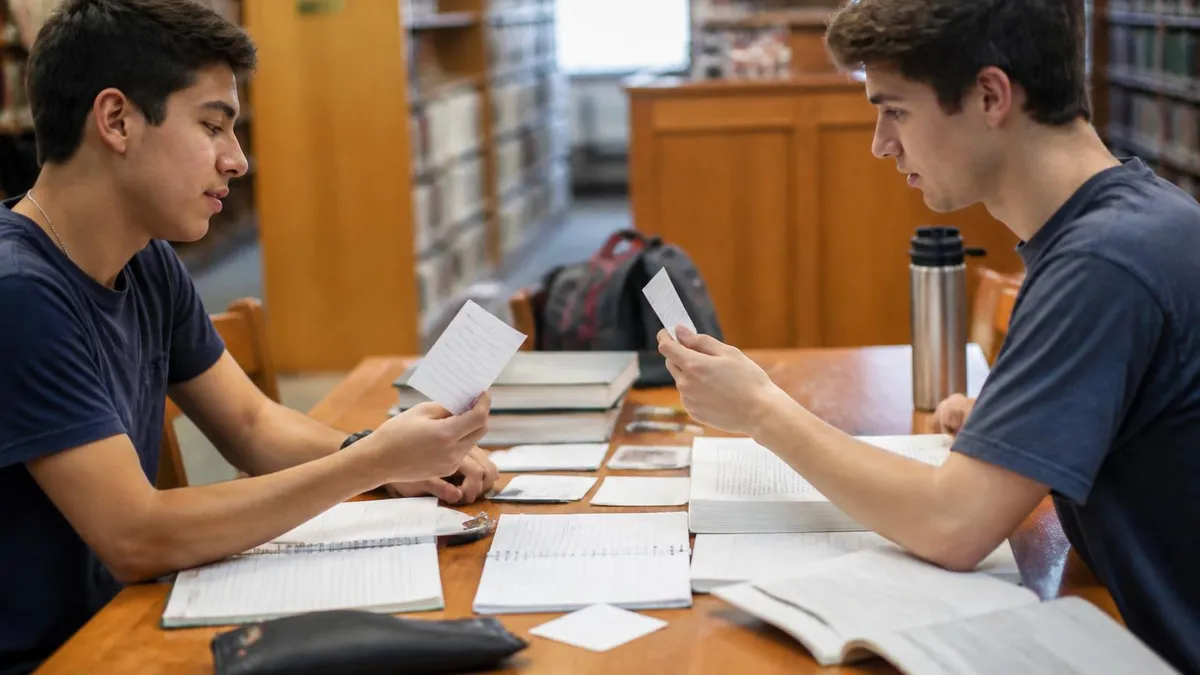
From Curious to Active in 90 Days
Week 1–3
Week 4
Week 5
Week 6–7
Week 8
Week 9–12
Why Ham Radio Is Still Relevant in 2026
It is easy to look at smartphones, satellite internet, and global Wi-Fi and ask why anyone would care about a hobby invented before the radio tube was perfected. The answer is that ham radio survives in 2026 for the same reason a sailboat survives in the age of jets — it works when everything else fails, and it teaches you things no app ever will.
When Hurricane Maria flattened Puerto Rico in 2017, ham operators carried the first reliable messages between the island and the mainland for nearly two weeks. After the 2011 Tōhoku earthquake, Japanese hams ran health-and-welfare nets while cellular networks were buried under load.
During every major disaster in the United States — wildfires in California, tornadoes in the Midwest, floods on the Gulf Coast — ARES and RACES volunteers staff shelters, hospitals, and emergency operations centers with radios powered by car batteries and solar panels.
The hobby also teaches. New hams pick up electronics, antenna theory, propagation physics, digital signal processing, and basic networking just by playing. There is no certification to chase, no fee to pay after the FCC issues your callsign, and no algorithm deciding what you can or cannot say. You point an antenna at the sky, and the world answers.
The Numbers Behind the Comeback
The FCC database listed roughly 750,000 active U.S. amateur callsigns at the start of 2026, up from 700,000 a decade ago. The ARRL adds tens of thousands of new licensees every year, and youth participation has climbed steadily since the Morse code requirement was dropped in 2007. The hobby has more first-time licensees now than it did in 1990, despite the existence of every modern alternative.
What Hams Talk About
On any given evening on the bands, you can hear weather reports from a SKYWARN net, a rag-chew between two retirees comparing antennas, a contest exchange that lasts six seconds and counts as a contact, a CW conversation in slow Morse, an FT8 signal from a researcher in Antarctica, an SSTV image from the International Space Station, and someone calling "CQ DX" hoping to land a rare country.
The conversations are wide open. Operators sign off with "73," the old telegraph code for "best regards," and the bands stay alive 24 hours a day. There is no algorithm picking what you say, no subscription to renew, and no inbox to manage. Just frequencies, antennas, and other operators.
Field Day is the single biggest event on the ham radio calendar. Held the fourth full weekend of June every year since 1933, it simulates emergency conditions: clubs deploy in fields, parks, and parking lots, run radios off generators and solar panels, and try to make as many contacts as possible in 24 hours. More than 30,000 operators participate annually across North America. Show up at any local site — no license required to observe — and you will leave with a clear picture of what the hobby is actually like.
How to Find a Local Ham Club
Almost every county in the U.S. has at least one ham club, and most clubs meet monthly. The fastest way to find one is the ARRL Club Finder at arrl.org/find-a-club, which lets you search by ZIP code and shows meeting locations, contact emails, and active repeater frequencies.
Hamfests — flea-market-style ham gatherings — happen most weekends somewhere in the country, with the biggest annual event (Hamvention, held in Dayton, Ohio every May) drawing more than 30,000 attendees. Club members are notoriously welcoming. Walk into a meeting as a curious non-licensee and you will leave with study materials, a buddy, and probably an invitation to Field Day.
After you pass the test and join the community, study the broader ham radio technician test material and try a ham radio practice test to keep your skills sharp. The hobby rewards depth — every weekend you log on the air teaches you something new.
Ham Radio Questions and Answers
About the Author

Educational Psychologist & Academic Test Preparation Expert
Columbia University Teachers CollegeDr. Lisa Patel holds a Doctorate in Education from Columbia University Teachers College and has spent 17 years researching standardized test design and academic assessment. She has developed preparation programs for SAT, ACT, GRE, LSAT, UCAT, and numerous professional licensing exams, helping students of all backgrounds achieve their target scores.
Join the Discussion
Connect with other students preparing for this exam. Share tips, ask questions, and get advice from people who have been there.
View discussion (8 replies)