

GSAT Practice Test
Updated November 2026Facts verified Oct 25, 2026 against 財團法人大學入學考試中心基金會
Key Takeaways
- The GSAT is a standardized test that measures a student’s academic abilities and potential for success in college.
- Effective preparation for the GSAT involves developing strong study habits, time management strategies, and stress management techniques.
- Mastering exam strategies, such as reading comprehension, mathematics problem-solving, and writing skills, can significantly improve GSAT performance.
- The GSAT is a crucial component of the college admission process, as it provides an objective assessment of a student’s cognitive skills and academic achievement.
- Preparing for the GSAT can help students demonstrate their academic preparedness and increase their chances of getting accepted into their desired college or university.
- The GSAT covers six subjects (Chinese, English, Mathematics A, Mathematics B, Social Studies, Natural Sciences) that candidates may freely choose, with multiple-choice questions plus mixed-format or constructed-response items.[1]
- The GSAT Chinese subject has two sections, the comprehensive test (國綜) and the writing test (國寫), of 90 minutes each.[1]
- The GSAT English, Mathematics A and Mathematics B subjects each last 100 minutes.[1]
- Individual registrants for the GSAT pay a NT$250 base processing fee plus NT$170 for each subject taken.[2]
- Group (school) registrants for the GSAT pay a NT$200 base processing fee plus NT$170 for each subject taken.[2]
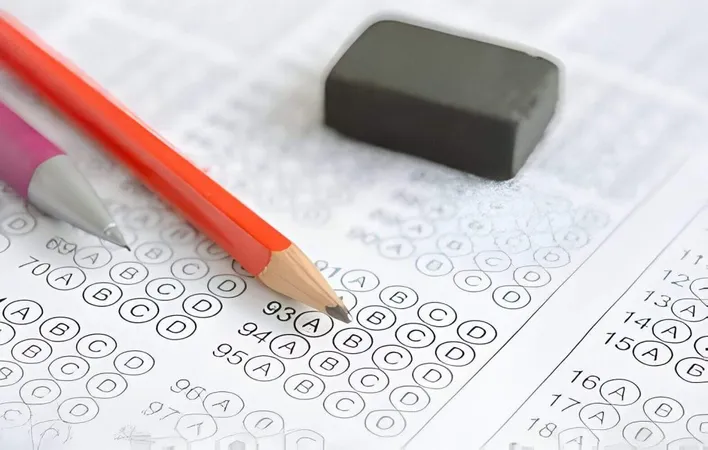
- The GSAT is a paper-based exam answered on A3 answer sheets at CEEC test sites in Taiwan.[1]
- The GSAT is open to third-year students and graduates of senior high schools, or holders of equivalent qualifications.[2]
Numbers in brackets link to the official sources listed under Sources & last verified. Dates that have passed are removed automatically.
GSAT Exam at a Glance
| Item | Detail | Source · Verified |
|---|---|---|
| Number of questions | 6 optional subjects; multiple-choice plus mixed/constructed-response items[1] | Taiwan College Entrance Examination Center · Oct 25, 2026 |
| Time limit (Chinese (國綜 / 國寫)) | 90 minutes per section (two sections)[1] | Taiwan College Entrance Examination Center · Oct 25, 2026 |
| Time limit (English / Mathematics A / Mathematics B) | 100 minutes each[1] | Taiwan College Entrance Examination Center · Oct 25, 2026 |
| Time limit (Social Studies / Natural Sciences) | 110 minutes each[1] | Taiwan College Entrance Examination Center · Oct 25, 2026 |
| Exam fee (Individual registration) | NT$250 base fee + NT$170 per subject[2] | Taiwan College Entrance Examination Center · Oct 25, 2026 |
| Exam fee (School/group registration) | NT$200 base fee + NT$170 per subject[2] | Taiwan College Entrance Examination Center · Oct 25, 2026 |
| Delivery | Paper-based answer sheets at CEEC test sites in Taiwan[1] | Taiwan College Entrance Examination Center · Oct 25, 2026 |
| Eligibility | Senior-high third-year students, graduates, or equivalent qualification[2] | Taiwan College Entrance Examination Center · Oct 25, 2026 |
What changed for GSAT in 2026
- Oct 25, 2026: Eligibility changed to Senior-high third-year students, graduates, or equivalent qualification (previously Senior-high third-year students, graduates, or holders of equivalent qualifications).[2]
- Oct 25, 2026: Delivery changed to Paper-based answer sheets at CEEC test sites in Taiwan (previously Paper-based, at CEEC test sites in Taiwan).[1]
GSAT Practice Test Questions
Prepare for the GSAT - General Scholastic Ability Test exam with our free practice test modules. Each quiz covers key topics to help you pass on your first try.
GSAT Mathematics
GSAT Exam Questions covering Mathematics. Master GSAT Test concepts for certification prep.
GSAT Writing and Language
Free GSAT Practice Test featuring Writing and Language. Improve your GSAT Exam score with mock test prep.
GSAT Critical Analysis
GSAT Mock Exam on Critical Analysis. GSAT Study Guide questions to pass on your first try.
GSAT Data Analysis
GSAT Test Prep for Data Analysis. Practice GSAT Quiz questions and boost your score.
GSAT English Language
GSAT Questions and Answers on English Language. Free GSAT practice for exam readiness.
GSAT General Knowledge
GSAT Mock Test covering General Knowledge. Online GSAT Test practice with instant feedback.
GSAT Science and Technology
Free GSAT Quiz on GSAT Science and Technology. GSAT Exam prep questions with detailed explanations.
GSAT Social Studies and Civics
GSAT Practice Questions for GSAT Social Studies and Civics. Build confidence for your GSAT certification exam.
GSAT Logical Thinking
GSAT Test Online for Logical Thinking. Free practice with instant results and feedback.
GSAT Mathematical Ability
GSAT Study Material on Mathematical Ability. Prepare effectively with real exam-style questions.
GSAT Problem Solving
Free GSAT Test covering Problem Solving. Practice and track your GSAT exam readiness.
GSAT Quantitative Reasoning
GSAT Exam Questions covering Quantitative Reasoning. Master GSAT Test concepts for certification prep.
GSAT Reading Comprehension
Free GSAT Practice Test featuring Reading Comprehension. Improve your GSAT Exam score with mock test prep.
Worked examples: how to reason through GSAT questions
These are practice questions written for this site, not questions from the real exam. Each explanation shows why the right answer is right and why the others are wrong.
Example 1
Question: Which number would come next in the sequence? (1, 5, 25 ....)
- 30
- 45
- 125
- 152
Answer: C. 125
Explanation:
The correct answer is 125. Look at how each term relates to the one before it: 5 is 1 times 5, and 25 is 5 times 5, so the rule is multiplying by 5. Applying it again gives 25 times 5, which is 125.
30 is wrong because it adds 5 to 25, but the step from 5 to 25 was not an addition of 5. 45 does not follow any steady rule from 1, 5 and 25. 152 uses the right digits as 125 but in the wrong order, which is a typical slip when you rush.
Rule to remember: when a sequence grows quickly, test the ratio between neighbouring terms before you test the difference. Then confirm the rule on every pair you have, not just the first.
Example 2
Question: What is the primary objective of logical thinking in General Scholastic Ability Test?
- To ensure competence and proficiency in core logical thinking concepts
- To replace practical experience entirely
- To limit access to the profession
- To generate revenue for testing organizations
Answer: A. To ensure competence and proficiency in core logical thinking concepts
Explanation:
The correct answer is the option saying the aim is to ensure competence and proficiency in core logical thinking concepts. A test of a skill exists to check that people can actually apply it, so this option states a believable purpose.
The option about replacing practical experience entirely is wrong because a test measures knowledge and cannot take the place of experience. The option about limiting access to the profession describes a side effect at best, not a purpose. The option about generating revenue for testing organizations is a cynical claim that no test describes as its objective.
Rule to remember: in questions about the primary objective of an assessment, choose the answer that describes what the assessment measures. Be wary of absolute or cynical wording such as entirely, limit or revenue.
Example 3
Question: Before you can go out, you must clean the room, mop the floor, and dusting the house.
- Before you can go out, you must clean the room, mop the floor, and dusting the house.
- Before you can go out, you must clean the room, mop the floor, and to dust the house.
- Before you can go out, you must clean the room, mop the floor, and dusting.
- Before you can go out, you must clean the room, mop the floor, and do dusting.
- Before you can go out, you must clean the room, mop the floor, and dust the house.
Answer: E. Before you can go out, you must clean the room, mop the floor, and dust the house.
Explanation:
The correct answer is E: clean the room, mop the floor, and dust the house. After the modal verb must, each item in the list needs the same base-form verb, and E gives clean, mop and dust with a matching object each time.
A is wrong because dusting is an -ing form, which breaks the pattern set by clean and mop. B is wrong because to dust adds an infinitive marker that the other items lack. C repeats the -ing problem and also drops the object. D, do dusting, is wordy and does not match the single-verb pattern of the other items.
Rule to remember: items in a list must share the same grammatical form. Check the first items, then make the last one match.
How to use these practice tests
Start with the official material. Read the current CEEC handbook and note which subjects you will sit, their time limits, and how the Chinese writing sheet works. Then decide your subject choices before you plan practice, because the time limits differ by subject.
Next, take one of our sets cold and untimed to find where you lose marks. Sort each miss into a reason: you did not know the content, you misread the question, or you ran out of attention. Keep a short written list of the rules behind your misses, such as checking ratios in a sequence or matching list forms in grammar, and read the explanation for every question, including those you got right.
After that, move to timed work. Set a timer matching the real limit for the subject you are practising, and sit it at a desk with only a pen and paper, since the real test uses paper answer sheets. For Chinese writing, practise handwriting your answer in full rather than typing it.
Repeat sets after a gap and see whether the same rules still catch you out. Because our questions are written by us and are not real exam items, treat the results as a guide to your habits and not as a prediction of your score. Recheck the CEEC site close to registration for changes.
Understanding the GSAT (General Scholastic Ability Test)
The GSAT (General Scholastic Ability Test) is a widely recognized standardized exam that assesses the academic preparedness and cognitive abilities of high school students in the United States. This comprehensive assessment serves as a crucial component of the college admission process, providing admissions officers with valuable insights into an applicant’s academic potential and readiness for the demands of higher education.
What is the GSAT?
The GSAT is a standardized test that measures a student’s scholastic aptitude, evaluating their academic skills and cognitive abilities across various domains. It is designed to assess a student’s proficiency in areas such as reading comprehension, mathematical reasoning, and written expression, which are essential for success in college-level coursework.
Job seekers and students can prepare for free ncae general scholastic using our NCAE general scholastic ability test 2026, which mirrors the real assessment format and scoring.
Test-takers preparing for achievement will find our achievement test 2026 invaluable for mastering the content and format before exam day.
Candidates can also sharpen their skills with our SAT practice test 2026, which includes hundreds of practice questions in the exact format and difficulty of the real exam.
Students preparing for standardized academic tests can also practice with our SAT practice test 2026, covering the quantitative and analytical reasoning sections tested on exam day.
Purpose and Significance
The primary purpose of the GSAT is to serve as a reliable indicator of a student’s academic preparedness for college-level studies. Colleges and universities use the GSAT scores, along with other application materials, to evaluate the academic qualifications of prospective students and make informed admission decisions. By assessing a student’s academic aptitude and cognitive skills, the GSAT helps admissions committees identify applicants who have the potential to thrive in a challenging academic environment.
- ✓Review the official GSAT exam content outline
- ✓Take a diagnostic practice test to identify weak areas
- ✓Create a study schedule (4-8 weeks recommended)
- ✓Focus on your weakest domains first
- ✓Complete at least 3 full-length practice exams
- ✓Review all incorrect answers with detailed explanations
- ✓Take a final practice test 1 week before exam day
Test Structure and Format
The GSAT is typically administered in a paper-based or computer-based format and consists of several sections that evaluate different aspects of a student’s academic abilities. The test typically includes the following components:

| Section | Description | Duration |
|---|---|---|
| Reading Comprehension | Assesses the student’s ability to understand, interpret, and analyze written passages | 60-65 minutes |
| Mathematics | Evaluates the student’s problem-solving skills and mathematical reasoning | 60-65 minutes |
| Writing and Language | Measures the student’s proficiency in written expression, grammar, and editing | 35-40 minutes |
| Optional Essay | Assesses the student’s ability to develop and articulate a well-reasoned argument | 50 minutes |
The GSAT is designed to provide a comprehensive evaluation of a student’s academic abilities, enabling colleges and universities to make informed decisions about admission and scholarship opportunities.
Developing Effective Study Habits
Preparing for Academic Success
Achieving academic preparedness for the GSAT (General Scholastic Ability Test) requires a complex approach. At the core of this preparation lies the development of effective study habits. By creating a structured study plan and engaging in active learning techniques, students can enhance their academic achievement and skills assessment on the exam.
One of the keys to success in the GSAT is the cultivation of strong study habits. This includes setting clear learning goals, allocating dedicated study time, and using a variety of learning resources such as practice tests, study guides, and online educational platforms. By practicing active learning strategies, such as summarizing key concepts and engaging in regular self-assessments, students can deepen their student evaluation and solidify their understanding of the tested material.
Time Management Strategies
Effective time management is critical in test preparation. Students should develop a structured study schedule that optimizes their time and minimizes distractions. This may involve techniques like the Pomodoro method, where focused work periods are alternated with short breaks. By prioritizing their tasks and managing their time efficiently, students can ensure they cover all the necessary content and maintain a healthy work-life balance during the student performance assessment process.
Stress Management Techniques
The GSAT can be a high-stakes exam, and managing stress is crucial for academic success. Students should incorporate stress management techniques into their preparation, such as practicing mindfulness, engaging in physical exercise, and maintaining a balanced lifestyle. By prioritizing their mental well-being, students can approach the exam with a clear and focused mindset, ultimately enhancing their academic achievement and skills assessment on the GSAT.
Reading Comprehension Strategies
GSAT (General Scholastic Ability Test) Exam Strategies
As the final section of this comprehensive guide, we explore into specific strategies and techniques to help students excel on the GSAT (General Scholastic Ability Test). This standardized exam evaluates a student’s cognitive skills and academic preparedness for college admission, making it a critical component of the application process. By mastering the strategies presented here, students can enhance their performance and demonstrate their academic readiness to colleges and universities.
The reading comprehension section of the GSAT assesses a student’s ability to understand, analyze, and interpret written passages. To excel in this section, it is essential to develop effective reading strategies, such as actively engaging with the text, identifying key ideas and supporting details, and drawing logical inferences. Students should also practice time management to ensure they can accurately respond to all questions within the allotted time.

Mathematics Problem-Solving Approaches
The mathematics section of the GSAT evaluates a student’s proficiency in quantitative reasoning and problem-solving skills. Effective preparation for this section involves mastering various mathematical concepts, practicing a wide range of problem types, and developing efficient strategies to tackle complex questions. Students should focus on understanding the underlying principles, identifying relevant information, and applying appropriate problem-solving techniques to arrive at accurate solutions.
Writing and Essay Tips
The written component of the GSAT assesses a student’s ability to communicate effectively in a clear, organized, and persuasive manner. To excel in this section, students should focus on developing strong writing skills, such as crafting a well-structured essay, maintaining a cohesive flow, and using appropriate language and tone. Additionally, they should practice organizing their thoughts, supporting their arguments with relevant evidence, and demonstrating their critical thinking abilities.
GSAT: Pros and Cons
- +GSAT exam preparation strengthens your knowledge across all domains
- +Passing the exam proves competency to employers and clients
- +Study materials and practice tests are widely available
- +Exam-based credentials are portable across states and employers
- +Clear exam objectives help focus your study plan effectively
- −Exam anxiety can affect performance — practice tests help reduce it
- −Registration fees are non-refundable if you miss your test date
- −Limited retake opportunities may apply with waiting periods
- −Exam content updates periodically — use current study materials
- −Testing center availability may require advance scheduling
Sample GSAT - General Scholastic Ability Test Practice Questions
Try these questions from our free GSAT - General Scholastic Ability Test practice tests. The correct answer and an explanation follow each question.
What is the relationship between theory and practice in General Scholastic Ability Test general knowledge?
- A. Theory provides the foundation and framework that guides effective practical application
- B. Theory and practice are completely unrelated
- C. Practice is only important; theory is unnecessary
- D. Theory replaces the need for any practical experience
Answer: A. Theory provides the foundation and framework that guides effective practical application
Theory and practice are complementary: theoretical knowledge provides the conceptual framework and understanding that guides effective, evidence-based practical application in professional settings.
What is a best practice in General Scholastic Ability Test general knowledge?
- A. A method or technique recognized as superior based on evidence and expert consensus
- B. Any practice that is easy to implement
- C. The cheapest available approach
- D. A practice used only by large organizations
Answer: A. A method or technique recognized as superior based on evidence and expert consensus
Best practices are methods, techniques, or approaches that are recognized through evidence, research, and expert consensus as producing superior results and are recommended for adoption.
In General Scholastic Ability Test, why is general knowledge knowledge important for professional certification?
- A. It demonstrates competence and ensures practitioners meet established standards
- B. It is only required for administrative purposes
- C. It has no practical relevance to daily work
- D. It is important only for entry-level positions
Answer: A. It demonstrates competence and ensures practitioners meet established standards
Professional certification in specific knowledge areas demonstrates that practitioners have met established competency standards, ensuring quality of service and public protection.
In General Scholastic Ability Test, what role does continuing education play in general knowledge?
- A. To keep professionals current with evolving standards, technologies, and best practices
- B. To prevent professionals from advancing in their careers
- C. To replace initial certification requirements
- D. To increase testing frequency for compliance purposes
Answer: A. To keep professionals current with evolving standards, technologies, and best practices
Continuing education ensures professionals stay current with new developments, evolving standards, and emerging best practices in their field, maintaining competence throughout their careers.
Take the full GSAT - General Scholastic Ability Test practice test
GSAT Questions and Answers
Sources & last verified
- Taiwan College Entrance Examination Center — number of questions, time limit, delivery (official source). “考試科目包括國文、英文、數學 A、數學 B、社會、自然共 6 科,考生可自由選考。” Verified Oct 25, 2026.
- Taiwan College Entrance Examination Center — exam fee, eligibility (official source). “基本作業費:250 元” Verified Oct 25, 2026.
How we verify: editorial & fact-checking policy. Report an error: contact us.
How this page was made: written with AI tools and published by Nathan Beja, founder of Practice Test Geeks, who is responsible for its content. Exam facts are checked against the official sources listed below. Not reviewed by a subject-matter expert. Editorial policy
Sources & references
Exam facts on this page (fees, format, dates, passing scores) are checked against these official sources; the date is our last check. Editorial policy
- ceec.edu.tw — Test delivery, exam format, time limit, eligibility, fees · verified Oct 2026