
GNA Certification Requirements: Everything You Need to Earn Your GNA Certificate
Everything about GNA certification requirements, cna classes, salary & training. Get your gna certificate faster. 🎯 Step-by-step 2026 October guide.

If you are exploring cna classes and want to specialize in elder care, earning a gna certification is one of the most rewarding career moves you can make. The GNA — Geriatric Nursing Assistant — credential goes beyond a standard CNA license by training you specifically to work with elderly and aging populations in nursing homes, assisted living facilities, and long-term care settings. Your gna certificate proves to employers that you have the clinical knowledge and compassionate skills needed to serve this vulnerable demographic with dignity and professionalism.
Geriatric nursing assistants play an indispensable role in the U.S. healthcare system. As the Baby Boomer generation ages, demand for qualified GNA professionals continues to surge. The Bureau of Labor Statistics projects that nursing assistant employment will grow by approximately 5 percent through 2032, and the geriatric specialty is outpacing that average in states with large senior populations like Maryland, Florida, Pennsylvania, and California. Understanding certification requirements before you enroll in a program saves time, prevents costly mistakes, and sets you on the fastest path to employment.
Many people confuse CNAs and GNAs. While both titles describe nursing assistants, the GNA designation is specifically used in states — most notably Maryland — where the Board of Nursing requires additional competency verification for working with geriatric patients. In Maryland, all CNAs who want to work in a nursing facility must hold a GNA endorsement on top of their CNA credential. If you already hold a CNA license in another state, you may be able to transfer and obtain your gna certificate through an endorsement process rather than repeating the entire training program from scratch.
The certification pathway involves four main stages: completing an approved training program, accumulating the required clinical hours, passing the competency evaluation exam, and registering with your state's nursing assistant registry. Each stage has specific rules, timelines, and fees attached to it. Missing a deadline or skipping a step can delay your entry into the workforce by weeks or even months, which is why this guide walks you through every requirement in plain language backed by official state and federal guidance.
One of the most common questions prospective GNAs ask is how long the process takes from first day of class to first day on the job. In most cases, students who attend a full-time program can complete all training and testing requirements within four to eight weeks. Part-time students may take two to four months. The pace depends on your program's schedule, how quickly testing slots are available in your area, and how long the state registry takes to process your application after you pass the competency exam.
Cost is another major concern for prospective students. GNA training programs range from tuition-free state-sponsored options to community college courses costing up to $1,500. Nursing homes frequently offer employer-sponsored training where you earn a small wage while completing your coursework, effectively making the program free or even profitable for you. Federal law under the Omnibus Budget Reconciliation Act (OBRA) requires that facilities pay for training if they hire an uncertified aide and want that aide to work with residents, which creates a significant number of paid training opportunities across the country.
Whether you are a recent high school graduate, a career changer entering healthcare for the first time, or a CNA looking to advance your credential, this comprehensive guide covers every aspect of GNA certification requirements. You will learn about educational prerequisites, approved training programs, the structure of the competency evaluation, salary expectations, and practical study strategies to help you pass the exam on your first attempt.
GNA Certification by the Numbers
How to Earn Your GNA Certificate: Step-by-Step Process
Meet Basic Eligibility Requirements
Enroll in a State-Approved Training Program
Complete Clinical Hours & Skills Lab
Apply to Take the Competency Evaluation
Pass the Written and Skills Examination
Register with the State Nurse Aide Registry
The GNA competency evaluation is the gateway between completing your cna classes and working legally as a geriatric nursing assistant. Understanding the exam's structure in detail allows you to allocate your study time wisely and walk into the testing center with confidence. The competency evaluation is administered in two distinct parts — a written knowledge test and a hands-on clinical skills demonstration — and you must achieve a passing score on both to receive your gna certificate and be listed on the state registry.
The written portion of the exam typically consists of 70 questions, though the exact number varies slightly by state and testing vendor. In Maryland, the Prometric-administered GNA exam includes a computer-based written test covering five major content domains: physical care skills, psychosocial care skills, role of the nursing assistant, safety and emergency procedures, and resident rights. Each domain carries a specific weighting, with physical care skills representing the largest share of the test — roughly 30 to 40 percent of all questions. You will have approximately 90 minutes to complete the written section.
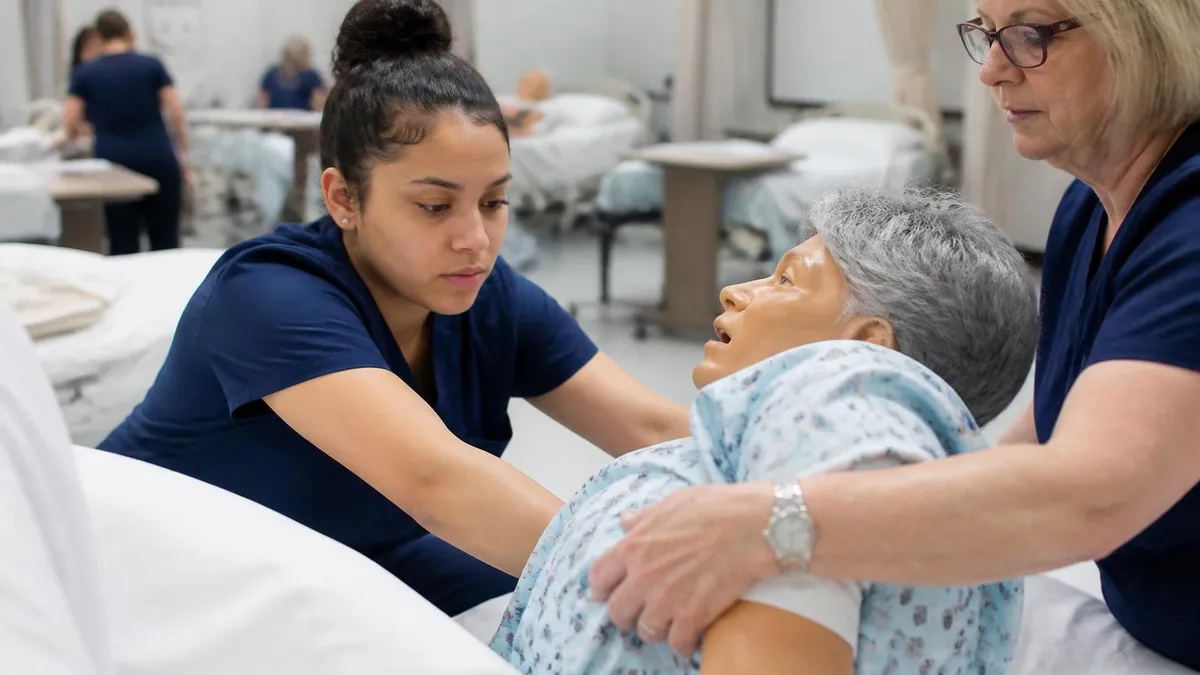
The clinical skills demonstration is the part of the exam that trips up the most first-time test takers. During this portion, a trained evaluator will observe you performing 3 to 5 randomly selected nursing skills drawn from a standardized list of roughly 25 possible tasks. Common skills that appear on the exam include handwashing, measuring blood pressure, positioning a resident in bed, performing range-of-motion exercises, assisting with ambulation, and providing mouth care. The evaluator scores each skill against a detailed checklist — every critical step must be performed correctly for you to receive full credit for that skill.
Infection control is one of the most heavily weighted areas in the skills demonstration. Proper handwashing technique must be demonstrated before and after every patient care procedure, and failure to wash hands at the correct moments is considered a critical error that can result in automatic failure of that skill.
Many candidates underestimate how rigorously evaluators score hand hygiene, so practicing this step until it becomes completely automatic is essential. Similarly, communication with your simulated resident — introducing yourself, explaining what you are about to do, providing for privacy by drawing curtains — earns points that many nervous test takers forget to collect.
If you fail either section on your first attempt, most states allow you to retest that section a limited number of times — typically three attempts total — within a 24-month window following program completion. If you exhaust all attempts or exceed the time window, you are generally required to repeat the full training program before you can test again. This policy makes it critically important to prepare thoroughly before your first attempt rather than treating the first test as a practice run. Retesting fees, scheduling delays, and the emotional toll of failing add up quickly.
To review official gna certification requirements for Maryland specifically — including fee schedules, approved testing sites, and the full list of testable skills — the Maryland Board of Nursing website and the Prometric candidate handbook are your authoritative sources. These documents are updated regularly and reflect any changes to exam content or policy that may have occurred since any third-party guide was published. Always verify current requirements directly with the state board before enrolling in a program or scheduling your exam.
Candidates who take practice exams consistently outperform those who rely solely on classroom instruction. Research on health professions licensing exams consistently shows that active recall — forcing yourself to retrieve information from memory rather than passively rereading notes — produces dramatically better retention. Practice questions that mirror the format, difficulty level, and content distribution of the actual GNA competency exam give you both a performance preview and a targeted review of your weakest content areas before test day.
GNA Salary, Career Outlook & Work Settings
The gna salary in the United States ranges from approximately $28,000 to $46,000 per year depending on location, employer type, years of experience, and shift differentials. The Bureau of Labor Statistics reports that nursing assistant wages at the median sit around $36,600 annually, which translates to roughly $17.60 per hour. States with the highest pay for geriatric nursing assistants include Alaska ($40,010), New York ($39,060), and California ($42,550), reflecting higher costs of living and stronger union representation in those regions.
Geriatric nursing assistant salary growth is driven by several factors within your control. Working evening, overnight, or weekend shifts typically adds a differential of $1.00 to $3.00 per hour above the base rate. Earning specialty certifications such as a Dementia Care Specialist credential, a Restorative Nursing Assistant (RNA) endorsement, or a Medication Aide certification can increase your earning potential by 10 to 20 percent. Facilities that operate under union contracts also tend to offer higher nursing assistant wages along with defined annual step increases based on seniority.
Is Becoming a GNA the Right Career Move for You?
- +Short training timeline — earn your credential in as little as four to eight weeks
- +High job security driven by the rapidly aging U.S. population and growing elder care demand
- +Meaningful, relationship-centered work that makes a genuine difference in residents' daily lives
- +Employer-paid training programs make it possible to enter healthcare with zero upfront tuition cost
- +Flexible scheduling with day, evening, and overnight shifts available to suit most lifestyles
- +Strong career ladder with clear pathways to LPN, RN, and specialty certifications
- −Physical demands are significant — lifting, transferring, and repositioning residents can cause injury without proper body mechanics
- −Emotional toll of working with cognitively impaired or end-of-life patients requires strong coping skills
- −Entry-level nursing assistant wages are modest, particularly in rural areas and smaller facilities
- −High patient-to-aide ratios in some facilities create stressful, fast-paced work environments
- −Mandatory weekend and holiday rotation is standard at most residential care facilities
- −Two-year registry renewal requires proof of continued employment, which can be challenging during career gaps
Pros and Cons at a Glance
| Pros | Cons |
|---|---|
| Short training timeline — earn your credential in as little as four to eight weeks | Physical demands are significant — lifting, transferring, and repositioning residents can cause injury without proper body mechanics |
| High job security driven by the rapidly aging U.S. population and growing elder care demand | Emotional toll of working with cognitively impaired or end-of-life patients requires strong coping skills |
| Meaningful, relationship-centered work that makes a genuine difference in residents' daily lives | Entry-level nursing assistant wages are modest, particularly in rural areas and smaller facilities |
| Employer-paid training programs make it possible to enter healthcare with zero upfront tuition cost | High patient-to-aide ratios in some facilities create stressful, fast-paced work environments |
| Flexible scheduling with day, evening, and overnight shifts available to suit most lifestyles | Mandatory weekend and holiday rotation is standard at most residential care facilities |
| Strong career ladder with clear pathways to LPN, RN, and specialty certifications | Two-year registry renewal requires proof of continued employment, which can be challenging during career gaps |
GNA Certification Exam Prep Checklist
- ✓Verify your training program is state-approved by checking the Board of Nursing's official list before enrolling.
- ✓Obtain copies of your immunization records, TB test results, and background check clearance early in the process.
- ✓Purchase or borrow the most current edition of a GNA or CNA exam review textbook with practice questions.
- ✓Complete at least 200 practice questions across all five content domains before your scheduled test date.
- ✓Attend every scheduled skills lab session and practice each testable skill until you can perform it from memory.
- ✓Memorize the infection control sequence — handwashing steps, PPE donning and doffing order — as critical errors here fail skills automatically.
- ✓Practice introducing yourself to your simulated resident, explaining each procedure, and providing privacy every single time you run through a skill.
- ✓Schedule your exam promptly after program completion to keep information fresh and avoid exceeding your eligibility window.
- ✓Arrive at the testing site 30 minutes early with required identification and your eligibility confirmation documents.
- ✓After passing, submit your registry application immediately and save a copy of your confirmation for employment verification purposes.
Infection Control Is the Single Most Tested GNA Skill
Across all GNA competency evaluations, improper hand hygiene is the leading reason candidates fail individual skills during the clinical demonstration. Evaluators are specifically trained to mark any hand hygiene omission as a critical error — even if every other step of the skill is performed perfectly. Practice handwashing before and after every skill repetition during your preparation, without exception.
Maryland has some of the most clearly defined and thoroughly documented GNA requirements of any state in the country, making it an excellent model for understanding how the certification system works in practice. The Maryland Board of Nursing (MBON) oversees both the CNA and GNA credentialing processes, and the state mandates that all nursing assistants working in Maryland-licensed nursing facilities hold a GNA endorsement — not merely a CNA license. This means that even experienced CNAs licensed in other states must obtain the GNA endorsement before legally working as a nursing assistant in a Maryland nursing home.
Maryland requires a minimum of 100 hours of training to sit for the GNA competency exam, which exceeds the federal OBRA floor of 75 hours by a significant margin. Of those 100 hours, at least 40 must be completed in clinical settings under the direct supervision of a registered nurse.
The remaining hours cover classroom and laboratory instruction in topics including anatomy and physiology, medical terminology, resident rights under federal and Maryland law, nutrition and hydration, bowel and bladder care, mental health and social needs of elderly residents, and — notably — a mandatory module on the care of residents with Alzheimer's disease and other forms of dementia.
The dementia-specific training requirement reflects the epidemiology of Maryland's long-term care population. Approximately 60 to 80 percent of nursing home residents in the United States have some form of cognitive impairment, and Maryland's Board of Nursing determined that standard CNA training does not adequately prepare aides to communicate effectively with or safely care for this population. Topics covered in the dementia module include validation therapy techniques, behavioral symptom management, wandering prevention, and strategies for supporting residents during personal care when they are resistant or agitated.
Maryland GNA candidates must complete their competency exam within 24 months of finishing their approved training program. The exam is administered by Prometric at testing centers throughout the state, and candidates must pre-register with Prometric using the eligibility code provided by their training program upon graduation.
The written portion is computer-based and consists of 60 scored questions plus 10 unscored pilot questions that do not affect your result but are indistinguishable during the test. The passing standard for the written section is set at a scaled score — currently 70 percent — which equates to answering approximately 42 of the 60 scored questions correctly.
The skills demonstration portion of the Maryland GNA exam requires candidates to perform 5 randomly selected skills from a standardized list of 25 tasks. Each skill is evaluated using a detailed step-by-step checklist, and candidates must complete all critical steps of each skill to receive a passing score on that skill. Passing the skills section requires successfully completing all 5 evaluated skills — a single failed skill constitutes a failure of the entire skills section even if the other four skills were performed flawlessly. This all-or-nothing structure makes thorough skills preparation absolutely essential.
After passing both sections of the Maryland GNA competency exam, your name is added to the Maryland Nurse Aide Registry within approximately 7 to 10 business days. You can verify your listing by searching the public registry on the MBON website using your name and date of birth. The registry entry shows your certification status, any disciplinary findings, and the date your credential expires.
Maryland GNA credentials expire every two years, and renewal requires documentation of at least eight hours of paid employment as a nursing assistant during the two-year renewal period — there is no continuing education requirement for renewal beyond the employment verification.
Candidates who already hold a current, active CNA credential from another state can apply for Maryland GNA endorsement through an expedited reciprocity pathway. This process requires submitting a notarized verification of your out-of-state credential, a completed Maryland application form, the applicable fee, and documentation of a negative TB test within the past 12 months.
If your training program met Maryland's 100-hour minimum and included the required clinical components, the Board may waive the Maryland competency exam requirement and endorse your existing credential directly onto the Maryland registry — though policies on this vary and you should confirm current practice directly with MBON before applying.
In Maryland and most other states, you must successfully pass the GNA competency evaluation within 24 months of completing your approved training program. If you miss this window — even by a single day — you are required to repeat the full training program before you can retest. Schedule your exam as soon as your program issues your eligibility code to protect the training investment you have already made.
Preparing effectively for the GNA competency exam requires more than attending every class and reviewing your notes the night before the test. The candidates who pass on their first attempt share a common set of preparation habits: they start practice testing early, they identify and aggressively target their weak content areas, they practice skills in real time rather than just visualizing them, and they simulate exam conditions so that nothing about the testing experience feels unfamiliar on test day.
Adopting these habits from the first week of your training program — not just in the final days before the exam — produces dramatically better outcomes.
Active recall is the most evidence-supported study method for nursing assistant licensing exams. Instead of rereading your textbook chapter on vital signs, close the book and force yourself to write down everything you remember about measuring blood pressure, pulse, respiration, temperature, and oxygen saturation from memory.
The effort of retrieving information strengthens the neural pathways that encode it, making the information far more accessible under the pressure of a timed exam. Passive review — highlighting, rereading, watching videos — creates an illusion of learning without producing durable retention. Mix active recall with spaced repetition by reviewing material at increasing intervals over days and weeks rather than cramming everything into a single session.
For the skills demonstration portion, physical practice in front of a mirror or with a study partner is irreplaceable. You need to be able to perform each testable skill smoothly, in the correct order, while simultaneously communicating with your simulated resident — and you need to do this under the social pressure of being observed and evaluated by a stranger with a clipboard.
The only way to build that capacity is through repeated, realistic rehearsal. Aim to practice each skill on the testable list at least five times in the week before your exam, focusing especially on the skills you find most awkward or where you most often forget a step.
Content knowledge is the foundation of written exam success, but test-taking strategy matters too. Read every question stem carefully before looking at the answer choices — nursing exam questions frequently include qualifiers like "first," "most important," "priority," or "except" that completely change the correct answer. Eliminate obviously wrong answers before evaluating the remaining options. When two answers seem equally correct, look for the one that reflects established nursing assistant scope of practice — GNAs do not diagnose, prescribe, or make independent clinical judgments, so any answer that implies those actions is almost certainly wrong.
Time management during the written exam requires calibration. With 70 questions and 90 minutes available, you have roughly 75 seconds per question — more than enough time if you do not get stuck. If you encounter a question you are uncertain about, flag it and move on. Answer every question you are confident about first, then return to flagged items with whatever time remains. Leaving questions blank is never advantageous — there is no penalty for guessing on the GNA written exam, so you should always fill in an answer even when you are not certain of the correct response.
In the days immediately before your exam, shift your focus from learning new material to consolidating and reviewing what you already know. Sleep is one of the most powerful memory consolidation tools available to you — staying up late to cram the night before the exam actively impairs the recall performance you will need the next morning.
Instead, review your flashcards or practice questions for no more than two hours on the evening before the test, then get a full eight hours of sleep. Eat a balanced meal on exam morning, arrive at the testing site early, and take several slow, deep breaths before you begin — physiological calm directly improves cognitive performance under pressure.
After you pass and receive your gna certificate, the work of becoming an excellent geriatric nursing assistant is just beginning. Your first 90 days on the job are a critical learning period during which you will translate the clinical knowledge from your training into the practical, relationship-centered care that defines excellence in elder care. Seek out experienced GNAs and nurses as mentors, ask questions freely, and treat every shift as an opportunity to refine your skills and deepen your understanding of each resident you serve.
Once you have earned your gna certificate and are working regularly in a nursing facility, the most effective thing you can do for your residents — and for your long-term career — is to commit to continuous skill development. The elder care field evolves constantly as new research emerges on dementia care, fall prevention, wound care, and therapeutic communication. GNAs who stay current with best practices through in-service training, voluntary workshops, and peer learning communities consistently provide better care and advance more quickly than those who treat initial certification as the end of their professional education.
Dementia care is an area where continuing education pays particularly high dividends. Alzheimer's disease and related dementias affect more than 6.9 million Americans aged 65 and older according to the Alzheimer's Association, and the majority of them will spend time in a nursing facility at some point in their illness. Learning to interpret behavioral expressions of unmet needs — recognizing that aggression during personal care often signals pain, fear, or loss of control rather than willfulness — transforms how you approach these interactions and reduces both resident distress and your own stress on the job.
Fall prevention is another high-priority competency for geriatric nursing assistants because falls are the leading cause of injury-related death among adults over 65 in the United States. GNAs who understand individualized fall risk factors — including medication side effects, footwear, environmental hazards, and the specific mobility patterns of each resident they care for — actively reduce the number of falls that occur on their unit.
Many facilities now use structured fall risk assessment tools that CNAs and GNAs help complete during each shift, and understanding how to use these tools correctly is increasingly part of the baseline expectation for nursing assistants in high-quality facilities.
Restorative nursing is a specialty area within geriatric care that aligns especially well with the GNA's patient-centered focus. Restorative nursing assistants (RNAs) work under the direction of physical and occupational therapists to implement range-of-motion programs, ambulation schedules, and ADL retraining exercises that help residents maintain or regain functional independence after injury, surgery, or illness. Many facilities offer RNA endorsement training to GNAs who demonstrate interest and aptitude, and this endorsement typically comes with a pay differential and a higher degree of professional autonomy within the care team.
Documentation is a skill that does not get enough attention in initial GNA training but becomes critically important in day-to-day practice. Accurate, timely, and legally defensible documentation of the care you provide — meal intake percentages, repositioning times, behavioral observations, vital sign trends — protects your residents, protects your facility, and protects you professionally.
Facility surveyors from state health departments scrutinize nursing assistant documentation during annual inspections, and gaps or inconsistencies in the record can result in deficiencies that affect the facility's star rating and reputation. Understanding what to document, when to document it, and how to write observations in objective, non-judgmental language is a foundational professional skill worth mastering early in your career.
Advocacy is perhaps the highest expression of the GNA role. Because nursing assistants spend more direct time with residents than any other member of the care team, you are uniquely positioned to notice subtle changes in a resident's condition, mood, or behavior that might signal an emerging health problem.
Communicating these observations promptly and clearly to the charge nurse is not just part of your job description — it is often what prevents a resident from experiencing a serious adverse event. Develop the confidence to speak up when something does not seem right, even if you cannot articulate exactly what has changed. Your direct care relationship with residents is an irreplaceable source of clinical information that no lab value or imaging study can fully replace.
Finally, remember that self-care is not optional in a career that involves physically and emotionally demanding work with vulnerable populations. Compassion fatigue — the gradual erosion of empathy and emotional resilience that results from sustained exposure to others' suffering — is a real occupational hazard for nursing assistants.
Building a sustainable practice that includes peer support, regular physical activity, adequate sleep, and intentional decompression time outside of work is not a luxury but a professional necessity. GNAs who invest in their own wellbeing consistently deliver better care and have longer, more satisfying careers than those who sacrifice their health in service of their residents.
Sample GNA - Geriatric Nursing Assistant Practice Questions
Try these questions from our free GNA - Geriatric Nursing Assistant practice tests. The correct answer and an explanation follow each question.
A GNA is caring for a resident with advanced dementia who is pacing the halls and appears distressed, repeatedly saying, "I need to go home! I need to go home!" Which communication technique is most therapeutic?
- A. Gently reminding the resident that this is their home now.
- B. Asking the resident to describe what their home is like.
- C. Offering to walk them to their room to rest.
- D. Administering their prescribed PRN medication for anxiety.
Answer: B. Asking the resident to describe what their home is like.
This response uses validation therapy by acknowledging the resident's feelings and reality without directly correcting them. Asking about their home focuses on the emotion behind the words and allows the GNA to connect with the resident's experience. Reminding them that the facility is their home (reality orientation) can increase agitation in advanced dementia. While rest may be needed, it doesn't address the underlying emotional distress. Administering medication is not within the GNA's scope of practice without a nurse's direction.
Mr. Jones is a resident who can feed himself but has difficulty getting out of his bed and moving to a chair. Which ADL does he need assistance with?
- A. Eating
- B. Transferring
- C. Dressing
- D. Continence
Answer: B. Transferring
Transferring is the ADL that refers to the ability to move from one position to another, such as moving from a bed to a chair or standing up from a seated position. Since Mr. Jones can feed himself but struggles with moving from the bed to a chair, he requires help with transferring.
When assisting a resident with dementia who has become combative during morning care, which of the following actions should the GNA take first?
- A. Continue with the care task quickly to finish.
- B. Leave the resident alone to calm down.
- C. Stop the care task and step back to ensure safety.
- D. Firmly tell the resident to stop the behavior.
Answer: C. Stop the care task and step back to ensure safety.
The immediate priority in any situation involving aggression or combativeness is the safety of both the resident and the caregiver. The GNA should stop the task that is causing the agitation and create a safe distance. Continuing the task or using a firm tone can escalate the behavior. Leaving a distressed resident entirely alone may not be safe or therapeutic.
The GNA notices that a resident's bed sheet has wrinkles under the resident's back. This is a concern because:
- A. It makes the bed look untidy
- B. Sheet wrinkles create pressure points that can damage skin
- C. It is harder to change wrinkled sheets
- D. Wrinkles indicate the sheet is too small
Answer: B. Sheet wrinkles create pressure points that can damage skin
Sheet wrinkles create uneven pressure points against the skin, which can accelerate tissue breakdown in immobile residents.
Take the full GNA - Geriatric Nursing Assistant practice test
GNA Questions and Answers

GNA Practice Test PDF (Free Printable 2026)

CNA & GNA Training in Baltimore: Free Programs, Requirements & Certification Guide

GNA Salary 2026 — How Much Do Geriatric Nursing Assistants Make?

How to Become a GNA: Complete Training Guide & Requirements

GNA Tips: Complete Study Guide for Geriatric Nursing Assistant Certification
About the Author

Educational Psychologist & Academic Test Preparation Expert
Columbia University Teachers CollegeDr. Lisa Patel holds a Doctorate in Education from Columbia University Teachers College and has spent 17 years researching standardized test design and academic assessment. She has developed preparation programs for SAT, ACT, GRE, LSAT, UCAT, and numerous professional licensing exams, helping students of all backgrounds achieve their target scores.
Join the Discussion
Connect with other students preparing for this exam. Share tips, ask questions, and get advice from people who have been there.
View discussion (8 replies)