
GNA Tips: Complete Study Guide for Geriatric Nursing Assistant Certification
Master your GNA certification with proven study tips, exam strategies, and practice resources. 🎓 Covers salary, CNA classes, and geriatric nursing assistant...

If you are preparing for your GNA certification, having the right gna tips can mean the difference between passing on your first attempt and spending extra weeks in remediation. Geriatric nursing assistants occupy a critical frontline role in long-term care facilities, skilled nursing homes, and assisted living communities across the United States. Before you even register for the state competency exam, it pays to understand exactly what the credentialing process demands, how the curriculum is structured, and which study strategies produce the best results for adult learners who may be balancing work and family obligations at the same time.
Many candidates first encounter the GNA pathway while researching cna classes at a local community college or vocational school. The good news is that the GNA curriculum builds directly on certified nursing assistant fundamentals, so if you have already completed a state-approved CNA program you will have a significant head start. That said, the GNA specialization adds a focused layer of geriatric content — covering age-related physiological changes, dementia care protocols, fall prevention, and restorative nursing skills — that CNAs must master before sitting for the geriatric-specific competency examination administered in states like Maryland.
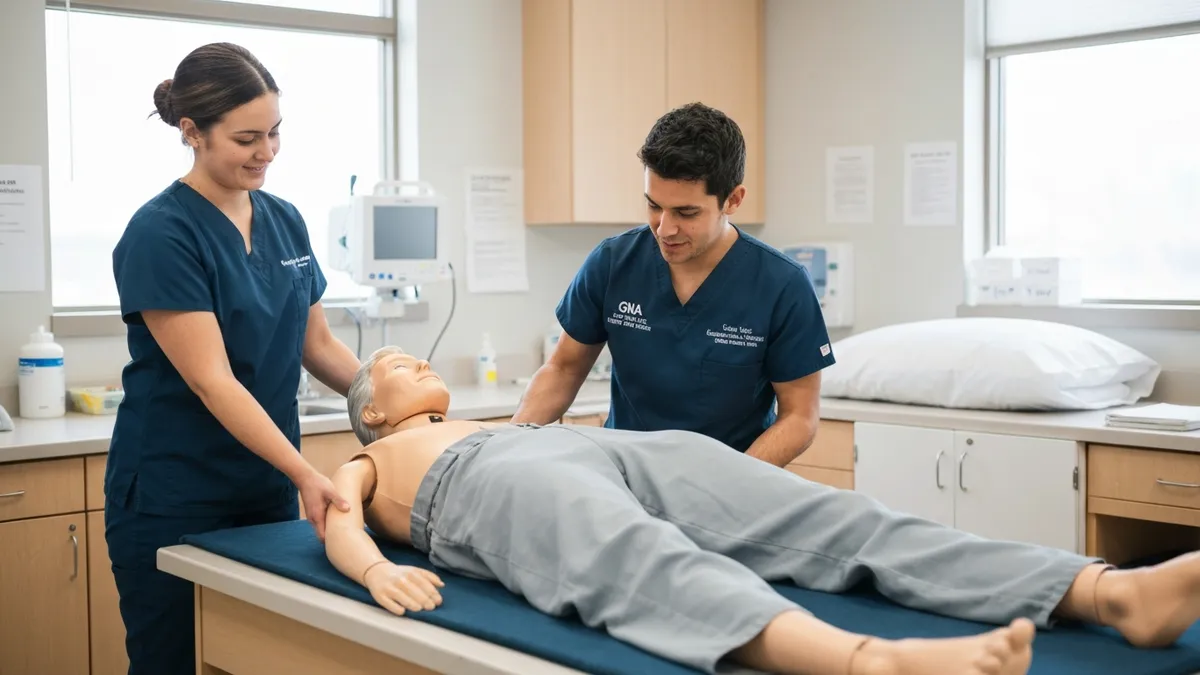
Understanding the full scope of the credential from day one allows you to allocate your study hours efficiently. Many test-takers underestimate the clinical skills portion of the exam, focusing almost exclusively on multiple-choice written content while neglecting hands-on competencies like proper transfer techniques, range-of-motion exercises, and infection-control procedures. Both components are evaluated, and failure on the skills portion requires a complete retest, adding weeks and additional fees to your credentialing timeline. Plan for both written and clinical preparation from the very start of your study schedule.
Time management is another area where well-prepared candidates separate themselves from the field. The most successful GNA exam takers build a consistent study routine — even 30 to 45 minutes of focused review each day outperforms marathon cramming sessions the night before the test. Spacing your learning across multiple weeks allows for better retention of the medical terminology, anatomy concepts, and care procedures that populate the written examination. Combine daily reading with active recall techniques such as practice questions, flashcards, and verbal explanation of concepts to maximize long-term memory consolidation.
Salary is a motivating factor for many people entering the field, and rightly so. The gna salary for entry-level positions typically ranges from $30,000 to $38,000 annually, with experienced geriatric nursing assistants in high-demand markets earning considerably more. States with strong union representation and high costs of living — including California, Massachusetts, and New York — report nursing assistant wages that push well above the national median. Understanding the earning potential helps candidates stay motivated through the rigorous preparation process and make informed decisions about geographic mobility after certification.
Your study resources matter enormously. Free online practice tests, state-specific study guides, and downloadable PDF review packets are all valuable additions to your preparation toolkit. Check out these gna tips in printable PDF format to reinforce your knowledge across every exam domain. Combining structured self-study with instructor-led review sessions creates a multi-modal learning experience that addresses different cognitive styles and helps surface knowledge gaps before exam day.
This guide walks you through every dimension of GNA exam preparation: the certification timeline, core content domains, proven study strategies, common pitfalls to avoid, and the salary outlook that makes this credential worth pursuing. Whether you are a brand-new student entering the healthcare field or an experienced CNA upgrading your specialization, the actionable advice in each section will help you build confidence, study smarter, and walk into the testing center fully prepared to earn your credential on the first attempt.
GNA Certification by the Numbers
GNA Study Schedule: 4-Week Certification Prep Plan
- ▸Review CNA fundamentals and age-related physiological changes
- ▸Study musculoskeletal, cardiovascular, and neurological systems
- ▸Complete 50 written practice questions on basic nursing skills
- ▸Begin flashcard deck for medical terminology
- ▸Study ADL assistance techniques: bathing, dressing, grooming, feeding
- ▸Review dementia care, sundowning, and behavior management strategies
- ▸Practice clinical skills: bed baths, oral hygiene, catheter care
- ▸Complete 75 practice questions covering ADL and restorative care domains
- ▸Master proper body mechanics for transfers, lifts, and repositioning
- ▸Study fall prevention protocols and restraint-free care principles
- ▸Review emergency response: cardiac arrest, choking, fire safety, elopement
- ▸Practice clinical skills checkoffs with a partner or instructor
- ▸Take two full-length timed practice exams under realistic conditions
- ▸Review all missed questions and trace each error to a content domain
- ▸Run through clinical skills demonstration at full speed without prompts
- ▸Rest, hydrate, and review key concept sheets the day before the exam
Mastering the core content domains of the GNA exam requires a systematic approach rather than random reading. State competency exams for geriatric nursing assistants are typically organized around five to seven major domains: basic nursing and restorative skills, activities of daily living, body mechanics and mobility, the work environment, emergency procedures, and communication and interpersonal skills. Each domain carries a different weight on the written examination, so understanding which areas are most heavily tested allows you to prioritize your study time and avoid spending disproportionate hours on low-yield content.
Basic nursing and restorative skills represent the largest single domain on most state GNA written exams. Questions in this area cover topics such as vital sign measurement, range-of-motion exercises, assistive device use, wound care fundamentals, and restorative ambulation techniques. Geriatric nursing assistants are expected to understand not just how to perform these tasks but why each intervention matters for maintaining resident function and preventing complications like contractures, pressure injuries, and aspiration pneumonia. Connecting the clinical rationale to each skill reinforces understanding and helps you answer application-level questions that go beyond simple memorization.
Activities of daily living — commonly abbreviated as ADLs — form the practical backbone of geriatric care and represent a substantial portion of both the written and clinical skills components of the exam. You must demonstrate competency in bathing, oral hygiene, grooming, dressing, feeding, toileting, and positioning. For each ADL, examiners look for proper technique, infection-control compliance, resident dignity preservation, and correct use of assistive devices. One of the most common errors candidates make during the clinical skills test is rushing through the dignity and privacy steps — graders deduct points even when the technical execution is flawless.
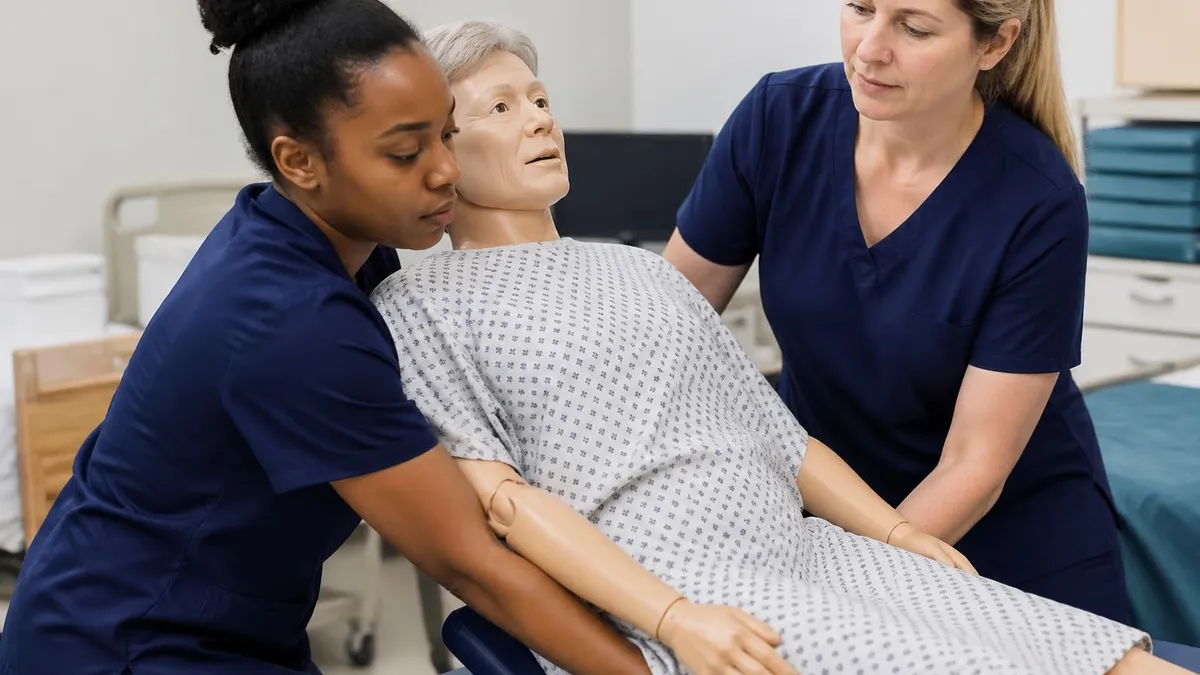
Body mechanics and mobility content includes patient transfer techniques (pivot transfer, gait belt use, mechanical lift operation), wheelchair management, ambulation assistance, and fall prevention. The GNA must be able to protect both the resident and themselves from injury during every transfer and mobility task. Understanding the biomechanical principles behind each technique — keeping the load close, maintaining a wide base of support, using leg muscles rather than the back — helps you apply correct form naturally during the clinical skills evaluation even under exam-day pressure.
Emergency procedures are tested with scenario-based questions that require rapid, accurate decision-making. Common emergency scenarios include respiratory distress, choking (including the Heimlich maneuver for ambulatory and chair-bound residents), fire and evacuation procedures, suspected abuse reporting obligations, and elopement response. The GNA is not expected to provide advanced medical interventions, but must know exactly when and how to activate the emergency response chain, what observations to report to the charge nurse, and how to document incidents accurately in the resident record.
The work environment domain covers infection control, standard precautions, personal protective equipment (PPE) selection and donning/doffing procedures, safe handling of sharps and biohazardous waste, resident rights under OBRA regulations, and basic workplace safety protocols. This domain also addresses professional boundaries, ethical conduct, and mandatory reporting requirements. Many candidates overlook infection-control content, assuming it is too basic to be heavily tested — in reality, infection-control questions appear frequently because lapses in this area create immediate resident safety risks that regulators and facilities take very seriously.
Communication content tests your understanding of therapeutic communication techniques, documenting observations objectively in medical records, reporting changes in resident condition to the supervising nurse, and communicating respectfully with residents who have hearing impairment, cognitive decline, or language barriers. For GNA candidates who also completed cna classes focused on general adult populations, geriatric-specific communication nuances — such as validation therapy for dementia patients and cueing strategies for residents with aphasia — represent new material that deserves dedicated study time before the exam.
GNA Certification Pathways and CNA Classes
The most common route to GNA certification begins with completing a state-approved CNA program, which typically requires a minimum of 120 classroom and clinical hours depending on your state. After earning your CNA credential and working at least six months in a direct care setting, you become eligible to enroll in a GNA specialization program. These post-CNA courses usually run two to four weeks and are offered at community colleges, vocational schools, and some long-term care facilities. Tuition ranges from $300 to $900 depending on the provider.
Once you complete the GNA coursework, you must pass both a written competency examination and a clinical skills evaluation administered by your state's nursing aide registry or a third-party testing vendor. Maryland, one of the few states with a formalized GNA credential, uses Prometric as its testing vendor. Scores are reported within two to four weeks, and passing candidates are added to the state registry. Maintaining your GNA certification requires renewal every two years along with documented continuing education hours in geriatric care topics.

Is Becoming a GNA the Right Career Move?
- +Higher earning potential than standard CNA positions — geriatric nursing assistant salary averages 10–15% above CNA base pay
- +Specialized credential differentiates your resume in a competitive long-term care job market
- +Deeper geriatric training improves care quality and personal professional satisfaction
- +Short certification timeline — most candidates complete coursework and testing in 4–8 weeks post-CNA
- +Strong and growing job demand as the U.S. 65-and-older population continues to expand rapidly through 2040
- +Credential serves as a foundation for further advancement to LPN, RN, or geriatric care management roles
- −Currently recognized as a formal credential primarily in Maryland — not all states offer or require the GNA designation
- −Tuition and exam fees add $400–$1,200 in upfront costs beyond the initial CNA training investment
- −Physical demands of geriatric care — including frequent lifting and transfers — increase injury risk over time
- −Emotional toll of working with cognitively impaired and end-of-life residents can contribute to caregiver burnout
- −Certification renewal every two years requires ongoing continuing education hours and associated costs
- −Nursing assistant wages, while competitive at the entry level, still lag behind licensed nursing salaries significantly
GNA Exam Day Checklist: 10 Steps to Success
- ✓Confirm your exam date, time, and testing center location at least one week in advance.
- ✓Bring two valid forms of government-issued photo identification to the testing center.
- ✓Arrive at least 30 minutes early to complete check-in procedures without rushing.
- ✓Review your five most challenging content domains the morning of the exam for no more than 30 minutes.
- ✓Eat a balanced meal and drink adequate water before the exam to maintain focus and energy.
- ✓Wear comfortable, professional clothing appropriate for the clinical skills demonstration component.
- ✓Bring any required clinical supplies listed in your exam candidate handbook, such as a watch with a second hand.
- ✓During the written exam, eliminate clearly wrong answer choices first before selecting the best remaining option.
- ✓For clinical skills, narrate each step aloud as you perform it to demonstrate awareness and intent to the evaluator.
- ✓After completing each skills station, mentally check that you washed hands and maintained resident dignity throughout.

The Clinical Skills Test Counts as Much as the Written Exam
Many GNA candidates focus almost entirely on multiple-choice written content and neglect clinical skills practice until the final week. This is a critical mistake — the hands-on competency evaluation is graded with equal rigor, and failing even one skills station requires a full retest. Practice each skill at least 10 times before exam day, ideally with a partner acting as the evaluator to simulate real testing conditions.
The salary and career trajectory available to credentialed geriatric nursing assistants represents one of the most compelling reasons to invest in this specialized certification. The geriatric nursing assistant salary at the national level averages between $33,000 and $40,000 per year for full-time positions, with part-time and per-diem roles offering hourly rates that typically range from $16 to $22 depending on geographic market and employer type. These figures place GNAs meaningfully above the base CNA wage floor in most states, validating the additional training investment with a concrete financial return within the first one to two years of employment.
Geographic location exerts the single greatest influence on nursing assistant wages. States in the Pacific Northwest, New England, and the mid-Atlantic region consistently report the highest compensation for geriatric direct care workers. Washington state, California, and Connecticut all report median hourly wages for nursing assistants above $20 per hour, with experienced GNAs at union-represented facilities in major metropolitan areas earning $24 to $28 per hour. Conversely, states in the Southeast and South Central regions tend to cluster near the federal minimum wage floor for entry-level positions, making geographic mobility a financially significant career decision for ambitious candidates.
Employer type is another major salary variable. Hospital-based skilled nursing units and large regional medical centers typically offer the most competitive compensation packages, including health insurance, retirement contributions, and paid time off that can add $8,000 to $12,000 in total compensation value beyond the base hourly rate.
Freestanding nursing homes and assisted living communities often pay modestly less but may offer schedule flexibility that appeals to students, parents, and individuals pursuing additional education. Home health agencies represent a third employment category where GNAs can earn premium hourly rates — sometimes $25 or more — but typically without guaranteed hours or benefits.
Shift differential pay substantially boosts take-home income for GNAs willing to work evening, overnight, or weekend shifts. Evening differentials of $1 to $2 per hour and overnight differentials of $2 to $4 per hour are standard in the industry. A GNA working five overnight shifts per week could add $4,000 to $8,000 to annual gross earnings simply through differential pay. Facilities with chronic staffing shortages on less desirable shifts often sweeten these offers further with sign-on bonuses ranging from $500 to $3,000 for candidates who commit to a minimum service period.
For longer-term career planning, the GNA credential serves as an excellent foundation for upward mobility within the healthcare workforce. Many GNAs use their clinical experience and employer tuition assistance to pursue licensed practical nurse (LPN) training, which typically requires 12 to 18 months of additional education and results in a median salary above $55,000 nationally. Others specialize further in dementia care coordination, restorative therapy aide roles, or geriatric care management — career paths that use the GNA's deep expertise in aging populations while moving into positions with greater autonomy and compensation.
The demand side of the labor market strongly favors GNA candidates through at least 2035. The U.S. Bureau of Labor Statistics projects employment of nursing assistants and orderlies to grow by 4 to 5 percent over the coming decade, adding tens of thousands of positions nationwide. More importantly, the specific demand for geriatric specialists is outpacing overall CNA demand as the baby boomer generation accelerates through its 70s and 80s, driving increased occupancy rates at skilled nursing facilities, memory care units, and home health agencies that serve older adults with complex chronic conditions.
For candidates weighing whether the GNA certification is worth the time and cost, the financial case is straightforward. The average candidate spends between $400 and $1,200 on GNA coursework and examination fees, and recaptures that investment within three to six months through higher hourly wages compared to an uncredentialed CNA role. Add in the long-term career mobility benefits, and the return on investment for the GNA credential is among the strongest available at the entry level of the healthcare workforce pipeline.
You cannot enroll in a GNA specialization program without first holding an active, unencumbered CNA certification on your state's nursing aide registry. Expired, suspended, or out-of-state-only certifications will disqualify your application. Verify your CNA registry status at least 30 days before your intended GNA program start date to allow time to resolve any administrative issues that could delay your enrollment.
Passing the GNA exam on the first attempt requires not just content knowledge but also strategic test-taking skills that most candidates never formally develop. The written portion of the GNA competency exam uses multiple-choice questions with four answer options, and the most effective general strategy is to read each question stem carefully before reviewing the choices, form your own answer in your head first, and then select the option that most closely matches your reasoning. This approach prevents the answer choices from anchoring your thinking prematurely and helps you apply genuine understanding rather than pattern-matching to familiar-sounding language.
One of the most valuable gna tips for the written exam is learning to identify the type of question being asked before attempting to answer it. Recall questions test straightforward factual knowledge — the normal range for resting heart rate, the correct doffing sequence for PPE, the definition of a pressure injury stage. Application questions present a scenario and ask what action the GNA should take.
Analysis questions require you to evaluate a situation and identify the underlying problem or the highest-priority concern. Each question type calls for a different cognitive approach, and recognizing the type before you start reasoning prevents you from overcomplicating recall questions or oversimplifying application scenarios.
For prioritization questions — those asking what the GNA should do first — apply the ABCs framework: airway, breathing, and circulation concerns always take precedence over comfort, dignity, and documentation concerns. Safety-related actions (preventing a fall, stopping active bleeding, calling for help during a choking incident) come before documentation or communication tasks. Knowing this hierarchy lets you quickly eliminate distractor answers that describe appropriate but lower-priority actions and zero in on the correct response even when you are uncertain about the specific clinical detail involved.
Process of elimination is your most powerful tool when you are genuinely uncertain about the correct answer. Begin by eliminating options that contain absolute language such as always, never, or only — these are almost always incorrect in nursing exams because healthcare rarely involves categorical rules without exceptions. Next, eliminate options that contradict basic safety principles or patient rights, regardless of whether you remember the specific factual content. Finally, between the remaining options, choose the one that is most conservative, most protective of the resident, and most consistent with following the chain of command by reporting to the supervising nurse.
Time management during the written exam is straightforward: allocate roughly one minute per question, flag anything you want to revisit, and complete the entire exam before going back to flagged items. Spending more than two minutes on any single question is almost never productive — if you do not know the answer after careful reading and elimination, mark your best guess, flag it, and move on. Returning to a question with fresh eyes after completing the rest of the exam sometimes triggers recall that was inaccessible under initial pressure.
For the clinical skills evaluation, consistency and communication are the two qualities that evaluators score most heavily. Performing a skill perfectly but silently — without explaining to the resident what you are doing and why — earns lower marks than a slightly imperfect technique delivered with clear, warm communication and step-by-step narration.
Practice narrating every step of every skill out loud during your preparation: "I am going to help you turn onto your side now, and I am going to use the gait belt to make sure we are both safe." This habit makes the communication element automatic under exam pressure and demonstrates the resident-centered care philosophy that GNA training programs emphasize above technical perfection.
Finally, strategic use of practice resources in the final week before the exam pays significant dividends. Rather than reviewing new material, focus entirely on taking timed practice exams, analyzing your error patterns, and drilling the specific content domains where you consistently miss more than 25 percent of questions. Targeted review of weak areas in the final 48 hours is far more productive than broad re-reading of study materials. Going into the exam with a clear picture of where your knowledge is strongest builds the confidence that carries you through difficult questions without second-guessing answers you actually know.
Building sustainable study habits in the weeks leading up to your GNA exam is just as important as knowing the content itself. Research in cognitive science consistently shows that distributed practice — studying for shorter periods across many days — produces significantly better long-term retention than massed practice, where a student covers the same material in one extended session.
For GNA candidates, this means committing to a daily study habit of 45 to 60 minutes rather than trying to cram everything into weekend marathon sessions. Even 30 minutes of focused active review per day adds up to more than 10 hours of high-quality study over a three-week period.
Active recall techniques are measurably more effective than passive re-reading for retaining clinical content. Instead of reading through your notes repeatedly, cover the answers and try to recall the information from memory, then check your accuracy. Flashcard systems — whether physical index cards or a digital tool like Anki — implement this active recall principle automatically.
For GNA content, create flashcards for normal vital sign ranges, medication side effects relevant to geriatric populations, OBRA resident rights provisions, and the step-by-step sequence for each clinical skill you will be tested on. Review your weakest cards daily and your stronger cards every two to three days.
Practice exams serve a dual purpose: they build familiarity with the question format and difficulty level while also identifying the specific content domains where your knowledge is weakest. Take your first practice exam at the very beginning of your study period, before reviewing any material, to establish a baseline.
Your score on this cold practice exam will quickly reveal which domains need the most attention. Repeat full-length practice exams at the end of each study week to measure progress and recalibrate your study focus. Tracking your scores on a simple chart gives you objective evidence of improvement that reinforces motivation during difficult stretches of the preparation process.
Study groups can dramatically accelerate learning when structured around active, peer-to-peer teaching rather than passive co-reading. Agreeing to take turns explaining clinical concepts aloud to the group forces each member to organize their knowledge, identify gaps, and practice the verbal communication skills that are also evaluated during the clinical skills test.
Effective study groups keep sessions focused with a clear agenda, limit group size to three to five participants, and assign each session a specific content domain rather than trying to cover everything at once. Meeting two to three times per week for 90-minute sessions works well for most GNA candidates in the final three weeks before the exam.
Physical wellness during your study period is a factor that many candidates dismiss as unrelated to academic performance — but sleep, nutrition, and exercise have direct, documented effects on memory consolidation and cognitive performance. Adequate sleep (seven to nine hours for most adults) is when the brain consolidates declarative memories formed during daytime study into long-term storage. Cutting sleep to create more study time is counterproductive: you spend more hours studying but retain less because the consolidation process is interrupted. Prioritize sleep above all other wellness factors, especially in the week before the exam.
Managing test anxiety is a practical skill that responds to preparation and deliberate practice. The most effective anxiety-reduction strategy is not reassurance or positive thinking but genuine competence built through thorough preparation. Candidates who have taken ten or more full-length practice exams and performed consistently well on clinical skills demonstrations experience far less anxiety on exam day than candidates who crammed at the last minute and are uncertain about their readiness.
Beyond preparation, slow diaphragmatic breathing — inhaling for four counts, holding for two, exhaling for six — activates the parasympathetic nervous system and reduces the physiological symptoms of anxiety within minutes. Practice this technique during your study sessions so it becomes automatic when you need it most.
Remember that the GNA certification is a professional credential that opens doors to a rewarding career working with one of the most vulnerable and often most grateful populations in the healthcare system. Older adults in long-term care settings frequently describe their geriatric nursing assistants as among the most important people in their lives — the individuals who help them maintain dignity, independence, and comfort through the challenges of aging.
That purpose is worth the weeks of preparation the exam demands, and every study hour you invest brings you one step closer to making a genuine difference in the lives of the residents you will serve.
GNA Questions and Answers




About the Author

Educational Psychologist & Academic Test Preparation Expert
Columbia University Teachers CollegeDr. Lisa Patel holds a Doctorate in Education from Columbia University Teachers College and has spent 17 years researching standardized test design and academic assessment. She has developed preparation programs for SAT, ACT, GRE, LSAT, UCAT, and numerous professional licensing exams, helping students of all backgrounds achieve their target scores.
Join the Discussion
Connect with other students preparing for this exam. Share tips, ask questions, and get advice from people who have been there.
View discussion (8 replies)