
CNA & GNA Training in Baltimore: Free Programs, Requirements & Certification Guide
Find free CNA & GNA training in Baltimore. Programs, requirements, salary data & tips for geriatric nursing assistants. 🎯 Start your career today.
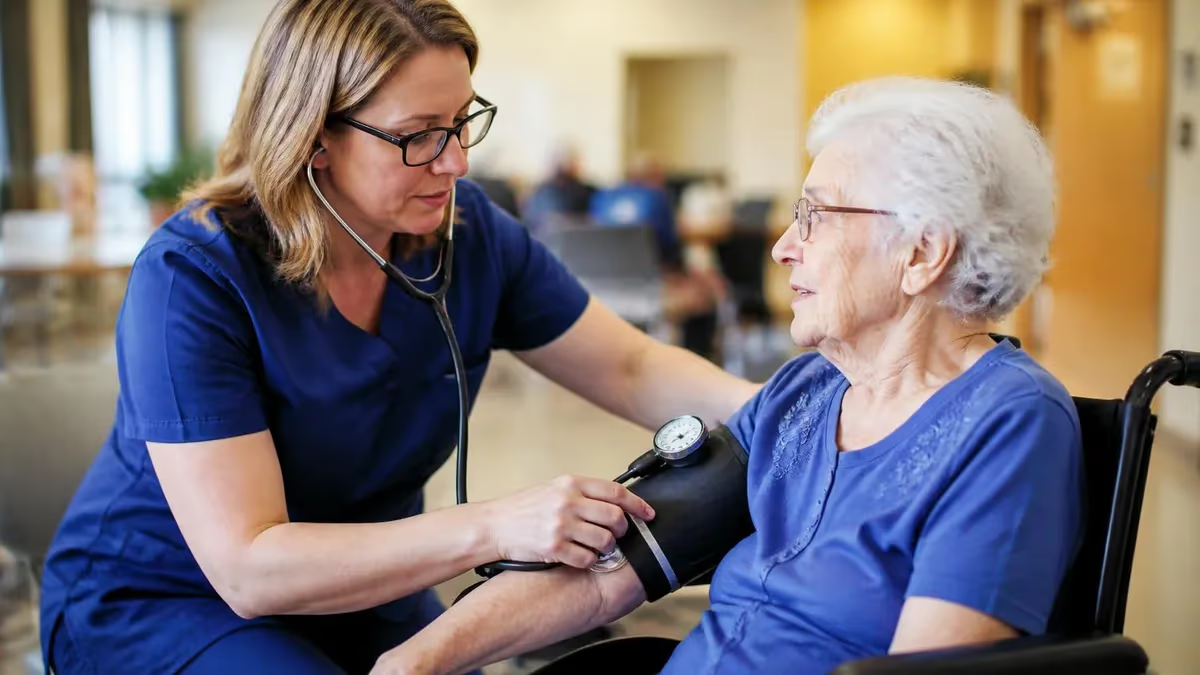
If you are searching for CNA classes or cna gna free training in Baltimore, you have landed in the right place. Baltimore is one of the strongest job markets in the Mid-Atlantic for healthcare workers, and demand for certified nursing assistants and geriatric nursing assistants continues to grow year over year. Hospitals, assisted living facilities, skilled nursing centers, and home health agencies across the city are actively hiring, and many of them will sponsor your training or cover tuition entirely in exchange for a work commitment after certification.
The GNA credential — Geriatric Nursing Assistant — is Maryland's state-specific designation that goes beyond the standard CNA. While CNAs are certified under federal guidelines, GNAs must meet additional Maryland Board of Nursing requirements focused on elder care, restorative skills, and patient safety in long-term care settings. For anyone planning to work in a nursing home, assisted living community, or geriatric specialty unit in Baltimore, the GNA certification is not optional — it is legally required, making gna training in baltimore one of the most searched career topics in the region.
Baltimore offers a surprisingly wide range of training pathways. Community colleges such as Community College of Baltimore County (CCBC) and Baltimore City Community College (BCCC) offer affordable credit and noncredit GNA programs that run anywhere from four to eight weeks. Private vocational schools operate accelerated programs that can be completed in as little as three weeks. And workforce development organizations — including programs funded through the Workforce Innovation and Opportunity Act (WIOA) — provide free or subsidized training for qualifying low-income residents, career changers, and unemployed workers.
Understanding the difference between CNA and GNA training matters before you enroll. Both tracks include classroom instruction and hands-on clinical hours. However, GNA programs in Maryland must meet specific Maryland Board of Nursing-approved curricula that cover at least 100 hours of training: 60 hours of theory and 40 hours of supervised clinical practice in a long-term care setting. Some programs exceed these minimums, offering 120 or even 150 hours of combined instruction, which tends to produce better exam pass rates and stronger job readiness among graduates.
Free training programs are a major draw for Baltimore residents. Several healthcare systems — including LifeBridge Health, Mercy Medical Center, and University of Maryland Medical System — periodically offer employer-sponsored CNA and GNA training pipelines. Participants go through a compressed program at no cost, then commit to work for the sponsoring employer for a defined period, typically one year. These programs fill quickly, so knowing when application windows open and what eligibility criteria apply is critical for prospective students.
Financial aid, workforce grants, and scholarship programs add more options for those who do not qualify for employer-sponsored training. Baltimore City Department of Social Services and the Mayor's Office of Employment Development both administer workforce training funds that can cover GNA program tuition at approved schools. Maryland Higher Education Commission grants and federal Pell Grants can apply to community college programs. Veterans, active-duty military members, and military spouses may also qualify for additional tuition assistance through the MyCAA scholarship or GI Bill benefits.
This guide walks you through every step — from choosing the right program and meeting eligibility requirements to passing the GNA certification exam and landing your first job in Baltimore. Whether you are entering healthcare for the first time, transitioning from a different career, or upgrading from a CNA to a GNA credential, the information here will help you make confident, informed decisions about your next move in one of Baltimore's most stable and rewarding career paths.
GNA Training in Baltimore by the Numbers

GNA Program Structure: What to Expect
Covers anatomy and physiology, infection control, patient rights, communication skills, nutrition, and Maryland-specific elder care regulations. Instructors use textbooks, videos, and case studies to build your foundational knowledge before clinical practice begins.
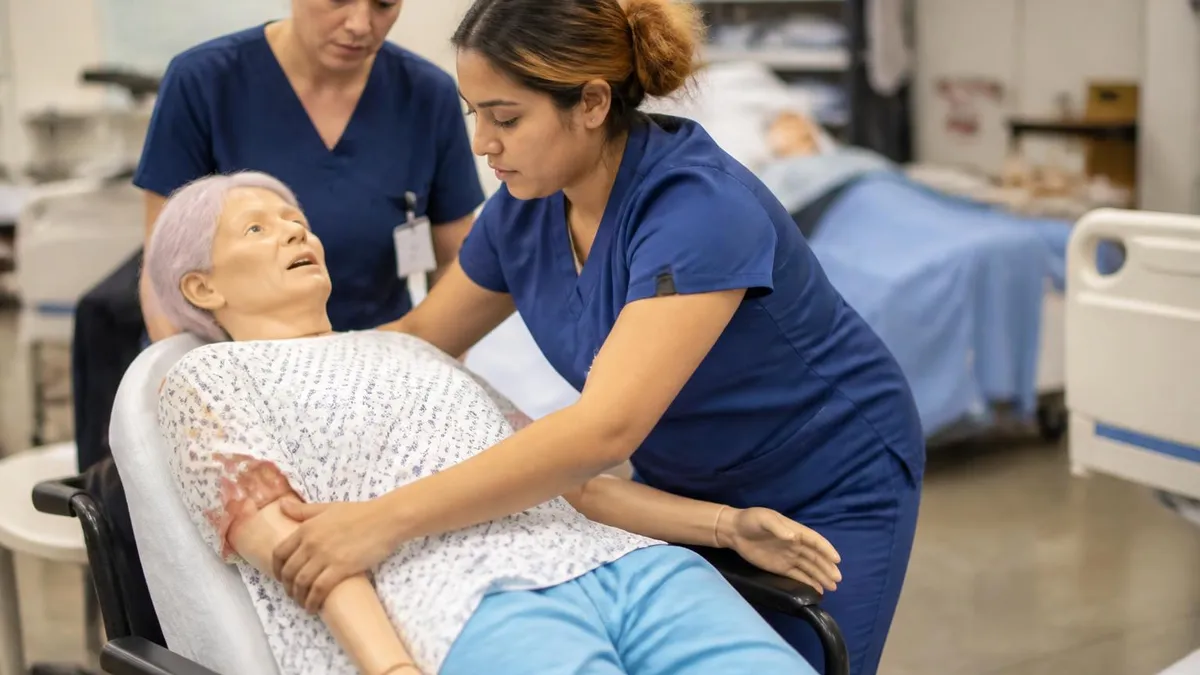
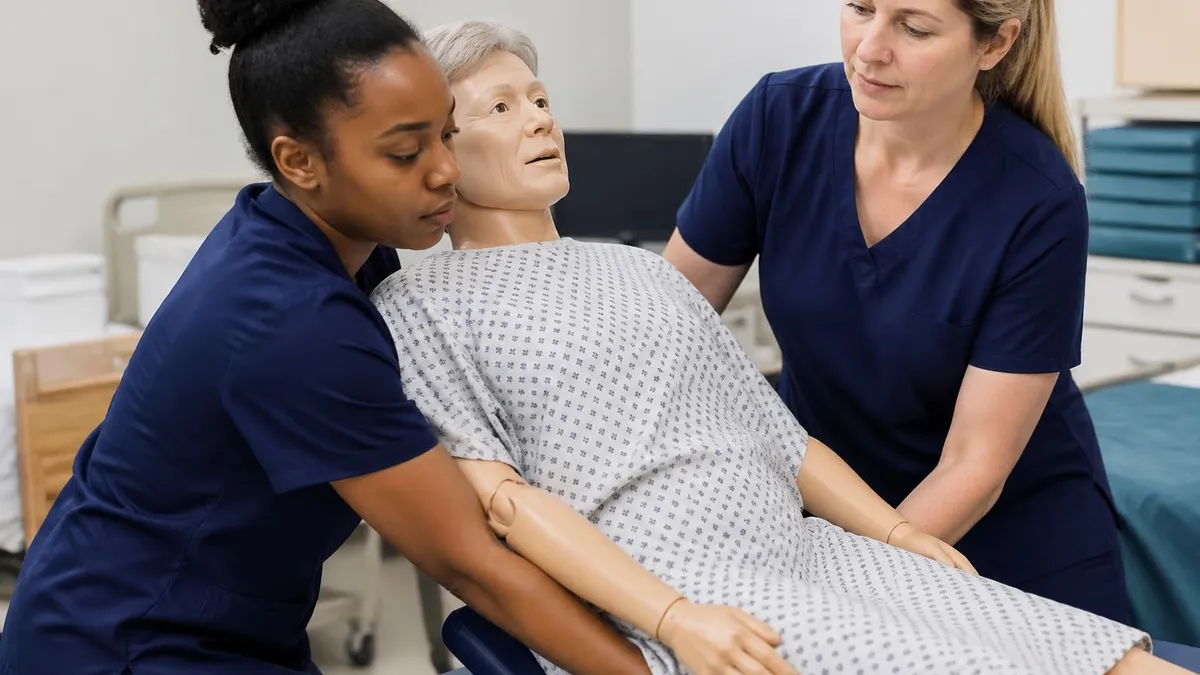
Hands-on skill practice in a simulated lab setting. Students practice bed baths, transfers, vital signs, catheter care, and feeding techniques on mannequins and lab partners under direct instructor supervision before moving to a real care environment.
Students complete clinical rotations in a Maryland Board of Nursing-approved long-term care facility in or near Baltimore. You will provide direct resident care under a licensed nurse's supervision, documenting your skill performance on a competency checklist.
Most programs include a written exam review session and skills demonstration rehearsal in the final week. Practice tests, flashcards, and mock skill evaluations help students identify weak areas and build confidence before sitting for the official Maryland GNA exam.
Tuition ranges from $0 for employer-sponsored cohorts to roughly $1,800 for private vocational schools. Community college programs typically cost $400–$900 including fees. WIOA workforce grants, Pell Grants, and city workforce funds can offset or eliminate tuition for qualifying students.
Before you enroll in any GNA program in Baltimore, you need to confirm you meet the basic eligibility requirements set by both Maryland and the individual training provider. Maryland Board of Nursing rules require GNA candidates to be at least 16 years old. Most programs require a high school diploma or GED, though some community-based programs accept students without a diploma if they can demonstrate basic reading and math competency through a placement assessment. You will also need government-issued photo identification and a valid Social Security number for the background check process.
Criminal background checks are mandatory for all GNA students and candidates in Maryland. The background check is conducted through the Maryland Department of Health's Criminal History Records Check (CHRC) process and covers both state and federal criminal databases. A felony conviction does not automatically disqualify you, but convictions related to abuse, neglect, exploitation, or theft from a vulnerable adult are typically disqualifying under Maryland law. If you have a criminal record, it is worth consulting with a workforce development advisor before paying program tuition, as some offenses can be reviewed for waiver consideration.
Health and immunization requirements are another important pre-enrollment step. Virtually every Baltimore-area GNA program requires students to show proof of current tuberculosis (TB) screening — either a two-step TB skin test or an IGRA blood test — completed within the past year. Proof of hepatitis B vaccination series or a signed declination form is also standard. Some clinical sites require additional immunizations such as MMR, varicella, and annual influenza vaccination. A recent physical exam clearing you for direct patient care is often required as well, and some programs require a drug screen prior to clinical placement.
Reading and math skills matter more than many applicants realize. GNA work involves reading care plans, interpreting physician orders, measuring and recording vital signs and fluid intake, and documenting care accurately. Programs that use a placement exam typically use the TABE or a similar literacy and numeracy tool. Scoring below the program threshold may require you to complete pre-enrollment remediation — which community colleges often offer free of charge — before starting the GNA curriculum.
Computer literacy is increasingly important as Baltimore-area care facilities transition to electronic health records (EHR). Some GNA programs now include a basic EHR orientation module so that new graduates can navigate common platforms like PointClickCare or MatrixCare on day one of employment. While you do not need to be a tech expert, being comfortable typing, using a mouse, and navigating basic software menus will help you succeed both in the program and in your first job.
Enrollment timing also matters. Many Baltimore programs admit students in cohorts that start monthly or quarterly. Employer-sponsored programs may have specific application windows tied to facility hiring needs. Community college programs follow semester schedules with registration deadlines that can fall several weeks before classes begin. If you miss one cohort start date, you will typically wait four to twelve weeks for the next one. Building a realistic timeline — accounting for background checks, immunizations, and financial aid processing — helps you avoid delays that push your start date back by an entire term.
Finally, transportation and scheduling considerations are practical factors that determine which program is the right fit. Clinical rotations are assigned by the program, not chosen by the student, and the facility may be anywhere within the greater Baltimore area. If you rely on public transit, confirming that your clinical site is accessible by MTA bus or light rail before enrolling can prevent a serious problem mid-program. Many programs also offer evening and weekend cohorts designed for students who work full-time, so ask specifically about schedule options rather than assuming all programs run on a standard weekday format.
GNA Certification: Pathways, Exam & Renewal
After completing a Maryland Board of Nursing-approved GNA training program, you must pass a two-part competency exam administered by Prometric on behalf of the Maryland Board of Nursing. The written portion consists of approximately 60 multiple-choice questions covering nursing assistant knowledge and Maryland GNA-specific content. You have two hours to complete the written test, and questions focus on patient care, infection control, resident rights, safety, and communication.
The skills demonstration portion requires you to perform five randomly selected clinical skills in front of a trained evaluator. Common tested skills include hand washing, bed bath, vital sign measurement, ambulation with a gait belt, and range-of-motion exercises. You must demonstrate each skill correctly within a set time limit. If you fail one portion, you may retake only the failed section — you do not need to retake the entire exam. Maryland allows up to three attempts within 24 months of completing your training program.
Is GNA Training in Baltimore Worth It?
- +High job security — Baltimore nursing homes and assisted living facilities have consistent, year-round demand for GNAs
- +Fast credential — most programs take only 3 to 8 weeks, far shorter than LPN or RN programs
- +Free training options exist through employer sponsorship and WIOA workforce grants
- +GNA certification opens the door to advancement — many RNs and LPNs started as CNAs or GNAs
- +Geriatric nursing assistant salary in Baltimore is competitive compared to similar entry-level healthcare roles
- +Clinical experience during training is genuinely practical and directly applicable to day-one job duties
- −The work is physically demanding — lifting, transferring, and repositioning residents can lead to back injuries without proper technique
- −Shift work is the norm — many GNA positions require evenings, weekends, and holidays, which affects work-life balance
- −Nursing assistant wages, while improving, are still below the median for healthcare workers with more advanced credentials
- −Emotionally demanding — caring for elderly residents with dementia, chronic illness, or end-of-life needs can be emotionally taxing
- −Background check disqualifications can block enrollment or licensure without any waiver process available
- −Private school programs can cost up to $1,800 with no guarantee of job placement or pass rate outcomes
Pros and Cons at a Glance
| Pros | Cons |
|---|---|
| High job security — Baltimore nursing homes and assisted living facilities have consistent, year-round demand for GNAs | The work is physically demanding — lifting, transferring, and repositioning residents can lead to back injuries without proper technique |
| Free training options exist through employer sponsorship and WIOA workforce grants | Shift work is the norm — many GNA positions require evenings, weekends, and holidays, which affects work-life balance |
| GNA certification opens the door to advancement — many RNs and LPNs started as CNAs or GNAs | Nursing assistant wages, while improving, are still below the median for healthcare workers with more advanced credentials |
| Geriatric nursing assistant salary in Baltimore is competitive compared to similar entry-level healthcare roles | Emotionally demanding — caring for elderly residents with dementia, chronic illness, or end-of-life needs can be emotionally taxing |
| Clinical experience during training is genuinely practical and directly applicable to day-one job duties | Background check disqualifications can block enrollment or licensure without any waiver process available |
GNA Certification Exam Preparation Checklist
- ✓Confirm your training program is approved by the Maryland Board of Nursing before enrolling.
- ✓Schedule your Prometric exam within 90 days of completing your GNA program to keep material fresh.
- ✓Complete at least 200 practice questions covering all GNA content domains before exam day.
- ✓Practice all five core skill areas — hand washing, vital signs, ambulation, bed bath, and range of motion — until you can perform each from memory.
- ✓Review Maryland-specific elder care laws, resident rights under OBRA, and mandatory abuse reporting requirements.
- ✓Study infection control protocols including standard precautions, PPE use, and hand hygiene technique.
- ✓Memorize normal vital sign ranges for elderly patients, including age-adjusted baselines for blood pressure and heart rate.
- ✓Create a timeline for background check submission — it can take up to two weeks to process, so start early.
- ✓Gather all required immunization records and TB test results before your program start date.
- ✓Bring two forms of valid ID and your ATT (Authorization to Test) letter to the Prometric exam site.
- ✓Use timed practice exams to build pacing — you have roughly two minutes per question on the written portion.
Baltimore Employer-Sponsored GNA Programs Cover Full Tuition
Several major Baltimore healthcare employers — including LifeBridge Health and the University of Maryland Medical System — run GNA training cohorts at zero cost to participants. These programs pay for tuition, supplies, and sometimes uniform costs in exchange for a 12-month employment commitment post-certification. Seats are limited and application windows open just a few times per year, so signing up for employer mailing lists is the most reliable way to catch the next open enrollment cycle.
One of the most common questions prospective GNA students ask is what they can realistically expect to earn after certification. Understanding gna salary data for Baltimore specifically — rather than national averages — gives you a much clearer picture of the financial return on your investment of time and training costs. According to 2025 Bureau of Labor Statistics data and regional salary surveys, GNAs in the Baltimore metropolitan area earn a median hourly wage between $17.50 and $22.00, translating to roughly $36,400 to $45,760 per year for full-time work.
Geriatric nursing assistant salary varies meaningfully based on employer type, shift, and experience level. Nursing homes and skilled nursing facilities tend to pay at the lower end of the range — typically $17 to $19 per hour — but frequently offer predictable schedules, comprehensive benefits packages, and paid time off. Hospital-based CNAs and GNAs working in geriatric or medical-surgical units often earn $20 to $24 per hour, particularly at unionized facilities. Home health agencies can offer $19 to $23 per hour but typically do not provide paid benefits, so total compensation comparisons require looking at the full package.
Shift differentials add meaningful income for GNAs willing to work non-standard hours. Evening shift differentials in Baltimore typically add $1.00 to $2.00 per hour to the base rate, while overnight and weekend differentials can add $2.00 to $3.50 per hour. A GNA working consistent night or weekend shifts can earn $42,000 to $52,000 annually without any additional credentials — simply by taking the shifts that are harder to fill. Understanding this dynamic helps new GNAs negotiate smarter and plan their schedules to maximize take-home pay during their first year.
Nursing assistant wages in Maryland have risen noticeably over the past several years, driven by healthcare worker shortages accelerated by the COVID-19 pandemic and ongoing population aging. Maryland's statewide minimum wage increases have also pushed entry-level healthcare wages upward, and several large Baltimore care facilities have voluntarily raised their starting GNA wages above $18 per hour to reduce turnover. The trajectory is clearly positive for workers entering the field now versus five years ago, and labor economists project continued wage growth through at least 2030 given demographic trends.
Advancement opportunities tied to the GNA credential create additional income potential. Many Baltimore GNAs pursue the Certified Medication Technician (CMT) credential within their first year, which adds $1.50 to $3.00 per hour to base pay and expands job responsibilities in assisted living settings. Restorative aide designations, which require additional training in rehabilitation techniques, similarly command pay premiums. And for GNAs who pursue further education — whether LPN or RN licensure — the clinical foundation built during GNA work dramatically accelerates their learning curve and often qualifies them for tuition assistance from their employer.
Benefits packages at Baltimore-area healthcare employers for full-time GNAs typically include employer-subsidized health, dental, and vision insurance; paid time off accruing at roughly one day per month; and 401(k) retirement plans with employer matching ranging from 3 to 6 percent. Several large systems also offer tuition reimbursement of $2,500 to $5,250 per year for employees pursuing further education. When you factor in these benefits alongside base wages, the total compensation for a full-time GNA in Baltimore compares favorably to many jobs requiring similar entry-level qualifications in other industries.
Job security for geriatric nursing assistants in Baltimore is exceptionally strong. Maryland's population of adults aged 65 and older is growing faster than the overall population, and Baltimore City and the surrounding counties have a dense concentration of nursing homes, assisted living communities, continuing care retirement communities, and adult day service programs.
The Maryland Department of Labor projects that employment of nursing assistants in the state will grow by 15 to 18 percent through 2032 — nearly twice the average for all occupations. For anyone weighing a career change, few entry-level healthcare credentials offer this combination of fast training, real wages, benefits, and genuine job security.
If you stop working as a GNA for 24 consecutive months or more, your Maryland registration is considered lapsed and you will need to complete a competency re-evaluation before you can legally return to practice. This is different from a simple renewal — it may require additional clinical hours or a skills demonstration test. Plan your career transitions carefully to maintain active status, as re-entry after a lapse can delay your return to work by several weeks.
Once you have passed your GNA certification exam and received your Maryland Board of Nursing registration, the job search process in Baltimore moves quickly — the market strongly favors qualified candidates. Most new GNAs in Baltimore receive job offers within two to four weeks of becoming certified, with some receiving offers even before their exam results are officially posted, particularly if they completed an employer-sponsored training program. The key is knowing where to look, how to present your new credential, and what questions to ask potential employers during the interview process.
Your clinical rotation facility is often your first and best job lead. Many Baltimore GNA programs place students in facilities that are actively hiring, and supervisors and staff nurses who work alongside you during clinicals form an informal evaluation of your potential as an employee. Performing well, asking thoughtful questions, and showing up consistently and on time during your rotation can translate directly into a job offer before you even graduate. Do not underestimate the value of making a strong impression during your supervised hours — it is your most powerful job audition.
Online job boards including Indeed, ZipRecruiter, and Maryland Workforce Exchange list hundreds of GNA openings in the Baltimore area at any given time. When searching, use both GNA and CNA as search terms, since many Baltimore employers post under CNA even if they specifically require the Maryland GNA credential. LinkedIn is increasingly useful for healthcare job searching, particularly for positions at larger health systems that post roles there before they appear on general job boards. Setting up job alert notifications with your exact credential and location filters saves significant time during an active search.
The Maryland Caregivers Support Coordinating Council and Baltimore City Department of Social Services maintain referral relationships with long-term care employers and can connect newly certified GNAs with open positions at facilities that participate in their workforce pipeline programs. If you received WIOA-funded training, your assigned workforce development counselor is typically required to provide job placement support as part of the grant program — take advantage of this resource, as these counselors often have direct relationships with hiring managers at partner facilities.
During job interviews, be prepared to discuss the specific skills you practiced during your clinical hours, your comfort level with dementia care, and your availability for different shifts. Baltimore employers value GNAs who are honest about their experience level and enthusiastic about continuing to learn. Asking questions about staff-to-resident ratios, new employee orientation length, and opportunities for advancement signals that you are a serious professional rather than someone just filling a job. Facilities with thorough orientation programs and lower turnover rates tend to be better employers — these questions help you identify them.
Salary negotiation is appropriate and expected for GNA positions, even at the entry level. If a facility's posted wage is at the lower end of the Baltimore market range, it is entirely reasonable to ask whether the rate is negotiable given your training performance, clinical hours, or prior healthcare-adjacent experience.
Many facilities have posted rates that represent a starting point rather than a fixed offer, particularly for candidates who demonstrate strong skills or a willingness to work less desirable shifts. Coming in with knowledge of the Baltimore wage range — the $17 to $22 per hour spectrum outlined earlier — gives you a factual foundation for any negotiation conversation.
Professional development resources are abundant in Baltimore for GNAs who want to build on their initial credential. The Maryland Health Care Education and Training Collaborative (MHCETC) offers continuing education workshops, skills updates, and certification prep courses for healthcare workers across the state. The National Association of Health Care Assistants (NAHCA) provides professional community, advocacy resources, and online continuing education. Several Baltimore-area community colleges also offer bridge programs that allow GNAs to earn college credit toward LPN or RN programs — an important option for anyone who wants to keep climbing the healthcare career ladder without starting over from scratch.
Passing the GNA certification exam on your first attempt requires more than attending class and completing your clinical hours. The candidates who score highest are those who treat exam preparation as a structured, deliberate process — not a last-minute cram session. Starting your practice test routine in week two or three of your program, well before the final exam review week, gives your brain enough repetition cycles to move information from short-term recall into durable long-term memory. Research on test preparation consistently shows that distributed practice over several weeks outperforms intensive study in the final days before an exam.
Content area prioritization is a practical strategy for making the most of limited study time. The Maryland GNA exam weights certain content domains more heavily than others. Patient care skills, infection control, safety and emergency procedures, and resident rights consistently appear in high proportions on the exam. Spending at least 60 percent of your practice time on these four areas before branching into nutrition, body mechanics, and documentation topics will give you the highest return on your study hours. Your program instructor can often tell you which content areas have historically been the most challenging for students at your school.
Skills practice outside of class time is one of the most effective and underused preparation strategies. Many students stop practicing physical skills the moment they leave the clinical lab, then discover during the exam that muscle memory has faded just enough to cause errors in technique. Practicing skills at home — using a willing family member, a pillow as a patient surrogate, and a printed skills checklist — keeps your procedural memory sharp. Video resources from your program or free tutorials posted by nursing education channels can help you review correct technique on specific skills that feel uncertain.
Managing test anxiety is a genuine challenge for many GNA candidates, particularly those who have not taken a formal exam in years. Simple strategies — arriving at the Prometric testing center 30 minutes early, bringing a valid ID and your ATT letter, completing a light review the night before rather than a heavy cram session, and getting a full night of sleep — significantly reduce day-of anxiety.
During the exam itself, reading each question carefully twice before selecting an answer and flagging uncertain questions for review rather than lingering on them reduces the cognitive load and prevents the spiral of second-guessing that derails many test-takers.
Study groups work particularly well for GNA exam preparation because the content lends itself to verbal rehearsal and peer teaching. Explaining a skill or a care concept out loud to another student forces you to organize your knowledge in a way that solo reading does not. If your program does not formally organize study groups, connecting with two or three classmates on a messaging app to schedule weekly group review sessions takes very little time to arrange and often produces a measurable improvement in everyone's exam confidence and performance.
Flashcards remain one of the most efficient tools for memorizing terminology, normal lab value ranges, disease symptom lists, and medication side effects that appear on the GNA exam. Digital flashcard platforms allow you to study on your phone during commutes, break times, or any spare moment throughout the day.
Building your own flashcard deck — rather than just downloading someone else's — deepens encoding by forcing you to think through each concept as you write the card. Aim for a deck of 150 to 200 cards covering all major content areas, and review the full deck at least three times before your exam date.
Finally, use the days immediately after your exam — while you wait for results — to begin your job search in earnest rather than simply waiting. Update your resume to reflect your newly completed GNA training program, gather your clinical hours documentation, and begin submitting applications to Baltimore-area facilities. The two to three weeks between exam completion and results posting is valuable job search time that many new GNAs waste. By the time your official passing notification arrives, having three or four active applications in progress means you can move immediately from certified to employed without an unnecessary gap.
Sample GNA - Geriatric Nursing Assistant Practice Questions
Try these questions from our free GNA - Geriatric Nursing Assistant practice tests. The correct answer and an explanation follow each question.
When assisting a dependent resident to move up in bed, what is the safest and most effective method for the GNA to use?
- A. Ask a coworker for help and use a draw sheet or slide sheet.
- B. Grasp the resident under their arms and pull them up toward the headboard.
- C. Lower the bed as much as possible to get better leverage.
- D. Instruct the resident to grab onto the side rails and pull themselves up.
Answer: A. Ask a coworker for help and use a draw sheet or slide sheet.
Using two people and a friction-reducing device like a draw sheet is the standard of care. This method prevents shearing injury to the resident's skin and protects both caregivers from musculoskeletal injury by distributing the weight and reducing the force needed.
When a GNA promotes a resident's independence in performing ADLs, what is the primary goal?
- A. To make the GNA's job easier and faster.
- B. To enhance the resident's self-esteem and functional ability.
- C. To ensure the resident can be discharged quickly.
- D. To fulfill the facility's documentation requirements.
Answer: B. To enhance the resident's self-esteem and functional ability.
Encouraging residents to participate in their own ADLs as much as they are safely able to is crucial for rehabilitation and maintaining their quality of life. This practice helps preserve their physical function, independence, and sense of self-worth.
The GNA's role in providing direct care and assisting with activities of daily living (ADLs) is performed under the direct supervision of which healthcare team member?
- A. The facility administrator
- B. The physical therapist
- C. The licensed nurse (RN/LPN)
- D. The medical doctor
Answer: C. The licensed nurse (RN/LPN)
Geriatric Nursing Assistants work as part of the nursing team and are supervised by licensed nurses (Registered Nurses or Licensed Practical Nurses). The nurse delegates tasks to the GNA and is ultimately responsible for the resident's overall nursing care plan.
A resident's blood pressure is 148/92 mmHg. How should the nursing assistant respond?
- A. Document it as normal and continue care
- B. Recheck immediately and report to the nurse
- C. Ask the resident to exercise to lower it
- D. Administer an antihypertensive medication
Answer: B. Recheck immediately and report to the nurse
148/92 mmHg is elevated; the nursing assistant should recheck and promptly report this finding to the nurse for further evaluation.
Take the full GNA - Geriatric Nursing Assistant practice test
GNA Questions and Answers




About the Author

Educational Psychologist & Academic Test Preparation Expert
Columbia University Teachers CollegeDr. Lisa Patel holds a Doctorate in Education from Columbia University Teachers College and has spent 17 years researching standardized test design and academic assessment. She has developed preparation programs for SAT, ACT, GRE, LSAT, UCAT, and numerous professional licensing exams, helping students of all backgrounds achieve their target scores.
Join the Discussion
Connect with other students preparing for this exam. Share tips, ask questions, and get advice from people who have been there.
View discussion (8 replies)