
Books to Increase General Knowledge: The GKT Candidate's Reading Guide
Discover the best books to increase general knowledge for GKT success. Expert picks across history, science, arts, and more. 📚

Choosing the right books to increase general knowledge is one of the most powerful steps any aspiring Florida educator can take before sitting the General Knowledge Test. The GKT demands broad, cross-disciplinary fluency — you need to navigate reading comprehension passages, interpret data in mathematics sections, compose structured essays, and demonstrate command of facts spanning science, history, arts, and current affairs. No single textbook covers all of this, but a curated reading list can fill gaps faster than passive review alone.
Many GKT candidates underestimate how much background reading accelerates exam performance. When you have read widely about history, economics, and the natural world, reading comprehension passages feel familiar rather than foreign. Your brain is not decoding every word from scratch — it is pattern-matching against mental frameworks built across dozens of books. That cognitive head start translates directly into faster passage processing and fewer careless errors on test day, even under timed pressure.
The relationship between reading and vocabulary acquisition is especially important for the GKT's English Language Skills subtest. Research consistently shows that encountering words in meaningful context — inside a well-written book — embeds them far more durably than flashcard memorization. Candidates who read one challenging nonfiction book per month in the months before their exam routinely report that unfamiliar vocabulary on the actual test feels manageable rather than threatening, simply because they have seen complex language used naturally and repeatedly.
Beyond vocabulary, books build what cognitive scientists call "schema" — organized mental structures that help you understand and retain new information. A candidate who has read a solid survey of world history processes a GKT passage about the Industrial Revolution very differently from one who has never engaged with that period. The schema reader locates the passage's argument quickly, identifies the main idea efficiently, and answers inference questions with confidence. Schema built through books is cumulative and durable in ways that cramming simply cannot replicate.
Mathematics may seem disconnected from reading, but general knowledge books focused on quantitative reasoning, logical thinking, and real-world data interpretation can sharpen the analytical skills the GKT math section requires. Books that teach you to read charts, evaluate statistical claims, and recognize fallacious reasoning are directly applicable to GKT questions that present graphs, tables, and word problems. The boundary between literary general knowledge and mathematical fluency is more porous than most candidates realize.
Essay writing — the GKT's written composition component — is perhaps the area most directly improved by reading widely. Writers internalize sentence structure, paragraph logic, and argumentative flow by encountering excellent prose repeatedly. When you read a well-crafted book that builds a clear thesis through evidence and transitions gracefully between ideas, your own writing absorbs those patterns. Examiners scoring GKT essays are not looking for flashy vocabulary; they are looking for clarity, organization, and logical development — qualities modeled in every good nonfiction book.
This guide organizes recommended titles by GKT subtest relevance, explains what each book develops in the reader, and provides a realistic month-by-month reading schedule. Whether you have two months or six before your exam date, strategic reading will compound your preparation efforts and help you walk into the testing center with genuine confidence built on broad, deeply internalized knowledge.
GKT Reading Prep by the Numbers

Top Book Categories for GKT Preparation
Survey histories of the United States and the world build the contextual knowledge GKT reading passages frequently assume. Titles covering politics, culture, and economic development give candidates the background schema that makes unfamiliar passages immediately accessible.
Popular science books that explain biology, physics, and earth science in plain language develop the scientific literacy the GKT tests. They also improve graph and data interpretation skills that cross over directly into the mathematics subtest.
Style guides and writing handbooks sharpen the grammar, usage, and mechanics knowledge tested in the English Language Skills subtest. They also teach the principles of clear, organized prose that the GKT essay rubric rewards.
Books surveying literary history, art movements, and cultural criticism build the background knowledge the GKT arts and literature content area draws on, while simultaneously modeling sophisticated analytical reading and argumentation.
Books focused on reasoning, argumentation, and logical analysis develop the inference and evaluation skills that GKT reading comprehension questions directly test. Candidates learn to identify main ideas, evaluate evidence, and detect logical fallacies.
Understanding how reading actually builds GKT-relevant skills helps candidates choose books strategically rather than reading at random. The GKT's reading comprehension subtest does not simply ask you to locate information — it asks you to identify an author's main idea, draw inferences from implicit evidence, evaluate the logical structure of an argument, and determine the meaning of vocabulary from context. Every one of these skills is exercised every time you read a challenging, well-written nonfiction book with focused attention.
Main idea identification is the skill GKT candidates most frequently struggle with on reading passages. When a passage is unfamiliar in topic or tone, it can be difficult to separate the central argument from supporting details. Books train this skill because good nonfiction is organized around clear theses supported by layered evidence. As you read books actively — asking yourself "what is the author's central claim here?" at the end of each chapter — you build the analytical habit that makes GKT main-idea questions straightforward rather than tricky.
Inference questions on the GKT require you to conclude something that is implied but not explicitly stated in the passage. This is precisely the skill practiced every time you read fiction or narrative nonfiction and must understand a character's motivation, predict a consequence, or recognize an unstated assumption. Readers who engage regularly with complex texts develop a natural sensitivity to implication and subtext that pays dividends on every GKT inference item they encounter.
Vocabulary in context — another GKT reading skill — is built almost exclusively through reading. Research from vocabulary acquisition studies shows that encountering an unfamiliar word approximately six to twelve times in varied contexts produces lasting retention. A single encounter during a flashcard session rarely achieves the same depth. When you encounter "ameliorate" three times in one history book, twice in a science book, and once in a literary essay, you understand its nuance far more richly than any definition could provide, and you recognize it instantly on the GKT.
The English Language Skills subtest covers sentence structure, grammar, punctuation, and usage — areas where reading also provides crucial preparation. Candidates who read standard edited English regularly have internalized the patterns of correct syntax and will often recognize a grammatically incorrect option on the GKT simply because it "sounds wrong." This intuition, built through thousands of hours of reading, is not a substitute for explicit grammar study but powerfully reinforces it, catching errors that rule-based review might miss.
For the GKT's mathematics subtest, books focused on quantitative literacy — understanding percentages, interpreting graphs, evaluating statistical arguments — are directly applicable. Titles like popular books on data science, behavioral economics, or scientific methodology regularly ask readers to evaluate numerical claims, spot misleading visualizations, and reason proportionally. These are exactly the cognitive moves GKT math items require, and developing them through engaging reading is far less mentally taxing than grinding through practice sets in isolation.
The written essay portion of the GKT benefits from reading in the most direct way possible. Examiners assess organization, clarity, development of ideas, and control of standard English — qualities absorbed from reading excellent prose over time. Candidates who read well-organized argumentative writing learn to structure their own essays instinctively. They open with clear thesis statements, develop each paragraph around a single idea, use transitions that signal logical relationships, and close with conclusions that genuinely synthesize rather than merely restate. These habits emerge naturally from extensive reading of good books.
Books by GKT Subtest: Targeted Reading Strategies
For the GKT reading subtest, prioritize books that model analytical argumentation and varied prose styles. Survey histories of the United States, collections of longform journalism such as pieces from The Atlantic or The New Yorker in book form, and popular philosophy titles all develop the close reading habits the exam tests. Aim for books that challenge you slightly — if you understand every word effortlessly, you are not building new capacity.
Active reading is essential: annotate in the margins, pause at chapter ends to summarize the main argument in one sentence, and identify how the author uses evidence to support claims. This reflective practice during reading is the direct analog of what the GKT reading section demands. Candidates who read passively — eyes moving across the page without cognitive engagement — build far less transferable skill than those who read with deliberate analytical attention.
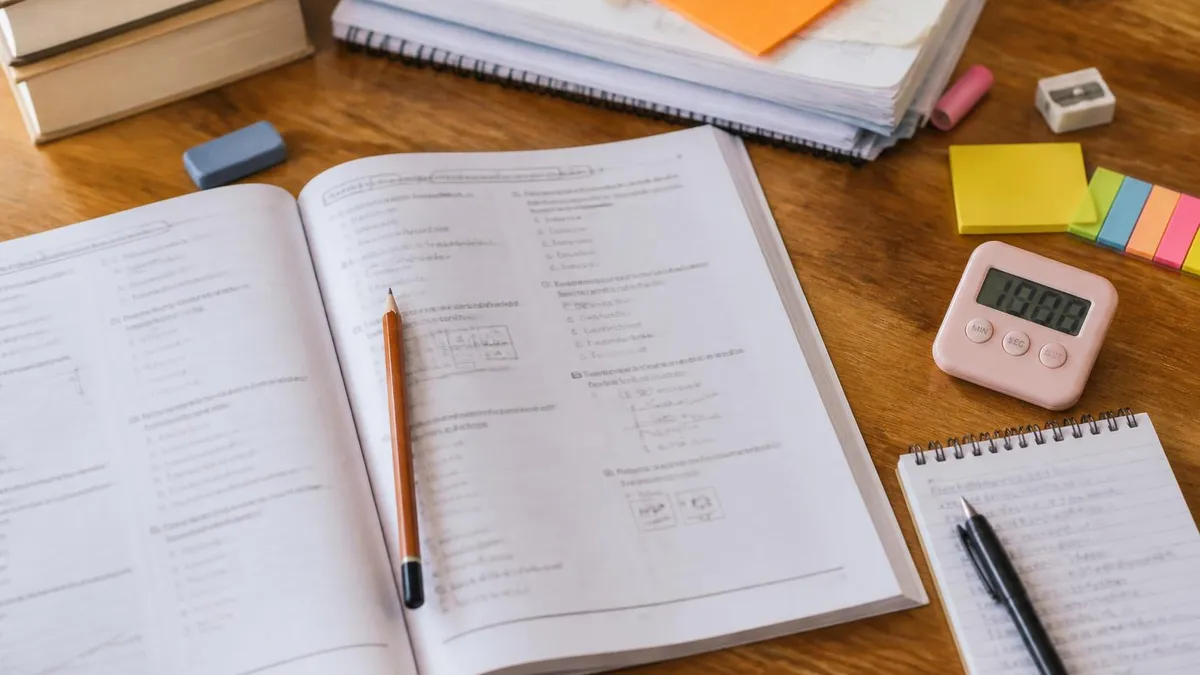
Books vs. Other GKT Study Methods: What Works Best?
- +Builds durable schema that makes unfamiliar GKT passages immediately accessible
- +Develops vocabulary in rich context, producing far deeper retention than flashcards
- +Improves reading speed and analytical stamina for timed exam sections
- +Models excellent prose organization, directly improving GKT essay quality
- +Covers multiple GKT subtests simultaneously through cross-disciplinary reading
- +Reduces test anxiety by making broad knowledge feel natural and internalized
- −Requires sustained time investment — meaningful gains take weeks, not days
- −Benefits are harder to measure than completing a practice test with a score
- −Wrong book choices can waste preparation time on low-relevance content
- −Reading alone does not replace explicit grammar review or math practice
- −Progress is gradual and cumulative rather than immediately visible
- −Candidates with limited reading time may need to prioritize targeted practice tests instead
GKT Reading Prep Checklist: 10 Actions to Take Before Exam Day
- ✓Select at least one survey history book covering U.S. or world history and read it actively with annotations.
- ✓Read one popular science title focused on biology, earth science, or technology to build scientific literacy.
- ✓Work through a grammar and style guide systematically, completing all exercises rather than just reading explanations.
- ✓Read one book on quantitative reasoning or everyday statistics to prepare for GKT math data interpretation items.
- ✓Practice summarizing each chapter of your reading in one or two sentences to develop main-idea identification skills.
- ✓Keep a vocabulary journal noting unfamiliar words encountered in your reading, including context sentences.
- ✓Read at least one collection of longform journalistic essays to experience varied argumentative styles and topics.
- ✓Practice timed essay writing after each major book, applying organizational techniques you observed in the text.
- ✓Alternate between books in different subject areas each week to maintain cross-disciplinary GKT readiness.
- ✓Complete at least two full GKT practice tests to calibrate how your reading preparation is translating into actual exam performance.
30 Minutes of Daily Nonfiction Reading Outperforms Weekend Cramming Sessions
Cognitive research on spaced repetition and schema formation consistently shows that daily reading in moderate doses builds far more durable knowledge than marathon study sessions. Thirty focused minutes of challenging nonfiction reading six days per week — roughly 180 minutes total — produces greater GKT-relevant knowledge gains than a single four-hour weekend cramming session covering the same pages. Consistency and active engagement matter more than raw time on task.
Integrating books into a structured GKT study plan requires intentional scheduling rather than hoping to read "whenever there is time." The most effective approach treats reading as a non-negotiable daily block — ideally in the morning before cognitive fatigue sets in — rather than a supplemental activity squeezed around practice tests. Candidates who schedule reading first and practice tests second consistently report that their comprehension of practice passage content improves as their reading program advances.
A realistic twelve-week reading plan for GKT preparation might allocate the first four weeks to a U.S. history survey and a grammar handbook, the middle four weeks to a popular science title and a quantitative reasoning book, and the final four weeks to an arts-and-literature survey and a collection of analytical essays. This progression mirrors the GKT's own content distribution, ensuring that no major subtest area goes unaddressed through reading while also allowing depth in each domain.
Note-taking during reading is not optional for GKT candidates — it is the mechanism that converts passive exposure into active knowledge. The most effective method is a simple two-column format: the left column captures the author's main claims and supporting evidence; the right column captures your own questions, connections to other things you know, and potential GKT relevance. This approach keeps your reading genuinely analytical rather than allowing your eyes to drift across pages without cognitive engagement.
Discussion of your reading with a study partner or small group multiplies its preparation value significantly. Explaining what you read to someone else — summarizing the argument, fielding questions, defending your interpretation of a difficult passage — engages the retrieval and elaboration processes that produce durable learning. GKT study groups that incorporate book discussions alongside practice tests consistently outperform solo study candidates in both reading comprehension scores and essay quality, according to test prep research.
The relationship between reading speed and GKT performance deserves special attention. The GKT's reading subtest is timed, and candidates who read slowly may not finish all items. Books improve reading speed naturally through practice, but you can accelerate the process by occasionally timing yourself reading nonfiction passages of 300 to 500 words and tracking your pace over the weeks of preparation. Most candidates should aim for a comfortable reading speed of 250 to 300 words per minute with strong comprehension, which allows adequate time for all GKT reading items without rushing.
Audio formats of books — audiobooks — are a legitimate supplement for GKT candidates with limited time for traditional reading, but they should not fully replace text-based reading in your preparation. The visual processing of written text, the ability to re-read difficult passages, and the practice of moving your eyes across dense prose are all skills the GKT tests that audiobooks do not develop as directly. Use audiobooks for commutes and exercise, but maintain at least some traditional reading every day to ensure your eye-tracking and decoding fluency remain sharp.
Finally, connect your book reading directly to GKT practice questions at least once per week. After completing a chapter or two on, say, the American Civil War, immediately attempt a set of GKT reading comprehension questions on a passage touching that period. Notice how your background knowledge activates, how quickly you identify the main idea, and how confidently you eliminate wrong answer choices. This deliberate connection between broad reading and targeted practice is what transforms a good reading habit into measurable GKT score gains.

Books build GKT knowledge through gradual schema formation — a process that requires weeks, not days. Starting a reading program just one week before your exam date will not produce meaningful score improvements and may actually increase anxiety by exposing knowledge gaps you no longer have time to address. Begin your reading preparation at least eight weeks before your scheduled GKT date, ideally twelve, to allow the cumulative benefits of broad reading to fully develop.
Advanced reading strategies can significantly amplify the GKT preparation value you extract from every book you read. The most powerful of these is what reading researchers call "elaborative interrogation" — the practice of pausing after each paragraph or section and asking yourself "why is this true?" and "how does this connect to what I already know?" This active questioning forces deeper processing than simple reading and produces retention rates substantially higher than passive reading alone, according to multiple cognitive science studies.
Cornell note-taking, originally developed for college lectures, adapts beautifully to GKT book preparation. Divide your note page into three sections: a narrow left column for cue words and questions, a wide right column for main notes from the reading, and a summary section at the bottom of each page. After completing a reading session, cover your notes and use only the cue column to reconstruct what you read. This retrieval practice — recalling information without looking at it — is one of the most robustly validated techniques in memory research.
Interleaving subjects during your reading preparation — alternating between a history book and a science book rather than completing each one fully before starting the next — is counterintuitive but effective. The mental effort of switching contexts forces your brain to retrieve and reactivate earlier reading, which strengthens retention. It also mirrors the GKT itself, which jumps between topic areas without warning, so candidates who have practiced flexible topic-switching through interleaved reading are better prepared for the exam's varied content demands.
Marking up your books is not just permitted — it is an active reading strategy that improves retention by engaging your visual and motor systems in addition to your language processing. Underline main claims, circle key vocabulary, draw boxes around evidence, and write marginal questions and connections. Research consistently shows that readers who annotate retain significantly more than those who read without marking, and the act of deciding what to mark forces the analytical judgment the GKT tests directly.
Reviewing your book notes one week after completing each title — before moving on to the next — applies the spacing effect to your reading preparation. The spacing effect is one of the most replicated findings in cognitive psychology: information reviewed at increasing intervals is retained far longer than information reviewed immediately and then not revisited. A brief one-hour review session per book, timed about one week after you finish, can double or triple your long-term retention of the material covered.
Connecting reading to the specific competencies assessed by the GKT's four subtests keeps your preparation purposeful. As you read, actively flag content relevant to each subtest: vocabulary that might appear in reading comprehension, grammatical constructions that illustrate English language skills rules, quantitative claims that parallel math subtest logic, and argumentative techniques that you want to replicate in your own GKT essay. Color-coding your annotations by subtest relevance is a simple but highly effective organizational strategy that many high-scoring GKT candidates use.
For candidates who want structured guidance on choosing the right books and applying advanced reading strategies to the full GKT content domain, practice quizzes remain essential companions to your reading program. After completing each major book, take a targeted GKT practice quiz in the book's primary subject area to measure how effectively your reading is translating into exam performance. This feedback loop allows you to calibrate your reading choices and strategies throughout your preparation rather than waiting until exam day to discover whether your approach was effective.
Practical tips for GKT candidates in the final weeks before their exam should focus on consolidating and applying the broad knowledge base built through months of reading rather than introducing new books or entirely new content areas. In the final four weeks, shift from expansive reading to intensive review of your book notes, targeted practice testing in your weakest subtest areas, and timed essay writing practice using organizational techniques absorbed from your reading. New books in the final month can introduce anxiety more than knowledge.
One of the most overlooked practical tips for GKT candidates is the value of reading the full text of GKT sample essays published by Florida's educator certification program. These official scored samples show you exactly what top-scoring, mid-range, and below-standard essays look like in practice. Read them the way you read any book — analytically, noting organizational choices, evidence use, and language clarity — and you will internalize the scoring rubric in a far more concrete way than any abstract description of the rubric can provide.
Sleep and reading comprehension are deeply connected, and GKT candidates preparing through extensive reading should protect their sleep schedule as rigorously as their study schedule. Memory consolidation — the process by which information read during the day becomes durable long-term knowledge — happens primarily during sleep, particularly during REM sleep cycles. Candidates who sacrifice sleep to read more are undermining the very consolidation process that makes their reading preparation effective. Seven to nine hours of sleep per night during your GKT prep period is not a luxury — it is a core component of effective preparation.
Physical exercise has documented positive effects on reading comprehension and memory, making it another practical tip GKT candidates often overlook. Even thirty minutes of moderate aerobic exercise three to four times per week improves blood flow to the prefrontal cortex, the brain region most responsible for the analytical reading, working memory, and executive function that the GKT demands. Many high-performing GKT candidates schedule a brisk walk or light workout before their most demanding reading sessions, reporting that they comprehend and retain more with this simple preparation.
Candidate communities — online forums, local study groups, and social media groups for Florida educators pursuing certification — are valuable resources for sharing book recommendations and reading strategies. Candidates who have recently passed the GKT often share which titles they found most valuable, which chapters they wish they had read more carefully, and which books were not worth the investment. These peer recommendations, filtered through actual GKT experience, can save you significant preparation time by helping you prioritize the highest-leverage reading choices.
Time management on the actual GKT reading subtest requires a different kind of practice than most candidates anticipate. Because the GKT presents passages followed by multiple questions, candidates must develop the habit of reading each passage once for main idea and structure rather than rereading repeatedly for each question. Books train this single-pass comprehension naturally — you cannot re-read a book chapter for each thing you want to remember from it. Candidates with strong reading backgrounds approach GKT passages with the confident single-pass comprehension that timed testing rewards.
Finally, remember that the goal of reading to prepare for the GKT is not to memorize facts but to develop the broad, flexible knowledge base and analytical reading skills that make any passage — on any topic — approachable and manageable. The GKT will present passages you have never encountered before on topics you may never have studied specifically.
But candidates who have read widely across history, science, arts, and social issues arrive at those passages with the contextual familiarity, vocabulary depth, and analytical confidence to succeed. Start reading today, read consistently, and trust the cumulative power of broad, purposeful reading to carry you through exam day.
GKT Questions and Answers

History General Knowledge: What the GKT Tests and How to Prepare

General Knowledge Book: Your Complete GKT Study Resource Guide

Define General Knowledge: What It Means for the GKT and Your Teaching Career

About Pakistan General Knowledge: What Every GKT Candidate Should Know

Florida General Knowledge Test: Complete Study Guide and Certification Prep
About the Author

Educational Psychologist & Academic Test Preparation Expert
Columbia University Teachers CollegeDr. Lisa Patel holds a Doctorate in Education from Columbia University Teachers College and has spent 17 years researching standardized test design and academic assessment. She has developed preparation programs for SAT, ACT, GRE, LSAT, UCAT, and numerous professional licensing exams, helping students of all backgrounds achieve their target scores.