
General Knowledge Book: Your Complete GKT Study Resource Guide 2026 October
Find the best general knowledge book for GKT prep. Strategies, top resources, and study tips to pass the Florida teacher certification exam. 📚

Choosing the right general knowledge book is one of the most important decisions you will make when preparing for the Florida Teacher Certification Examination (FTCE) General Knowledge Test. With dozens of study guides, textbooks, and resource materials available on the market today, narrowing down the options can feel overwhelming — especially when you are already managing coursework, student teaching responsibilities, and the pressure of an upcoming certification deadline. Understanding which resources genuinely align with the GKT's format and content areas is essential for building an efficient, targeted study plan.
The FTCE General Knowledge Test is a mandatory requirement for anyone seeking initial teacher certification in Florida. It is administered by Pearson and covers four major subtests: English Language Skills, Essay, Reading, and Mathematics. Each of these subtests demands a distinct approach to preparation, and the best general knowledge study books are those that address all four domains with equal depth and rigor. A well-structured book provides not only content review but also test-taking strategies, sample questions, and diagnostic tools that help you identify your weakest areas before test day.
Many aspiring teachers underestimate the level of difficulty the GKT presents, particularly in the mathematics subtest, which covers topics ranging from basic arithmetic and algebra to geometry, statistics, and probability. A strong general knowledge study book will include step-by-step problem walkthroughs, formula sheets, and multiple practice sets for each mathematical concept. Simply reviewing high school math notes is rarely sufficient — the GKT requires you to apply concepts under timed conditions, and dedicated book-based practice builds the speed and accuracy you need.
For the Reading subtest, the best study books include annotated passages that teach you how to approach different question types, such as main idea, vocabulary in context, logical inference, and author's purpose. These skills are transferable across the exam's various reading passages, and a good book will give you frameworks — not just definitions — so that you can decode unfamiliar texts systematically. Learning to recognize passage structure, tone, and rhetorical strategy can dramatically improve your performance on questions that initially appear ambiguous.
The English Language Skills subtest tests grammar, sentence structure, usage, and mechanics. Top-rated GKT preparation books drill these rules through targeted exercises rather than passive reading. You will encounter questions about subject-verb agreement, punctuation, pronoun reference, and parallel structure. A quality book uses real GKT-style questions to simulate the test environment, helping you internalize grammar rules in an applied context rather than simply memorizing abstract definitions. The more you practice under realistic conditions, the more natural these skills become.
The Essay subtest requires you to produce a focused, well-organized written response on a given prompt within a limited time window. Many candidates find this subtest the most intimidating because it relies on spontaneous writing rather than recognition-based answers. A comprehensive general knowledge study book will include essay-scoring rubrics aligned with Florida's official criteria, model essays at different score levels, and guided writing exercises that teach you to plan, draft, and revise efficiently. Building this habit before exam day is invaluable for managing test anxiety.
Ultimately, no single book replaces a holistic study strategy that combines content review, timed practice, and self-assessment. The most effective candidates use a primary study book as the backbone of their preparation and supplement it with additional resources like online practice tests, flashcard decks, and peer study groups. Beginning your preparation at least eight to twelve weeks before your scheduled exam date gives you enough time to work through a study book thoroughly and revisit challenging topics without rushing through material in the final days before the test.
FTCE General Knowledge Test by the Numbers

8-Week GKT Book-Based Study Schedule
- ▸Take a full-length diagnostic practice test
- ▸Review your score breakdown by subtest
- ▸Identify your two weakest content areas
- ▸Read your study book's introduction and strategy chapters
- ▸Complete all arithmetic and number theory chapters
- ▸Work through every algebra example problem
- ▸Take end-of-chapter practice quizzes
- ▸Review all incorrect answers with explanations
- ▸Study geometry formulas and spatial reasoning problems
- ▸Complete statistics and data interpretation sections
- ▸Practice probability word problems step by step
- ▸Time yourself on a 30-question math drill
- ▸Study passage-type strategies (narrative, expository, persuasive)
- ▸Practice main idea and inference question sets
- ▸Learn vocabulary-in-context strategies from book examples
- ▸Complete two full reading practice sections
- ▸Review grammar rules: agreement, punctuation, usage
- ▸Complete sentence correction practice exercises
- ▸Study parallel structure and modifier placement
- ▸Score and analyze your ELS practice section results
- ▸Study the official GKT essay scoring rubric
- ▸Practice writing three timed essays from book prompts
- ▸Score your essays against the model responses in your book
- ▸Work on introduction and conclusion paragraph structure
- ▸Complete two full-length timed practice tests from your book
- ▸Review every incorrect answer across all subtests
- ▸Revisit the weakest content chapters from earlier weeks
- ▸Practice pacing strategies for each subtest
- ▸Complete targeted drills on remaining weak spots
- ▸Re-read key strategy chapters and formula sheets
- ▸Confirm your test center location and registration details
- ▸Rest well and prepare materials the night before the exam
Selecting the right study book for the FTCE General Knowledge Test requires more than picking the highest-rated title on an online marketplace. The most effective books are those specifically written for the current version of the GKT rather than general teacher certification exams, since the Florida test has its own unique question formats, scoring criteria, and content specifications that differ from national certification exams like the Praxis. Always verify that the edition you are purchasing reflects the most current test blueprint issued by the Florida Department of Education and Pearson.
One of the most reliable ways to evaluate a study book before purchasing is to examine its table of contents and confirm that it covers all four GKT subtests in roughly equal depth. Some books heavily emphasize mathematics while giving only cursory coverage to essay writing, or vice versa. If you have already identified your weakest subtest through a diagnostic test or previous attempt, you may want to supplement a general overview book with a specialized resource focused on that particular area — for example, a dedicated grammar workbook or a focused math review guide.
Look for books that include full-length practice tests rather than just chapter-ending quizzes. Simulated full-length exams are critical for building the mental stamina required to sustain concentration through multiple hours of testing. The best books provide at least two complete practice tests with answer keys that include detailed explanations for every option — not just the correct answer. Understanding why a wrong answer is wrong is often just as instructive as confirming why the right answer is correct.
Annotation quality is another key differentiator among GKT study books. High-quality books use marginal callouts, strategy boxes, and worked examples to guide you through complex problems, rather than simply presenting information in dense paragraph form. When you are reviewing a reading passage or a math problem, having explicit guidance embedded in the text — such as a note explaining the reasoning behind each step or highlighting a common test-writer trap — accelerates learning far more than plain exposition. This scaffolded approach reflects how expert tutors would walk you through a problem.
Publisher reputation and author credentials also matter. Look for books authored by certified educators with direct experience preparing students for Florida-specific certification exams, or by test-prep companies that have a documented history of working with FTCE content. Books produced by national test-prep brands do not always reflect the particular nuances of the GKT, so peer recommendations from Florida educators and teacher preparation program faculty can be among the most valuable sources of guidance when evaluating study materials.
Price should not be your primary consideration, but it is worth comparing what each book offers at its price point. Some books include access codes for online companion resources — digital practice tests, video explanations, or flashcard libraries — that significantly extend the value of the printed material. These hybrid print-digital resources are particularly useful because they allow you to switch between passive reading and active practice, which cognitive science research identifies as one of the most effective learning strategies for long-term retention and recall under exam conditions.
Finally, do not overlook free and low-cost supplemental resources that can complement your primary study book. The Florida Department of Education's official GKT test information guide is available online at no charge and provides the official test blueprint, sample questions, and scoring information. Pairing the official guide with a comprehensive study book gives you a complete picture of exactly what the exam expects, ensuring that your book-based preparation is always anchored to the official source of truth for the GKT.
GKT Study Strategies by Subtest
The GKT Mathematics subtest covers four broad domains: number sense and operations, measurement and geometry, algebraic thinking, and data analysis and probability. When studying from a general knowledge book, prioritize the areas where Florida's test blueprint assigns the highest percentage of questions — typically number sense and algebraic reasoning. Work through every example problem before looking at the solution, and use the book's formula reference sheets as active study tools rather than passive lookups. Recreating the formula sheet from memory weekly is a proven strategy for retention.
Timed practice is non-negotiable for the math subtest. Many candidates know the material conceptually but lose points because they cannot complete questions efficiently within the allotted window. Set a timer for every practice set in your study book and simulate the same conditions you will face on test day — no calculator access, no reference sheet. Review your errors by category, not just by individual question, so you can identify patterns such as consistent mistakes on multi-step word problems or fraction operations. Targeted repetition in your weak categories is the most efficient path to score improvement.

Book-Based GKT Study: Advantages and Limitations
- +Structured, linear content review that progresses from foundational to advanced concepts
- +Portable and offline — study anywhere without requiring internet connectivity
- +Full-length practice tests simulate real exam conditions for stamina building
- +Detailed answer explanations teach reasoning strategies alongside correct answers
- +Written by subject-matter experts with Florida-specific certification experience
- +One-time purchase provides unlimited reuse without subscription fees
- −Books may not be updated promptly when the GKT test blueprint changes
- −No adaptive technology to automatically prioritize your personal weak areas
- −Passive reading without active recall exercises limits long-term retention
- −Cannot replicate the exact digital interface and timing tools of the real exam
- −Content coverage can vary widely in depth and accuracy between publishers
- −Requires self-discipline and structured scheduling — no built-in accountability
Pros and Cons at a Glance
| Pros | Cons |
|---|---|
| Structured, linear content review that progresses from foundational to advanced concepts | Books may not be updated promptly when the GKT test blueprint changes |
| Portable and offline — study anywhere without requiring internet connectivity | No adaptive technology to automatically prioritize your personal weak areas |
| Full-length practice tests simulate real exam conditions for stamina building | Passive reading without active recall exercises limits long-term retention |
| Detailed answer explanations teach reasoning strategies alongside correct answers | Cannot replicate the exact digital interface and timing tools of the real exam |
| Written by subject-matter experts with Florida-specific certification experience | Content coverage can vary widely in depth and accuracy between publishers |
| One-time purchase provides unlimited reuse without subscription fees | Requires self-discipline and structured scheduling — no built-in accountability |
GKT Study Book Preparation Checklist
- ✓Purchase a GKT-specific study book that covers all four subtests: Math, Reading, ELS, and Essay.
- ✓Take the book's diagnostic practice test on day one to establish your baseline scores by subtest.
- ✓Create a week-by-week study schedule that allocates more time to your weakest subtest.
- ✓Complete every example problem in the math chapters with the solution covered before checking your work.
- ✓Write at least five timed essays using prompts from your book and score them against the official rubric.
- ✓Study vocabulary-in-context and passage analysis strategies from the reading section before practicing passages.
- ✓Complete all end-of-chapter quizzes and analyze your error patterns by question type, not just by question.
- ✓Take at least two full-length timed practice tests from your study book under real exam conditions.
- ✓Review every incorrect answer using the book's explanations and note recurring error patterns in a journal.
- ✓Supplement your book with the FDOE's official GKT test information guide to align with the current blueprint.
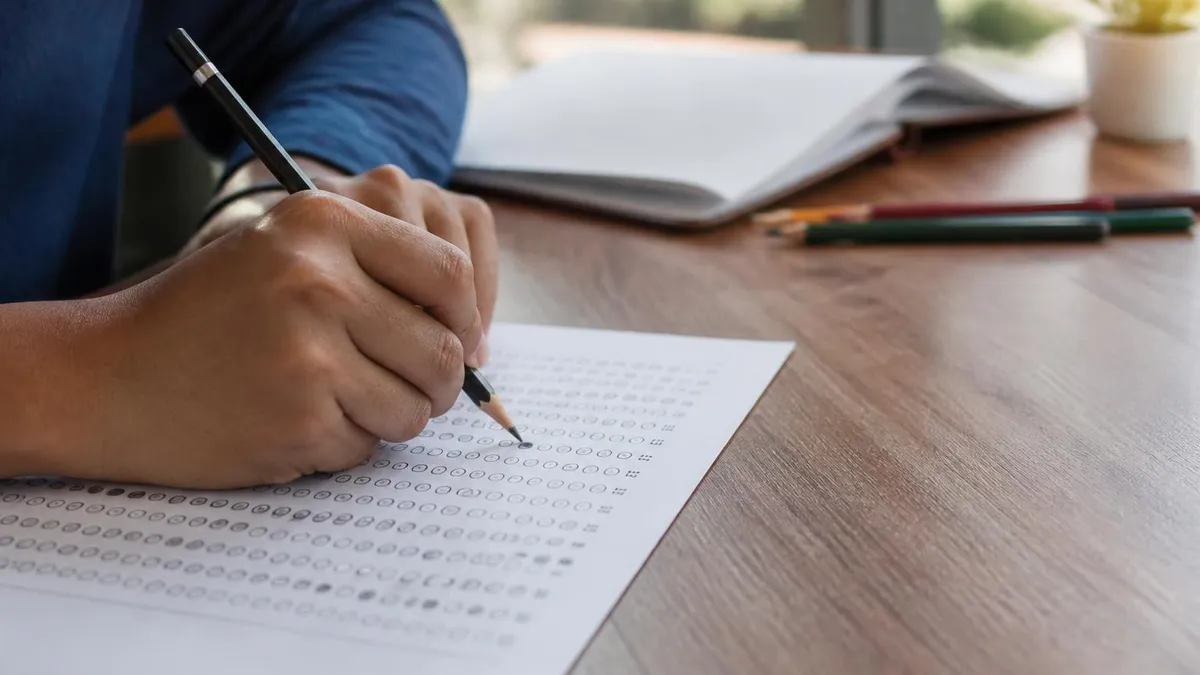
Active Recall Beats Passive Reading Every Time
Research in cognitive science consistently shows that actively testing yourself — closing the book and trying to recall what you just read — produces up to 50% better long-term retention than simply re-reading the same material. After finishing each chapter in your GKT study book, close it and write down the five most important concepts you remember. This simple habit, repeated consistently over your study period, can be the difference between marginal performance and a confident passing score.
Once you have selected a study book and established your study schedule, the next challenge is sustaining productive momentum throughout your preparation period. Many GKT candidates begin with strong motivation but experience a mid-preparation slump — typically around weeks three and four — when the novelty of a new study resource fades and the breadth of material still to cover feels daunting. Building structured accountability into your study routine from the beginning helps prevent this pattern from derailing your preparation.
One of the most effective ways to maximize your book-based preparation is to treat each chapter as a learning cycle rather than a linear reading assignment. The cycle consists of four stages: preview, study, practice, and review. In the preview stage, scan the chapter headings and summary box to activate prior knowledge. In the study stage, read actively by underlining key terms and marginal notation.
In the practice stage, complete all questions without referring back to the text. In the review stage, analyze every error and re-read only the sections directly relevant to your mistakes. This four-stage cycle compresses learning and accelerates mastery far more efficiently than simply reading from start to finish.
Mathematics is the subtest that most candidates identify as their greatest challenge, and book-based math preparation is most effective when it is problem-driven rather than definition-driven. Rather than reading through a chapter on fractions and then doing a few examples, flip this sequence: attempt the practice problems first, struggle productively with the ones you cannot solve, and then read the instructional content as a targeted explanation for specific gaps you encountered.
This approach — called problem-based learning — creates a mental hook for new information because your brain is primed to receive an explanation for something it just attempted and failed to solve independently.
For the Reading subtest, book-based preparation should include deliberate work on reading speed as well as comprehension. Many candidates read slowly enough that they run out of time before completing all the passages, which prevents them from even attempting some questions. Your study book's practice sections can double as speed-training tools: time yourself reading each passage, record your reading speed in words per minute, and track whether your comprehension holds steady as you gradually increase your pace. Most skilled readers can improve their efficiency by twenty to thirty percent through deliberate practice without sacrificing accuracy.
Essay preparation benefits enormously from the model responses included in good GKT study books. Rather than just reading model essays once, use them as templates for deconstructing organizational structure. Number the sentences in a high-scoring model essay and categorize each one by function: thesis, context, evidence, analysis, transition, or conclusion.
This structural mapping exercise reveals the internal architecture of effective GKT essays in a way that abstract rubric descriptions never can. Once you can identify the structural role of each sentence in a model essay, you can begin to replicate that structure in your own timed writing with greater confidence and consistency.
Spaced repetition is another evidence-backed technique that works exceptionally well in combination with a study book. Rather than concentrating all your mathematics review in weeks two and three and then moving on, return to earlier chapters periodically throughout your study period to reinforce what you learned.
Many study books include a cumulative review section or mixed-practice tests that draw from all content areas simultaneously — use these sections intentionally as spaced repetition tools rather than treating them as optional extras. The interleaved practice forces your brain to retrieve information from multiple content areas in rapid succession, which is precisely the cognitive demand the actual GKT places on you.
Finally, remember that your study book is a means to an end, not an end in itself. The goal is not to finish the book — it is to pass the GKT. Be willing to skip sections you have already mastered through previous coursework and invest that saved time in additional practice for areas where you are still shaky.
Experienced test-prep specialists consistently observe that the candidates who improve most dramatically are those who follow the data from their practice scores rather than following a rigid chapter-by-chapter reading plan. Let your diagnostic results guide your priorities, and let your book be the resource you deploy strategically in service of those priorities.
FTCE GKT scores are valid for ten years from the date of the exam. However, Florida teacher preparation programs and the Florida Department of Education impose their own deadlines for submitting passing scores in relation to program completion and certificate application timelines. Always verify your specific program's requirements before scheduling your exam, and register for your test date at least four to six weeks in advance to secure your preferred testing location and time slot through Pearson VUE.
Beyond the study book itself, building a comprehensive GKT preparation ecosystem gives you the best possible chance of earning a strong passing score. Think of your study book as the foundation of a layered system: it provides structure and depth, but supplementary resources — online practice tests, peer study groups, and tutoring — add variety, interactivity, and accountability that a printed book alone cannot deliver. The most successful GKT candidates typically use three to four complementary resources across their preparation period, with the study book serving as the primary reference point that ties everything together.
Online practice tests are particularly valuable as a complement to book-based study because they simulate the digital interface of the actual Pearson testing environment. The GKT is administered on a computer, and some candidates are surprised to find that reading passages on a screen feels different from reading them on a printed page. Supplementing your book's paper-based practice tests with computer-delivered practice reduces this source of test-day anxiety and ensures that your pacing strategies translate accurately from practice to performance. Free and paid digital practice resources are available from the FTCE publisher and from several third-party test-prep providers.
Peer study groups offer a different kind of value: they provide external accountability, expose you to different problem-solving approaches, and give you the opportunity to teach concepts to others — one of the most powerful consolidation strategies in learning science. If you are enrolled in a Florida teacher preparation program, connect with classmates who are also preparing for the GKT and organize weekly review sessions around your study book's chapters. Teaching a grammar rule or explaining a math concept to a peer forces you to organize your understanding at a deeper level than reading or practice alone can achieve.
Tutoring is worth considering if you have a consistently low score in one particular subtest despite sustained independent study. A tutor who specializes in GKT preparation can diagnose patterns in your errors that may not be obvious to you and provide targeted instruction that a general study book cannot customize. Even two to three focused tutoring sessions on your weakest subtest can produce significant score gains, particularly if those sessions occur in the middle of your study period — early enough that you still have time to practice the strategies introduced before your exam date.
Mental and physical preparation in the final week before your exam is as important as any last-minute content review. The GKT is a multi-hour exam that demands sustained cognitive performance, and fatigue is a real performance factor. In the week leading up to your test, maintain a consistent sleep schedule, eat balanced meals, and avoid the temptation to cram new material in the final forty-eight hours. Use this time instead for light review of key formulas, essay structure reminders, and grammar rules you want fresh in mind — not to learn anything new, but to consolidate what you already know.
Test-day logistics can affect your performance in ways that are easy to overlook during preparation. Know your testing center's exact location and plan to arrive at least thirty minutes early. Bring your valid government-issued ID and your Pearson registration confirmation.
Familiarize yourself with the materials policy — some items, including certain types of watches and electronic devices, are not permitted in the testing room. Having a mental routine for the morning of your exam — a familiar breakfast, a brief review of your formula sheet or essay checklist, a short walk — can reduce anxiety and help you arrive at the testing center in a calm, focused state.
The payoff for all of this preparation is not just a passing score — it is the professional credential that opens the door to a career in Florida's public school system. Florida educators play an irreplaceable role in shaping the next generation of students, and the GKT exists to ensure that every certified teacher enters the classroom with a verified foundation of academic knowledge and reasoning skills.
Every hour you invest in your study book, every practice test you complete, and every essay you draft in preparation is an investment in the quality of education you will bring to your future students. That context makes the challenge of GKT preparation not just a hurdle to clear, but a meaningful first step in your professional journey as an educator.
Practical preparation tips can make a significant difference in how efficiently you move through your study book and how effectively you retain what you review. One of the most underused strategies is the error log — a dedicated notebook or digital document where you record every question you answer incorrectly during practice, along with the concept tested, the error you made, and the correct reasoning. Reviewing your error log weekly reveals patterns that are invisible when you look at individual mistakes in isolation, and it creates a personalized study guide that becomes more valuable as your preparation period advances.
Flashcards are particularly effective for the English Language Skills subtest, where you need to internalize a large number of discrete grammar and usage rules. Rather than reviewing grammar rules passively in your study book, convert them into active flashcard prompts. For example, write a sentence with a subject-verb agreement error on the front of the card and the corrected sentence with a brief explanation on the back. Creating the flashcards forces engagement with the material, and the spaced repetition of reviewing them daily compounds your learning exponentially over your preparation period.
For mathematics, maintain a formula reference sheet that you build by hand rather than copying from your study book. Start with a blank sheet of paper and recreate each formula from memory as you encounter it in your study sessions. Check your recreated sheet against the book to catch errors, then repeat this exercise at the start of each study session until you can reproduce the entire sheet accurately from memory. This approach not only ensures that you have internalized the formulas but also builds the kind of fluent mathematical recall that the GKT's timed conditions demand.
Reading stamina is a physical as well as cognitive skill that benefits from deliberate training. If you find that your concentration fades after twenty to thirty minutes of reading practice, start with shorter sessions and progressively extend your reading duration over several weeks. Many study books include two to three reading passages per practice section — complete all of them in a single sitting rather than breaking them up across sessions. This trains your brain to maintain analytical focus across multiple successive passages, which is exactly the demand the GKT's reading subtest places on you in a real exam session.
For the Essay subtest, practice writing under the same physical conditions you will face on test day. The GKT essay is typed on a computer using a basic word processor interface with limited editing tools. If you are accustomed to handwriting essays, the switch to typing under timed conditions can be disorienting. Practice composing your timed essay responses directly in a plain text document or basic word processor without advanced formatting features so that the interface feels familiar when you sit down at the Pearson testing terminal. This small adjustment removes one potential source of friction on exam day.
Mindset matters more than most preparation resources acknowledge. The GKT has a pass rate of approximately fifty-four percent on the first attempt, which means a significant proportion of test-takers need to retake the exam. If you have previously attempted the GKT and not passed, reframe that experience as valuable diagnostic information rather than as evidence of inadequacy.
Your previous attempt tells you exactly which subtests and content areas need the most attention in your current study period. Approach your study book with that specific data in hand, and you are already in a better starting position than you were before your first attempt.
Finally, build celebration milestones into your study plan. Completing a full chapter, finishing a practice test, or reaching the halfway point of your study book are achievements worth acknowledging. Positive reinforcement sustains motivation across a long preparation period, and treating your progress as meaningful — not just as a means to an end — makes the daily discipline of studying feel less burdensome.
When you sit down for your actual GKT exam, the confidence that comes from weeks of consistent, structured preparation is itself a competitive advantage that no single study resource can manufacture. You bring that confidence with you — earned through every hour you invested in becoming ready.
Sample GKT - General Knowledge Test Practice Questions
Try these questions from our free GKT - General Knowledge Test practice tests. The correct answer and an explanation follow each question.
How should industry best practices knowledge be maintained and updated?
- A. Initial training provides lifelong competence
- B. Through continuous professional development, current literature review, and professional networking
- C. Knowledge updates are only needed every five years
- D. Learning stops after certification
Answer: B. Through continuous professional development, current literature review, and professional networking
Professional competence requires ongoing development through education, literature review, and engagement with the professional community.
What grammatical function does the infinitive phrase 'To succeed in college' serve in the sentence 'To succeed in college, students must study regularly'?
- A. Subject of the sentence
- B. Direct object
- C. Adverbial phrase modifying the main clause
- D. Predicate nominative
Answer: C. Adverbial phrase modifying the main clause
The infinitive phrase 'To succeed in college' acts adverbially, indicating the condition or purpose under which students must study regularly.
How should continuing education requirements knowledge be maintained and updated?
- A. Initial training provides lifelong competence
- B. Through continuous professional development, current literature review, and professional networking
- C. Knowledge updates are only needed every five years
- D. Learning stops after certification
Answer: B. Through continuous professional development, current literature review, and professional networking
Professional competence requires ongoing development through education, literature review, and engagement with the professional community.
How should communication and documentation knowledge be maintained and updated?
- A. Initial training provides lifelong competence
- B. Through continuous professional development, current literature review, and professional networking
- C. Knowledge updates are only needed every five years
- D. Learning stops after certification
Answer: B. Through continuous professional development, current literature review, and professional networking
Professional competence requires ongoing development through education, literature review, and engagement with the professional community.
GKT Questions and Answers

FTCE General Knowledge Practice Test: Complete Study Guide and Prep Hub

General Knowledge Test: Complete Guide to Preparation, Format, and Scoring

Florida General Knowledge Test: Complete Study Guide and Certification Prep

FTCE General Knowledge Exam: Complete Study Guide and Certification Prep

GKT Practice Test PDF (Free Printable 2026)
About the Author

Educational Psychologist & Academic Test Preparation Expert
Columbia University Teachers CollegeDr. Lisa Patel holds a Doctorate in Education from Columbia University Teachers College and has spent 17 years researching standardized test design and academic assessment. She has developed preparation programs for SAT, ACT, GRE, LSAT, UCAT, and numerous professional licensing exams, helping students of all backgrounds achieve their target scores.