
Forklift Parts: Components, Maintenance, and Replacement 2026 September
Forklift parts overview: 📝 forks, mast, hydraulics, transmission, batteries, tires, and common replacement parts for industrial trucks.
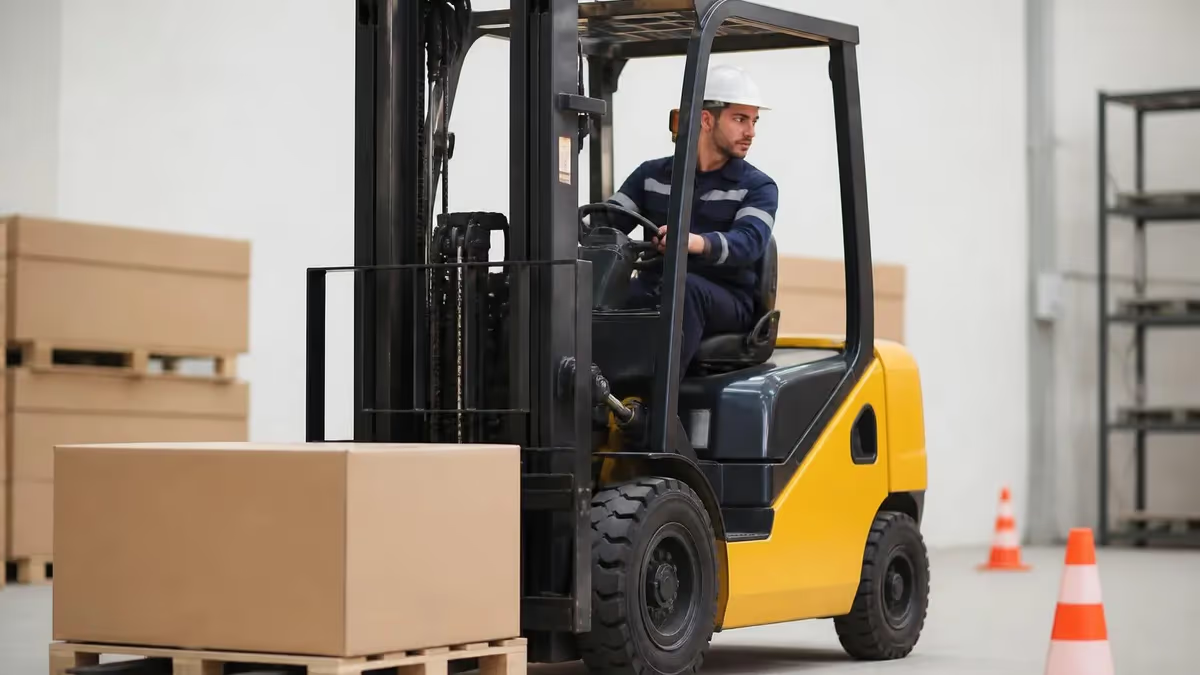
Forklift parts encompass the many components that make up powered industrial trucks used throughout warehouses, manufacturing facilities, distribution centers, construction sites, and other commercial operations. Modern forklifts integrate hundreds of components across mechanical, hydraulic, electrical, and structural systems. Understanding the key parts of forklift systems helps operators identify problems, supports basic preventive maintenance decisions, informs purchase considerations when comparing equipment, and provides foundation for technicians servicing these substantial industrial machines. Whether you operate a forklift daily or manage facilities using lift trucks, awareness of major parts and their functions supports better decision-making.
Forklifts come in multiple categories with substantially different components and design considerations. The OSHA classifications include seven distinct types: Class I (electric motor rider trucks), Class II (electric motor narrow aisle trucks), Class III (electric motor hand-controlled trucks), Class IV (internal combustion engine cushion tire), Class V (internal combustion pneumatic tire), Class VI (electric/IC sit-down ride-on tractors), and Class VII (rough terrain). Each class has parts considerations specific to its design and operational environment. Generic discussion of forklift parts addresses common patterns across classes; specific maintenance always requires consulting documentation for your specific equipment.

Forklift Parts Quick Facts
Major systems: Forks/attachments, mast assembly, hydraulics, transmission/drivetrain, power source (battery or engine), tires, controls, safety systems. Common wear items: Tires, batteries, brake components, hydraulic hoses, lift chains. Maintenance priorities: Daily pre-shift inspection, periodic preventive maintenance, repair as needed. Costs: Replacement parts range from $20 (small components) to $20,000+ (major rebuilds). Sources: OEM dealers, aftermarket suppliers, specialty rebuilders.
The forks themselves are the most visible part of any forklift — the metal arms that lift loads. Forks vary in length (typically 36-72 inches), thickness (affecting capacity), and design (standard, tapered, fully tapered, or specialty shapes). Forks must be inspected regularly for cracks, bending, wear, and damage that could compromise load handling.
Damaged forks must be replaced rather than repaired since structural welding compromises strength. Forks attach to the carriage through hooks engaging the carriage bar; carriage and fork sizes must match (Class II carriage with Class II forks, Class III with Class III, etc.). Specialty fork attachments expand capabilities — fork extensions for longer loads, paper roll clamps, drum handlers, side shifters, and many others.
Major Forklift Components
Lifting forks attached to vertical carriage. Various sizes and types for different load handling.
Vertical structure providing lift movement. Single, two-stage, three-stage, or four-stage masts for different lift heights.
Pump, valves, hoses, cylinders providing lift, tilt, and auxiliary movements. Common service area.
Battery (electric forklifts) or internal combustion engine (gas, diesel, propane). Different maintenance needs.
Transmission, differential, drive axle, wheels. Transfer power to ground for movement.
Cushion (solid rubber for indoor), pneumatic (air-filled for outdoor), or solid pneumatic. Class-specific.
Steering wheel, joysticks/levers, pedals, instrument panel. Operator interface for all functions.
Overhead guard, seat belt, horn, lights, backup alarm. Required equipment for compliance.
The mast assembly provides vertical lifting motion through interconnected channels and chains. Most forklifts have multi-stage masts allowing higher lifts than single-mast designs. Two-stage masts have one telescoping channel; three-stage masts have two; four-stage masts have three. Free lift describes how high the carriage can rise before mast extension begins — important for loading inside trailers or under low ceilings.
Lift chains transfer hydraulic motion through pulleys to lift the carriage; chains must be inspected periodically for wear, stretch, and damage. Mast components generally require minimal maintenance beyond lubrication and chain inspection but failures can be expensive due to the structural complexity.
Hydraulic systems power lift, tilt, and auxiliary movements. The hydraulic pump (usually engine-driven on IC forklifts, electric-motor-driven on electric forklifts) pressurizes hydraulic fluid that flows through valves to cylinders performing specific motions. Common hydraulic problems include leaks at hose connections, cylinder seal failures, valve sticking, and pump wear. Hydraulic fluid quality affects component longevity — contaminated or degraded fluid causes accelerated wear. Periodic hydraulic fluid changes per manufacturer recommendations and prompt repair of any leaks support long-term hydraulic system reliability.
Power systems vary fundamentally by forklift type. Electric forklifts (Classes I, II, III) use lead-acid or lithium-ion batteries providing power for both motion and lift. Battery costs are substantial — replacement batteries cost $5,000-$15,000+ depending on size and type. Lithium-ion costs more upfront but lasts longer than lead-acid.
Internal combustion forklifts (Classes IV, V) use gasoline, diesel, or propane (LPG) engines. LPG is most common for indoor IC use due to cleaner exhaust. Engine maintenance follows automotive patterns including oil changes, filter replacements, spark plugs (gasoline), and various other periodic tasks. Each power source has different maintenance requirements and operating costs.
Common forklift wear items: Tires (replace every 1-3 years depending on use). Brake pads and friction discs (variable lifespan). Lift chains (inspect for stretch and damage). Hydraulic hoses (replace at signs of degradation). Battery cables and connectors (electric forklifts). Air filters, oil filters, fuel filters (IC engines). Headlights and warning lights. Spark plugs (gasoline engines). Belts (alternator, AC, etc.). Seat upholstery and floor mats. Each item has manufacturer recommended replacement intervals or condition-based criteria. Tracking wear items in maintenance records supports predictable budget planning.

Tires deserve specific attention because they're high-wear consumable items affecting both performance and safety. Cushion tires (solid rubber, no air) are standard for indoor use on smooth concrete floors — they don't puncture but provide minimal cushioning. Pneumatic tires (air-filled with treaded outer surface) handle outdoor and rough surfaces — they provide better ride and traction but can puncture. Solid pneumatic tires combine treaded design with solid construction — eliminating punctures while maintaining traction characteristics. Tire selection affects forklift suitability for specific operations. Replacement tires must match original specifications including size, type, and load capacity.
Lift chains warrant specific maintenance attention because chain failures can drop loads catastrophically. Chains stretch over time as plates wear; manufacturers specify maximum acceptable stretch (typically 2-3% of original length) before replacement. Chain inspection involves checking for visible damage, measuring stretch using gauges, lubricating per recommendations, and verifying proper tension. Chain replacement on most forklifts is moderately complex job requiring specific knowledge — some operators replace chains themselves while others use service technicians. Always replace chains in matched pairs for forklifts with multiple chains rather than replacing only the worse chain.
Battery management for electric forklifts is significant operational concern. Lead-acid batteries require regular watering, equalization charges, proper charging routines, and rotation across multiple batteries in heavy-use facilities. Lithium-ion batteries eliminate watering and equalization but require careful temperature management. Battery rooms in larger facilities provide dedicated charging space with proper ventilation. Battery rotation systems support continuous operation through battery swaps when capacity depletes. Battery replacement costs are major capital expenses justifying careful battery management to maximize service life. Newer lithium-ion technology often pays back through longer life and reduced maintenance despite higher initial cost.
Don't operate forklifts with damaged forks — forks under load can fail catastrophically. Don't ignore hydraulic leaks — small leaks become big problems and can cause sudden component failures. Don't skip daily inspections — OSHA requires them and they prevent dangerous failures. Don't repair structural components like forks through welding — structural welding compromises strength even if appears successful. Don't use mismatched parts — parts must match equipment specifications including weight class and configuration.
Preventive maintenance schedules vary by usage intensity. Light-use forklifts (less than 1,000 hours annually) often follow time-based schedules — annual major service, quarterly minor service. Heavy-use forklifts (3,000+ hours annually) typically use hour-based schedules — major service every 2,000 hours or so, minor service every 250-500 hours. Specific intervals come from manufacturer recommendations. Service categories include daily inspection (operator-performed), planned maintenance (technician-performed at scheduled intervals), and corrective maintenance (repair as needed). Quality fleet management balances all three categories to minimize downtime and total cost of ownership.
Cost considerations for forklift maintenance affect operational budgets substantially. Total cost of ownership for forklifts includes initial purchase cost, fuel/electricity, scheduled maintenance, repair costs, parts replacement, and depreciation. Annual maintenance and repair costs typically run 5-15% of forklift purchase price for properly maintained equipment, with substantially higher costs for poorly maintained equipment. Fleet operators tracking these costs across multiple forklifts identify equipment requiring excessive maintenance and make data-informed replacement decisions. Some operators prefer leasing arrangements that include maintenance, eliminating maintenance budget management complexity in exchange for monthly lease fees.
Making repair vs replace decisions for older forklifts requires evaluating multiple factors. Equipment age beyond 8-10 years often shows accumulating issues making repairs less economical. Major repair costs approaching 50%+ of replacement value typically favor replacement. Newer technology (particularly lithium-ion electric replacing lead-acid) sometimes justifies replacement for operational improvements beyond pure cost analysis. Tax considerations affecting depreciation timing sometimes drive replacement decisions. Each fleet operator develops policies and practices balancing these factors based on their specific situations and equipment usage patterns.
Daily Forklift Pre-Shift Inspection
- ✓Tire condition and pressure (inflate if needed)
- ✓Forks for cracks, bending, excessive wear
- ✓Lift chains for damage and proper tension
- ✓Hydraulic leaks under and on the truck
- ✓Engine fluid levels (oil, coolant, fuel) for IC trucks
- ✓Battery condition and connections for electric trucks
- ✓Brake function and steering response
- ✓Horn, lights, backup alarm operation
For technicians servicing forklifts, training and certification develop specialty expertise. Forklift mechanic positions typically require electrical, mechanical, and hydraulic skills across multiple equipment types. Manufacturer training programs at Toyota, Caterpillar, Hyster, Yale, Crown, and other major brands provide structured certification supporting work on specific equipment. Cross-training across multiple manufacturers expands employment options. Industrial truck mechanic positions typically pay $40,000-$70,000 depending on experience and location, with specialized skills supporting higher wages. Career progression includes lead mechanic, service manager, and various supervisory roles.
For facility managers overseeing forklift operations, parts management is one component of broader fleet management. Establishing parts inventory for common consumables prevents downtime when minor parts need replacement. Tracking parts usage identifies equipment with chronic issues. Preferred supplier relationships often produce better pricing and faster delivery than ad-hoc purchases. Documentation of parts replacements supports warranty claims and equipment lifecycle decisions. Many facilities use computerized maintenance management systems (CMMS) tracking equipment, parts, work orders, and costs across the entire fleet.
Looking forward at forklift technology trends, electrification continues advancing through lithium-ion battery improvements and hydrogen fuel cell development. Autonomous forklifts (AGVs and AMRs) introduce new component types including LIDAR sensors, computer vision systems, and complex software. Connectivity through telematics provides ongoing performance data and predictive maintenance support. Each technology advance creates new parts considerations and maintenance approaches. Forklift technicians and fleet managers benefit from continuous learning to stay current with evolving equipment technology rather than relying on knowledge from years past.

For specific brand considerations, major manufacturers have substantial parts ecosystems supporting their equipment. Toyota Industrial Equipment is largest global forklift manufacturer with extensive parts and service network. Hyster-Yale Materials Handling owns Hyster, Yale, and Bolzoni brands with broad equipment lineup and parts support. Crown Equipment focuses on warehouse equipment with strong service reputation. Caterpillar Industrial through their licensing arrangement with Mitsubishi maintains presence in heavy industrial markets. Komatsu, Hyundai, Doosan, Linde, Jungheinrich, and many others compete in various market segments. Each manufacturer has distinct parts pricing, availability, and quality characteristics affecting total ownership economics.
For OEM versus aftermarket parts decisions, several factors apply. OEM parts generally have highest quality, fit, and warranty support but cost most. Quality aftermarket suppliers provide functionally equivalent parts at substantial savings, particularly for common consumables. Used or rebuilt parts make sense for older equipment where investment in OEM parts isn't justified. Counterfeit parts (sometimes labeled as OEM but actually substandard) pose safety risks and should be avoided through verified suppliers. Multi-source approach typically minimizes costs while maintaining quality — OEM for safety-critical components, quality aftermarket for routine consumables, used parts for non-safety-critical major components on older equipment.
Storage and inventory management for forklift parts affects operational efficiency. Common consumables (filters, belts, common bearings, brake pads) benefit from on-site stocking to prevent downtime waiting for delivery. Less common parts can be ordered as needed with reasonable lead times. Major repair components (transmissions, hydraulic pumps) too expensive to stock — order when needed. Specialty tooling for forklift maintenance (jacks rated for forklift weights, hydraulic test equipment, alignment tools) often justifies investment for facilities with multiple forklifts. Smaller operations using single forklifts may rely on dealer service for any work requiring specialty tools.
Forklift Parts Quick Numbers
Common Forklift Repair Categories
Hose replacement, cylinder rebuilds, pump replacement, valve service. Most common service category for older forklifts.
Periodic replacement of cushion or pneumatic tires. Cost varies $200-$1,500+ per set depending on type.
Pad replacement, hydraulic system service, parking brake adjustment. Safety-critical work.
Wiring repair, motor service, controller programming, battery cable replacement. Electric forklift focus.
Oil changes, tune-ups, major rebuilds. IC forklift focus. Standard automotive service patterns plus forklift-specific items.
Chain replacement, mast lubrication, carriage adjustment, attachment service. Less frequent but critical when needed.
For organizations purchasing new forklifts, parts considerations should factor into purchase decisions. Brands with strong local dealer networks support faster service when issues arise. Parts availability over expected equipment lifetime (10-15 years for forklifts) affects long-term ownership viability — buying brands likely to discontinue or be acquired creates parts uncertainty over time. Standardization across fleet on consistent brands simplifies parts inventory and technician training. Some organizations diversify across multiple brands to maintain pricing leverage but add complexity. The total cost of ownership analysis should include parts and service considerations alongside initial purchase price.
For training program operators teaching forklift operation and maintenance, parts identification is foundational content for both operator and mechanic curricula. Operators need to identify components for daily inspections and recognize when issues require service rather than continued operation. Mechanics need detailed parts knowledge across multiple equipment types. Training curricula combine classroom instruction with hands-on practice on actual equipment. Manufacturer-supplied training materials, industry textbooks, and online resources support comprehensive curriculum development. Quality programs produce graduates capable of effective work in actual facility environments rather than simply passing certification exams.
Environmental considerations affect forklift parts and operations. Indoor air quality concerns make electric forklifts increasingly preferred over IC engines releasing exhaust. LP-fueled IC forklifts have cleaner exhaust than gasoline or diesel but still produce CO and other emissions. Battery disposal requires proper recycling rather than landfill — lead from lead-acid batteries is highly recyclable but requires specialized processing. Lithium-ion battery recycling industry continues developing. Used hydraulic fluid, used motor oil, and similar fluid waste require proper disposal through licensed waste handlers. Environmental regulations around forklift operations continue tightening, particularly in states like California with stringent air quality standards.
Specialty forklifts for unique applications have specific parts considerations. Cold storage forklifts include components hardened against cold temperatures including special hydraulic fluids and electrical components. Hazardous classified location forklifts (used in flammable atmospheres) include sealed electrical components meeting specific safety standards. Long-load forklifts with extended forks for handling lumber or pipe have specific stability considerations. High-rack reach trucks for narrow-aisle warehousing have specialized mast and movement systems. Each specialty creates parts considerations beyond standard forklift maintenance — often higher-cost and longer-lead-time parts than standard equipment uses.
Insurance considerations for forklift operations include coverage for equipment damage, third-party damage from accidents, workers compensation for operator injuries, and product liability for damaged products. Quality preventive maintenance reduces accident frequency and severity, supporting better insurance rates. Documentation of maintenance practices supports claims when accidents occur. Some insurance policies include maintenance requirements as conditions of coverage. Equipment failures contributing to accidents can shift liability based on whether maintenance was current and adequate. The combination of risk management, regulatory compliance, and insurance considerations supports investment in quality forklift maintenance even when direct cost analysis might suggest cutting corners.
For mechanics specializing in forklift maintenance, career development through certifications and continued education supports advancement. Manufacturer-specific certifications (Toyota, Hyster-Yale, Crown, others) demonstrate expertise on particular brands. Industry associations like Industrial Truck Association provide training resources. Specialty training in newer technologies like lithium-ion batteries or autonomous vehicles supports career relevance as technology evolves. Quality forklift mechanics earn $50,000-$80,000+ annually depending on experience, location, and specialization. Top specialists working on complex industrial applications can earn substantially more in specialized fields including industrial automation, electric forklift specialty, and high-end equipment service for major industrial clients.
Forklift Parts Strategy Considerations
- +Quality parts support reliable operation and safety
- +Preventive maintenance reduces unexpected downtime
- +Multiple supplier sources support competitive pricing
- +Parts inventory prevents extended downtime for common items
- +Documentation supports warranty claims and equipment decisions
- +Manufacturer training certifies technician expertise
- −Parts costs are substantial component of total ownership
- −Counterfeit parts pose safety and reliability risks
- −Older equipment may face parts availability issues
- −Specialty tools required for some major repairs
- −Multiple equipment brands complicate parts inventory
- −Major repairs sometimes uneconomical vs replacement
Forklift Questions and Answers
About the Author

Certified Crane Operator & Skilled Trades Exam Specialist
Ferris State UniversityRobert Martinez is a Journeyman Ironworker, NCCCO-certified crane operator, and forklift trainer with a Bachelor of Science in Construction Technology from Ferris State University. He has 21 years of ironworking, rigging, and heavy equipment operation experience across high-rise and industrial construction sites. Robert prepares candidates for crane operator, rigger, forklift, and skilled trades certification examinations.