

FiCEP Practice Test
Updated November 2026Facts verified Nov 14, 2026 against America's Credit Unions
The FiCEP exam is administered by CUNA (now America's Credit Unions). Earning your CCUFC certification distinguishes you as a trusted advisor capable of helping members navigate financial challenges and achieve their goals. Start with our free FiCEP practice test below — the same content credit union staff used to call the CUNA practice test before the CUNA/NAFCU merger. Practice with the free FiCEP - Financial Counseling Certification Program practice test on PracticeTestGeeks (450+ questions with answer explanations).
FiCEP: upcoming dates and official changes
- Jan 1, 2026 – Dec 18, 2026: The 2026 FiCEP exam window, including retakes, runs from January 1 to December 18, 2026. (America's Credit Unions)
- Updated Oct 24, 2026: Exam fee (FiCEP eSchool 2026) is now $1,895 ACU member; $3,790 non-member; $0 with subscription (previously $1,895 ACU member; $1,705.50 Councils; $1,516 small CU/league staff; $3,790 non-member; $0 with CPD subscription).
- Updated Oct 24, 2026: Time limit is now 2 hours (previously 2 hours).
- Updated Oct 24, 2026: Retake policy is now No immediate retake after a ProctorU failure; request retake, rebook, pay proctor fee again (previously No immediate retake; request again ≥2 weeks ahead; within the exam window).
Facts verified Nov 14, 2026 against America's Credit Unions. Dates that have passed are removed automatically.
- Each America's Credit Unions proctored exam, including FiCEP, consists of multiple-choice or true/false questions, with no reference materials or calculator allowed. (America's Credit Unions)
- Candidates are allotted two hours to complete the FiCEP proctored exam. (America's Credit Unions)
- The FiCEP eSchool 2026 costs $1,895 for America's Credit Unions members and $3,790 for non-members. (America's Credit Unions)
- The ProctorU proctor fee for the two-hour FiCEP exam is $30. (America's Credit Unions)
- A FiCEP exam retake costs $50, invoiced to the student's credit union, plus the proctor fee. (America's Credit Unions)
- After a failed ProctorU attempt, a FiCEP candidate cannot retake the exam immediately and must request the retake, which America's Credit Unions confirms before a new session is booked. (America's Credit Unions)
- The FiCEP Certification 6th Edition book is good through December 31, 2026. (America's Credit Unions)
- To earn the CCUFC designation through FiCEP, candidates complete the required coursework and pass the proctored exam. (America's Credit Unions)
- FiCEP exam results are posted to the student's transcript within 48 hours. (America's Credit Unions)
Facts verified Nov 14, 2026 against America's Credit Unions. Dates that have passed are removed automatically.
FiCEP Exam at a Glance
| Item | Detail | Official source |
|---|---|---|
| Number of questions | Multiple-choice or true/false; no reference materials or calculator | America's Credit Unions |
| Time limit | 2 hours | America's Credit Unions |
| Exam fee (FiCEP eSchool 2026) | $1,895 ACU member; $3,790 non-member; $0 with subscription | America's Credit Unions |
| Exam fee (ProctorU proctor fee) | $30 for the two-hour exam | America's Credit Unions |
| Retake fee | $50 per retake (invoiced to the credit union) | America's Credit Unions |
| Retake policy | No immediate retake after a ProctorU failure; request retake, rebook, pay proctor fee again | America's Credit Unions |
| Validity | 6th Edition book good through Dec 31, 2026 | America's Credit Unions |
| Eligibility | Complete coursework and pass the proctored exam | America's Credit Unions |
| Score release | Posted to transcript within 48 hours | America's Credit Unions |
| Registration deadline | Exam request form at least 2 weeks before exam date | America's Credit Unions |
| Testing window | Jan 1 – Dec 18, 2026 (includes retakes) | America's Credit Unions |
Facts verified Nov 14, 2026 against America's Credit Unions. Dates that have passed are removed automatically.
Free FiCEP - Financial Counseling Certification Program Study Tools
Interactive FiCEP - Financial Counseling Certification Program resources on PracticeTestGeeks, free to start:
- Free FICEP Finance Questions and Answers 1 — 11 questions with instant scoring and answer explanations
- FiCEP - Financial Counseling Certification Program flashcards — review key terms and concepts card by card
- FiCEP - Financial Counseling Certification Program study guide — topic-by-topic overview of what the exam covers
- FiCEP - Financial Counseling Certification Program cheat sheet — one-page printable summary for last-minute review

According to America's Credit Unions, “Each exam will consist of multiple-choice or true/false questions.”[1]
FiCEP Practice Test Questions
Prepare for the FiCEP - Financial Counseling Certification Program exam with our free practice test modules. Each quiz covers key topics to help you pass on your first try.
FiCEP Bankruptcy and Insolvency
FiCEP Exam Questions covering Bankruptcy and Insolvency. Master FiCEP Test concepts for certification prep.
FiCEP - Financial Counseling Certification...
Free FiCEP Test covering - Financial Counseling Certification Program Budgeting and Cash Flow Questions and Answers. Practice and track your FiCEP exam readiness.
FiCEP - Financial Counseling Certification...
FiCEP Exam Questions covering - Financial Counseling Certification Program Consumer Protection Laws Questions and Answers. Master FiCEP Test concepts for certification prep.
FiCEP - Financial Counseling Certification...
FiCEP Mock Exam on - Financial Counseling Certification Program Credit Reports and Scoring Questions and Answers. FiCEP Study Guide questions to pass on your first try.
FiCEP - Financial Counseling Certification...
FiCEP Test Prep for - Financial Counseling Certification Program Debt Management Strategies Questions and Answers. Practice FiCEP Quiz questions and boost your score.
FiCEP - Financial Counseling Certification...
FiCEP Questions and Answers on - Financial Counseling Certification Program Effective Communication Skills Questions and Answers. Free FiCEP practice for exam readiness.
FiCEP - Financial Counseling Certification...
Free FiCEP Quiz on - Financial Counseling Certification Program Handling Financial Difficulties Questions and Answers. FiCEP Exam prep questions with detailed explanations.
FiCEP - Financial Counseling Certification...
FiCEP Practice Questions for - Financial Counseling Certification Program Investment and Retirement Basics Questions and Answers. Build confidence for your FiCEP certification exam.
FiCEP - Financial Counseling Certification...
FiCEP Test Online for - Financial Counseling Certification Program Taxes and Insurance Questions and Answers. Free practice with instant results and feedback.
FiCEP Housing and Mortgage Counseling
FiCEP Mock Exam on Housing and Mortgage Counseling. FiCEP Study Guide questions to pass on your first try.
FiCEP Student Loan Counseling
FiCEP Practice Questions for Student Loan Counseling. Build confidence for your FiCEP certification exam.
Worked examples: how to reason through FiCEP questions
These are practice questions written for this site, not questions from the real exam. Each explanation shows why the right answer is right and why the others are wrong.
Example 1
Question: Which debt repayment strategy minimizes total interest paid over time?
- Snowball method — paying smallest balances first
- Avalanche method — paying highest interest rate balances first
- Consolidation method — combining all debts into one payment
- Minimum payment method — paying only the required minimums
Answer: B. Avalanche method — paying highest interest rate balances first
Explanation:
The answer is the avalanche method. It sends extra money to the debt with the highest interest rate first, so the costliest balance shrinks fastest and less interest builds up overall. The snowball method pays the smallest balances first. That can keep a client motivated, but it ignores the rate, so it usually costs more in interest. Consolidation combines debts into a single payment. That may simplify things, but the total interest depends on the new rate and term, so it is not the strategy that minimizes interest by design. Paying only minimums keeps balances alive the longest and maximizes interest. Rule to remember: lowest interest cost means highest rate first; best fit for motivation may mean smallest balance first. Know which goal the question asks about.
Example 2
Question: What is the purpose of Form W-4 and when should it be updated?
- It is a tax return filed annually
- It tells the employer how much tax to withhold, and should be updated after major life changes
- It is only needed when starting a new job
- It determines Social Security benefits
Answer: B. It tells the employer how much tax to withhold, and should be updated after major life changes
Explanation:
Form W-4 is the form you give your employer so they know how much tax to withhold from your pay. Because your situation changes, it should be updated after major life events such as marriage, divorce, a new child or a significant change in income. It is not a tax return, since the return is a separate filing made after the year ends. It is not needed only at a new job, because withholding can become wrong at any time your circumstances change. It does not determine Social Security benefits, which depend on a different record of earnings. Rule to remember: the W-4 controls withholding during the year, and it should be revisited whenever your finances or household change.
Example 3
Question: A client is facing foreclosure on their home but has a regular source of income. They want to keep their house and catch up on missed payments over time. Which type of personal bankruptcy would be the most appropriate strategy to pursue?
- Chapter 7 Bankruptcy
- Chapter 11 Bankruptcy
- Chapter 12 Bankruptcy
- Chapter 13 Bankruptcy
Answer: D. Chapter 13 Bankruptcy
Explanation:
Chapter 13 is correct. It is built for people with regular income who want to keep their property, because a repayment plan lets them catch up on missed mortgage payments over time and stop the foreclosure from proceeding. Chapter 7 is a liquidation. It can wipe out many debts, but it does not give a structured way to cure mortgage arrears, so the client could still lose the house. Chapter 11 is mainly a reorganization used by businesses and some very large individual cases, so it is not the usual fit here. Chapter 12 is for family farmers and fishermen, which this client is not. Rule to remember: regular income plus a wish to keep the home and cure arrears points to Chapter 13.
How to use these practice tests
Start with the official material. Read the coursework and the 6th Edition book, and note any topic list or exam outline that America's Credit Unions gives you. Then use the practice sets to find weak spots.
Begin with the fundamentals sets and the ethics and behaviors sets, because they set the frame for how a counselor is expected to act. Move to budgeting and cash flow, credit reports and scoring, and debt management strategies. After that, work through bankruptcy and insolvency, consumer protection laws, handling financial difficulties, and the sets on housing, identity theft and specialized populations.
After each set, review every miss. Write down why the right answer is right and why the wrong options fail, as the worked examples above do. Return to the official material for any topic you keep missing, since our questions are written by us and are not real exam questions.
Close to test day, practise under the exam conditions: a timer for the full 2 hours, no notes and no calculator. Book your exam request at least 2 weeks ahead, and check your ProctorU setup before the day.
FiCEP Flashcards
Quick review for the Financial Counseling Certification Program
🧠What is the primary goal of financial counseling?
The primary goal is to help members improve their financial well-being by developing responsible money management habits and decision-making skills.
START FICEP PRACTICE TEST📉What is a debt-to-income (DTI) ratio?
DTI is a personal finance measure that compares an individual's monthly debt payment to their monthly gross income, expressed as a percentage.
REVIEW FICEP EXAM QUESTIONS🛡️What does the Truth in Lending Act (TILA) require?
TILA requires lenders to disclose credit terms and costs in a standardized way, including the Annual Percentage Rate (APR), to protect consumers.
ACCESS FICEP STUDY GUIDE💰What is a credit score?
A credit score is a numerical expression based on a level analysis of a person's credit files, representing the creditworthiness of an individual.
PRACTICE FICEP TEST NOW🏦What is Chapter 7 Bankruptcy?
Chapter 7 is a liquidation bankruptcy where non-exempt assets are sold to pay off creditors, wiping out most unsecured debts.
GET FICEP EXAM PREPFiCEP Exam Study Guide
Our FiCEP study guide breaks down the essential components of the Certified Credit Union Financial Counselor exam. Navigate through the tabs below to understand the basics, format, and key details for your FiCEP certification journey.
Most credit unions cover the full FiCEP certification cost for their staff as it directly benefits member service quality. Check with your HR department about tuition reimbursement, and use our FiCEP practice test free modules on this page to prepare before you commit to the paid proctored exam.
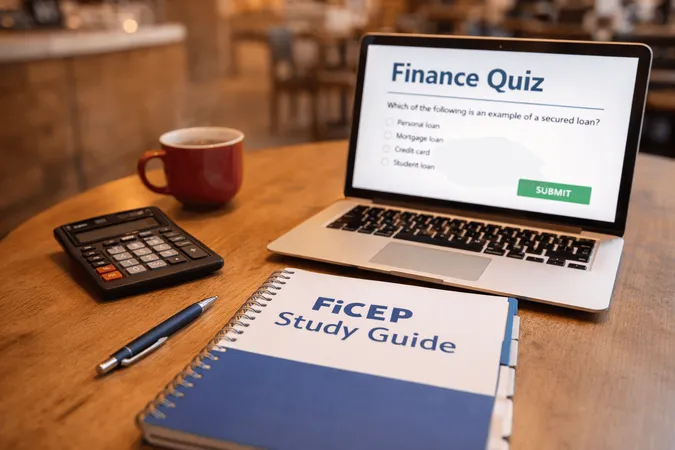
Free FiCEP Practice Test: From CUNA to America's Credit Unions
Most people searching for a free FiCEP practice test remember the program by its original name: the CUNA practice test. FiCEP (Financial Counseling Certification Program) was created and run for decades by CUNA, the Credit Union National Association. When CUNA merged with NAFCU in 2024 to form America's Credit Unions, the program kept its curriculum, its 6th Edition study book, and its CCUFC designation — only the parent organization's name changed. If you find older materials or forum posts calling it a "CUNA practice test" or "CUNA CCUFC exam," they refer to the exact same certification you see on this page today.
Our FiCEP practice test free question sets below mirror the real exam's structure: multiple-choice and true/false items pulled from the same 60 chapters covered in the official 6th Edition book, spanning budgeting, credit laws, debt management, insurance, taxes, and counseling ethics. Work through each topic tile, use the flashcards for quick review, and check the score calculator to see where you stand against the 70% passing threshold before you schedule your proctored FiCEP/CCUFC exam through America's Credit Unions or your state credit union league.
FiCEP Test Day Checklist
- ✓Valid Photo ID
- ✓Login Credentials
- ✓Reliable Internet
- ✓Webcam Tested
- ✓Quiet Environment
- ✓Calculator (if permitted)
- ✓Clear Desk Space
- ✓Water Bottle (Clear)
Ready to Get Certified?
Join thousands of successful credit union professionals who have enhanced their careers with the FiCEP certification. Start your practice today.
FiCEP: Pros and Cons
- +FiCEP exam preparation strengthens your knowledge across all domains
- +Passing the exam proves competency to employers and clients
- +Study materials and practice tests are widely available
- +Exam-based credentials are portable across states and employers
- +Clear exam objectives help focus your study plan effectively
- −Exam anxiety can affect performance — practice tests help reduce it
- −Registration fees are non-refundable if you miss your test date
- −Limited retake opportunities may apply with waiting periods
- −Exam content updates periodically — use current study materials
- −Testing center availability may require advance scheduling
Pros and Cons at a Glance
| Pros | Cons |
|---|---|
| FiCEP exam preparation strengthens your knowledge across all domains | Exam anxiety can affect performance — practice tests help reduce it |
| Passing the exam proves competency to employers and clients | Registration fees are non-refundable if you miss your test date |
| Study materials and practice tests are widely available | Limited retake opportunities may apply with waiting periods |
| Exam-based credentials are portable across states and employers | Exam content updates periodically — use current study materials |
| Clear exam objectives help focus your study plan effectively | Testing center availability may require advance scheduling |
Official Resources
- Certified Credit Union Financial Counselor (CCUFC) designation page — the official America's Credit Unions page describing the FiCEP curriculum, the CCUFC credential, and current program requirements.
- How to Certify (FiCEP/CCUFC) — step-by-step instructions for buying the 6th Edition book or eSchool, registering, and submitting your proctored exam request.
- Proctored Exam Procedures — the official rules for scheduling, ProctorU online proctoring, closed-book requirements, and result timing for the FiCEP exam.
Sample FiCEP - Financial Counseling Certification Program Practice Questions
Try these questions from our free FiCEP - Financial Counseling Certification Program practice tests. The correct answer and an explanation follow each question.
Which record-keeping practice best aligns with FiCEP ethical standards?
- A. Retaining client records indefinitely in unsecured paper files
- B. Destroying all records immediately after a counseling engagement ends
- C. Maintaining secure, confidential records for the period required by professional and legal standards
- D. Sharing digital records on cloud platforms without password protection for easy access
Answer: C. Maintaining secure, confidential records for the period required by professional and legal standards
Ethical record-keeping requires secure storage and retention for the professionally and legally mandated period to protect client confidentiality.
Under the FiCEP code of ethics, which action best demonstrates the principle of non-maleficence?
- A. Recommending high-yield investment products to increase a client's returns quickly
- B. Avoiding advice that could harm a client's financial stability even if the client requests it
- C. Charging fees only when clients achieve their financial goals
- D. Sharing client success stories publicly to attract new clients
Answer: B. Avoiding advice that could harm a client's financial stability even if the client requests it
Non-maleficence means avoiding harm, so counselors should refrain from recommending strategies that could damage a client's financial well-being, even if requested.
Under the Real Estate Settlement Procedures Act (RESPA), what practice is explicitly prohibited?
- A. Charging an origination fee
- B. Paying kickbacks or referral fees between settlement service providers
- C. Requiring title insurance on a purchase loan
- D. Offering lender credits in exchange for a higher interest rate
Answer: B. Paying kickbacks or referral fees between settlement service providers
RESPA Section 8 prohibits giving or receiving any fee, kickback, or thing of value in exchange for referrals of settlement services.
What is the 'means test' in Chapter 7 bankruptcy?
- A. A credit score threshold that determines if a debtor qualifies for bankruptcy protection
- B. A formula that compares the debtor's income to the state median to determine Chapter 7 eligibility
- C. An asset evaluation to identify non-exempt property for liquidation
- D. A court hearing where creditors can challenge the debtor's good faith
Answer: B. A formula that compares the debtor's income to the state median to determine Chapter 7 eligibility
The means test calculates whether a debtor's income and expenses meet the criteria for Chapter 7; if income exceeds the state median, further calculations determine if they have disposable income to fund a Chapter 13 plan.
Take the full FiCEP - Financial Counseling Certification Program practice test
FiCEP Questions and Answers
How this page was made: written with AI tools and published by Nathan Beja, founder of Practice Test Geeks, who is responsible for its content. Exam facts are checked against the official sources listed below. Not reviewed by a subject-matter expert. Editorial policy
Sources & references
Exam facts on this page (fees, format, dates, passing scores) are checked against these official sources; the date is our last check. Editorial policy
- americascreditunions.org — Eligibility, test dates, score validity, fees, exam format, registration deadline, retake fee, retake policy, score release, time limit · verified Nov 2026