
FBLA Dress Code: Complete Guide to Professional Attire for Conferences and Competitions
Master the FBLA dress code with our complete 2026 October guide covering business professional attire, 🏆 conference rules, and competition requirements for members.

The FBLA dress code is one of the most important elements of participating in any Future Business Leaders of America event, and understanding it can make or break your competition experience. Whether you are attending a chapter meeting, regional conference, state leadership conference, or the National Leadership Conference, dressing appropriately demonstrates respect for the organization, your competitors, and the professional business world that FBLA prepares you to enter. Failure to comply with the official dress code can result in disqualification from competitive events, regardless of how well you perform.
FBLA established its official dress code policy to mirror the expectations of the modern corporate workplace, helping students transition from classroom learners to confident young professionals. The code applies to all attendees at official FBLA functions, including competitors, voting delegates, candidates for office, and general members participating in workshops or general sessions. Conference monitors actively enforce these standards at registration, in competition rooms, and during awards ceremonies. Members who violate the rules may be asked to change clothing before re-entering official events, which can mean missing crucial competition timeslots.
The current FBLA dress code policy is published in the official Chapter Management Handbook and updated periodically by the national organization. For 2026, the policy emphasizes business professional attire with specific requirements around fit, length, color, and accessories. Many chapter advisers conduct dress code inspections before busing students to conferences, knowing that even one non-compliant member can disrupt the entire chapter's competition schedule. Adherence to the code is also tied to chapter awards like the National Chapter of the Year recognition program.
Beyond the rules themselves, the FBLA dress code teaches members an invaluable career skill: how to present yourself professionally in high-stakes environments. Hiring managers across industries cite first impressions and professional appearance as key factors in early-career hiring decisions. By learning to assemble, maintain, and wear a business wardrobe as a teenager, FBLA members gain a tangible advantage when they enter internships, college interviews, and full-time job searches. This guide breaks down every component of the dress code with practical shopping tips, packing checklists, and answers to the most common questions members ask their advisers each year.
This article covers both the men's and women's guidelines, conference-specific rules, exceptions for cultural or religious attire, what to do if you cannot afford professional clothing, and the consequences of non-compliance. We also include strategies for traveling with dress clothes, packing efficient garment bags, and quickly addressing wardrobe malfunctions during back-to-back competition rounds. Whether you are a brand-new freshman attending your first regional or a senior preparing for nationals, this comprehensive resource will ensure you arrive looking polished and ready to compete at your highest level.
If you are still learning the basics of the organization itself, consider reading our companion article on the broader FBLA experience after finishing this guide. Understanding the dress code is just one piece of competing successfully, and pairing it with solid content preparation, networking strategies, and conference logistics knowledge will set you up for a memorable and resume-building FBLA career. Let's dive into exactly what you need to wear and how to wear it correctly.
Throughout this guide, we will reference the official rules as published by the national FBLA organization, but always confirm with your local adviser about state-specific addendums. Some state chapters add stricter requirements, particularly around skirt length, footwear color, and the use of denim in any form. When in doubt, dress more conservatively rather than less, because no judge has ever penalized a student for looking too professional.
Many readers pair this guide with the middle level fbla competitions to check their readiness before exam day.
FBLA Dress Code by the Numbers

Official FBLA Dress Code Categories
The standard dress code for all competitive events, general sessions, and awards ceremonies. Requires a suit, tailored separates, dress shoes, and conservative accessories. This is the strictest tier and applies to most conference activities you will attend.
Permitted for certain workshops, recreational events, and travel days. Includes dress slacks or knee-length skirts with collared shirts or blouses. No suit jacket required, but jeans, shorts, t-shirts, and athletic wear remain strictly prohibited.
Official FBLA polos, blazers, or chapter shirts may be worn during designated team-building activities, service projects, or transit. These items must be clean, properly fitted, and free of unauthorized modifications or graphics added by members.
FBLA fully respects cultural, religious, and traditional dress that aligns with the spirit of business professionalism. Members should notify their adviser in advance so accommodations can be documented and judges informed if needed during competition.
The men's FBLA dress code centers on a coordinated business professional look that mirrors what young professionals wear to client meetings, board presentations, and corporate interviews. At the core is a matching suit in a conservative color such as navy, charcoal gray, or black. While separates (jacket and pants in different colors) are technically permitted under business casual, the safer choice for competitive events is always a fully matching two-piece suit. The fabric should be wrinkle-resistant if possible, since you may need to wear the same suit across multiple days of conference activities.
Underneath the jacket, members must wear a long-sleeved, button-front dress shirt in white or another conservative solid color such as light blue or pale gray. The shirt must be tucked in at all times during official events, including during walking between rooms in the conference venue. Short-sleeved dress shirts, polos, and t-shirts under the jacket are not acceptable substitutes. A coordinating necktie is mandatory, and it should be tied properly in a four-in-hand or half-Windsor knot that reaches the top of the belt buckle. Bow ties are permitted as alternatives.
Dress slacks should match the suit jacket and be hemmed to break cleanly at the top of the shoe. Pants that drag on the ground, bunch at the ankle, or expose excessive sock are not acceptable. A leather belt in black or brown should match the color of your dress shoes, which must be closed-toe oxfords, loafers, or derby-style lace-ups. Athletic shoes, sandals, boat shoes, casual loafers, and sneakers of any kind, including all-white or black athletic styles, are strictly prohibited even if they look formal at first glance.
Socks deserve more attention than members typically give them. They must be dress socks in a color that coordinates with the suit, generally dark navy, black, or charcoal gray. White athletic socks are an instant red flag for judges and conference monitors. The socks should be long enough that no skin shows when you sit down or cross your legs during interview-style competitions. Many seasoned competitors keep a backup pair in their bag in case they accidentally tear a sock during the long competition day.
Grooming standards complement the clothing requirements and matter just as much. Hair should be clean and styled neatly out of the face, facial hair should be trimmed and even, and fingernails should be clean and short. Cologne, if worn at all, should be applied sparingly because judges spend hours in small rooms with multiple competitors and strong scents can be overwhelming. Visible body piercings beyond conservative ear studs are discouraged, and large or distracting jewelry should be avoided entirely.
Accessories should be minimal and purposeful. A simple watch, a conservative ring or two, and a leather portfolio for carrying notes are all appropriate. Backpacks, drawstring bags, and casual messenger bags are not appropriate substitutes for a professional portfolio during competition. Some members carry a slim padfolio with extra copies of their resume, business cards, a pen, and breath mints. This level of preparation signals to judges that you take the competition seriously and have planned every detail of your appearance and presentation.
If you are competing in a presentation event, consider how your suit will look on camera, on stage, and under the bright lights of competition rooms. Patterns like loud pinstripes or windowpane checks can be distracting on video and during live presentations. Solid colors photograph better and read as more authoritative. For more on what to expect in different competitive formats, members often review event-specific requirements alongside dress guidelines when preparing for major conferences.
FBLA Practice Test Questions
Prepare for the FBLA - Future Business Leaders of America exam with our free practice test modules. Each quiz covers key topics to help you pass on your first try.
FBLA Business Communication
FBLA Exam Questions covering Business Communication. Master FBLA Test concepts for certification prep.
FBLA Business Law and Ethics
Free FBLA Practice Test featuring Business Law and Ethics. Improve your FBLA Exam score with mock test prep.
FBLA Business Management and Leadership
FBLA Mock Exam on Business Management and Leadership. FBLA Study Guide questions to pass on your first try.
FBLA Economics and Personal Finance
FBLA Test Prep for Economics and Personal Finance. Practice FBLA Quiz questions and boost your score.
FBLA Entrepreneurship
FBLA Questions and Answers on Entrepreneurship. Free FBLA practice for exam readiness.
FBLA Marketing and Advertising
FBLA Mock Test covering Marketing and Advertising. Online FBLA Test practice with instant feedback.
FBLA Dress Code for Women: Three Approved Outfit Approaches
The pantsuit is increasingly popular among female FBLA competitors because it offers both polish and practicality during long conference days. A matching jacket and dress pants set in navy, charcoal, or black creates a strong professional silhouette. The jacket should be properly fitted at the shoulders without being tight, and the pants should be hemmed to break at the top of closed-toe dress shoes. Pair with a coordinating blouse or shell underneath in white, cream, or a conservative pastel.
Pantsuits are particularly recommended for events involving extensive walking, role-play scenarios that may require movement, or travel days when comfort matters. They also eliminate concerns about skirt length, sitting modestly during judged interviews, and managing hosiery. Choose closed-toe pumps, flats, or loafers in black or nude with a heel height under three inches. Avoid trendy details like cropped pants, exposed ankles, or oversized lapels that read as more fashion-forward than business professional.

Is the Strict FBLA Dress Code Worth It?
- +Builds lifelong professional habits and confidence in formal business settings
- +Eliminates outfit-based social comparison so members focus on content and skills
- +Mirrors expectations of real corporate America, internships, and college interviews
- +Creates impressive group photos and chapter recognition opportunities
- +Teaches budgeting, garment care, and personal grooming as career skills
- +Demonstrates respect for judges, sponsors, and the organization's brand identity
- −Initial cost of a full suit and accessories can exceed $150 for new members
- −Dress clothes require dry cleaning, ironing, and careful packing for travel
- −Restrictive clothing can feel uncomfortable during long conference days
- −Limited room for personal style or cultural expression beyond approved categories
- −Strict enforcement can intimidate first-time competitors and cause anxiety
- −Wardrobe malfunctions like broken zippers or stained shirts can derail events
Pros and Cons at a Glance
| Pros | Cons |
|---|---|
| Builds lifelong professional habits and confidence in formal business settings | Dress clothes require dry cleaning, ironing, and careful packing for travel |
| Eliminates outfit-based social comparison so members focus on content and skills | Restrictive clothing can feel uncomfortable during long conference days |
| Mirrors expectations of real corporate America, internships, and college interviews | Limited room for personal style or cultural expression beyond approved categories |
| Creates impressive group photos and chapter recognition opportunities | Strict enforcement can intimidate first-time competitors and cause anxiety |
| Teaches budgeting, garment care, and personal grooming as career skills | Wardrobe malfunctions like broken zippers or stained shirts can derail events |
FBLA Dress Code Packing Checklist for Every Conference
- ✓Pack at least two complete business professional outfits for multi-day conferences
- ✓Bring a backup white dress shirt or blouse in case of spills or stains
- ✓Include two pairs of dress socks or hosiery, with one extra as a spare
- ✓Pack a small travel iron, steamer, or wrinkle-release spray for touch-ups
- ✓Carry a portable sewing kit with safety pins, thread, and clear buttons
- ✓Bring stain remover wipes or a Tide-to-Go pen for emergency cleanup
- ✓Pack polished dress shoes in a separate shoe bag to protect other items
- ✓Include a professional leather portfolio with extra resume copies inside
- ✓Bring breath mints, deodorant, and a travel-sized lint roller for grooming
- ✓Pack a comfortable change of clothes for evening recreational activities
Always Pack a Backup Outfit in Your Carry-On
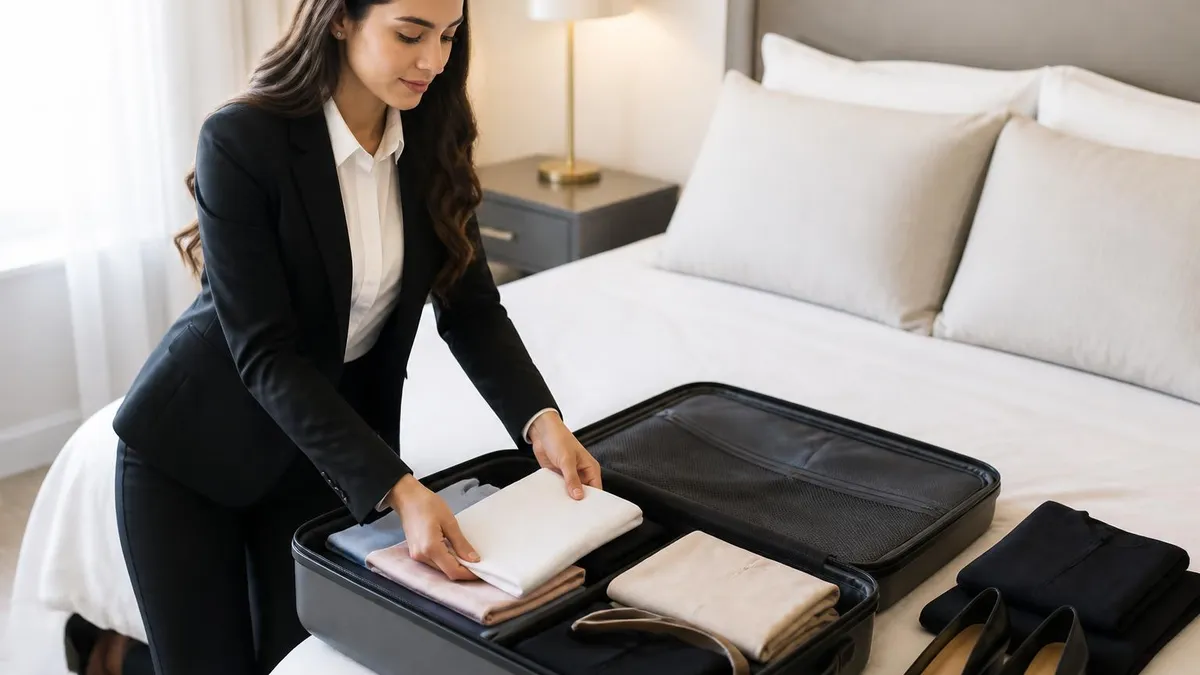
Checked luggage gets lost at the worst possible moments, especially during the chaos of NLC week. Seasoned FBLA advisers recommend that every member traveling by plane keep one complete business professional outfit in their carry-on bag. This single habit has saved countless competition spots when airlines misroute baggage or chapters arrive late to the host city after the hotel garment storage has closed.
Understanding common dress code violations helps you avoid the embarrassment and consequences of being pulled aside by a conference monitor minutes before your competition. The single most frequent violation across all FBLA conferences is improper footwear. Members regularly arrive in athletic shoes, casual loafers, or open-toe sandals thinking they look formal enough, only to be turned away at the competition room door. Always test your shoes in advance by walking, standing, and sitting in them for several hours to ensure both compliance and comfort.
The second most common violation involves skirt and dress length. The two-inch rule above the knee is enforced strictly by conference monitors who often carry small measuring tools at registration. Many members underestimate how much a skirt rises when sitting down during interview-format competitions, so always test your skirt by sitting in a chair and checking the length from a judge's eye level. If there is any doubt about whether a skirt is too short, choose a longer option or switch to a pantsuit for the day.
Improperly worn ties and unbuttoned collars are major violations among male competitors. A tie must be fully tightened against the collar with no visible gap, and the shirt must be buttoned all the way to the top button under the tie. Members sometimes loosen ties between events for comfort and forget to retighten them before entering the next competition room. Make a habit of doing a full appearance check in a mirror before each event, paying particular attention to collars, ties, and tucked shirts.
Jeans of any color, including black denim and dark wash skinny styles, are never acceptable under the FBLA dress code regardless of how dressy they appear. This rule trips up members who interpret modern business casual standards at their part-time jobs as compatible with FBLA standards. The same applies to jeggings, leggings under tunics, and any pants made primarily of stretch fabric. When in doubt, choose traditional dress slacks made from wool blends, polyester, or tropical weight fabrics designed for office wear.
Visible tattoos and unconventional hair colors are not technically banned by national FBLA rules, but they can affect how judges perceive your professionalism in close-decision rounds. If you have visible tattoos, consider covering them with long sleeves, makeup, or sleeves during competition. For hair color, the safest choice for major competitions is to maintain a natural color or subtle variation. While your individuality matters, competition rounds are short windows where judges form quick impressions, and conservative choices generally support stronger scores.
Consequences for violations escalate based on severity and timing. A first-time minor violation, such as forgetting to tuck in a shirt, typically results in a quick verbal correction from a monitor and the opportunity to fix the issue before entering the competition. More serious violations, such as wearing jeans or athletic shoes to a competitive event, can result in disqualification from that specific event with no opportunity for a retest. Repeated or willful violations may also affect chapter awards and individual eligibility for future leadership roles within the organization.
Chapter advisers play a crucial enforcement role and often conduct mandatory pre-departure dress checks before busing students to conferences. Some chapters require members to wear their conference attire to a meeting in the weeks leading up to the event so advisers can identify issues with time to correct them. If your chapter does not run these checks, take initiative and ask your adviser to review your outfit personally. This small step prevents the heartbreak of months of preparation being undone by a wardrobe choice you could have caught in advance.
At the National Leadership Conference, dress code enforcement is significantly stricter than at chapter or regional levels. Conference monitors at NLC competition room doors will turn away any member who fails the dress check, and you will not be allowed to compete in that event. Given the cost and effort of qualifying for nationals, take no chances with borderline outfit choices and always confirm compliance with your adviser before competition day.
Building a professional FBLA wardrobe on a tight budget is entirely possible with strategic shopping and patience. The biggest mistake new members make is buying everything new from full-price department stores, which can easily cost $300 to $500 for a complete starter outfit. Instead, look first to thrift stores, secondhand luxury sites like Poshmark and ThredUp, and outlet stores where you can assemble a complete business professional look for under $100 if you shop carefully and are open to gently used pieces.
Goodwill, Salvation Army, and locally owned thrift stores in affluent suburbs are gold mines for quality men's and women's suits. Look for natural fiber suits in wool, wool blends, or cotton that will hold up to multiple wears and dry cleanings. Avoid heavily worn pieces with shiny elbows, pilling, or stains that will not lift. A $15 thrift store suit jacket that fits well and has been professionally tailored looks dramatically more expensive than a poorly fitting new suit. Many chapters also organize formal wear donation drives specifically for members who cannot afford new business attire.
Tailoring is the secret weapon that transforms inexpensive clothing into polished professional outfits. A basic tailor visit costs $15 to $40 and can hem pants, take in shoulders, slim jacket sides, and adjust skirts to the correct length. Even brand-new suits from major retailers benefit dramatically from tailoring, since off-the-rack sizing rarely fits any individual body perfectly. Build a relationship with a local tailor and bring all your formal wear at once to save on multiple appointment fees.
Look for end-of-season sales at department stores like Macy's, JCPenney, Kohl's, and Nordstrom Rack where suits are routinely discounted 40 to 70 percent off. The post-holiday January sales and back-to-school August sales typically offer the deepest discounts on professional clothing. Sign up for store email lists and use cashback apps like Rakuten to stack discounts. Many stores offer additional student discounts that can save another 10 to 15 percent on your total purchase if you ask at checkout.
Online options like Amazon, eBay, and discount sites like Marshalls and TJ Maxx carry brand-name professional clothing at significant discounts. For men, Jos. A. Bank and Men's Wearhouse frequently run buy-one-get-one-free suit promotions that effectively cut prices in half. For women, Loft, Banana Republic Factory, and Express Outlet offer rotating sales on blazers, skirts, and dress pants. Always read return policies carefully before ordering online, since fit issues are common and you may need to exchange sizes once before finding the right fit.
Consider sharing or borrowing within your chapter, especially for one-time-use items like specific colored ties or accessories needed for themed events. Some chapters maintain a small wardrobe closet of donated suits, blazers, and accessories that members can borrow for conferences. Ask your adviser if this resource exists or whether you can help start one as a service project.
This kind of peer support can be the difference between a deserving student competing at nationals and missing out entirely due to financial constraints. If you are looking for more comprehensive prep beyond wardrobe planning, our team also publishes detailed competition strategy guides.
Finally, treat your professional wardrobe as an investment that extends far beyond FBLA. The same suit you wear to nationals will serve you in college admissions interviews, scholarship competitions, summer internship interviews, and your first post-graduation job hunt. Spending $150 on quality basics that last four to six years works out to less than $30 per year of practical use. Care for your clothes properly with regular dry cleaning, proper hanging, and seasonal storage, and they will reward you with years of professional service well into your career.
Final preparation in the days leading up to your conference makes all the difference between feeling rushed and feeling confident on competition day. Start by laying out your complete outfit a full week in advance, including underwear, socks or hosiery, shoes, accessories, and grooming items. This early preparation gives you time to identify missing pieces, repair small issues, and get any necessary alterations done. Many wardrobe panics happen the night before departure when a missing button or unhemmed pant leg becomes a true emergency with no time to fix it properly.
Try on your complete outfit a few days before the conference and do a full mobility test. Sit down, cross your legs, raise your arms above your head, bend over to pick up a dropped pen, and walk briskly down a hallway. Anything that pinches, gaps, splits at the seams, or restricts your movement needs to be addressed before competition day. The last thing you want is to discover during your roleplay event that your blazer is too tight to gesture comfortably or your skirt rises uncomfortably when you cross your legs in front of judges.
The night before your competition, hang all your outfits properly in the closet or on the back of the bathroom door to allow wrinkles to relax overnight. If the hotel offers an in-room iron, give your suit and shirt a quick press before bed rather than rushing in the morning. Polish your shoes the night before using a soft cloth and a small amount of polish or shoe wipes. Lay out all your accessories, including your portfolio, badge, watch, and any required ID, in one spot so the morning routine flows smoothly without searching for misplaced items.
Eat a substantial but plain breakfast the morning of competition and avoid foods that can cause stains, bad breath, or stomach discomfort. Coffee, berries, tomato sauce, and brightly colored sauces are notorious for ruining white shirts and blouses minutes before judging begins. Stick to neutral options like plain bagels, oatmeal, scrambled eggs, and water. Brush your teeth thoroughly, use mouthwash, and tuck a small pack of breath mints into your portfolio for use right before entering each judging room.
Build small grooming touch-ups into your day between events. Spend a few minutes in the restroom checking your appearance in the mirror, retucking your shirt, straightening your tie, adjusting your jewelry, and combing or smoothing your hair. Carry a small zipper pouch with the essentials: a comb, lint roller sheets, breath mints, bandages, ibuprofen, and any prescription medication you need. These small reset moments help you walk into each competition room looking fresh and feeling mentally centered, even after hours of back-to-back events.
Manage your emotions and confidence by remembering that the FBLA dress code exists to level the playing field, not to intimidate you. Every competitor in your room faced the same wardrobe requirements and standards. Judges are evaluating your knowledge, skills, and presentation content far more than the precise cut of your jacket. As long as you meet the basic requirements and look neat and put together, your appearance will fade into the background and let your actual competition performance take center stage where it belongs.
After your competition concludes, change carefully out of your formal wear and hang each piece up to air out before packing it back into your garment bag for the trip home. Spot-treat any new stains immediately so they do not set during travel. Once home, schedule a dry cleaning visit for suits and blazers, hand-wash blouses according to their care labels, and inspect everything for damage that needs repair before the next event. Treating your wardrobe with care extends its life and ensures you are ready when the next conference invitation arrives in your inbox.
Sample FBLA - Future Business Leaders of America Practice Questions
Try these questions from our free FBLA - Future Business Leaders of America practice tests. The correct answer and an explanation follow each question.
Which competition is a brand-new offering for 2017–2018?
- A. Red tie / scarf
- B. Alumni division
- C. Look at competitive events list
- D. Blue and gold
Answer: C. Look at competitive events list
The correct answer is "Look at competitive events list." This event was introduced as a new competitive event for the 2017-2018 period. It seems to be related to a competition or event where participants are required to examine or review a list of competitive events.
The 2018 Georgia FBLA State Leadership Conference is scheduled for when?
- A. Building bridges
- B. March 23-24, 2018
- C. February 13th, 2018
- D. Hyatt regency Atlanta
Answer: B. March 23-24, 2018
The 2018 Georgia FBLA State Leadership Conference was held on March 23-24, 2018. It's an important event for FBLA members in Georgia, providing opportunities for leadership development and competition.
Which programming concept refers to the reuse of code by creating a template that other objects can inherit properties from?
- A. Object-Oriented Programming (OOP)
- B. Procedural programming
- C. Machine language coding
- D. Assembly language
Answer: A. Object-Oriented Programming (OOP)
Object-Oriented Programming (OOP) uses concepts like classes and inheritance to allow code reuse and modular design.
What does the term 'opportunity cost' mean in economics?
- A. The price of a product plus taxes
- B. The value of the next best alternative foregone
- C. The total cost of producing one unit
- D. The fee charged by a financial advisor
Answer: B. The value of the next best alternative foregone
Opportunity cost is the value of the next best option you give up when making a choice.
Take the full FBLA - Future Business Leaders of America practice test
FBLA Questions and Answers

What Is FBLA? Future Business Leaders of America Guide

FBLA Competitive Events: Categories, Levels and Prep Guide
Unveiling the Path to Success: A Guide to Mastering the Future Business Leaders of America Test 2026

FBLA Nationals 2026: Complete Guide to Schedule, Events & Awards

FBLA Practice Test PDF (Free Printable 2026)
About the Author

Educational Psychologist & Academic Test Preparation Expert
Columbia University Teachers CollegeDr. Lisa Patel holds a Doctorate in Education from Columbia University Teachers College and has spent 17 years researching standardized test design and academic assessment. She has developed preparation programs for SAT, ACT, GRE, LSAT, UCAT, and numerous professional licensing exams, helping students of all backgrounds achieve their target scores.
Join the Discussion
Connect with other students preparing for this exam. Share tips, ask questions, and get advice from people who have been there.
View discussion (8 replies)