
Compare Excel Workbooks for Differences: The Complete 2026 October Guide to Spotting Changes Between Spreadsheets
Learn how to compare excel workbooks for differences using Spreadsheet Compare, 🏆 formulas, conditional formatting, Power Query, and VBA in this

Learning how to compare excel workbooks for differences is one of the most practical skills a spreadsheet user can master in 2026, and the demand for it has never been higher. Whether you are an accountant reconciling month-end ledgers, an analyst auditing a forecast that two colleagues edited, or a project manager hunting for a single rogue formula change, knowing how to spot variations between two files saves hours of manual checking and prevents costly reporting mistakes. This guide walks you through every tool Excel offers, from built-in utilities to formulas and Power Query.
Most professionals first encounter the problem when a coworker emails back a workbook with the dreaded subject line: "I made a few small edits." The temptation is to scroll through tab by tab, eyeballing numbers and praying nothing slipped through. That approach fails because human eyes simply cannot reliably detect a flipped decimal in cell H247 of a forty-tab model. You need a systematic comparison method, and Excel actually ships with several that very few users ever discover.
The first and most powerful tool is Microsoft Spreadsheet Compare, a free utility bundled with Office Professional Plus and Microsoft 365 Apps for enterprise. It produces a color-coded report showing every cell that changed, every formula that was rewritten, every formatting tweak, and every named range that moved. For users without Spreadsheet Compare, formulas like IF, EXACT, and VLOOKUP, along with conditional formatting rules, can replicate much of the same behavior inside a regular worksheet.
Power Query, available in Excel 2016 and later, is the modern workhorse for comparing large workbooks because it can join two tables on a key column and immediately return only the rows that changed. VBA macros remain the go-to for repetitive monthly comparisons because a fifty-line script can loop through every sheet and write a difference log automatically. Finally, third-party add-ins such as xlCompare, Synkronizer, and DiffEngineX fill in the gaps when you need version-control style features.
Choosing the right method depends on three variables: the size of the workbook, how often you need to perform the comparison, and whether you care about formula differences as well as value differences. A one-off check of a small budget file is fine with a quick IF formula on a third sheet. A monthly reconciliation of a 200,000-row data export demands Power Query or a macro. An audit-grade review of a financial model requires Spreadsheet Compare because it tracks structural changes that formulas cannot see.
Before you dive in, take a moment to set up both files for fair comparison. Save copies with clear version labels, unprotect any locked sheets so the tools can read every cell, recalculate both workbooks with F9 to make sure volatile functions show current values, and confirm that named ranges and external links resolve correctly. These five minutes of prep work eliminate ninety percent of the false positives that frustrate first-time users.
By the end of this guide you will know exactly which tool to reach for, how to interpret its output, and how to build a repeatable comparison workflow that your team can rely on. We will also cover the most common pitfalls, including hidden rows, merged cells, trailing spaces, and floating-point rounding errors that fool even experienced analysts.
Workbook Comparison by the Numbers
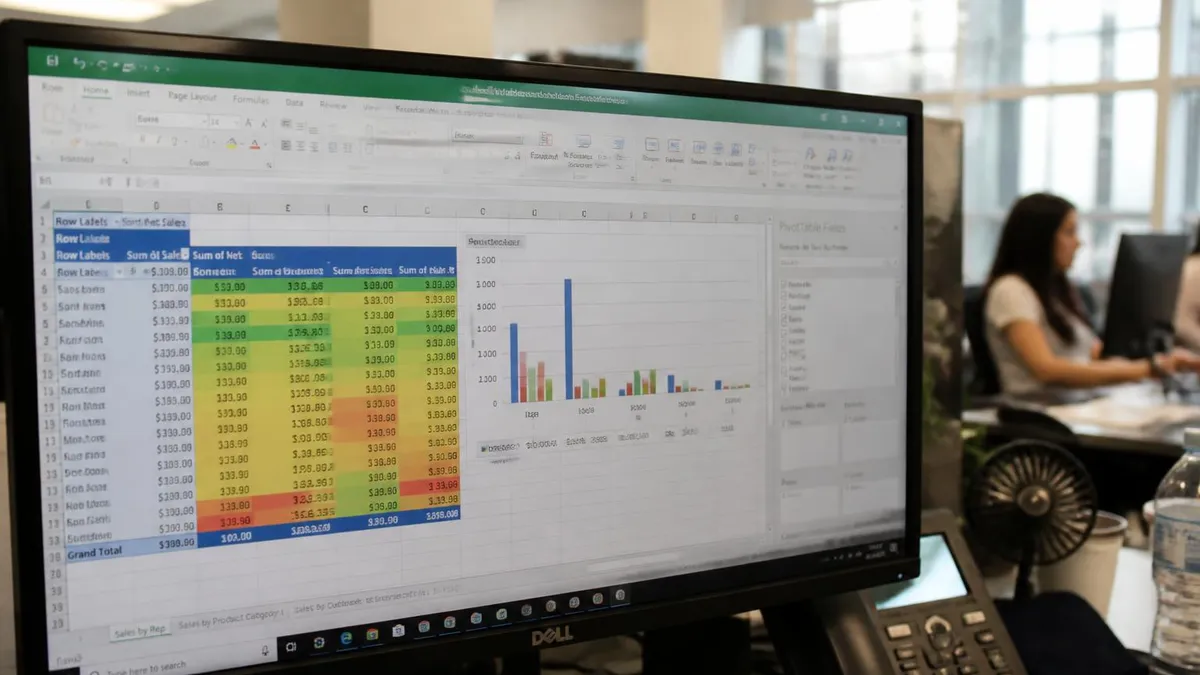
Five Ways to Compare Two Workbooks
Microsoft Spreadsheet Compare
View Side by Side
Formula-Based Comparison
Power Query Merge
VBA Macro
Microsoft Spreadsheet Compare is the most underused gem in the entire Office suite, partly because Microsoft hides it inside a separate Start menu folder rather than exposing it on the Excel ribbon. To launch it, type "Spreadsheet Compare" into the Windows search bar; if it does not appear, you likely have Microsoft 365 Family or Home edition, which excludes the tool, and you will need to fall back on formulas, Power Query, or a third-party add-in. Once open, the interface looks almost identical to the much-loved vlookup excel workflow: pick a source file, pick a comparison file, click Compare.
The output report splits the screen into four panes. The top two panes show the two workbooks side by side with every changed cell shaded in a distinct color: green for entered values, blue for calculated values, purple for formula changes, and grey for formatting. The bottom-left pane lists every change in a sortable table, and the bottom-right pane summarizes the totals by category. You can filter to show only formula differences, only value differences, or only structural changes such as added rows and renamed sheets.
A typical real-world example: an FP&A team receives an updated budget file from sales operations and needs to know exactly what changed between version 7 and version 8. Spreadsheet Compare highlights forty-two changed values, six rewritten formulas, and one renamed tab in under three seconds. The team exports the difference log to Excel, attaches it to a comment in their version-control system, and routes the file for approval. The same review done manually would have taken half a day and likely missed the renamed tab entirely.
The tool also detects changes that other methods cannot see, including modifications to VBA project code, alterations to named ranges, edits to data validation rules, and even changes to the workbook's calculation mode setting. For auditors and compliance teams this depth is essential because malicious or accidental tampering often hides in those non-visible areas. Spreadsheet Compare reads them all by parsing the underlying XML of the .xlsx file structure rather than relying on the visible cell grid.
Performance is impressive: on a modern laptop the tool can process two 50 MB workbooks in roughly thirty seconds, comparing more than a million cells per second according to Microsoft's documentation. Memory usage stays reasonable because the tool streams the XML rather than loading both workbooks into RAM at full fidelity. The main bottleneck is disk I/O on the source files, which means keeping both files on a local SSD rather than a network share dramatically speeds up the run.
One important limitation: Spreadsheet Compare is read-only. It cannot merge changes from one workbook into another, unlike Microsoft Word's Compare and Combine feature. If your workflow requires a true merge with conflict resolution, you will need either co-authoring via OneDrive or SharePoint, or a dedicated third-party tool such as Synkronizer Excel Compare. For pure detection, however, Spreadsheet Compare remains unmatched and completely free for anyone with the right Office license.
Finally, the tool supports command-line invocation via the cscript.exe interface, which means you can schedule comparisons through Windows Task Scheduler and pipe the output into a SQL Server database for long-term audit trails. Larger finance teams often build this kind of automation around quarter-end close, generating a permanent record of every workbook change that touched the consolidation. That level of governance is virtually impossible to achieve with manual review or with formulas scattered across helper sheets.

Microsoft Excel Practice Test Questions
Prepare for the Microsoft Excel exam with our free practice test modules. Each quiz covers key topics to help you pass on your first try.
Microsoft Excel Excel Basic and Advance
Microsoft Excel Exam Questions covering Excel Basic and Advance. Master Microsoft Excel Test concepts for certification prep.
Microsoft Excel Excel Formulas
Free Microsoft Excel Practice Test featuring Excel Formulas. Improve your Microsoft Excel Exam score with mock test prep.
Microsoft Excel Excel Functions
Microsoft Excel Mock Exam on Excel Functions. Microsoft Excel Study Guide questions to pass on your first try.
Microsoft Excel Excel MCQ
Microsoft Excel Test Prep for Excel MCQ. Practice Microsoft Excel Quiz questions and boost your score.
Microsoft Excel Excel
Microsoft Excel Questions and Answers on Excel. Free Microsoft Excel practice for exam readiness.
Microsoft Excel Excel Trivia
Microsoft Excel Mock Test covering Excel Trivia. Online Microsoft Excel Test practice with instant feedback.
Microsoft Excel Advanced Data Analysis Tools
Free Microsoft Excel Quiz on Advanced Data Analysis Tools. Microsoft Excel Exam prep questions with detailed explanations.
Microsoft Excel Advanced Formula and Macro...
Microsoft Excel Practice Questions for Advanced Formula and Macro Creation. Build confidence for your Microsoft Excel certification exam.
Microsoft Excel Advanced Formulas and Macros
Microsoft Excel Test Online for Advanced Formulas and Macros. Free practice with instant results and feedback.
Microsoft Excel Basic and Advance Question...
Microsoft Excel Study Material on Basic and Advance Questions and Answers. Prepare effectively with real exam-style questions.
Microsoft Excel Creating and Managing Charts
Free Microsoft Excel Test covering Creating and Managing Charts. Practice and track your Microsoft Excel exam readiness.
Microsoft Excel Data Visualization with Ch...
Microsoft Excel Exam Questions covering Data Visualization with Charts. Master Microsoft Excel Test concepts for certification prep.
Microsoft Excel Formulas and Functions
Free Microsoft Excel Practice Test featuring Formulas and Functions. Improve your Microsoft Excel Exam score with mock test prep.
Microsoft Excel Formulas and Functions App...
Microsoft Excel Mock Exam on Formulas and Functions Application. Microsoft Excel Study Guide questions to pass on your first try.
Microsoft Excel Formulas Questions and Ans...
Microsoft Excel Test Prep for Formulas Questions and Answers. Practice Microsoft Excel Quiz questions and boost your score.
Microsoft Excel Functions Questions and An...
Microsoft Excel Questions and Answers on Functions Questions and Answers. Free Microsoft Excel practice for exam readiness.
Microsoft Excel Managing Data Cells and Ra...
Microsoft Excel Mock Test covering Managing Data Cells and Ranges. Online Microsoft Excel Test practice with instant feedback.
Microsoft Excel Managing Tables and Data
Free Microsoft Excel Quiz on Managing Tables and Data. Microsoft Excel Exam prep questions with detailed explanations.
Microsoft Excel Managing Tables and Table ...
Microsoft Excel Practice Questions for Managing Tables and Table Data. Build confidence for your Microsoft Excel certification exam.
Microsoft Excel Managing Worksheets and Wo...
Microsoft Excel Test Online for Managing Worksheets and Workbooks. Free practice with instant results and feedback.
Microsoft Excel MCQ Questions and Answers
Microsoft Excel Study Material on MCQ Questions and Answers. Prepare effectively with real exam-style questions.
Microsoft Excel Questions and Answers
Free Microsoft Excel Test covering Questions and Answers. Practice and track your Microsoft Excel exam readiness.
Method Deep-Dive: Formulas, Power Query, and VBA
The simplest formula-based approach uses IF combined with a cross-workbook reference: =IF(A1='[Budget_v2.xlsx]Sheet1'!A1,"","DIFF") placed on a third workbook that has both files open. For text comparisons that must respect case, swap IF for EXACT because Excel treats "YES" and "yes" as equal otherwise. Apply the formula across the full data range using fill handles or array formulas in modern Excel 365.
To make the report more useful, wrap the comparison in a SUMPRODUCT to count total differences per sheet, or use a vlookup excel pattern to pull the changed value from the second file next to the original. Conditional formatting with a formula rule like =A1<>Sheet2!A1 highlights every changed cell in red without needing a separate report sheet, which keeps the workflow tidy for smaller workbooks under ten thousand cells.
Spreadsheet Compare vs Formula Method: Which Wins?
- +Detects formula, value, format, and structural changes in one pass
- +Generates a sortable, exportable difference log automatically
- +Handles workbooks up to roughly 100 MB without memory errors
- +Reads VBA code, named ranges, and data validation changes
- +No formula writing or technical setup required from the user
- +Color-coded UI makes presenting findings to stakeholders easy
- +Free with any Office Professional Plus or 365 Apps license
- −Not available in Microsoft 365 Family, Home, or Mac editions
- −Read-only — cannot merge changes between the two files
- −Requires both files to be saved locally, not on SharePoint
- −Cannot tolerate small numeric differences like rounding errors
- −Output report cannot be customized or filtered before generation
- −Slower than a tight VBA loop on very small comparisons
- −Hidden inside Start menu, not on the Excel ribbon itself
Pros and Cons at a Glance
| Pros | Cons |
|---|---|
| Detects formula, value, format, and structural changes in one pass | Read-only — cannot merge changes between the two files |
| Generates a sortable, exportable difference log automatically | Requires both files to be saved locally, not on SharePoint |
| Reads VBA code, named ranges, and data validation changes | Cannot tolerate small numeric differences like rounding errors |
| No formula writing or technical setup required from the user | Output report cannot be customized or filtered before generation |
| Color-coded UI makes presenting findings to stakeholders easy | Slower than a tight VBA loop on very small comparisons |

Pre-Comparison Checklist for Accurate Results
- ✓Save both workbooks with clear version labels such as v1 and v2
- ✓Close both files in Excel before launching Spreadsheet Compare
- ✓Unprotect any locked sheets so every cell is readable
- ✓Press F9 to recalculate volatile functions like NOW and RAND
- ✓Confirm external links resolve or break them with Edit Links
- ✓Remove or document any hidden sheets that might skew the diff
- ✓Strip trailing spaces from text columns with the TRIM function
- ✓Set both workbooks to manual calculation if comparing formulas
- ✓Disable iterative calculation to avoid false formula differences
- ✓Back up originals to a separate folder before running any tool
Always reconcile totals first
Before diving into cell-level differences, sum the key columns in both workbooks and compare the grand totals. If the totals match exactly, you are likely chasing presentation tweaks rather than real data changes. If they differ by a round number, look for added or deleted rows. If they differ by pennies, suspect rounding or floating-point precision rather than genuine errors.
Power Query has become the default comparison engine for serious Excel users in 2026 because it scales gracefully, refreshes with one click, and produces audit-ready output. The setup takes about ten minutes the first time, but the resulting query can be reused indefinitely with new source files.
Start by opening a blank workbook that will host your comparison query. From the Data tab, click Get Data, From File, From Workbook, and point Excel at your first source file. Choose the relevant table or sheet and click Load To, then select Only Create Connection so the data does not occupy your worksheet grid.
Repeat the process for the second workbook, again choosing connection only. Now you have two queries living in the right-hand Queries pane. Right-click the first one and choose Merge Queries as New. In the dialog that appears, select the second query as the merge target, click the key column in both tables to match them, and choose Full Outer as the join type. Full outer is critical because it preserves rows that exist in only one file, which is exactly what you want to detect deletions and additions.
After the merge, expand the second query's columns by clicking the double-arrow icon at the top of the new column. Power Query will display every field from the second table next to the matching row from the first. Now add custom columns that compare each pair: a typical formula looks like if [Amount] = [Amount.1] then "Match" else "Diff" written in the Add Custom Column dialog. Repeat for every field you care about, or use a more compact List.Zip approach for wide tables.
Filter the final result to show only rows where any comparison column equals "Diff" or where the key column is null in either table. The resulting view is your difference report: every changed, added, and deleted row in one tidy table that loads back to Excel as a refreshable connection. Save the workbook, and next month all you do is replace the two source files in the same folder and click Refresh All. Power Query re-runs the entire pipeline and updates the report.
A few power user enhancements pay big dividends. First, parameterize the file paths so the source workbooks can live in a date-stamped folder structure: 2026-Q1, 2026-Q2, and so on. Second, add a column that calculates the absolute difference between numeric fields so you can sort by largest variance first. Third, pivot the result with a Difference Type column so the report groups added rows, deleted rows, and changed rows separately, which mirrors the layout that finance auditors expect to see.
Power Query also handles tricky data quality issues that trip up other methods. Trailing spaces vanish with Text.Trim, case differences disappear with Text.Lower, and numeric precision can be normalized with Number.Round to a specified number of decimals. These transformations apply to both source tables before the merge, so your comparison logic runs on clean, normalized data and produces only meaningful differences rather than noise from formatting quirks.
The final advantage of the Power Query approach is documentation. Every step in the query lives in the Applied Steps pane on the right, and the underlying M code is fully readable in the Advanced Editor. Auditors love this because it provides a complete, reproducible trail of every transformation applied to the source data. Compare that with a tangle of formulas spread across helper sheets and the Power Query approach quickly proves itself the cleaner long-term solution.
Excel stores numbers using 64-bit floating point, which means 0.1 + 0.2 actually equals 0.30000000000000004 internally. When comparing two calculated columns you may see thousands of false differences caused by rounding alone. Always wrap numeric comparisons with ROUND to a sensible number of decimals, or use a tolerance test like ABS(A-B)<0.005 instead of strict equality.
Even with the best tools, comparison projects can go sideways when the source files are not in good shape. The most common culprit is inconsistent row order: file one is sorted by customer name, file two by invoice date. A naive row-by-row formula comparison will flag every single row as different even though the underlying data is identical.
The fix is to sort both files by the same key column before comparing, or to use Power Query or a VLOOKUP-style match that compares by key rather than by position. This is exactly the scenario where understanding how to merge cells in excel and how it affects cell references becomes important, because merged cells in either file silently break key-based matching.
Hidden rows and columns cause another class of false positives. Spreadsheet Compare ignores visibility and reports differences in hidden cells, which is usually what you want for an audit. Formula-based comparisons sometimes skip hidden rows if you used SUBTOTAL with the right function number. Decide early whether hidden content matters for your use case and document the choice in your comparison procedure so the next person who runs it gets identical results.
Date and time fields deserve special attention. Excel stores dates as serial numbers, but two cells displaying "03/15/2026" can actually contain 45731 and 45731.5 if one includes a time component. A formula comparing displayed text will say they match; a formula comparing underlying values will say they differ. Use INT to strip times before comparing, or use TEXT to force both into the same string format. The same logic applies to currency formatting, percentage display, and any cell where the visible text differs from the stored value.
External references that point to closed workbooks are a major source of frustration. When Excel cannot reach a linked file it returns #REF! errors and your comparison report fills with garbage. Before running any comparison, open Edit Links from the Data tab and check the status of every external link. Either open the referenced files so the values refresh, or break the links to convert them into hard-coded values. The cleaner approach is to copy both workbooks to a single folder and use Find and Replace to update the link paths.
Volatile functions such as NOW, TODAY, RAND, and OFFSET recalculate every time a workbook opens, which creates phantom differences that change with each comparison run. The fix is to convert these to static values before comparing: select the cell, press F2 then F9 to evaluate the formula, and press Enter to lock the result. For large workbooks, a VBA loop that does this across all sheets takes only a few seconds and dramatically cleans up the comparison output.
Performance tuning matters once your workbooks cross the 50 MB threshold. Disable automatic calculation on both workbooks during the comparison, turn off screen updating in VBA, and close any other open Excel windows to free memory. For Power Query, enable Fast Data Load in the Query Options and consider loading the source files from a local SSD rather than a network drive. These tweaks routinely cut comparison time by half on big files.
Finally, always document your comparison results in a way that someone unfamiliar with the project can understand a year later. Save the difference report with a timestamp, attach a brief plain-English summary of what changed and why, and store both alongside the original source files in a structured folder. This habit transforms ad-hoc comparisons into an auditable trail that protects you when questions arise during year-end reviews or external audits.
To turn workbook comparison from a chore into a repeatable workflow, build yourself a standard operating procedure that lives in a shared folder accessible to your whole team. The procedure should specify which tool to use for each file size bracket, which pre-processing steps to apply to clean the data, and where the resulting difference report should be saved. A one-page checklist taped next to a monitor often outperforms a thirty-page wiki page because it gets used.
Invest twenty minutes in setting up keyboard shortcuts for your most common comparison actions. Map Alt+F8 to open the macro list, set up a Quick Access Toolbar button that launches your favorite VBA comparison routine, and pin Spreadsheet Compare to your Windows taskbar. These tiny ergonomic improvements compound: a task that used to take six clicks now takes one, and the lower friction means you actually run the comparison instead of skipping it under deadline pressure.
When training new analysts on your team, start them with the formula method before introducing Power Query or Spreadsheet Compare. The reason is pedagogical: building IF and EXACT comparisons by hand forces them to understand exactly what a difference means, how to handle nulls, and why floating point matters. Once that mental model is solid, the more powerful tools feel like accelerators rather than black boxes. Pair the training with a few sample workbooks that contain deliberately planted differences and have the trainees find every one.
Adopt a naming convention for workbook versions that encodes the date and author: Budget_2026Q1_v3_AS.xlsx tells you at a glance the period, the iteration, and the editor. This convention plays nicely with comparison tools because the difference report becomes self-documenting. It also reduces the all-too-common scenario where two files have identical names but live in different folders, leading to comparisons against the wrong baseline and embarrassing follow-up emails.
Use comparison as a quality control gate, not just a forensic tool. Before you send any model out of your team, run a quick Spreadsheet Compare against the last known good version and review the differences yourself. This pre-flight check catches accidental edits, broken links, and stray formulas before stakeholders see them. The five minutes you spend on the check often saves an hour of awkward correction emails later in the week.
For mission-critical models, layer multiple comparison methods rather than relying on one. Run Spreadsheet Compare for structural changes, a Power Query refresh for row-level data changes, and a VBA total-reconciliation macro that confirms grand totals match. Each method catches a different class of error, and the combination gets you very close to a comprehensive review. Document which method caught which issue so the team can refine the process over time.
Finally, embrace version control beyond Excel. Tools such as Git LFS, SharePoint version history, and OneDrive's File Version feature add a layer of safety that complements but does not replace cell-level comparison. The combination of automated versioning plus disciplined difference reporting is what professional finance and data teams use in 2026 to move fast without breaking things. Adopt that mindset and your spreadsheets become assets you can trust rather than landmines you tiptoe around.
Sample Excel Practice Questions
Try these questions from our free Excel practice tests. The correct answer and an explanation follow each question.
Which chart shows the relationship between two numerical variables?
- A. Bar chart
- B. Pie chart
- C. Scatter (XY) chart
- D. Area chart
Answer: C. Scatter (XY) chart
Scatter charts plot data points using X and Y coordinates to reveal relationships.
Which formula returns the number of days between two dates in cells A1 and B1?
- A. =B1-A1
- B. =DAYS(A1,B1)
- C. =DATEDIF(A1,B1,"D")
- D. =NETWORKDAYS(A1,B1)
Answer: A. =B1-A1
Simply subtracting one date from another (=B1-A1) returns the number of days between them, since Excel stores dates as serial numbers.
Which function calculates the number of days between two dates?
- A. DATEIF
- B. DATEDIF
- C. DAYS
- D. NETDAYS
Answer: B. DATEDIF
DATEDIF calculates the difference between two dates in specified units (days, months, or years).
What is the difference between SUMIF and SUMIFS?
- A. SUMIF for text, SUMIFS for numbers
- B. SUMIF applies one criterion, SUMIFS applies multiple with AND logic
- C. They are identical
- D. SUMIFS is older
Answer: B. SUMIF applies one criterion, SUMIFS applies multiple with AND logic
SUMIF handles one condition; SUMIFS evaluates multiple criteria, summing where ALL are met.
Excel Questions and Answers

Excel Functions List: The Complete Reference Guide to Every Formula You Need in 2026

Excel Finance Functions Guide With PMT, NPV, IRR and Loan Models

Standard Deviation Formula in Excel: STDEV.P vs STDEV.S Guide

Excel Data Analysis Toolpak: Complete Guide to the Analysis ToolPak Add-In

How to Create a Report in Excel: The Complete 2026 Guide to Building Professional Spreadsheet Reports
About the Author

Business Consultant & Professional Certification Advisor
Wharton School, University of PennsylvaniaKatherine Lee earned her MBA from the Wharton School at the University of Pennsylvania and holds CPA, PHR, and PMP certifications. With a background spanning corporate finance, human resources, and project management, she has coached professionals preparing for CPA, CMA, PHR/SPHR, PMP, and financial services licensing exams.