

EMT Practice Test
Updated November 2026Facts verified Nov 22, 2026 against National Registry of Emergency Medical Technicians
EMT (Emergency Medical Technician) play a crucial role in providing pre-hospital care and responding to emergencies. Aspiring EMTs must pass rigorous training and certification processes to ensure they are equipped to handle life-saving situations. This guide explores into the key aspects of EMT certification, practice tests, skills verification, and the exam, providing valuable tips and resources to excel. Practice with the free Emergency Medical Technician practice test on PracticeTestGeeks (7 questions with answer explanations).
EMT: upcoming dates and official changes
- Updated Nov 22, 2026: Testing window is now ATT valid up to 90 days (previously Year-round; ATT valid 90 days).
- Updated Nov 22, 2026: Delivery is now Pearson VUE test center or OnVUE online proctoring (previously Pearson VUE test center or OnVUE remote proctoring).
- Updated Nov 22, 2026: Eligibility is now State-approved EMT course completed within 2 years; State EMS Office approved BLS skills competency (previously State-approved EMT course within two years; approved BLS skills competency).
Facts verified Nov 22, 2026 against National Registry of Emergency Medical Technicians. Dates that have passed are removed automatically.
- The NREMT Emergency Medical Technician (EMT) cognitive exam consists of 70 to 120 items, including 10 unscored pilot items. (National Registry of Emergency Medical Technicians)
- Candidates have a time limit of 2 hours (120 minutes) to complete the NREMT Emergency Medical Technician (EMT) examination. (National Registry of Emergency Medical Technicians)
- The passing score for the NREMT Emergency Medical Technician (EMT) cognitive examination is 950 on a scale ranging from 100 to 1500. (National Registry of Emergency Medical Technicians)
- The NREMT Emergency Medical Technician (EMT) application fee is $104 per examination attempt. (National Registry of Emergency Medical Technicians)
- The NREMT Emergency Medical Technician (EMT) recertification fee is $29, plus a $50 fee if renewing after the March 31 deadline. (National Registry of Emergency Medical Technicians)
- The retake fee for the NREMT Emergency Medical Technician (EMT) examination is $104 per attempt. (National Registry of Emergency Medical Technicians)
- Candidates have up to six attempts to pass the NREMT EMT exam, must wait 15 days between attempts, and must complete remedial education after three failures. (National Registry of Emergency Medical Technicians)
- NREMT Emergency Medical Technician (EMT) certification is valid on a 2-year cycle ending on March 31 of the expiration year. (National Registry of Emergency Medical Technicians)
- EMTs must complete 40 credits of continuing education under the NCCP model or pass the recertification examination to renew certification. (National Registry of Emergency Medical Technicians)
Facts verified Nov 22, 2026 against National Registry of Emergency Medical Technicians. Dates that have passed are removed automatically.
EMT Exam at a Glance
| Item | Detail | Official source |
|---|---|---|
| Number of questions | 70–120 items (10 unscored pilot) | National Registry of Emergency Medical Technicians |
| Time limit | 2 hours | National Registry of Emergency Medical Technicians |
| Passing score | 950 on a 100–1500 scale | National Registry of Emergency Medical Technicians |
| Exam fee | $104 per examination attempt | National Registry of Emergency Medical Technicians |
| Exam fee (Recertification) | $29 (plus $50 late fee after March 31) | National Registry of Emergency Medical Technicians |
| Retake fee | $104 per examination attempt | National Registry of Emergency Medical Technicians |
| Retake policy | 6 attempts; remedial education after 3 failures; 15-day wait between attempts | National Registry of Emergency Medical Technicians |
| Validity | 2-year cycle ending March 31 | National Registry of Emergency Medical Technicians |
| Renewal | 40 CE credits (NCCP) or recertification by examination | National Registry of Emergency Medical Technicians |
| Delivery | Pearson VUE test center or OnVUE online proctoring | National Registry of Emergency Medical Technicians |
| Eligibility | State-approved EMT course completed within 2 years; State EMS Office approved BLS skills competency | National Registry of Emergency Medical Technicians |
| Score release | Generally within 2 business days | National Registry of Emergency Medical Technicians |
| Late registration deadline (Recertification by continuing education) | April 30 of expiration year ($50 late fee) | National Registry of Emergency Medical Technicians |
| Registration deadline | Up to 1 business day in advance | pearsonvue.com |
| Registration deadline (Recertification by continuing education) | March 31 of expiration year | National Registry of Emergency Medical Technicians |
| Registration opens (Recertification by continuing education) | October 1 (6 months before expiration) | National Registry of Emergency Medical Technicians |
| Registration opens (Recertification by examination) | April 1 (1 year before expiration) | National Registry of Emergency Medical Technicians |
| Testing window | ATT valid up to 90 days | National Registry of Emergency Medical Technicians |
Facts verified Nov 22, 2026 against National Registry of Emergency Medical Technicians. Dates that have passed are removed automatically.
Free Emergency Medical Technician Study Tools
Interactive Emergency Medical Technician resources on PracticeTestGeeks, free to start:
- Emergency Medical Technician flashcards — review key terms and concepts card by card
- Emergency Medical Technician study guide — topic-by-topic overview of what the exam covers
- Emergency Medical Technician cheat sheet — one-page printable summary for last-minute review
According to National Registry of Emergency Medical Technicians, “Your score will be presented on a scale from 100-1500. The passing point is indicated by a 950.”[3]
EMT content outline and where to practise each area
The content areas below are copied from the official EMT content outline published by National Registry of Emergency Medical Technicians. The right-hand column shows which of our practice sets covers it.
| Official content area | Practice on this site |
|---|---|
| Scene Size-up and Safety[8] | EMT EMS Operations and Scene Safety Practise deciding whether a scene is safe to enter, when to stage and wait for law enforcement, and which PPE and extra resources the call needs. |
| Primary Assessment[8] | EMT Airway Management Practise finding and treating immediate life threats in order, especially opening and keeping an airway, checking breathing, and choosing the right oxygen device. |
| Secondary Assessment[8] | EMT Patient Assessment Practise focused and full-body exams, taking a history, reading vital signs, and choosing which assessment fits a medical patient or a trauma patient. |
| Patient Treatment and Transport[8] | EMT Medical Emergencies Practise matching treatment to the presentation, such as cardiac, respiratory, diabetic and allergic emergencies, and deciding when and where to transport. |
| Operations[8] | EMT EMS Operations and Scene Safety Practise hazmat zones, incident command, triage at multiple-casualty incidents, ambulance operations, and safe patient movement. |
EMT Practice Test Questions
Prepare for the EMT - Emergency Medical Technician exam with our free practice test modules. Each quiz covers key topics to help you pass on your first try.
EMT Airway Management
EMT Exam Questions covering Airway Management. Master EMT Test concepts for certification prep.
EMT EMS Operations and Scene Safety
Free EMT Practice Test featuring EMS Operations and Scene Safety. Improve your EMT Exam score with mock test prep.
EMT Legal and Ethical Issues
EMT Mock Exam on EMT Legal and Ethical Issues. EMT Study Guide questions to pass on your first try.
EMT Pharmacology and Medications
EMT Test Prep for EMT Pharmacology and Medications. Practice EMT Quiz questions and boost your score.
EMT Equipment and Tools
EMT Questions and Answers on Equipment and Tools. Free EMT practice for exam readiness.
EMT Medical Emergencies
EMT Mock Test covering Medical Emergencies. Online EMT Test practice with instant feedback.
EMT Patient Assessment
Free EMT Quiz on Patient Assessment. EMT Exam prep questions with detailed explanations.
EMT Roles and Responsibilities
EMT Practice Questions for Roles and Responsibilities. Build confidence for your EMT certification exam.
Worked examples: how to reason through EMT questions
These are practice questions written for this site, not questions from the real exam. Each explanation shows why the right answer is right and why the others are wrong.
Example 1
Question: When arriving at a potential crime scene where a victim is injured, what is the most appropriate action for EMTs?
- Enter immediately to provide patient care
- Stage at a safe location until law enforcement clears the scene
- Contact medical direction before approaching
- Don full PPE and enter cautiously
Answer: B. Stage at a safe location until law enforcement clears the scene
Explanation:
B is correct. Scene safety comes before patient care. At a possible crime scene the person who caused the injury may still be there, so EMTs stage at a safe location, out of sight, until law enforcement says the scene is secure.
- A is wrong because entering an unsecured scene can turn the EMT into another patient, and then nobody can help the victim.
- C is wrong because medical direction gives clinical guidance. It cannot make a scene safe, and you do not need it before staging.
- D is wrong because PPE protects you from body fluids, not from violence.
Rule to remember: if the scene is not safe, do not enter. Stage, wait for law enforcement to clear it, and once inside, disturb evidence as little as possible while you treat the patient.
Example 2
Question: When applying a cervical collar, the correct sizing is determined by measuring:
- The circumference of the patient's neck
- The distance from the chin to the top of the shoulder
- The distance from the chin to the chest
- The width of the patient's shoulders
Answer: B. The distance from the chin to the top of the shoulder
Explanation:
B is correct. With the head held in neutral alignment, use your fingers to measure from the bottom of the chin to the top of the shoulder (the trapezius). Then match that distance to the sizing mark on the collar.
- A is wrong because rigid cervical collars are sized by neck height, not by how big around the neck is.
- C is wrong because the chest is the wrong landmark. Measuring to it gives a size that does not match the collar's reference points.
- D is wrong because shoulder width has nothing to do with the height of the neck the collar has to fill.
Rule to remember: measure chin to trapezius in neutral position, and keep manual stabilization the whole time. A collar that is too short does not support the neck, and a collar that is too tall can push the head out of alignment.
Example 3
Question: The 'hot zone' at a hazardous materials incident is best defined as:
- The area immediately surrounding and including the source of contamination
- The area where patient decontamination is performed
- The location of the incident command post
- The staging area where incoming resources are assembled
Answer: A. The area immediately surrounding and including the source of contamination
Explanation:
A is correct. The hot zone, also called the exclusion zone, is the area around the hazardous material and includes the source itself. Contamination is highest there, and only trained personnel in proper protective equipment may enter.
- B is wrong because decontamination happens in the warm zone, the corridor between the hot and cold zones.
- C is wrong because the incident command post is set up in the cold zone, away from the hazard.
- D is wrong because staging for incoming resources is also in the cold zone.
Rule to remember: the zones go hot, then warm, then cold, moving out from the source. EMTs without hazmat training and equipment stay in the cold zone and care for patients after they have been decontaminated.
How to use these practice tests
Start with the full practice test to see where you stand, then sort your misses by topic. Work through the sets that match the official content areas: EMS Operations and Scene Safety, Airway Management, Patient Assessment, Medical Emergencies and Trauma Care. Then add Pharmacology and Medications and Legal and Ethical Issues.
Read every explanation, including the ones for questions you got right, and write down the rule behind each mistake in a short notebook. Once a topic feels solid, mix sets together so you have to work out which kind of problem you are facing, the way the adaptive exam will make you do.
Check your weak areas against your course textbook and the official NREMT handbooks. Our questions are practice material written by us, not real exam items. Before test day, take a timed run of the full practice test. The real exam allows 2 hours, so practise keeping a steady pace without rushing. Confirm your ATT, appointment and ID rules on the NREMT and Pearson VUE sites.
Key Takeaways
Free EMT Practice Test Online
- Emergency Medical Technician (EMT) certification involves education, clinical training, and passing state and national exams.
- Practice tests and hands-on skills verification are essential for mastering the required competencies.
- Preparation for the EMT exam should focus on core topics and time management techniques.
- Use accredited resources and professional guidance for effective learning and practice.
How to Get EMT Certified
Becoming an EMT involves completing a series of essential steps, which include education, training, and certification. Here's how you can begin your journey:
- Meet Prerequisites: Most programs require candidates to be at least 18 years old, possess a high school diploma or equivalent, and hold a valid CPR certification.
- Enroll in an Accredited EMT Program: These programs provide theoretical and hands-on training, covering areas such as anatomy, patient assessment, and emergency procedures.
- Complete Clinical Experience: Hands-on training in hospitals and ambulance settings is a vital part of gaining practical knowledge.
- Pass the NREMT Exam: The National Registry of Emergency Medical Technicians (NREMT) exam assesses both cognitive and psychomotor skills.
- Apply for State Certification: Each state has its certification requirements, so it's essential to review and complete these steps accordingly.
- ✓Confirm your exam appointment and location
- ✓Bring required identification documents
- ✓Arrive 30 minutes early to check in
- ✓Read each question carefully before answering
- ✓Flag difficult questions and return to them later
- ✓Manage your time — don't spend too long on one question
- ✓Review flagged questions before submitting
Tips for EMT Practice Tests
Emergency Medical Technician (EMT) practice tests are invaluable for candidates preparing for the NREMT exam. These tests simulate the actual exam environment and help identify areas for improvement. Here’s how to make the most of them:
- Use Reliable Resources: Access practice tests from accredited organizations or platforms such as the National Registry of Emergency Medical Technicians.
- Analyze Your Performance: Review incorrect answers to understand mistakes and strengthen weak areas.
- Practice Under Exam Conditions: Time yourself to replicate the pressure of the actual test and build confidence.
- Focus on Core Topics: These include airway management, cardiology, trauma, and medical emergencies.
EMT practice tests not only enhance your knowledge but also familiarize you with the test's format, improving your chances of success.
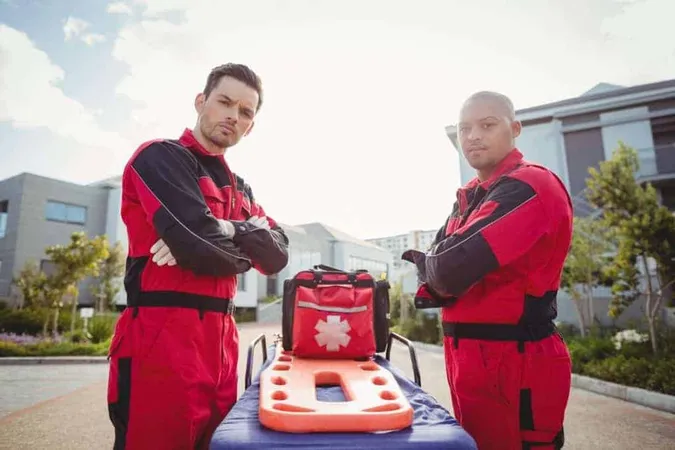
Mastering EMT Skills Verification
Skills verification is a critical component of EMT certification, designed to evaluate your practical abilities in real-world scenarios. Here are some essential tips to excel:
- Practice Hands-On Skills Regularly: Set aside time to practice key procedures like patient assessments, airway management, and CPR techniques.
- Work with a Mentor: Experienced EMTs can provide guidance and constructive feedback on your performance.
- Simulate Emergency Scenarios: Practice in controlled settings to gain confidence and improve your decision-making under pressure.
- Follow Checklists: Ensure you’re proficient in all required skills by referring to your program’s guidelines and checklists.
Candidates are evaluated on their ability to perform these tasks accurately and efficiently. Continuous practice is essential for passing this stage.

Preparing for the EMT Exam
The EMT exam, administered by NREMT, consists of two parts: the cognitive exam (a computer-based test) and the psychomotor exam (a hands-on skills test). Here’s how to prepare effectively:
- Understand the Exam Structure: The cognitive exam is adaptive, meaning questions adjust in difficulty based on your answers. Familiarize yourself with this format in advance.
- Study Key Topics: Focus on critical subjects like pharmacology, trauma systems, and OB-GYN emergencies.
- Use Study Guides: Resources such as the Emergency Care and Transportation of the Sick and Injured textbook can be helpful.
- Practice Time Management: Allocate time to each question and section during the exam to ensure you complete it within the given timeframe.
- Stay Calm and Focused: Confidence and composure are key to performing well during the exam.
Remember, consistent preparation and familiarity with the test format are the cornerstones of success in the EMT exam.
Conclusion
Achieving EMT (Emergency Medical Technician) certification requires dedication, thorough preparation, and a commitment to mastering both theoretical knowledge and practical skills. By using study guides, practice tests, and expert advice, candidates can confidently approach the certification process and excel in their roles as first responders. EMTs are indispensable in emergency care, and the journey to certification is a vital step toward making a difference in people’s lives.
- +Validates your knowledge and skills objectively
- +Increases job market competitiveness
- +Provides structured learning goals
- +Networking opportunities with other certified professionals
- −Study materials can be expensive
- −Exam anxiety can affect performance
- −Requires dedicated preparation time
- −Retake fees apply if you don't pass
Pros and Cons at a Glance
| Pros | Cons |
|---|---|
| Validates your knowledge and skills objectively | Study materials can be expensive |
| Increases job market competitiveness | Exam anxiety can affect performance |
| Provides structured learning goals | Requires dedicated preparation time |
| Networking opportunities with other certified professionals | Retake fees apply if you don't pass |
(EMT) Emergency Medical Technician Questions and Answers
Written and edited by Nathan Beja, founder of Practice Test Geeks, with AI assistance. Exam facts are checked against the official sources linked below. Editorial policy
Sources & references
Exam facts on this page (fees, format, dates, passing scores) are checked against these official sources; the date is our last check. Editorial policy
- nremt.org — Registration, score validity, fees, late registration, renewal, passing score, retake policy, score release, test dates, test delivery · verified Oct 2026
- pearsonvue.com — Registration deadline · verified Oct 2026