
EEG Test Cost in 2026 October: What You'll Pay, Insurance Coverage, and How to Save
How much does an EEG test cost? 🧠 Compare prices by type, learn what insurance covers, and find ways to reduce your out-of-pocket expense.

An EEG test — short for electroencephalogram — measures the electrical activity of your brain using small electrodes attached to your scalp. Whether your doctor ordered one to investigate seizures, evaluate sleep disorders, or rule out other neurological conditions, one of the first questions most patients ask is: how much will this cost? Understanding eeg cost upfront can help you plan financially, avoid surprise medical bills, and make informed decisions about where and when to schedule your procedure.
The price of an EEG test in the United States varies significantly depending on the type of test, the facility you choose, your geographic location, and whether you have health insurance. A routine outpatient EEG at a hospital can cost anywhere from $200 to over $3,000 without insurance. With coverage, your out-of-pocket responsibility typically drops to just a copay or coinsurance amount, often between $50 and $500 depending on your plan's deductible and network status.
There are several distinct types of EEG tests, and each carries a different price tag. A standard routine EEG — which lasts about 20 to 40 minutes — is the least expensive option. Ambulatory EEGs, which you wear for 24 to 72 hours while going about your daily life, cost considerably more due to the extended monitoring equipment and technologist time involved. Video EEG monitoring, often done in an inpatient epilepsy monitoring unit, is the most expensive type and can result in hospital bills exceeding $10,000 for a multi-day stay.
If you're a healthcare student or EEG technologist studying for certification, understanding the clinical and financial context of these tests is just as important as mastering the technical skills. The cost of eeg test is a topic covered broadly in patient education materials and often appears in healthcare administration coursework as well, giving EEG techs a fuller picture of the care they provide.
Insurance coverage for EEGs generally falls under diagnostic testing benefits, which means it is usually covered when medically necessary. However, "medically necessary" is determined by your insurer based on the diagnosis codes submitted by your physician. Common covered indications include epilepsy monitoring, evaluation of loss of consciousness, assessment of encephalopathy, and workup for dementia or brain injury. Cosmetic or experimental uses are typically excluded.
For uninsured or underinsured patients, several cost-reduction strategies can make EEGs more accessible. These include shopping at freestanding outpatient imaging centers instead of hospitals, using healthcare cost transparency tools, negotiating a cash-pay discount directly with the facility, and applying for financial assistance programs offered by many hospital systems. Some academic medical centers offer lower rates for patients who agree to participate in research or teaching programs.
This article breaks down EEG costs by test type, explains what drives price differences, details how insurance typically handles these claims, and provides a practical guide to reducing your out-of-pocket burden. Whether you are a patient, a caregiver, or an EEG technologist wanting to better advise patients, the information below will give you a comprehensive, up-to-date picture of EEG pricing in 2026.
EEG Test Costs by the Numbers

EEG Cost by Test Type
Health insurance coverage for an EEG medical test is generally available when a physician documents medical necessity. Most major commercial insurers — including Aetna, Cigna, Blue Cross Blue Shield, and UnitedHealthcare — cover EEGs under their diagnostic testing benefits. Medicare Part B also covers outpatient EEGs at 80% of the approved amount after the annual deductible is met, leaving beneficiaries responsible for the remaining 20% coinsurance unless they carry a supplemental Medigap policy.
To get your EEG covered, your ordering physician must submit the correct ICD-10 diagnosis codes alongside the CPT procedure codes for the EEG. Common covered diagnoses include epilepsy (G40.x), convulsions (R56.9), encephalopathy (G93.40), altered mental status (R41.3), and syncope evaluation (R55). If your insurer denies coverage, it is often because the diagnosis code submitted does not align with what the payer considers a covered indication, or because prior authorization was not obtained. Always verify prior authorization requirements before your appointment.
Your out-of-pocket cost with insurance depends on three main plan variables: your deductible, your coinsurance rate, and whether the facility is in-network. If your deductible has not been met, you may owe the entire contracted rate for the EEG until you hit your deductible ceiling. Once the deductible is satisfied, you typically pay only your coinsurance — commonly 10% to 30% of the contracted amount. Choosing an in-network facility is critical, as out-of-network providers can bill at much higher rates, and your insurer may apply a lower reimbursement percentage.
For patients with high-deductible health plans (HDHPs) paired with a Health Savings Account (HSA) or Flexible Spending Account (FSA), EEGs are a qualified medical expense. This means you can pay for your EEG using pre-tax dollars, effectively reducing the real cost by your marginal income tax rate — often 22% to 32% for middle-income earners. Using an HSA or FSA is one of the simplest and most overlooked ways to reduce the financial impact of diagnostic testing.
Medicaid coverage for EEGs varies by state, but most state Medicaid programs cover routine and ambulatory EEGs when medically indicated. Inpatient video EEG stays may require additional prior authorization and documentation of failed outpatient monitoring. Children enrolled in CHIP (Children's Health Insurance Program) typically have strong diagnostic testing coverage, and many pediatric epilepsy centers have dedicated financial counselors to help families navigate benefits.
If your insurance denies your EEG claim, you have the right to appeal. Start with an internal appeal to your insurance company, providing supporting clinical documentation from your physician explaining why the test was medically necessary. If the internal appeal fails, you can request an external appeal reviewed by an independent organization. Federal law requires insurers to comply with the outcome of external reviews. Many denials are overturned on appeal, particularly when strong clinical documentation is provided. For those with ongoing costs from eeg cost for overnight studies, appealing denied claims can save hundreds or even thousands of dollars.
Understanding the billing process can also help you avoid overpaying. EEG billing typically involves two separate charges: a professional fee for the interpreting neurologist who reads the recording, and a facility or technical fee for the equipment and staff. Some insurers process these as a single bundled payment under a global CPT code, while others process them separately. Reviewing your Explanation of Benefits (EOB) carefully after your test — and comparing it to your actual bill — can reveal billing errors that, when corrected, reduce your final balance.
What Is an EEG Test and Why Is It Ordered?
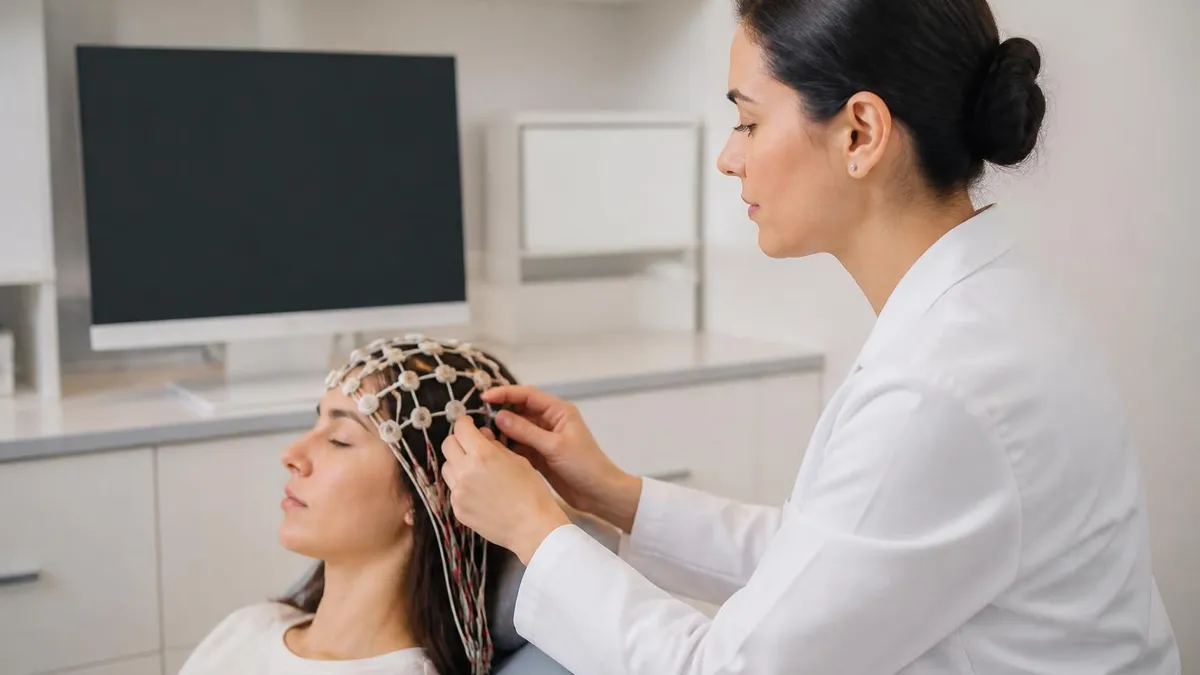
An EEG test — or electroencephalogram — is a non-invasive neurological procedure that records the electrical impulses generated by neurons firing in your brain. During the test, a technologist applies 19 to 25 small metal electrodes to your scalp using a conductive gel or paste. These electrodes pick up tiny voltage fluctuations that are amplified and displayed as waveforms on a computer screen. The resulting patterns help neurologists identify abnormalities in brain function, including seizure activity, areas of slow or suppressed activity, and disruptions in normal sleep architecture.
The test itself is painless and carries no radiation exposure. Most routine EEG tests last between 20 and 40 minutes, though prolonged studies can run two to four hours. During the recording, you may be asked to breathe rapidly (hyperventilation), look at a flashing strobe light (photic stimulation), or fall asleep — all of which are activation procedures designed to bring out abnormal brain activity that might not appear during a quiet, wakeful recording. The information gathered helps neurologists diagnose epilepsy, encephalopathy, brain injury, and sleep-related neurological disorders.

Pros and Cons of Different EEG Settings
- +Outpatient clinic EEGs cost significantly less than hospital-based studies for the same CPT code
- +Ambulatory EEGs allow natural daily activity recording without a hospital stay
- +Academic medical center EEGs may offer lower rates for teaching or research participation
- +Freestanding IDTFs often have same-week or next-day scheduling with lower facility fees
- +Cash-pay discounts at many facilities can reduce costs 30–60% below billed charges
- +HSA and FSA funds can be used to pay EEG costs with pre-tax dollars, lowering real expense
- −Hospital outpatient EEGs carry higher facility fees that can be 3–5x the equivalent clinic rate
- −Inpatient video EEG monitoring can generate bills exceeding $10,000 for a multi-day stay
- −Out-of-network facility charges may not count toward your in-network deductible or out-of-pocket maximum
- −Insurers may deny coverage if prior authorization is not obtained before the test
- −Separate professional and facility fees can arrive as two different bills, confusing patients
- −High-deductible plans may leave patients owing the full contracted rate if deductible is unmet
Pros and Cons at a Glance
| Pros | Cons |
|---|---|
| Outpatient clinic EEGs cost significantly less than hospital-based studies for the same CPT code | Out-of-network facility charges may not count toward your in-network deductible or out-of-pocket maximum |
| Ambulatory EEGs allow natural daily activity recording without a hospital stay | Insurers may deny coverage if prior authorization is not obtained before the test |
| Academic medical center EEGs may offer lower rates for teaching or research participation | Separate professional and facility fees can arrive as two different bills, confusing patients |
| Freestanding IDTFs often have same-week or next-day scheduling with lower facility fees | High-deductible plans may leave patients owing the full contracted rate if deductible is unmet |
How to Lower Your EEG Test Cost
- ✓Verify your insurance benefits and confirm EEG coverage before scheduling your appointment.
- ✓Ask your physician whether prior authorization is required and submit it before the test date.
- ✓Choose an in-network facility to ensure your insurer applies the contracted rate and counts costs toward your deductible.
- ✓Call freestanding outpatient neurology clinics and IDTFs to compare their rates with hospital outpatient pricing.
- ✓Request the cash-pay or self-pay discount rate directly from the billing department before your appointment.
- ✓Use HSA or FSA funds to pay your EEG bill with pre-tax dollars, reducing your effective cost.
- ✓Ask whether the interpreting neurologist is also in-network to avoid surprise out-of-network professional fees.
- ✓Apply for the hospital's financial assistance or charity care program if your income qualifies.
- ✓Review your Explanation of Benefits carefully and dispute any billing errors or duplicate charges.
- ✓If your claim is denied, file a formal appeal with supporting clinical documentation from your ordering physician.
Same Test, Wildly Different Prices
The identical routine EEG procedure — same CPT code, same 30-minute recording — can cost $250 at a freestanding neurology clinic and $1,800 at a hospital outpatient department. Always call ahead to compare facility fees, and ask specifically whether both the technical and professional components are billed separately. This single step can save hundreds of dollars on the same diagnostic test.
Comparing EEG prices across different facility types reveals some of the most dramatic pricing disparities in all of outpatient medicine. Hospital outpatient departments (HOPDs) operate under a different payment structure than freestanding clinics. Hospitals can bill a facility fee in addition to the professional interpretation fee, and their facility fees are often three to five times higher than what an independent clinic charges.
This is not because the quality of care is necessarily better at a hospital — it is simply a function of how hospital billing is structured under the Medicare Outpatient Prospective Payment System (OPPS), which other payers often use as a benchmark for their own contracted rates.
Freestanding outpatient neurology clinics and independent diagnostic testing facilities (IDTFs) typically offer the lowest prices for routine and prolonged EEGs. These facilities bill only a technical component (for the equipment and technologist) and a professional component (for the reading neurologist), without an additional hospital facility fee. For patients who are uninsured or who have not yet met their deductible, this can mean a difference of $500 to $1,500 for the same test. Many IDTFs can also schedule appointments faster than hospital-based programs, which is another practical advantage.
Academic medical centers and university hospital neurology departments occupy a middle-to-high price tier. While their facility fees are typically higher than community clinics, they often have dedicated financial assistance programs and may offer reduced rates for patients who participate in teaching or research protocols. For complex cases — such as refractory epilepsy requiring inpatient video EEG or pediatric cases needing specialized interpretation — an academic epilepsy center may be the only appropriate option regardless of cost, and their financial counselors are accustomed to helping families navigate coverage challenges.
Telehealth and remote EEG interpretation services have introduced new pricing models in recent years. Some companies now offer home-based ambulatory EEG kits paired with remote neurologist interpretation at a flat cash-pay rate, often between $500 and $1,200 for a complete 72-hour study including the interpretation report. These services are particularly appealing for patients in rural areas with limited local access to neurology, though insurance coverage for remote EEG interpretation is still evolving and varies significantly by state and insurer.
Community health centers (federally qualified health centers, or FQHCs) and rural health clinics (RHCs) offer EEG services on a sliding-scale fee basis for qualifying low-income patients. These centers are federally funded and required to provide services regardless of ability to pay. If you are uninsured and your household income falls below 200% of the federal poverty level, you may qualify for EEG services at little to no cost through an FQHC. Finding your nearest FQHC is as simple as visiting the HRSA health center locator online.
Price transparency tools have become increasingly useful for comparing EEG costs. The federal Hospital Price Transparency rule now requires hospitals to publish their standard charges — including EEG CPT codes — in a machine-readable format on their websites. Several consumer-facing tools aggregate this data and allow side-by-side price comparisons across facilities in your area. Fair Health Consumer and Healthcare Bluebook are two free tools that let patients look up typical costs for specific procedures by zip code, giving you a solid benchmark before you call facilities for quotes.
One final facility-type consideration: mobile EEG services. Several companies now operate mobile EEG units that travel to physician offices, assisted living facilities, and even patients' homes. These services eliminate the need for patients to travel to a hospital or clinic and can offer competitive pricing, particularly for routine EEGs in elderly or homebound patients. Mobile EEG pricing typically ranges from $300 to $800 for a standard recording, and many mobile services bill insurance directly, making the process straightforward for covered patients.

Ambulatory and inpatient video EEG studies almost always require prior authorization from your insurance company before the test begins. Failing to obtain prior authorization — even if your physician orders the test — can result in a claim denial, leaving you responsible for the full bill. Call your insurer at least five business days before your scheduled test date to confirm authorization status and document the authorization number for your records.
Preparing for your EEG medical test involves both practical steps and an understanding of what the procedure entails. Your neurologist's office will typically provide preparation instructions when you schedule the appointment. The most important preparation step for most routine EEGs is arriving with clean, dry hair — free of conditioners, oils, sprays, and styling products. These substances can interfere with electrode adhesion and signal quality, potentially requiring the test to be repeated, which adds cost and inconvenience.
For a sleep-deprived EEG, your physician may ask you to stay awake for all or part of the night before the test. The goal is to make you drowsy during the recording so that the EEG can capture brain activity during light sleep, which can reveal abnormalities not visible during normal wakefulness. Children and adults with certain seizure types are more likely to show abnormal activity during the transition from wakefulness to drowsiness. The sleepiness itself is not dangerous, but you should arrange for someone else to drive you home after a sleep-deprived EEG.
Unless your physician specifically instructs otherwise, you should continue taking all medications on your normal schedule before your EEG. Stopping anti-seizure medications before an EEG is sometimes done intentionally during inpatient video EEG monitoring (to increase the chance of capturing a seizure), but this is always done under direct medical supervision in a hospital setting — never on your own at home. For a routine outpatient EEG, medication changes are not typically required and could be dangerous if done without physician guidance.
On the day of your test, plan to arrive 10 to 15 minutes early to complete any remaining paperwork and allow the technologist time to review your history before starting. The electrode application process typically takes 20 to 30 minutes. The technologist will measure your head, mark electrode positions, lightly scrub the skin with a mild abrasive gel to improve conductivity, and apply each electrode with conductive paste. Some protocols use a mesh cap with pre-positioned electrodes, which shortens setup time. The recording itself is then conducted with you resting quietly, eyes closed, in a reclined position.
During the recording, the technologist will guide you through several activation procedures. Hyperventilation — breathing deeply and rapidly for three minutes — temporarily changes blood carbon dioxide levels and can activate abnormal waveforms in patients with certain seizure types. Photic stimulation involves looking at a strobe light that flashes at varying frequencies; this can trigger photosensitive responses in susceptible individuals. These procedures are safe for almost all patients, though hyperventilation may be omitted if you have certain cardiac or pulmonary conditions.
After the recording is complete, the technologist will remove the electrodes and help clean the conductive gel from your hair. Most of the gel can be removed with warm water and a towel at the facility, but some residue may remain and require a full shampoo at home.
You can return to all normal activities immediately after a routine EEG — there is no recovery time required, no anesthesia, and no restrictions on driving (unless you had a sleep-deprived study). Results are typically reviewed and reported by the interpreting neurologist within one to five business days, after which your ordering physician will discuss the findings with you.
For those studying for the EEG technologist credentialing exam, understanding patient preparation protocols is a key tested domain. Knowing why each step matters — from hair care to medication management to activation procedures — helps you advise patients confidently and perform recordings of the highest technical quality. Strong preparation reduces artifact, improves diagnostic yield, and ultimately serves the patient's best interest by minimizing the need for repeat testing, which carries both clinical and financial costs. For more on extended recording techniques, explore how cost of eeg test considerations intersect with clinical decision-making in ambulatory monitoring protocols.
Understanding the eeg test side effects is important for patient counseling and for anyone studying EEG technology. The good news is that a standard EEG is one of the safest diagnostic procedures in neurology. The test is entirely non-invasive — no needles, no injections, no radiation, and no electrical current is passed through the brain. The electrodes only record the brain's own electrical activity; they do not stimulate it. For the vast majority of patients, the most significant side effect is mild scalp irritation or temporary redness at electrode sites, which typically resolves within an hour of electrode removal.
The activation procedures used during an EEG carry a small but acknowledged set of considerations. Hyperventilation can cause tingling in the hands and face, lightheadedness, or a feeling of faintness in some patients — these effects are caused by changes in blood carbon dioxide levels and resolve within seconds of stopping the deep breathing. In rare cases, hyperventilation can trigger a seizure in patients with certain types of epilepsy, but this occurs in a controlled environment with trained staff present, making it a medically managed event rather than a dangerous complication.
Photic stimulation — the flashing strobe light — carries a very small risk of triggering a photosensitive seizure in individuals with that specific susceptibility, which affects roughly 3% to 5% of people with epilepsy. Again, this is intentional in some diagnostic protocols and occurs with the technologist present and prepared to respond. Patients with known photosensitivity are typically told in advance, and the strobe procedure may be shortened or omitted based on clinical history. For the general population, photic stimulation is entirely safe and does not cause seizures or other adverse effects.
Ambulatory EEG studies, which are worn at home, have their own practical considerations. The recording equipment — a small digital recorder worn on a belt or carried in a pouch — must be kept dry and handled carefully to maintain signal integrity. Some patients find the electrode cap or wires uncomfortable during sleep, and scalp irritation can develop over the 24 to 72 hours of wearing time.
Waterproof electrode systems have improved comfort significantly in recent years. Patients should be instructed to keep a detailed event diary during ambulatory recording, noting symptoms, activities, sleep times, and any medication doses, as this information is critical for correlating clinical events with EEG findings.
For inpatient video EEG monitoring, the primary patient experience concern is the extended hospital stay itself. Patients are typically connected to stationary EEG equipment and remain in a monitored room for several days. Anti-seizure medications may be reduced or discontinued under physician supervision to increase seizure frequency and improve diagnostic yield, which means the medical team must be vigilant about patient safety.
Seizure precautions — padded bed rails, suction at bedside, call light within reach — are standard in epilepsy monitoring units. Most patients report that the waiting period for seizures to occur is the most psychologically challenging aspect of the admission.
From a financial planning perspective, understanding how EEG side effects and recovery compare to other diagnostic tests helps patients make realistic scheduling decisions. Unlike an MRI, which may trigger claustrophobia and require sedation, or a lumbar puncture, which requires a recovery period and carries risk of headache, an EEG is truly a same-day, walk-in, walk-out procedure for most patients.
This simplicity makes it an excellent diagnostic first step when neurological symptoms are present, and its relatively low risk profile means that ordering physicians can request it with minimal concern for patient harm — making the primary barrier to access one of cost and logistics rather than medical safety.
For EEG technologists preparing for the ABRET R.EEG.T. credentialing examination, patient safety, electrode application technique, artifact recognition, and knowledge of activation procedure protocols are all heavily tested domains. Solid preparation in these areas not only helps you pass the exam but also ensures that your patients have the best possible experience during what can be an anxiety-provoking diagnostic test. Reviewing practice materials that mirror real exam content is one of the most effective preparation strategies available.
Sample EEG - Electroencephalography Practice Questions
Try these questions from our free EEG - Electroencephalography practice tests. The correct answer and an explanation follow each question.
What property of pyramidal neurons makes them the primary generators of scalp-recorded EEG signals rather than stellate cells?
- A. Higher firing rates
- B. Open-field geometry with parallel dendrites perpendicular to cortical surface
- C. Greater absolute membrane potential
- D. Larger action potential amplitude
Answer: B. Open-field geometry with parallel dendrites perpendicular to cortical surface
Pyramidal neurons are arranged in parallel columns perpendicular to the cortical surface, creating open-field dipoles whose extracellular currents summate and propagate to the scalp.
According to American Clinical Neurophysiology Society (ACNS) and AAN guidelines, what is the minimum sensitivity required when recording an EEG to assess for electrocerebral inactivity (ECI)?
- A. 2 µV/mm
- B. 5 µV/mm
- C. 7 µV/mm
- D. 10 µV/mm
Answer: A. 2 µV/mm
AAN/ACNS guidelines require a minimum sensitivity of 2 µV/mm (equivalent to ≤2 µV/mm) during ECI recordings so that very low-amplitude cerebral activity is not missed. Standard clinical sensitivity (7 µV/mm) would be insufficiently sensitive for this purpose.
What are the three main types of evoked potentials commonly recorded in a clinical neurophysiology laboratory?
- A. Visual, Auditory, and Somatosensory
- B. Motor, Sensory, and Cognitive
- C. Cortical, Subcortical, and Peripheral
- D. Pattern, Flash, and Click
Answer: A. Visual, Auditory, and Somatosensory
The three main clinical evoked potentials are Visual (VEP), Auditory (BAEP/ABR), and Somatosensory (SSEP), each assessing a different sensory pathway.
Spectral edge frequency (SEF95) is defined as the frequency below which what percentage of the total EEG spectral power is contained?
- A. 50%
- B. 75%
- C. 90%
- D. 95%
Answer: D. 95%
SEF95 is the frequency at or below which 95% of the total spectral power lies. It is a single-number summary of the 'upper edge' of EEG activity and is used in anesthesia monitoring and ICU trend analysis to track shifts in dominant frequencies over time. A falling SEF95 indicates slowing of brain activity.
EEG Questions and Answers
EEG Electroencephalography Practice Test PDF (Free Printable 2026)
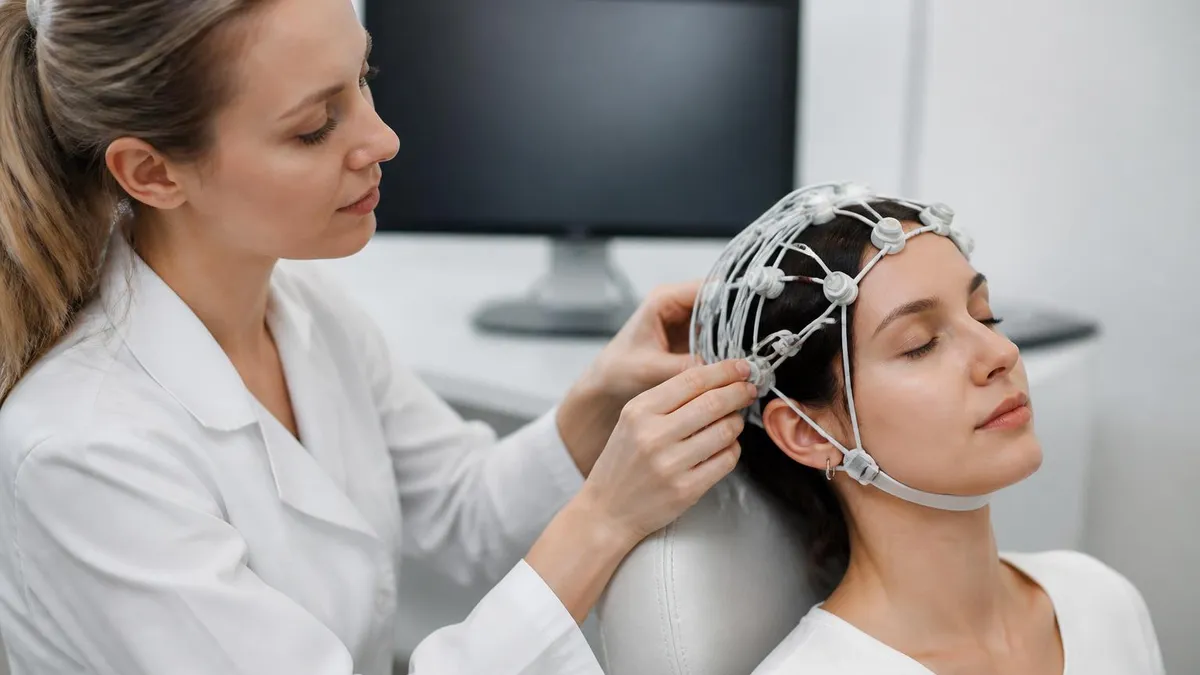
Sleep EEG: How Overnight Brain Wave Testing Works and What Your Results Mean
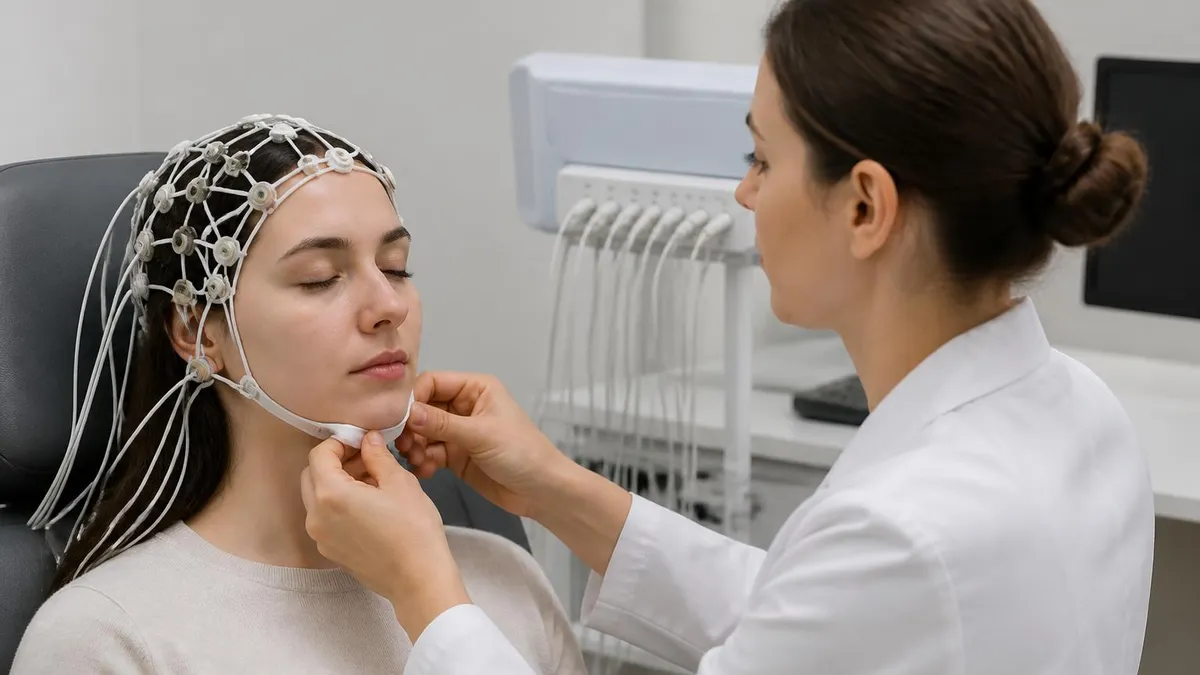
EEG Test Cost in 2026: Prices, Insurance Coverage, and How to Save
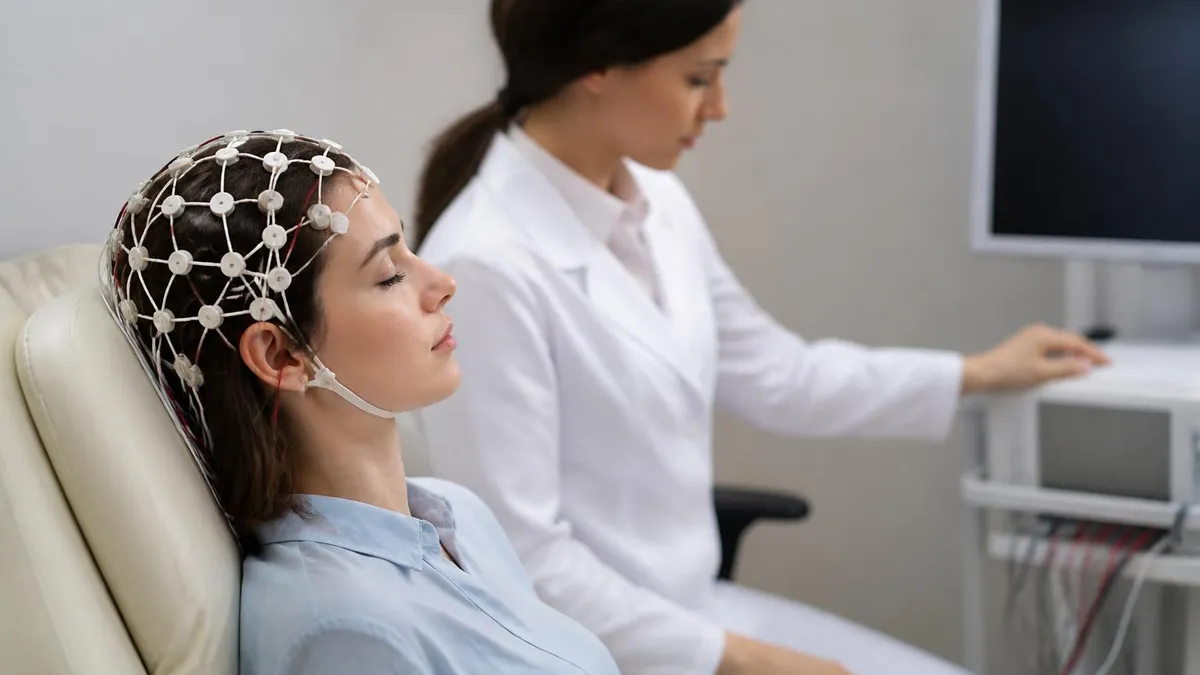
EEG vs ECG vs EKG: Brain and Heart Test Differences
Abnormal EEG Results: What They Mean, Common Patterns, and Next Steps
About the Author

Educational Psychologist & Academic Test Preparation Expert
Columbia University Teachers CollegeDr. Lisa Patel holds a Doctorate in Education from Columbia University Teachers College and has spent 17 years researching standardized test design and academic assessment. She has developed preparation programs for SAT, ACT, GRE, LSAT, UCAT, and numerous professional licensing exams, helping students of all backgrounds achieve their target scores.