
Can I Use My Own Car for the Driving Test? Complete UK DVSA Guide 2026 September
Can I use my own car for the driving test? Full UK DVSA rules, insurance, L-plates, vehicle requirements and pre-test checklist for 2026 September. 🗨️
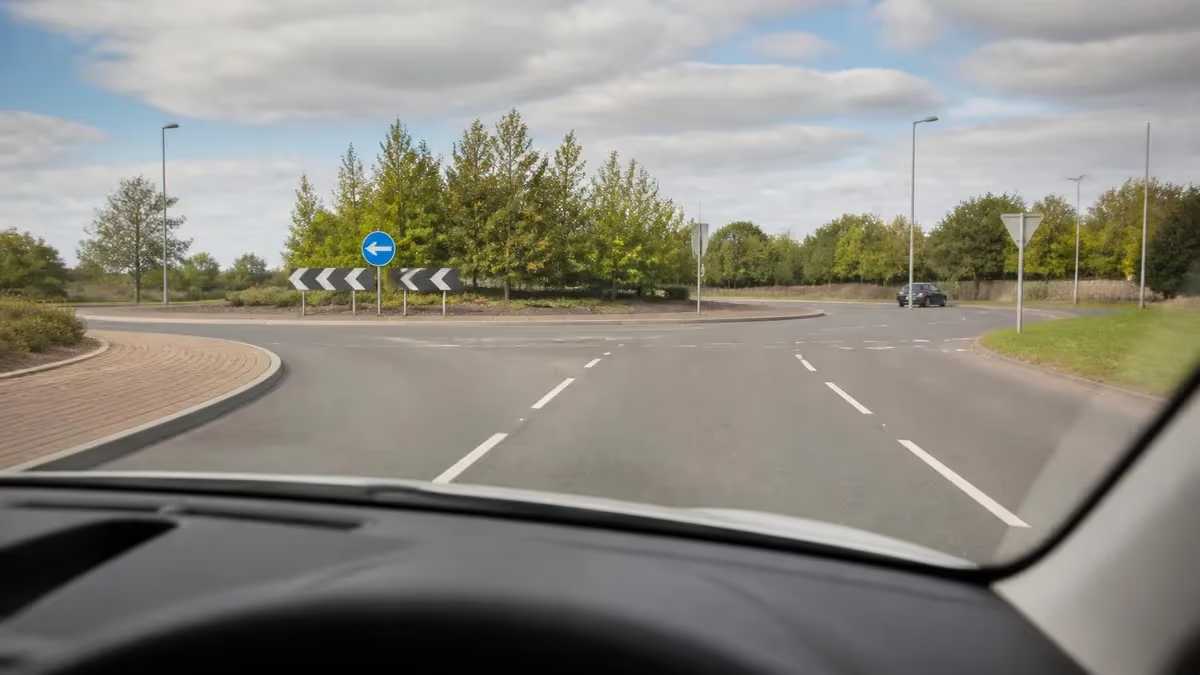
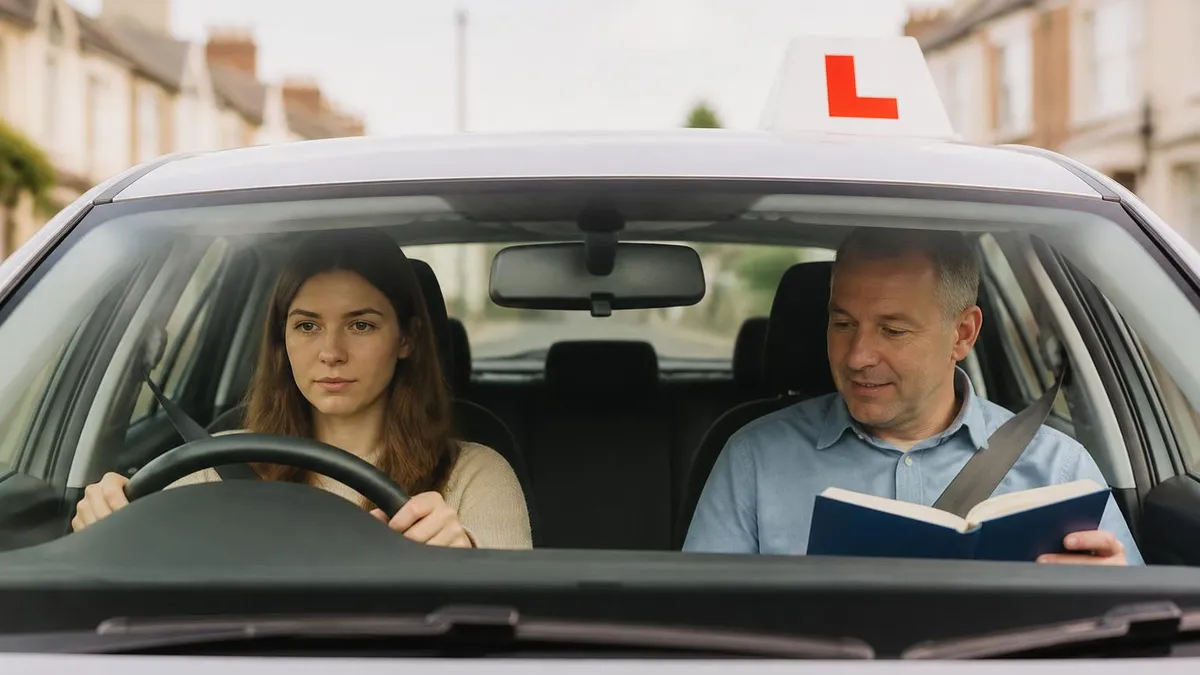
Can I use my own car for the driving test? Yes, the DVSA absolutely allows you to use your own car for the UK practical driving test, but the vehicle must meet a strict set of conditions covering insurance, roadworthiness, tax, MOT, L-plates, and a working front passenger seatbelt and head restraint for the examiner. Many learners assume only driving school cars qualify, but bringing your own vehicle is perfectly legal — provided you read the rulebook carefully and prepare the car as thoroughly as you prepare yourself.
The decision to bring your own car is usually driven by familiarity, comfort, and confidence. You already know the biting point of the clutch, the turning circle, the visibility from the mirrors, and the exact pedal travel. That muscle memory can shave precious seconds off hill starts, parallel parks and emergency stops on test day. However, that comfort only translates into a pass if the DVSA examiner is satisfied that the vehicle is safe, insured for the test, and fitted with everything the assessment requires.
Before booking, you should review the official DVSA car requirements list carefully. The agency publishes a vehicle checklist that is updated regularly, and any failure to meet even one item — for example, a missing interior rear-view mirror for the examiner or an active recall — means your test is cancelled on the spot and your fee is forfeited. That outcome is more common than you might think, with thousands of tests cancelled every year simply because of vehicle issues that could have been fixed in five minutes.
Insurance is the single most misunderstood requirement. Standard learner driver policies are usually fine for lessons, but the DVSA requires that the policy explicitly covers the vehicle for use during a practical driving test. Some insurers list this as an exclusion in the small print, and a phone call to confirm cover is non-negotiable. Once you pass, your provisional cover usually ends within hours, so most learners line up a full licence policy to start the moment the certificate is issued.
You also need to think about practical comforts. Examiners spend hours in passenger seats every day, so the car must have a working seatbelt, an adjustable head restraint, and enough legroom. Two-door coupes, vans converted for personal use, and convertibles with rear visibility issues are often refused. Even some hatchbacks can fail because the rear window is too small or the head restraint at the front passenger seat is fixed too low to protect against whiplash in the event of a rear-end collision.
This guide walks you through every DVSA rule, every disqualifying condition, and every preparation step needed to confidently take your test in your own car. Whether you've just bought your first runabout, are borrowing a parent's hatchback, or are wondering if your insurance covers test day, you'll find the answers below. We also compare the trade-offs versus using your instructor's car, so you can make an informed choice that maximises your chance of leaving the test centre with a full UK driving licence.
Using Your Own Car: Key Numbers for 2026

DVSA Vehicle Requirements Checklist
The car must be road-legal with valid vehicle tax and a current MOT certificate if it is over three years old. Examiners check the DVLA database before the test begins and will refuse to proceed if either is missing.
Insurance must explicitly cover driving tests — not just learning. Many policies exclude examiner-supervised driving by default, so call your insurer to confirm and request written confirmation if possible.
Tyres must meet the 1.6mm legal tread depth, lights and indicators must work, brakes must be responsive, and the windscreen must be free of cracks larger than a 10p coin in the driver's line of sight.
Display L-plates (or D-plates in Wales) on the front and rear of the vehicle. They must be clearly visible and conform to the legal size of 178mm by 178mm with the correct red letter on white background.
The car must have a working passenger seatbelt, an adjustable head restraint at the front passenger seat, and an interior rear-view mirror for the examiner. Many older or stripped-back vehicles fail this requirement.
Insurance is where most learners stumble. The fundamental rule is that you must hold a policy that covers you to drive the specific vehicle for the purpose of a practical driving test with a DVSA examiner. While almost every learner policy covers tuition with an Approved Driving Instructor (ADI), some explicitly carve out driving tests as a separate activity, treating them as a higher-risk scenario. Reading the policy schedule line by line is the only reliable way to confirm this — vague reassurance from a call centre agent is not enough if something goes wrong.
If you're insured as a named driver on a parent or partner's policy, the same checks apply. The policyholder's main insurer must confirm that test-day driving is covered, and that any third-party damage or injury caused during the test would be honoured. Some insurers will issue temporary 'test cover' add-ons for a single day, which can be a sensible safety net if you're unsure. These typically cost between £20 and £40 and provide peace of mind without compromising the no-claims discount on the main policy.
The car must also be displayed correctly. L-plates must be on the front and rear, large enough and bright enough to be visible from a reasonable distance. In Wales, D-plates (for 'Dysgwr', meaning learner in Welsh) are acceptable, though English L-plates are also fine. They must be removed the moment you pass, because driving with L-plates on a full licence can be an offence in itself if it misleads other road users. Most candidates carry a small pair of scissors or simply peel-and-stick magnetic plates for quick removal.
Modern cars often come with active safety features such as autonomous emergency braking, lane assist, and adaptive cruise control. These are generally permitted, but anything that takes control of the steering or pedals without your explicit input may be viewed as automating the test. The DVSA's position has evolved over time, and certain Tesla Autopilot or similar Level 2 systems must be disabled before the test starts. Read the official guidance for your specific model and disable any feature that could interfere with the examiner's assessment of your skill.
Some vehicles are banned outright. Convertible cars and vans without proper passenger visibility are not allowed because the examiner needs a clear view of all surroundings to assess your observation skills. BMW Mini Convertibles, Ford Ka Convertibles, Toyota iQs, and certain panel vans appear on the DVSA's official restricted list. Always cross-check your make and model against the current list before booking — the list is updated, and a vehicle that was acceptable two years ago may now be excluded due to recalls or design issues that compromise safety.
If your test is part of an intensive course, you may already have access to a vetted vehicle. Browse our guide to the intensive driving course with test route to see how schools provide compliant cars as standard. This can save you the hassle of preparing your own vehicle, but the trade-off is that you spend less time building muscle memory in the car you'll drive after passing.
Finally, plan how you'll get the car to the test centre. You cannot drive solo to the centre on a provisional licence, so a supervising driver aged 21 or over who has held their full licence for three years must accompany you. Many learners ask their instructor to meet them at the centre and follow in a separate car, or arrange for a parent to ride along. Plan this logistic in advance — turning up alone in your own car on a provisional licence is illegal and your test will not go ahead.
DVSA Practice Test Questions
Prepare for the DVSA - UK Driving Theory Test exam with our free practice test modules. Each quiz covers key topics to help you pass on your first try.
DVSA Eco-Friendly Driving and Vehicle Loading
DVSA Exam Questions covering Eco-Friendly Driving and Vehicle Loading. Master DVSA Test concepts for certification prep.
DVSA Hazard Awareness
Free DVSA Practice Test featuring Hazard Awareness. Improve your DVSA Exam score with mock test prep.
DVSA Incidents, Accidents and First Aid
DVSA Mock Exam on Incidents, Accidents and First Aid. DVSA Study Guide questions to pass on your first try.
DVSA Motorway Rules and Smart Motorways
DVSA Test Prep for Motorway Rules and Smart Motorways. Practice DVSA Quiz questions and boost your score.
DVSA Rules of the Road (Highway Code)
DVSA Questions and Answers on Rules of the Road (Highway Code). Free DVSA practice for exam readiness.
DVSA - UK Driving Theory Hazard Awareness ...
DVSA Mock Test covering - UK Driving Theory Hazard Awareness and Perception. Online DVSA Test practice with instant feedback.
DVSA - UK Driving Theory Motorway Rules an...
Free DVSA Quiz on - UK Driving Theory Motorway Rules and Regulations. DVSA Exam prep questions with detailed explanations.
DVSA - UK Driving Theory Road and Traffic ...
DVSA Practice Questions for - UK Driving Theory Road and Traffic Signs. Build confidence for your DVSA certification exam.
DVSA - UK Driving Theory Rules of the Road
DVSA Test Online for - UK Driving Theory Rules of the Road. Free practice with instant results and feedback.
Own Car vs Instructor's Car: Side-by-Side Comparison
Driving your own car means total familiarity with controls, biting point, mirror placement, and seat position. You don't waste mental energy adjusting to an unfamiliar vehicle during a high-pressure 40-minute assessment, and you can practise unlimited hours without paying instructor rates. Many learners feel significantly more relaxed in a car they already trust on the school run or supermarket trip.
However, the responsibility falls on you to ensure roadworthiness, insurance, and DVSA compliance. There is no dual-control brake on the passenger side, so the examiner cannot intervene if you make a serious mistake. You'll also need to arrange a supervising driver to bring the car to the test centre, which adds logistical complexity that some learners would rather avoid on test day.
Should You Use Your Own Car for the Driving Test?
- +Total familiarity with controls, mirrors and pedal feel
- +Unlimited practice without paying hourly instructor rates
- +No adjustment period at the start of the 40-minute test
- +Confidence boost from driving a car you already trust
- +Seamless transition to solo driving the moment you pass
- +You can customise seat, steering wheel and mirror position perfectly
- −No dual controls — examiner cannot intervene in emergencies
- −Full responsibility for insurance, MOT, tax and roadworthiness
- −Must arrange a qualified supervising driver to reach the centre
- −Risk of test cancellation for unexpected vehicle faults
- −Some cars are banned outright by DVSA's restricted list
- −Higher emotional stake if a mechanical fault wastes your fee
Pre-Test Checklist for Using Your Own Car
- ✓Confirm in writing that your insurance covers practical driving tests
- ✓Verify the car has valid road tax via the DVLA website
- ✓Check the MOT certificate is current and won't expire on test day
- ✓Inspect all tyres for tread depth above 1.6mm and correct pressures
- ✓Test every light, indicator, brake light and reversing light works
- ✓Top up screen wash, oil, coolant and check brake fluid levels
- ✓Clean the interior, windscreen and all mirrors thoroughly
- ✓Fit L-plates (or D-plates in Wales) to the front and rear
- ✓Ensure the front passenger seatbelt and head restraint function correctly
- ✓Bring your provisional licence and a qualified supervising driver to the centre
Do this every single time before the examiner approaches your car
Five minutes before the examiner arrives, walk around your car checking every light, mirror, tyre and number plate. Sit in the driver's seat and test the wipers, horn, indicators and demisters. This 'show me, tell me' style check catches 90% of issues that lead to cancelled tests — a bulb that blew overnight, a tyre that's lost pressure, or a mirror knocked out of alignment in a car park.
Tests get cancelled for vehicle reasons more often than nervous learners realise. DVSA records show that roughly one in 25 own-car tests doesn't go ahead because of a problem the examiner spots in the first two minutes. The single most common reason is a faulty indicator or brake light, which can fail overnight without warning. The second most common is a windscreen crack or chip in the driver's swept area — even a small chip larger than 10mm can be enough to fail the safety check and lose your fee.
Tyres are another frequent culprit. The legal minimum tread depth across the central three-quarters of the tyre is 1.6mm, but examiners sometimes refuse tyres that are visibly cracked, bulging, or showing uneven wear that suggests an alignment issue. Spare a few minutes to inspect each tyre with a 20p coin — if the outer band of the coin is visible when slotted into the tread, the tyre is below the legal limit and must be replaced before the test. The same applies to the spare wheel if your car carries one.
Modern recall notices catch many learners by surprise. If the manufacturer has issued an unresolved safety recall on your vehicle — for airbags, brakes, or fuel systems for example — the DVSA will refuse to use the car. Check the GOV.UK vehicle recall service using your registration number before the test. If a recall is outstanding, book a free repair at a main dealer, which usually takes a few hours, and reschedule the test if necessary. Driving to the centre in a recalled car can technically invalidate your insurance too.
Don't underestimate cleanliness. Examiners aren't expecting a valet, but the windscreen, mirrors and side windows must be clear enough to give safe all-round visibility. A smeared windscreen in low winter sun, condensation on the inside that won't clear, or a rear window obscured by clutter on the parcel shelf can all be cited as reasons to cancel.
Clean inside and out the evening before, and arrive early enough to demist the car properly with the engine running. If you accumulate too many faults, our breakdown of the UK driving test faults system shows exactly how minors and serious faults are scored.
Engine warning lights cause more cancellations than mechanical failures. A check engine light, ABS warning, airbag warning, or low oil pressure light on the dashboard at test start means immediate refusal. These warnings sometimes appear after a cold start in winter and clear after a short drive, but the examiner cannot risk taking a vehicle with active warning lights into traffic. If a light comes on during the drive to the centre, pull over, restart, and if it persists, contact the centre rather than hoping for the best.
Finally, document everything. Take photos of your insurance certificate, MOT, and tax confirmation on your phone before leaving home. Examiners rarely ask, but having the documents instantly accessible reduces stress and shows you've prepared properly. If your test is cancelled for a vehicle issue, you forfeit the fee and lose your slot — and rebooking can take weeks during busy periods, with some test centres in 2026 still seeing waits of 12 to 24 weeks for the next available date.
If the worst happens and your test is cancelled, request the formal cancellation reason in writing. This gives you a clear record for any future insurance claim if the issue was caused by a third party, and it documents exactly what needs fixing before you rebook. Some learners successfully appeal cancellations where the examiner's reasoning was unclear, though the success rate is low and the appeals process is slow.
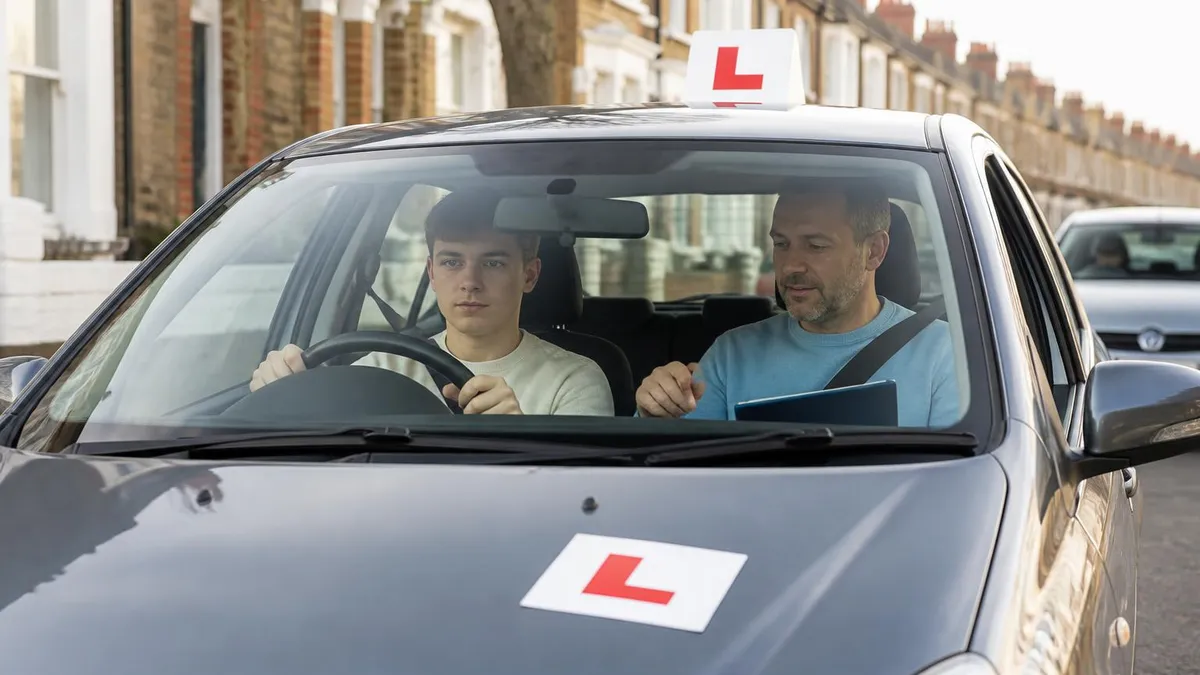
If any warning light is illuminated on your dashboard when the examiner enters the car — including the check engine light, ABS, airbag, low oil pressure, or tyre pressure monitor — the test will not start and your fee will be lost. Always start the car five minutes before the examiner arrives to allow self-checks to complete, and never ignore a persistent warning even if the car appears to drive normally.
On test day, your morning routine matters as much as your driving skill. Arrive at the test centre at least 15 minutes early with your provisional licence, supervising driver, and the test confirmation email or reference number. Park sensibly in a marked space — examiners watch how learners park before the test even begins, and a chaotic arrival can colour their first impression. Take a few minutes to compose yourself, drink some water, and avoid heavy food that can make you drowsy or anxious.
The examiner will call your name in the waiting area and walk you to the car park. Before getting in, they ask you to read a number plate at a distance of 20 metres for new-style plates (or 20.5 metres for old-style). Failing this eyesight check ends the test instantly — bring glasses or contact lenses if you need them, and don't bluff because the examiner will not let you proceed if there's any doubt about your vision. This is a non-negotiable legal safety requirement.
Next come the 'show me, tell me' questions. One is asked at the start of the test (the 'tell me' question), and one is asked while you're driving (the 'show me' question). Topics include how to check tyre pressures, operate the demister, top up screen wash, and use the handbrake. An incorrect answer counts as a single driving fault, not a serious one, so don't panic if you fumble — just stay focused on the rest of the drive. The DVSA publishes the full list of possible questions on its website and on most learner driver apps.
The driving portion lasts around 40 minutes and includes general driving on a mix of roads, one or two manoeuvres from the official list (parallel park, bay park forward or reverse, or pull up on the right then reverse), and roughly 20 minutes of independent driving following sat nav directions or road signs. The examiner gives clear instructions in plain English and will always tell you in advance when a manoeuvre or junction is coming up. Listen carefully and ask for clarification if you genuinely didn't catch the instruction.
If you make a mistake, do not assume the test is over. Examiners only end tests early in dangerous situations — usually requiring intervention with the verbal or physical assist of a dual control. A bumped kerb during a parallel park, a missed mirror check, or stalling at a junction can all be recovered from. Stay calm, take the next instruction, and continue driving as if nothing happened. Many candidates pass with up to 15 minor faults despite feeling certain they had failed, because their overall performance was safe and competent.
If you're worried about being rusty, consider a refresher lesson in your own car the day before. Most ADIs offer one-off sessions specifically targeted at test prep, and they can ride along the exact routes used by your local test centre. Combined with a thorough understanding of the DVSA car practical test structure, this preparation can lift your pass probability significantly. Local instructors often know the typical manoeuvre spots and challenging junctions, which means no nasty surprises on the big day.
After the test ends, the examiner will drive — sorry, sit in the passenger seat — back to the test centre and give you the result there. If you pass, you receive a pass certificate immediately and your provisional licence is sent off automatically (you don't need to do anything for the full licence to arrive in the post within three weeks). If you fail, the examiner explains what went wrong, and you can usually rebook within ten working days, though slot availability often pushes that further out.
Final preparation for using your own car comes down to systems, not last-minute panic. The night before, charge your phone fully, set two alarms, and pack a small kit containing your provisional licence, glasses or contacts if needed, a bottle of water, breath mints, and a copy of your insurance certificate. Lay out comfortable, layered clothing — test centres can be cold in the morning, and you don't want to be fiddling with a coat while driving. Avoid stiff shoes or platform soles that change the feel of the pedals.
Drive to the test centre at least an hour before your slot if possible, taking a route you know well. This warms up the car, lets all electronic self-checks complete, and gives you time to deal with any unexpected traffic or roadworks. Many learners arrive 30 minutes early, park in a quiet spot, and run through the manoeuvres in a nearby empty street with their supervising driver. This brief warm-up settles the nerves and reminds the body of recent practice without exhausting your concentration before the main event.
Mentally rehearse the route through the test. Picture yourself completing the 'show me, tell me' questions calmly, executing a smooth parallel park, and confidently navigating the independent driving section. Sports psychologists call this visualisation, and it has measurable effects on performance. Avoid talking endlessly about possible failure scenarios — focus on the positive outcomes you've already achieved hundreds of times in practice. Your subconscious knows how to drive; your job is to stop the anxious conscious mind from interfering.
Handle nerves with breathing techniques. The simplest is the four-seven-eight pattern: breathe in for four seconds, hold for seven, exhale for eight. Repeat three times while waiting for the examiner. This lowers your heart rate, slows the body's stress response, and improves fine motor control — exactly what you need for smooth clutch work and accurate mirror checks. Don't drink excessive caffeine; one normal cup of tea or coffee is fine, but a triple espresso will make your hands shake on the steering wheel.
Treat the examiner as a passenger you're giving a lift to, not a judge. The most successful candidates relax into the drive, talking gently through their actions if it helps, and behaving exactly as they would on an ordinary trip. Examiners are trained to put learners at ease, and most are former driving instructors themselves. They want you to pass — the system is designed to confirm competence, not to trip you up. Trust your training, follow instructions, and drive defensively.
If you fail, don't take it personally. The national pass rate hovers below 50%, meaning the majority of candidates fail at least once. Use the examiner's feedback as a targeted study plan, book a few more lessons focused on the specific weakness, and rebook your test as soon as you feel ready. Your own car is still the best option if it meets the rules — the familiarity advantage doesn't disappear because of one disappointing result. Many candidates pass on their second or third attempt with the same vehicle.
Finally, plan the moment after you pass. Have your full-licence insurance ready to activate by phone or app, so you can drive home solo legally. Remove the L-plates immediately, take a photo for social media, and then drive carefully — new pass holders are statistically over-represented in collisions during their first six months, so treat the new freedom with respect. Consider a Pass Plus course in the first year to build motorway and night-driving confidence, which can also unlock cheaper insurance premiums with many providers across the UK market.
DVSA Questions and Answers

DVSA Car Practical Test: Complete Guide to Passing First Time
How to Change Theory Test Date: Complete DVSA Rebooking Guide for 2026

How Many Minors Can You Have in a Driving Test? UK Faults Guide 2026
Intensive Driving Course With Test: Complete UK Guide to Fast-Track Your Licence in 2026

Theory Test Date Change: How to Reschedule Your DVSA Booking Without Losing Your Fee
About the Author

Licensed Driving Instructor & DMV Test Specialist
Penn State UniversityRobert J. Williams graduated from Penn State University with a degree in Transportation Management and has spent 20 years as a certified driving instructor and DMV examiner consultant. He has personally coached thousands of applicants through written knowledge tests, skills assessments, and commercial driver licensing programs across more than 30 states.