
Motorbike Hazard Perception Practice: The Complete UK Study Guide for 2026
Master motorbike hazard perception practice with our complete UK guide. Tips, scoring, free tests & strategies to pass first time. 🎯
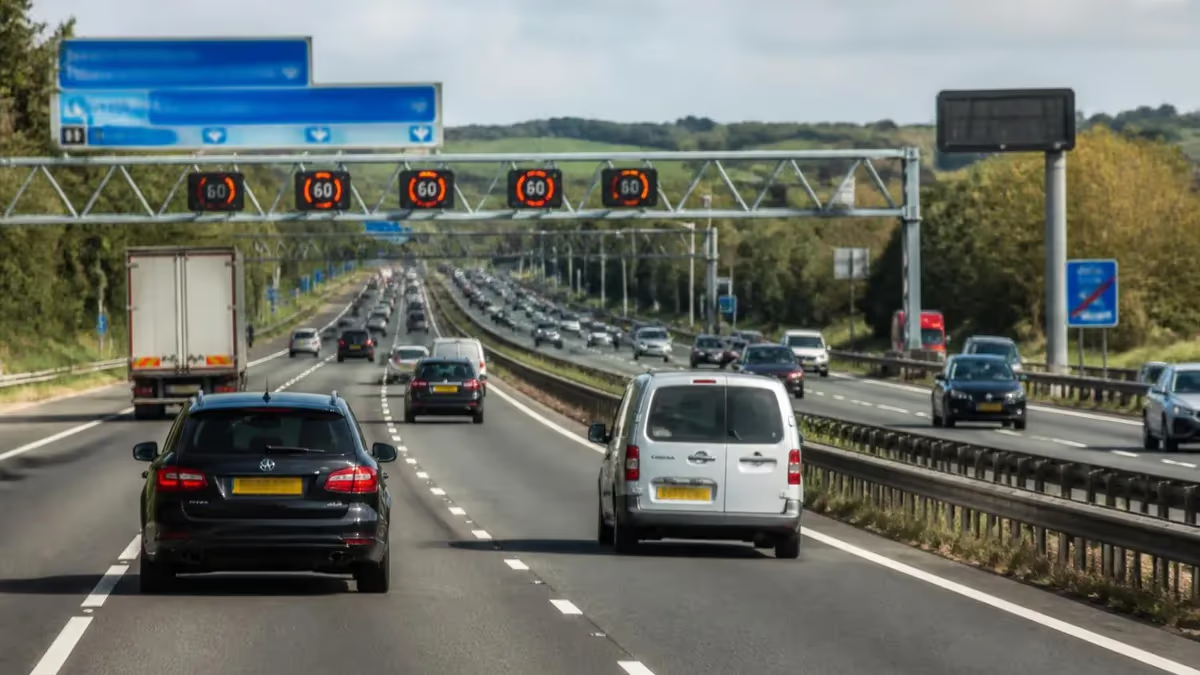
Motorbike hazard perception practice is one of the most important steps any aspiring motorcyclist can take before sitting the DVSA theory test. Unlike the multiple-choice section, the hazard perception clip test requires you to spot developing dangers on real roads in real time — a skill that demands active training, not passive reading. Every learner rider who wants to earn their full motorcycle licence must pass both parts of the theory test, and many candidates underestimate just how much targeted practice the hazard perception section demands before they are truly ready.
The hazard perception test was introduced by the DVSA specifically because research showed that early identification of road hazards is one of the single strongest predictors of collision involvement over a lifetime of riding.
For motorcyclists the stakes are even higher than for car drivers: two-wheeled vehicles offer no protective crumple zones, no airbags, and far less passive safety, meaning that the ability to spot and react to a developing hazard in the first fraction of a second can be the difference between a clean escape and a serious injury. That is why the DVSA treats this component of the theory test with such importance.
Before sitting the real test, candidates should complete multiple rounds of motorcycle hazard perception practice using official-style video clips so they become completely comfortable with the format, the scoring system, and the rhythm of clicking at precisely the right moment. The format rewards early clicks on genuine developing hazards while penalising those who click randomly or repeatedly in rapid succession — a nuance that catches many first-time candidates off guard and leads to avoidable failures.
This guide covers everything you need to know about the motorcycle hazard perception test in 2026: what the clips look like, how the scoring algorithm works, exactly what a "developing hazard" means in DVSA terms, proven strategies to raise your score efficiently, and how to build a structured revision programme over the weeks leading up to test day. Whether you are a complete beginner who has never watched a hazard perception clip before, or a candidate who has already failed once and is trying to understand what went wrong, the advice here is practical and evidence-based.
Many learners make the mistake of treating the hazard perception test as an afterthought and focusing nearly all their revision energy on the multiple-choice bank. In reality, a significant proportion of theory test failures — especially among younger riders and those new to UK roads — come from falling short on the hazard perception threshold rather than on the knowledge questions.
The pass mark for the hazard perception section is 44 out of a possible 75 points, and the distribution of marks across the fourteen clips means that missing a handful of clips entirely can push you below the pass threshold even if you score well on the rest.
Throughout this guide you will find free practice quizzes, structured study schedules, scoring tips, and insider strategies drawn from thousands of successful motorcycle theory test candidates. The goal is not just to help you scrape over the pass mark but to ensure you walk into the test centre genuinely confident in your ability to spot hazards quickly, reliably, and consistently across every type of road scenario the DVSA uses in its official clip library. Let us start by understanding exactly what the test involves.
Motorcycle Hazard Perception Test by the Numbers
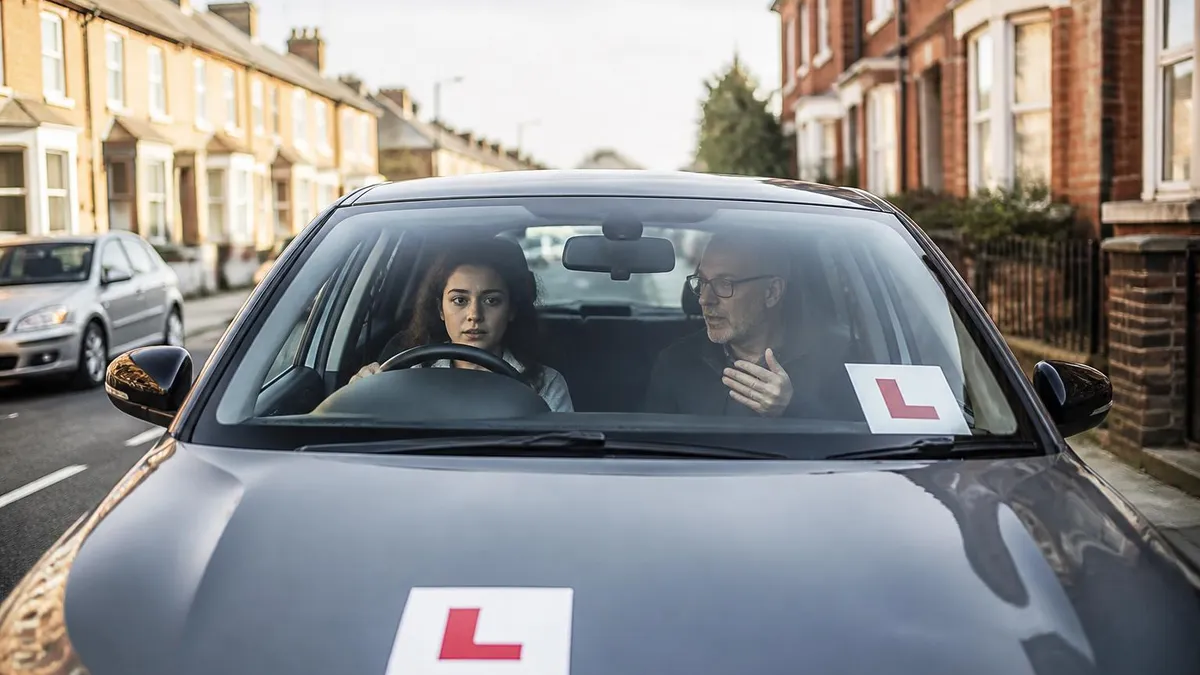
4-Week Motorcycle Hazard Perception Study Plan
- ▸Watch at least 20 official-style hazard perception clips without clicking — observe only
- ▸Read the DVSA guide on what counts as a developing hazard
- ▸Complete one full 14-clip practice session and note your score
- ▸Identify which clip types you found most difficult
- ▸Complete two full 14-clip practice sessions daily
- ▸Focus on pedestrian and cyclist hazard clips
- ▸Practice clicking precisely at the moment hazards begin to develop
- ▸Review every clip you scored 0 or 1 on and identify the correct click window
- ▸Simulate real test conditions — no pausing, no replays
- ▸Target junction and roundabout clips specifically
- ▸Practice on mobile and desktop to adapt to different screen formats
- ▸Aim for a consistent practice score above 55 out of 75
- ▸Complete one full timed practice test each morning
- ▸Review the Highway Code sections on observation and hazard awareness
- ▸Rest from intensive practice the day before your test
- ▸Arrive at the test centre relaxed and confident in your preparation
Understanding exactly what the DVSA means by a "developing hazard" is the single most important concept to grasp before any motorbike hazard perception practice session. The test does not reward you for clicking on static hazards — a parked car, a red traffic light, or a pedestrian walking calmly on the pavement are not scoreable events.
A developing hazard is specifically defined as a situation that is changing in a way that will require you, as the driver or rider, to take some form of action: braking, steering, slowing, or adjusting your road position. The key word is "developing" — the hazard must be in the process of becoming dangerous, not already fully formed.
In practical terms, a developing hazard might be a child on the pavement who begins to step toward the kerb, a car emerging slowly from a side road, a cyclist wobbling ahead of you, or a pedestrian with a pushchair beginning to cross at an uncontrolled junction. In each case the clip shows the moment of transition — the point at which something that was safe becomes something that demands a response.
Your job as the test candidate is to identify that transition point and click your mouse or touchscreen at the earliest moment it becomes apparent. The earlier your valid click within the scoring window, the higher your score for that hazard, up to a maximum of five points.
Each of the fourteen clips in the motorcycle hazard perception test contains at least one scoreable developing hazard, and one of the clips will contain two. This means there are fifteen hazards in total across the full test, giving a maximum possible score of seventy-five points.
The pass mark is forty-four points, which means you need to score an average of just under three points per hazard to pass — but this average masks a lot of variability. Scoring zero on several clips and fives on others can still get you across the line, but candidates who consistently miss the scoring window entirely on multiple clips will struggle to reach forty-four points even with strong performance elsewhere.
The clips themselves are filmed from the perspective of a driver or rider travelling on real UK roads, covering urban streets, rural lanes, dual carriageways, roundabouts, and residential areas. Motorcyclists taking the theory test see the same clips as car learners — the DVSA does not currently use separate clip libraries for different vehicle categories. However, motorcycle candidates often benefit from paying particular attention to clips that involve vulnerable road users such as cyclists, pedestrians, and horse riders, since these scenarios directly mirror the real-world hazards that motorcyclists encounter most frequently on UK roads.
The scoring window for each developing hazard opens at the exact moment the DVSA's human raters agreed was the earliest reasonable time to identify the hazard, and it closes when the hazard has fully developed or resolved. Within that window, clicking earlier earns more points: a click at the very start of the window scores five, progressively later clicks score four, three, two, or one, and clicking outside the window scores zero.
If the test system detects a pattern of rapid repeated clicking — sometimes called "clicking chickens" — it will automatically award zero for that clip regardless of whether any individual click fell within a scoring window. This anti-cheat mechanism is important to understand during practice.
The best way to build genuine hazard identification skill is to watch clips actively rather than passively. Before each practice clip begins, remind yourself to scan the entire scene ahead, not just the road directly in front of the virtual vehicle.
Real hazards often develop in peripheral areas of the frame — a child running between parked cars at the edge of the screen, a cyclist partially hidden behind a bus, a vehicle nose emerging from a driveway at the far left of the image. Developing the habit of wide-field scanning during motorcycle hazard perception practice is one of the techniques that most reliably improves scores for candidates who are consistently missing the early part of scoring windows.
After each practice session, spend time reviewing the clips on which you scored poorly. Most practice platforms show you exactly where your click landed relative to the scoring window, which gives you precise feedback on whether you are clicking too early, too late, or outside the window entirely. Too-early clicks often indicate that a candidate is clicking on static hazards or on situations that are merely unusual rather than genuinely developing.
Too-late clicks usually indicate that the candidate spotted the hazard correctly but hesitated before clicking, perhaps waiting for the situation to become more obviously dangerous before committing. Both patterns are correctable with targeted practice once you understand which error you are making.
Hazard Perception Practice Strategies by Rider Level
If you have never watched a hazard perception clip before, begin by watching the first ten to fifteen clips without clicking at all. Simply observe what happens on screen and try to notice the moment when something changes — a pedestrian steps forward, a vehicle pulls out, a cyclist wobbles into your path. This passive observation phase trains your eye to track multiple elements simultaneously rather than fixating on a single object, which is the most common mistake beginners make during their first real practice sessions.
Once you have watched around fifteen clips in pure observation mode, switch to active clicking. At this stage, do not worry about your score — focus only on identifying the first frame in which you sense something beginning to develop. Most beginners click too late because they wait for certainty before committing. The DVSA rewards early identification specifically to encourage the kind of proactive hazard awareness that prevents real crashes, so training yourself to click at the first sign of change rather than the point of obvious danger is the foundational skill to build first.
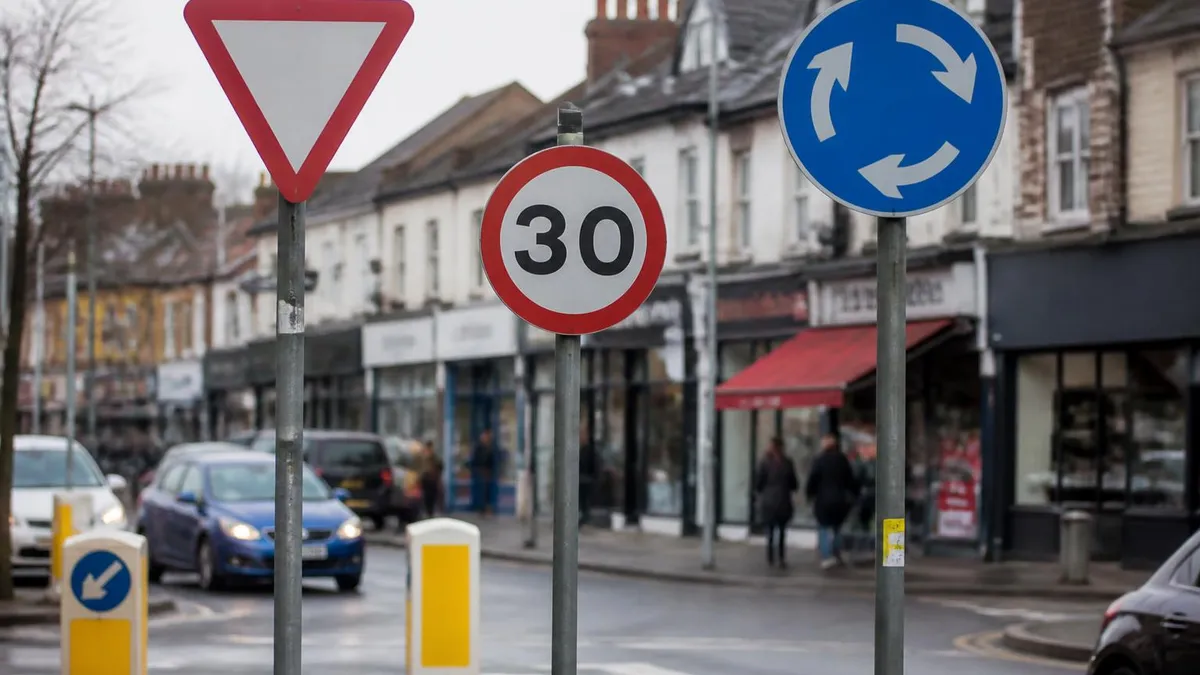
Online Hazard Perception Practice: Benefits and Limitations
- +Available 24/7 — practice whenever your schedule allows, including late evenings and early mornings
- +Instant score feedback after every clip so you know immediately which hazards you missed
- +Wide variety of clip types covering urban, rural, motorway, and residential road scenarios
- +Ability to replay missed clips and study exactly where the scoring window opened
- +Free or low-cost access removes financial barriers for candidates on tight budgets
- +Progress tracking across multiple sessions helps you measure improvement objectively
- −Screen quality and frame rate on free platforms may not match the official DVSA test interface
- −Some free clip libraries are outdated and do not reflect the current DVSA clip selection
- −Repeated exposure to the same clips can create familiarity bias — you learn the clip, not the skill
- −No substitute for real-world riding experience in building genuine hazard awareness instincts
- −Anti-click detection algorithms vary across platforms, so practice scoring may not mirror official test scoring
- −Over-reliance on practice scores can create false confidence if the practice clips are easier than official ones
Pros and Cons at a Glance
| Pros | Cons |
|---|---|
| Instant score feedback after every clip so you know immediately which hazards you missed | Screen quality and frame rate on free platforms may not match the official DVSA test interface |
| Wide variety of clip types covering urban, rural, motorway, and residential road scenarios | Some free clip libraries are outdated and do not reflect the current DVSA clip selection |
| Ability to replay missed clips and study exactly where the scoring window opened | Repeated exposure to the same clips can create familiarity bias — you learn the clip, not the skill |
| Free or low-cost access removes financial barriers for candidates on tight budgets | No substitute for real-world riding experience in building genuine hazard awareness instincts |
| Progress tracking across multiple sessions helps you measure improvement objectively | Anti-click detection algorithms vary across platforms, so practice scoring may not mirror official test scoring |
Motorcycle Hazard Perception Practice: 10-Point Preparation Checklist
- ✓Complete at least four full 14-clip practice sessions before booking your theory test date
- ✓Consistently score above 50 out of 75 in practice before sitting the real test
- ✓Study the official DVSA hazard perception guidance document available on GOV.UK
- ✓Review the Highway Code sections on hazard awareness, observation, and vulnerable road users
- ✓Practise on a desktop or laptop screen similar in size to the test centre monitor
- ✓Complete at least two full practice sessions under strict uninterrupted timed conditions
- ✓Identify your three weakest clip types and complete targeted extra practice on those scenarios
- ✓Confirm you understand the anti-click-spam rule and never click more than once per second
- ✓Get a full night of sleep the evening before your theory test date
- ✓Arrive at the test centre at least 15 minutes early to settle your nerves before starting
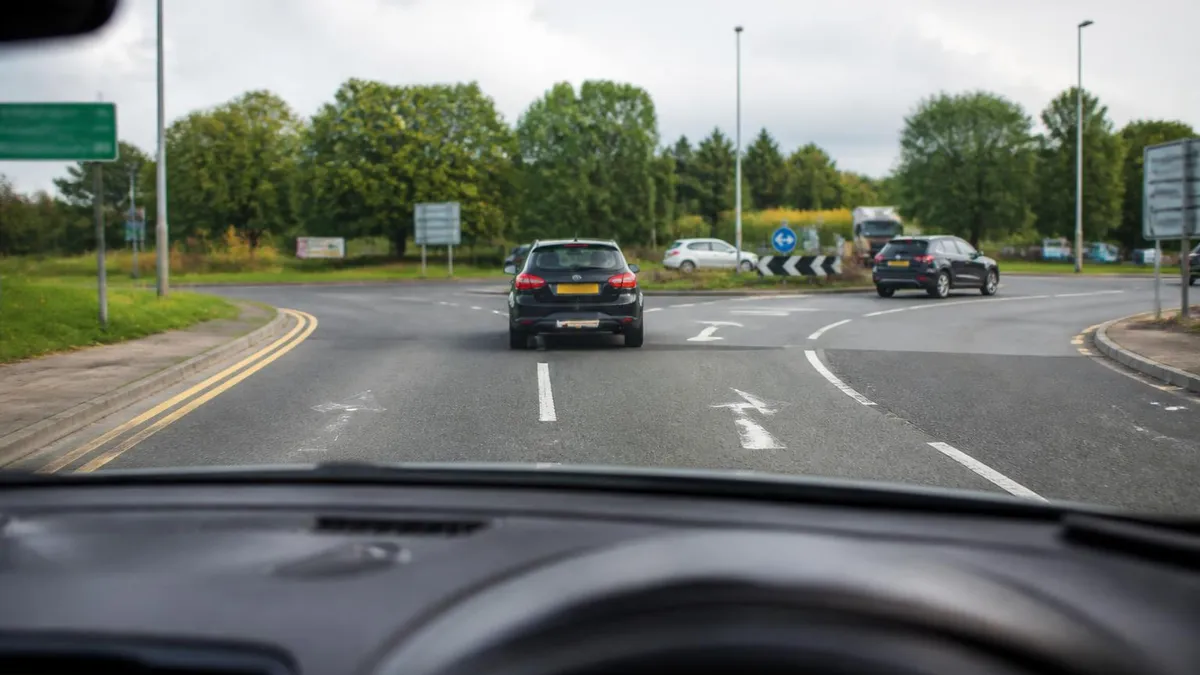
The 5-Second Rule for Maximum Points
Research into DVSA scoring windows shows that the highest-value click zone — worth 5 points — typically opens within the first 5 seconds of a hazard beginning to develop. If you find yourself thinking "should I click?" you are probably already past the peak scoring window. Train yourself to click the moment you feel uncertainty, not the moment you feel certainty.
Achieving the highest possible scores in the motorcycle hazard perception test requires moving beyond basic hazard identification into a more sophisticated understanding of how road scenes develop over time. Expert-level candidates do not simply react to hazards as they become obvious — they read the visual cues that signal a hazard is about to develop before it becomes unmistakable. This predictive scanning approach is what separates candidates who score consistently in the 60s and 70s from those who hover around the pass mark, and it is a skill that can be taught and trained systematically.
The most important predictive cue to learn is the behaviour of pedestrians near the kerb edge. A pedestrian walking parallel to the road with their head facing forward is a low-level concern. The same pedestrian who slows slightly, turns their head toward the road, or steps slightly closer to the kerb is showing early signs of crossing intention — and that is the moment to click, several seconds before they actually step into the road.
Practising this mental labelling — asking "what is this person about to do?" rather than "what are they doing right now?" — trains your brain to process road scenes predictively rather than reactively.
Vehicle-related hazards follow similar patterns. A car waiting to emerge from a side road on the left with a driver looking right is a low-level static hazard. The moment that driver's head begins to turn forward, or the car's front wheels begin to inch forward, the hazard is developing.
For vehicles turning right across your path, the key cue is often a slight reduction in speed combined with a change in steering angle — the car's nose begins to point slightly across the centreline before the driver commits to the turn. Learning to read these vehicle dynamics through practice gives you a decisive advantage in the scoring window.
Cyclists and motorcyclists in the clips deserve special attention from motorcycle theory test candidates, both because they are disproportionately represented in the DVSA clip library and because understanding their behaviour from personal riding experience can actually work against you in the test.
Some candidates who ride regularly find themselves under-clicking on cyclist and motorcyclist hazard clips because the behaviour seems normal and familiar rather than alarming. The test does not ask whether a situation is alarming — it asks whether it is developing into something that requires a response. Even a small swerve by a cyclist to avoid a pothole qualifies as a developing hazard if it brings them into your path.
Rural road clips present a unique challenge because the visual field is wider, the road is narrower, and hazards often appear at higher speeds with less warning time. On a rural clip, pay particular attention to field entrances and farm tracks — slow-moving agricultural vehicles pulling onto the road represent one of the most common high-value hazards in rural clips.
Also watch for horses and riders on narrow country lanes: a horse that appears calm can react unpredictably to the sound of an approaching vehicle, and the DVSA frequently uses horse-related scenarios as developing hazards in rural road clips. Click the moment the horse shows any sign of nervousness or the rider begins to signal.
Dual carriageway and motorway clips tend to feature hazards related to lane changes, merging vehicles, and vehicles slowing unexpectedly. On higher-speed road clips, the scoring window opens and closes faster than on urban clips because the speed differential between vehicles compresses the available reaction time. Candidates who practise primarily on urban clips sometimes struggle with dual carriageway scenarios because they are accustomed to slower-developing hazards. Ensure your practice sessions include a proportionate share of faster-road clips so that the rhythm of high-speed hazard identification becomes as natural as urban scenario scanning.
One underused technique for improving hazard perception scores is verbalising what you see during practice clips — narrating the scene aloud as you watch it. Saying "car at junction left, beginning to move" or "cyclist ahead, wobbling toward centre" forces your conscious attention onto hazard elements that your eye might otherwise skim over passively. This technique is particularly effective for candidates who find their mind wandering during longer clips or who struggle to maintain concentration across a full fourteen-clip practice session. Try it for a week of practice and measure whether your average score improves.
The DVSA's hazard perception system automatically awards zero points for any clip where it detects a pattern of rapid, repeated clicking. If you click more than once every two seconds during a clip, you risk triggering this penalty even if some of your clicks fell within valid scoring windows. Never click more than once per second, and never click in bursts — practise single, deliberate clicks only.
One of the most common reasons motorcycle theory test candidates fail the hazard perception section is not a lack of hazard awareness but a fundamental misunderstanding of the test's scoring mechanics. Many candidates walk into the test centre believing that the more they click, the better their chances — a strategy that the DVSA has explicitly designed the anti-click-spam detection to penalise. Understanding the mechanics in detail before you sit the test transforms the hazard perception section from a lottery into a manageable, learnable challenge with a clear path to a reliable pass.
The scoring window system works as follows: for each developing hazard in a clip, the DVSA has defined an opening frame and a closing frame based on human rater consensus about when the hazard first becomes identifiable and when it has fully materialised. Within this window, your first click is scored: a click at the very start earns five points, and points decrease by one for each subsequent band within the window, down to one point for a click near the closing frame.
Clicks outside the window earn nothing, and a clip flagged for click spam earns zero regardless. Only your first click within a scoring window counts — clicking multiple times during a window does not increase your score but does increase your risk of triggering the spam detection.
This means the ideal strategy is simple to describe but requires practice to execute reliably: click once, at the earliest moment you identify a developing hazard, and then stop clicking until the next hazard begins to develop.
In practice, this demands a level of disciplined confidence that most learners do not have naturally — the instinct when uncertain is to click repeatedly to cover your bases. Replacing that instinct with a single, confident early click is the central skill challenge of the hazard perception test, and it is why structured practice is so much more effective than casual viewing of clips.
Between practice sessions, there are several complementary activities that accelerate skill development. Watching dash-cam footage from UK roads on video platforms is an excellent supplement to formal practice clips, because real-world footage presents hazards without the artificial framing of test clips and forces you to scan the entire scene rather than the centre of a formatted test video. Try pausing dash-cam clips at random intervals and asking yourself what the three most significant developing elements in the scene are — this unstructured version of hazard identification builds flexible, transferable skills rather than pattern-matching to specific test clip formats.
Reading about motorcycle crashes and near-misses in DVSA statistical publications and insurance industry reports also builds a mental library of the situations that most commonly lead to collisions. When you know from real data that junctions account for the majority of motorcycle collisions in the UK, you naturally become more attentive to junction-related hazards in practice clips. When you know that rear-end collisions increase significantly in wet weather, you scan following-distance situations more actively. This data-informed approach to practice makes your hazard scanning purposeful rather than generic.
For candidates who have previously failed the hazard perception section, the most valuable first step is to obtain a breakdown of their scores by clip if available, or at minimum to note which clips they felt least confident about during the test. Many failed candidates discover a consistent pattern — for example, consistently poor performance on rural clips or clips featuring vulnerable road users — that points to a specific gap in their preparation.
Addressing a targeted gap is far more efficient than repeating general practice, and it is the approach most likely to produce a pass at the next attempt. Structured motorcycle hazard perception practice with honest self-assessment is the fastest route from a fail to a confident pass.
Finally, remember that the hazard perception test is not just a qualification hurdle — it is training for real riding. Every skill you develop during practice translates directly to safer behaviour on UK roads. The motorcyclists who are most likely to ride incident-free for decades are those who developed genuine, automatic hazard scanning habits early in their riding careers. The DVSA theory test gives you a structured opportunity to build those habits before you ever ride in traffic, and taking that opportunity seriously pays dividends not just on test day but throughout your entire riding life.
In the final days before your motorcycle theory test, the focus should shift from intensive skills acquisition to consolidation, confidence-building, and logistical preparation. At this stage, adding new material or attempting to cram additional practice clips is less valuable than reviewing what you already know and ensuring that your mental and physical state on test day is optimal. Candidates who arrive at the test centre tired, anxious, or uncertain about basic logistics often underperform relative to their actual ability — and the hazard perception section, which requires sustained concentration across fourteen consecutive clips, is particularly sensitive to fatigue and anxiety.
In the 48 hours before the test, aim to complete no more than one full practice session per day. Use this session not to push your score higher but to confirm that your performance is stable and consistent at a level comfortably above the pass mark. A practice score of 55 or above on the day before the test is a strong indicator of readiness.
If your practice score drops unexpectedly during this final session, do not panic — single-session variance is normal and does not predict actual test performance. Take a break, review any clips you found difficult, and trust the preparation you have done over the preceding weeks.
On the morning of the test itself, eat a proper meal and stay well hydrated. Cognitive performance — including the rapid visual processing and decision-making required for hazard perception — deteriorates measurably with dehydration and low blood sugar. These are entirely controllable factors that cost nothing to optimise and can make a meaningful difference to your concentration level across the full duration of the theory test. Avoid caffeine in excess if it makes you jittery or impairs your fine motor coordination, since the precise timing of mouse clicks is genuinely important for maximising your hazard perception score.
At the test centre, you will be given the opportunity to complete a practice hazard perception clip before the scored section begins. Use this practice clip fully and actively — do not treat it as a formality. The practice clip allows you to calibrate your clicking rhythm to the specific test interface you are using that day, which may feel slightly different from the platform you used during home practice. Getting one or two confident early clicks during the practice clip will settle your nerves and establish the rhythm you want to carry through the full scored section.
During the scored clips, remember the three core principles: scan wide, click early, click once. Keep your eyes moving across the full frame rather than fixating on the centre of the road directly ahead. Commit to your first click the moment you sense a situation beginning to develop, rather than waiting for it to become obviously dangerous.
And after clicking, resist the temptation to keep clicking on the same hazard — move your attention forward to scan for the next developing situation. These three habits, practised consistently in the weeks before the test, should become automatic enough by test day that you can execute them without conscious effort.
If at any point during the test you feel your concentration slipping — perhaps after a particularly complex clip or during a longer rural road sequence — take a single breath and refocus before the next clip begins. The brief pause between clips is there partly for this reason.
Candidates who maintain steady concentration across all fourteen clips consistently outperform those whose attention fluctuates, regardless of their raw hazard identification ability. Mental stamina is a genuine component of hazard perception performance, and the study schedule in this guide includes extended practice sessions precisely to build that stamina progressively over your preparation period.
After the test, regardless of outcome, take time to reflect on which aspects of the hazard perception section felt comfortable and which felt challenging. If you pass — congratulations, and carry those hazard awareness habits forward into your on-road riding. If you need to resit, the reflection process is the first step toward a stronger second attempt. The DVSA imposes a three-day waiting period before you can resit the theory test, which is enough time to identify your specific weaknesses, complete targeted practice sessions, and arrive at your next attempt better prepared than before.
Sample DVSA UK Driving Theory Practice Questions
Try these questions from our free DVSA UK Driving Theory practice tests. The correct answer and an explanation follow each question.
Which of the following is NOT permitted to use a UK motorway?
- A. A learner driver accompanied by an approved driving instructor in a dual-control car.
- B. A motorcycle with a 150cc engine.
- C. A double-decker bus.
- D. A cyclist.
Answer: D. A cyclist.
Motorways MUST NOT be used by certain classes of road users, including pedestrians, cyclists, horse riders, and riders of motorcycles under 50 cc. Since June 2018, learner drivers can drive on motorways if accompanied by an approved instructor in a suitable car.
At a crash scene, a vehicle is on fire with a casualty inside. What should you do first?
- A. Try to remove the casualty immediately
- B. Call the emergency services
- C. Attempt to put the fire out yourself
- D. Wait for other motorists to help
Answer: B. Call the emergency services
You should call the emergency services immediately so trained professionals can deal with both the fire and the casualty safely.
You see a circular sign with a red border and a symbol of a car and a motorcycle inside. What does this sign prohibit?
- A. Only cars and motorcycles are allowed
- B. No motor vehicles allowed
- C. Motorcycle and car racing prohibited
- D. Parking for cars and motorcycles only
Answer: B. No motor vehicles allowed
A circular sign with a red border indicates a prohibition. The symbols inside show what is prohibited. In this case, the car and motorcycle symbols mean that no motor vehicles are allowed on this road, which is likely reserved for pedestrians and cyclists.
How does an incorrectly inflated tyre affect fuel consumption?
- A. It has no effect on fuel consumption
- B. Under-inflated tyres increase rolling resistance and raise fuel consumption
- C. Over-inflated tyres always increase fuel consumption
- D. Tyre pressure only affects braking, not fuel use
Answer: B. Under-inflated tyres increase rolling resistance and raise fuel consumption
Under-inflated tyres have a larger contact patch and higher rolling resistance, forcing the engine to work harder and burn more fuel.
DVSA Questions and Answers
UK Theory Test Pass Mark: Car, Bike, LGV, PCV & ADI Scores

Free Theory Test App: The Complete UK Guide to Choosing, Using and Passing With Mobile Practice in 2026

Cancelling Driving Test: The Complete UK Guide to Refunds, Rebooking and Avoiding Lost Fees in 2026
Theory Test Certificate: Complete UK Guide to Passing and Using Your DVSA Pass Letter in 2026
Official DVSA Theory Test Kit: Complete Study Guide for UK Learners
About the Author

Licensed Driving Instructor & DMV Test Specialist
Penn State UniversityRobert J. Williams graduated from Penn State University with a degree in Transportation Management and has spent 20 years as a certified driving instructor and DMV examiner consultant. He has personally coached thousands of applicants through written knowledge tests, skills assessments, and commercial driver licensing programs across more than 30 states.