
Crash Course Driving: Cost, Pass Rates & Is It Worth It? 2026 September
Everything about crash course driving in the UK — ✏️ what's included, how much it costs, pass rates vs traditional lessons, and how to find a good instructor.
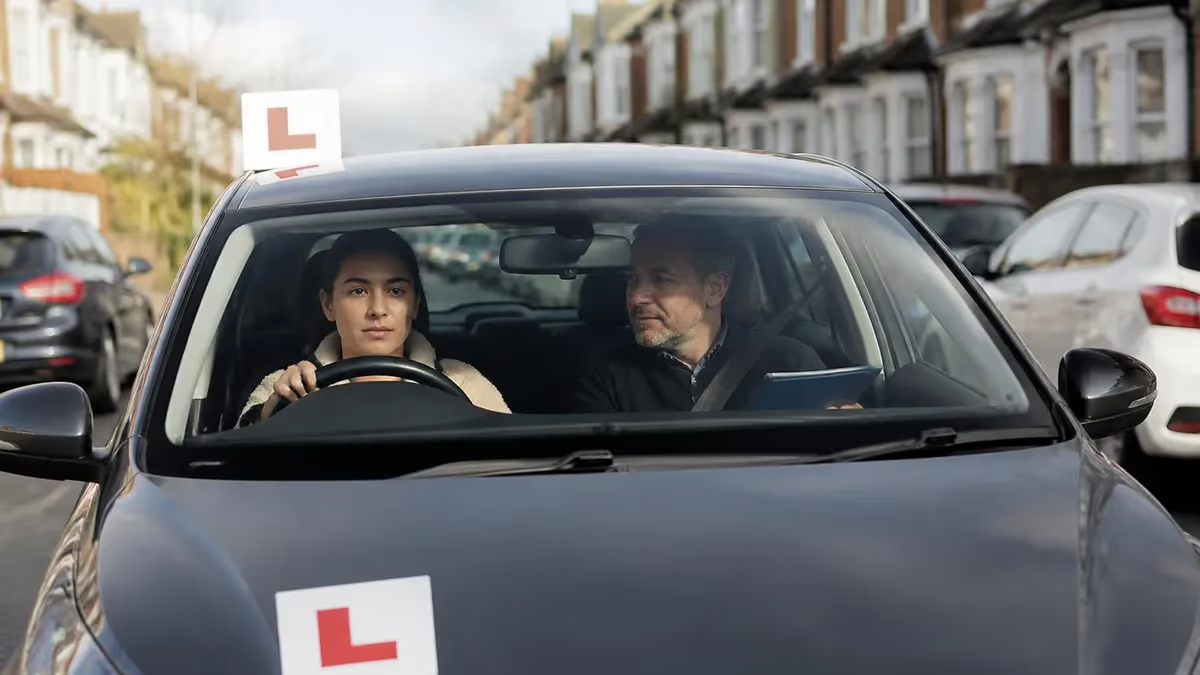
A crash course driving programme packs months of learning into a single week or two. Instead of one or two hours every Saturday, you're behind the wheel for six or seven hours a day — practising junctions, roundabouts, manoeuvres, and independent driving until they become automatic. It's intense. It works for the right person. But it isn't for everyone.
Here's the honest picture: crash courses deliver the same content as traditional driving ls — clutch control, hazard perception, motorway rules, the lot. The difference is compression. What most learners spread across six months, you're absorbing in ten days. That speed is both the appeal and the risk.
This guide covers everything you need to decide whether a crash course is right for you — costs, realistic pass rates, what a typical week looks like, and how to avoid dodgy providers. It won't sugarcoat the driving test pa and it won't pretend a crash course is the right call for every learner. Read through it properly before you part with any money — a little research upfront saves a lot of frustration later.
Crash Course Driving: Key Numbers
What Exactly Is a Crash Course?
A crash course — sometimes called an intensive driving course — is a block of driving lessons booked back-to-back over a short period, usually one to two weeks. The DVSA doesn't use the term officially, but the format is widely recognised and legal. Your instructor must still be a DVSA-approved ADI (Approved Driving Instructor).
The word "crash" refers to the speed of learning, not the quality. You're not skipping content. You're covering it faster. A learner taking traditional lessons might spread 40 hours over six months; on a crash course, that same 40 hours happens in a fortnight.
Most providers offer packages that bundle lessons with a book driving exam. Some also include theory test prep materials, though the theory test itself is a separate DVSA exam you must pass before you can sit the practical — more on that shortly.
There are two main formats. The first is a fixed package: you pay upfront for a set number of hours (typically 30–40) plus a test fee, all arranged back-to-back. The second is flexible intensive: you choose your own pace — say, three or four hours per day over three weeks — which gives you slightly more consolidation time between sessions.
One thing that surprises some people: crash courses are taught in the instructor's dual-controlled car, not your own. That applies to every lesson and to the practical test itself. The examiner requires dual controls — non-negotiable. So even if you've been privately practising in a family car, you'll be switching to the instructor's vehicle from day one. Give yourself a session to get used to the feel of it.
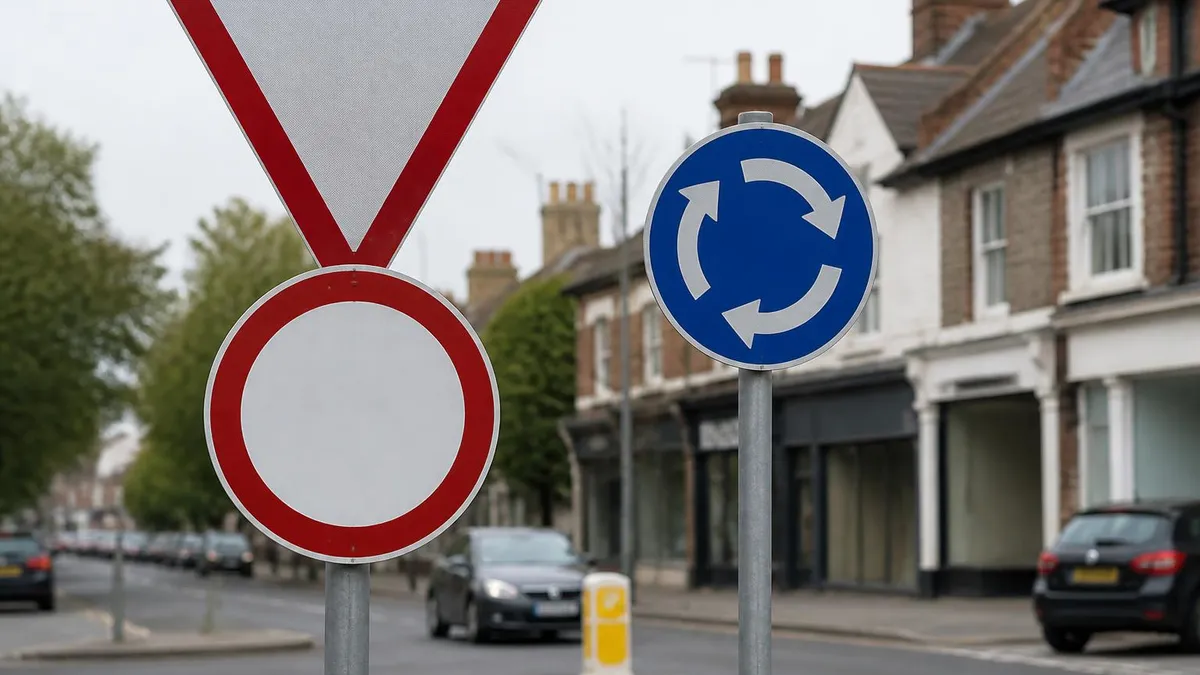
You cannot book your practical driving test until you've passed the DVSA theory test. Crash courses cover on-road driving only — the theory test is entirely separate and must be sat and passed beforehand. Make sure you've booked your theory test practice before you start your crash course. Don't assume the theory is part of the package — most providers don't include it.
How Many Hours Do You Actually Need?
The DVSA doesn't set a minimum hour requirement, but the average learner needs around 45 hours of professional lessons plus 22 hours of private practice to reach test standard — according to DVSA's own published data. Crash courses typically offer 30–40 hours of professional instruction.
That gap matters. If you've already done some private driving with a parent or a friend, 30–35 hours of professional tuition may be enough to fill the gaps. If you've never driven before in your life, 30 hours is usually too thin — you'll likely need 40+ to be genuinely test-ready.
A typical daily schedule looks like this: four to eight hours behind the wheel, broken into morning and afternoon sessions with a break in between. Instructors won't push you beyond what's safe, so the day usually splits into roughly 3–4 hours in the morning, an hour's break, then 2–3 hours in the afternoon. After about five hours of active driving, concentration drops — and a tired learner makes more mistakes, not fewer.
The honest question to ask yourself before booking: how much driving have you done already? If the answer is "a fair bit" — regular trips with a parent or a partner — a 30-hour crash course may work well. If the answer is "almost none", budget for more hours and don't book your test date until your instructor says you're ready.
What Does a Crash Course Cost?
Prices vary by region, provider, and how many hours you need — but here's a realistic breakdown.
A full crash course package typically costs £800–£1,500. That usually includes all your lesson hours plus the practical test fee (currently £62 for a weekday test, £75 for evenings and weekends). Some providers include a theory test mock or revision materials; most don't.
If you'd rather pay as you go, some ADIs offer intensive lessons at £30–£40 per hour — though you'll pay separately for the test. That can work out cheaper if you need fewer hours than the package assumes. It can also work out more expensive if you need more. Get clarity before you commit.
A few things that affect price:
- Location — London and the South East are typically £100–£200 more expensive than the Midlands or the North.
- Time of year — summer has more demand, so some providers charge more in July and August.
- Automatic vs manual — automatic lessons are sometimes priced slightly higher, though not universally.
- Pass guarantee — some providers offer a "pass or your money back" deal. Read the small print — refunds often require you to have failed within a specific number of attempts.
One thing to watch: very cheap deals. A package priced at £400 or less for 30 hours and a test is almost certainly cutting corners somewhere — underqualified instructors, rushed test bookings, or hours that simply don't add up. Paying the going rate for a qualified ADI is not optional if you want a fair chance of passing.
Crash Course vs Traditional Driving Lessons
- +Skills build rapidly — you don't forget between sessions
- +Suits adults with some prior experience who learn quickly
- +Can get licence in weeks rather than months
- +Good for people with a specific deadline (job, move abroad, family need)
- +Less disruption to work schedules once the week is blocked out
- +Intensive practice often fixes bad habits faster than weekly lessons
- −First-time pass rates are lower than traditional learners
- −Less consolidation time — the brain needs sleep to convert skill to memory
- −Higher upfront cost than weekly lessons spread over time
- −Mental fatigue is real — seven hours of driving is exhausting
- −Poor fit for anxious learners or complete beginners
- −If you fail, rebooking another test adds weeks and more cost
Who Should Actually Do a Crash Course?
Crash courses suit a specific type of learner. They're not the best route for everyone — and being honest with yourself here saves money.
You're a good candidate if you've driven before. Maybe you've had lessons in the past and stopped, or you've been doing private practice with a family member for a year. You've got the basic coordination — clutch, steering, mirrors — and you just need structured tuition to get to test standard. In that case, 30 hours of intensive instruction can fill the gaps quickly.
Career changers often find crash courses ideal. If you need a driving licence to start a new job — delivery, care work, fieldwork — and you have a start date looming, booking a crash course and targeting a specific test slot makes sense. You can plan around it, clear your diary for a fortnight, and focus.
Gap year students heading off to work or travel abroad sometimes take crash courses before they leave. So do people who've just moved from a city to a rural area where driving is suddenly non-negotiable.
People who failed their test and want intensive retraining are another strong use case. If you failed because of a specific set of issues — roundabouts, reverse parallel park, independent driving — a focused intensive block with an instructor who knows exactly where you went wrong can be very effective.
Who crash courses don't suit so well: nervous or anxious drivers who find lessons stressful, complete beginners with zero prior experience, people who struggle to process new skills quickly, or anyone who can't afford to fail and redo the course. Traditional lessons over several months give you time — time to make mistakes, recover from them, and let the skills settle properly.
What a Typical Crash Course Week Looks Like
Day 1 — Basics and Town Driving
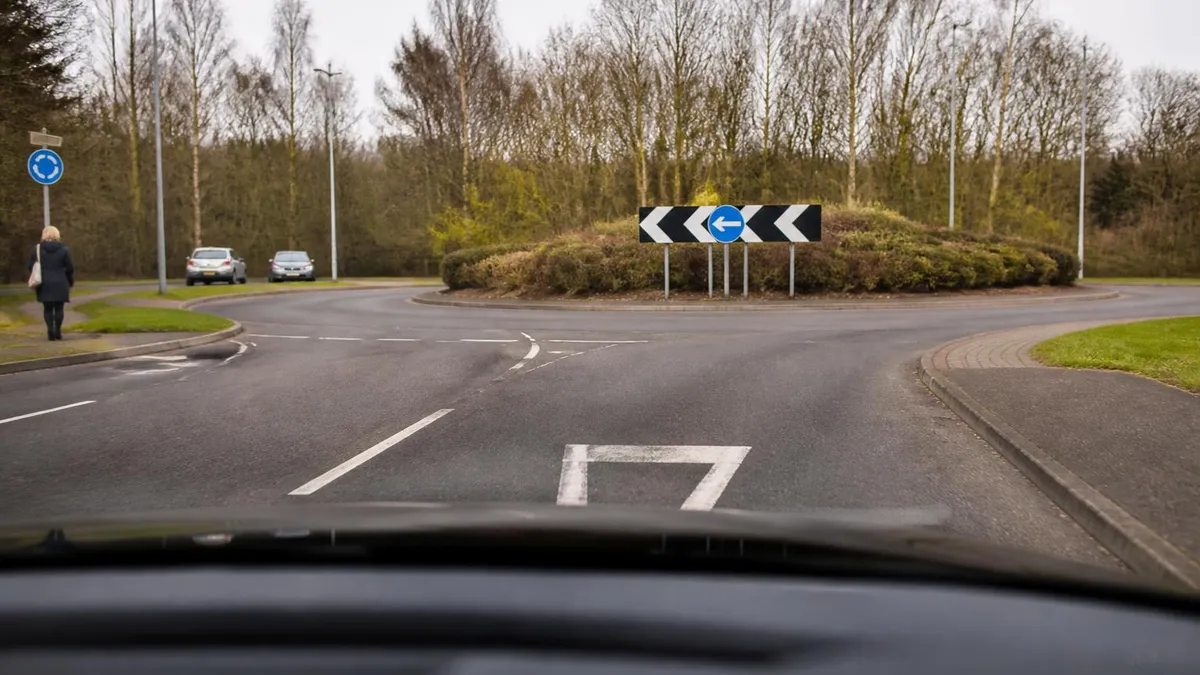
Day 2 — Junctions and Roundabouts
Day 3 — Manoeuvres
Day 4 — Dual Carriageways and Faster Roads
Day 5 — Mock Test
Days 6–7 — Targeted Remedial Practice
Test Day
Pass Rates: The Honest Truth
Crash courses typically produce first-time pass rates of around 40–50%. The national first-time pass rate for all driving l in the UK sits at roughly 47% — so crash course pass rates are roughly in line with, or slightly below, the national average.
That might seem counterintuitive. More hours in less time — shouldn't that mean better results? The problem is consolidation. When you sleep, your brain processes and embeds the skills you practised during the day. Sleep deprivation, mental fatigue, and the sheer volume of new information per day all work against you on a crash course. A learner who spent six months having weekly lessons has had dozens of "sleep cycles" to embed each skill. A crash course learner has had ten.
Traditional learners who take their time — typically 40–50 hours of lessons spread over five or six months — tend to achieve slightly higher first-time pass rates. There's simply more consolidation time built in.
That said, pass rate data is tricky to compare fairly. Many crash course learners come in with some prior experience, which partly offsets the consolidation disadvantage. And many traditional learners drag lessons out longer than necessary, taking tests before they're ready.
Test centre location also matters. Some centres have notoriously trickier routes — busy city-driving test centres, or routes that require merging onto fast dual carriageways early in the test. Your instructor should know the local driving test route well. Ask specifically which test centre your test will be at and whether your instructor has taken pupils through that test centre before. An instructor unfamiliar with local hazards puts you at a slight disadvantage — avoidable with a simple question upfront.
Bottom line: a crash course doesn't guarantee a worse chance of passing. But if you're a complete beginner booking a crash course purely to save time, your odds are lower than a learner who takes their time. Going in with realistic expectations matters.
Before you book your driving test, make sure your instructor genuinely believes you're ready — not that you've done the hours and the test date is booked.

How to Find a Reputable Crash Course Provider
- ✓Check for the DVSA ADI badge — every qualified instructor must display it in the windscreen
- ✓Verify on the DVSA ADI register at gov.uk — takes 30 seconds and confirms the licence is current
- ✓Read reviews on Google and Trustpilot — look for specific mentions of the test centre used
- ✓Ask directly for the instructor's first-time pass rate — a good instructor won't hesitate
- ✓Get a written breakdown of what's included — hours, test fee, and any rebooking policy
- ✓Avoid providers who cannot tell you which test centre your test will be at
- ✓Be cautious of packages priced significantly below the £800 market average
- ✓Ask whether you'll have the same instructor throughout — consistency matters on a crash course
- ✓Check the refund policy before paying a large deposit — especially for 'pass guarantee' deals
- ✓Confirm the practical test is already booked or can be booked before you commit
Theory Test: Do It First
This is the single most common mistake crash course learners make. You book the course, clear your diary, pay the deposit — and then realise you haven't passed your theory test yet. You cannot sit your practical test without a valid theory test pass certificate. Full stop.
The theory test has two parts: a multiple choice section (50 questions, 86% pass mark) and a hazard perception section (14 video clips, threshold score required). Both must be passed in the same sitting. The certificate is valid for two years from the date you passed.
If your theory certificate expires before you pass your practical, you have to sit the theory again. That's a common and avoidable delay. Start your theory test practice well before your crash course begins — aim to have the theory certificate in hand before your first lesson.
Good news: the theory content and the practical skills reinforce each other. Understanding stopping distances makes you a better driver. Knowing the rules for pedestrian crossings makes the real-world decisions faster. Don't treat the theory as a box-ticking exercise — it genuinely helps.
One more thing: if your test date is booked and the slot disappears, check for driving test — they appear regularly and can get you an earlier date if your original booking falls through.
Crash Course Packages: What to Compare
- Hours included: 25–30 hrs
- Typical cost: £600–£900
- Test fee included: Usually no
- Best for: Experienced drivers needing a top-up
- Hours included: 30–40 hrs
- Typical cost: £900–£1,200
- Test fee included: Usually yes
- Best for: Most learners with some prior experience
- Hours included: 40+ hrs
- Typical cost: £1,200–£1,500+
- Test fee included: Yes (sometimes 2 attempts)
- Best for: Learners who need more time or want security
Have your theory test certificate first. Without it, your practical test cannot be booked — and your crash course week is wasted. Do not book a crash course until you have passed your theory test or have a theory test date already confirmed within the next few weeks.
Tips for Getting the Most from Your Week
A crash course is physically and mentally demanding. These aren't optional extras — they're the difference between ending the week at test standard and ending it exhausted and underprepared.
Sleep properly. Every night. Six hours isn't enough when you're trying to embed 40 hours of motor skills in ten days. The brain consolidates procedural memory during deep sleep — skimping on it directly slows your progress. Aim for eight hours minimum.
Don't drink alcohol during the course week. Even a couple of drinks the night before disrupts sleep quality and slows reaction times. It's a week. It's worth it.
Keep a brief daily log. After each session, write three or four lines: what you practised, what went well, what your instructor flagged. It takes five minutes and forces you to process what happened. The next morning, read it before you get in the car.
Eat a proper breakfast. Driving on an empty stomach kills concentration faster than you'd expect. Low blood sugar mid-roundabout is not the time to find out.
Tell your instructor if you're struggling. A good ADI will adjust the session pace. There's no benefit to pressing on when you're at capacity — mistakes at that point don't teach you anything useful.
Do your homework. Most instructors will give you a Highway Code topic to review each evening. Ten minutes of reading cements what you practised during the day and primes you for the next session.
One underrated tip: visualise. Sounds a bit odd, but it works. In the evenings, mentally walk yourself through a roundabout approach — mirrors, signal, position, speed, gear, look. Sports psychologists use this with athletes because motor rehearsal in the mind activates the same neural pathways as physical practice. Driving instructors who coach high-performance learners recommend it. Cost: zero. It takes three minutes.
Finally, if your test is at a specific test centre you haven't driven around, ask your instructor to do a familiarisation drive in the area beforehand. Examiners use local roads and familiar hazards — if you've never driven past a particular school crossing or a busy level crossing on that test route, the first time shouldn't be during the actual test.
Crash Course vs Traditional Lessons: Which Is Right for You?
A crash course condenses all required driving content into one to two weeks of intensive daily sessions. You'll typically drive four to eight hours per day, covering everything from basic car control through to independent driving and test-standard manoeuvres. The main advantage is speed — you can hold a full licence within weeks. Skills also build continuously because you're practising every day, so each session reinforces the last rather than starting slightly cold after a week's gap. The main drawback is consolidation: your brain needs sleep cycles to embed procedural memory, and ten days simply provides fewer of those cycles than six months. Crash courses suit motivated adults with some prior experience and a clear deadline. If you're anxious behind the wheel or starting from scratch, the intensity can become counterproductive.
DVSA Crash Course Driving Questions and Answers
About the Author

Licensed Driving Instructor & DMV Test Specialist
Penn State UniversityRobert J. Williams graduated from Penn State University with a degree in Transportation Management and has spent 20 years as a certified driving instructor and DMV examiner consultant. He has personally coached thousands of applicants through written knowledge tests, skills assessments, and commercial driver licensing programs across more than 30 states.