
How to Become a Death Doula: Training, Certification, and Career Path
Learn how to become a death doula: ✍🏼 training programs, certification paths, costs, scope of practice, and how to build a sustainable end-of-life practice.
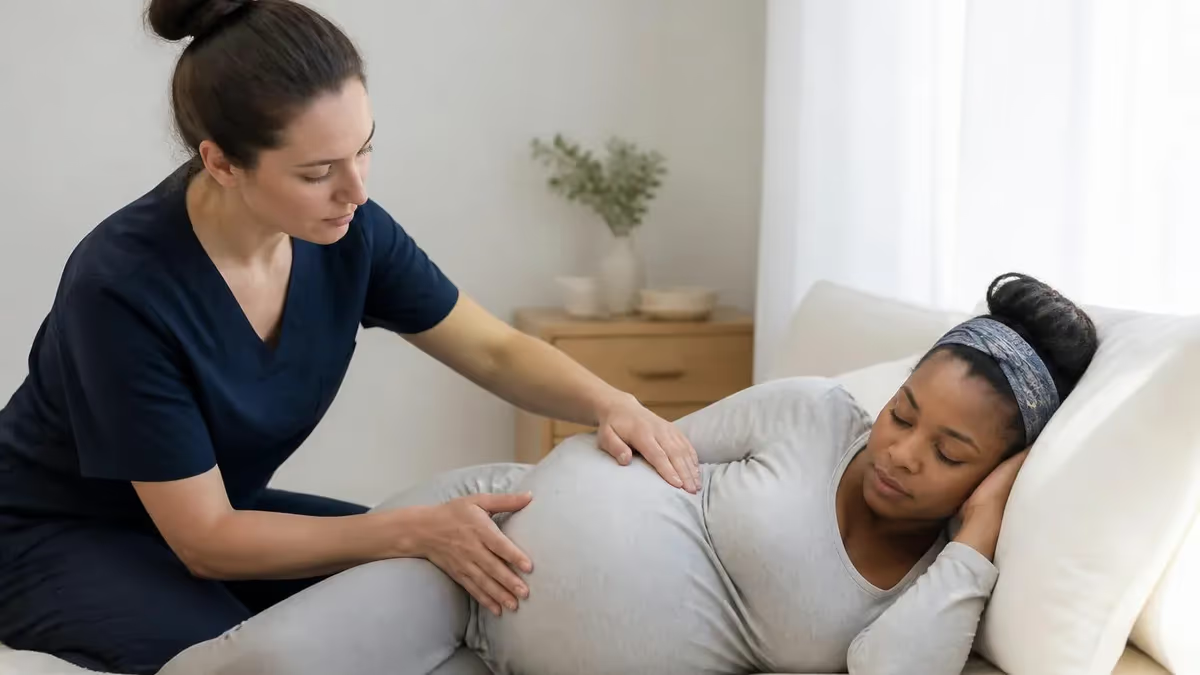
Learning how to become a death doula starts with understanding the role itself, the doula meaning behind it, and the very real demand for compassionate, non-medical companionship at the end of life. A death doula, sometimes called an end-of-life doula, supports dying people and their families through education, presence, legacy work, vigil planning, and after-death care. The work blends emotional labor, practical organization, and spiritual sensitivity, and it has grown rapidly as Americans look for more personal, less clinical death experiences in homes, hospices, and care facilities.
The death doula movement borrows much of its philosophy from birth work, which is why the broader question of what is a doula matters here. A doula, whether at birth, postpartum, or end of life, provides continuous non-medical support. The death doula is the mirror of the birth doula: where one welcomes a soul into the world, the other helps usher one out with dignity, choice, and informed consent. This parallel framing also helps families understand your role when you introduce yourself in hospital rooms or hospice meetings.
If you are weighing the comparison of doula vs midwife or wondering where end-of-life work fits within the larger doula profession, you are not alone. Most newcomers discover death doula training after first researching birth or postpartum doula work, and many practitioners hold dual certifications. Understanding the wider doula landscape gives your end-of-life practice credibility, vocabulary, and a network of allied professionals to refer to.
Becoming a death doula in the United States typically takes between three and twelve months, depending on whether you choose a weekend workshop, a self-paced online program, or a full immersion certificate course. There is no federal license required, which means the field is largely self-regulated by organizations such as the National End-of-Life Doula Alliance (NEDA), the International End-of-Life Doula Association (INELDA), and Going With Grace. Each sets its own training hours, scope of practice standards, and code of ethics.
Cost is the next question every prospective doula asks. Training fees in 2026 range from roughly $650 for a basic 30-hour online certificate to $3,500 for advanced in-person programs that include practicum hours, mentorship, and business coaching. NEDA proficiency badges add another $135. Add optional grief counseling continuing education and your first-year investment can easily land between $1,200 and $5,000. None of this is reimbursed by health insurance the way some birth doula services now are.
The reward, however, is profound and measurable. End-of-life doulas report some of the highest job-satisfaction scores in caregiving, even though pay varies widely. Hourly rates in 2026 sit between $40 and $125, with vigil packages from $1,200 to $3,500. Many practitioners blend doula work with hospice volunteering, public speaking, advance care planning, and grief group facilitation to create a sustainable income. The path is unconventional, deeply meaningful, and increasingly viable as a primary or secondary career.
This guide walks through every step of how to become a death doula in 2026: defining the role, choosing the right training, building your scope of practice, setting prices, finding clients, and avoiding the most common legal and emotional pitfalls. Whether you are a nurse seeking deeper presence work, a hospice volunteer ready for paid practice, or a complete career changer drawn by purpose, the roadmap below applies.
Death Doula Career by the Numbers

Your Step-by-Step Path to Becoming a Death Doula
Self-Assessment and Exposure
Choose a Training Program
Complete Coursework and Practicum
Earn a NEDA Proficiency Badge
Launch Your Practice
Refine Through Continuing Education
Choosing the right training program is the single most important decision in figuring out how to become a death doula. Unlike nursing or social work, there is no accredited degree, so the quality bar varies dramatically. The best programs combine live instruction with required practicum hours, written case studies, and a code-of-ethics agreement. Programs that promise certification in a single weekend with no mentorship should be treated with caution; they may technically grant a certificate but will not prepare you for the realities of vigil work or family dynamics.
The International End-of-Life Doula Association (INELDA) offers one of the most established curricula, with roughly 32 hours of foundational instruction plus a multi-month proficiency process. Going With Grace, founded by Alua Arthur, leans into the cultural, racial, and systemic context of death in America. Doulagivers offers tiered training from free introductory webinars to advanced clinical certifications. The University of Vermont Larner College of Medicine runs a respected eight-week professional certificate that academic-minded learners often prefer.
Curriculum should include the active dying process, advance directives, pain and symptom recognition (without crossing into medical advice), legacy projects, vigil planning, after-death body care, family system dynamics, grief theory, self-care, and business basics. If a program glosses over scope of practice, ethics, or business setup, plan to supplement with separate workshops. Many practitioners stack a foundational certificate with continuing education in trauma-informed care or thanatology to round out their skills.
If you are also interested in how to become a doula at births or postpartum, several organizations now offer combined programs. DONA International, CAPPA, and Cornerstone all train cross-specialty doulas. A dual credential lets you serve families across the lifespan and creates referral synergy: a family who hired you postpartum may call you years later for a grandparent. About 30 percent of working death doulas report holding at least one other doula specialty.
Online versus in-person is the next decision. Online cohorts cost less, accommodate working students, and reach rural areas where no local trainer exists. In-person intensives offer somatic learning, ritual practice, and the kind of peer bond that becomes a lifelong professional network. Hybrid programs split the difference, delivering didactic content online and reserving weekend retreats for the embodied, harder-to-Zoom material like washing a body or facilitating a forgiveness conversation.
Verify three things before paying tuition. First, ask for the syllabus and the names of past instructors. Second, request contact information for two recent graduates and ask them directly about post-graduation support. Third, confirm whether the certificate aligns with NEDA proficiency badge requirements, because NEDA is becoming the unofficial standard hospices look for. A program unwilling to share any of these is a program to skip.
Finally, budget for the hidden costs: books (about $150), liability insurance (about $300 per year), mentorship calls ($75 to $150 each), and travel to in-person residencies. A realistic all-in figure for your first year of training and launch sits between $2,200 and $5,800. Spreading payments across two tax years and writing off business expenses can soften the impact considerably.

DOULA Practice Test Questions
Prepare for the Doula Certification exam with our free practice test modules. Each quiz covers key topics to help you pass on your first try.
DOULA Certification Anatomy and Physiology...
DOULA Exam Questions covering Certification Anatomy and Physiology of Birth. Master DOULA Test concepts for certification prep.
DOULA Certification Breastfeeding and Infa...
Free DOULA Practice Test featuring Certification Breastfeeding and Infant Feeding. Improve your DOULA Exam score with mock test prep.
DOULA Certification Evidence-Based Practic...
DOULA Mock Exam on Certification Evidence-Based Practices and Research. DOULA Study Guide questions to pass on your first try.
DOULA Certification Labor Support Techniques
DOULA Test Prep for Certification Labor Support Techniques. Practice DOULA Quiz questions and boost your score.
Postpartum Doula Skills That Transfer to End-of-Life Work
The core competency of a postpartum doula is non-judgmental, continuous presence during a vulnerable transition. End-of-life work demands the same patience: sitting through long silences, normalizing intense emotions, and refusing the urge to fix what cannot be fixed. Both roles ask the practitioner to manage their own discomfort so the family feels safe being messy.
If you have already trained as a postpartum doula, you have practiced this skill under fluorescent lights and at three in the morning. That muscle memory transfers directly to vigil shifts, where exhaustion, family conflict, and uncertainty about timing test even the calmest professionals. Many post pregnancy doula graduates find the end-of-life pivot easier than expected.
Is Becoming a Death Doula Right for You?
- +Deeply meaningful work with high reported job satisfaction
- +Flexible, self-directed schedule that fits caregiving or part-time goals
- +Low barrier to entry compared to nursing or social work
- +Growing demand as Baby Boomers age and home-death rates rise
- +Strong professional community through NEDA, INELDA, and local circles
- +Skills transfer from any caregiving or counseling background
- +Opportunity to specialize in pediatric, dementia, or cultural niches
- −Income is inconsistent, especially in the first two years
- −Emotional load is heavy and burnout is common without supervision
- −No insurance reimbursement in most states as of 2026
- −Self-employed taxes and business setup intimidate newcomers
- −Family conflict can place you in uncomfortable mediator roles
- −On-call vigil work disrupts personal life and sleep
- −Field is unregulated, so clients may not understand your value

Pre-Launch Checklist for New Death Doulas
- ✓Complete a recognized end-of-life doula training program with practicum hours
- ✓Volunteer 20+ hours with a local hospice to confirm clinical comfort
- ✓Earn the NEDA Proficiency Badge after 50 documented client interactions
- ✓Register an LLC or sole proprietorship in your state
- ✓Purchase professional liability insurance ($250–$400 per year)
- ✓Build a one-page website with services, pricing, and a clear scope statement
- ✓Draft a written client agreement reviewed by a small-business attorney
- ✓Create a referral list of grief counselors, hospices, and funeral directors
- ✓Set up a HIPAA-compliant intake form and secure file storage
- ✓Schedule monthly peer supervision to prevent vicarious trauma and burnout
Volunteer Before You Certify
Every experienced end-of-life doula gives the same advice: spend 20 to 40 hours volunteering with a hospice or sitting with strangers in a No One Dies Alone program before you spend a dollar on tuition. It saves money, builds humility, and confirms that you can stay present without rescuing. Many trainings will even waive admission requirements for applicants who arrive with documented volunteer hours.
Building a sustainable death doula practice is part calling and part business, and most new practitioners underestimate the second half. The clinical and emotional skills get all the attention in training, but the practitioners who last five years or more are the ones who treat their work as a small business from day one. That means clear pricing, written agreements, organized intake, and a marketing plan that does not rely on grief or guilt to convert clients.
Pricing in 2026 generally follows three models. Hourly rates run from $40 to $125 depending on region and experience, with urban coastal markets at the high end. Package pricing bundles a non-medical assessment, two planning sessions, a vigil shift, and an after-death visit for $1,200 to $3,500. Retainer models, used by wealthier clients with longer prognoses, charge $400 to $900 per month for unlimited messaging plus a guaranteed number of in-person hours. Pick the model that fits your energy and your community.
Marketing as a death doula is unusual because direct advertising can feel intrusive. Most working doulas get clients through three channels: hospice and palliative care referrals, funeral home partnerships, and word-of-mouth from past families. Building those referral relationships requires showing up at interdisciplinary team meetings, offering free community talks at libraries, and writing clearly about your scope so professionals know exactly when to call you. A simple, well-written website that explains how you define doula in the end-of-life context outperforms social media in this niche.
Insurance and legal protection matter even more in death work than in birth work because the family is grieving and looking for someone to blame when things go wrong. Carry at least $1 million in professional liability coverage through a provider like CM&F or HPSO. Use a written agreement that spells out non-medical scope, after-hours expectations, refund policies, and confidentiality. Have a small-business attorney review the template once and reuse it for every client. The few hundred dollars spent on this step is the cheapest insurance you will ever buy.
Bookkeeping is the third pillar. Open a separate business checking account, track every expense, and put 25 to 30 percent of every payment into a tax account from day one. Quarterly estimated taxes will sneak up on first-year doulas who forget that no employer is withholding for them. Software like Wave or QuickBooks Self-Employed handles most of this for less than $25 a month and pays for itself the first time you claim mileage to a client home.
Self-care and supervision are not optional add-ons but core business infrastructure. Burnout is the leading reason death doulas leave the field within two years. Budget for monthly peer supervision groups, a personal therapist who understands grief work, and at least one yearly retreat away from client contact. These line items belong in your pricing model just as much as liability insurance. A doula who burns out helps no one.
Finally, plan for income diversification. Few doulas live on direct client fees alone. Many add public speaking, advance care planning workshops, grief group facilitation, hospital chaplaincy, writing, or teaching the next generation of doulas. A typical sustainable practice in 2026 looks like 40 percent direct client work, 30 percent teaching or speaking, 20 percent contract work with hospices, and 10 percent writing or grants. Build that mix intentionally instead of leaving it to chance.
Death doulas are non-medical, non-clinical practitioners. You cannot diagnose, prescribe, administer medication, declare death, or replace hospice nursing. Crossing these lines is the fastest way to face complaints, lawsuits, or state action even in unregulated jurisdictions. Always defer clinical questions to licensed providers and document the referral.
Long-term success as a death doula depends on three habits that the best practitioners develop early: continuing education, community building, and ruthless self-care. The field is young, evolving fast, and culturally varied. The doula who keeps learning every year will out-earn and outlast the one who treats certification as a finish line. Plan for at least 20 hours of continuing education annually, ideally a mix of clinical, cultural, and business topics.
Specialization is the most reliable way to increase your rate and your impact. Pediatric end-of-life work, dementia-specific support, home funeral guidance, trauma-informed care for veterans, and culturally specific death practices each have growing demand and few qualified practitioners. Pick one or two specialties that match your life experience and pursue advanced training in those areas. A specialist doula in 2026 commands $100 to $150 per hour with less competition than a generalist at $60.
Community is your second lever. Local doula circles, peer supervision groups, and national associations such as NEDA and INELDA give you supervision, referrals, and continuing education at a fraction of the cost of going solo. Many cities now have monthly death cafes where doulas, hospice staff, and curious community members gather. Showing up consistently for three to six months builds your reputation faster than any paid advertising. Search doula near me directories to find local gatherings and listings that families actually use.
Mentorship deserves its own paragraph because it is the single biggest predictor of long-term success. Pair with an experienced doula who has at least five years of practice and a different demographic than yours. Pay them for monthly calls. Bring real cases, ask hard questions, and let them push back on your blind spots. Many new doulas resist this step because of cost, but a $150 monthly mentorship investment routinely returns thousands in avoided mistakes and accelerated client growth.
Boundaries with clients are the often-overlooked third habit. New doulas tend to over-give, answering texts at midnight and attending every family meeting unpaid. This kindness corrodes the practice and the practitioner. Set clear response windows, charge for extra hours past the agreed package, and decline cases that fall outside your scope or capacity. Clients respect a doula who models healthy limits, and modeling those limits is itself a teaching for the family.
Public-facing writing and speaking accelerate your career more than any single marketing tactic. A monthly blog post, a quarterly podcast appearance, or a yearly community talk positions you as the go-to resource in your area. You do not need a large audience. Hospices, social workers, and clergy quietly read everything in the field, and they refer to the doula whose name they recognize. Two thoughtful articles a year, indexed by search engines, will produce client inquiries for the rest of your career.
Finally, plan for sustainability across decades, not seasons. Many of the most respected death doulas in the country worked the role part-time for the first three to five years while keeping another income source. There is no shame in pacing the transition. The work itself rewards patience, and so does the business behind it. The goal is not the fastest path to full-time death doula income but the longest, healthiest, most useful career possible.
Practical preparation in the final weeks before launching your death doula practice can make the difference between a confident first client and a nervous, money-losing scramble. Start by completing all administrative tasks at least three weeks before you publicly announce your services. That means LLC paperwork filed, EIN issued, business bank account funded, liability insurance active, and at least one written agreement reviewed by an attorney. Doing this before clients show up prevents the temptation to skip steps under pressure.
Next, run two or three pro bono or sliding-scale cases under mentor supervision. These cases function as your professional shakedown cruise. You will discover which intake questions you forgot to ask, which family dynamics you mishandled, and which logistics broke down. Pro bono cases are not free labor; they are paid for in feedback, testimonials, and confidence. Pick families through a hospice partner so that there is a clinical safety net behind you.
Set up your client experience as carefully as your training. From the first inquiry email to the after-death follow-up letter, every touchpoint should feel calm, organized, and clearly priced. Create templates for the welcome packet, the initial assessment form, the vigil plan, and the after-death checklist. Templates are not impersonal; they free your attention to be fully present with the family instead of reinventing paperwork at midnight.
Build a referral network of at least ten allied professionals before you announce your launch. The list should include two grief counselors, two hospice intake coordinators, two funeral directors, one estate attorney, one financial planner experienced with end-of-life issues, one chaplain or interfaith minister, and one home funeral guide. Meet each of them in person if possible, exchange materials, and follow up quarterly. These ten people will generate the bulk of your first-year client flow.
Invest in a sustainable schedule from the start. Cap your active caseload at three to four families at a time, with at least one full day off every week and one full weekend off every month. Vigil work can compress your schedule unpredictably, so the cap protects you from accidental overload. Track your hours weekly, not monthly, so creep does not sneak up. Doulas who burn out almost always exceeded a reasonable caseload for six months before the crash.
Prepare your own grief practice. You will lose every client. That truth shapes the work in a way no other caregiving role demands. Identify your grief rituals before you need them: a walk, a conversation with a peer, a written reflection, a candle lit at the studio. Without an active grief practice, the losses stack quietly until they topple the practice. Treat your own grief processing as professional infrastructure, not a personal hobby.
Finally, give yourself permission to evolve. The death doula you are in year one will not be the doula you are in year five. Specialties will narrow, prices will rise, methods will deepen, and certain populations will call to you more than others. Trust the evolution. The families you serve in year five will benefit from every mistake, course, mentor, and vigil shift that came before. Becoming a death doula is not an event but a long, dignified apprenticeship to mortality itself.
Doula Questions and Answers
Free Doula Basic Questions and Answers: Certification Practice 2026

Doula Services Near Me: How to Find, Vet, and Hire the Right Birth or Postpartum Doula

Doula Training: Programs, Certifications, and How to Start

End-of-Life Doula: Role, Training, Cost, and How to Become One

Insurance Coverage for Doulas: Does Insurance Cover Doula Services in 2026?
About the Author

Registered Nurse & Healthcare Educator
Johns Hopkins University School of NursingDr. Sarah Mitchell is a board-certified registered nurse with over 15 years of clinical and academic experience. She completed her PhD in Nursing Science at Johns Hopkins University and has taught NCLEX preparation and clinical skills courses for nursing students across the United States. Her research focuses on evidence-based exam preparation strategies for healthcare certification candidates.