
Doula Near Me: How to Find, Hire, and Verify a Certified Doula in 2026 October
Searching for a doula near me? Learn doula meaning, 🎓 how to vet certifications, costs, and what postpartum, birth, and death doulas actually do.
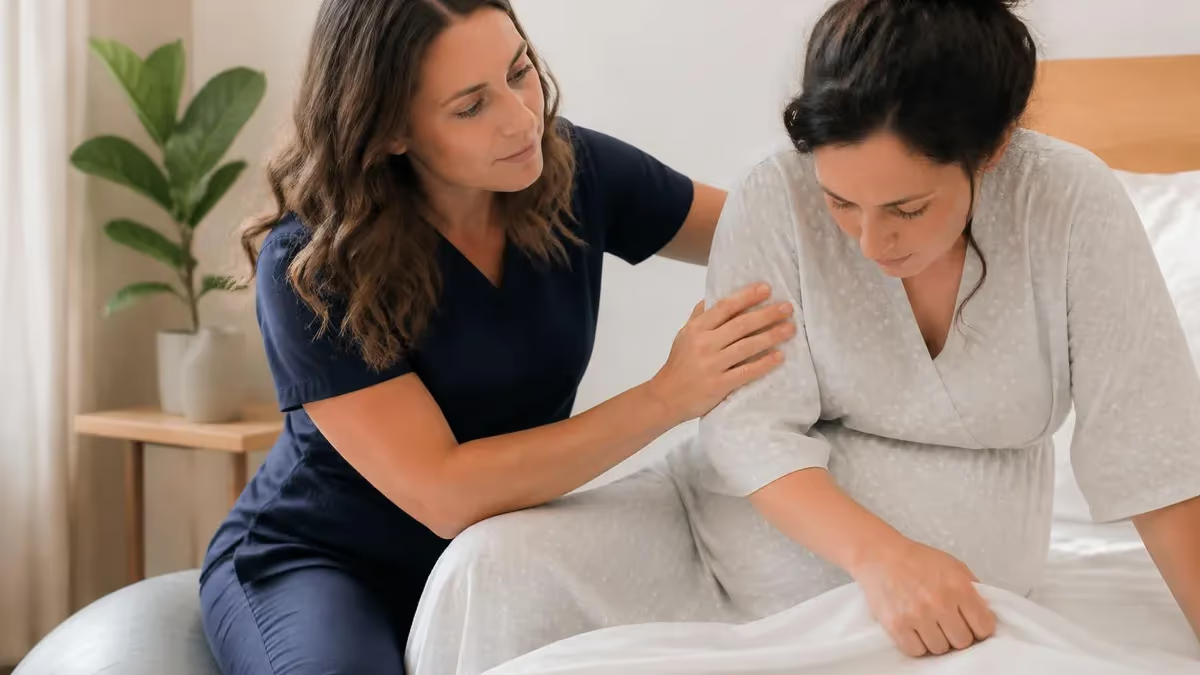
If you have ever typed "doula near me" into a search bar at 2 a.m. while cradling a heating pad, you are not alone. Searches for local doulas have climbed more than 60 percent since 2020, and roughly one in nine American birthing people now hire some form of doula support. The trouble is that "doula" is an unregulated title in nearly every U.S. state, so the quality, training, and scope of the person who shows up at your door can vary wildly. This guide cuts through the noise.
The doula meaning traces back to an Ancient Greek word for a woman who serves another woman, but the modern role is broader and more clinical-adjacent than the etymology suggests. A doula is a trained, non-medical companion who provides continuous physical, emotional, and informational support before, during, and after a major life transition. Most people think of birth doulas, but postpartum doulas, antepartum (bed-rest) doulas, abortion doulas, fertility doulas, and end-of-life death doulas all operate under the same umbrella.
Hiring locally matters more than most first-time clients realize. A doula who lives within 30 minutes of your home can attend prenatal visits, arrive quickly when labor stalls, and continue weekly postpartum support without burning out on travel. Telehealth doulas exist and serve rural clients well, but proximity remains the single strongest predictor of whether your doula actually makes it to your birth, your bedside, or your kitchen table on the hardest days.
This article walks you through every decision you will face: what training credentials to trust, how postpartum doulas differ from birth doulas, what death doulas actually do, how the doula vs midwife distinction shapes your care team, what fair pricing looks like in 2026, and the red flags that should send you running. We also cover insurance reimbursement, Medicaid coverage in the 12 states that now fund doula care, and how to interview three candidates in a single afternoon.
You will also find practical scripts: questions to ask at the consultation, a contract checklist, and a vetting framework borrowed from hospital-based doula programs. By the end, you should be able to walk into a meet-and-greet, ask sharp questions, and leave knowing whether the person across the table is the right fit for your family or your dying parent.
One last thing before we dive in. Doula work is intimate. It is not a transactional service like dog walking or house cleaning, even though the booking experience can feel that way on apps like DoulaMatch or Bornbir. The right doula will sit with you in silence at 4 a.m., advocate when you cannot find your voice, and remember the name of your toddler three years later. Pick someone you would trust with the most vulnerable hours of your life — because that is exactly what you are doing.
Throughout this guide we will use the terms birth doula, labor doula, and childbirth doula interchangeably. We will distinguish postpartum doulas (who specialize in the fourth trimester) and death doulas (who specialize in end-of-life care) as separate roles, because their training paths, fees, and daily work look very different from labor support.
Doula Care in the U.S. by the Numbers

Types of Doulas You Can Hire Locally
Provides continuous in-person support during labor and delivery, plus two to three prenatal visits and one postpartum visit. Specializes in comfort measures, positioning, and partner coaching. Average local fee: $1,200 to $2,000.
Supports families during the first six to twelve weeks after birth with newborn care, breastfeeding help, meal prep, and overnight shifts. Billed hourly ($30 to $55/hr) or in packages of 20 to 80 hours.
Specializes in high-risk pregnancies and prescribed bed rest. Helps with light household tasks, sibling care, and emotional support during prolonged hospitalization or home confinement. Often hourly billing.
Also called an end-of-life doula. Sits vigil with the dying, helps with legacy projects, advance directives, and supports families through anticipatory grief. Sessions run $50 to $100 per hour or flat-fee packages.
Provides non-judgmental support during pregnancy termination, miscarriage, or stillbirth. Many work on sliding-scale or volunteer bases through reproductive justice collectives in major cities.
The fastest way to find a credible local doula is to layer three searches: a national certifying-body directory, a regional collective, and one peer-review platform. Start with DONA International, CAPPA, ProDoula, or DTI — each maintains a free zip-code search of currently certified members. These directories are the cleanest baseline because every name listed has paid annual dues and met re-certification requirements within the last three years.
Next, search for a regional doula collective. Cities like Atlanta, Brooklyn, Oakland, Minneapolis, and Austin host collectives that vet members internally and often offer sliding-scale rates for clients of color, LGBTQ+ families, and Medicaid recipients. Collectives also pool backup-doula coverage, which means if your primary doula gets the flu at 39 weeks, someone you have already met will step in. Solo practitioners cannot always guarantee that.
Layer three is a marketplace platform. DoulaMatch.net, Bornbir, and Mahmee aggregate independent doulas with reviews, photos, and availability calendars. Treat reviews here like Airbnb reviews: read the three-star ones first, because they tend to be the most honest. A doula with 47 perfect five-star reviews and zero detailed paragraphs is harder to evaluate than one with 12 reviews where past clients describe specific moments.
Watch for a critical detail in any listing — the language around certification status. "Certified through DONA" is verifiable. "DONA-trained" usually means the person attended the workshop but never completed the certification packet (which includes attending births, writing essays, and passing a written exam). Both can be good doulas, but the latter is essentially apprentice-level. Ask directly: "Are you currently certified, and through which organization?" then verify on the org's website.
Geographic radius matters. A birth doula should generally live within a 45-minute drive of your planned birth location. Postpartum doulas can stretch to an hour, but anything farther starts to eat into the support time you are paying for. For death doula work, proximity is similarly critical because vigils are unpredictable — your loved one may decline suddenly at 11 p.m. and the doula needs to be reachable, not stuck in cross-town traffic.
Hospitals are an underused source. Many large hospitals — Mount Sinai, Cedars-Sinai, Northwestern, Grady, UCSF — run in-house doula programs that connect uninsured or low-income patients with free or reduced-cost doulas. Ask your OB or midwife if your hospital has such a program. Even if you do not qualify financially, the program coordinator often keeps a list of trusted private doulas who are credentialed to attend births at that specific facility.
Finally, do not underestimate referrals from your prenatal care team. Midwives, chiropractors who specialize in Webster Technique, pelvic floor physical therapists, and IBCLC lactation consultants often refer the same three or four doulas because they know who shows up, who communicates clearly, and who handles complications without panicking. A referral from a trusted clinician is worth ten Instagram ads. If you want a deeper breakdown of how to verify a doula's scope of practice, see our companion piece on the doula near me certification landscape.

DOULA Practice Test Questions
Prepare for the Doula Certification exam with our free practice test modules. Each quiz covers key topics to help you pass on your first try.
DOULA Certification Anatomy and Physiology...
DOULA Exam Questions covering Certification Anatomy and Physiology of Birth. Master DOULA Test concepts for certification prep.
DOULA Certification Breastfeeding and Infa...
Free DOULA Practice Test featuring Certification Breastfeeding and Infant Feeding. Improve your DOULA Exam score with mock test prep.
DOULA Certification Evidence-Based Practic...
DOULA Mock Exam on Certification Evidence-Based Practices and Research. DOULA Study Guide questions to pass on your first try.
DOULA Certification Labor Support Techniques
DOULA Test Prep for Certification Labor Support Techniques. Practice DOULA Quiz questions and boost your score.
Doula Meaning Across Birth, Postpartum, and Death Care
If you ask three doulas to define doula, you will get three slightly different answers, but all will land on the same core: a doula is a trained, non-clinical professional who provides continuous emotional, physical, and informational support through a major life transition. The role explicitly excludes medical tasks — no cervical checks, no fetal monitoring, no medication dosing.
The most-asked variant of the question — what is a doula — really comes down to scope. Doulas hold space, suggest position changes, brew tea, reframe difficult news, and remind partners to eat. They do not deliver babies, prescribe herbs, or diagnose conditions. When a doula stays inside that lane, outcomes improve measurably across nearly every metric Cochrane has studied.
Hiring a Local Doula vs Going Without
- +Continuous one-on-one support that nurses and OBs cannot provide due to shift changes and patient loads
- +Statistically lower cesarean rates, shorter labors, and fewer requests for epidural pain relief
- +Higher rates of breastfeeding initiation and longer breastfeeding duration at 6 weeks postpartum
- +Partner gets coaching and breaks rather than being the sole support person for 18+ hours
- +Postpartum doulas reduce risk of postpartum mood disorders through early intervention and respite
- +Death doulas free family members to be present rather than acting as case managers in the final days
- −Out-of-pocket cost ranges from $800 to over $3,000 depending on region and experience level
- −Insurance reimbursement is inconsistent and often requires a Superbill plus appeals process
- −Doula availability around your due date is not guaranteed — backup doulas may attend your birth
- −Personality fit matters enormously and the wrong match can add stress rather than relieve it
- −Unregulated industry means credentials, scope, and ethics standards vary widely between practitioners
- −Rural areas may have only one or two doulas, limiting choice and creating long drive times

Vetting Checklist for Any Doula Near Me Search
- ✓Confirm current certification status (not just "trained") with DONA, CAPPA, ProDoula, DTI, or INELDA
- ✓Verify they carry professional liability insurance — at least $1 million per occurrence
- ✓Ask how many births or vigils they have attended in the last 12 months, not lifetime totals
- ✓Request two client references from clients whose situation resembled yours (twins, VBAC, hospice, etc.)
- ✓Read the contract carefully for refund policy, backup-doula clause, and travel-radius limits
- ✓Clarify communication boundaries — text response window, phone hours, after-hours emergency contact
- ✓Confirm CPR and infant safety certification is current (postpartum doulas especially)
- ✓Discuss explicit scope of practice — what they will and will not do regarding medical procedures
- ✓Verify hospital privileges if your birth facility restricts which doulas may attend
- ✓Ask about their backup doula by name and request a meet-and-greet with that person too
Continuous support cuts cesarean risk by 39%
The 2017 Cochrane Review of 26 trials covering more than 15,000 birthing people found that continuous one-on-one labor support reduced cesarean delivery by 39 percent, increased spontaneous vaginal birth by 8 percent, and shortened labor by an average of 41 minutes. Doula support produced the largest effect — bigger than support from a nurse, partner, or hospital staff alone. Hiring locally is not a luxury; it is one of the highest-evidence interventions available.
Cost is the question nobody wants to ask first but everyone needs answered. In 2026, expect to pay $800 to $1,200 for a newer certified birth doula (under 25 births attended), $1,200 to $1,800 for an experienced doula (25 to 100 births), and $1,800 to $3,500+ for a senior doula or one with specialized training in VBAC, multiples, or trauma-informed care. Major metros — NYC, LA, San Francisco, Seattle, Boston, DC — run 30 to 50 percent above national averages.
Postpartum doula pricing is hourly rather than flat-fee. Daytime hours average $30 to $45 in most regions, climbing to $50 to $65 in high cost-of-living cities. Overnight rates carry a 25 to 50 percent premium because the doula sleeps lightly between feedings rather than at home in their own bed. Many postpartum doulas require a minimum 4-hour shift; some require 20-hour package minimums to make the engagement worth the scheduling complexity.
Death doula fees follow no single industry standard. Some work entirely on donation through hospice-affiliated programs. Others bill hourly at $50 to $125 or offer tiered packages: a $500 "planning package" covers two 90-minute sessions and advance directive support; a $2,500 "full vigil package" covers ongoing visits over six months, on-call vigil presence, and family bereavement follow-up. Ask for written scope and deliverables before signing.
Insurance coverage is improving but still patchwork. As of early 2026, Medicaid reimburses doula services in roughly a dozen states including Oregon, Minnesota, New Jersey, Rhode Island, Virginia, Michigan, Maryland, and California. Reimbursement rates are often below the private-pay market rate, so not every local doula accepts Medicaid clients. If you qualify, ask your state's Medicaid office for a current list of enrolled doula providers.
Private insurance reimbursement usually requires a Superbill — an itemized invoice your doula provides with CPT or HCPCS codes — that you submit to your insurer for out-of-network reimbursement. Aetna, Cigna, and some Blue Cross plans have begun direct contracting with doula networks like Mahmee and Carrot Fertility. HSAs and FSAs almost universally accept doula expenses as qualified medical expenses with a letter of medical necessity.
Employer benefits are the fastest-growing funding source. Maven Clinic, Carrot, Progyny, and Cleo offer doula stipends or full coverage as part of corporate maternity benefits. If your employer offers any fertility, maternity, or family-forming benefit, log into the portal and check before you assume you are paying out of pocket. Roughly 35 percent of Fortune 500 companies now offer some form of doula benefit, up from under 5 percent in 2019.
Sliding-scale and community-funded doulas exist in nearly every major metro and many rural regions. Organizations like Ancient Song Doula Services (Brooklyn), SisterWeb (San Francisco), and Mamatoto Village (DC) provide free or low-cost doula care to Black, Indigenous, and Latina birthing people as part of broader maternal health equity work. Many are funded through Medicaid waivers, hospital partnerships, and philanthropic grants. If cost is the barrier, these programs should be your first stop.
A doula who offers to perform cervical checks, listen to fetal heart tones with a Doppler, prescribe herbs, dose oxytocin or castor oil, or instruct you to leave the hospital against medical advice is violating every major certifying body's scope of practice. These are red flags that put your safety — and theirs — at legal risk. Walk away from any candidate who blurs the line between non-clinical support and medical decision-making.
The interview is where you separate marketing from substance. Schedule consultations with at least three candidates and budget 45 to 60 minutes each. Most doulas offer free initial meetings either in person, on video, or at a neutral coffee shop. Treat the meeting as a two-way evaluation — they are also assessing whether they can serve you well, and a doula who asks no questions about your goals is a doula who works on autopilot.
Open with logistics: due date or estimated decline timeline, planned birth location or hospice setting, who else is on your support team, and what your last similar experience (if any) was like. This sets context. Then move into the doula's background: how they came to the work, what their training looked like, and how their practice has evolved. Listen for specifics. "I trained with DONA in 2019, attended 14 births that first year, and now specialize in VBAC after my own VBAC in 2022" is a real answer. "I just love supporting families" is a brochure.
Ask scenario questions. "What would you do if I asked for an epidural at 4 cm and my partner pushed back?" reveals how the doula handles intra-family disagreement. "How do you respond when a nurse asks you to leave the room?" reveals their relationship with hospital staff and their understanding of scope. There are no perfect answers — you are listening for thoughtfulness, humility, and clear ethics.
Probe for cultural fit. If you are queer, ask how they support LGBTQ+ families. If you are a single parent by choice, ask about their experience with non-traditional family structures. If your faith shapes your birth or death plan, ask how they have honored that with past clients. Doulas should not match your identity to serve you well, but they should demonstrate genuine competence and curiosity about your context.
Discuss the difference between doula vs midwife roles within your care team. A confident doula will articulate this clearly: the midwife or OB is the medical provider responsible for clinical decisions and the safe delivery of the baby; the doula is the continuous non-clinical support whose loyalty is to the birthing person's emotional and physical experience. If a candidate seems unclear about this boundary, that is a major red flag.
Get the contract in writing before you pay a deposit. Read every clause. Specifically check the on-call window (usually 38 to 42 weeks for birth doulas), the refund policy for early induction or rapid labor that the doula misses, the backup doula clause, the travel radius, and any clauses about adding services later. Reputable doulas have professional contracts; informal handshake arrangements protect no one when things get complicated.
Trust your gut at the end of the meeting. You can verify training, check references, read reviews, and run cost comparisons, but the doula who walks into your labor or your parent's bedside is going to be in your most intimate hours. If something feels off — pushiness about ideology, dismissiveness about your concerns, vague answers to specific questions — keep looking. The right local doula will feel like both a professional and a person you genuinely want in the room.
Once you have signed a contract, the work of preparation begins. Schedule your first prenatal visit (or first end-of-life planning session) within two weeks of hiring. Use that meeting to share medical history, previous birth or loss experiences, family dynamics, fears, and goals. The more your doula knows early, the less translation labor is needed when the actual event arrives. Bring your partner or primary support person — they are part of the team, not a bystander.
Build a shared communication system. Most doulas prefer text for non-urgent items and a designated phone line for active labor or vigil calls. Establish what counts as "call me now" versus "text me in the morning." For birth clients, this usually means call when contractions are five minutes apart for an hour, or when membranes rupture. For death doula clients, this means call when symptoms change significantly or when the dying person asks for support.
Prepare a birth or vigil plan document together. This is not a script — it is a values document. Note your preferences around pain management, mobility, who is allowed in the room, what music plays, how you want news delivered if complications arise, and what "success" looks like to you. A good doula will help you think through scenarios you would not have considered and gently challenge unrealistic assumptions without overriding your autonomy.
Practice comfort measures before the day arrives. Spend one prenatal session learning hip squeezes, counter-pressure for back labor, the rebozo sift, and breathing patterns. For death vigils, practice presence-based listening, gentle touch protocols, and how to coach family members through last-words conversations. The muscle memory built in calm prep sessions is what allows everyone to function under stress later.
Coordinate with your medical team. Share your doula's contact info with your OB, midwife, or hospice nurse. Some hospitals require doulas to register in advance or sign visitor agreements. Some hospice programs ask the doula to attend the initial care-plan meeting. Doing this paperwork at 36 weeks pregnant or in week one of hospice — rather than at 3 a.m. in active labor — saves enormous friction.
Stock the support kit together. Birth doulas often bring TENS units, rebozos, essential oils, snacks, and phone chargers. Postpartum doulas bring lactation aids, swaddles, and meal-prep ingredients. Death doulas bring journals, hand lotion, soft music playlists, and ritual supplies. Knowing what your doula provides versus what you should have at home prevents last-minute scrambling and ensures everyone arrives prepared.
Finally, plan for the after. Birth doulas typically offer one to three postpartum visits within the first six weeks. Use them. These visits process the birth, troubleshoot feeding, screen for mood disorders, and ease the transition to independent parenting. Death doulas typically continue family support for two to six weeks after death — grief check-ins, help navigating funeral logistics, and quiet presence during the disorienting first weeks. Closure is part of the contract, not an afterthought.
Doula Questions and Answers
Free Doula Basic Questions and Answers: Certification Practice 2026

Death Doula Training: Programs, Costs, and Certification Path
Doula Certification Practice Test Video Answers
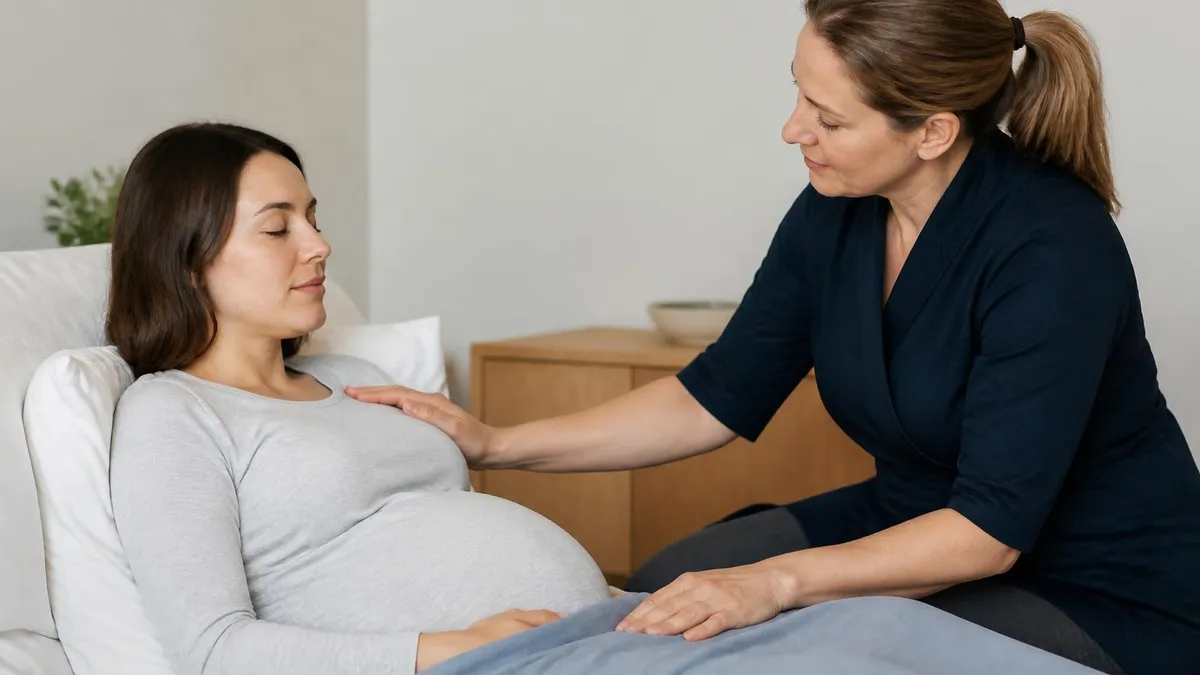
Doula Services: What's Included, Cost, and Insurance Coverage

What Is a Doula? Your 2026 Guide to Doula Support and Certification
About the Author

Registered Nurse & Healthcare Educator
Johns Hopkins University School of NursingDr. Sarah Mitchell is a board-certified registered nurse with over 15 years of clinical and academic experience. She completed her PhD in Nursing Science at Johns Hopkins University and has taught NCLEX preparation and clinical skills courses for nursing students across the United States. Her research focuses on evidence-based exam preparation strategies for healthcare certification candidates.