

DGT Practice Test
Updated October 2026Facts verified Oct 24, 2026 against Dirección General de Tráfico (DGT), Spain's Directorate-General for Traffic, part of the Ministry of the Interior
Obtaining a Spanish driving licence is a crucial step for residents and expatriates aiming to drive legally in Spain. The process is overseen by the Directorate-General for Traffic (DGT), the national authority responsible for road safety and traffic regulations. This comprehensive guide outlines the steps to acquire a new Spanish driving licence, exploring into the role and functions of the DGT, the structure of the driving theory test, and essential information about the Spanish driver's license system. Practice with the free Directorate-General for Traffic practice test on PracticeTestGeeks (7 questions with answer explanations).
- The DGT theory test for the car licence (permiso B) has 30 multiple-choice questions, each with three answer options.[1]
- The DGT theory test is taken in person, usually on a computer, with paper tests still given in some cases.[2]
- Candidates can take their first DGT theory test up to three months before they reach the minimum age for the licence class.[3]
- DGT computer-based theory test results are posted online the same afternoon from 17:00, and paper-test results the next day from 17:00.[2]
Numbers in brackets link to the official sources listed under Sources & last verified. Dates that have passed are removed automatically.
DGT Exam at a Glance
| Item | Detail | Source · Verified |
|---|---|---|
| Number of questions (Theory test (permiso B)) | 30 multiple-choice questions, 3 options each[1] | Dirección General de Tráfico (DGT), Spain's Directorate-General for Traffic, part of the Ministry of the Interior · Oct 24, 2026 |
| Delivery (Theory test) | In person at a DGT exam centre, on computer (paper in some cases)[2] | Dirección General de Tráfico (DGT), Spain's Directorate-General for Traffic, part of the Ministry of the Interior · Oct 24, 2026 |
| Eligibility (Theory test) | Can sit the theory test up to 3 months before the minimum age[3] | sede.dgt.gob.es · Oct 22, 2026 |
| Score release (Theory test) | Same day from 17:00 (computer test); next day from 17:00 (paper)[2] | Dirección General de Tráfico (DGT), Spain's Directorate-General for Traffic, part of the Ministry of the Interior · Oct 24, 2026 |
Free Directorate-General for Traffic Test Study Tools
Interactive Directorate-General for Traffic Test resources on PracticeTestGeeks, free to start:
- Directorate-General for Traffic Test flashcards — review key terms and concepts card by card
- Directorate-General for Traffic Test study guide — topic-by-topic overview of what the exam covers
- Directorate-General for Traffic Test cheat sheet — one-page printable summary for last-minute review
According to Dirección General de Tráfico (DGT), Spain's Directorate-General for Traffic, part of the Ministry of the Interior, “continuará siendo un test con 30 preguntas y tres opciones de respuesta cada una, si bien, el tiempo para su realización se ampliará en relación a la duración del vídeo que incluya.”[1]
DGT Practice Test Questions
Prepare for the DGT - Directorate-General for Traffic Test exam with our free practice test modules. Each quiz covers key topics to help you pass on your first try.
DGT Alcohol, Drugs & Impaired Driving
DGT Exam Questions covering Alcohol, Drugs & Impaired Driving. Master DGT Test concepts for certification prep.
DGT Communication & Documentation
Free DGT Practice Test featuring Communication & Documentation. Improve your DGT Exam score with mock test prep.
DGT Defensive Driving Techniques
DGT Mock Exam on Defensive Driving Techniques. DGT Study Guide questions to pass on your first try.
DGT Intersections & Right-of-Way
DGT Test Prep for DGT Intersections & Right-of-Way. Practice DGT Quiz questions and boost your score.
DGT Speed Management & Distance Control
DGT Questions and Answers on DGT Speed Management & Distance Control. Free DGT practice for exam readiness.
DGT Emergency Procedures & First Aid
DGT Mock Test covering Emergency Procedures & First Aid. Online DGT Test practice with instant feedback.
DGT Environmental Awareness & Conservation
Free DGT Quiz on Environmental Awareness & Conservation. DGT Exam prep questions with detailed explanations.
DGT Licensing & Legal Requirements
DGT Practice Questions for Licensing & Legal Requirements. Build confidence for your DGT certification exam.
DGT Navigation & Route Planning
DGT Test Online for Navigation & Route Planning. Free practice with instant results and feedback.
DGT Passenger Safety & Service
DGT Study Material on Passenger Safety & Service. Prepare effectively with real exam-style questions.
DGT Road Safety & Rules
Free DGT Test covering Road Safety & Rules. Practice and track your DGT exam readiness.
DGT Traffic Laws & Regulations
DGT Exam Questions covering Traffic Laws & Regulations. Master DGT Test concepts for certification prep.
DGT Traffic Signs & Signals
Free DGT Practice Test featuring Traffic Signs & Signals. Improve your DGT Exam score with mock test prep.
Worked examples: how to reason through DGT questions
These are practice questions written for this site, not questions from the real exam. Each explanation shows why the right answer is right and why the others are wrong.
Example 1
Question: What does the check engine light indicate?
- The gas tank is empty.
- A serious engine or emissions problem.
- The headlights need replacing.
- The wipers need to be replaced.
Answer: B. A serious engine or emissions problem.
Explanation:
The correct answer is that the check engine light signals a serious engine or emissions problem. The car's onboard diagnostic system raises this warning when it detects a fault in the engine, transmission or emissions control, so it needs a prompt inspection.
The empty fuel tank option is wrong because low fuel has its own separate warning symbol. The headlight option is wrong because a failed bulb is reported by a different indicator, or simply seen on the road. The wiper option is wrong because worn wipers have no dashboard warning of this kind.
The rule to remember: learn the dashboard symbols as a group, and treat any engine or emissions warning as a reason to have the car checked rather than something to ignore.
Example 2
Question: Which authority is responsible for issuing driver's licenses in the United States?
- The federal Department of Transportation
- Each state's Department of Motor Vehicles (DMV)
- The National Highway Traffic Safety Administration (NHTSA)
- The local police department
Answer: B. Each state's Department of Motor Vehicles (DMV)
Explanation:
The correct answer is that each state's Department of Motor Vehicles (DMV) issues driver's licenses in the United States. Licensing is handled state by state, which is why requirements and card formats differ across the country.
The federal Department of Transportation is wrong because it sets national policy and funding, but it does not issue licenses to individuals. The National Highway Traffic Safety Administration (NHTSA) is wrong because it works on vehicle safety standards and highway safety programs. The local police department is wrong because police enforce traffic law and do not run the licensing process.
The rule to remember: always ask which body actually issues the document. For your own exam, rely on the licensing authority named by the exam body, which for Spain is the DGT.
Example 3
Question: A driver approaching an intersection notices the GPS is recalculating. The correct action is to:
- Slow down, stay in a safe lane, and wait for the new route
- Pull an immediate U-turn to re-enter the original route
- Accelerate through the intersection before the route changes
- Stop in the intersection until recalculation is complete
Answer: A. Slow down, stay in a safe lane, and wait for the new route
Explanation:
The correct answer is to slow down, stay in a safe lane and wait for the new route. A recalculating navigation device is a distraction, not an emergency, so the safest response is to keep control of the car and let the system catch up.
An immediate U-turn is wrong because it is sudden, may be illegal at that spot and surprises other drivers. Accelerating through the intersection is wrong because it raises risk at the point where conflicts are most likely. Stopping in the intersection is wrong because it blocks traffic and creates a hazard.
The rule to remember: never make a sudden or unsafe move because of a device. Follow the road rules and signs first, and take the next safe opportunity to change your route.
How to use these practice tests
Start with the official material. Read the DGT pages on the theory test so you know the format, what the result page shows and what to bring. Then use these practice sets to find your weak areas.
- Begin with Traffic Signs & Signals and Traffic Laws & Regulations, since they underpin most other topics.
- Move to Intersections & Right-of-Way and Speed Management & Distance Control, where small wording differences change the answer.
- Add Alcohol, Drugs & Impaired Driving, Weather & Hazardous Conditions and Emergency Procedures to cover judgment questions.
After each set, read the explanation for every question you missed and write the rule in your own words. Then check that rule against the official DGT material, because our questions are written by us and are not real exam questions. When your scores steady out, take the mixed practice test in a single sitting, with 30 questions as your target length, to get used to the format.
Key Takeaways
Free DGT Practice Test Online
The DGT is the authoritative body overseeing traffic regulations and road safety in Spain.
Obtaining a Spanish driving licence involves passing both theoretical and practical exams administered by the DGT.
Applicants must meet age, residency, and medical fitness requirements.
Foreign residents may need to exchange their existing licences or obtain a new Spanish licence, depending on their country of origin.
Understanding the Directorate-General for Traffic (DGT)
The Directorate-General for Traffic (Dirección General de Tráfico, DGT) is an autonomous agency under the Spanish Ministry of the Interior. Established in 1959, the DGT is tasked with implementing the government's road policies across Spain's road transport network. Its primary responsibilities include:
Traffic Management: Overseeing the flow of vehicles on interurban roads to ensure safety and efficiency.
Driver and Vehicle Licensing: Issuing driving licences, managing vehicle registrations, and enforcing regulations related to both.
Road Safety Education: Developing programs and campaigns to promote safe driving practices among road users.
Law Enforcement: Monitoring compliance with traffic laws and imposing penalties for violations.
Through these functions, the DGT plays a pivotal role in enhancing road safety and reducing traffic-related incidents in Spain.
What is the DGT?
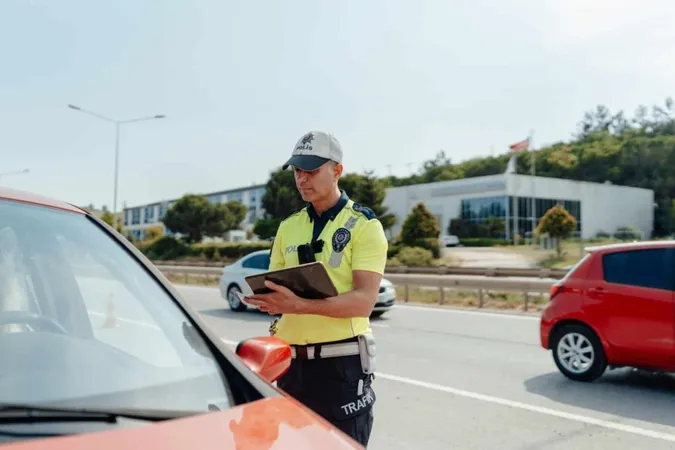
The DGT operates as both an administrative body and an autonomous agency, acting as the Central Traffic Headquarters (Jefatura Central de Tráfico, JCT). Its mission encompasses the development and enforcement of traffic regulations, issuance of driving permits, and the promotion of road safety initiatives. By collaborating with regional and local authorities, the DGT ensures a cohesive approach to traffic management and road safety across the nation.
How Does the DGT Work?
The DGT's operations are complex, involving:
Policy Implementation: Executing national road safety strategies and adapting them to regional contexts.
Data Collection and Analysis: Gathering statistics on traffic incidents to inform policy decisions and safety campaigns.
Technological Integration: Using advanced technologies for traffic monitoring, enforcement, and public information dissemination.
By integrating these elements, the DGT strives to create a safer and more efficient driving environment in Spain.
DGT Driving Theory Test
To obtain a Spanish driving licence, applicants must pass the DGT's driving theory test, which assesses their knowledge of traffic laws, road signs, and safe driving practices. The process includes:
Preparation: Studying the Spanish Highway Code (Reglamento General de Circulación) and attending theoretical classes, often provided by driving schools.
Theoretical Exam: A multiple-choice test typically consisting of 30 questions, where a minimum of 27 correct answers is required to pass.
Practical Training: Upon passing the theory test, candidates must complete practical driving lessons to prepare for the road test.
Practical Exam: A driving test conducted on public roads, evaluating the applicant's ability to operate a vehicle safely and in compliance with traffic regulations.
Successful completion of both the theoretical and practical exams is mandatory to obtain a Spanish driving licence.
Spain Driver's License: Eligibility and Requirements
To apply for a Spanish driver's license, applicants must meet the following criteria:
Age Requirement: Be at least 18 years old for a standard car licence.
Residency: Hold legal residency in Spain.
Medical Fitness: Obtain a medical certificate from an authorized center, confirming physical and mental fitness to drive.
Documentation: Provide necessary identification documents, proof of residence, and photographs.
Foreign residents should note that non-EU driving licences are typically valid for six months after establishing residency in Spain. After this period, obtaining a Spanish licence is required. Some countries have reciprocal agreements with Spain, allowing for direct exchange of licences without additional testing.
- +Validates your knowledge and skills objectively
- +Increases job market competitiveness
- +Provides structured learning goals
- +Networking opportunities with other certified professionals
- −Study materials can be expensive
- −Exam anxiety can affect performance
- −Requires dedicated preparation time
- −Retake fees apply if you don't pass
Pros and Cons at a Glance
| Pros | Cons |
|---|---|
| Validates your knowledge and skills objectively | Study materials can be expensive |
| Increases job market competitiveness | Exam anxiety can affect performance |
| Provides structured learning goals | Requires dedicated preparation time |
| Networking opportunities with other certified professionals | Retake fees apply if you don't pass |
Sample Directorate-General for Traffic Test Practice Questions
Try these questions from our free Directorate-General for Traffic Test practice tests. The correct answer and an explanation follow each question.
In Spain, how many hours of mandatory driving practice are required before taking the practical driving exam for a Class B license?
- A. No minimum is required
- B. A minimum of 10 hours
- C. A minimum of 20 hours
- D. A minimum of 40 hours
Answer: A. No minimum is required
Spain does not mandate a specific minimum number of driving hours before taking the practical exam, unlike some other European countries.
What does it mean when the oil pressure warning light illuminates while driving?
- A. Stop immediately and check oil level
- B. The oil needs to be changed soon
- C. The engine oil is too hot
- D. The oil filter needs replacement
Answer: A. Stop immediately and check oil level
A lit oil pressure warning light indicates dangerously low oil pressure and you should stop the vehicle immediately to prevent engine damage.
What effect does sun glare have on driving safety?
- A. It only affects drivers in the morning and has no significant risk
- B. It can temporarily blind a driver and obscure traffic signals, signs, and pedestrians
- C. Sun glare increases alertness and reduces fatigue
- D. It primarily affects motorcyclists, not car drivers
Answer: B. It can temporarily blind a driver and obscure traffic signals, signs, and pedestrians
Direct sun glare can render traffic signals and obstacles invisible for critical seconds.
What precaution should you take before driving through a flooded road?
- A. Accelerate through quickly to minimize water contact
- B. Assess the depth — avoid if you cannot see the road surface or if water is moving rapidly
- C. Drive in the center of the road where water is shallowest
- D. Flash your headlights and honk before entering
Answer: B. Assess the depth — avoid if you cannot see the road surface or if water is moving rapidly
Just six inches of moving water can knock a person down, and two feet can float most vehicles.
Take the full Directorate-General for Traffic Test practice test
Sources & last verified
- Dirección General de Tráfico (DGT), Spain's Directorate-General for Traffic, part of the Ministry of the Interior — number of questions (official source). “continuará siendo un test con 30 preguntas y tres opciones de respuesta cada una, si bien, el tiempo para su realización se ampliará en relación…” Verified Oct 24, 2026 · source checked Oct 24, 2026.
- Dirección General de Tráfico (DGT), Spain's Directorate-General for Traffic, part of the Ministry of the Interior — delivery, score release (official source). “Examen teórico realizado en ordenador: la misma tarde del día del examen, a partir de las 17:00. Exámenes prácticos y pruebas teóricas realizadas en papel:…” Verified Oct 24, 2026 · source checked Oct 24, 2026.
- sede.dgt.gob.es — eligibility (official source). “el Reglamento General de Conductores dispone que la antelación máxima para poder presentarse a la primera convocatoria de las pruebas de control de conocimientos será…” Verified Oct 22, 2026 · source checked Oct 22, 2026.
How we verify: editorial & fact-checking policy. Report an error: contact us.
How this page was made: written with AI tools and published by Nathan Beja, founder of Practice Test Geeks, who is responsible for its content. Exam facts are checked against the official sources listed below. Not reviewed by a subject-matter expert. Editorial policy
Sources & references
Exam facts on this page (fees, format, dates, passing scores) are checked against these official sources; the date is our last check. Editorial policy
- dgt.es — Test delivery, score release, exam format · verified Oct 2026
- sede.dgt.gob.es — Eligibility · verified Oct 2026