
CPR 2026: What Is CPR and How Does It Work?
Complete CPR guide for 2026: what CPR is, CPR steps for adults and children, compression ratios, when to use CPR, and free CPR practice tests.
What Is CPR?
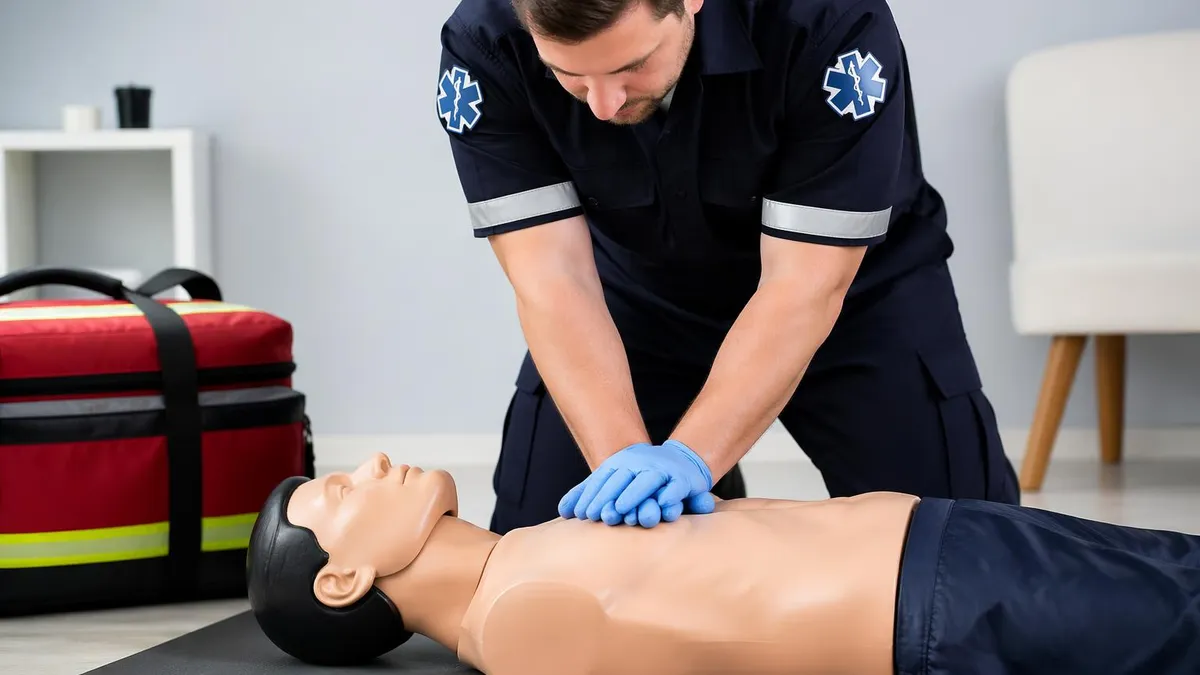
CPR — cardiopulmonary resuscitation — is an emergency life-saving procedure performed when a person's heart has stopped beating or they have stopped breathing. CPR combines chest compressions (which manually pump blood from the heart to vital organs) with rescue breaths (which deliver oxygen to the lungs). Together, these interventions maintain blood circulation and oxygenation until the heart can be restored to a normal rhythm, either spontaneously or through defibrillation.
Cardiac arrest — the sudden stopping of the heart's pumping function — causes unconsciousness within seconds and brain death within 4 to 6 minutes if circulation is not restored. CPR, when performed immediately after cardiac arrest, can maintain circulation at approximately 25 to 30 percent of normal cardiac output — enough to preserve brain function and buy time until a defibrillator is available or emergency medical services arrive. The combination of immediate CPR and early defibrillation dramatically increases survival rates for cardiac arrest. For every minute without CPR, the chance of survival from cardiac arrest decreases by 7 to 10 percent. When CPR is started immediately, survival rates for out-of-hospital cardiac arrest increase from under 10 percent to 30 percent or higher in some settings.
CPR guidelines in the United States are set by the American Heart Association (AHA) and updated every five years based on the latest resuscitation research. The most current guidelines emphasize continuous, high-quality chest compressions with minimal interruptions, the correct compression rate and depth, adequate chest recoil between compressions, and early defibrillation as the primary interventions that improve cardiac arrest survival outcomes.
CPR Steps for Adults
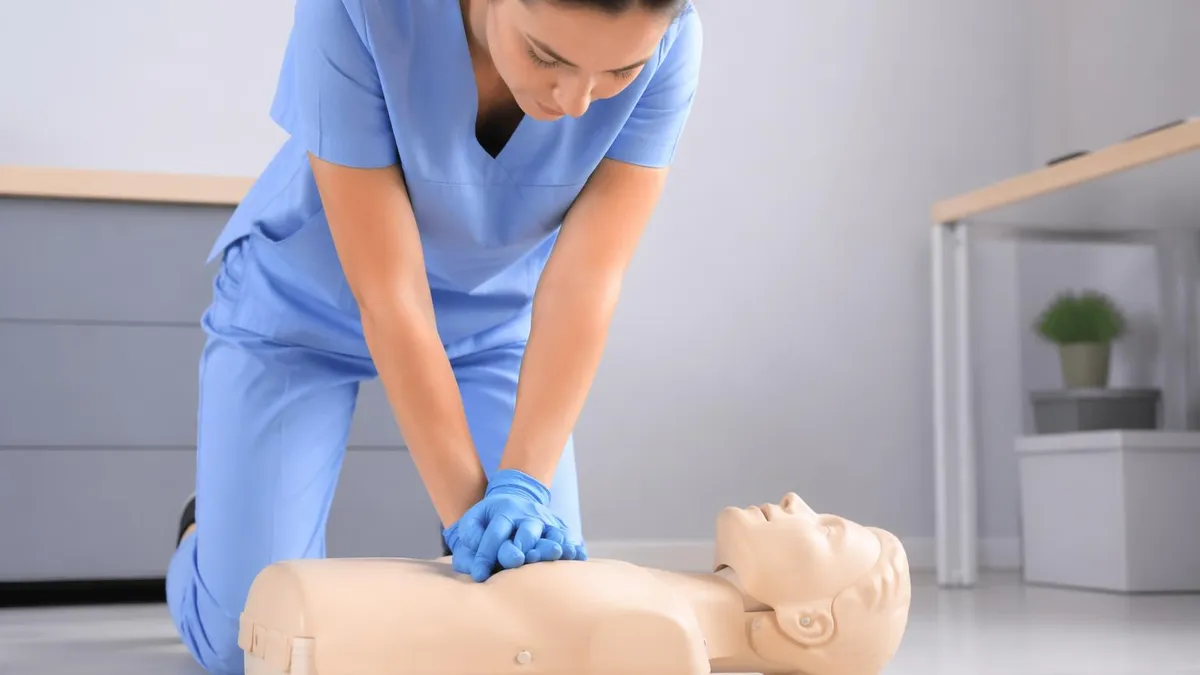
CPR for adults (puberty and older) follows the C-A-B sequence recommended by the AHA: Compressions, Airway, Breathing. This sequence prioritizes chest compressions because the most critical intervention in cardiac arrest is maintaining circulation, and starting compressions immediately delivers oxygenated blood to the brain from the blood already present in the lungs.
Step 1: Check for Safety and Responsiveness
Before approaching a victim, ensure the scene is safe — do not enter a dangerous environment. Tap the victim's shoulders firmly and shout 'Are you okay?' to check for responsiveness. Look for normal breathing — occasional gasps (agonal respirations) are not normal breathing and indicate cardiac arrest. If the victim is unresponsive and not breathing normally, call 911 immediately (or direct a bystander to call) and send someone to get an AED if available.
Step 2: Chest Compressions
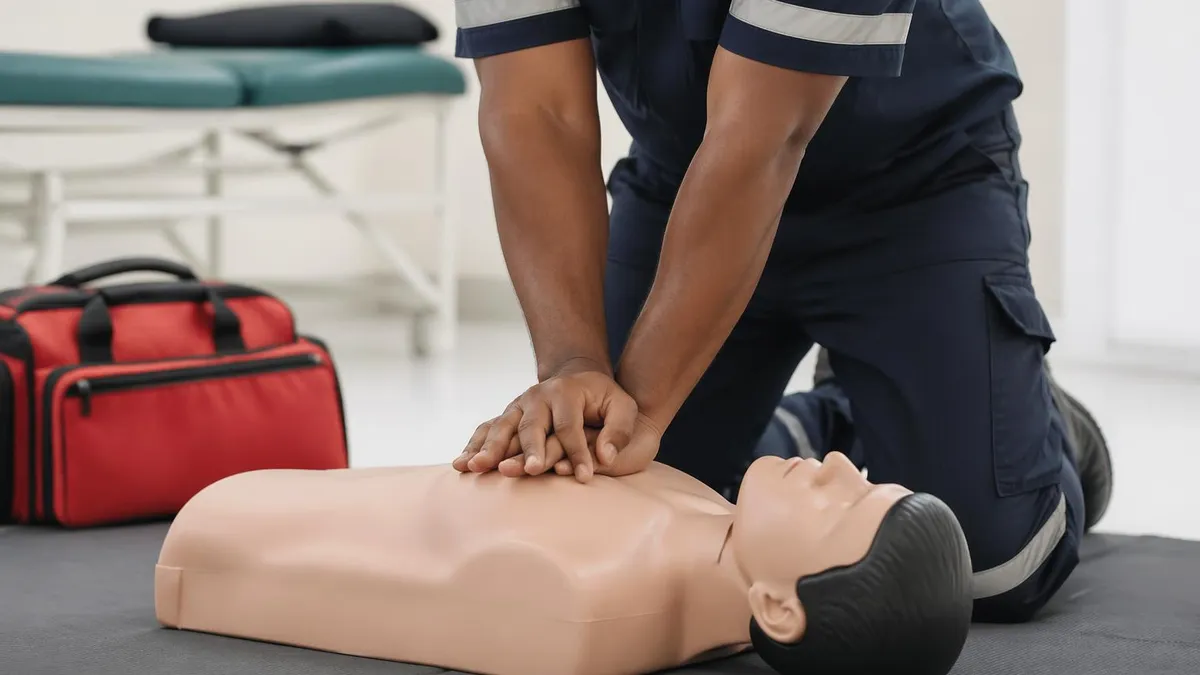
Position the victim on their back on a firm, flat surface. Kneel beside the victim. Place the heel of one hand on the center of the chest (the lower half of the sternum). Place the other hand on top, interlacing fingers, and keep fingers lifted off the chest. Straighten arms and position shoulders directly above hands. Compress the chest at least 2 inches (5 cm) but no more than 2.4 inches (6 cm) deep. Allow the chest to fully recoil (return to normal position) between compressions — do not lean on the chest. Compress at a rate of 100 to 120 compressions per minute. The song 'Stayin' Alive' by the Bee Gees is at approximately 100 bpm and is commonly used as a mental metronome for compression rate.
Step 3: Airway and Rescue Breaths
After 30 compressions, open the airway using the head-tilt chin-lift technique: place one hand on the forehead, tilt the head back, and lift the chin with two fingers of the other hand. This extends the neck and opens the airway. Pinch the nose shut and create a complete seal over the mouth. Give 2 rescue breaths, each lasting approximately 1 second, watching for visible chest rise. If the first breath does not cause chest rise, re-tilt the head and try again. If the second breath does not go in, continue compressions — do not delay compressions to repeatedly attempt breaths.
Compression-to-Breath Ratio and Continuous CPR
The standard CPR cycle is 30 compressions to 2 breaths (30:2), repeated continuously. For two-rescuer CPR in a healthcare setting, one rescuer performs compressions while the other manages the airway and delivers breaths — switch compressors every 2 minutes (5 cycles of 30:2) to prevent compressor fatigue. Compression quality degrades rapidly after 2 minutes of continuous compressions. Continue CPR until: an AED is available and ready to use; the victim shows obvious signs of life (movement, normal breathing); trained emergency responders take over; or you become unable to continue due to exhaustion.
CPR for Children and Infants
CPR technique varies for children and infants due to their smaller size and different physiology. The same C-A-B sequence applies — compressions first, then airway and breathing — but depth, hand position, and compression-to-breath ratio differ.
CPR for Children (Age 1 to Puberty)
For children, chest compression depth is approximately 2 inches (5 cm) — slightly shallower than adults — at the same rate of 100 to 120 per minute. For a single rescuer, use one or two hands depending on the size of the child (one hand may be sufficient for small children; use two for larger children). The compression-to-breath ratio for a single lay rescuer is 30:2 (same as adults). For two healthcare provider rescuers performing CPR on a child, the ratio changes to 15:2, which allows more frequent breaths relative to compressions. The head-tilt chin-lift is used to open the airway, but avoid tilting the head past neutral position in small children. Rescue breaths for children are smaller — just enough to cause visible chest rise.
CPR for Infants (Under 1 Year)
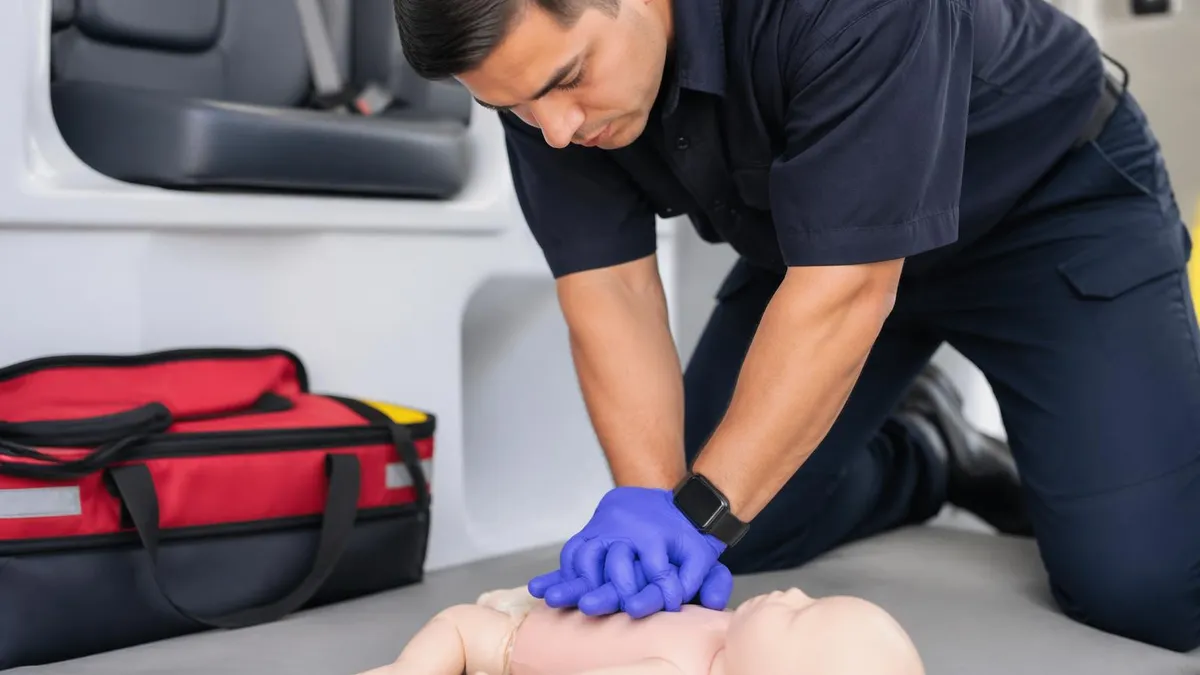
For infants, use two fingers (the middle and ring fingers) to compress the center of the chest, just below the nipple line. Compress approximately 1.5 inches (4 cm) deep at 100 to 120 compressions per minute. For two healthcare provider rescuers on an infant, use the two-thumb encircling technique — encircle the infant's chest with both hands and use both thumbs to compress the sternum. This technique produces higher compression depth and coronary perfusion pressure than the two-finger technique and is preferred in healthcare settings. For airway, use a gentle head-tilt — do not overextend the neck (infants' airways are easily kinked). Cover both the mouth and nose with your mouth to create a seal for rescue breaths. Deliver small puffs of air — just enough to cause visible chest rise.
Using an AED with CPR
An AED (automated external defibrillator) delivers an electric shock to restore a normal heart rhythm in cases of ventricular fibrillation (VF) or pulseless ventricular tachycardia (pVT) — the two most common initial rhythms in cardiac arrest. CPR without defibrillation cannot restart a fibrillating heart; the AED is the definitive treatment for shockable cardiac arrest rhythms.
AED Operation
Modern AEDs are designed for use by untrained bystanders and provide step-by-step voice instructions. The general sequence: turn on the AED (press the power button or open the lid); attach electrode pads to the victim's bare chest as shown in the diagram on the pads (upper right chest and lower left side); allow the AED to analyze the rhythm — ensure no one is touching the victim during analysis; if a shock is advised, ensure no one is touching the victim and press the shock button; immediately resume CPR after the shock, starting with compressions. The AED will continue to analyze the rhythm and advise additional shocks every 2 minutes as needed. If the AED advises 'no shock needed,' immediately resume CPR.
CPR and AED Integration
Minimize interruptions to CPR when preparing the AED — one rescuer continues compressions while another sets up the pads whenever possible. The goal is to deliver the shock as quickly as possible after cardiac arrest — every minute of delay reduces the probability that defibrillation will be successful. After any shock, immediately resume 30:2 CPR for 2 minutes before allowing the AED to re-analyze. Do not stop CPR after a shock to check for a pulse unless the victim shows obvious signs of life.
CPR Certification
CPR certification is available at two main levels: Heartsaver CPR/AED (for lay rescuers and non-healthcare workers) and BLS for Healthcare Providers (for healthcare professionals). Both certifications are offered through the American Heart Association, the American Red Cross, and other training organizations.
Heartsaver CPR/AED
The Heartsaver CPR/AED course is designed for the general public and for workplace settings. It covers adult CPR and AED use, and versions are available that also include child and infant CPR and first aid. Heartsaver certification is appropriate for teachers, coaches, lifeguards, workplace first responders, and anyone who wants to be prepared to respond to a cardiac emergency. The course typically takes 2 to 4 hours and results in a 2-year certification card.
BLS for Healthcare Providers
The AHA BLS for Healthcare Providers course is required for nurses, physicians, medical assistants, dental professionals, and other healthcare workers. BLS covers adult, child, and infant CPR with both one-rescuer and two-rescuer techniques, AED use, relief of foreign-body airway obstruction, and mask ventilation. BLS certification is a prerequisite for advanced certifications including ACLS (Advanced Cardiovascular Life Support) and PALS (Pediatric Advanced Life Support). BLS is valid for 2 years.
Hands-Only CPR Works for Adult Cardiac Arrest
About the Author
Attorney & Bar Exam Preparation Specialist
Yale Law SchoolJames R. Hargrove is a practicing attorney and legal educator with a Juris Doctor from Yale Law School and an LLM in Constitutional Law. With over a decade of experience coaching bar exam candidates across multiple jurisdictions, he specializes in MBE strategy, state-specific essay preparation, and multistate performance test techniques.