

CPO Practice Test
Updated October 2026Facts verified Oct 25, 2026 against Pool & Hot Tub Alliance
The CPO license is recognized globally and is often required by health departments for public pool operators. Unlike many other exams, the CPO test is typically open book, meaning you can reference your CPO book and notes during the exam. Also check our nccer practice test.
Candidates preparing for mass can build exam confidence with our MASS practice test 2026, which covers all key topics and question formats used in the real assessment.
- The CPO exam is a 50-question open book exam given during the last part of the second day of class.[1]
- CPO certifications are valid for five years from the end of the month of issuance.[2]
- To renew a CPO certification that is still active, candidates attend the second day of a CPO course (or CPO Fusion plus day two) and take the exam at the end of that day.[2]
- The PHTA CPO certification requires no industry experience; candidates complete the CPO course and pass the CPO exam.[3]
- The CPO exam is graded shortly after the student completes it, and students get their score before leaving class.[1]
Numbers in brackets link to the official sources listed under Sources & last verified. Dates that have passed are removed automatically.
CPO Exam at a Glance
| Item | Detail | Source · Verified |
|---|---|---|
| Number of questions | 50 questions, open book[1] | Pool & Hot Tub Alliance · Oct 25, 2026 |
| Validity | Valid for 5 years, to end of the month of issuance[2] | Pool & Hot Tub Alliance · Oct 25, 2026 |
| Renewal | Attend day 2 of a CPO course and pass the exam[2] | Pool & Hot Tub Alliance · Oct 25, 2026 |
| Eligibility | No industry experience required[3] | Pool & Hot Tub Alliance · Oct 25, 2026 |
| Score release | Graded shortly after completion, in class[1] | Pool & Hot Tub Alliance · Oct 25, 2026 |
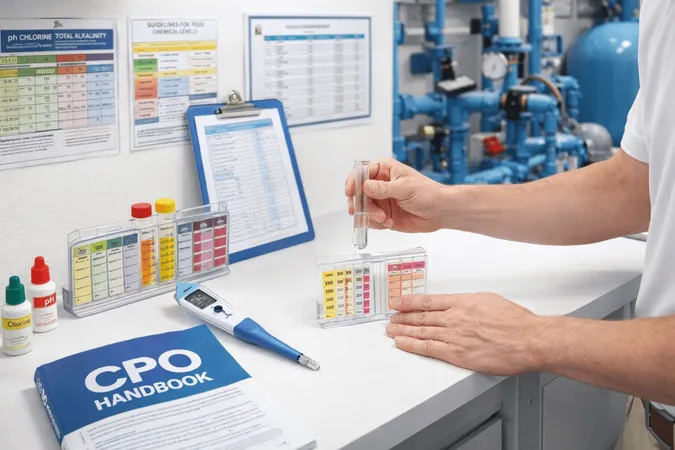
According to Pool & Hot Tub Alliance, “with a 50-question open book exam during the last part of the second day of class.”[1]
CPO Practice Test Questions
Prepare for the CPO Exam exam with our free practice test modules. Each quiz covers key topics to help you pass on your first try.
CPO Pool Equipment and Mechanical Systems
CPO Mock Exam on CPO Pool Equipment and Mechanical Systems. CPO Study Guide questions to pass on your first try.
Worked examples: how to reason through CPO questions
These are practice questions written for this site, not questions from the real exam. Each explanation shows why the right answer is right and why the others are wrong.
Example 1
Question: Mustard (yellow) algae is particularly difficult to eliminate because it:
- Only grows in pools with pH above 8.0
- Is resistant to normal chlorine levels and clings tightly to pool walls
- Cannot be treated with any chlorine-based product
- Reproduces only in heated pools above 85°F
Answer: B. Is resistant to normal chlorine levels and clings tightly to pool walls
Explanation:
B is correct. Mustard algae can survive chlorine at normal operating levels, and it clings tightly to walls, often in shaded spots. You usually need to brush it hard and raise sanitizer levels well above normal to get rid of it.
- A is wrong: it does not grow only when pH is above 8.0. High pH weakens chlorine, but it is not a condition the algae needs to grow.
- C is wrong: chlorine-based treatment does work if you use a high enough dose and also brush. Watch out for absolute words like "cannot."
- D is wrong: it is not limited to heated pools above 85°F. It also shows up in unheated pools.
Rule to remember: for algae that resists chlorine, brush the surfaces and raise the sanitizer level. Be wary of answer options with narrow absolute conditions.
Example 2
Question: Total alkalinity in pool water primarily serves as a buffer against changes in:
- Calcium hardness
- pH
- Chlorine demand
- Total dissolved solids
Answer: B. pH
Explanation:
B is correct. Total alkalinity is a buffer. It neutralizes acids and bases that enter the water, so pH does not swing quickly when you add chemicals, rain falls or bathers are in the water.
- A is wrong: calcium hardness is a separate measurement that you adjust on its own. Alkalinity does not hold it steady.
- C is wrong: chlorine demand is the chlorine used up by contaminants. Buffering does not control it.
- D is wrong: total dissolved solids build up over time. Alkalinity adds to them but does not buffer them.
Rule to remember: alkalinity protects pH. If pH keeps drifting, check total alkalinity first, and bring it into range before you fine-tune pH.
Example 3
Question: What is the phenol red indicator used to measure in pool water testing?
- Free chlorine
- pH level
- Total alkalinity
- Cyanuric acid
Answer: B. pH level
Explanation:
B is correct. Phenol red is a pH indicator. It changes color from yellow on the acidic side, through orange, to red on the basic side, and you read pH by matching the sample to a color scale.
- A is wrong: free chlorine is measured with a different reagent, such as DPD. Very high chlorine can actually bleach phenol red and give a false pH reading.
- C is wrong: total alkalinity is measured with a titration test, not by reading phenol red color directly.
- D is wrong: cyanuric acid is measured with a turbidity test, where cloudiness shows the level.
Rule to remember: phenol red means pH. Learn which reagent goes with which test, because exam questions often swap them.
How to use these practice tests
Since the exam is open book and comes at the end of the course, study for two things: understanding the ideas and finding information quickly.
- Start with chemistry. Work through Pool Water Chemistry, Water Testing and Analysis and Disinfection and Sanitizers. For every question you miss, write down the rule behind it, not just the letter of the right answer.
- Practise the math. Use Pool Calculations and Formulas until you can set up volume and dosage problems without guessing which formula to use.
- Cover equipment and safety. Move on to Filtration and Circulation Systems, Electrical Safety and Bonding, Chemical Handling and Storage and Regulatory Compliance and Health Codes.
- Tab your course materials. As you go, mark the pages that hold formulas, chemical ranges and safety rules, so you can find them quickly during the open book exam.
- Finish with mixed review. Before class ends, redo the sets where you scored lowest, then try Spa and Hot Tub Operations and Pool Maintenance and Troubleshooting.
CPO Exam Study Guide
This study guide covers essential topics for the CPO exam. The exam is typically open-book, allowing you to use the official CPO book during the test. Understanding how to get cpo certified involves mastering these key areas.
CPO Test Format
The CPO exam questions cover a broad range of topics essential for pool operation. The test is designed to ensure you can apply the knowledge from the cpo certification course to maintain a safe facility. Also check our g60 test.
Understanding water balance and sanitization.
- Topics: Disinfection, Oxidation, Water Balance, Saturation Index.
- Questions: ~15-20% of exam
Since the CPO exam is open book, you don't need to memorize everything. Instead, familiarize yourself with the CPO book index and tables. Knowing where to find chemical adjustment factors and turnover formulas quickly is key to finishing on time.
How to Become a CPO
The path to becoming a certified pool operator involves a specific training process mandated by PHTA.
- Find a Course: Locate cpo certification classes either online or in-person.
- Choose Format: Select the 2-day in-person class or the "Pool Operator Primer" (online + 1 day in-person).
- Attend Training: Complete the 14-16 hours of required instruction covering all chapters of the CPO Handbook.
- Take the Exam: Sit for the open-book CPO exam at the end of the course.
- Pass the Test: Score at least 75% to earn your certification.
- Receive Certificate: You will receive your digital CPO certificate immediately or within a few weeks.
- Maintain Status: Renew your certification every 5 years by retaking the course and exam.
Many employers in the hospitality and property management sectors will pay for your cpo training and exam fees. Always ask before registering!

CPO Career Opportunities
Your CPO license opens doors to various roles in aquatics.
Hotel Pool Manager
Oversee pool operations for hotels and resorts, ensuring guest safety and water quality compliance.
Aquatics Director
Manage programming, staff, and facility operations for YMCAs, community centers, or water parks.
Commercial Pool Technician
Specialize in the repair and maintenance of large-scale commercial pool equipment and systems.
Property Manager
Manage apartment or condo complexes with pools, handling compliance and routine checks.
Health Inspector
Work for local government to inspect public pools and enforce safety and health codes.
CPO Test Day Checklist
- ✓Valid Photo ID
- ✓CPO Handbook (Open Book)
- ✓Calculator (Basic)
- ✓Pencils/Pens
- ✓Course Handouts/Notes
- ✓Notebook/Scratch Paper
- ✓Water/Snacks
- ✓Confidence!
Ready to Get Certified?
Start your journey to becoming a Certified Pool Operator today. Practice with our free questions and master the material.
Don't let your cpo license expire! You must retake the course and exam to renew. Some instructors offer a one-day renewal course for current certificate holders.
CPO: Pros and Cons
- +CPO exam preparation strengthens your knowledge across all domains
- +Passing the exam proves competency to employers and clients
- +Study materials and practice tests are widely available
- +Exam-based credentials are portable across states and employers
- +Clear exam objectives help focus your study plan effectively
- −Exam anxiety can affect performance — practice tests help reduce it
- −Registration fees are non-refundable if you miss your test date
- −Limited retake opportunities may apply with waiting periods
- −Exam content updates periodically — use current study materials
- −Testing center availability may require advance scheduling
CPO Exam Flashcards
Review the key facts most likely to appear on your CPO certification test, then jump into a free practice test on each topic.
🏢 Who administers the CPO certification?
The Certified Pool/Spa Operator (CPO) program is administered by the Pool & Hot Tub Alliance (PHTA), formerly the National Swimming Pool Foundation (NSPF). It is the industry-standard credential recognized by health departments across the United States and in over 100 countries.
START CPO SAFETY PRACTICE TEST📝 How many questions are on the CPO exam?
The CPO certification exam contains 60 multiple-choice questions covering water chemistry, filtration, disinfection, safety and regulations. You must answer at least 45 of the 60 questions correctly to reach the 75% passing score required for certification.
START CPO QUESTIONS PRACTICE TEST✅ What score do you need to pass the CPO test?
The passing score for the CPO exam is 75%, which means getting at least 45 of the 60 questions right. Because the test is open-book, most candidates who complete the full course and practice the math formulas pass on their first attempt.
START CPO CALCULATIONS PRACTICE TEST📖 Is the CPO exam open book?
Yes. The CPO exam is open-book in most course formats, so you may use the PHTA Pool & Spa Operator Handbook, your course handouts and a basic calculator. Knowing where the chemical-adjustment and turnover tables are in the handbook saves valuable time during the test.
START CPO MAINTENANCE PRACTICE TEST⏱️ How long do you get for the CPO exam?
Candidates are typically given about 2 to 2.5 hours to complete the 60-question CPO certification test, though the exact limit depends on the instructor's format. The exam is taken at the end of the CPO course rather than at a separate testing center.
🧪 What chemistry does the CPO exam cover?
CPO water chemistry questions focus on free chlorine, pH, total alkalinity, calcium hardness, cyanuric acid and the Langelier Saturation Index for water balance. The exam expects you to adjust these values to keep pool water safe, comfortable and non-corrosive.
START CPO CHEMISTRY PRACTICE TEST🔄 What is pool turnover rate?
Turnover rate is the time it takes to circulate a volume of water equal to the entire pool through the filtration system. CPO candidates calculate it from pool volume and flow rate; public pools commonly require a turnover of about 6 hours or faster depending on local code.
START CPO FILTRATION PRACTICE TEST⚡ Why is bonding and grounding on the CPO exam?
Electrical safety is a CPO topic because pool pumps, lights and metal fixtures must be bonded and grounded to prevent electric shock in and around the water. The exam tests your understanding of equipotential bonding and ground-fault protection for aquatic facilities.
START CPO ELECTRICAL PRACTICE TEST🛁 How are spas different from pools on the exam?
Spa and hot tub questions address higher water temperatures, faster turnover, stricter sanitizer demand and bather-load limits. Because heat accelerates chlorine loss and bacterial growth, CPO operators must test and adjust spa water more frequently than standard pool water.
START CPO SPA PRACTICE TEST🗓️ How long is the CPO certification valid?
A CPO certification is valid for five years from the date you pass the exam. To renew, you retake the CPO course and exam; some PHTA-authorized instructors offer a shorter one-day renewal class for current certificate holders before expiration.
CPO Questions and Answers
Sources & last verified
- Pool & Hot Tub Alliance — number of questions, score release (official source). “with a 50-question open book exam during the last part of the second day of class.” Verified Oct 25, 2026 · source checked Oct 20, 2026.
- Pool & Hot Tub Alliance — validity, renewal (official source). “CPO certifications are valid for five years from the end of the month of issuance.” Verified Oct 25, 2026 · source checked Oct 20, 2026.
- Pool & Hot Tub Alliance — eligibility (official source). “No industry experience required!” Verified Oct 25, 2026 · source checked Oct 20, 2026.
How we verify: editorial & fact-checking policy. Report an error: contact us.
Official Resources
- PHTA — Certified Pool/Spa Operator (CPO) Certification: the official overview from the Pool & Hot Tub Alliance, the body that administers the CPO credential.
- PHTA — CPO Courses: find authorized in-person and blended online CPO certification courses and instructors.
- PHTA — Education & Certification: the Alliance's full catalog of aquatic education and professional certifications.
How this page was made: written with AI tools and published by Nathan Beja, founder of Practice Test Geeks, who is responsible for its content. Exam facts are checked against the official sources listed below. Not reviewed by a subject-matter expert. Editorial policy
Sources & references
Exam facts on this page (fees, format, dates, passing scores) are checked against these official sources; the date is our last check. Editorial policy
- phta.org — Renewal, score validity, exam format, score release, eligibility · verified Oct 2026