
CPC Certification Skills Checklist: Every Competency You Need to Pass the AAPC Exam
Master every skill for CPC certification ✅ Complete competency checklist, study tips, and exam strategy to pass the AAPC CPC exam in 2026 September.

The CPC certification is the gold standard credential for professional medical coders in the United States, awarded by the American Academy of Professional Coders (AAPC). Before you sit for the CPC exam, having a thorough cpc checklist of required skills and competencies is absolutely essential. Without knowing exactly what the exam tests, candidates risk studying the wrong material, misallocating their time, and walking into the testing center underprepared. This guide gives you the definitive, skill-by-skill breakdown of every competency area the AAPC evaluates on exam day.
Understanding what is CPC in its full scope means recognizing that this credential goes far beyond simple code lookup. The CPC exam tests your ability to apply ICD-10-CM diagnosis codes, CPT procedural codes, and HCPCS Level II supply and drug codes across dozens of medical specialties. You must demonstrate mastery of anatomy, medical terminology, operative report interpretation, compliance regulations, and payer guidelines — all within a timed, open-book format that rewards deep familiarity over last-minute memorization.
Many aspiring coders underestimate the breadth of the CPC exam. The test spans 17 distinct medical specialty sections plus anatomy, medical terminology, and coding guidelines. Each section carries its own weighting, and a candidate who neglects even one or two areas can find themselves struggling to achieve the 70% passing threshold. A comprehensive skills checklist prevents these blind spots by mapping every tested competency to a concrete study action item you can check off as you build proficiency.
The cpc certification process also requires meeting eligibility criteria before you can register. AAPC requires either two years of professional coding experience or completion of an approved coding training program. First-time passers who lack experience receive the CPC-A (apprentice) designation until they document sufficient work history. Knowing this distinction matters when planning your career timeline and understanding which credential letters will appear after your name upon passing.
One of the biggest advantages of working through a structured cpc checklist is that it reveals exactly where your knowledge gaps are months before exam day, not the night before. Coders who systematically work through every domain — from evaluation and management coding to radiology guidelines to surgical package concepts — enter the exam with confidence because they have evidence-based certainty about their preparation level. This article walks you through each domain, explains what depth of knowledge the AAPC expects, and provides actionable tasks for every competency area.
Beyond the exam itself, the skills you build while preparing for CPC certification translate directly into workplace value. Employers hiring certified professional coders expect them to handle complex operative reports, navigate compliance requirements under HIPAA and payer-specific policies, and apply coding guidelines accurately to minimize claim denials. The checklist approach ensures you build real competencies rather than superficial test-taking tricks. You can also pair this article with our comprehensive skills checklist to understand how each domain connects to long-term career earnings.
Whether you are a new coder entering the field or an experienced medical billing professional seeking formal credentials, this guide provides the clearest possible map of the CPC certification landscape. Read through every section carefully, use the checklist at the center of this article as your daily study companion, and return to this resource whenever you need to re-anchor your preparation to the actual exam blueprint. With disciplined, checklist-driven study, passing on your first attempt is a realistic and achievable goal.
CPC Certification by the Numbers

CPC Exam Format & Structure
| Section | Questions | Time | Weight | Notes |
|---|---|---|---|---|
| Medical Terminology & Anatomy | 10 | ~22 min | 7% | Foundational knowledge |
| ICD-10-CM Diagnosis Coding | 12 | ~27 min | 8% | Includes coding guidelines |
| CPT Surgical Sections (all specialties) | 83 | ~188 min | 55% | Largest portion of exam |
| Evaluation & Management Coding | 15 | ~34 min | 10% | 2021 E/M guidelines apply |
| HCPCS Level II & Compliance | 10 | ~22 min | 7% | Supplies, drugs, regulations |
| Anesthesia & Radiology | 20 | ~45 min | 13% | Combined specialty weight |
| Total | 150 | 5 hours 40 minutes | 100% |
The foundation of every cpc certification candidate's preparation is mastery of the three core code sets: CPT, ICD-10-CM, and HCPCS Level II. CPT codes, published annually by the American Medical Association, describe the procedures and services performed by healthcare providers. A competent CPC exam candidate must understand how to navigate the CPT manual's tabular list, interpret parenthetical notes, recognize add-on codes, understand modifier usage, and apply the concept of the global surgical package without making common errors on unbundling or separate procedure designations.
ICD-10-CM diagnosis coding is equally critical and often tripped up by otherwise well-prepared candidates. The CPC exam requires you to apply the Official ICD-10-CM Guidelines for Coding and Reporting with precision. This means understanding sequencing rules, the distinction between principal diagnosis and additional diagnoses in inpatient versus outpatient settings, how to code combination codes, when to use placeholder characters, and how seventh-character extensions work for trauma, obstetrics, and certain chronic conditions. Many exam questions hinge on a single guideline detail that makes the difference between two plausible answer choices.
HCPCS Level II is the third code set in the CPC universe. These alphanumeric codes cover durable medical equipment, prosthetics, orthotics, supplies, ambulance services, and certain drugs and biologicals not included in CPT. Understanding how HCPCS codes interact with CPT codes on a claim, when payers require HCPCS codes instead of CPT equivalents, and how to interpret the HCPCS manual's table of drugs is a competency area many self-taught coders underinvest in. The exam typically includes 8 to 12 HCPCS questions that can make a meaningful difference in your total score.
Modifier proficiency is a cross-cutting skill that applies to CPT, ICD-10-CM, and HCPCS coding situations. The CPC exam tests modifiers extensively because modifier misuse is one of the most common causes of claim denials and compliance violations in real-world coding. You must know two-digit CPT modifiers such as modifier 25 for a significant, separately identifiable E/M service, modifier 59 for distinct procedural services, modifier 51 for multiple procedures, and modifier 50 for bilateral procedures. You also need HCPCS modifiers for specific payer and site-of-service distinctions.
Medical terminology and anatomy form the interpretive backbone of accurate coding. If you cannot read an operative report and understand what the surgeon actually did — which anatomical structures were involved, what approach was used, what findings were encountered — you cannot select the correct CPT code. AAPC's exam blueprint dedicates approximately 7 percent of questions directly to anatomy and terminology, but these concepts implicitly support correct answers throughout every other section of the exam. Investing time in learning root words, prefixes, suffixes, and anatomical planes pays dividends across all 150 questions.
Evaluation and management coding received a major overhaul in 2021 when the AMA revised the documentation guidelines for office and outpatient E/M services. Under the new guidelines, code selection for office visits is based on either total time or medical decision making, rather than the history and examination requirements used under the 1995 and 1997 guidelines.
CPC candidates must be fluent in the 2021 MDM table, including the three elements of MDM — number and complexity of problems, amount and complexity of data, and risk — and must understand how to count time when time-based coding is used for a given encounter.
Compliance and regulatory knowledge rounds out the core competency framework. CPC certification holders are expected to understand HIPAA privacy and security rules, the False Claims Act, the Anti-Kickback Statute, and the Stark Law at a practical level. The exam tests whether you can identify coding scenarios that constitute fraud or abuse, distinguish between upcoding, downcoding, and medically unnecessary service claims, and recognize situations that require query of the treating physician. These compliance questions typically account for 6 to 8 questions on the exam and are frequently missed by candidates who focus exclusively on technical coding.
CPC Exam Specialty Coding Domains Explained
The surgical specialties make up more than half of the CPC exam by question count. Candidates must be able to code procedures from the integumentary system, musculoskeletal system, respiratory system, cardiovascular system, digestive system, urinary system, male and female genital systems, nervous system, and eye and ocular adnexa. Each system has its own coding rules, bundling edits, and documentation requirements that must be memorized and applied correctly under timed conditions with your CPT manual open.
Cardiovascular and musculoskeletal coding are among the highest-volume specialty areas on the exam and require the deepest preparation. Cardiovascular coding involves complex bundling rules for cardiac catheterization, pacemaker insertion, vascular surgery, and electrophysiology studies. Musculoskeletal coding requires understanding fracture care versus surgical repair, the difference between open and closed treatment, and how to code arthroscopic versus open approaches. Candidates who invest at least 10 to 15 hours in each of these two specialties tend to see the greatest score improvements.
Is the CPC Certification Worth the Effort?
- +Nationally recognized credential accepted by virtually all healthcare employers
- +Average salary premium of $8,000 to $15,000 annually over non-credentialed coders
- +Opens doors to remote work opportunities at hospitals, payers, and physician groups
- +Builds systematic, evidence-based coding habits that reduce claim denial rates
- +Provides a competitive edge in the job market over CPC-A or uncredentialed applicants
- +AAPC membership and credential network offers ongoing education and peer community access
- −Exam preparation requires 3 to 6 months of dedicated, structured study for most candidates
- −Exam fee is $300 for AAPC members and $399 for non-members as of 2026
- −Annual CEU requirement of 36 credits adds ongoing time and potential cost post-certification
- −Open-book format still requires deep familiarity — finding answers in real time is very slow
- −Pass rate hovers near 50 to 60 percent, meaning many first-time takers need a retake
- −CPC-A designation limits earning potential until two years of experience are documented
Complete CPC Skills Checklist: 10 Must-Master Competencies
- ✓Apply ICD-10-CM Official Guidelines accurately for both outpatient and inpatient sequencing rules
- ✓Select correct CPT surgical codes using operative report details, anatomical site, and approach
- ✓Calculate anesthesia units using base units plus time units plus qualifying circumstance units
- ✓Code evaluation and management services using 2021 MDM criteria or total time methodology
- ✓Identify correct HCPCS Level II codes for DME, supplies, drugs, and ambulance services
- ✓Apply CPT modifiers correctly including modifier 25, 51, 59, and bilateral modifier 50
- ✓Interpret and apply the global surgical package concept to avoid unbundling on claims
- ✓Recognize compliance violations including upcoding, unbundling, and medically unnecessary services
- ✓Navigate the CPT index and tabular list efficiently within time constraints using tab and flag systems
- ✓Code radiology procedures including component billing with modifier 26 and modifier TC as appropriate

Open Book Does Not Mean Easy
The CPC exam is open book, but most candidates cannot look up every answer in the allotted time. The exam averages just over 2 minutes per question. Experienced test-takers estimate that looking up an answer from scratch takes 3 to 5 minutes — meaning you must already know roughly 70% of answers before opening your manual. Build speed through timed practice under exam conditions starting at least 8 weeks before your test date.
Developing an effective study strategy for the cpc certification exam requires understanding how professional coders actually learn complex coding concepts. Unlike rote memorization tests, the CPC exam assesses applied reasoning — your ability to read a clinical scenario and identify which codes, modifiers, and guidelines apply. This means passive reading of the CPT manual is insufficient. You must practice active coding by working through operative reports, clinic notes, and pathology reports and selecting codes before checking your answers against authoritative references.
One of the most effective study approaches is specialty rotation — dedicating one to two weeks to each of the major CPT sections in turn. Start with the specialties that carry the most exam weight, namely surgery (particularly musculoskeletal, cardiovascular, and digestive system), and spend the most time there. As you progress through each specialty, complete at least 30 to 50 practice questions per section before moving on. This approach ensures you develop working familiarity with each section's unique coding rules rather than a superficial overview of all sections.
Practice exams are the single most valuable preparation tool available to CPC candidates. Full-length, timed practice exams under realistic conditions reveal your actual time management weaknesses and expose knowledge gaps that section-by-section study misses. Take your first practice exam during week 4 or 5 of your preparation to establish a baseline score, then use the results to redirect your remaining study time toward your weakest domains. Take a second full-length practice exam two weeks before your scheduled test date to measure progress.
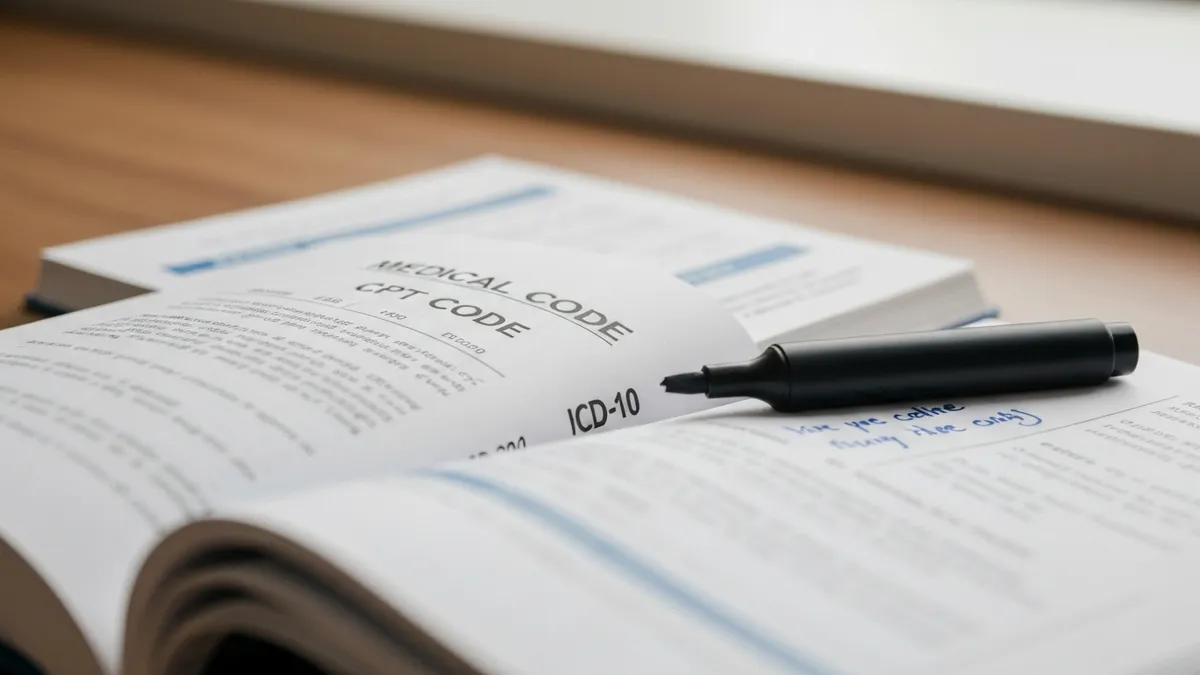
Tab and flag your code books systematically before exam day. AAPC permits candidates to tab and annotate their code books with hand-written notes, and this is a massive time advantage. Create tabs for every major CPT section, every ICD-10-CM chapter, and key HCPCS sections. Add handwritten notes for frequently tested guidelines such as the ICD-10-CM sequencing hierarchy, the global surgical package inclusions and exclusions, and anesthesia unit conversion formulas. Coders who walk in with well-organized, annotated manuals consistently outperform those relying on pristine, untabbed books.
Time management during the actual CPC exam is a skill that must be practiced, not assumed. With 150 questions in 5 hours and 40 minutes, you have roughly 2 minutes and 16 seconds per question. Develop a two-pass strategy: on the first pass, answer every question you can answer confidently within 90 seconds and mark the rest. On the second pass, work through marked questions more carefully, using your code books only when truly needed. Never spend more than 4 minutes on any single question before moving on and returning if time permits at the end.
Study groups and peer accountability significantly boost both retention and motivation during the weeks-long preparation grind. AAPC local chapters offer study group meetups, and the AAPC online community forums provide a venue for discussing specific coding scenarios with credentialed peers. When you explain a coding concept to another person, you reinforce your own understanding at a much deeper level than solo review. Even a virtual study partner who texts you accountability check-ins each day can meaningfully improve your consistency and follow-through on study commitments.
Nutrition, sleep, and physical state on exam day matter more than many candidates acknowledge. The CPC exam is a nearly six-hour cognitive marathon. Arriving well-rested, having eaten a protein-rich meal, and bringing permitted snacks and water to the testing center supports sustained concentration across all 150 questions. Candidates who take practice exams under exam-like physical conditions — same time of day, same duration, no breaks beyond the permitted ones — are better conditioned to perform at their best when it counts on actual exam day.
AAPC exam seats fill quickly, especially at testing centers in major metropolitan areas. Register at least 8 to 10 weeks before your target exam date to secure your preferred location and time slot. Additionally, if you are registering as a student through an AAPC-approved training program, confirm your program completion date with your instructor well in advance — incomplete coursework disqualifies you from the student exam rate and may delay your eligibility.
After passing the CPC exam, your certification journey is far from over. The AAPC requires all CPC holders to complete 36 continuing education units every two-year certification cycle to maintain their active credential status. These CEUs must be earned through AAPC-approved education providers and must include at least 18 units directly related to medical coding. The remaining 18 units may cover a broader range of healthcare topics including compliance, healthcare law, anatomy, or practice management — giving you flexibility to pursue professional development in areas relevant to your specific role.
The two-year CEU cycle begins on January 1 following the year you passed your exam. If you passed in March 2026, your first renewal period runs from January 1, 2027 through December 31, 2028, and you must submit proof of 36 CEUs by that date to renew without penalty. Missing the renewal deadline results in a lapsed credential status, which requires either completing a reinstatement process or retaking the exam. Staying ahead of your CEU requirements throughout the two-year cycle rather than rushing to complete them in the final months is strongly advisable.
Career advancement after cpc certification typically follows one of several tracks. Many new CPCs begin in outpatient physician practice coding and progressively move into higher-complexity settings such as hospital outpatient, ambulatory surgery center, or facility inpatient coding. Others specialize in a particular medical domain — oncology coding, cardiology coding, orthopedic coding — and pursue additional AAPC specialty credentials in those areas. Specialty credentials such as the Certified Surgical Coder (CSC) or the Certified Cardiology Coder (CCC) are available as add-on credentials for credentialed CPCs and command additional salary premiums.
Remote coding positions have expanded dramatically since 2020, and CPC credential holders are disproportionately represented in the remote coding workforce. Health systems, physician management companies, and revenue cycle outsourcing firms actively recruit remote CPCs for both production coding and coding auditing roles. A remote coding career offers geographic flexibility, elimination of commute time, and access to employers nationwide regardless of your physical location — making the CPC credential even more valuable in the current labor market.
Coding auditing and compliance consulting represent two high-value career paths that open specifically to experienced CPC holders. Auditors review coded claims for accuracy, identify patterns of systemic error, and produce reports that guide physician education and process improvement. Compliance consultants assist healthcare organizations in building, evaluating, and remedying their compliance programs under OIG guidelines. Both of these roles typically require 3 to 5 years of direct coding experience plus the CPC credential, and both carry significantly higher compensation than entry-level coding positions.
Leadership roles in health information management, revenue cycle management, and coding department supervision represent the upper end of the CPC career ladder. Coding managers and directors oversee teams of coders, establish departmental productivity and quality benchmarks, interface with payers on coverage and billing disputes, and participate in strategic planning for the revenue cycle. The CPC credential is almost universally required for these roles and is often paired with a bachelor's or master's degree in health information management or a related field for the most senior positions.
For a comprehensive view of how your specific coding competencies translate to salary ranges across experience levels and geographic markets, explore our dedicated salary and career resource linked directly from this skills checklist. Understanding the financial return on your certification investment — and which specialty niches pay the most — is an important part of long-term career planning that every new CPC should evaluate before choosing a first position or specialty focus.
In the final weeks before your CPC exam, the most valuable thing you can do is shift from learning new material to consolidating and reinforcing what you already know. Many candidates make the mistake of trying to cram entirely new specialty sections in the last two weeks, which creates anxiety and interferes with retention of previously mastered content. Instead, use the final two weeks for timed practice sessions, targeted review of your known weak areas, and systematic verification that your code books are properly tabbed and annotated for exam day efficiency.
One underutilized strategy for the final preparation phase is deliberately practicing difficult question types in isolation. Identify the question formats that cost you the most time — complex cardiovascular surgical scenarios, multi-code ICD-10-CM sequencing exercises, or anesthesia unit calculations — and spend focused 30-minute blocks working exclusively on those question types. This targeted repetition builds the pattern recognition that makes difficult questions feel manageable under exam pressure rather than overwhelming and time-consuming.
Coding guideline mastery at a granular level separates 70 to 75 percent scorers from 80-plus percent scorers. Read the complete ICD-10-CM Official Guidelines for Coding and Reporting from Section I through Section IV and highlight every rule that affects code sequencing, combination code selection, or the use of additional codes.
Do the same for the CPT Evaluation and Management guidelines and the Surgery section's general notes and guidelines. Many exam questions are designed to test whether you know the specific guideline, not just whether you can find a plausible code — and knowing the guidelines prevents costly errors on otherwise approachable questions.
On the day before your exam, resist the temptation to do a marathon study session. Research on cognitive performance consistently shows that fatigue impairs reasoning ability, and the CPC exam is fundamentally a test of reasoning applied to medical coding knowledge. A light 60 to 90 minute review of your most frequently missed question types is sufficient. Spend the remainder of the day organizing your exam materials, confirming your testing center location and arrival time, and engaging in activities that help you relax and feel mentally fresh for the following morning.
During the exam itself, trust the preparation you have done. When you encounter a question that initially stumps you, use the process of elimination aggressively. Medical coding multiple choice questions almost always contain at least one clearly incorrect distractor and one close-but-wrong answer that violates a specific guideline. By eliminating the obviously wrong choices first and then applying your guideline knowledge to distinguish between the remaining options, you can frequently arrive at the correct answer even on questions where your initial confidence was low.
After submitting your exam, AAPC provides your score immediately for computer-based testing. If you pass, you will receive your official CPC certificate within approximately four to six weeks, along with your AAPC membership card reflecting your new credential. Update your LinkedIn profile, your resume, and any professional bios immediately — employers, recruiters, and clients actively search for CPC-credentialed candidates, and your credential becomes a searchable professional signal the moment it appears on your public profile.
If you need to retake the exam, AAPC permits retakes after a 30-day waiting period, and you may retake up to three times within a 12-month window. Use the score report from your first attempt, which breaks your performance down by section, to create a highly targeted remediation plan.
Focus 80 percent of your additional study time on the sections where your score fell furthest below passing, and resist the urge to re-study sections where you already performed well. A strategic, data-driven retake approach gives most candidates the additional 5 to 10 percentage points needed to cross the passing threshold on their second attempt.
CPC Questions and Answers




About the Author

Educational Psychologist & Academic Test Preparation Expert
Columbia University Teachers CollegeDr. Lisa Patel holds a Doctorate in Education from Columbia University Teachers College and has spent 17 years researching standardized test design and academic assessment. She has developed preparation programs for SAT, ACT, GRE, LSAT, UCAT, and numerous professional licensing exams, helping students of all backgrounds achieve their target scores.
Join the Discussion
Connect with other students preparing for this exam. Share tips, ask questions, and get advice from people who have been there.
View discussion (8 replies)