
CPC Score & Exam Tips: How to Pass the AAPC CPC Exam 2026 September
💯 Free CPC Score & Practice Test practice test with instant feedback and detailed answer explanations. Prepare for your exam.

Understanding Your CPC Score
The CPC exam is 150 multiple-choice questions. You have 5 hours and 40 minutes to answer them all. The passing score is 70% — which means you need to answer at least 105 questions correctly. Miss 45 or more and you don't pass.
That sounds straightforward. But what trips people up is how the questions are distributed. The CPC covers 17 content areas, from surgical coding to anesthesia to HCPCS Level II. Each content area has a set number of questions. You could be brilliant at surgery coding but weak on evaluation and management, and that weakness shows directly in your score.
When the AAPC sends your score report, it breaks your performance down by content area. That breakdown is invaluable — not just if you need to retake the exam, but as a study guide during prep. If you're doing well in medical coding fundamentals but struggling with radiology, redirect your practice time accordingly.
What's Actually on the CPC Exam
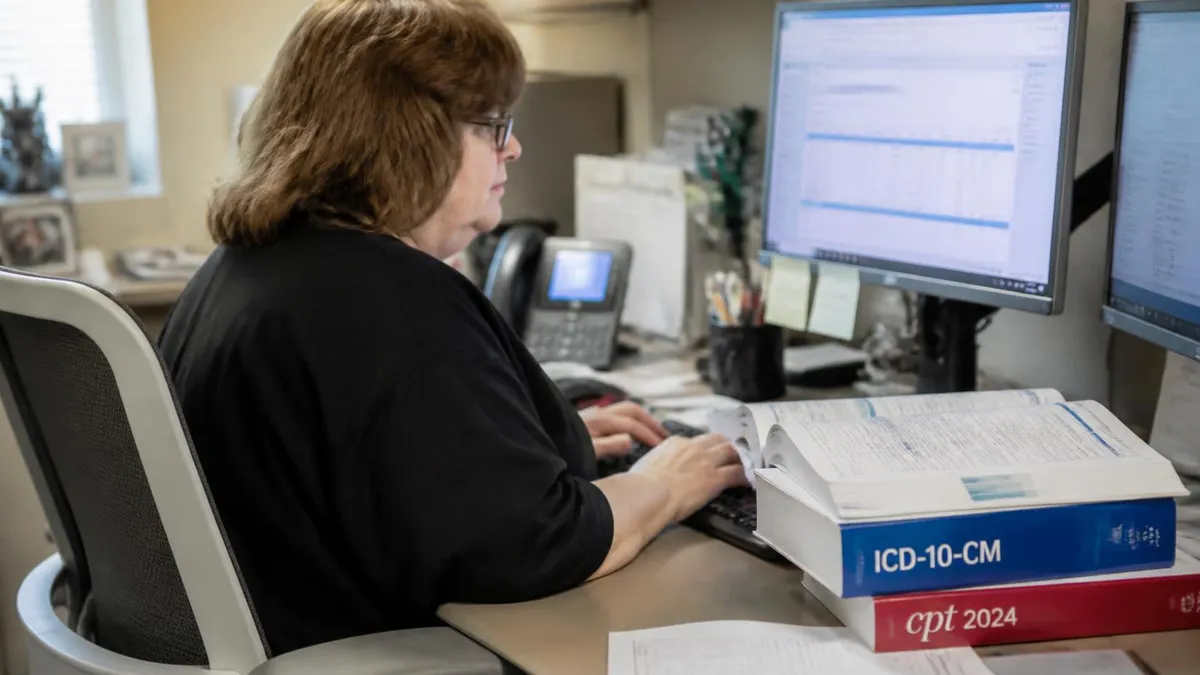
The CPC tests your ability to code accurately using CPT, ICD-10-CM, and HCPCS Level II code sets. It's not a memorization test — you bring your code books into the exam room. What it tests is your ability to locate codes quickly, apply coding guidelines correctly, and choose the right code when multiple options look similar.
The 17 content areas include: anesthesia, surgery (multiple subsections), radiology, pathology and laboratory, E&M coding, ICD-10-CM diagnosis coding, HCPCS Level II, medical terminology, anatomy and physiology, and compliance/regulatory topics.
The cpc exam eligibility requirements page covers what you need to qualify to sit for the exam — if you haven't checked those yet, start there.
CPC Exam Tips That Actually Work
Here's what consistently separates candidates who pass on their first attempt from those who need to retake:
Tab Your Code Books
Time is your biggest enemy on the CPC exam. The exam is open book, but flipping through untabbed code books costs you minutes you don't have. Tab your CPT, ICD-10-CM, and HCPCS Level II books before exam day. Mark the major sections, the anesthesia codes, the E&M guidelines, the modifiers section. Every second you shave off navigating your books adds up across 150 questions.
Read the Question Before the Scenario
CPC questions often include a patient scenario followed by the actual question. Read the question first, then read the scenario with your question in mind. This prevents you from reading hundreds of words and then realizing you need to reread to find the relevant detail.
Watch the Modifiers
Modifier questions are a significant portion of the exam and a source of careless errors. Slow down on modifier questions. Make sure you understand what the modifier does before selecting it. Common traps: confusing 51 vs. 59, misapplying laterality modifiers, and overlooking when a modifier is appropriate vs. when it's not permitted.
Pro Tip: Focus your CPC study time on areas where you score lowest. Most exam questions test application of knowledge, not memorization.
How to Study for the CPC Exam
Most candidates spend 3–6 months preparing for the CPC. How you structure that time matters as much as how many hours you put in. Here's a framework that works:
Phase 1: Learn the Content (Weeks 1–8)
Go through each of the 17 content areas systematically. Don't try to memorize codes — learn the structure of the code books and the guidelines that govern each section. For surgery, understand the package concept (global period, what's included, what requires a separate code). For E&M, internalize the key components (history, examination, medical decision-making) and how documentation maps to code levels.
Phase 2: Practice, Practice, Practice (Weeks 9–16)
Shift to practice questions. Do them timed — simulate real exam conditions. Aim for at least 300–400 practice questions before exam day, with full practice exams in the final 2–3 weeks. Review every wrong answer in detail. When you miss a question, trace the error back: was it a guideline you didn't know? A tabbing issue? A misread scenario? Each error type needs a different fix.
Phase 3: Targeted Weak Spot Review (Final 2–3 Weeks)
Use your practice test scores by topic to identify your 3–4 weakest areas. Spend the final weeks drilling those specifically. Don't ignore your strong areas entirely, but prioritize the gaps. Coming into the exam with a few glaring weak spots is more dangerous than having broad moderate knowledge.
Common CPC Exam Mistakes to Avoid
Running out of time is the most common reason candidates don't pass, not lack of knowledge. If you're spending more than 2–3 minutes on any single question, mark it and move on. Return to it later if time allows. Answer every question — there's no penalty for guessing on the CPC. A blank answer is definitely wrong; a guess has a chance.
Don't rely on memory for codes. Open your books. The exam is designed to be taken open book, and the questions are written at a difficulty level that assumes you'll look things up. Candidates who try to rely on memorized codes make errors they wouldn't make if they just looked it up.
The certified professional coder certification is administered by the AAPC. It's the most widely recognized medical coding credential — employers know what it means. Passing it opens doors in physician offices, health systems, coding consulting, and more.
What to Bring to the CPC Exam
You can bring physical copies of CPT, ICD-10-CM, and HCPCS Level II. Tabbing and highlighting are permitted; writing notes in the margins is generally allowed within AAPC guidelines (check current rules before exam day). You can't bring electronic devices or digital code books.
Bring your AAPC ID, a watch (no smartwatch), and test-day snacks if the test center permits them. Five hours and 40 minutes is a long time — energy management matters. Stay hydrated, take the breaks offered, and don't skip meals before the exam.
CPC: Pros and Cons
- +cpc — cPC exam preparation strengthens your knowledge across all domains
- +Passing the exam proves competency to employers and clients
- +Study materials and practice tests are widely available
- +Exam-based credentials are portable across states and employers
- +Clear exam objectives help focus your study plan effectively
- −Exam anxiety can affect performance — practice tests help reduce it
- −Registration fees are non-refundable if you miss your test date
- −Limited retake opportunities may apply with waiting periods
- −Exam content updates periodically — use current study materials
- −Testing center availability may require advance scheduling





Build Exam Readiness with Practice Tests
The CPC exam rewards candidates who've done realistic exam practice — timed, open book, with code books they've learned to navigate efficiently. Reading prep materials and doing practice tests are both necessary; neither alone is sufficient.
Our CPC practice tests cover surgical coding, HCPCS Level II, radiology, pathology, and more. Work through them in timed sessions. Review every wrong answer. Track your accuracy by topic area and use that data to direct your study time in the final weeks before your exam date.
The cpc practice exam resources here are free — use them as often as you need. The more exam-like your preparation, the more comfortable and confident you'll be when the real test clock starts.
About the Author

Educational Psychologist & Academic Test Preparation Expert
Columbia University Teachers CollegeDr. Lisa Patel holds a Doctorate in Education from Columbia University Teachers College and has spent 17 years researching standardized test design and academic assessment. She has developed preparation programs for SAT, ACT, GRE, LSAT, UCAT, and numerous professional licensing exams, helping students of all backgrounds achieve their target scores.
Join the Discussion
Connect with other students preparing for this exam. Share tips, ask questions, and get advice from people who have been there.
View discussion (8 replies)