
CPC Exam: Complete Guide to the AAPC Certified Professional Coder Test
The CPC exam is AAPC's outpatient medical coding certification. ❓ Get format, sections, cost, prep tips and what to bring on test day.

The CPC exam is the credential most outpatient medical coders chase first, and for good reason. It's the gold-standard certification from the AAPC (American Academy of Professional Coders), and passing it tells employers you can read a chart and assign accurate CPT, ICD-10-CM, and HCPCS Level II codes without supervision. If you're staring at a registration page wondering what you're actually signing up for, this guide walks you through every moving part.
You'll find the exact format, the section breakdown, what scoring looks like, current pricing, what to drag into the testing room, and how to study without burning out. We'll also untangle the difference between sitting the exam and earning full CPC status versus the apprentice CPC-A designation. By the end, you'll know whether you're ready to schedule a date or whether you need a few more weeks with your code books.
Before we dive in, a quick word about who this exam is really for. The CPC is built for outpatient coders, meaning anyone who'll spend their day coding physician office visits, ambulatory surgery, urgent care, outpatient hospital, or freestanding clinic encounters. If your future job involves inpatient hospital records, you'd want the CIC instead. Risk adjustment coders chase the CRC. The CPC is the broadest, most marketable credential and the one recruiters mention most often in job listings.
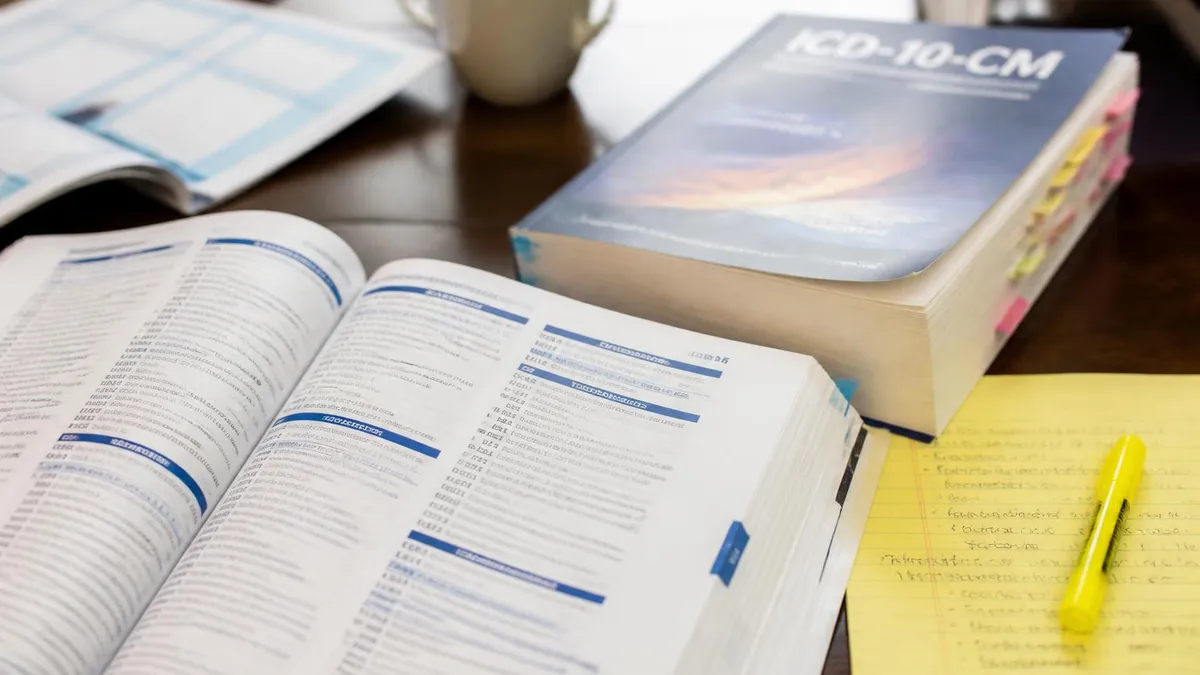
Quick facts: 100 multiple-choice questions, 4 hours, open-book with approved code manuals, 70% to pass, results in 7-10 business days. Costs $399 for AAPC members or $499 for non-members in 2026, and includes one free retake within a year.
The Certified Professional Coder exam validates that you can pull the right codes from real-world clinical documentation. It's not a memory test. Examiners assume you'll have your books open, your tabs in place, and your highlights ready. What they're measuring is whether you can navigate quickly, apply guidelines correctly, and pick the single best answer when two codes look almost identical. That's why a solid cpc exam study guide is worth its weight in gold.
AAPC built the CPC around outpatient coding specifically. Inpatient coders sit a different exam (the CIC). If you'll be working in physician offices, ambulatory surgery centers, or outpatient hospital departments, the CPC is the credential that opens doors. Hospitals, billing companies, and large physician groups list it on nearly every coder job posting, and salary surveys consistently show certified coders earn more than uncertified peers.
One more thing to set expectations: the questions look like the real charts you'll see at work. Operative reports, progress notes, lab requisitions, radiology reads. AAPC writes them this way on purpose. They want you proving you can decode messy provider documentation, not regurgitating textbook examples. Approach every practice question like a mini case study, and your test-day mindset will already be in shape long before you walk in.
CPC Exam Key Numbers
Key Facts at a Glance
| Item | Value | Details |
|---|---|---|
| Multiple-choice questions | 100 | |
| Total exam time | 4 hours | |
| Passing score | 70% |
Now to the format itself. You get 100 questions in four hours. That works out to about 2.4 minutes per question, which sounds generous until you hit a complex operative report with three procedures and modifiers stacked on top of each other. Most candidates spend the first hour cruising through the easier sections and then slow down dramatically in surgery and E/M. Pacing is half the battle.
Every question is multiple-choice with four answer choices. There's no penalty for guessing, so never leave a blank. Mark anything tricky for review and come back if time allows. The exam software lets you flag questions and jump back, so use that feature aggressively. A free cpc practice exam is the best way to get comfortable with the rhythm before test day.
A useful pacing trick: split the four hours into four 25-question chunks, and aim to finish each chunk in roughly 55 minutes. That builds in a small cushion at the end for review. If you blow past the 55-minute mark on chunk one, you know to pick up speed before the next block. Watching the clock once every ten questions keeps you honest without becoming a distraction. Practice this pace during your timed mock exams so it becomes muscle memory.
CPC Exam Format, Sections, Scoring and Delivery
The CPC exam is 100 multiple-choice questions delivered over a single 4-hour session. There are no scheduled breaks, but you can leave your seat for a quick restroom trip if needed (the clock keeps running). Questions appear one at a time on screen, and you can flag any item to revisit before submitting. The exam is open-book: you bring printed copies of the current-year CPT, ICD-10-CM, and HCPCS Level II manuals.
Let's break down what's actually inside those 100 questions. AAPC publishes a content outline that lists about 17 areas, but the weighting matters more than the count. Surgery alone (broken into ten subsections by body system) accounts for roughly 10 questions. E/M coding is its own beast and shows up in 6-8 questions, often with full progress notes you have to read carefully. Anatomy, physiology, and medical terminology questions test whether you understand what's happening in the chart, not just where the codes live.
Compliance, regulatory, and practice management questions are the sleeper section nobody talks about. They cover HIPAA privacy and security rules, OIG fraud and abuse guidance, the False Claims Act, advance beneficiary notices, and basic billing workflow. They feel softer than coding questions, but they're worth the same point each, and the wrong answers are often worded to sound right. Memorize the core compliance frameworks early so they become free points on test day.

CPC Exam Section Breakdown
- Approx questions: 10+
- Focus: 10 surgical subsections by body system
- Watch for: Bundling rules, modifier 51, 59, 25, 26
- Approx questions: 6-8
- Focus: Office visits, hospital, consults
- Watch for: 2021+ MDM-based level selection
- Approx questions: 5-6 each
- Focus: Section guidelines and code selection
- Watch for: Time units, contrast, professional vs technical
- Approx questions: 5-7
- Focus: Diagnosis coding and sequencing
- Watch for: Combination codes, laterality, 7th characters
- Approx questions: 3-5
- Focus: Supplies, drugs, DME, ambulance
- Watch for: J-codes for drugs, modifiers
- Approx questions: 10-15 combined
- Focus: HIPAA, fraud rules, body systems
- Watch for: Standalone questions without a chart
Cost is the next thing most candidates ask about. AAPC charges $399 for current AAPC members and $499 for non-members. That includes the exam itself plus one free retake within 12 months if you don't pass on the first try. Annual AAPC membership is $175, so the math usually favors becoming a member first if you plan to maintain certification long-term anyway. Prices typically tick up each January, so check the current AAPC site before you register.
Eligibility is fairly open. There's no hard prerequisite to sit the exam, but AAPC strongly recommends two years of coding experience before attempting it. If you don't have that experience yet, you can still pass and earn the CPC-A apprentice designation. The 'A' drops off your credential as soon as you document two years of work or one year of experience plus 80 hours of approved coding coursework. Detailed cpc certification requirements vary by employer, but the AAPC pathway is universal.
Don't forget the hidden costs. A current-year CPT Professional Edition runs $130-$250 depending on the publisher. ICD-10-CM and HCPCS Level II add another $80-$150 each. Practice exam bundles, online courses, and AAPC's official study guide can stack another $300-$800 on top. Budget the whole package, not just the exam fee, so you're not surprised when sticker shock hits during your final week of prep. Many employers reimburse all of this for current employees, so check your benefits package before paying out of pocket.
What to Bring to the CPC Exam
- ✓Active AAPC membership ($175 per year)
- ✓Exam fee paid ($399 member, $499 non-member)
- ✓Government-issued photo ID matching your registration name
- ✓Current-year CPT Professional Edition (AMA or AAPC)
- ✓Current-year ICD-10-CM code book
- ✓Current-year HCPCS Level II code book
- ✓Two #2 pencils and a manual eraser
- ✓Quiet test environment (if testing online via ProctorU)
Registration is straightforward. Log into your AAPC account, head to the certification page, and pick a date that gives you at least 1-2 weeks of buffer. In-person sites fill up fast in test-heavy months (May, August, November), so book early if you want a specific Saturday. Online ProctorU slots are usually available within days, including evening and weekend windows.
Once you're signed up, you'll get a confirmation email with everything you need to know: location address or ProctorU login link, what time to arrive, and the rules for code books. Read it twice. Showing up without an approved ID or with the wrong-year code book gets you turned away with no refund.
Code book rules matter: Your manuals can be tabbed and highlighted, but loose papers, sticky notes, taped-in cheat sheets, and inserted printouts are NOT allowed. Proctors will ask you to remove anything that wasn't bound into the book by the publisher. Handwritten notes inside the margins are fine; printed external notes are not.
Speaking of code books, this is where many candidates trip up. AAPC accepts the latest CPT Professional Edition (the AMA version or the AAPC-branded version), the current ICD-10-CM (any major publisher), and the current HCPCS Level II (any publisher). 'Current' means the version effective for the year you're testing. If you're sitting the exam in 2026, you need 2026 code books. Old editions get rejected at check-in.
Tabbing your books is the single most valuable prep activity besides taking practice questions. Color-code by section: one color for surgery, another for E/M, another for ICD-10-CM chapters. Write short notes in the margins for tricky guidelines. The faster you can flip to the right page, the more questions you'll finish.
One more code book tip: use plastic flag tabs that hang slightly off the page edge so you can see them stacked. Cheap paper tabs tear by hour two of intense flipping. Spend the extra few dollars on durable tabs and you won't be reattaching them mid-exam. Pre-write the section name on each tab in fine permanent marker so they stay readable across multiple study sessions and your real test day.
So how long should you actually study? Most candidates do well with a 6-12 week prep window at 5-15 hours per week. If you're brand new to coding, push toward the longer end. If you've been coding professionally for a year or two, six weeks of focused review is usually enough. Block out time for guided lessons, then move into timed practice tests during the final two weeks.
A good study plan rotates between content review and active recall. Don't just read your manuals cover to cover (you'd be there forever). Instead, work through practice questions, look up codes you don't know, and add a margin note so you remember next time. Repetition with variety beats passive reading every single time. Pair this with a structured cpc study guide and you'll build the kind of pattern recognition the exam rewards.
Group study can help, but it can also slow you down. Two-person study pairs work well because you can quiz each other on tough concepts and split the cost of premium prep materials. Larger study groups tend to drift into chat. If you join one, set a clear weekly agenda and stick to it. Online study forums and Reddit's medical coding communities are excellent for asking 'why is the answer C and not B' questions when you get stuck on a specific scenario.
CPC Exam Study Timeline
Weeks 1-2: Foundations
Weeks 3-5: Section deep dives
Weeks 6-8: ICD-10-CM and HCPCS
Weeks 9-10: Full-length practice
Week 11-12: Final polish
The CPC-A apprentice designation deserves its own paragraph because new coders often misunderstand it. If you pass the exam without two years of documented work experience, AAPC awards you the CPC-A. You're certified, you can list it on a resume, and many employers will hire CPC-As at slightly lower starting wages. To remove the 'A,' you submit proof of two years of full-time coding experience, OR one year of experience plus 80 hours of approved coding education. Most apprentices get the 'A' removed within 18-24 months of their first job.
Once you're certified, you have to maintain it. AAPC requires 36 continuing education units (CEUs) every two years for the CPC credential. You earn CEUs by attending AAPC webinars, local chapter meetings, conferences, or by passing approved courses. Most coders cover their CEUs through a mix of free chapter meetings and paid online courses. Letting CEUs lapse means losing your certification, so track them in your AAPC dashboard from day one.
Test day strategy is where prep meets execution. Eat a real breakfast, dress in layers (testing rooms run cold or hot, never just right), and arrive at least 30 minutes early. If you're testing online, log into ProctorU 15 minutes before your scheduled time so you have buffer for the room scan and ID check. Have water and a small snack within reach if you're at home; in-person sites have stricter rules.
Once the clock starts, attack the questions you know first. Skim each question, identify the section, flip to the right page, and pick the best answer. If you're stuck for more than 90 seconds, flag it and move on. Don't let a single nasty surgery question eat 10 minutes of your time. After your first pass through all 100 questions, you'll usually have 30-45 minutes left for the flagged items.
CPC Exam Pros and Cons
- +Industry-standard credential recognized by hospitals, clinics, and billing companies nationwide
- +Open-book format rewards organized prep and strong navigation skills
- +One free retake within 12 months reduces the financial sting of a first-attempt fail
- +Online proctored option means you can test from home on flexible schedules
- +Strong salary lift: certified coders out-earn uncertified peers by a measurable margin
- −Pass rate hovers around 57% on first attempt, so under-preparation is costly
- −Code books cost $200-$400 extra on top of the exam fee and membership
- −4 hours is mentally exhausting and pacing mistakes can sink an otherwise prepared candidate
- −CPC-A designation can lower your starting salary until you log two years of experience
- −Annual CEU requirement means the cost of certification continues every year
If you're wondering about the bigger picture, the CPC sits inside a wider AAPC credential family. what is CPC? It's the entry-level outpatient credential, but specialized add-on certifications exist for nearly every specialty (cardiology, dermatology, OB/GYN, orthopedics, etc.) once you have your base CPC. Many coders use the CPC as a launchpad and stack specialty credentials over the next 2-5 years to boost their earning potential.
If you don't pass the first time, don't panic. Use your section-by-section score report to identify your weak spots. If you bombed surgery, spend the next 4-6 weeks working through nothing but operative reports until they feel routine. If E/M tripped you up, focus exclusively on the 2021+ MDM-based selection rules. Use your free retake window strategically. Most second-attempt candidates pass with comfortable margins because they finally know what the exam looks like.
One last piece of advice: don't underestimate the compliance and regulatory questions. They feel easy compared to surgery, so candidates rush through them. But they're worth the same point as a complex operative report, and the answer choices are designed to look correct on the surface. Slow down, read the full scenario, and pick the response that follows official HIPAA, OIG, or AAPC ethics guidance. Easy points add up.
And a quick word on test anxiety. The four-hour clock can mess with your head if you let it. Practice with a real timer at home so the pressure becomes familiar, not foreign. Pick a steady breathing pattern (in for four counts, out for six) to use when you feel your heart rate climbing. Skip the energy drinks. Drink water, eat a balanced meal, and get a full night of sleep before exam day. Your brain works better when it's hydrated, fed, and rested.
You're now equipped with everything you need to plan your CPC attempt: the format, the sections, the scoring, the cost, the eligibility rules, the registration process, what to bring, how to prep, and how to handle test day. Schedule with confidence, study with purpose, and walk in knowing you've done the work. The credential pays back the effort many times over.
CPC Exam Questions and Answers
About the Author

Certified Internal Auditor & Compliance Certification Expert
University of Illinois Gies College of BusinessBrian Henderson is a Certified Internal Auditor, Certified Information Systems Auditor, and Certified Fraud Examiner with an MBA from the University of Illinois. He has 19 years of internal audit and regulatory compliance experience across financial services and healthcare industries, and coaches professionals through CIA, CISA, CFE, and SOX compliance certification programs.
Join the Discussion
Connect with other students preparing for this exam. Share tips, ask questions, and get advice from people who have been there.
View discussion (8 replies)