
CPC Study Materials: Best Resources for the Certified Professional Coder Exam
✅ Pass the CPC Study Materials: Best Resources for exam with confidence. Practice questions with detailed explanations and instant feedback on every answer.

The CPC exam is one of the most respected credentials in medical coding, issued by AAPC (American Academy of Professional Coders). Passing it requires mastering three codebooks — ICD-10-CM, CPT, and HCPCS Level II — along with anatomy, medical terminology, and coding guidelines for every major specialty. The right study materials make the difference between a confident test day and a frustrating retake.
Because the CPC is an open-book exam, your prep strategy differs from most professional certifications. You're not memorizing every code. Instead, you're building speed and accuracy — learning to navigate tabbed codebooks under time pressure while applying guidelines correctly. That means your study plan must include both content mastery and exam-taking mechanics.
This guide covers every resource category worth considering: official AAPC materials, third-party study guides, practice question banks, video courses, and the codebook tabbing strategies that experienced coders rely on. Whether you're starting from scratch or preparing for a retake, the resources below are the ones actively used by CPC candidates in 2026.
The CPC credential opens doors across healthcare. Certified Professional Coders work in physician offices, hospitals, insurance companies, consulting firms, and remote coding departments. Starting salaries typically range from $42,000 to $55,000, with experienced coders earning $60,000–$80,000 and subspecialty coders (orthopedics, cardiovascular, oncology) commanding premium rates. The upfront investment in quality study materials pays dividends quickly once you're working.
First-time pass rates for the CPC hover around 70% for candidates who complete formal prep — but that number drops significantly for those who walk in underprepared. The exam isn't designed to trick you; it's designed to confirm that you can apply coding rules accurately under realistic working conditions. Candidates who treat study time as genuine coding practice, rather than passive reading, consistently report higher confidence and better results on exam day.
The study material landscape has changed considerably over the past few years. Video-based learning, specifically Blitz CPC and YouTube channels dedicated to medical coding, now supplements or sometimes replaces traditional textbook prep for many candidates. Online question banks let you drill by specialty section and identify weak areas without the logistics of a classroom. Remote proctored exams allow candidates to test from home. The core requirement — three tabbed codebooks and deep familiarity with coding guidelines — remains unchanged, but how candidates prepare around that core is now far more flexible.
Don't underestimate the value of practicing with the physical codebooks you'll bring to the exam. Some candidates use library copies or borrowed books during early study, then switch to their own purchased copies in the final weeks. Your personal copy will have your own tabs, annotations, and wear patterns — it becomes a cognitive tool, not just a reference. Switching books late in your prep resets that familiarity.
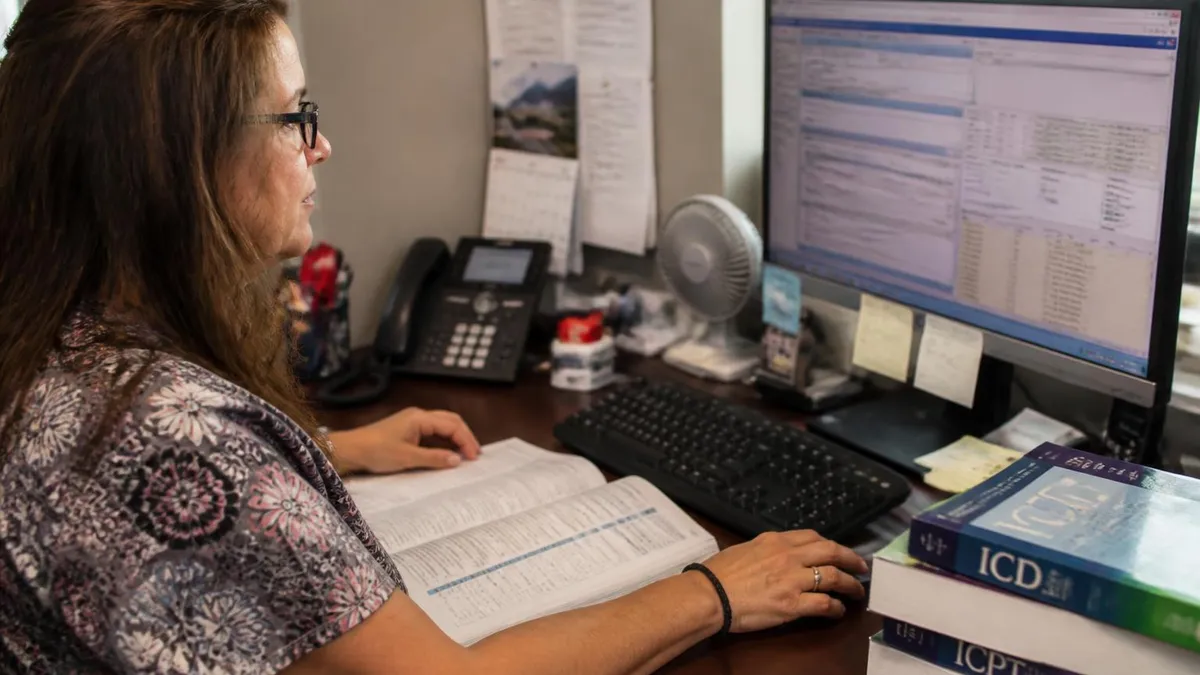
Buy your codebooks early, use them consistently, and bring those same books to the exam. Exam centers allow you to bring multiple tabbed codebooks, loose printed sheets of hand-written notes, and sticky-note reference sheets — use this allowance fully — it's a meaningful advantage over computer-based exams where you can't bring references.
If cost is a barrier, a phased purchase approach works well. Buy the CPT Professional Edition first — it's the most-tested codebook and the most expensive to rent or borrow. Add ICD-10-CM next, and HCPCS Level II last. You can delay buying the official AAPC Study Guide or Blitz videos until your third or fourth week, once you've confirmed that your self-study approach is working. Free practice questions on sites like PracticeTestGeeks let you gauge your baseline before committing to premium resources.
The CPC exam tests knowledge across all major areas of outpatient medical coding. Understanding the exam's content distribution tells you exactly where to focus your study time.
Medical terminology and anatomy together account for roughly 20 questions at the start of the exam. These sections reward candidates who invest time reviewing body systems, directional terms, and surgical word roots before exam day. A solid anatomy foundation also speeds up your work in the specialty coding sections that follow.
ICD-10-CM diagnosis coding comprises approximately 15% of the exam. Questions in this area test your ability to apply coding guidelines, sequence codes correctly for comorbidities, and select specificity (laterality, encounter type, severity). The Official Guidelines for Coding and Reporting are printable and can be included in your exam materials — many candidates tab them as a standalone reference inside their ICD-10-CM codebook.
CPT procedure coding is the largest portion of the exam, covering roughly 40% of questions. This includes E/M services, surgery codes by body system, anesthesia, radiology, pathology, and medicine. Mastery of CPT guidelines, parenthetical notes, and add-on code rules is essential. HCPCS Level II adds another category covering supplies, drugs, and services not described by CPT codes.
Evaluation and Management coding deserves particular attention despite representing only 10% of exam questions. The 2021 E/M revision fundamentally changed how office and outpatient visit levels are selected — moving away from the history/physical exam counting system to a medical decision-making (MDM) or time-based approach. Candidates who studied for the exam before 2021 and are retaking it need to completely relearn this section, as the old guidelines no longer apply.
Compliance and regulatory questions round out the exam at roughly 3–5 questions. These cover HIPAA privacy rules, the False Claims Act, fraud and abuse scenarios, and AAPC's code of ethics. While this section is small, the questions are often high-stakes common knowledge — most candidates can answer them correctly with minimal dedicated study once they understand the basic framework of healthcare compliance.
One common mistake among first-time CPC candidates is spending equal time on every section regardless of its exam weight. If you have 10 hours per week available for study over 12 weeks, that's 120 hours total.
Allocating those hours proportionally — about 30 hours on CPT Surgery, 15 hours on E/M, 12 hours on ICD-10-CM, and the remaining 63 hours spread across anesthesia, radiology, pathology, medicine, HCPCS, terminology, anatomy, and compliance — mirrors the actual exam distribution. Studying anatomy for 30 hours at the expense of surgery practice is a common exam-prep mistake that shows clearly in category breakdowns on score reports.

| Section | Questions | Time | Weight |
|---|---|---|---|
| Medical Terminology | 10 | — | 7% |
| Anatomy & Physiology | 10 | — | 7% |
| ICD-10-CM (Diagnosis Coding) | 23 | — | 15% |
| CPT — E/M Services | 15 | — | 10% |
| CPT — Surgery (All Specialties) | 40 | — | 27% |
| CPT — Anesthesia | 7 | — | 5% |
| CPT — Radiology | 8 | — | 5% |
| CPT — Pathology & Lab | 8 | — | 5% |
| CPT — Medicine | 10 | — | 7% |
| HCPCS Level II | 7 | — | 5% |
| Compliance & Regulatory | 5 | — | 3% |
| Unscored Pretest Items | 10 | — | N/A |
Three codebooks are required for the CPC exam and should be your primary study tools:
- ICD-10-CM Professional Edition (AAPC or AMA publisher) — includes Official Guidelines
- CPT Professional Edition (AMA) — includes full guidelines and parenthetical notes; the Standard Edition omits some guidelines
- HCPCS Level II (AMA or Optum) — table of drugs section, appendices
Buy the current year's editions. Outdated codebooks will have deleted or revised codes that could cost you points. Tab every section, specialty, and appendix before exam day — you won't have time to search from scratch under exam conditions.
- ✓ICD-10-CM: Tab each alphabetic index letter (A–Z)
- ✓ICD-10-CM: Tab each code chapter (1–22)
- ✓ICD-10-CM: Tab Official Guidelines section
- ✓CPT: Tab each section (Evaluation & Management, Anesthesia, Surgery, Radiology, Pathology, Medicine)
- ✓CPT: Tab Surgery subsections by body system (Integumentary, Musculoskeletal, Respiratory, etc.)
- ✓CPT: Tab Appendix A (Modifiers) separately
- ✓CPT: Tab E/M guidelines and MDM table
- ✓HCPCS: Tab Table of Drugs
- ✓HCPCS: Tab each section by letter (A–V)
- ✓HCPCS: Add sticky note with most-tested HCPCS categories

Effective codebook use is what separates candidates who pass from those who run out of time. The CPC allows 5 hours and 40 minutes for 150 questions — that's roughly 2 minutes and 16 seconds per question. Some terminology and anatomy questions are answerable in under 30 seconds. Surgery and specialty coding questions often take 3–4 minutes each, especially when multiple code lookups are required. You need to bank time on the fast questions to spend on the slow ones.
Tab your codebooks before exam day — not the day before, but weeks before. Your tabs should be as familiar as the contents themselves. Color-coding by section or book is common: one color for CPT sections, another for ICD-10-CM chapters, a third for HCPCS. Some candidates use sticky notes with custom reference tables at the front of each book; others add hand-written notes in the margins. AAPC allows annotated codebooks as long as annotations are handwritten or typed, not printed third-party content pasted in.
The alphabetic index in both ICD-10-CM and CPT is your fastest lookup path. Train yourself to always confirm codes in the tabular list before selecting a final code — index entries sometimes point to approximate matches that don't reflect the full specificity or instructional notes in the tabular list. This two-step lookup habit prevents errors on specificity questions and instructional note questions that trip up unprepared candidates.
Modifiers are a consistent source of exam questions, particularly in the surgery section. Modifier 59 (distinct procedural service), Modifier 26/TC (professional/technical component), Modifier 51 (multiple procedures), and Modifier 22 (increased procedural services) appear regularly. Keep a modifier quick-reference sheet tabbed in Appendix A of your CPT and review it during the final week before your exam.
Surgery section questions frequently require you to look up multiple codes in sequence — a primary procedure, one or more add-on codes, and one or more modifiers. Practice this multi-step lookup pattern during your study sessions so it becomes automatic. Many candidates lose time on surgery questions not because they don't know the codes, but because they aren't efficient at the multi-code assembly process.
ICD-10-CM has several sections that disproportionately appear on the exam: neoplasm coding (Table of Neoplasms + behavior/site specificity), injury and trauma codes (S and T codes with 7th character extensions), and pregnancy/obstetrics codes (O codes with episode-of-care extensions). Dedicate focused study time to these sections and practice their unique lookup paths separately from general ICD-10-CM coding practice.
CPT's surgery section is organized by body system — integumentary, musculoskeletal, respiratory, cardiovascular, digestive, urinary, reproductive, nervous, eye, and ear. Knowing which body system each code range belongs to lets you go directly to the right section without scanning. Many candidates create a single reference card listing the CPT code ranges for each body system and keep it tabbed at the front of the Surgery section. This shortcut alone can save 15–20 seconds per surgery question.
Anesthesia, radiology, pathology, and medicine sections each have specialized guidelines that don't apply elsewhere in CPT. Anesthesia uses base units plus time units rather than a standard procedure code value. Radiology frequently separates professional component (interpretation) from technical component (equipment and staff) using modifiers. Understanding these section-specific rules before exam day prevents confusion when you encounter question types you haven't seen before in your regular practice question bank.
The CPC is open book, but don't let that create false confidence. The exam is designed so that candidates who rely on looking up every code will run out of time. Successful coders use codebooks to verify answers, not find them from scratch. Study until you know the approximate location of every section — then tab and index so you can confirm quickly.
Most CPC candidates who work full time budget 3–6 months of study before their exam date. The specific timeline depends on your background: someone transitioning from clinical work with anatomy knowledge may need less time on the front-end terminology sections, while someone new to healthcare may need an extra month on those foundational areas.
A structured 12-week plan works well for most candidates. Weeks 1–2 cover medical terminology and anatomy. Weeks 3–4 address ICD-10-CM guidelines and coding practice. Weeks 5–8 work through CPT by section, spending the most time on Surgery. Weeks 9–10 cover HCPCS, anesthesia, radiology, pathology, and medicine. Weeks 11–12 are reserved for full-length timed practice exams, review of weak areas, and final codebook organization. This schedule assumes roughly 10–15 hours per week of active study.
If you're preparing for a retake, the approach is different. Review your previous score report — AAPC provides a breakdown by category. Focus the first two weeks exclusively on the lowest-scoring sections before returning to general practice. Many retake candidates pass simply by closing gaps in two or three categories they previously underinvested in.
Scheduling your exam date before you feel completely ready is a common and effective strategy. Candidates with a fixed test date study with more discipline and urgency than those who leave the date open. Book the exam, then build your study schedule backward from that date with specific weekly milestones.
The final two weeks before your exam should shift from learning new material to consolidation and speed training. Run timed 50-question mini-exams every other day. Identify which question types consistently slow you down and drill the corresponding codebook lookup path. Organize your codebooks one final time — tighten tabs, confirm that your sticky-note reference sheets are accurate and legible, and pack your exam bag two days before test day.
On exam day itself, strategy matters as much as knowledge. Skip questions you can't answer quickly and mark them for review. Return with fresh eyes after completing the rest of the section. Many candidates find that second-pass questions become clearer after working through related questions elsewhere in the exam. Don't change correct answers based on second-guessing — studies consistently show that first instincts on coding questions are right more often than post-deliberation changes.
Study group participation, whether through AAPC's local chapters or online forums, provides advantages that solo study doesn't. Other candidates share question sources, flag confusing guidelines interpretations, and troubleshoot specific scenarios you might not encounter in your own practice set. The r/medicalcoding subreddit and AAPC's own forums have active threads from current exam candidates — reading these during your final weeks of prep exposes you to question types and confusions you might not have anticipated from your study guide alone.
After passing the exam, maintaining your CPC credential requires 36 continuing education units (CEUs) every two years. AAPC offers CEU courses on updated coding guidelines, specialty areas, compliance changes, and new technology impacts on coding. Many employers cover CEU costs, and several AAPC webinars offer free CEUs for members. Building a habit of following coding updates — annual ICD-10-CM and CPT code changes, quarterly AAPC newsletter content — keeps your skills sharp and reduces the review burden at recertification time.
The CPC is not just an exam; it's the foundation credential for a career path with multiple specialization options. After earning your CPC, you can pursue specialty credentials like the CPC-P (payer), CCS (facility coding), or subspecialty certifications in cardiology, orthopedics, pediatrics, and more. Many experienced coders eventually move into compliance, auditing, or revenue cycle management — roles that rely on the same coding knowledge base but apply it at a managerial or analytical level. The study habits and codebook fluency you build while preparing for the CPC serve you throughout that entire trajectory.
- +Self-study is significantly cheaper ($300–$400 for codebooks vs. $1,000+ for a full course)
- +Flexible schedule — study at your own pace and focus on weak areas
- +Builds the independent problem-solving skills the job actually requires
- +Many self-study candidates pass on their first attempt with disciplined practice
- −Requires strong self-discipline and scheduling; easy to procrastinate without external deadlines
- −No instructor to clarify confusing guidelines or specialty-specific questions
- −Harder to gauge exam readiness without structured benchmarking
- −Self-study candidates may miss nuanced coding scenarios that courses cover explicitly



CPC Questions and Answers
About the Author

Certified Internal Auditor & Compliance Certification Expert
University of Illinois Gies College of BusinessBrian Henderson is a Certified Internal Auditor, Certified Information Systems Auditor, and Certified Fraud Examiner with an MBA from the University of Illinois. He has 19 years of internal audit and regulatory compliance experience across financial services and healthcare industries, and coaches professionals through CIA, CISA, CFE, and SOX compliance certification programs.
Join the Discussion
Connect with other students preparing for this exam. Share tips, ask questions, and get advice from people who have been there.
View discussion (8 replies)