
CPC Certification Course: Complete Training Guide for Aspiring Certified Professional Coders
Complete guide to the CPC certification course — requirements, costs, study tips, and how to become a certified professional coder in 2026 September. 📚

A CPC certification course is the structured training path that prepares aspiring certified professional coders to pass the AAPC's Certified Professional Coder (CPC) exam and launch rewarding careers in medical billing and coding. Whether you are a complete newcomer to healthcare or an experienced biller looking to formalize your skills, choosing the right course can mean the difference between passing on your first attempt and struggling through multiple retakes. Understanding what these programs cover, how long they take, and what they cost helps you invest wisely in your future.
The demand for certified professional coder professionals has grown substantially in recent years, fueled by an aging US population, expanding insurance markets, and the ongoing shift to value-based care. The Bureau of Labor Statistics projects above-average growth for health information technologists through 2032, and the CPC credential sits at the center of that opportunity. Employers ranging from large hospital systems to solo physician practices and insurance companies actively seek coders who have demonstrated competency through a recognized certification program.
A quality certified professional coder certification program covers all forty body systems and specialty sections of the CPT manual, ICD-10-CM diagnosis coding, HCPCS Level II supply and drug codes, and the medical necessity principles that tie clinical documentation to reimbursement. Students learn to interpret operative reports, evaluation and management notes, radiology requisitions, and pathology results — then translate that clinical language into the standardized code sets that drive insurance claims. This breadth of coverage explains why most courses span three to six months of dedicated study.
One of the most common questions prospective students ask is whether an online format is just as effective as in-person classroom instruction. The answer, for most learners, is yes — provided the program includes live instructor support, timed practice exams that mirror the actual CPC format, and access to the current code books you will use on exam day. Many working adults find that a self-paced online schedule allows them to complete modules around shift work, childcare, and other obligations that would make a fixed classroom schedule impractical.
Cost is another major consideration. CPC certification courses range from a few hundred dollars for self-study materials to several thousand dollars for comprehensive programs that bundle textbooks, online access, practice exams, and AAPC membership and exam fees. Before enrolling, calculate the total cost of ownership: the course fee itself, the official CPT, ICD-10-CM, and HCPCS code books, the AAPC membership required to sit for the exam, and the exam registration fee. Some employers reimburse these costs, so check your benefits package before paying out of pocket.
Salary potential is a compelling reason to pursue this credential. According to AAPC survey data, the average certified professional coder salary in the United States is approximately $64,000 per year, with experienced coders in high-demand specialties and supervisory roles earning well above that figure. Remote work opportunities have expanded significantly, with many certified professional medical coder jobs posted as fully remote roles, allowing credentialed coders to work from anywhere in the country while earning competitive compensation.
This guide walks you through every stage of the CPC certification course journey — from choosing the right program and understanding the exam format to building an effective study schedule and making the most of free practice resources like the certified professional coder online course practice questions available here on PracticeTestGeeks. By the end, you will have a clear roadmap to earning your CPC credential and stepping into one of healthcare's most stable and rewarding career paths.
CPC Certification by the Numbers

CPC Course Requirements & Eligibility
No specific degree is required to enroll in a CPC certification course or to sit for the AAPC exam. A high school diploma or GED is the standard baseline. Many students come from medical assisting, nursing, or administrative backgrounds, while others enter with no prior healthcare experience.
You must hold an active AAPC membership to register for the CPC exam. Student membership is available at a reduced rate. Membership also unlocks practice exams, coding roundtables, continuing education resources, and networking opportunities that complement your coursework.
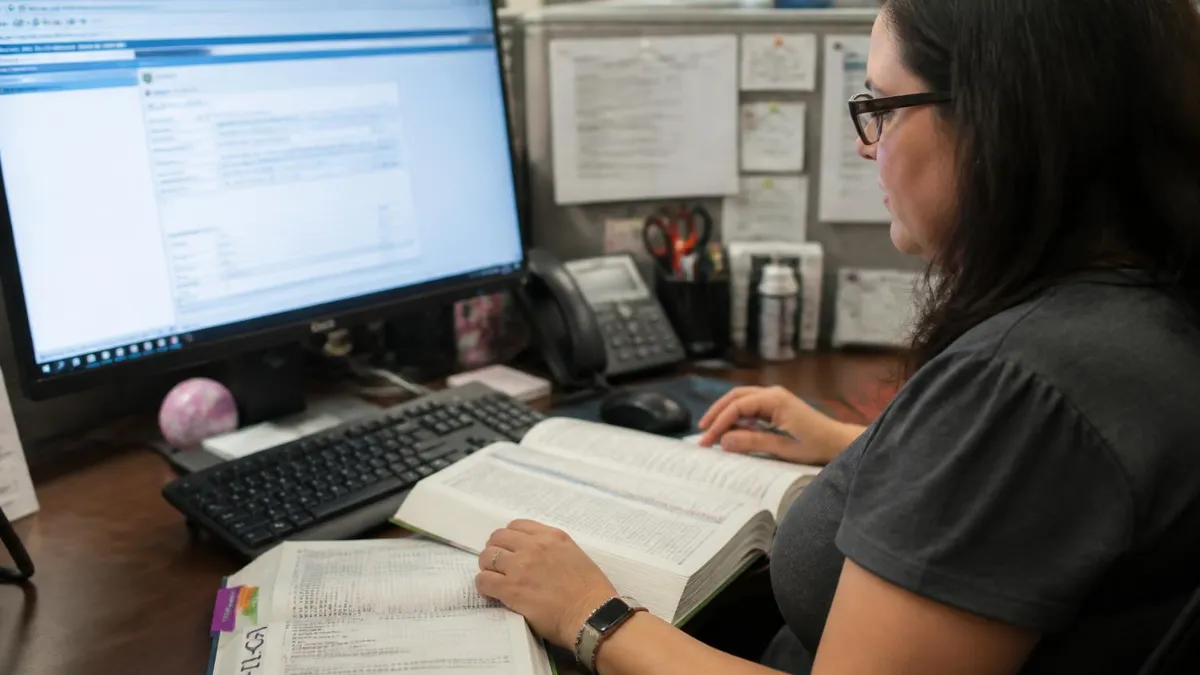
Exam day requires the current-year CPT manual, ICD-10-CM, and HCPCS Level II codebooks — physical copies, tabbed and annotated. Most reputable courses specify which editions to purchase and provide guidance on annotation strategies that are allowed under AAPC exam rules.
New coders who pass the CPC exam without two years of coding work experience receive an apprentice designation (CPC-A). Submitting two years of professional coding experience — verified by an employer — upgrades the credential to full CPC status automatically.
Once credentialed, CPCs must earn 36 continuing education units (CEUs) every two years to maintain their certification. CEUs are available through AAPC chapter meetings, online courses, conferences, and approved third-party providers, keeping your knowledge current as coding guidelines evolve.
A comprehensive CPC certification course is built around the core code sets that drive physician office and outpatient facility billing. The CPT (Current Procedural Terminology) manual, published annually by the American Medical Association, is the backbone of the curriculum. Students spend the majority of their training learning to navigate CPT's six sections — Evaluation and Management, Anesthesia, Surgery, Radiology, Pathology and Laboratory, and Medicine — along with the appendices that explain modifier usage, add-on codes, and exemptions to the multiple-procedure reduction rule. Understanding how these sections interact is essential for accurate, compliant claim submission.
ICD-10-CM diagnosis coding is the second major pillar of CPC training. Introduced in the United States in October 2015, ICD-10-CM replaced ICD-9-CM with a far more detailed code set containing over 70,000 codes organized by body system and etiology. CPC courses teach students how to use the Alphabetic Index and Tabular List together, apply sequencing guidelines from the Official ICD-10-CM Guidelines for Coding and Reporting, and distinguish between codes for acute conditions, chronic conditions, sequelae, and external causes of injury. Mastering ICD-10-CM sequencing logic is one of the areas where students most frequently struggle on the actual exam.
HCPCS Level II codes cover supplies, durable medical equipment, drugs administered in physician offices, and certain professional services not captured in CPT. While HCPCS Level II represents a smaller portion of the CPC exam than CPT or ICD-10-CM, questions about injectable medications, diabetic supplies, ambulance transport, and prosthetics appear regularly and can be the deciding factor in borderline pass/fail situations. Good courses dedicate at least two to three weeks specifically to HCPCS Level II categories and their associated coverage guidelines.
Medical terminology, anatomy, and physiology are foundational subjects that every certified professional coder cpc certification candidate needs to master. You cannot correctly code a laparoscopic cholecystectomy without understanding what the gallbladder is, where it sits anatomically, and why a surgeon might approach it laparoscopically versus open. Most courses begin with a two-to-four-week anatomy and terminology review before diving into the code sets, and the best programs weave clinical context throughout their coding exercises rather than treating anatomy as a separate isolated module.
Compliance and regulatory knowledge is a topic that surprises many first-time CPC students in terms of its weight on the exam. The certified professional coder (CPC) exam tests your understanding of the False Claims Act, the Anti-Kickback Statute, HIPAA privacy and security rules, the Office of Inspector General's work plan priorities, and the basic structure of fraud and abuse penalties. This regulatory foundation matters enormously in practice: coders who understand compliance requirements are far less likely to inadvertently participate in billing patterns that trigger audits or government investigations.
Reimbursement methodology — how Medicare, Medicaid, and commercial payers actually calculate payment — rounds out the core curriculum of a strong CPC course. Students learn about the Medicare Physician Fee Schedule, the Relative Value Unit (RVU) system, global surgery packages, the Medicare Correct Coding Initiative edits that automatically bundle certain code combinations, and the basics of payer contract negotiation. Understanding reimbursement helps coders explain why certain code choices result in higher or lower payment and enables meaningful dialogue with providers about documentation improvement opportunities.
Specialty-specific coding modules distinguish a truly comprehensive course from a minimalist one. While the CPC exam draws questions from all specialty areas of CPT, students benefit from deep dives into high-volume specialties like orthopedics, cardiology, gastroenterology, obstetrics and gynecology, dermatology, and neurology.
The surgical sections of CPT are particularly dense, and specialty modules provide the clinical context that turns abstract procedure codes into understandable descriptions of what the surgeon actually did in the operating room. The certified professional coder course materials you choose should include case studies drawn from real operative and procedure notes across at least eight to ten specialty areas.
Online vs. In-Person vs. Self-Study: Certified Professional Coder Program Formats
Online CPC certification programs have become the dominant format for working adults pursuing the credential. The best online programs offer live virtual office hours with credentialed CPC instructors, recorded lecture libraries that students can pause and rewatch, interactive quizzing after each module, and timed full-length practice exams that simulate the real testing environment. Platforms like AAPC's own online campus, AHIMA, and several accredited career colleges deliver this format with high student satisfaction rates.
The flexibility of online learning comes with a responsibility for self-discipline. Students who succeed in online CPC programs typically set fixed weekly study hours rather than studying opportunistically, participate actively in discussion forums or virtual study groups, and complete every practice exam under timed conditions rather than open-book comfort mode. Plan for 15 to 20 hours of study per week over four to six months to complete a thorough online CPC course while retaining enough information to pass the exam.

Is a CPC Certification Course Worth It? Pros and Cons
- +Industry-recognized credential accepted by virtually all US healthcare employers
- +Significant salary premium over non-credentialed coders — often $10,000–$15,000 more annually
- +Expands access to remote work opportunities in certified professional medical coder jobs
- +Strong job security in a field projected to grow faster than average through 2032
- +Credential is portable across specialties, settings, and geographic locations
- +AAPC membership network provides ongoing education, job boards, and peer support
- −Upfront course and exam costs can range from $500 to $3,500 depending on program
- −Exam difficulty is significant — first-time pass rates hover around 50–54%
- −Entry-level positions may still require one to two years of experience for full CPC status
- −Annual CEU requirements add ongoing time and modest financial commitment
- −The credential must be maintained — lapsed CPCs must reapply and potentially retest
- −Market saturation in some regions means competition for entry-level positions is high
CPC Exam Prep Checklist: Everything You Need Before Test Day
- ✓Purchase the current-year CPT Professional Edition, ICD-10-CM, and HCPCS Level II code books.
- ✓Join AAPC as a student member to qualify for exam registration at the reduced member rate.
- ✓Tab and annotate all three code books following AAPC-approved annotation guidelines.
- ✓Complete at least three full-length timed practice exams under realistic test conditions.
- ✓Review the official ICD-10-CM Official Guidelines for Coding and Reporting cover to cover.
- ✓Master the Medicare Correct Coding Initiative (CCI) edit logic for bundled procedure pairs.
- ✓Study modifier usage for all common CPT modifiers: 25, 26, 51, 59, 76, 77, 80, and TC.
- ✓Practice Evaluation and Management level selection using 2023-forward MDM-based guidelines.
- ✓Review OIG fraud and abuse statutes: False Claims Act, Anti-Kickback Statute, Stark Law basics.
- ✓Take specialty-specific practice sets in surgical, radiology, pathology, and E/M coding.
Tab Your Books Before You Study, Not Before the Exam
Many first-time CPC candidates underestimate how much time tabbing and annotating code books takes. Professional coders report spending eight to twelve hours on book preparation alone. Start this process in the first week of your course so your books are navigation-ready when you begin timed practice. Color-coded tabs by section dramatically reduce look-up time on exam day, where speed is as important as accuracy.
Understanding certified professional coder salary ranges and career outcomes helps candidates evaluate whether the investment in a CPC certification course makes financial sense for their specific situation. According to AAPC's most recent salary survey, the national median salary for a CPC is approximately $64,000 per year. However, this number hides significant variation based on geography, specialty, experience level, and work setting. Coders in high-cost-of-living markets like California, New York, and Massachusetts routinely earn $75,000 to $90,000, while those in rural Midwestern markets may see salaries closer to $50,000 to $55,000.
Specialty focus has an enormous impact on certified professional coder salary trajectories. Surgical specialties — particularly cardiovascular, neurosurgery, and orthopedic coding — command premium compensation because the procedural codes are complex, the documentation requirements are stringent, and errors carry significant financial and compliance risk. Coders who develop deep expertise in one or two surgical specialties and earn a specialty credential like the Certified Outpatient Coder (COC) or a specialty-specific board certification can often negotiate salaries fifteen to twenty-five percent above the CPC median within three to five years of credentialing.
The growth of remote work has fundamentally changed the certified professional coder jobs landscape. Before 2020, most coding positions required on-site presence or commuting to a regional office. Today, the majority of new CPC job postings list remote eligibility, and many health systems have converted their entire coding departments to fully remote workforces. This geographic flexibility allows credentialed coders to pursue opportunities at large academic medical centers, national insurance carriers, and revenue cycle management companies regardless of their physical location — a dramatic expansion of the effective job market for any given coder.
Entry-level certified professional coder jobs typically start between $40,000 and $52,000 annually, with candidates who hold the CPC-A (apprentice) designation often starting at the lower end of that range. The fastest way to move from CPC-A to full CPC status — and the associated compensation bump — is to document two years of professional coding work experience and submit the verification form to AAPC.
Employers who hire CPC-A candidates generally understand the apprentice pathway and do not view the designation negatively; what they are evaluating is coding accuracy, productivity (charts coded per hour), and the ability to work independently with minimal supervision.
The career ladder for CPCs extends well beyond the individual contributor coding role. Experienced coders move into coding supervisor positions, revenue cycle management, compliance officer roles, clinical documentation improvement (CDI) specialties, and healthcare consulting. Some pursue additional credentials — the Certified Professional Medical Auditor (CPMA), the Certified Coding Specialist (CCS) from AHIMA, or specialty board certifications — to differentiate themselves for senior roles. Each additional credential typically corresponds to a meaningful salary increase and expanded career options.
Healthcare organizations are also increasingly recognizing that accurate coding is a strategic function, not just an administrative one. Undercoding costs providers real revenue; overcoding creates compliance risk. CPCs who can demonstrate measurable impact on clean claim rates, denial rates, and coding quality scores are being promoted into revenue integrity leadership roles at salaries that often exceed $90,000 to $110,000 for experienced professionals. This evolution of the profession reflects the growing sophistication with which health systems view their revenue cycle operations.
For candidates weighing the financial return on their CPC certification course investment, the math is compelling. A comprehensive course costs $1,500 to $3,000. The salary premium from CPC certification — compared to uncredentialed billing staff — is typically $10,000 to $20,000 per year. That means most candidates recover their full educational investment within the first three to six months of employment in a credentialed role, with decades of compounding returns on that initial investment to follow.

You cannot register for the CPC exam without an active AAPC membership. Many candidates discover this only after completing their course and scrambling to join before their preferred exam date is filled. Join AAPC at the start of your course — not the end — to access member discounts, practice resources, and preferred exam scheduling windows that fill quickly in high-demand testing markets.
Building an effective study schedule is the most important tactical decision a CPC certification course student makes after choosing their program. Research on professional certification preparation consistently shows that distributed practice — studying a moderate amount every day over several months — produces significantly better retention than intensive cramming in the weeks before the exam. For the CPC specifically, where success depends on fast, accurate navigation of three large codebooks, daily practice translates directly to the speed and confidence that separates passing scores from failing ones.
A sixteen-week study schedule works well for most candidates who are studying part-time while working. Weeks one through four should focus on anatomy, medical terminology, and the foundational structure of CPT, ICD-10-CM, and HCPCS Level II.
Weeks five through ten should cycle through each CPT section in depth — Evaluation and Management, Surgery by body system, Radiology, Pathology, and Medicine — with ICD-10-CM coding exercises integrated into each specialty area rather than treated as a separate standalone module. Weeks eleven through fourteen should shift toward practice exams and targeted review of identified weak areas. Weeks fifteen and sixteen are final review, book tabbing refinement, and logistics preparation for exam day.
Practice exams are the single most effective study tool available to CPC candidates, and free resources like the practice questions here on PracticeTestGeeks offer a no-cost way to test knowledge across every exam domain. The key is to treat every practice exam like the real thing: close your notes, set a timer, and work through every question before reviewing answers.
After each practice session, categorize your errors by topic area — modifier errors, sequencing errors, surgical section navigation errors — and create a targeted review list. This data-driven approach ensures you spend study time where it will have the greatest impact on your score.
Study groups, whether in-person or virtual, significantly improve pass rates for professional certification exams. A group of three to five CPC candidates can divide challenging CPT sections among members, each researching a section deeply and then teaching it to the group. Teaching concepts to others is one of the most powerful learning strategies available, forcing the explainer to confront gaps in their own understanding before those gaps surface on exam day. AAPC local chapters often organize study groups for candidates in a geographic area, and the AAPC's online forums host active study communities for remote learners.
Codebook annotation strategy deserves dedicated attention in any serious CPC certification course preparation. The AAPC allows candidates to annotate their codebooks with handwritten notes, color coding, tabs, and even printed guidelines — but prohibits loose papers inserted into books and requires that all annotations be in the candidate's own handwriting. Experienced CPCs recommend highlighting the most commonly confused code pairs in the surgical sections, writing modifier applicability notes in CPT's introduction pages, and flagging the Official ICD-10-CM coding guidelines that govern sequencing for the most tested conditions including diabetes, hypertension, and fractures.
Time management during the actual exam is a skill that requires deliberate practice. The CPC exam gives candidates five hours and forty minutes for one hundred questions, which works out to just under three and a half minutes per question. Questions that require looking up three or four codes in multiple codebooks can easily consume six to eight minutes if the candidate is not proficient with book navigation.
The recommended strategy is to answer every question you can quickly and confidently in the first pass, marking difficult questions for review, then return to the complex look-up questions with remaining time. This approach ensures that time pressure on hard questions does not cause you to miss easier questions later in the exam.
Nutrition, sleep, and physical preparation in the week before the exam are not trivial factors. Cognitive performance research shows that sleep deprivation of even two hours reduces accuracy on pattern recognition tasks — exactly what medical coding requires. Plan to get seven to eight hours of sleep on each of the three nights before the exam.
Arrive at the testing center early enough to settle in without rushing. Bring water and a permissible snack. The logistics of exam day matter more than most candidates realize, and treating them with the same seriousness as your coding knowledge preparation separates calm, confident test-takers from anxious ones.
Once you have earned your CPC credential, the focus shifts from passing the exam to building a sustainable professional practice that advances your career over the long term. The most successful CPCs treat their credential as a foundation, not a destination. Immediately after credentialing, identify one or two specialty areas where you want to develop depth — your current employer's dominant specialty is often the most practical choice — and begin building expertise through specialty coding resources, AAPC specialty roundtables, and CEU courses focused on that area's coding guidelines and payer rules.
Networking within the AAPC community accelerates career growth in ways that purely technical skill development cannot. AAPC local chapter meetings bring together credentialed coders from diverse practice settings, creating opportunities to learn how other organizations handle complex coding scenarios, hear about job openings before they are publicly posted, and build relationships with coding managers and directors who may be hiring contacts in the future. National AAPC events like the annual conference provide even broader networking opportunities alongside concentrated educational programming on emerging coding topics.
Staying current with annual code set updates is a professional obligation for every credentialed CPC. The CPT manual is updated annually each October for implementation January 1st of the following year, with the AMA typically adding, deleting, or revising several hundred codes per cycle. ICD-10-CM updates are implemented each October 1st.
HCPCS Level II updates occur on a quarterly basis for certain drug and supply codes. Missing these updates — or failing to understand their clinical and billing implications — can result in claim denials, compliance risk, and professional embarrassment. Subscribe to the AMA's CPT update newsletter, AAPC's Coding Edge magazine, and your specialty society's coding guidance to stay ahead of changes.
Productivity benchmarks are a reality of professional coding life that your CPC certification course may not have addressed in depth. Employers measure coder productivity in terms of charts coded per hour or per day, clean claim rates (the percentage of claims that go out without errors), denial rates, and coding quality audit scores.
Understanding what benchmarks are considered acceptable in your work setting — and actively working to meet or exceed them — is what converts credential-holding into career advancement. Most experienced coders report that productivity speed comes with practice volume: your first three to six months post-credentialing will be slower than your eventual cruising speed, and this is normal and expected.
Auditing and compliance roles represent some of the highest-value career paths for experienced CPCs. A Certified Professional Medical Auditor (CPMA) credential, which builds on the CPC foundation, qualifies coders to conduct internal and external coding audits that identify billing errors, compliance risks, and documentation improvement opportunities. Healthcare organizations pay premium compensation for coders who can conduct these audits because the financial and regulatory stakes are high — a single OIG audit finding can result in six or seven-figure repayment demands, making prevention vastly more valuable than remediation.
Technology is changing the coding profession, and forward-thinking CPCs are positioning themselves to work alongside artificial intelligence coding assistance tools rather than being displaced by them. Computer-assisted coding (CAC) systems can auto-suggest codes based on natural language processing of clinical documentation, but they require human review for accuracy, clinical context, and compliance. CPCs who understand how these tools work, what their error patterns are, and how to audit their output are more valuable than coders who either ignore the technology or treat it as infallible. Courses and CEU content on CAC systems are increasingly available through AAPC and specialty organizations.
The long-term career trajectory for a committed, continuously developing CPC is genuinely exciting. From entry-level coder to coding supervisor, revenue integrity analyst, compliance officer, clinical documentation improvement specialist, or healthcare consultant — the CPC credential opens doors across the full breadth of the healthcare revenue cycle. The investment in a quality CPC certification course, followed by years of dedicated professional practice and continuing education, compounds into a career that offers intellectual challenge, financial stability, remote work flexibility, and the satisfaction of contributing meaningfully to accurate, ethical healthcare reimbursement.
CPC Questions and Answers


About the Author

Certified Internal Auditor & Compliance Certification Expert
University of Illinois Gies College of BusinessBrian Henderson is a Certified Internal Auditor, Certified Information Systems Auditor, and Certified Fraud Examiner with an MBA from the University of Illinois. He has 19 years of internal audit and regulatory compliance experience across financial services and healthcare industries, and coaches professionals through CIA, CISA, CFE, and SOX compliance certification programs.
Join the Discussion
Connect with other students preparing for this exam. Share tips, ask questions, and get advice from people who have been there.
View discussion (8 replies)