
AAPC CPC Certification: Complete Study Guide for Certified Professional Coder Jobs
🆕 Complete guide to AAPC CPC certification. Study tips, exam format, certified professional coder jobs, salary data, and free practice questions.

The AAPC CPC certification opens doors to some of the most in-demand aapc cpc certification roles in the entire healthcare industry. Certified professional coder jobs are projected to grow 8 percent through 2032, driven by an aging population, expanding insurance coverage requirements, and the ongoing complexity of ICD-10-CM and CPT code sets. Whether you are entering medical coding for the first time or advancing from a CPC-A apprentice credential, understanding exactly what the exam tests and how to prepare strategically makes a measurable difference in your pass rate and your career trajectory.
The CPC — Certified Professional Coder — is the most widely recognized outpatient medical coding credential in the United States. Administered by the AAPC, the exam covers anatomy, physiology, medical terminology, surgical coding across all body systems, Evaluation and Management guidelines, anesthesia, HCPCS Level II codes, and compliance regulations. Passing it signals to employers that you can translate complex physician documentation into accurate billable codes under real-world time pressure — a skill that directly impacts a healthcare organization's revenue cycle.
Preparation timelines vary considerably by background. Candidates with prior clinical or billing experience often require eight to ten weeks of focused study, while those brand new to healthcare may need four to six months of structured coursework before sitting for the exam. The AAPC recommends completing a formal coding program, but the credentialing body does not mandate it as an eligibility requirement — you can register with no prior experience and earn your CPC-A apprentice designation until you accumulate one year of coding work experience.
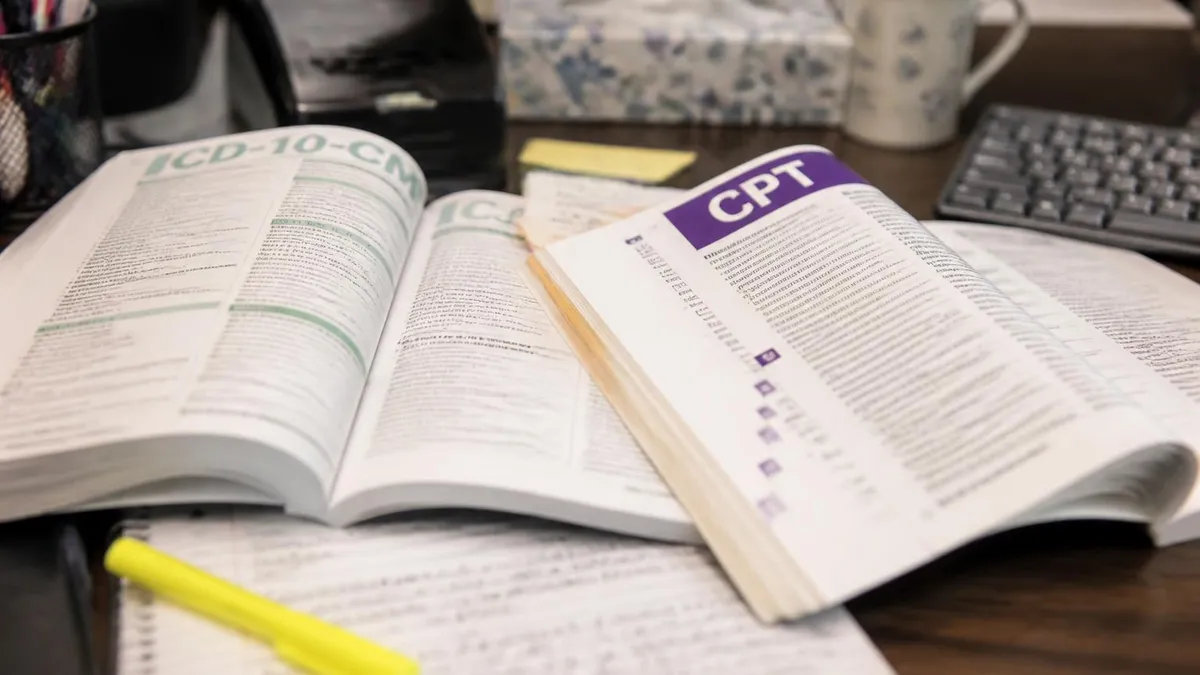
The exam itself is 150 multiple-choice questions delivered over five hours and forty minutes. You may use your own tabbed and highlighted CPT, ICD-10-CM, and HCPCS Level II code books, making this an open-book test — but the time constraint means you must know where to look, not just that the answer exists somewhere in your manuals. Efficient code book navigation is arguably the most underrated skill candidates need to develop during preparation.
Salary data reinforces the credential's value. Entry-level certified professional coders earn an average of $42,000 to $50,000 per year, while experienced CPCs — particularly those who specialize in high-complexity areas such as cardiology, oncology, or interventional radiology — regularly earn $65,000 to $80,000. Remote coding roles have expanded dramatically since 2020, meaning your geographic location no longer limits your earning potential once you hold an active CPC credential.
This guide covers every stage of the journey: understanding the exam format, building a realistic study schedule, mastering the highest-weighted content domains, navigating code book strategy, and positioning yourself for the best certified professional coder jobs once you pass. You will also find free practice questions embedded throughout to test your knowledge at each stage — the single best way to identify gaps before exam day so you can close them deliberately rather than discovering them under timed conditions.
Whether you are targeting a hospital outpatient department, a physician practice, a payer, or a fully remote coding position, the CPC credential is the universally accepted baseline qualification. The investment of time and study energy pays dividends for decades, because coding credentials do not expire — you maintain them through continuing education units, ensuring your knowledge stays current as code sets and compliance requirements evolve year after year.
CPC Certification by the Numbers

CPC Exam Format & Structure
| Section | Questions | Time | Weight | Notes |
|---|---|---|---|---|
| Medical Terminology, Anatomy & Physiology | 10 | ~22 min | 6.7% | Foundation for all coding domains |
| ICD-10-CM Diagnosis Coding | 18 | ~24 min | 12% | Covers general coding guidelines and conventions |
| CPT Surgery — All Body Systems | 70 | ~190 min | 46.7% | Largest section; includes modifiers |
| Evaluation & Management (E/M) | 16 | ~21 min | 10.7% | Updated 2021 office visit guidelines apply |
| Anesthesia | 7 | ~10 min | 4.7% | Base units, time units, qualifying circumstances |
| HCPCS Level II & Compliance | 10 | ~14 min | 6.7% | DME, drugs, compliance, regulatory |
| Radiology, Pathology & Medicine | 19 | ~23 min | 12.7% | Imaging, lab, therapeutic services |
| Total | 150 | 5 hours 40 minutes | 100% |
Understanding what the certified professional coder certification exam actually tests — not just the topic list, but the cognitive level at which it tests you — is the critical insight that separates candidates who study efficiently from those who over-prepare in some areas while neglecting others. The CPC is not a memorization exam. It is a code assignment exam. You are expected to read a clinical scenario, identify the documented procedure or diagnosis, locate the correct code, apply all relevant guidelines, and select the one best answer from four plausible options. That sequence requires both knowledge and process.
The CPT Surgery section is the most heavily weighted domain at nearly 47 percent of the exam, covering all body systems from the integumentary system through the musculoskeletal, respiratory, cardiovascular, digestive, urinary, nervous, and eye and ear systems. Each body system has its own subsection of CPT codes with unique instructional notes, parenthetical cross-references, and bundling rules.
Candidates who skip the CPT guidelines at the front of each subsection in their code book are consistently tripped up by questions that hinge entirely on those guidelines — for example, the correct use of modifiers 50, 51, 59, and the XE/XS/XP/XU family of modifiers.
Evaluation and Management coding received a major overhaul in 2021 that eliminated time-consuming key component counting for office visits and replaced it with medical decision making complexity or total time as the determinants for code level. This change is fully reflected in current CPC exams. Candidates using older study materials or practice questions may have outdated E/M guidelines embedded in their preparation — always verify that your resources reference the 2021 and later AMA guidelines, particularly for office/outpatient visit codes 99202 through 99215.
ICD-10-CM diagnosis coding makes up approximately 12 percent of the exam, but its influence extends further because every CPT code submitted on a claim requires a supporting diagnosis code that establishes medical necessity. The exam tests your ability to apply the ICD-10-CM official coding guidelines, including sequencing rules for principal versus additional diagnoses, combination codes, excludes 1 and excludes 2 notes, and code first / use additional code instructions. Practicing with actual clinical scenarios — not just looking up codes by condition name — is the only way to build reliable accuracy under time pressure.
HCPCS Level II codes cover durable medical equipment, prosthetics, orthotics, supplies, drugs administered in an outpatient setting, and transportation services. The exam typically includes questions on selecting the correct HCPCS code when no CPT code adequately describes the service, understanding modifier usage specific to HCPCS, and recognizing which payers require HCPCS codes versus CPT codes. For candidates who have worked primarily in physician office environments, HCPCS Level II may be their weakest domain — budget extra review time there if this is your situation.
Anesthesia coding is a specialized area that many candidates find counterintuitive because the payment formula — base units plus time units plus qualifying circumstance units, multiplied by the conversion factor — is unlike any other coding section. The exam tests whether you can identify the correct anesthesia code from a surgical procedure description, apply physical status modifiers (P1 through P6), and recognize which qualifying circumstances add additional units. Fortunately, anesthesia is a smaller section, so a focused review of the anesthesia guidelines and a few dozen practice questions is usually sufficient to build competency.
Medical terminology and anatomy questions appear early in the exam and serve as a confidence builder — but also as a trap for candidates who underestimate them. Questions in this domain are often framed as "which term best describes" or "what does this root word indicate," requiring you to decode clinical language rather than look up a code. Strong anatomy knowledge also makes surgery coding faster and more accurate, because you can visualize the operative site and eliminate implausible answer choices immediately rather than looking up every term from scratch.
CPC Exam Study Strategies by Domain
Efficient code book navigation is the single greatest time-saver on the CPC exam. Every candidate should tab their CPT, ICD-10-CM, and HCPCS Level II manuals using the AAPC's recommended tabbing guide or a custom system that matches their own study priorities. Color-coded highlighting — one color for guidelines, another for parenthetical notes, a third for commonly tested codes — allows you to locate critical information in seconds rather than minutes. Practice locating at least 50 codes per study session under timed conditions to build the muscle memory you need for the real exam.
Beyond physical tabs, understanding the structure of each code book dramatically speeds up look-up time. CPT codes are organized by section, subsection, subheading, and category. ICD-10-CM has an alphabetic index and a tabular list that must be used in sequence — going directly to the tabular without verifying in the index is one of the most common errors that leads to wrong code selection. HCPCS Level II is organized alphabetically by code letter, with extensive appendices for modifiers. Spend at least two full study sessions doing nothing but navigating all three books to build index fluency before attempting timed practice exams.

Is the CPC Certification Worth It? Pros and Cons
- +Highest employer recognition — most job postings for outpatient coders list CPC as preferred or required
- +Median salary premium of $8,000-$12,000 annually over non-credentialed coders
- +Remote work eligibility — nearly 60% of CPC job postings now offer fully remote options
- +Open-book exam format reduces pure memorization burden and rewards code book proficiency
- +CPC-A designation lets you start working and earning immediately while accumulating experience hours
- +Broad specialty tracks available post-certification (cardiology, oncology, surgery, pediatrics)
- −54% first-time pass rate means nearly half of candidates need a retake, adding cost and delay
- −Exam fee is $399 for AAPC members, $499 for non-members — significant upfront investment
- −Code books cost an additional $100-$200 and must be replaced annually as code sets update
- −Five-hour-forty-minute duration is physically and mentally demanding, especially for first-timers
- −Continuing education requirement — 36 CEUs every two years to maintain the credential
- −Does not cover inpatient (facility) coding — a separate CIC credential is needed for hospital coders
CPC Exam Prep Checklist: 10 Steps Before Exam Day
- ✓Register for the exam at least 60 days in advance to secure your preferred test center date and time.
- ✓Purchase the current-year editions of CPT Professional, ICD-10-CM, and HCPCS Level II code books.
- ✓Tab all three code books using the AAPC tabbing guide or a proven custom system before your first practice session.
- ✓Complete a diagnostic practice exam in the first week to identify your strongest and weakest domains.
- ✓Allocate at least 60% of your study hours to CPT Surgery sections, which constitute nearly half of exam questions.
- ✓Review all CPT Section Guidelines, including the Surgery, Anesthesia, Radiology, and Medicine guidelines front matter.
- ✓Study the 2021 and later E/M coding changes for office and outpatient visits — outdated resources will cost you points.
- ✓Complete at least two full-length, timed mock exams in the final two weeks before your scheduled exam date.
- ✓Review all wrong answers by root cause — guideline gap, code book navigation error, or scenario misread.
- ✓Confirm your exam center location, allowed materials list, and check-in procedures 48 hours before exam day.
Speed Beats Memorization on the CPC Exam
The CPC is open-book, but time is your real constraint — candidates who spend more than 2.5 minutes per question routinely run out of time. The most effective preparation strategy is not memorizing more codes; it is reducing your average look-up time to under 30 seconds per code book reference through deliberate timed drills during the weeks before your exam.
The job market for certified professional coders has never been stronger, and understanding the full landscape of certified professional coder jobs helps you negotiate better offers and target the right employers from day one. Healthcare organizations of every type — physician practices, hospital outpatient departments, ambulatory surgery centers, insurance companies, revenue cycle management firms, and health information technology vendors — all employ CPCs. The credential is genuinely portable across settings, which gives you negotiating leverage that non-credentialed billing staff simply do not have.
Salary ranges vary considerably by specialty area, geographic region, and work setting. According to AAPC's annual salary survey, the national median for a CPC is approximately $64,000, but that number hides wide variation. A CPC working in a single-specialty cardiology practice in a major metropolitan area may earn $75,000 to $85,000. A CPC in a rural family practice may earn $42,000 to $50,000. Remote coders with specialty certifications — for example, a CPC who also holds an AAPC specialty credential in cardiovascular coding — frequently earn $70,000 or more from fully remote positions, eliminating geographic salary compression entirely.
Remote coding roles have been the most significant structural change in the certified professional coder job market since 2020. Prior to the pandemic, most physician practices and hospitals required coders to work on-site. Today, the majority of revenue cycle management companies — including Optum, Parallon, MedQuist, and dozens of regional firms — hire remotely by default. This has expanded the accessible job market for every CPC holder and created genuine national competition for top coding talent, which in turn has driven salaries upward across all settings including on-site positions.
Career advancement follows a predictable progression for most CPCs. Entry-level coders spend one to three years building production volume and accuracy metrics, typically coding 50 to 80 charts per day depending on specialty complexity. Lead coders and coding supervisors earn $70,000 to $90,000 and take on quality auditing, coder training, and payer policy research responsibilities. Coding managers and directors earn $90,000 to $120,000 and oversee entire revenue cycle coding departments. A small number of CPCs transition into compliance officer roles, healthcare consulting, or coding education, where total compensation can exceed $130,000.
Specialty credentials amplify earning potential significantly. The AAPC offers specialty certifications in over 30 areas including cardiology (CCC), emergency medicine (CEMC), general surgery (CGSC), oncology (COC), orthopedic surgery (COSC), and pediatrics (CPEDC). Each specialty exam tests CPT codes, payer policies, and clinical documentation requirements specific to that specialty. Adding even one specialty credential to your CPC typically increases your salary by $5,000 to $10,000 and narrows the job postings you compete for — meaning higher offer rates and faster hiring timelines when you do apply.
Job search strategy matters as much as credentials. AAPC's online job board at aapc.com/careers is the highest-density source of CPC-specific postings in the country. LinkedIn and Indeed both surface strong opportunities, but AAPC's board tends to attract employers who already understand and value the credential, reducing the time you spend educating hiring managers. Networking through AAPC local chapters — every major metro area has one — connects you to hiring managers, senior coders who can provide referrals, and continuing education events that keep your skills current and visible.
If you want to explore certified professional coder cpc requirements by state, including any state-level employer preferences or Medicaid billing requirements that affect which credential matters most in your local market, that resource covers the full picture of how geography influences both eligibility pathways and post-certification job opportunities across all fifty states and major territories.
If you pass the CPC exam without one year of professional coding experience, you receive a CPC-A (Apprentice) designation rather than full CPC status. You have three years from your exam pass date to document one year of coding experience and convert to full CPC. Working as a CPC-A counts toward that experience — most employers accept it. Do not let the three-year window lapse or you will need to retake the exam to reactivate your credential.
Maintaining your CPC credential requires completing 36 continuing education units every two-year cycle, with at least 18 of those CEUs earned in the same calendar year. The AAPC offers numerous pathways to earn CEUs: attending local chapter meetings, completing online courses through the AAPC Education Center, attending the annual HEALTHCON conference, passing specialty exams, or completing AAPC's monthly CEU quizzes published in AAPC's Coding Edge magazine. Annual AAPC membership ($199 per year) is also required to maintain the credential, and it bundles access to many of the CEU resources mentioned above.
Code set updates are the most operationally important aspect of credential maintenance. The AMA releases new CPT codes effective January 1 each year, with the code book typically available for purchase in October or November of the prior year. ICD-10-CM updates take effect October 1 and April 1 each year, with October being the primary annual update.
HCPCS Level II codes change on a rolling quarterly basis throughout the year. Failing to update your code books is not just a compliance risk — it is a direct patient billing risk, because submitting claims with deleted or changed codes results in denials that cost the organization money and time to correct.
The AAPC's CPB (Certified Professional Biller) credential is a natural complement to the CPC for coders who want to expand into the billing and reimbursement side of revenue cycle management. While the CPC focuses on code assignment, the CPB covers claims submission, payer contract interpretation, denial management, accounts receivable, and patient financial counseling. Holding both credentials qualifies you for revenue cycle manager and director roles that require fluency across the entire coding-to-payment workflow, and these dual-credential professionals consistently earn above the median salary for either credential alone.
AAPC's Fellow of AAPC (FANPC) designation recognizes members who have achieved exceptional expertise and contributed to the coding profession through education, research, or industry leadership. While this is an advanced recognition rather than an exam-based credential, it carries significant weight with employers who want senior coders or coding educators, and it is worth understanding as a long-term career milestone if you plan to stay in the profession for a decade or more. Eligibility requires a minimum number of years of experience, existing credentials, and a portfolio demonstrating contributions to the field.
Telehealth coding has emerged as a rapidly growing specialty area since 2020, when CMS dramatically expanded coverage for telemedicine services in response to the pandemic. The temporary telehealth flexibilities have since been extended multiple times, and a growing body of permanent telehealth coverage has been codified through annual Medicare physician fee schedule rules. CPCs who understand the nuances of telehealth place of service codes (02, 10, 11), originating site modifiers, and the documentation requirements that distinguish a telehealth encounter from an in-person visit are in high demand at both payers and providers navigating this evolving billing landscape.
Artificial intelligence tools for coding assistance — including natural language processing engines that suggest codes from clinical notes — are increasingly being deployed in large health systems. These tools do not replace CPCs; they create a new workflow where coders review, validate, and override AI code suggestions rather than assigning codes from scratch.
CPCs who understand how to work with AI-assisted coding platforms, recognize their common error patterns, and audit their outputs accurately will be more valuable in this evolving environment than coders who resist or avoid these tools. Embracing technology fluency as part of your professional development is a strategic investment in your long-term earning power.
For ongoing career development, exam preparation resources, and subject matter depth, certified professional medical coder jobs remote since yesterday provides a detailed breakdown of each CPC exam content domain, mapped to real-world job responsibilities so you can see exactly how what you study for the exam translates into daily coding decisions on the job — a perspective that makes the preparation process feel purposeful rather than purely academic.
Final preparation in the two weeks before your CPC exam should shift entirely from learning new material to refining speed and accuracy with what you already know. This is not the time to discover a new topic or deep-dive into an unfamiliar section of CPT — the cognitive overhead of learning new material this close to the exam is not worth the marginal benefit. Instead, run full timed practice exams, review wrong answers methodically, and drill code book navigation in the specific sections where your mock exam times show you are slowest.
Sleep and physical preparation matter far more than most candidates acknowledge. The five-hour-forty-minute exam duration is equivalent to a full workday of sustained cognitive effort. Candidates who arrive sleep-deprived, hungry, or anxious make significantly more errors in the final ninety minutes of the exam than well-rested candidates — and that is precisely when the hardest questions often appear. Build a sleep routine in the final week that has you going to bed and waking at the same time each day, mimicking the exam start time so your cognitive peak aligns with the test window.
On exam day, time management is your primary tactical challenge. A common recommended approach is to answer every question you can confidently answer first, marking any question that requires extended code book research, and then returning to marked questions in a second pass. This ensures you never run out of time on questions you knew how to answer while spending remaining minutes on the harder ones. Never leave a question blank — there is no penalty for guessing on the CPC, so an educated guess on every marked question is always the correct strategy.
Answer elimination is a powerful tool on questions where you are uncertain. The AAPC constructs answer choices with intentional distractors — a code that is almost right but wrong for one specific reason, such as a missing fourth or fifth digit, an incorrect modifier, or a code from the wrong body system.
Being able to recognize why a distractor is wrong — rather than just knowing why the correct answer is right — is a higher-order skill that develops through deliberate wrong-answer analysis during your practice sessions. Build this habit early and it compounds into significant accuracy gains by exam day.
Post-exam processing is worth planning in advance. AAPC exam results are typically delivered via email within two to four weeks of your exam date, depending on your testing format (paper-based national exam days take longer than computer-based Prometric center results). If you pass, your CPC-A or CPC certificate will follow by mail within four to six weeks, and your credential status will be updated in the AAPC member directory almost immediately, making it searchable by employers.
If you need to retake, your score report will identify the domains where you fell below the passing threshold, giving you a precise map for targeted remediation before your next attempt.
The CPC exam allows unlimited retakes, but each attempt requires a separate registration fee. AAPC members receive a 20 percent discount on their second attempt if taken within one year of the first, which reduces the financial sting of a retake. Most candidates who fail their first attempt and then invest another six to eight weeks in targeted practice — specifically focusing on their identified weak domains — pass on their second attempt at a rate significantly above the first-time average. The data strongly favor persisting through a retake rather than giving up on the credential.
Community support accelerates preparation more than most candidates expect. AAPC local chapter meetings, online forums such as the AAPC's member community boards, and study groups on social platforms connect you with candidates who are preparing simultaneously and with credentialed coders who can answer specific questions about difficult topics. Learning why a specific code is correct from someone who codes that specialty daily is qualitatively different from reading the same explanation in a textbook — the practical context makes guidelines stick, and the relationships you build often convert into job referrals after you pass.
CPC Questions and Answers

CPC Exam Guide: Certified Professional Coder Certification Overview

CPC Exam Requirements by State: AAPC Certification Guide 2026

What Is CPC? Certified Professional Coder Exam Guide

Certified Professional Coder Jobs: CPC Career Guide 2026
CPC Test: Certified Professional Coder Exam Practice & Prep 2026
About the Author

Certified Internal Auditor & Compliance Certification Expert
University of Illinois Gies College of BusinessBrian Henderson is a Certified Internal Auditor, Certified Information Systems Auditor, and Certified Fraud Examiner with an MBA from the University of Illinois. He has 19 years of internal audit and regulatory compliance experience across financial services and healthcare industries, and coaches professionals through CIA, CISA, CFE, and SOX compliance certification programs.
Join the Discussion
Connect with other students preparing for this exam. Share tips, ask questions, and get advice from people who have been there.
View discussion (8 replies)