
Cosmetology Overview: What the Craft Covers, How It Works 2026 October
Cosmetology overview: 📝 spelling, services, salon business, NY-state hours, graduation traditions, gift ideas, and surprising facts.
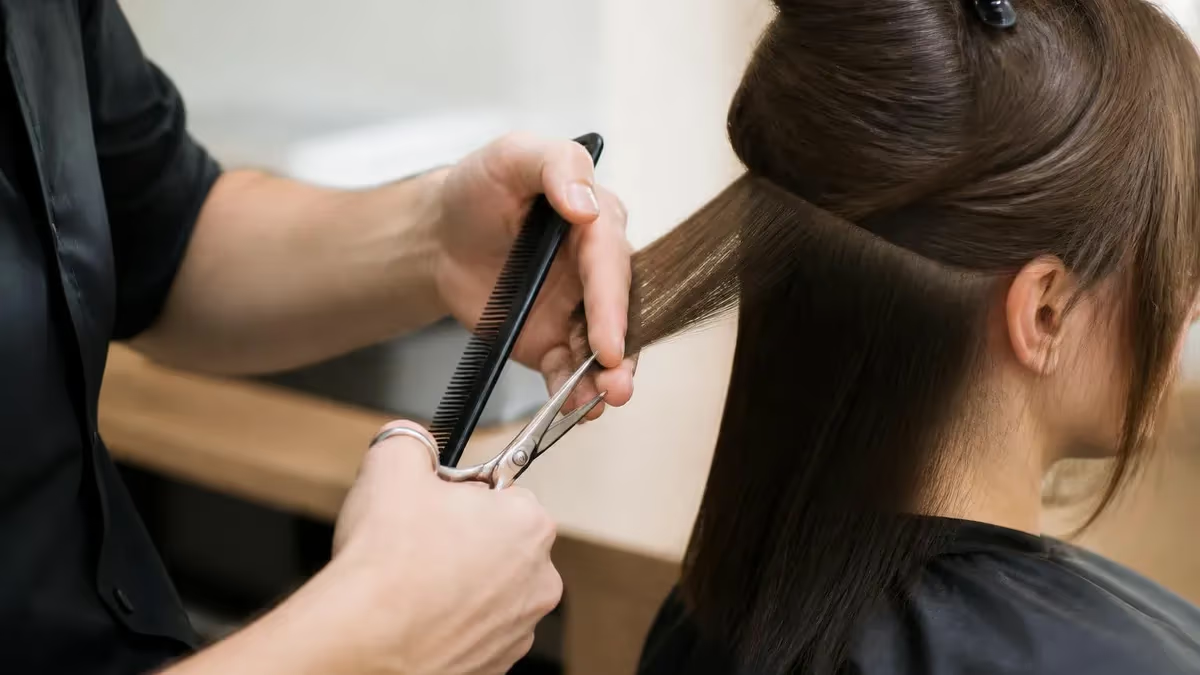
The word cosmetology trips up more people than you'd think. Spell it slowly: c-o-s-m-e-t-o-l-o-g-y. The root is Greek, kosmetikos, meaning "skilled at adorning," fused with -logia, the study of. Put plainly, it's the science (and the art) of looking after how a person presents themselves to the world. Hair. Skin. Nails. Sometimes makeup. Sometimes the gentler end of esthetics. Your scope shifts a bit from state to state, but the bones of the trade stay the same.
People wander into the field for all kinds of reasons. A friend who'd been laid off from accounting once told me she enrolled because she wanted "to make people leave a room feeling lighter than when they walked in." That's not a bad mission statement. And it's the kind of work where you see results inside an hour, which is rare in modern jobs.
This overview is built for someone weighing the path: maybe a high-schooler picking a track, maybe a career-switcher in their thirties, maybe a parent buying a graduation gift and wondering what the heck a shear holster is. We'll cover the spelling, the daily realities, the New York rules that anyone in that state needs to know, the business side, and a handful of cool facts that you can pull out at a dinner party.
The rest of this overview drops the storytelling and gets practical. Stats, structure, traditions, pros and cons, FAQs. Use the quizzes scattered through the page to test what's sticking. You'll spot the spots where you need more reps, and you'll know what to focus on next session.
Cosmetology at a Glance
Key Facts at a Glance
| Item | Value | Details |
|---|---|---|
| Minimum cosmetology training hours required in New York State for licensure | 1,000+ | |
| New York cosmetology license renewal cycle through Department of State | 4 yrs | |
| Typical price range for a quality hydraulic cosmetology chair | $400-$3,000 |
So what does a cosmetologist actually do on a Tuesday at 2 p.m.? Probably a root touch-up, a quick blowout, a paraffin dip while the color processes, and a chat about why the client's teenage daughter won't stop dyeing her hair pink. The technical menu is wide. Cuts and color sit at the center; perms and relaxers swing in and out of fashion; nail services pay the bills between haircuts; quick facials and brow shaping round out the day. If you want to drill deeper into one discipline, most states let you sub-specialize after the general license.
The benefits of cosmetology, talked about less than they should be: portable skills (you can move states with reciprocity in many cases), tips on top of wages, flexible hours once you build a book, and a creative outlet that doesn't require a degree from an expensive university. Downsides exist too. Your feet will hurt. Your back will hurt. Chemicals are real, and so is the need for gloves. Anyone selling you a glittery version of this career is leaving out the parts that aren't glittery.
One final note on terminology. People often confuse cosmetologist with esthetician. The cosmetologist is the generalist — hair, skin, nails. The esthetician focuses on skin alone (facials, peels, hair removal, sometimes makeup). In many states, an esthetics license is a separate, shorter program. If you're picking between them and you love hair, do cosmetology. If you love skin and quiet rooms, do esthetics. If you love both, do cosmetology first and pick up esthetics later — that order is usually cheaper.

Spelling Tip
It is spelled c-o-s-m-e-t-o-l-o-g-y — five syllables, four vowels, and one silent moment to slow down before you type it. The most common misspellings are cosmotology (wrong second-o), cosmatology (wrong a), and cosmetology with a double-m. The Greek root kosmetikos means "skilled at adornment," and the -logia suffix means "the study of." That root word also gives us cosmos (an ordered, well-arranged universe) — a useful mental anchor when you're stuck on the spelling. If your state board exam asks you to spell the word in a written response, take the half-second to sound it out: cos-meh-TOL-uh-jee.
A few cool facts about cosmetology that surprise even people inside the trade. The earliest hairdresser strikes on record happened in 18th-century Paris — the wig-makers were furious that women had started cutting and styling their own hair at home, and they took it to the courts. Sephora's name traces back to Zipporah, Moses' wife, who in some traditions was considered a beauty.
The first patent for a permanent wave machine, an alarming contraption with electrified rods dangling from the ceiling, was issued in 1909 to a German hairdresser named Karl Nessler. None of this comes up on the state board exam, but it's nice to know your craft has a long, weird, occasionally electrified history.
You'll also see cosmetology articles in trade magazines about microbiomes of the scalp, AI-assisted color formulation, and the slow return of finger waves. The field moves. Anyone who stops learning after they pass the state board is going to look outdated inside five years.
What Cosmetology Covers
Cutting, coloring, balayage, highlights, chemical services like perms and relaxers, smoothing treatments, blowouts, extensions, and conditioning treatments. Hair is the largest revenue driver in most full-service salons.
Basic facials, brow shaping, lash tinting, and lighter esthetics work where the state license permits. Deeper esthetics (peels, advanced extractions) usually require a separate esthetician license.
Manicures, pedicures, gel and acrylic application, dip powder, paraffin treatments, and nail art. Nail services pay the bills between bigger color appointments and build loyal weekly regulars.
Day looks, bridal makeup, photo and video shoots, special occasion looks, and occasional theatrical or editorial work. Many cosmetologists charge a premium tier for bridal packages.
Let's talk about the business. Most working cosmetologists end up choosing between three setups: working a chair at a commission salon (you keep a percentage, usually somewhere between 35 and 60%), renting a booth (you pay a flat weekly or monthly rate, keep everything else, and effectively run a one-person shop), or opening their own salon outright.
Each path has its math problem. The commission model trades autonomy for less risk. Booth rent is the middle path — you're a contractor, you set your hours, but the dryer breaks and it's your problem. Owning the salon means you stop cutting hair as much and start signing rent checks.
If you do open a salon, the unsexy part is the chair budget. A good cosmetology chair — hydraulic, reclining, built to survive a thousand sit-stand cycles a week — runs anywhere from $400 for a basic model to $3,000 for a heritage piece in a downtown space. People who skimp here regret it; clients feel the difference between a wobbly cheap chair and one that locks into place. Stations, mirrors, shampoo bowls, ventilation, towels, dispensary shelving — the full buildout sits comfortably in the $30k to $80k range for a small four-chair space, depending on city.
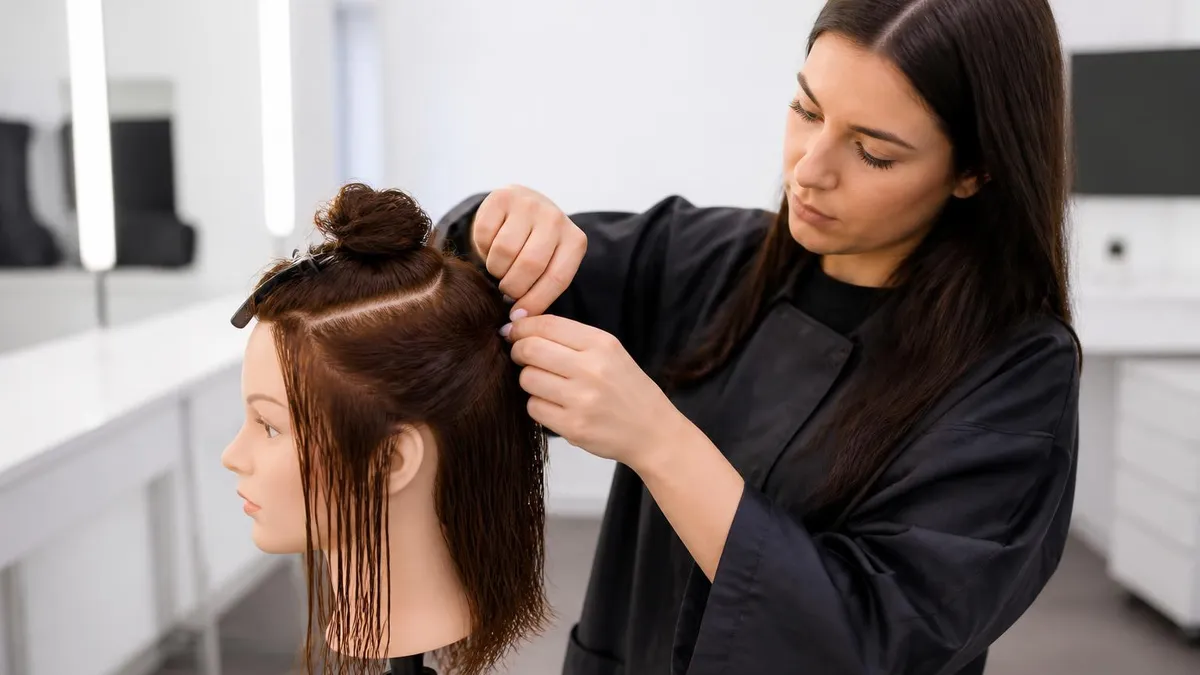
Three Cosmetology Business Models
You work for a salon and split your service revenue with the owner. Typical splits run 35%–60% to the stylist, with higher percentages going to senior staff with full books. The salon handles supplies, marketing, the front desk, towels, and laundry. You handle the chair. This is the lowest-risk path — there is no buildout cost and no rent line if your week is slow. The trade-off is a lower income ceiling and less control over the salon culture or product lines.
Then there's the regulatory layer, which varies wildly by state. New York cosmetology is one of the stricter regimes. The New York State Department of State, Division of Licensing Services, oversees the credential. Anyone hoping to practice in New York must complete a state-approved training program of at least 1,000 hours, sit a written and practical exam, and renew every four years.
Apprenticeship is allowed but with even more clock time. New York state cosmetology licenses also carry specific sanitation rules — the inspector cares about your Barbicide jar, your labeled spray bottles, your single-use file packets. People fail compliance audits over silly tiny things. Don't be one of them.
Outside New York the picture changes. Pennsylvania asks for 1,250 hours. Texas reduced its required hours to 1,000 in 2023. A few states have moved toward competency-based licensing rather than seat-time. The trend is gradually downward, although the major boards still keep the bar somewhere above the 1,000-hour line. If you're moving states, look up reciprocity before you book a U-Haul.
New York State cosmetology law requires at least 1,000 hours of approved training, a written exam, and a practical exam administered by the Department of State, Division of Licensing Services. Licenses renew every four years. An apprenticeship route exists but requires substantially more clock time. State Board inspectors care deeply about sanitation: labeled spray bottles, sealed Barbicide jars, single-use file packets, properly ventilated chemical stations, and clean linens between clients. Reciprocity with other states is handled case-by-case — verify your hour count maps to New York's standard before relocating, and budget time for paperwork that can take 4-8 weeks.
Graduation from cosmetology school is one of the most charming ceremonies in modern trade education. There's a cap-and-gown moment, sure, but there's also a working showcase: each graduate styles a model on stage. Family members cry; the model's hair survives; someone always faints from the heat in the auditorium. If you're searching for cosmetology graduation gifts, you're either a parent, a partner, or a friend, and you're probably wondering what's actually useful versus what just looks pretty in a gift bag. We'll get specific in a checklist further down.
A quick word on the cosmetology graduation itself: the diploma, the kit, the photos with the stylist's instructor. It's a real milestone. It's also a transition into a job market where the new graduate competes against seasoned stylists with books of regulars. The first two years out of school are when most attrition happens — not because the work is too hard, but because building a clientele takes longer than people warn you about. The grit shows up in year two, not year one.
Pre-grad checklists matter. Most schools hand them out a week before the finale, but few students read them carefully. Use the section below — it covers the kit checks, the licensing paperwork, the headshots for the salon you're auditioning at, and the small things (a thank-you card to the instructor) that students forget in the rush. It's a short list, but every item on it has a reason.
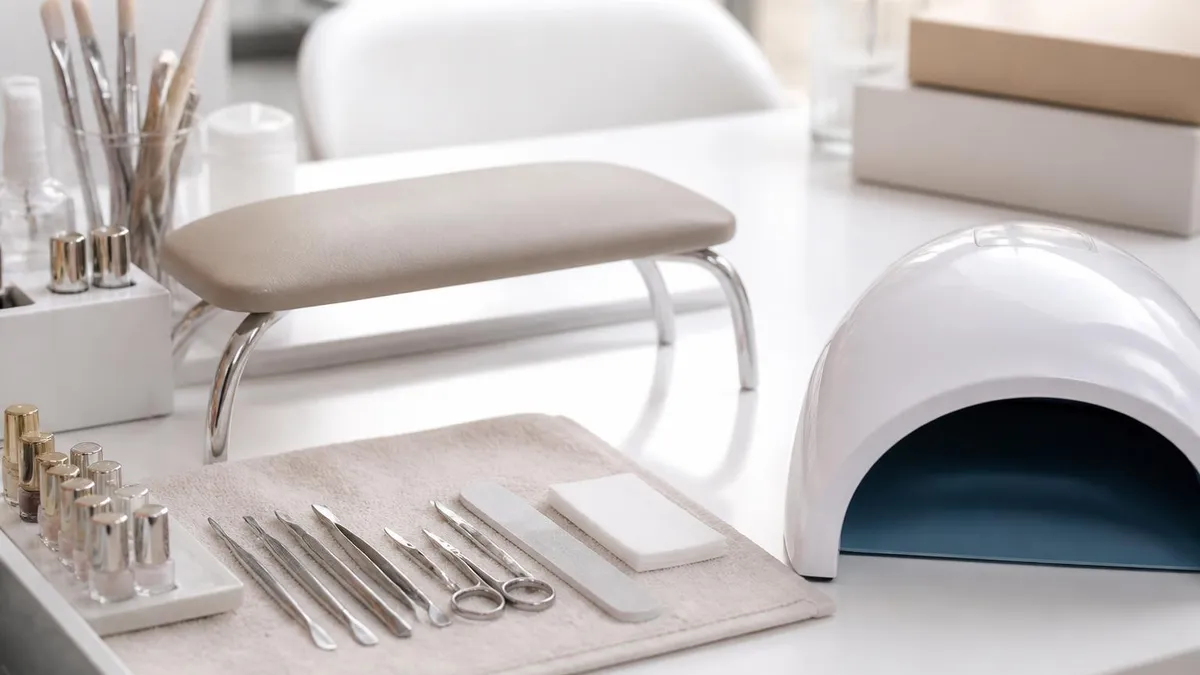
Cosmetology Graduation Gifts
- ✓A high-quality shear set from Hikari, Joewell, or Yasaka — the single most-used tool of the career and usually the most appreciated gift.
- ✓A leather shear holster or stylist apron with reinforced pockets and tool loops, ideally monogrammed with the graduate's name.
- ✓A professional blow-dryer upgrade such as a Dyson Supersonic or BabylissPRO Volare — pays for itself in elbow and shoulder health within a year.
- ✓A monogrammed cutting cape or full styling kit — small but meaningful for graduation ceremony photos and first-day-on-the-job nerves.
- ✓A subscription to a trade magazine like Modern Salon, American Salon, or Behind The Chair for ongoing continuing education and inspiration.
- ✓A first-year professional liability insurance gift card — boring on the surface but the most genuinely useful adult gift on the list.
- ✓A framed photo from the graduation showcase — they'll hang it at their first salon station and remember the day every shift.
- ✓A high-quality stylist water bottle with a carabiner clip — small detail, used a hundred times a day on the salon floor.
A few things about cosmetology that don't make it into the school brochure. You will smell like ammonia, then like coconut shampoo, then like ammonia again, by lunch. You'll learn to read body language so well that your friends start commenting on it. You'll get good at small talk in a way that is actually genuine, because you'll spend a thousand hours hearing real life from real people while you trim their bangs. And you'll develop opinions — strong opinions — about which conditioner companies are owned by which conglomerates, and which ones still test on animals despite their packaging.
It is, by some distance, one of the most human jobs left in the modern economy. A salon is a confessional, a venting space, an art studio, and a tiny social club all at once. The cosmetologist sits at the middle of that, holding a pair of scissors and a coffee.
Cosmetology Pros and Cons
- +Visible results inside an hour — rare in modern work and a source of daily psychological satisfaction.
- +Portable license with reciprocity available in many states, letting you relocate without restarting your career.
- +Tips on top of wages can add 15%–25% to take-home income, particularly in cities with strong tipping culture.
- +Flexible scheduling once a clientele is built — many veteran stylists work four-day weeks by choice.
- +Low barrier to entry compared to four-year degrees, with most programs completing in 9–14 months.
- +Creative work that combines art and science, with constant variety from one client to the next.
- +Strong sense of community within the industry, with mentorship, education events, and trade conferences.
- +Entrepreneurship paths through booth rent or salon ownership for those who want equity in their work.
- −Physically demanding — feet, back, shoulders, and wrists take real wear, especially in the first decade.
- −Income is slow to build in years one and two as you compete with senior stylists for new clients.
- −Chemical exposure requires consistent gloves, ventilation, and awareness of long-term respiratory health.
- −Weekends and evenings are peak earning hours, which can strain family life and social plans.
- −Self-employment paperwork on the booth rent path (quarterly taxes, expense tracking) can feel like a second job.
- −Trends move fast; continuing education is non-optional if you want to stay relevant past year five.
- −Income volatility — slow weeks happen, and stylists without savings buffers feel them immediately.
- −Repetitive-strain injuries (carpal tunnel, tendonitis) are common; ergonomics and stretching are essential.
If you're studying for the state board exam right now, a quick steer: focus on infection control, on the chemistry of color (the bowl-and-brush stuff is easier than the theory), and on the safe-handling questions that always trip people up. Use the practice tests on this site to drill weak areas. Repetition beats reading.
One more thing worth saying before the structured sections. The benefits of cosmetology are not just financial — though they can be, particularly in cities where stylists charge $200 for a cut. They're psychological. There's a quiet pride that comes from finishing a service and watching the client glance at the mirror with that small, involuntary smile. That smile is the whole job. Anyone who's done this for ten years will tell you the same thing.
On the marketing side, the easiest wins in year one are unglamorous. Take before-and-after photos of every client who consents. Post them with the kind of natural light that flatters skin tones (sunset window, never overhead fluorescent). Tag the products you used. Don't worry about the algorithm — focus on the body of work. A salon owner once told me she hired stylists off Instagram grids that were boring but consistent, and rejected the ones with three flashy posts and nothing else. Consistency reads as professional.
Ask for reviews after the third visit, never the first. Clients who come back three times are loyal; clients who come once might be sampling. A short text thanking them and asking for a Google review is awkward to send but it works. Five-star reviews in a stylist's personal profile compound faster than most people realize, especially in mid-sized cities where the same five salons dominate search results.
And keep your education line item funded. A $250 cutting class with a respected educator can add $40 to your average ticket within a month if you actually use what you learn. The math is straightforward, but most stylists treat continuing ed as a maybe. Treat it like rent — non-negotiable, paid every quarter.
Below the checklist sits the honest pros-and-cons section. Read both columns. The pros are real. So are the cons. The strongest stylists in the industry made an informed decision and showed up anyway. The weak ones romanticized the job and burned out around month eighteen. Be the first kind.
Once you've worked through the structured material, take the linked practice tests one more time. Then read the FAQ at the bottom — it answers the questions students ask in their final week of school, the ones no one wants to say out loud. Good luck. The chair is waiting.
Building a clientele in year one is mostly about consistency. Show up early. Stay a few minutes late. Walk the front desk team through your specialties so they can sell your chair when a new client calls. Take the walk-ins no one else wants — the gray cover-ups, the one-inch trims, the bangs-only appointments. Each of those is a chance at a long-term regular. The stylists who pretend they're too good for small services in year one are the same ones complaining about empty books in year two.
Money habits matter too. Tips are cash-flow generous and tax-heavy if you're sloppy. Open a separate savings account on day one. Move 25% of every paycheck into it for self-employment tax (booth rent path) or income tax (commission path), and forget that account exists until April. The stylists who skip this step learn the hard way in their second tax season. Don't be that person.
One last practical detail before the structured sections. Most new graduates underestimate how much salon culture matters. A great chair in a toxic salon will wear you down in six months. A modest chair in a well-run salon will keep you happy for ten years. When you audition, watch how the senior stylists talk to the receptionist. Watch whether the dispensary is clean. Watch whether the owner is on the floor or hiding in the office. Those signals tell you more than any commission percentage will.
If you take only one thing from this overview: cosmetology rewards patience. The first paycheck is small. The first year is humbling. The second year is when momentum arrives, sometimes all at once. Stylists who quit too early miss the curve. The ones who stay almost always find their footing — and then their voice, and then their book, and then their chair, and eventually their own salon if they want it. The chair is patient too.
Cosmetology Questions and Answers
About the Author

Licensed Cosmetologist & Beauty Licensing Exam Specialist
Paul Mitchell SchoolsMichelle Santos is a licensed cosmetologist with a Bachelor of Science in Esthetics and Salon Management from Paul Mitchell School. She has 16 years of salon industry experience and 8 years preparing students for state cosmetology board exams in theory, practical skills, and sanitation. She specializes in licensure preparation for cosmetologists, estheticians, and nail technicians.