
Correctional Officer in San Antonio TX: Jobs, Pay & How to Get Hired
Start your correctional officer career in San Antonio TX. Salary, requirements, hiring steps & free practice tests. ✅ Updated 2026 September.
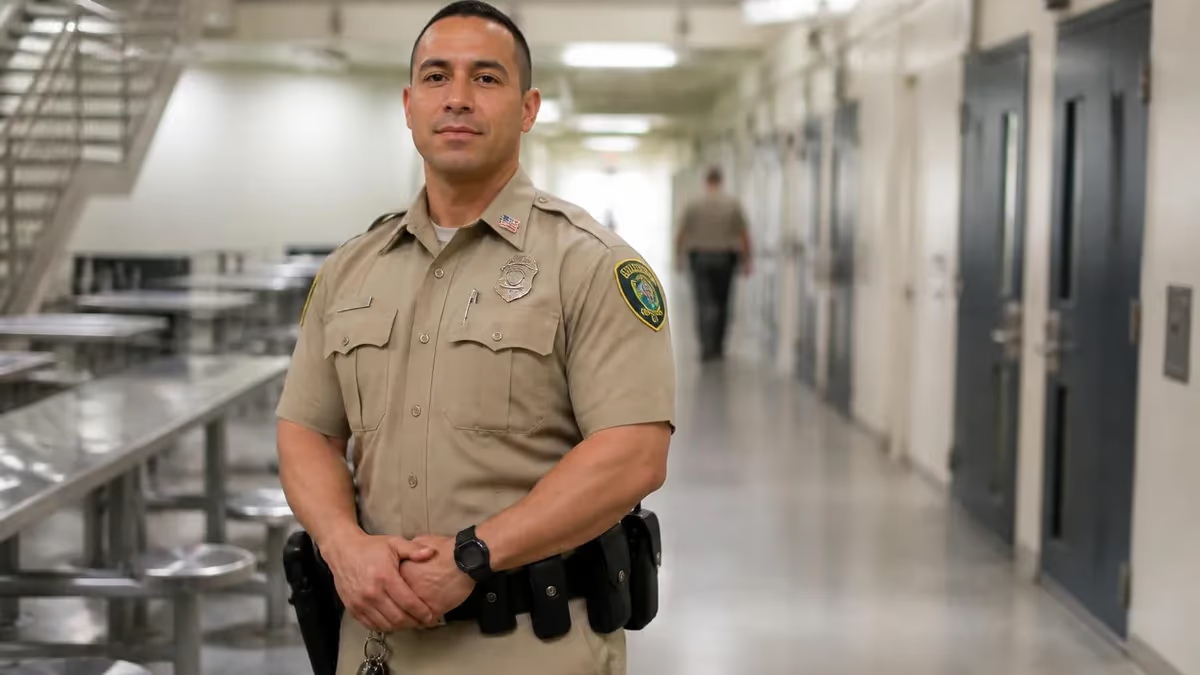
Becoming a correctional officer in San Antonio TX is one of the most accessible paths into law enforcement-adjacent public service in Bexar County, and demand for qualified candidates has never been higher. The Texas Department of Criminal Justice (TDCJ) operates several facilities within commuting distance of San Antonio, while the Bexar County Adult Detention Center employs hundreds of officers directly inside city limits. Whether you are switching careers or entering the workforce for the first time, understanding the local landscape gives you a serious competitive advantage over other applicants.
San Antonio sits at the crossroads of south-central Texas, where population growth and prison capacity expansion have created a steady pipeline of job openings year after year. The city's cost of living remains well below the national average, which means the salary packages offered to correctional officers translate into genuine purchasing power. Officers who stick with the TDCJ or Bexar County Sheriff's Office for five or more years often find that their total compensation — base pay, longevity pay, retirement contributions, and health benefits — rivals what private-sector jobs offer in the same metro area.
The hiring process for a correctional officer in San Antonio TX typically involves a written examination, a physical fitness assessment, a background investigation, and a medical and psychological evaluation. Each agency structures these steps slightly differently, but the core competencies being measured are the same: reading comprehension, report writing, situational judgment, and basic math. Candidates who arrive at the process having studied and practiced these areas consistently outperform those who treat the test as an afterthought.
One of the most overlooked aspects of breaking into this field is understanding what happens after you are hired. The TDCJ Pre-Service Training program is a six-week residential academy that covers everything from use-of-force law to inmate classification procedures. Bexar County runs its own academy track that mirrors many of the same topics. Arriving at the academy with baseline familiarity with health, safety, and stress management concepts — subjects covered in the practice exams on this site — can meaningfully shorten your learning curve during those demanding first weeks.
Exploring san antonio tx correctional officer jobs across multiple agencies is smart strategy because pay scales, shift structures, and promotion timelines differ significantly between the county jail system and the state prison system. Some officers prefer the county environment because it offers more variety in inmate population — pretrial detainees, short-sentence misdemeanants, and federal contract inmates all pass through the Bexar County facility. Others favor the TDCJ's state units because the agency is larger, rank advancement is more formalized, and the retirement system (TRS or ERS) is particularly generous for long-term employees.
Geography also matters when choosing which agency to target. TDCJ facilities like the Connally Unit in Kenedy (about 60 miles southeast of downtown), the Stiles Unit, and the Dominguez State Jail are all within reasonable commuting range, but each facility has its own culture, staffing ratios, and overtime availability. Officers who are willing to commute or even relocate slightly outside the immediate metro area often find it easier to get hired and promoted faster, since smaller facilities sometimes have shorter waiting lists for desirable shifts.
This guide consolidates everything a prospective officer needs to know about the San Antonio TX correctional officer job market in 2026: salary benchmarks, eligibility requirements, step-by-step hiring instructions, the realities of daily duties, and targeted preparation strategies for the written exam. Read through each section, then use the free practice quizzes embedded throughout this page to test your knowledge before your official exam date.
San Antonio CO Jobs by the Numbers
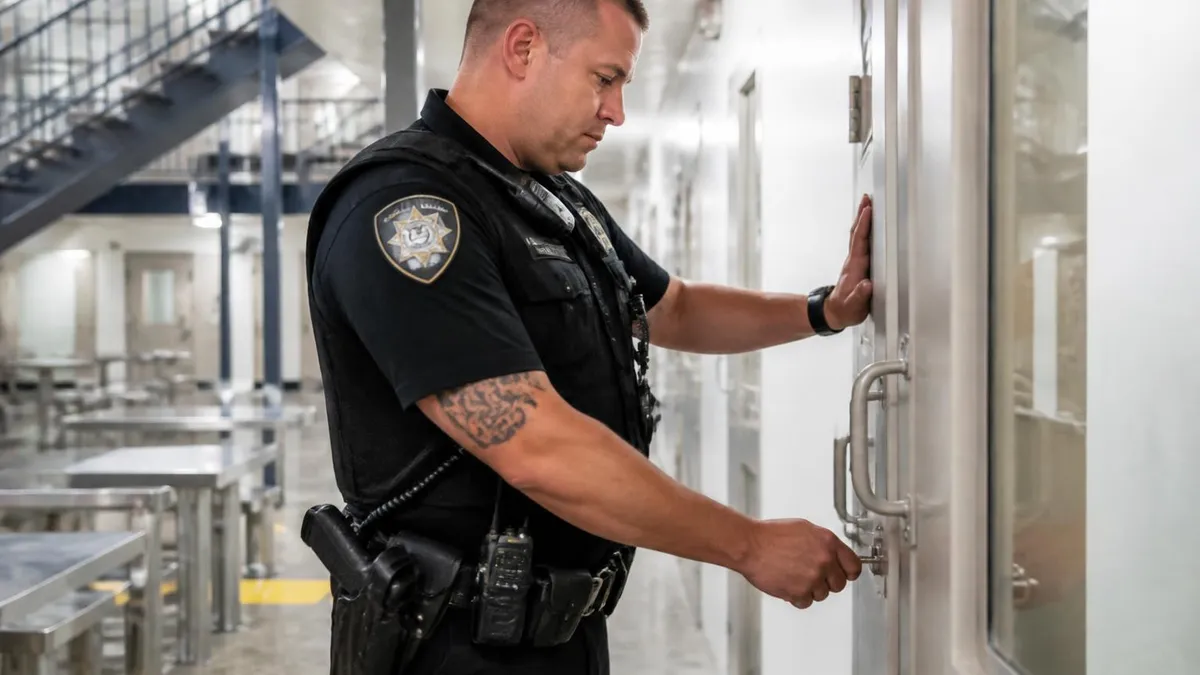
Eligibility Requirements for San Antonio CO Positions
Applicants must be at least 18 years old (TDCJ) or 21 years old (Bexar County Sheriff's Office) and must be a U.S. citizen or lawful permanent resident with work authorization. Dual citizenship is accepted in most cases.
A high school diploma or GED is the minimum educational requirement for both TDCJ and Bexar County. Some supervisory tracks prefer an associate's or bachelor's degree in criminal justice, psychology, or a related field.
Candidates must have no felony convictions and no Class A misdemeanor convictions. Certain Class B misdemeanors within the last ten years and any domestic violence convictions are automatic disqualifiers under Texas and federal law.
Officers must pass a physical fitness test, a vision screening (correctable to 20/20), and a full medical exam. TDCJ also requires a drug screen and psychological evaluation before a conditional offer becomes permanent.
A valid Texas driver's license is required for most CO positions. Your driving record will be reviewed during the background investigation, and excessive moving violations or a DWI history can disqualify an otherwise strong candidate.
Compensation is a central concern for anyone considering a career as a correctional officer in the San Antonio metro area, and the numbers in 2026 are genuinely competitive for a position that requires only a high school diploma to enter. TDCJ entry-level correctional officers earn a base salary of approximately $38,000 annually, but that figure climbs quickly.
After one year of satisfactory service, officers receive an automatic step increase, and longevity pay — a flat add-on that grows with each year of tenure — begins accumulating from the first day. By the five-year mark, total base compensation for a TDCJ officer often exceeds $46,000 to $50,000 before overtime.
Bexar County Sheriff's Office detention officers typically start slightly higher, with base pay in the $41,000 to $44,000 range depending on the specific classification and any applicable bilingual stipends. San Antonio's significant Spanish-speaking inmate population means that bilingual (English and Spanish) officers are in high demand, and the county frequently offers a monthly bilingual incentive of $100 to $200 on top of base pay. Officers who hold peace officer licenses or who have completed additional training credentials can qualify for higher starting pay tiers.
Overtime is a major component of actual take-home pay in San Antonio CO positions. Both TDCJ and Bexar County routinely offer mandatory or voluntary overtime due to chronic staffing shortages — a trend seen across the correctional industry nationwide. Officers willing to work additional shifts can realistically add $5,000 to $15,000 per year to their base salary. This creates a situation where a third-year officer earning a $42,000 base salary might bring home $55,000 or more in a busy year, fundamentally changing the financial calculus of the career.
Health benefits represent another major pillar of the compensation package. TDCJ employees participate in the Employees Retirement System of Texas (ERS), which provides health insurance, dental, vision, and life coverage at group rates. The state contributes substantially to the premium, meaning officers' out-of-pocket costs are far lower than what most private-sector employees pay for comparable coverage. Bexar County offers its own benefits package through the county's self-insured health plan, which has received consistent positive marks from enrolled employees in recent surveys.
Retirement deserves special attention because it is one of the strongest financial arguments for choosing a correctional officer career in Texas. TDCJ officers are enrolled in the ERS pension system, which provides a defined-benefit retirement after 20 years of service (or earlier with age-plus-years combinations). Officers who put in 30 years can retire at a substantial percentage of their final average salary. This defined-benefit structure is increasingly rare in the private sector, making the long-term value of a TDCJ career difficult to match with comparably-salaried private employment.
For those exploring rank advancement and its effect on salary, visiting resources that detail san antonio tx correctional officer jobs across the promotion ladder will show that Sergeant, Lieutenant, and Captain classifications each carry meaningful pay bumps in both the county and state systems. The gap between an entry-level CO and a Sergeant in the TDCJ system is roughly $10,000 to $14,000 in annual base pay, and each subsequent rank adds another significant tier. Career officers who reach the Warden or Assistant Warden level can earn well above $80,000 annually with full state benefits.
Beyond direct pay, officers in San Antonio also benefit from the city's relatively low cost of living. Compared with Houston, Austin, or Dallas, housing costs in San Antonio — whether renting or buying — stretch a correctional officer's salary further. A starting officer earning $38,000 in San Antonio is in a materially better housing position than an officer at the same pay grade in Austin, where median rents are 40 to 50 percent higher. This cost-of-living advantage is a genuine, if underappreciated, part of the total compensation picture.
Key Agencies Hiring Correctional Officers in the San Antonio Area
The Texas Department of Criminal Justice is the largest employer of correctional officers in Texas and maintains multiple units accessible from San Antonio. The Dominguez State Jail on Pleasanton Road sits directly within Bexar County, while the Connally Unit in Kenedy (Karnes County) draws heavily from the San Antonio labor market. TDCJ offers a structured pay scale, a six-week paid pre-service academy, and access to the ERS defined-benefit retirement plan, making it the top choice for officers planning a full 20- to 30-year career.
TDCJ units operate on a paramilitary command structure where rank is clearly defined and promotions require both time-in-grade and passing written examinations. Shift work is typical, with most units running three eight-hour shifts or two twelve-hour shifts depending on facility policy. New officers should expect to work nights and weekends for the first year or two before gaining enough seniority to bid on preferred shifts. The structured environment, while demanding, provides predictability that many officers come to value over longer careers.
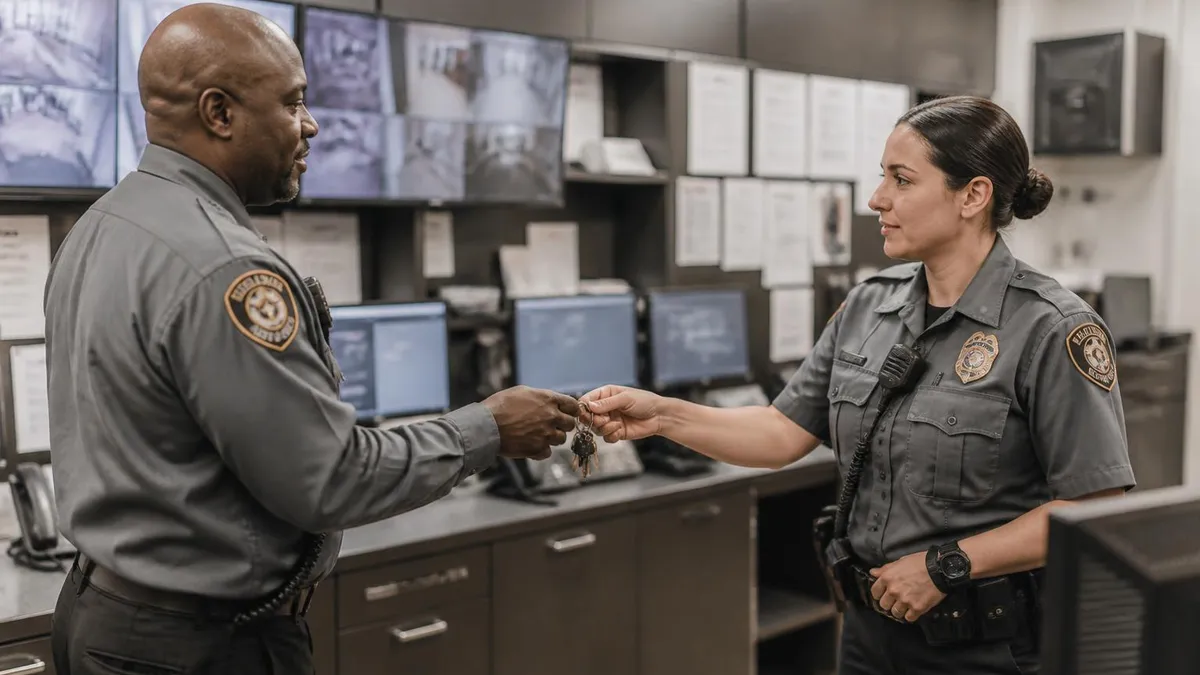
Is a San Antonio Correctional Officer Career Right for You?
- +Competitive starting salary with automatic step increases and longevity pay built into the pay scale
- +Defined-benefit pension through ERS (TDCJ) or county retirement system after 20+ years of service
- +Comprehensive health, dental, and vision benefits at subsidized group rates for the entire family
- +Strong job security — government correctional positions are rarely eliminated during economic downturns
- +Bilingual pay incentives at Bexar County that reward Spanish-English fluency common in San Antonio
- +Clear promotion pathway from CO I through Sergeant, Lieutenant, Captain, Major, and Warden levels
- −Mandatory shift work including nights, weekends, and holidays, especially for junior officers with low seniority
- −High stress work environment with frequent exposure to violence, trauma, and difficult inmate interactions
- −Mandatory overtime is common due to chronic understaffing across Texas correctional facilities
- −Physical and psychological demands accumulate over time, contributing to above-average burnout rates
- −Starting salary of ~$38,000 may feel modest for the intensity of the work compared to private-sector options
- −Commuting distances to some TDCJ units outside the immediate San Antonio metro can add 90+ minutes daily
Pros and Cons at a Glance
| Pros | Cons |
|---|---|
| Competitive starting salary with automatic step increases and longevity pay built into the pay scale | Mandatory shift work including nights, weekends, and holidays, especially for junior officers with low seniority |
| Comprehensive health, dental, and vision benefits at subsidized group rates for the entire family | High stress work environment with frequent exposure to violence, trauma, and difficult inmate interactions |
| Strong job security — government correctional positions are rarely eliminated during economic downturns | Mandatory overtime is common due to chronic understaffing across Texas correctional facilities |
| Bilingual pay incentives at Bexar County that reward Spanish-English fluency common in San Antonio | Physical and psychological demands accumulate over time, contributing to above-average burnout rates |
San Antonio CO Application Checklist — Complete Every Step
- ✓Verify you meet the minimum age, citizenship, and education requirements for your target agency (TDCJ or Bexar County).
- ✓Request your official high school transcript or GED certificate — agencies require originals, not photocopies.
- ✓Obtain certified copies of any college transcripts if applying for positions that offer a pay premium for post-secondary education.
- ✓Pull your Texas driving record from the DPS online portal and review it for any disqualifying violations before submitting your application.
- ✓Complete the TDCJ or Bexar County online application in full, including all prior employment history dating back at least 10 years.
- ✓Schedule and pass a physical fitness assessment — practice timed push-ups, sit-ups, and a 1.5-mile run before your test date.
- ✓Study for the written exam using practice tests covering reading comprehension, situational judgment, and basic mathematics.
- ✓Prepare a detailed list of five or more personal and professional references who can speak to your character and reliability.
- ✓Gather all required documentation: birth certificate or passport, Social Security card, and military discharge papers (DD-214) if applicable.
- ✓Budget four to eight weeks for the background investigation and medical screening process before expecting a conditional offer.
Bilingual Officers Earn More and Get Hired Faster
Bexar County's inmate population is approximately 60 percent Hispanic, and conversational Spanish fluency is one of the most valued soft skills a correctional officer can bring to the table. Officers who demonstrate bilingual ability during the hiring process — even at an intermediate level — are eligible for a monthly language incentive and are frequently prioritized during shift assignments where Spanish interpretation is needed. If you are a heritage Spanish speaker, make sure your application clearly reflects that skill.
Once hired, new correctional officers in the San Antonio area enter a structured academy training program before they are ever placed on a live post. TDCJ's Pre-Service Training is a six-week residential program conducted at a training facility in Huntsville, Texas. Officers are paid their full salary during this period, and housing and meals are covered by the agency.
The curriculum covers Texas criminal law, use-of-force continuum, defensive tactics, first aid and CPR, report writing, firearms qualification, inmate rights, and classification procedures. The pace is intensive, and academic washouts do occur — typically around five to ten percent of each cohort fails to complete the program on the first attempt.
Bexar County runs its own detention officer training academy on a block schedule that allows recruits to commute daily rather than live on-site. The county academy covers similar content to TDCJ's curriculum but is tailored to the jail environment, with additional emphasis on mental health crisis intervention, booking and intake procedures, court transport protocols, and the specific policies of the Bexar County Adult Detention Center. Recruits who complete the county academy receive a Texas Commission on Jail Standards certification, which is recognized statewide and transferable to other Texas county jails.
Daily duties after academy graduation vary by assignment, but most entry-level officers spend their first months in direct supervision posts — physically inside housing units, monitoring inmate behavior, conducting scheduled counts, responding to requests, and documenting observations in shift logs. Contrary to what many recruits expect, the majority of a correctional officer's shift is spent on communication, observation, and paperwork rather than physical confrontation. Officers who develop strong interpersonal skills — the ability to de-escalate tension through conversation before it becomes a physical altercation — are the ones who perform best and advance most quickly.
Inmate classification is a critical operational function that newer officers learn about early in their careers. Every person entering a TDCJ unit or county jail is assessed on multiple dimensions — criminal history, escape risk, gang affiliation, mental health status, and disciplinary history — and assigned a classification level that determines housing, program eligibility, and supervision requirements. Officers who understand classification rationale can make better judgment calls on the floor and are better prepared for promotion exams that test this knowledge extensively. The practice quizzes on inmate classification available on this site are a direct preparation resource for those exams.
Stress management is not a soft skill in corrections — it is an operational necessity. The correctional environment generates what researchers call chronic occupational stress: officers are exposed to human suffering, violence, manipulation, and institutional conflict on a daily basis over careers that can span 20 to 30 years.
TDCJ and Bexar County both offer Employee Assistance Programs (EAPs) that provide free counseling sessions, but the culture of utilization remains mixed. Officers who proactively develop personal stress management systems — regular exercise, strong peer relationships, structured time off from work-related thinking — demonstrably outperform and outlast those who ignore these needs.
Career development within the San Antonio correctional ecosystem accelerates when officers pursue additional certifications beyond their base training. TDCJ offers specialized training tracks in drug interdiction, crisis intervention, cognitive-behavioral programming facilitation, and food service management, among others. Each completed specialty program adds to an officer's personnel file and becomes a factor in competitive promotion decisions. Officers who accumulate a portfolio of specialty certifications within their first five years consistently outcompete single-credential peers when Sergeant slots open up.
The practical realities of shift work are worth discussing candidly for anyone considering this career. Most entry-level officers work rotating shifts — day, evening, and night rotations that change on a schedule determined by facility policy and staffing needs. The first year is typically the hardest: your sleep patterns are disrupted, your social schedule rarely aligns with friends and family, and the learning curve on procedures is steep. Officers who survive this initial adjustment period almost universally report that the job becomes more manageable and meaningful as competence grows and shift seniority allows for more schedule stability.

Both TDCJ and Bexar County conduct thorough background investigations that review your criminal history, employment record, financial history, social media presence, and personal references. Common disqualifiers include any felony conviction, domestic violence misdemeanors, dishonorable military discharge, or a recent pattern of financial irresponsibility such as multiple unpaid judgments or recent bankruptcy. Lying or omitting information on your application is itself a disqualifier and is treated more seriously than the underlying fact you attempted to conceal — always disclose everything and let the investigator make the determination.
Preparing for the written examination is the single most controllable factor in whether your application advances past the initial screening stage. Both TDCJ and Bexar County administer written tests that assess reading comprehension, basic arithmetic, and situational judgment. The reading passages on these exams draw from correctional policy language, legal notices, and inmate correspondence samples — content that can feel unfamiliar to candidates who have not worked in an institutional setting before. Practicing with similar passage types significantly reduces the cognitive load on exam day, allowing you to focus on content rather than format.
Situational judgment questions are designed to assess whether a candidate would make sound decisions in realistic correctional scenarios. You might be presented with a situation where an inmate approaches you with a complaint about another officer, or where you observe a fellow CO behaving improperly. There are rarely obvious trick answers — the examiners are looking for responses that reflect appropriate use of the chain of command, consistent policy application, and sound ethical judgment. Studying the core principles of correctional ethics and reporting obligations before the exam is more valuable than trying to memorize specific answers.
The physical fitness test is a checkpoint that catches a surprising number of otherwise strong candidates. TDCJ uses a standardized battery that includes push-ups, sit-ups, and a timed 1.5-mile run, all scored against age- and gender-adjusted standards. Bexar County uses a modified version of the same general format. Candidates who begin a structured training program at least eight to twelve weeks before their scheduled assessment date consistently perform better than those who rely on general fitness. If your cardiovascular endurance is the limiting factor, prioritize 30-minute aerobic sessions five days per week starting immediately after you submit your application.
The psychological evaluation is a component that candidates often underestimate or feel anxious about. The evaluation typically includes a standardized written inventory (such as the MMPI-2 or PAI) followed by a clinical interview with a licensed psychologist. The examiner is not looking for a perfect psychological profile — they are screening for significant psychopathology, antisocial tendencies, poor impulse control, or evidence of dishonesty on the written portion.
Candidates who answer honestly and do not try to game the instrument generally pass without difficulty. Coaching for psychological tests is not only ineffective; it often produces response patterns that flag as invalid, creating more scrutiny rather than less.
Networking within the San Antonio corrections community can provide meaningful advantages during the hiring process. Attending career fairs hosted by TDCJ and the Bexar County Sheriff's Office gives you direct access to recruiters who can answer questions about current vacancy timelines, provide clarification on disqualifier policies, and remember your face when your application enters their system. Officers who are already working in a facility and can provide an informal recommendation for your character are also valuable contacts, since personal vouching carries real weight during the background investigation phase of the process.
For those who are serious about building a long-term corrections career and want to understand how today's entry-level position connects to tomorrow's promotion, reviewing resources like san antonio tx correctional officer jobs that map the full rank hierarchy will reveal exactly which credentials, time-in-service requirements, and examination scores each promotion level requires. Planning for Lieutenant or Captain starting from your first day as a CO I is not premature — it is the mindset that distinguishes officers who reach senior leadership from those who plateau at the Sergeant level and remain there for the rest of their careers.
Finally, financial planning from day one makes a material difference in the long-term value of a correctional officer career. Maximizing ERS contributions, taking full advantage of the Texa$aver 401(k) program that supplements the defined-benefit pension, and avoiding consumer debt in the early years creates a financial foundation that makes the career's full potential visible. Officers who treat their government benefits as a complete compensation picture — not just the take-home paycheck — consistently report higher career satisfaction and are better positioned for early retirement if they choose it.
Practical preparation for the San Antonio CO hiring process should begin at least three months before you plan to submit your application. Use the first month to gather documentation, confirm your eligibility, research which agency and facility is your primary target, and begin physical training.
During the second month, focus intensively on written exam preparation — work through practice reading comprehension passages daily, drill arithmetic under timed conditions, and study correctional ethics and situational judgment frameworks. Reserve the third month for final physical preparation, a mock interview with someone who can give honest feedback, and a complete review of your application package for accuracy and completeness.
Study consistency matters far more than study volume on any single day. Thirty to forty-five minutes of focused daily practice — reading a policy document, working through ten practice questions, or reviewing a topic like inmate classification systems — compounds over twelve weeks into a preparation base that few competing applicants can match.
The candidates who score in the top quartile on written exams are almost never the ones who studied hardest the night before; they are the ones who studied moderately every day for two to three months. Set a daily minimum and honor it even on days when motivation is low.
Interview preparation is undervalued by most CO applicants, especially those who have never worked in a highly structured institutional environment. The oral board interview for TDCJ and Bexar County positions typically involves a panel of three to five evaluators who ask structured, behavioral questions using the STAR format (Situation, Task, Action, Result). Common questions cover how you have handled conflict with authority figures, how you have responded to a high-pressure situation, and what you would do if you observed a colleague violating policy.
Prepare three to five strong personal anecdotes that can be adapted to multiple question types, and practice delivering them concisely — under ninety seconds per answer is a good target.
Physical conditioning for the fitness assessment deserves its own dedicated routine. If you can currently run a 1.5-mile course in under 14 minutes (the typical passing standard for most age groups), your cardiovascular fitness is on track; if not, interval training sessions twice a week combined with steady-state cardio three times a week will build your aerobic base efficiently in eight to twelve weeks. For push-ups and sit-ups, daily submaximal sets — stopping two or three repetitions short of failure — build endurance without creating the muscular fatigue that stalls progress when you train to failure every session.
Staying informed about San Antonio correctional news and policy changes before your interview demonstrates genuine interest in the field and makes you a more conversational candidate during the oral board. Reading TDCJ press releases, following the Bexar County Sheriff's Office on public social media, and reviewing Texas Commission on Jail Standards inspection reports for the Bexar County facility all provide interview-worthy context.
An applicant who can reference a recent policy initiative or facility expansion project signals that they are not treating this as a desperation job — they are making an informed career choice, which is exactly what hiring panels want to see.
Mentorship from a currently serving officer is one of the highest-leverage resources available to you during preparation. If you know anyone working in corrections — even at a facility in a different city — reach out and ask if they would be willing to do a thirty-minute informational phone call.
Ask about what surprised them in the academy, what they wish they had known before starting, and what skills they see making the biggest difference for newer officers. This qualitative intelligence cannot be found in any study guide and will give your interview answers a specificity and authenticity that panels find genuinely compelling.
After you are hired and through the academy, the preparation mindset should not end — it should evolve. Officers who treat every shift as a learning opportunity, who debrief difficult incidents with more experienced colleagues, who complete optional continuing education whenever it is offered, and who begin tracking their accomplishments for future promotion packages from day one are the ones who advance.
The San Antonio correctional job market rewards officers who bring both the discipline to do the job well on routine days and the ambition to grow continuously throughout their career. Start preparing seriously today, take the practice exams on this site regularly, and you will arrive at every stage of the hiring and promotion process better positioned than the competition.
CO Questions and Answers

Correctional Officer Ranks: Complete Guide to CO Hierarchy, Insignia & Promotion Paths 2026

Correctional Officer Physical Test: Complete Training Guide & Requirements 2026

Correctional Officer Jobs: Pay, Requirements & How to Apply
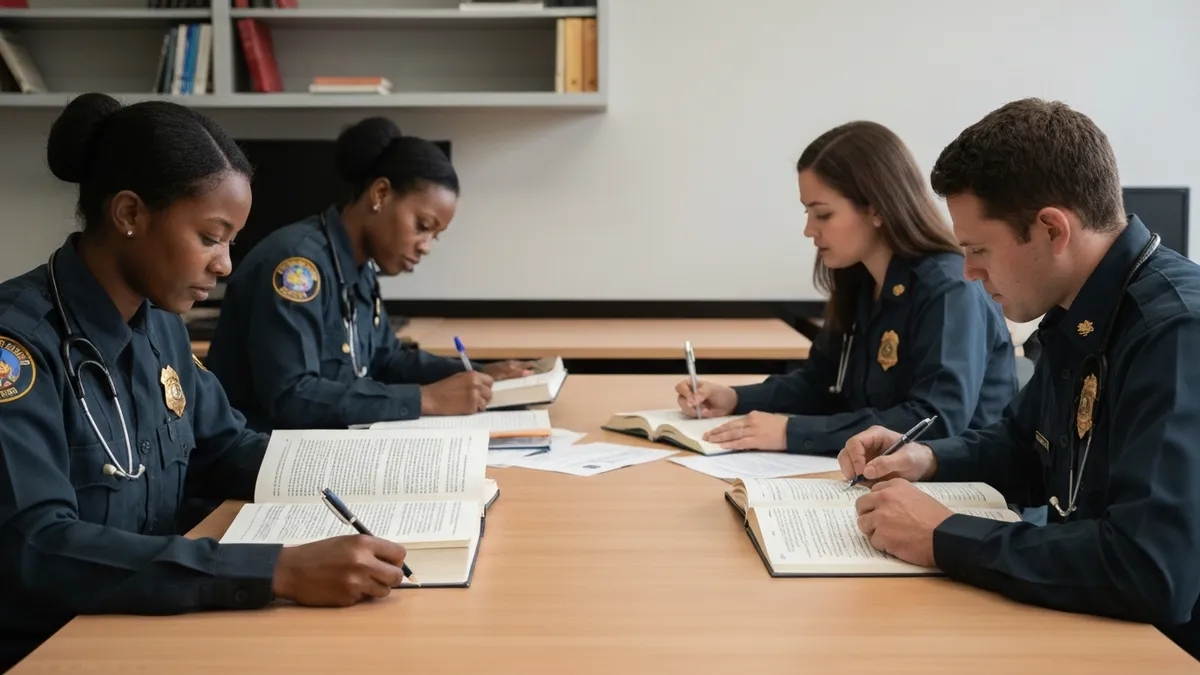
Colorado Correctional Officer — Corrections Career Guide 2026
Correctional Officer Practice Test PDF 2026
About the Author

Educational Psychologist & Academic Test Preparation Expert
Columbia University Teachers CollegeDr. Lisa Patel holds a Doctorate in Education from Columbia University Teachers College and has spent 17 years researching standardized test design and academic assessment. She has developed preparation programs for SAT, ACT, GRE, LSAT, UCAT, and numerous professional licensing exams, helping students of all backgrounds achieve their target scores.
Join the Discussion
Connect with other students preparing for this exam. Share tips, ask questions, and get advice from people who have been there.
View discussion (9 replies)