
Correctional Officer Requirements by State: Age Limits, Education & Hiring Standards
Age limit for correctional officer in NY and every state explained. 🎯 Education, fitness, and hiring standards compared nationwide.
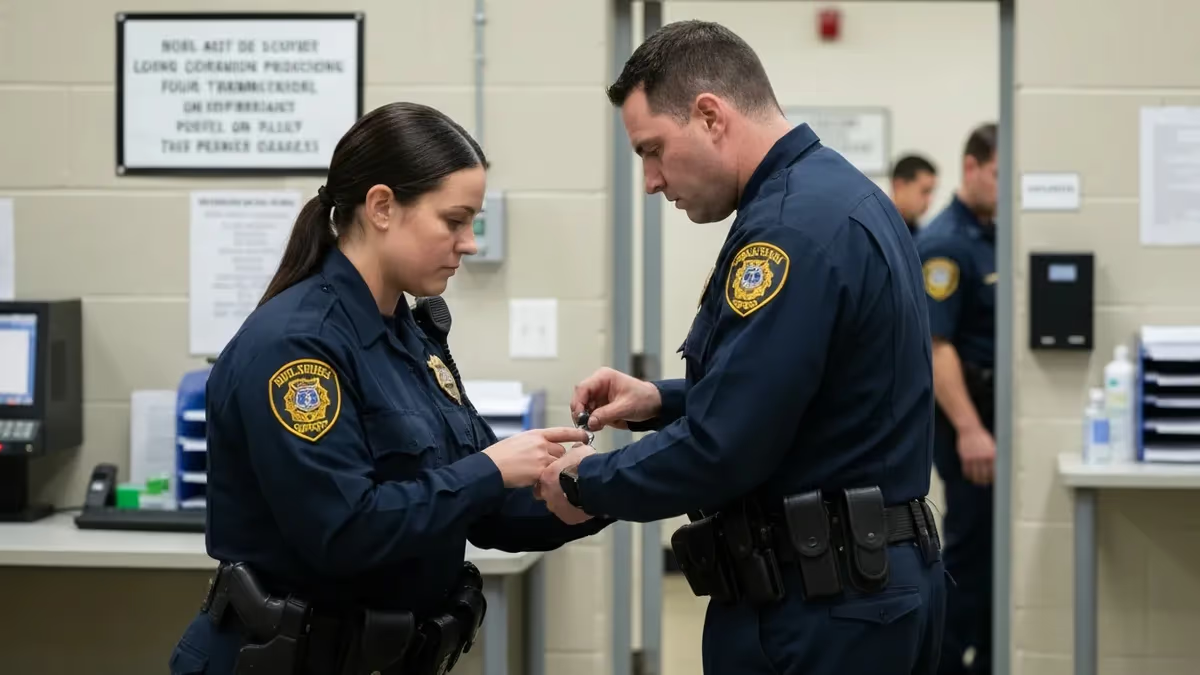
Understanding the age limit for correctional officer in NY — and across every other state — is the first step toward building a career in corrections. New York requires candidates to be at least 18 years old at the time of appointment, with no maximum age ceiling under state civil service law, though individual facilities may impose practical cutoffs tied to physical ability standards. Requirements vary considerably across the country, and what qualifies you in one jurisdiction may fall short in another, making it essential to research your target state thoroughly before investing time in an application.
The phrase "collars and co" captures something real about the corrections profession: officers wear a uniform, carry authority, and bear legal responsibility for the safety of everyone inside a facility — staff, visitors, and incarcerated individuals alike. That weight is why agencies set detailed eligibility thresholds. Minimum age requirements protect against immature judgment in high-stress situations. Education floors ensure officers can read incident reports, interpret legal documents, and communicate clearly during emergencies. Background checks filter out candidates whose history suggests a risk to institutional security.
Most states cluster around a minimum hiring age of 18 to 21. Federal Bureau of Prisons positions require applicants to be at least 18 but no older than 36 at the time of appointment, reflecting the physical demands and mandatory retirement at age 57. State-level rules diverge sharply from there. California requires 18 with a GED or high school diploma. Texas sets 18 as the floor. Florida mandates 19. Some county jail systems follow their own standards that differ from state prison requirements within the same state, adding another layer of complexity for job seekers.
Education requirements are similarly fragmented. The majority of states accept a high school diploma or GED as the minimum credential. A growing number of agencies — particularly in urban systems managing large populations — prefer or require some college coursework, especially in criminal justice, psychology, or social work. A handful of jurisdictions, including some federal contract facilities, now require an associate or bachelor's degree for entry-level positions. Candidates who hold a degree often move through the hiring process faster and may receive a higher starting pay grade.
Physical fitness standards are another major variable. Some states use a standardized physical ability test (PAT) that mirrors job-task simulations: running a fixed distance, dragging a weighted dummy, climbing stairs with equipment. Others rely on a medical examination and basic cardiovascular assessment. The trend since 2020 has been toward more structured, validated fitness testing that can withstand legal scrutiny, following a series of court decisions requiring agencies to prove the connection between test criteria and actual job duties.
Citizenship and residency requirements add further complexity. Most states require U.S. citizenship or lawful permanent resident status. Several require candidates to live within a specified radius of the facility at the time of appointment, or to establish residency within six to twelve months of hire. Veterans often receive preference points that effectively lower the competitive threshold, a policy embedded in civil service law across most states and at the federal level.
This article walks through correctional officer requirements by state in detail, covering age, education, physical fitness, background clearance, and residency rules so you can benchmark your own eligibility before submitting a single form.
Correctional Officer Requirements by the Numbers
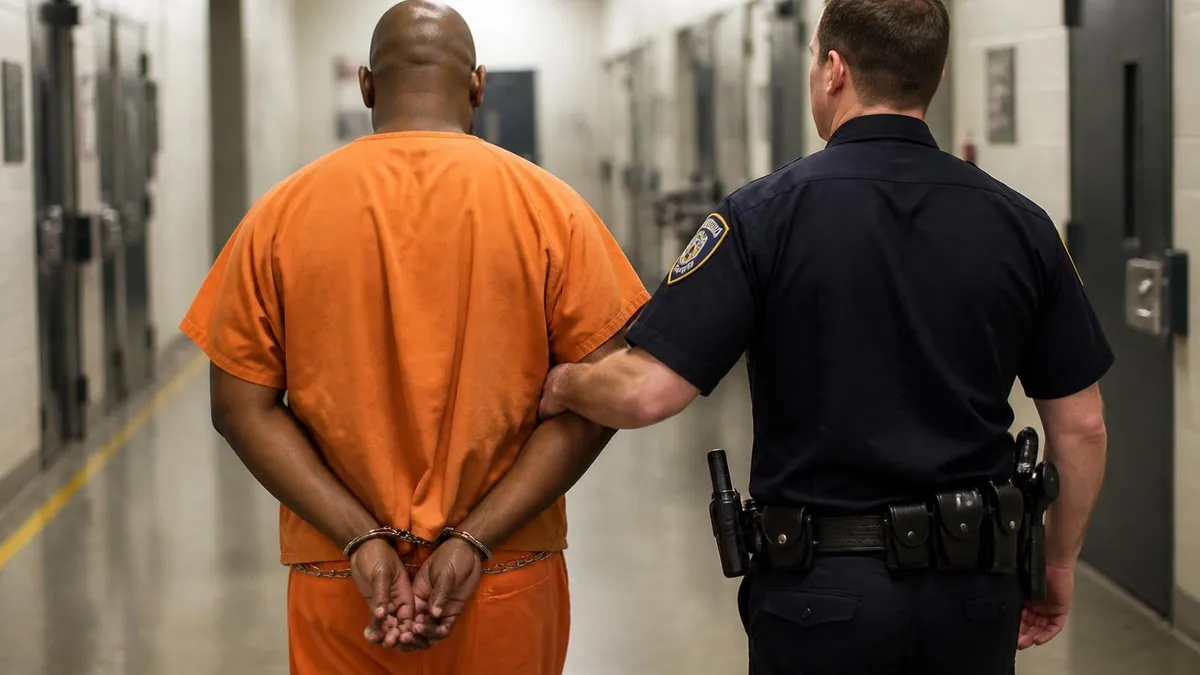
Core Eligibility Requirements Across States
Most states set the floor at 18 or 21 years old. New York, California, and Texas allow 18. Florida and several Southern states require 19. Federal BOP positions cap initial appointments at age 36 due to mandatory retirement rules.
A high school diploma or GED is the universal minimum. Urban systems and federal facilities increasingly prefer some college. A degree in criminal justice, psychology, or a related field can accelerate hiring and improve starting pay grade.
U.S. citizenship or lawful permanent residency is required in most states. Many agencies enforce a residency radius at appointment, typically 50 miles from the facility, with six to twelve months to establish residency post-hire.
Felony convictions are disqualifying nationwide. Many states also screen for misdemeanor domestic violence, drug history within three to five years, and financial irresponsibility. A clean driving record is required in most jurisdictions.
States use a range of methods: job-task simulation tests, standardized PATs, or basic medical exams. Candidates must pass vision, hearing, and cardiovascular assessments. Some states re-test annually after hire to maintain certification.
Education standards for correctional officers have evolved steadily over the past two decades, reflecting a broader shift in how agencies view the role. Early models treated corrections work as primarily custodial: lock doors, count heads, report incidents. Modern correctional theory — backed by research from the National Institute of Corrections — recognizes that officer communication skills, de-escalation training, and understanding of mental health are just as critical as physical capability. That philosophical shift has pushed education requirements upward, even as many agencies still accept a GED as the technical minimum.
In New York, candidates for the state Department of Corrections and Community Supervision (DOCCS) must hold a high school diploma or its recognized equivalent. NYC Correction Officers, who serve the Rikers Island complex and borough facilities, must also meet the same diploma requirement, though the city's civil service exam adds a competitive cognitive layer that effectively rewards candidates with stronger reading and reasoning skills. Completing college coursework before the exam correlates with higher scores and faster placement on the eligibility list, even when no degree is formally required.
California's Department of Corrections and Rehabilitation (CDCR) follows a similar pattern. The formal requirement is a GED or diploma, but the state's structured selection process — written exam, background investigation, psychological evaluation, and medical review — creates multiple checkpoints where stronger educational backgrounds provide measurable advantages. CDCR candidates with experience in social services, military corrections, or community college criminal justice programs consistently report smoother progress through the multi-step process.
Texas operates one of the largest correctional systems in the world, with over 100 state facilities managed by the Texas Department of Criminal Justice (TDCJ). TDCJ requires a high school diploma or equivalent and sets the minimum age at 18. The agency provides a fully paid, twelve-week training academy for new hires, making it one of the more accessible entry points for first-career candidates. However, the background investigation is rigorous: TDCJ screens for any felony conviction, any Class A misdemeanor within the past ten years, and any Class B misdemeanor within the past five years.
The federal Bureau of Prisons (BOP) applies the most structured educational framework. Entry-level Correctional Officer positions (GL-5 through GL-7) require a high school diploma plus either three years of general work experience or one year of specialized experience, or a combination of experience and post-secondary education.
A bachelor's degree in any field satisfies the experience requirement entirely. The BOP also enforces a unique age window: applicants must be at least 18 but cannot have reached their 37th birthday at the time of appointment, because federal law mandates retirement for covered law enforcement positions at age 57 and the BOP requires twenty years of service.
Background investigation depth also varies by state. Illinois conducts a full fingerprint-based FBI criminal history check, a statewide criminal database search, employment verification going back ten years, and personal reference interviews. Georgia uses a similar multi-layer approach but adds a polygraph examination for all correctional officer candidates, a practice common in Southern states. Washington state emphasizes financial background, reasoning that officers with severe debt are more vulnerable to bribery or corruption inside facilities.
Drug testing policies deserve special attention as cannabis legalization has spread across the country. States that have legalized recreational marijuana often maintain strict zero-tolerance policies for corrections applicants, regardless of state legalization status, citing federal facility oversight requirements and the safety-sensitive nature of the work. Candidates in states like Colorado, Oregon, and California frequently assume that legal cannabis use won't affect their application — and are surprised to learn that recent use remains disqualifying in most correctional hiring contexts.
Time in CO Hiring: Regional Age & Physical Requirements
The Northeast corridor — New York, New Jersey, Pennsylvania, Massachusetts, and Connecticut — generally sets minimum hiring ages at 18, with New York and Massachusetts allowing appointment as young as 18 for state facilities. New Jersey requires candidates to be 18 with a high school diploma. Pennsylvania's Department of Corrections requires 18 and a GED or diploma, and uses a structured written test administered through the state civil service system. Connecticut's Department of Correction requires candidates to be 21 for certain specialized units but accepts 18-year-olds for entry-level positions.
Physical standards in the Northeast tend to emphasize job-task simulation over pure athletic benchmarks. New York's Physical Abilities Test (PAT) includes activities like stair climbing, restraint simulation, and a timed run — all designed to reflect real duties. Massachusetts uses a similar job-simulation model. These tests are typically pass/fail rather than scored, meaning a candidate who meets the threshold moves forward regardless of how far above the bar they scored. Medical examinations in this region are thorough and include vision, hearing, cardiovascular stress tests, and musculoskeletal assessments.

Pros and Cons of a Correctional Officer Career
- +Stable government employment with strong job security and civil service protections
- +Competitive salary with built-in overtime opportunities that can significantly boost take-home pay
- +Defined-benefit pension plans in most states — rare in the modern job market
- +Comprehensive health, dental, and vision insurance for officer and family from day one
- +Structured promotional pathway from officer to sergeant, lieutenant, captain, and beyond
- +Meaningful work contributing directly to public safety and facility rehabilitation programs
- −High rates of occupational stress, burnout, and PTSD compared to most civilian careers
- −Mandatory overtime and irregular shift schedules that disrupt family and personal life
- −Physical danger from inmate violence, contraband incidents, and facility emergencies
- −Strict background and lifestyle requirements that eliminate many otherwise qualified candidates
- −Public perception challenges — corrections work is often undervalued compared to other law enforcement
- −Early mandatory retirement in federal positions limits long-term career flexibility after age 57
Pros and Cons at a Glance
| Pros | Cons |
|---|---|
| Stable government employment with strong job security and civil service protections | High rates of occupational stress, burnout, and PTSD compared to most civilian careers |
| Competitive salary with built-in overtime opportunities that can significantly boost take-home pay | Mandatory overtime and irregular shift schedules that disrupt family and personal life |
| Defined-benefit pension plans in most states — rare in the modern job market | Physical danger from inmate violence, contraband incidents, and facility emergencies |
| Comprehensive health, dental, and vision insurance for officer and family from day one | Strict background and lifestyle requirements that eliminate many otherwise qualified candidates |
| Structured promotional pathway from officer to sergeant, lieutenant, captain, and beyond | Public perception challenges — corrections work is often undervalued compared to other law enforcement |
Correctional Officer Application Checklist: Are You Ready to Apply?
- ✓Confirm you meet the minimum age requirement for your target state or federal facility.
- ✓Obtain a certified copy of your high school diploma, GED, or college transcripts.
- ✓Request a full copy of your criminal history from the state bureau of investigation before the agency does.
- ✓Gather ten years of verified employment history with supervisor contact information for each job.
- ✓Document all addresses where you have lived for the past five to ten years.
- ✓Obtain three professional or character references who are not family members.
- ✓Resolve any outstanding financial obligations — delinquent debts or liens can delay or disqualify your application.
- ✓Complete any required pre-application physical fitness preparation at least eight weeks before your scheduled PAT.
- ✓Obtain a valid driver's license and ensure your driving record has no major violations in the past three years.
- ✓Review the specific drug testing policy for your target agency, including cannabis use windows.
New York Has No Upper Age Limit — But Fitness Screening Is Strict
Unlike the federal Bureau of Prisons, which caps appointments at age 36, New York State DOCCS imposes no upper age ceiling. However, all candidates must pass the Physical Abilities Test regardless of age, and medical exams screen cardiovascular health rigorously. Candidates over 45 should invest additional preparation time in aerobic conditioning to ensure they clear the timed components comfortably.
New York's correctional system is among the most complex in the country, encompassing both the state-run DOCCS network of 44 facilities and the New York City Department of Correction's jail system, which includes Rikers Island and ten borough-based facilities. The two systems operate under separate civil service frameworks and have distinct hiring timelines, pay scales, and working conditions. Understanding which system you are targeting — state prisons or city jails — is essential because the eligibility criteria, exam schedules, and application portals are entirely separate.
For New York State DOCCS, candidates must be U.S. citizens, at least 18 years old at the time of appointment, and hold a high school diploma or recognized equivalent. The state uses a civil service examination, which is administered periodically rather than on a rolling basis. This means that missing an exam cycle can delay your entry by one to two years.
Candidates who pass the written exam are placed on an eligibility list ranked by score, with veterans receiving additional preference points that can shift their position significantly. From list placement to actual appointment typically takes six to eighteen months depending on facility vacancies.
NYC Correction Officers operate under a different timeline and a separate civil service list managed by the Department of Citywide Administrative Services (DCAS). The New York City CO exam is open more frequently and the city hires in larger cohorts, making it a more accessible entry point for candidates who want to start sooner.
Starting salaries for NYC COs are among the highest for entry-level officers in the country, reflecting both the high cost of living and the demanding nature of managing one of the world's largest urban jail systems. The starting base salary for a NYC Correction Officer trainee begins around $49,000 and rises to over $100,000 within five years when overtime is included.
The physical abilities test for New York State candidates was redesigned in recent years to better reflect actual job tasks rather than traditional athletic benchmarks like push-up counts or sit-and-reach measurements. The current PAT includes a stair climb with weighted equipment, a simulated inmate restraint drag, a controlled walking run, and a handcuffing simulation under time pressure.
Candidates are advised to train specifically for these tasks rather than relying on general gym fitness. Officers who have previously failed the PAT most often report difficulty with the restraint drag, which requires functional grip strength and core stability that standard cardio training does not develop.
Background investigation for New York candidates is extensive and can take three to five months. DOCCS investigators verify all employment for the past ten years, conduct personal interviews with listed references and neighbors, review financial credit history, and check all criminal databases at the state and federal levels.
Candidates with past arrests — even for charges that were dismissed — should be prepared to provide documentation of the outcome. A dismissed charge is not automatically disqualifying, but failure to disclose it is, because investigators cross-reference all records and any discrepancy between what a candidate reports and what records show is treated as a dishonesty finding, which is almost always disqualifying.
Drug testing in New York follows a pre-employment screen and random in-service testing thereafter. The state's current policy treats cannabis as disqualifying within a specified pre-employment window, even though recreational cannabis is legal in New York. DOCCS justifies this position based on the federal regulatory environment and safety-sensitive nature of the role. Candidates are advised to confirm the current testing window directly with DOCCS at the time of application, as agency policies in this area have been evolving in response to legislative pressure.
For candidates weighing New York options against other states, it is worth comparing the full compensation package. New York's Tier 6 pension plan, which covers new hires since 2012, requires a longer vesting period and higher employee contributions than the more generous Tier 3 and 4 plans available to earlier hires.
However, the pension still provides a defined benefit after 27 years of service that exceeds what most private-sector employees accumulate in a 401(k). Combined with subsidized health insurance that extends into retirement, the lifetime value of a New York correctional officer career remains among the highest of any state system.
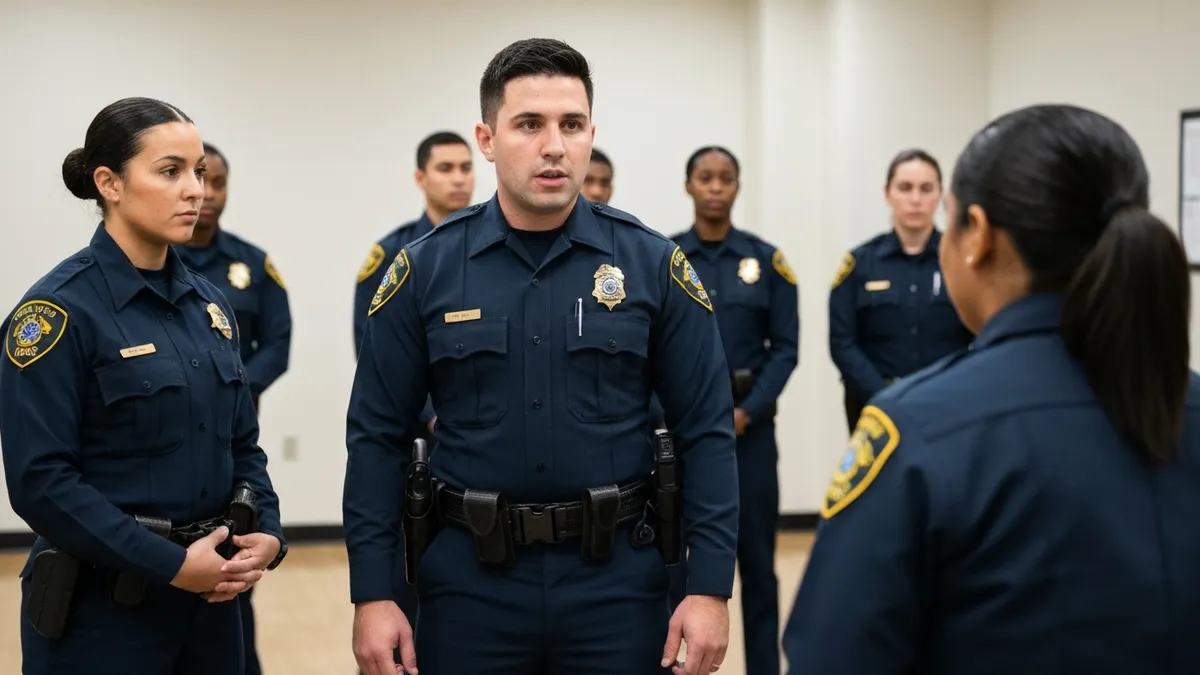
Even in states where recreational marijuana is fully legal, corrections agencies routinely maintain pre-employment drug screening policies that treat recent cannabis use as disqualifying. The window varies by agency — some screen for use within 30 days, others within 12 months. Do not assume state legalization protects your application. Confirm the specific drug policy with your target agency before applying, and allow adequate time to clear any testing window.
Preparing for the correctional officer hiring process requires the same disciplined, systematic approach that the job itself demands. Candidates who treat the application as a passive form-filling exercise tend to stumble during the background investigation, the psychological evaluation, or the physical test — not because they are unqualified, but because they failed to prepare for the specific standards each stage requires. The agencies that hire the most successfully are those that communicate what they expect clearly, and candidates who read those materials carefully and honestly self-assess against them before applying save themselves considerable time and frustration.
The psychological evaluation is a stage many candidates underestimate. Most major correctional systems — including New York, California, Texas, and the federal BOP — require a clinical psychological evaluation that combines standardized testing instruments (such as the MMPI-2 or PAI) with a structured interview conducted by a licensed psychologist.
The evaluation is not designed to find perfect people; it screens for patterns associated with poor impulse control, extreme authoritarianism, emotional instability under stress, or difficulty working within structured rule systems. Candidates who present honestly and consistently tend to perform better than those who try to game the instruments, because the tests are specifically validated to detect inconsistent response patterns.
The oral board interview, used by most state agencies and all federal hiring processes, evaluates communication clarity, situational judgment, and professional demeanor.
Common question formats include behavioral scenarios — "Tell me about a time when you had to enforce a rule someone disagreed with" — and situational hypotheticals — "If you observed a coworker accepting a gift from an inmate, what would you do?" Candidates who have studied the agency's use-of-force policy, mission statement, and code of conduct before the interview consistently outperform those who walk in without preparation. Researching the specific facility — its population type, recent news, and operational challenges — also signals serious interest.
Financial preparation matters beyond just resolving outstanding debts. Agencies investigate financial history because economic desperation is one of the most documented risk factors for correctional officer corruption. Candidates carrying significant unresolved debt, active collection accounts, or bankruptcy filings within the past two to three years may find their application paused pending explanation.
This does not mean financial difficulty is automatically disqualifying — investigators distinguish between situational hardship (medical debt, job loss, divorce) and patterns of reckless financial behavior. Candidates with complicated financial histories are advised to prepare a clear, factual explanation before the background interview rather than hoping investigators won't notice.
Veterans transitioning into corrections have a significant structural advantage in most hiring systems. Federal veteran preference points can move a candidate substantially up the eligibility list, and many states mirror this benefit in their civil service frameworks. Beyond preference points, military service provides direct experience with chain-of-command compliance, security protocols, controlled environment operations, and working with diverse populations under stress — all directly transferable to corrections work. VA transition assistance programs in some states specifically partner with correctional agencies to create streamlined hiring tracks for veterans, including credit toward academy training hours for military law enforcement or detention experience.
Networking within the corrections community before applying provides practical intelligence that is hard to find in official materials. Attending recruitment events, speaking with active officers, or joining professional associations like the American Jail Association (AJA) or the American Correctional Association (ACA) can yield current insights into what a specific agency is emphasizing in its current hiring cycle, which disqualifiers are being strictly enforced, and what the academy experience actually involves.
This kind of ground-level knowledge often makes the difference between a well-prepared candidate and one who is surprised by the process. Reviewing correctional officer requirements by state alongside conversations with active officers gives you the most complete picture available.
Finally, understanding the post-hire trajectory matters during the application process itself because it helps you frame your goals authentically. Correctional agencies are skeptical of candidates who frame the job as a temporary stepping stone to other law enforcement roles — not because career ambition is wrong, but because high turnover is a chronic operational problem that agencies work hard to minimize. Candidates who demonstrate genuine interest in the correctional environment, who can articulate why they want to work specifically in a correctional facility rather than just in uniform, tend to perform better in oral boards and psychological evaluations alike.
Once you clear the hiring process and enter the academy, the learning curve is steep and structured. Correctional officer training academies typically run eight to sixteen weeks depending on the state, with New York State DOCCS running a twelve-week residential program at the Correctional Services Training Academy in Albany. The federal BOP's Residential Training Center in Glynco, Georgia runs a comparable three-phase program. All academies cover legal authority and use-of-force law, inmate classification and behavior management, emergency response procedures, first aid and CPR, report writing, and facility-specific operations.
Report writing is one of the most practically important skills trained at the academy — and one of the most underappreciated by incoming candidates. A poorly written incident report can undermine a disciplinary proceeding, expose the facility to liability, or result in a use-of-force case being dismissed. Officers who write clearly, factually, and chronologically produce reports that hold up under scrutiny. Agencies that use supervisory scoring of report quality as a promotional criterion reward this skill directly, creating a career-long incentive to write well from the first day of field assignment.
De-escalation training has become a major focus in correctional academies since roughly 2018, driven by both research evidence and litigation outcomes. The principle is straightforward: most incidents inside facilities begin with verbal exchanges that escalate into physical confrontations, and officers trained in active de-escalation techniques can interrupt that escalation before force becomes necessary. States including Colorado, Washington, and Illinois have mandated expanded de-escalation curricula at the academy level and incorporated scenario-based assessment into certification requirements. Officers with strong verbal skills and emotional regulation consistently show lower rates of use-of-force incidents and better inmate compliance rates in research studies.
Mental health training is the other area seeing rapid curriculum expansion. Approximately 20% of the incarcerated population in any given U.S. facility meets diagnostic criteria for a serious mental illness, according to Bureau of Justice Statistics estimates. Officers who understand the behavioral presentations of schizophrenia, bipolar disorder, severe depression, and personality disorders are better equipped to distinguish a psychiatric crisis from a behavioral management problem — a distinction that shapes both the officer's response and the facility's legal exposure. Many states now partner with community mental health organizations to provide simulation-based training using actors portraying psychiatric presentations.
Physical conditioning does not end at the hiring gate. Most states require active officers to maintain fitness standards through periodic re-testing, typically annually or biennially. Officers who neglect fitness after hire find themselves struggling during re-certification cycles, which can affect shift assignments, specialized unit eligibility, and promotional consideration. Maintaining a consistent fitness routine throughout a corrections career is both a professional requirement and a health protection strategy: research on correctional officer occupational health shows that officers with higher cardiovascular fitness have significantly lower rates of hypertension, stress-related illness, and early mortality.
Shift work management is a practical skill the academy rarely teaches explicitly but that matters enormously for career longevity. Most facilities operate on rotating 8-hour or 12-hour shift schedules, with many requiring mandatory overtime to cover vacancies. Officers who develop consistent sleep hygiene practices, manage nutrition around irregular schedules, and establish clear off-duty boundaries with their supervisors report significantly better long-term wellbeing. Professional associations and union representatives often provide resources on shift work adaptation that new officers can access during their first year.
The pathway from entry-level officer to supervisory and administrative roles typically requires a combination of time-in-grade, promotional examination performance, performance evaluations, and — increasingly — continued education. Sergeants in most systems must pass a competitive written exam and oral board. Lieutenants and captains often require a college degree or substantial college credit in addition to examination performance. Officers who invest in continuing education during their first five years position themselves for earlier promotional eligibility and a wider range of specialized assignment opportunities, from training staff and classification specialists to emergency response team leadership.
Sample Correctional Officer Practice Questions
Try these questions from our free Correctional Officer practice tests. The correct answer and an explanation follow each question.
What is the purpose of the medical examination in the correctional officer hiring process?
- A. To establish a baseline for workers' compensation claims
- B. To confirm the candidate can physically perform all essential job functions
- C. To screen for genetic predispositions to illness
- D. To determine retirement eligibility
Answer: B. To confirm the candidate can physically perform all essential job functions
The medical exam verifies that a candidate is physically capable of performing duties such as restraining inmates, standing for long periods, and responding to emergencies.
Which of the following is a correctional officer's role when supervising an inmate education class?
- A. Teaching the academic curriculum
- B. Maintaining security and order while the program runs
- C. Evaluating inmates' academic progress
- D. Selecting which inmates may attend
Answer: B. Maintaining security and order while the program runs
A CO's role during programming is to maintain security and a safe environment, not to instruct or evaluate academic performance.
Which skill is essential for a correctional officer when dealing with inmates?
- A. Advanced mathematical abilities
- B. Strong communication and conflict-resolution skills
- C. High-level computer programming skills
- D. Expertise in foreign languages
Answer: B. Strong communication and conflict-resolution skills
Strong communication and conflict-resolution skills are essential for correctional officers when interacting with inmates. These skills enable officers to de-escalate tensions, mediate disputes, and effectively convey instructions, reducing the likelihood of violence or security breaches. Building rapport and understanding inmate behavior through effective communication is vital for maintaining order and safety.
When a correctional officer discovers contraband during a cell search, what is the FIRST action that should be taken?
- A. Immediately confront the inmate
- B. Secure and document the contraband, then notify a supervisor
- C. Dispose of the contraband to prevent further risk
- D. Ask other inmates who the contraband belongs to
Answer: B. Secure and document the contraband, then notify a supervisor
Contraband must first be secured and documented to preserve the chain of custody, and a supervisor must be notified before any further action.
CO Questions and Answers

Are Correctional Officers Law Enforcement? Peace Officer Status Explained
Correctional Officers Strike: February 2026 New York Wildcat Walkout Report

Correctional Officer Ranks: Complete Guide to CO Hierarchy, Insignia & Promotion Paths 2026

Correctional Officer Physical Test: Complete Training Guide & Requirements 2026

Correctional Officer Pay: Salary by State, Federal & Career Stage
About the Author

Educational Psychologist & Academic Test Preparation Expert
Columbia University Teachers CollegeDr. Lisa Patel holds a Doctorate in Education from Columbia University Teachers College and has spent 17 years researching standardized test design and academic assessment. She has developed preparation programs for SAT, ACT, GRE, LSAT, UCAT, and numerous professional licensing exams, helping students of all backgrounds achieve their target scores.
Join the Discussion
Connect with other students preparing for this exam. Share tips, ask questions, and get advice from people who have been there.
View discussion (9 replies)