
Correctional Officer Jobs Baltimore MD: Complete Career Guide 2026
Explore correctional officer jobs Baltimore MD — salaries, requirements, hiring steps & exam tips. 🎯 Start your CO career in Maryland today.

If you are searching for correctional officer jobs Baltimore MD, you are stepping into one of the most stable and meaningful law enforcement careers available in Maryland today. Baltimore City and the surrounding Baltimore County region host several state and local correctional facilities that are consistently hiring qualified candidates.
The Maryland Department of Public Safety and Correctional Services oversees thousands of uniformed staff across its network of facilities, and the need for new officers has grown steadily as attrition rates climb and the state expands its criminal justice reform initiatives. For anyone serious about a public safety career, Baltimore is one of the best entry points in the Mid-Atlantic region.
Understanding what this career entails before you apply is essential. Correctional officers are responsible for maintaining order, safety, and security inside detention facilities. Daily duties range from supervising inmate movement and conducting cell searches to writing incident reports, managing conflicts, and coordinating with medical and mental health staff. The role demands emotional resilience, sharp communication skills, and the ability to remain calm under pressure. Officers who thrive in Baltimore facilities often describe the job as demanding but deeply rewarding, particularly when they see positive rehabilitation outcomes for the individuals in their care.
Baltimore-area facilities operate under both city and state jurisdiction. The Baltimore City Detention Center, the Metropolitan Transition Center, and the Maryland Correctional Adjustment Center are among the most prominent institutions hiring locally. Each facility has its own operational culture, population profile, and staffing needs, but all operate within the Maryland Department of Public Safety and Correctional Services framework. Knowing which facility aligns with your career goals — whether that is working with pretrial detainees, long-term sentenced populations, or individuals in transition programs — can help you target your application effectively.
Compensation for Maryland correctional officers is competitive by national standards. Entry-level officers in the Baltimore metro area typically earn between $45,000 and $52,000 annually, with salaries climbing significantly as officers advance through the ranks. Overtime pay, shift differentials, and hazard pay can push total annual compensation well above base salary figures. Maryland also offers one of the stronger public employee pension systems in the country, making this a career with genuine long-term financial security. Benefits packages include comprehensive health coverage, dental and vision plans, and paid leave that rivals private-sector employment.
The application and hiring process for correctional officer positions in Baltimore is multistep and can take several months from initial application to academy enrollment. Candidates must pass a written examination, physical fitness assessment, background investigation, psychological evaluation, and medical examination before receiving a conditional job offer. The written exam tests reading comprehension, arithmetic, situational judgment, and writing skills. Preparation matters enormously — candidates who study systematically and take practice assessments consistently outperform those who rely on general knowledge alone. Understanding the exam format early gives you a meaningful competitive advantage.
Career advancement opportunities within Baltimore's correctional system are substantial. Officers who demonstrate leadership, maintain clean disciplinary records, and pursue additional certifications can advance to sergeant, lieutenant, captain, and higher administrative roles. The Maryland Department of Public Safety and Correctional Services promotes from within whenever possible, and many facility administrators began their careers as entry-level officers decades ago. Specialized assignments in K-9 units, tactical response teams, training academies, and classification departments open additional pathways for motivated officers. Explore the full landscape of correctional officer jobs baltimore md rank structures to understand where your career can take you.
The community impact of working as a correctional officer in Baltimore cannot be understated. Baltimore has faced significant challenges related to crime, incarceration rates, and recidivism, and officers who work thoughtfully and professionally within the system contribute directly to public safety and rehabilitation outcomes. Programs like cognitive behavioral therapy, vocational training, and reentry support services rely on officers who understand their role extends beyond custody. If you are motivated by a desire to serve your community in a meaningful, complex, and well-compensated role, a correctional officer career in Baltimore is worth pursuing with seriousness and preparation.
Free Correctional Officer Study Tools
Interactive Correctional Officer resources on PracticeTestGeeks, free to start:
- CO Security Procedures & Facility Operations 1 — 9 questions with answer explanations
- Correctional Officer flashcards — review key terms and concepts card by card
- Correctional Officer study guide — topic-by-topic overview of what the exam covers
- Correctional Officer cheat sheet — one-page printable summary for last-minute review
Baltimore CO Jobs by the Numbers

Core Eligibility Requirements for Baltimore CO Positions
Applicants must be at least 21 years old at the time of appointment and must be a United States citizen or legally authorized to work in the US. Maryland requires proof of citizenship or permanent residency as part of the background verification process.
A high school diploma or GED equivalent is the minimum educational requirement. Some competitive positions or specialty assignments prefer candidates with college coursework in criminal justice, psychology, or social services, though a degree is not mandatory for entry-level roles.
Candidates must have no felony convictions. Certain misdemeanor convictions, particularly those involving violence, weapons, or dishonesty, may also disqualify applicants. Maryland conducts thorough state and federal background checks including fingerprinting through the FBI database.
Applicants must pass a standardized physical fitness test that typically includes a timed run, push-ups, sit-ups, and grip strength assessment. Maryland's fitness standards align with national law enforcement benchmarks adjusted for age and gender.
A valid driver's license is required. All candidates must pass a comprehensive drug and alcohol screening. Maryland has a zero-tolerance policy for marijuana and controlled substances, and positive results result in automatic disqualification.
Compensation for correctional officers in the Baltimore area is structured to reward both longevity and performance. Entry-level officers at Maryland state facilities typically start at a Grade 11 pay scale position, which translates to roughly $45,000 to $52,000 annually depending on the specific facility and any negotiated county supplements. As officers complete their probationary period — usually 12 months — and advance through annual step increases, salaries can grow to $65,000 or more within five to seven years of service without any promotion required. This built-in growth makes the CO career path genuinely lucrative over a full career arc.
Overtime opportunities are abundant in Baltimore-area correctional facilities. Like many departments nationwide, Maryland facilities frequently operate below full staffing capacity, which means officers who are willing to work overtime shifts can dramatically increase their annual earnings. It is not uncommon for experienced Baltimore officers to earn $15,000 to $25,000 above their base salary in a given year through overtime and specialty pay. Shift differentials add another layer of compensation — officers assigned to evening or overnight shifts receive premium pay rates that further boost take-home income.
The Maryland State Retirement and Pension System is one of the most significant long-term benefits available to correctional officers. Officers enrolled in the Correctional Officers Retirement System can retire with full pension benefits after 20 to 25 years of service, depending on entry date and plan tier. Pension amounts are calculated based on a percentage of final average salary multiplied by years of service, meaning a 25-year veteran could receive 50 to 62.5 percent of their final salary as an annual pension — for life, with cost-of-living adjustments. This is a benefit increasingly rare in the private sector.
Health insurance is provided through the Maryland Department of Budget and Management's employee benefits program. Officers can choose from multiple plan options including PPO and HMO structures for medical, dental, and vision coverage. The state covers a substantial portion of premium costs, making quality health insurance accessible even at entry-level salary ranges. Family coverage is available, and many officers cite health benefits as one of the top reasons they chose public service over comparable private-sector opportunities.
Paid leave benefits for Maryland correctional officers are generous relative to industry norms. Officers accumulate annual leave starting at 15 days per year, increasing with tenure to a maximum of 25 days annually. Sick leave accumulates separately and can be carried over year to year without cap, providing a meaningful safety net for long-term illness or family care situations. Maryland also provides paid holidays aligned with state observances and a personal leave day that can be taken at the officer's discretion with supervisor approval.
Tuition assistance programs are available to Maryland state employees, including correctional officers. Officers pursuing higher education in criminal justice, public administration, social work, or related fields can receive reimbursement for approved coursework. This benefit is particularly valuable for officers who plan to advance into supervisory or administrative roles where educational credentials become increasingly important for promotion eligibility. Several Baltimore-area community colleges and universities have established partnerships with the Department of Public Safety to simplify the enrollment and reimbursement process.
Geographic considerations also affect overall compensation value in Baltimore. While the cost of living in Baltimore is higher than rural Maryland, it is meaningfully lower than peer cities like Washington D.C., where comparable law enforcement salaries purchase less. Baltimore officers who live in nearby Baltimore County, Harford County, or Anne Arundel County often find that their compensation stretches considerably further, enabling homeownership and financial stability that might be difficult to achieve in higher-cost metro areas. The combination of salary, benefits, and regional cost of living makes Baltimore CO positions genuinely competitive in the national law enforcement job market.
Baltimore CO Facilities, Shifts & Work Environment
Baltimore hosts several major correctional facilities under state and city jurisdiction. The Baltimore City Detention Center on Greenmount Avenue is one of the busiest pretrial detention facilities in Maryland, housing individuals awaiting trial across a wide range of charges. The Metropolitan Transition Center on Greenmount Avenue serves sentenced adult males approaching release, focusing heavily on reentry programming and vocational training. The Maryland Correctional Adjustment Center, known as the Supermax, houses the state's most security-intensive population and requires officers with advanced training and composure.
Additional facilities in the greater Baltimore region include the Baltimore Pre-Release Unit and the Jessup Correctional complex approximately 20 miles southwest of the city, which employs hundreds of officers within commuting distance. The Jessup complex includes multiple institutions with different security classifications, offering officers flexibility to transfer between facilities as their careers develop. Understanding the culture and population type at each facility helps candidates target their applications to environments where their strengths and interests align best with the mission.

Is a Baltimore Correctional Officer Job Right for You?
- +Stable government employment with strong union protections and job security
- +Competitive starting salary with built-in step increases and overtime opportunity
- +Comprehensive benefits including health insurance, dental, vision, and paid leave
- +Defined-benefit pension providing reliable retirement income after 20-25 years
- +Clear career advancement pathways from officer through senior leadership roles
- +Tuition assistance supports continuing education while working full-time
- −Mandatory rotating shifts including evenings, nights, weekends, and holidays
- −High stress environment with daily exposure to conflict and potential violence
- −Emotional toll from working with vulnerable and sometimes dangerous populations
- −Lengthy hiring process averaging four to six months before academy enrollment
- −Physical fitness requirements must be maintained throughout employment
- −Mandatory overtime mandates can disrupt personal and family schedules unexpectedly
Pros and Cons at a Glance
| Pros | Cons |
|---|---|
| Stable government employment with strong union protections and job security | Mandatory rotating shifts including evenings, nights, weekends, and holidays |
| Competitive starting salary with built-in step increases and overtime opportunity | High stress environment with daily exposure to conflict and potential violence |
| Comprehensive benefits including health insurance, dental, vision, and paid leave | Emotional toll from working with vulnerable and sometimes dangerous populations |
| Clear career advancement pathways from officer through senior leadership roles | Lengthy hiring process averaging four to six months before academy enrollment |
| Tuition assistance supports continuing education while working full-time | Physical fitness requirements must be maintained throughout employment |
Baltimore CO Application Checklist — 10 Steps to Get Hired
- ✓Create an account on the Maryland Department of Public Safety and Correctional Services careers portal and complete your online application.
- ✓Gather required documents including birth certificate, Social Security card, high school diploma or GED, and driver's license before your first interview.
- ✓Register and prepare for the Maryland CO written examination covering reading comprehension, math, situational judgment, and writing.
- ✓Begin a structured physical fitness training program at least 60 days before your scheduled fitness assessment.
- ✓Disclose all prior criminal history, traffic violations, and civil judgments accurately on background investigation forms — omissions are grounds for disqualification.
- ✓Prepare a detailed employment history going back 10 years with accurate contact information for all former employers and supervisors.
- ✓Identify three to five professional references who can speak to your reliability, communication skills, and character — avoid listing family members.
- ✓Schedule and complete your psychological evaluation appointment promptly after receiving notification — delays extend your overall timeline.
- ✓Pass your pre-employment medical examination including vision, hearing, and general health screening at an approved provider.
- ✓Accept your conditional offer and enroll in the next available Maryland CO Basic Training Academy session at the Jessup Training Center.
Start Exam Prep Before You Apply
Candidates who begin systematic exam preparation before submitting their application consistently score higher on the Maryland CO written examination. The exam includes a writing sample component that many applicants underestimate — practice writing clear, factual incident report narratives before your test date to give yourself a measurable advantage over unprepared competitors.
Career advancement within Baltimore's correctional system follows a structured promotional ladder that rewards both time in service and demonstrated competence. After completing the probationary period and accumulating the minimum required years of service, officers become eligible to sit for promotional examinations for the rank of sergeant. The promotional exam process involves written testing, performance evaluations, supervisory interviews, and sometimes an assessment center component where candidates demonstrate practical leadership skills. Officers who invest in formal education and leadership development programs consistently perform better in these competitive processes.
The sergeant rank is the first supervisory tier in Maryland's correctional officer hierarchy, and it represents a significant shift in responsibilities. Sergeants oversee a team of officers assigned to a specific post or housing unit, manage shift operations, handle disciplinary matters at the first line of authority, and serve as the primary link between line officers and facility administration. Experienced sergeants in Baltimore-area facilities earn base salaries in the $65,000 to $75,000 range before overtime and differential pay, making the promotion a substantial financial step forward as well as a professional one.
Above sergeant, the promotional path continues through lieutenant, captain, major, and eventually into warden and deputy secretary positions. Each rank requires additional time in service, competitive examination performance, and increasingly a demonstrated record of managerial and administrative competence. Lieutenants typically manage multiple posts or an entire shift, while captains oversee entire programs or large functional divisions within a facility. The Maryland Department of Public Safety and Correctional Services also offers lateral specialty assignments that allow experienced officers to develop expertise outside the traditional promotion track.
Specialized units within Baltimore correctional facilities include the Emergency Response Team, which handles facility disturbances and high-risk extractions, the Intelligence Unit, which monitors gang activity and contraband networks, and the K-9 Unit, which assists in contraband detection and perimeter security. These assignments typically require three to five years of service before eligibility and involve additional training and certification beyond the basic academy. Officers in specialty units often describe these roles as some of the most engaging and professionally stimulating work available within the system.
Training and professional development do not stop after the academy. Maryland requires correctional officers to complete annual in-service training covering updates in use of force policy, mental health response, legal changes affecting corrections, and facility-specific operational procedures. Officers pursuing specialty assignments or promotion must complete additional certification programs. The Maryland Police and Correctional Training Commissions oversees training standards statewide and provides resources for officers seeking to expand their credentials through approved training programs offered at regional training centers.
Mentorship plays a significant informal role in career development within Baltimore's facilities. New officers who build strong relationships with experienced mentors gain access to institutional knowledge, political navigation skills, and professional networks that accelerate their growth. Many successful Baltimore CO careers can be traced to a mentor relationship formed during the early years of service. Actively seeking out experienced officers and supervisors willing to share their expertise is one of the highest-return investments a new CO can make in their career trajectory.
Lateral transfers between Maryland facilities are available after officers complete their probationary period, allowing individuals to pursue opportunities at facilities that offer better shift availability, promotion prospects, or specialty assignments. Officers interested in transitioning from a Baltimore city facility to a suburban or rural institution — or vice versa — can request transfer through the department's internal mobility process. Understanding this flexibility is important for long-term career planning, particularly for officers whose personal circumstances change over the course of a career that may span 25 or more years.
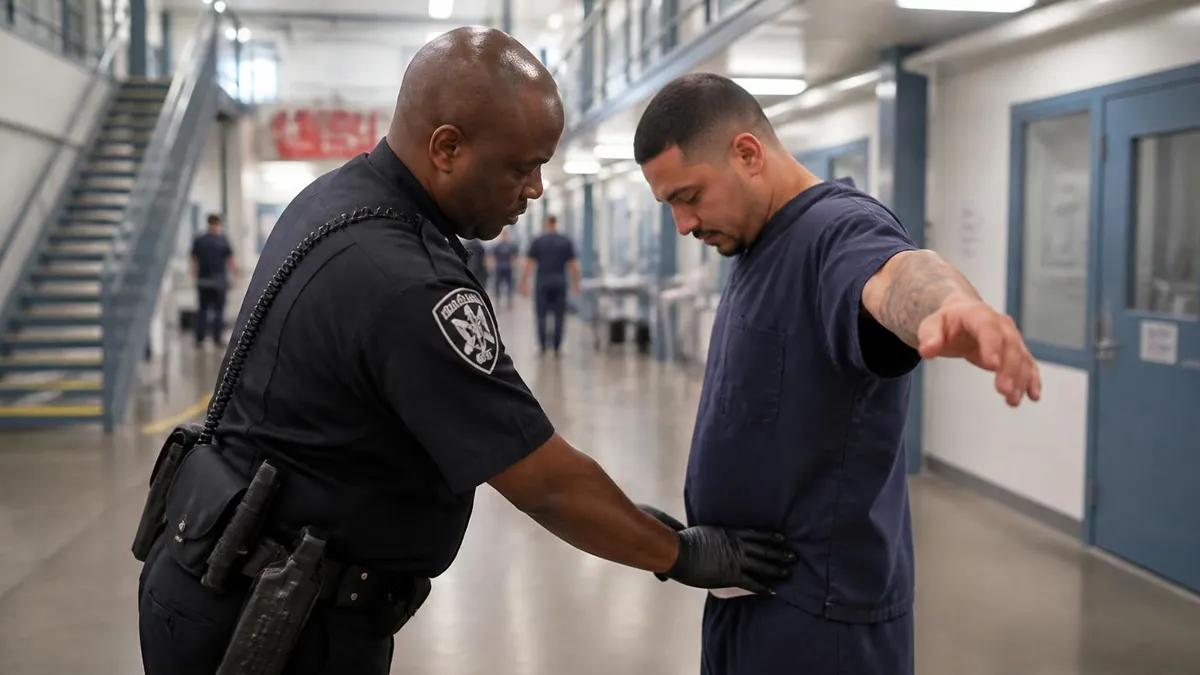
Maryland's background investigation process is thorough and includes social media review, financial history checks, and interviews with neighbors, family members, and former colleagues. Any deliberate omission or falsification on background forms — even minor incidents from years ago — is treated as a disqualifying integrity violation. Disclose everything accurately and let the investigators make the eligibility determination rather than self-screening based on assumptions about what might disqualify you.
The Maryland CO Basic Training Academy is an intensive 17-week residential program that transforms civilians into certified correctional officers. The academy is located at the Public Safety Education and Training Center in Sykesville, Maryland, approximately 45 minutes from downtown Baltimore. During the training period, recruits are paid at their full officer salary rate, which means the academy is a compensated professional training program rather than an unpaid pre-employment requirement. This distinction makes Maryland's approach to CO training more accessible and financially equitable than programs in states that require unpaid pre-service certifications.
Academy curriculum covers a comprehensive range of topics including legal authority and inmate rights, use of force principles and defensive tactics, firearms qualification (for facilities that require armed officers), first aid and CPR certification, mental health and crisis intervention training, report writing, and facility security procedures. Physical fitness training continues throughout the academy, with standards escalating as recruits build capability. Recruits who fall below fitness benchmarks during the academy face remediation and potential separation if they cannot meet minimum requirements by the program's conclusion.
The written examination that precedes academy enrollment is administered by the Maryland Department of Public Safety and Correctional Services at testing centers across the state including Baltimore-area locations. The exam takes approximately three hours to complete and is scored on a competitive basis, meaning your raw score determines your placement on the hiring eligibility list. Higher scores translate to earlier consideration for available positions — making exam preparation a direct investment in how quickly you get hired and at which facility you can realistically expect placement.
Effective exam preparation involves systematic study across all tested domains. Reading comprehension passages in the CO exam often use correctional facility scenarios, so practicing with realistic materials is more effective than generic reading tests. Arithmetic questions focus on practical applications like calculating inmate counts, shift schedules, and supply inventory — straightforward math but under timed conditions that require fluency. Situational judgment questions assess your instincts about handling scenarios involving inmate conflicts, ethical dilemmas, and supervisor directives, and practicing these questions helps you internalize the professional standards Maryland uses to evaluate candidates.
The writing component of the Maryland CO exam asks candidates to produce a clear, factual narrative based on a described incident. Evaluators look for organized structure, clear factual reporting, absence of inflammatory language, and grammatical correctness. Practicing incident report writing before the exam is one of the highest-use preparation activities available, because it combines writing skill development with direct exposure to the format you will use thousands of times throughout your career. Officers who write clearly and accurately from day one build reputations that support advancement in ways that strong tactical skills alone cannot replicate.
Physical preparation for the fitness assessment should begin at least eight to twelve weeks before your scheduled test date. The Maryland assessment typically includes a 1.5-mile run with a time cutoff, a maximum push-up and sit-up count within a set time window, and a grip strength measurement.
Officers who establish a consistent training routine — three to four days per week of cardio and strength training — routinely exceed minimum cutoffs and arrive at the academy already conditioned for the physical demands of training. Conditioning before the academy also reduces injury risk, which can delay your progress if it occurs during the training period itself.
For candidates comparing opportunities across states, Maryland's combination of compensation, benefits, and facility resources makes it a strong choice. Neighboring Virginia and Pennsylvania both have active correctional hiring programs, but Maryland's pension structure and proximity to the Baltimore-Washington employment corridor give it a meaningful advantage for candidates weighing long-term financial outcomes.
If you are ready to commit to a public service career with clear advancement paths and genuine stability, Baltimore's correctional officer opportunities represent one of the most accessible and rewarding entry points in the region. Candidates who prepare thoroughly and apply with complete, accurate materials consistently move through the process faster and with better placement outcomes than those who approach the application casually.
Practical preparation for a correctional officer career in Baltimore goes beyond passing the written exam and physical fitness test. The most successful candidates approach the process as a comprehensive professional development project that begins months before the application deadline. Start by researching the specific facilities where you want to work, including their security classification, population type, and recent news coverage. Demonstrating knowledge of a facility's mission and population during your interview signals genuine interest and preparation that distinguishes you from candidates who applied without doing their homework.
Networking within the corrections community pays dividends throughout the application process and beyond. Attending job fairs hosted by the Maryland Department of Public Safety, connecting with current officers through professional associations like the American Correctional Association, and reaching out to Baltimore-area CO unions for informational interviews can give you insights into the hiring process that are not available in official materials. Officers who have recently completed the hiring process are often willing to share their experiences and may alert you to upcoming testing dates, facility-specific preferences, or preparation resources they found valuable.
Managing your digital footprint before applying is increasingly important. Maryland's background investigators review social media profiles as part of the background check process. Review your public profiles on all major platforms and remove content that could be interpreted as endorsing illegal activity, expressing discriminatory views, or demonstrating poor judgment. You do not need to delete accounts, but ensuring that publicly visible content reflects the professional standards expected of law enforcement personnel is a straightforward precaution that eliminates an easily avoidable disqualifier.
Financial preparation for the application timeline is worth planning carefully. The hiring process can take four to six months, during which you may need to take time off from current employment for interviews, medical appointments, and psychological evaluation sessions. The academy period itself, while paid, requires full-time residential commitment that precludes most secondary income. Building a financial cushion before you begin the process ensures that logistical pressures do not force you to withdraw from consideration at a critical stage. Many candidates who fail to complete the process cite financial stress rather than eligibility issues as the primary reason.
Mental health preparation is as important as physical preparation. Correctional officer work involves sustained exposure to human suffering, institutional violence, and moral complexity that can accumulate into significant psychological burden over time.
Candidates who enter the field with established stress management practices — regular exercise, strong social support networks, professional counseling resources, and clear boundaries between work and personal life — consistently demonstrate better long-term career outcomes and lower rates of burnout and early retirement. Baltimore facilities offer Employee Assistance Programs that provide confidential counseling and support, and using these resources proactively rather than reactively is a sign of professional maturity, not weakness.
Continuing education after hiring accelerates career development and keeps professional skills sharp in a rapidly evolving field. Criminal justice policy, mental health law, use-of-force standards, and technology applications in corrections are all areas where knowledge becomes outdated within a few years without active effort to stay current. Officers who read professional journals, attend conferences, pursue certifications, and engage with the broader corrections community consistently outperform peers who limit their professional development to mandatory in-service training. The investment of time and energy is modest relative to the career returns it generates through promotion, specialty assignment eligibility, and professional reputation.
Finally, approach your correctional officer career in Baltimore as a long-term commitment rather than a stepping stone. The system rewards longevity with meaningful financial and professional benefits, and the officers who build the strongest careers are those who invest authentically in the mission of safe, humane, and effective correctional operations.
Baltimore's communities are directly affected by how well its correctional institutions function, and officers who understand this broader context bring a level of purpose to their daily work that sustains them through the inevitable challenges of the career. With thorough preparation, honest application, and genuine commitment to professional growth, a correctional officer career in Baltimore offers exceptional stability, compensation, and meaning.
Sample Correctional Officer Practice Questions
Try these questions from our free Correctional Officer practice tests. The correct answer and an explanation follow each question.
How does the correctional officer job market in rural areas typically compare to urban areas?
- A. Rural areas offer more positions because prisons are disproportionately located outside cities
- B. Urban areas always have far more openings due to larger inmate populations
- C. Rural and urban areas offer identical numbers of positions
- D. Rural positions are reserved exclusively for military veterans
Answer: A. Rural areas offer more positions because prisons are disproportionately located outside cities
Correctional facilities are frequently built in rural communities, making rural areas a major source of correctional officer employment.
What is the primary reason correctional officers conduct perimeter checks?
- A. To greet and verify the identity of incoming visitors
- B. To inspect the outer boundary of the facility for breaches, contraband, or escape attempts
- C. To supervise inmate recreation activities outdoors
- D. To verify that food deliveries are correctly portioned
Answer: B. To inspect the outer boundary of the facility for breaches, contraband, or escape attempts
Perimeter checks identify any compromise to the facility's outer security, including holes, cut fencing, or items thrown over the wall.
An officer observes two inmates whispering and exchanging a small item. What is the BEST course of action?
- A. Ignore it since small exchanges are common
- B. Immediately restrain both inmates
- C. Conduct a pat search of both inmates and document the observation
- D. Issue a verbal warning and move on
Answer: C. Conduct a pat search of both inmates and document the observation
Suspicious exchanges may involve contraband and warrant a search and documentation per facility policy.
Which of the following is a recommended organizational-level strategy for reducing officer stress and improving retention?
- A. Increasing mandatory overtime without compensation
- B. Implementing peer support programs, reasonable scheduling, and access to mental health resources
- C. Eliminating all in-service training requirements
- D. Removing all break periods to maintain vigilance
Answer: B. Implementing peer support programs, reasonable scheduling, and access to mental health resources
Research supports that peer support programs, equitable scheduling, and accessible mental health resources reduce burnout, absenteeism, and turnover in correctional settings.
Take the full Correctional Officer practice test
CO Questions and Answers

Correctional Officer Ranks: Complete Guide to CO Hierarchy, Insignia & Promotion Paths 2026

Correctional Officer Physical Test: Complete Training Guide & Requirements 2026

Colorado Correctional Officer — Corrections Career Guide 2026

Correctional Officer Jobs in CT: Complete Career Guide for Connecticut 2026
Correctional Officer Practice Test PDF 2026
How this page was made: written with AI tools and published by Nathan Beja, founder of Practice Test Geeks, who is responsible for its content. We have not yet matched this exam's facts to an official source, so confirm fees, dates and rules with the exam body. Not reviewed by a subject-matter expert. Editorial policy