
Attorney Bar Number Colorado: How to Look Up, Verify & Understand CO Bar Numbers
Learn how attorney bar number Colorado works — look up, verify & understand CO bar numbers. Complete guide for clients, employers & law students. 🔎

Every licensed attorney in Colorado is assigned a unique attorney bar number colorado — a permanent identifier issued by the Colorado Supreme Court Office of Attorney Registration. This number follows a lawyer throughout their entire career, appearing on court filings, licensing documents, disciplinary records, and professional profiles. Whether you are a client trying to verify an attorney's credentials, a law school graduate tracking your own registration status, or an employer conducting due diligence, understanding how Colorado bar numbers work is an essential first step in navigating the state's legal licensing system. Practice with the free Colorado Bar practice test on PracticeTestGeeks (7 questions with answer explanations).
Colorado bar numbers are administered by the Colorado Attorney Registration office, which operates under the direct supervision of the Colorado Supreme Court. When an attorney passes the Colorado Bar Exam and meets all character and fitness requirements, they are issued a registration number that never changes — even if the attorney is later suspended, reinstated, or moves to another state. This permanence makes the number a reliable anchor for researching an attorney's full licensing history, including any disciplinary actions taken against them over the course of their career.
The Colorado Attorney Registration database is publicly accessible online and contains detailed information for every lawyer who has ever been licensed in Colorado. A typical record includes the attorney's full name, bar number, current registration status (active, inactive, suspended, or disbarred), date of admission, mailing address, and any public disciplinary orders. This transparency is by design — the Colorado Supreme Court maintains these records to protect consumers and uphold the integrity of the legal profession throughout the state.
Law students who are preparing to sit for the Colorado Bar Exam often wonder when they will receive their bar number and what the registration process looks like. The timeline generally begins after passing the exam and receiving a positive character and fitness determination. Applicants are then sworn in at a formal admission ceremony and receive their official bar number at that point. Some applicants who are admitted on motion from another state follow a slightly different pathway, but the end result — a permanent Colorado attorney registration number — is the same for everyone who becomes licensed in Colorado.
Employers in the legal field, including law firms, corporate legal departments, and government agencies, routinely verify attorney bar numbers as part of their hiring process. Confirming that a candidate holds an active Colorado bar number — and checking that no suspensions or disciplinary orders are attached to that number — is considered standard due diligence. Legal staffing agencies and general counsel offices often build bar number verification into their onboarding checklists, ensuring that all attorneys they engage are authorized to practice law in Colorado at the time of hire.
Clients who hire attorneys in Colorado have every right to verify their lawyer's bar number before signing a fee agreement or disclosing sensitive information. The process is simple, free, and takes only a few minutes using the Colorado Supreme Court's public attorney search portal. Knowing a lawyer's bar number also makes it easier to file a complaint with the Office of Attorney Regulation Counsel if problems arise, since the complaint process typically requires the respondent attorney's registration number to route the matter correctly within the regulatory system.
This guide covers everything you need to know about Colorado attorney bar numbers: how to look one up, what the search results mean, how numbers are assigned, what different status designations indicate, and how the bar number system connects to the broader landscape of attorney regulation in Colorado. By the end, you will have a thorough understanding of this foundational piece of the Colorado legal licensing framework — and you will know exactly where to go and what to look for whenever you need to verify an attorney's standing in the state.
CO Bar: upcoming dates and official changes
- Oct 31, 2026: The timely application deadline for the February 2027 Colorado Bar Exam is October 31, 2026. (coloradolegalregulation.com)
- Nov 30, 2026: The late application deadline for the February 2027 Colorado Bar Exam is November 30, 2026. (coloradolegalregulation.com)
- Feb 1, 2027 – Mar 31, 2027: Timely applications for the July Colorado Bar Exam are accepted from February 1 to March 31. (Colorado Supreme Court Office of Attorney and LLP Admissions)
- Feb 23, 2027 – Feb 24, 2027: The February 2027 Colorado Bar Exam takes place February 23–24, 2027 at the Douglas County Fairgrounds Event Center. (coloradolegalregulation.com)
- Apr 1, 2027 – Apr 30, 2027: Late applications for the July Colorado Bar Exam are accepted from April 1 to April 30. (Colorado Supreme Court Office of Attorney and LLP Admissions)
- Updated Oct 28, 2026: Validity is now Oath within 18 months of results (previously Oath within 18 months of results).
- Updated Oct 28, 2026: Delivery is now In person at one Denver-metro location; laptop optional for written portions (previously In person at one Denver-metro location; laptop (ILG) optional for written portions).
- Updated Oct 28, 2026: Delivery is now In person at one Denver-metro location; laptop optional for written portions (previously In person, one Denver-metro location).
Facts verified Oct 28, 2026 against Colorado Supreme Court Office of Attorney and LLP Admissions. Dates that have passed are removed automatically.
- The MBE portion of the Colorado Bar Exam is a 6-hour test with 200 multiple-choice questions. (Colorado Supreme Court Office of Attorney and LLP Admissions)
- The MEE portion of the Colorado Bar Exam has six essay questions to answer in three hours. (Colorado Supreme Court Office of Attorney and LLP Admissions)
- To pass the Colorado Bar Exam (Legacy UBE), an examinee needs 270 scaled points out of a possible 400. (Colorado Supreme Court Office of Attorney and LLP Admissions)
- The passing score on Colorado's NextGen UBE, first given in July 2028, is 620. (Colorado Supreme Court Office of Attorney and LLP Admissions)
- The February 2027 Colorado Bar Exam application fee is $710 if filed on time, or $910 with the late fee, and all fees are nonrefundable. (Colorado Supreme Court Office of Attorney and LLP Admissions)
- From January 1, 2027, the Colorado Bar Exam application fee rises to $1,100 if filed on time, or $1,300 with the $200 late fee. (Colorado Supreme Court Office of Attorney and LLP Admissions)
- An unsuccessful Colorado Bar Exam examinee who reapplies for the next exam pays $410 (deadline October 31 for February, May 31 for July), or $610 with the late fee by November 30 for February. (Colorado Supreme Court Office of Attorney and LLP Admissions)
- Unsuccessful Colorado Bar Exam examinees may reapply for the next exam at a reduced reapplication fee, but Colorado does not let examinees carry over an MBE score from a previous exam or another jurisdiction. (Colorado Supreme Court Office of Attorney and LLP Admissions)
- Colorado Bar Exam applicants may take the oath of admission up to 18 months after their bar results are announced. (Colorado Supreme Court Office of Attorney and LLP Admissions)
Facts verified Oct 28, 2026 against Colorado Supreme Court Office of Attorney and LLP Admissions. Dates that have passed are removed automatically.
CO Bar Exam at a Glance
| Item | Detail | Official source |
|---|---|---|
| Number of questions (MBE) | 200 multiple-choice questions | Colorado Supreme Court Office of Attorney and LLP Admissions |
| Number of questions (MEE) | 6 essay questions in 3 hours | Colorado Supreme Court Office of Attorney and LLP Admissions |
| Passing score | 270 of 400 scaled points (Legacy UBE) | Colorado Supreme Court Office of Attorney and LLP Admissions |
| Passing score (NextGen UBE (from July 2028)) | 620 | Colorado Supreme Court Office of Attorney and LLP Admissions |
| Exam fee (February 2027) | $710 timely / $910 late (nonrefundable) | Colorado Supreme Court Office of Attorney and LLP Admissions |
| Exam fee (July 2027 (applications filed from Jan 1, 2027)) | $1,100 timely / $1,300 late | Colorado Supreme Court Office of Attorney and LLP Admissions |
| Retake fee | $410 reapplication (Feb: by Oct 31, or $610 late by Nov 30; July: by May 31) | Colorado Supreme Court Office of Attorney and LLP Admissions |
| Retake policy | Reapply for the next exam at a reduced fee; no MBE score transfer | Colorado Supreme Court Office of Attorney and LLP Admissions |
| Validity | Oath within 18 months of results | Colorado Supreme Court Office of Attorney and LLP Admissions |
| Delivery | In person at one Denver-metro location; laptop optional for written portions | Colorado Supreme Court Office of Attorney and LLP Admissions |
| Eligibility | Law degree conferred before the exam; MPRE needed before the oath | Colorado Supreme Court Office of Attorney and LLP Admissions |
| Next exam date (February 2027) | Feb 23–24, 2027 (Douglas County Fairgrounds Event Center) | coloradolegalregulation.com |
| Late registration deadline (February 2027) | Nov 30, 2026 | coloradolegalregulation.com |
| Late registration deadline (July 2027) | Late filing Apr 1 – Apr 30, 2027 | Colorado Supreme Court Office of Attorney and LLP Admissions |
| Registration deadline (February 2027) | Oct 31, 2026 (timely) | coloradolegalregulation.com |
| Registration deadline (July 2027) | Timely filing Feb 1 – Mar 31, 2027 | Colorado Supreme Court Office of Attorney and LLP Admissions |
| Testing window | Twice yearly, last Tuesday and Wednesday of February and July | Colorado Supreme Court Office of Attorney and LLP Admissions |
Facts verified Oct 28, 2026 against Colorado Supreme Court Office of Attorney and LLP Admissions. Dates that have passed are removed automatically.
Free Colorado Bar Exam Study Tools
Interactive Colorado Bar Exam resources on PracticeTestGeeks, free to start:
- CO Bar Civil Procedure 1 — 7 questions with answer explanations
- Colorado Bar Exam flashcards — review key terms and concepts card by card
- Colorado Bar Exam study guide — topic-by-topic overview of what the exam covers
- Colorado Bar Exam cheat sheet — one-page printable summary for last-minute review
Colorado Attorney Bar Numbers by the Numbers

How Colorado Attorney Bar Numbers Are Assigned
After passing the Colorado Bar Exam and clearing character and fitness review, applicants take the attorney's oath at an official swearing-in ceremony. The bar number is formally issued at this moment of admission to the Colorado bar.
Colorado assigns bar numbers sequentially, so lower numbers belong to attorneys admitted earlier in the state's history. An attorney with a number in the hundreds was admitted decades ago, while numbers in the tens of thousands reflect recent admissions.
Out-of-state attorneys who qualify for admission to the Colorado bar without re-taking the exam also receive a permanent bar number. Their number is issued through the same registration system and carries equal standing to exam-based admissions.
Once issued, a Colorado bar number is permanent. Even if an attorney is suspended, disbarred, or moves to another jurisdiction, the original number remains tied to their Colorado registration record indefinitely — making historical lookups accurate and reliable.
Looking up a Colorado attorney bar number is a straightforward process that requires nothing more than a web browser and the attorney's name or bar number. The Colorado Supreme Court maintains a public attorney search tool at the Office of Attorney Registration's website. Users can search by first name, last name, city, county, or bar number — any combination that helps narrow down the results. The search engine returns matching records with the attorney's current status, registration number, county, and contact information as listed with the registration office.
When you search by name, the system may return multiple results if several attorneys share similar names. In those cases, cross-referencing the listed city, law firm, or registration date can help you identify the correct record. If you already have the bar number — for example, from a court document or a business card — you can enter it directly into the search field to pull up the exact record instantly. This is the fastest and most precise way to verify a specific attorney's standing with the Colorado bar.
The search results page displays several key pieces of information. First, you will see the attorney's full legal name and their bar number. Second, the record shows their current registration status — whether they are active, administratively suspended, voluntarily inactive, or have faced more serious disciplinary action. Third, you will find the attorney's official mailing address as filed with the registration office, which may be their law firm address or a personal address. Fourth, if any public disciplinary orders exist, the record will include a link or notation directing you to those documents.
The Office of Attorney Regulation Counsel (OARC) maintains a separate but linked database of disciplinary actions. If a bar number lookup reveals a disciplinary notation, users can navigate to the OARC website to find the full text of any public censures, suspensions, or disbarment orders associated with that attorney. These documents are public record in Colorado and provide detailed information about what conduct led to the disciplinary action and what the outcome was — including whether the attorney has been reinstated after a period of suspension.
Some users discover that an attorney's record shows an "administratively suspended" status. This designation does not necessarily indicate misconduct. In many cases, administrative suspension results from failure to complete continuing legal education (CLE) requirements, failure to pay the annual registration fee, or failure to update registration information by the required deadline. Attorneys who cure these deficiencies can typically be reinstated to active status relatively quickly. However, clients should verify that an attorney is in active status before proceeding with legal representation to ensure they are authorized to practice law in Colorado at that time.
Legal researchers and journalists also use the Colorado attorney bar number lookup system to investigate attorneys involved in notable cases or public controversies. Because the database is public and freely accessible, anyone can research an attorney's licensing history without needing to file a formal records request. This open-access design reflects Colorado's commitment to judicial transparency and consumer protection. It also means that attorneys themselves need to keep their registration information current, since outdated or incorrect records are visible to anyone who searches the database.
Law firms that operate in Colorado frequently run bar number verifications on lateral hires, contract attorneys, and of counsel arrangements. Some firms automate this process through their conflicts-check or onboarding software, which pings the Colorado registration database periodically to flag any status changes. For solo practitioners and small firms without automated systems, a manual check at the time of hire followed by periodic re-verification — particularly before major filings or client engagements — is considered a reasonable best practice for risk management and professional responsibility compliance.
Understanding Colorado Attorney Status Designations
An attorney with active status in Colorado is fully authorized to practice law in the state. To maintain active status, attorneys must pay their annual registration fee, complete required continuing legal education hours (typically 45 credits every three years, including specific ethics credits), and keep their contact information current with the registration office. Clients should always confirm active status before hiring an attorney.
Active status is the most common designation in the Colorado attorney database and indicates that the attorney has met all current registration obligations. When you search a bar number and see "active," you can be confident that the attorney is currently licensed and in good standing, absent any pending disciplinary proceedings that have not yet resulted in a formal status change appearing in the public record.

Public Bar Number Lookup: Benefits and Limitations
- +Free and publicly accessible — no registration or fees required
- +Provides real-time registration status directly from the Colorado Supreme Court
- +Links to public disciplinary records for full transparency
- +Searchable by name, city, county, or bar number for flexible lookups
- +Permanent record tied to each attorney ensures historical accuracy
- +Helps clients, employers, and courts verify attorney credentials in minutes
- −Database does not show pending or private disciplinary investigations
- −Address information may be outdated if attorney has not updated their record
- −Common names can return many results, requiring additional cross-referencing
- −Administrative suspension may appear alarming but often reflects minor paperwork issues
- −System does not show bar numbers from other states where attorney may also be licensed
- −Records for very early admissions may have limited historical detail available online
Pros and Cons at a Glance
| Pros | Cons |
|---|---|
| Free and publicly accessible — no registration or fees required | Database does not show pending or private disciplinary investigations |
| Provides real-time registration status directly from the Colorado Supreme Court | Address information may be outdated if attorney has not updated their record |
| Links to public disciplinary records for full transparency | Common names can return many results, requiring additional cross-referencing |
| Searchable by name, city, county, or bar number for flexible lookups | Administrative suspension may appear alarming but often reflects minor paperwork issues |
| Permanent record tied to each attorney ensures historical accuracy | System does not show bar numbers from other states where attorney may also be licensed |
| Helps clients, employers, and courts verify attorney credentials in minutes | Records for very early admissions may have limited historical detail available online |
Colorado Attorney Bar Number Verification Checklist
- ✓Navigate to the Colorado Supreme Court Office of Attorney Registration website to access the free public search tool.
- ✓Search by the attorney's full name or enter their bar number directly if you already have it.
- ✓Confirm the attorney's current registration status shows 'Active' before proceeding with any legal engagement.
- ✓Cross-reference the listed city or county to ensure you have found the correct attorney if multiple results appear.
- ✓Check for any disciplinary notations in the record and follow the links to review full disciplinary orders if present.
- ✓Visit the Office of Attorney Regulation Counsel website to search for any public censures, suspensions, or other formal actions.
- ✓Note the attorney's official registration address in case you need to serve formal legal notices on them.
- ✓Verify that the attorney's CLE compliance is current — administrative suspension for CLE defaults appears in the status field.
- ✓Re-verify bar number status periodically for ongoing engagements, especially before major filings or transactions.
- ✓Document your verification steps and the date you confirmed the attorney's status for your own records.
Always Verify Before You Hire
A Colorado attorney bar number lookup takes less than five minutes and is completely free. Before signing any fee agreement or retainer, confirm that the attorney's status shows 'Active' in the Colorado Supreme Court's database. An 'administratively suspended' status means the attorney is currently prohibited from practicing law in Colorado — regardless of what they may tell you verbally.
The relationship between an attorney's bar number and the Colorado disciplinary system is fundamental to understanding how attorney oversight works in the state. Every formal complaint filed with the Office of Attorney Regulation Counsel is tracked by bar number, which ensures that the attorney's complete disciplinary history — across all firms and practice settings — is consolidated in a single record tied to their permanent registration number. This design prevents attorneys from evading disciplinary scrutiny by changing employers, moving to a different city, or practicing under a slightly different version of their name.
When the OARC receives a grievance against a Colorado attorney, the investigation is opened under that attorney's bar number. If the matter proceeds to a formal complaint, the hearing is conducted before the Presiding Disciplinary Judge or a three-member hearing board. The resulting decision — whether a dismissal, diversion, admonition, public censure, suspension, or disbarment — is issued in an order that references the attorney's bar number prominently. Public orders are then posted on the OARC website, where they remain accessible indefinitely and are linked from the attorney's registration record.
The severity of disciplinary sanctions in Colorado follows an escalating framework based on the American Bar Association's Standards for Imposing Lawyer Sanctions, which the Colorado Supreme Court has formally adopted. Factors such as the attorney's mental state (intentional vs. negligent conduct), the actual harm caused to clients or the legal system, and the presence of aggravating or mitigating circumstances all influence where on the sanction spectrum a particular case lands. Prior disciplinary history — which is always traceable through the bar number — is one of the most significant aggravating factors the hearing board considers.
Reinstatement proceedings in Colorado are governed by Colorado Rules of Civil Procedure Rule 251.29. An attorney who has been suspended for more than one year or who has been disbarred must file a formal petition for reinstatement and demonstrate fitness to practice by clear and convincing evidence. The bar number appears throughout the reinstatement petition and the subsequent hearing record. If reinstatement is granted, the order is published and linked to the original bar number record — creating a complete, transparent chain of events from initial admission through suspension and back to active status.
Colorado's attorney regulation system also uses bar numbers to track lateral transfers and pro hac vice admissions. When an out-of-state attorney seeks to appear in a Colorado court for a specific matter without being licensed in the state, they must associate with a Colorado-licensed attorney whose bar number is on file. The local counsel's bar number appears on all pleadings, and the local attorney assumes responsibility for the case alongside the pro hac vice attorney. This system ensures accountability and provides a traceable record of every attorney who has appeared in Colorado courts, even on a temporary basis.
In multi-jurisdictional practice situations, attorneys who are licensed in Colorado and one or more other states maintain separate bar numbers in each jurisdiction. The Colorado bar number does not transfer or apply in other states. However, disciplinary action taken in another state can trigger reciprocal disciplinary proceedings in Colorado under Rule 251.21 of the Colorado Rules of Civil Procedure.
When that happens, the OARC investigates the underlying conduct and may impose an equivalent or different sanction under Colorado's own disciplinary standards — and all of this is recorded under the attorney's Colorado bar number regardless of where the original misconduct occurred.
Ethics complaints from clients represent the largest single source of disciplinary matters investigated by the OARC each year. The most common categories of complaints involve communication failures (attorneys not returning calls or providing updates), fee disputes, competence concerns, and conflicts of interest.
Clients who wish to file a complaint can do so online through the OARC website, and the process begins by identifying the attorney's bar number to ensure the grievance is routed to the correct file. Understanding this connection between bar numbers and the complaint process empowers clients to advocate for themselves effectively and hold attorneys accountable when professional obligations are not met.

An attorney's registration status can change between the time you hire them and the date of an important court deadline or transaction closing. Administrative suspensions can take effect quickly when CLE or fee deadlines are missed. Always re-verify an attorney's active status in the Colorado Supreme Court database before major milestones in your legal matter — a few minutes of verification can prevent serious procedural complications if an attorney's license has lapsed.
For law students and newly admitted attorneys, the bar number is more than just a tracking identifier — it represents the formal beginning of a legal career and the assumption of all professional responsibilities that come with Colorado bar membership. Understanding what the bar number means, how it connects to registration obligations, and why keeping your registration current matters will help you avoid preventable administrative problems early in your practice.
Many new attorneys are surprised to learn how quickly an administrative suspension can occur if annual registration deadlines are missed, so building calendar reminders for key registration dates is an essential habit to develop from day one.
The annual attorney registration period in Colorado typically runs from January through March 1 of each year. Attorneys who fail to register and pay the required fee by the deadline are placed on administrative suspension, which appears in the public database immediately.
While reinstatement from administrative suspension is generally straightforward — pay the fees, cure the deficiency, and the suspension is lifted — it still results in a period during which the attorney is technically not authorized to practice law in Colorado. For new attorneys just building their reputation, an avoidable administrative suspension is something that clients and employers can see in the public record, which makes timely registration a matter of professional image as well as legal compliance.
Continuing legal education requirements also connect directly to bar number status. Colorado requires attorneys to complete 45 CLE credits every three-year compliance period, including 7 credits in legal ethics and professionalism. The Colorado Supreme Court's CLE office tracks compliance by bar number, and attorneys who fail to meet the requirement face administrative suspension until they cure the deficiency.
Law students who are approaching bar admission should plan their first three-year CLE period from the moment of admission and take advantage of newly admitted attorney CLE programs that offer discounted or free credits specifically designed to help new lawyers get their compliance period started on the right foot.
New attorneys who are admitted to the Colorado bar after passing the exam will also want to register with the federal courts if they plan to practice in federal district courts in Colorado. Federal court admission in Colorado (U.S. District Court for the District of Colorado) is a separate process from state bar admission and results in a separate federal bar number.
However, the federal admission process requires applicants to be in good standing with the Colorado bar, which is verified by reference to the applicant's Colorado bar number. Understanding the relationship between state and federal bar numbers is important for litigators who will regularly appear in both state and federal courts.
Law school career services offices frequently advise students to look up their future supervising attorneys' bar numbers before starting a clerkship, externship, or associate position. This is not about distrust — it is about developing the professional habit of bar number verification that will serve you throughout your career as a lawyer. Seeing a bar number in context, understanding what the status fields mean, and knowing how to navigate the Colorado registration database are practical skills that every new attorney should have in their toolkit from the first day of law practice.
Mentors and supervising attorneys can play an important role in helping new lawyers understand bar number obligations. In law firm settings, practice group leaders and general counsel often take responsibility for monitoring the bar status of all attorneys in their department, but individual attorneys remain personally responsible for their own registration.
No firm administrator can file for an extension on your behalf if you miss a CLE deadline — the obligation runs directly from the attorney to the Colorado Supreme Court, tracked through the bar number. Personal responsibility for registration compliance is a foundational professional obligation that the bar number system is specifically designed to enforce.
If you are currently preparing for the Colorado Bar Exam and thinking ahead to admission, now is a great time to familiarize yourself with all aspects of CO Bar practice. Reviewing the types of questions tested on the exam — including administrative law, civil procedure, and ethics — will help you build the substantive knowledge base that you will need both to pass the exam and to serve clients competently once you are admitted.
Practice resources are an invaluable part of any exam preparation strategy, and the more exam-style questions you work through, the more confident you will feel when you sit down at the testing center on exam day.
Practical preparation for the Colorado Bar Exam extends well beyond memorizing black-letter law. The most successful bar candidates develop a systematic approach to practice testing that mirrors the actual exam experience as closely as possible. This means working through timed practice sets, reviewing answer explanations carefully, and tracking which subject areas require the most additional review. Administrative law is one area that many candidates underestimate — Colorado's administrative procedure framework has specific nuances that differ from federal administrative law, and the exam tests both the general principles and the Colorado-specific variations.
Time management during the bar exam is a skill that requires deliberate practice to develop. The Uniform Bar Exam (UBE) format used in Colorado includes the Multistate Bar Examination (MBE), the Multistate Essay Examination (MEE), and the Multistate Performance Test (MPT). Each component has its own timing demands and requires a different cognitive approach. Practicing under timed conditions — not just reading through practice questions casually — trains your brain to work efficiently under the pressure of actual exam conditions and reveals any pacing issues before they affect your score on exam day.
Building a structured study schedule that allocates specific blocks of time to each subject area is one of the most effective strategies bar candidates can use. Most successful candidates study between eight and twelve weeks full-time, spending roughly 40 to 60 hours per week on exam preparation.
Within that schedule, subjects like MBE core topics (Contracts, Torts, Constitutional Law, Evidence, Criminal Law, Real Property, and Civil Procedure) typically receive the most attention because they carry the most weight in the overall score. However, MEE subjects — which in Colorado can include any of the 13 topics designated by the National Conference of Bar Examiners — deserve consistent attention throughout the preparation period.
Practice tests serve a dual function in bar exam preparation. First, they build familiarity with the question formats, the level of difficulty, and the types of distinctions the examiners draw between correct and near-correct answer choices. Second, they reveal gaps in your substantive knowledge that targeted review can address. The most efficient bar studiers use their practice test performance data diagnostically — identifying weak subjects, focusing additional study hours there, and then retesting to confirm improvement rather than simply re-reading outlines without active recall practice.
Peer study groups can be valuable for some candidates, particularly for MEE practice where talking through legal analysis out loud helps reinforce reasoning patterns. However, group study works best when members come prepared and use the time for active problem-solving rather than passive review. If your study group sessions are primarily spent re-reading notes together, consider converting that time to individual practice testing and using the group as an accountability structure rather than a primary study method. Every candidate learns differently, and the best preparation strategy is the one that produces measurable improvement in your practice test scores over time.
Physical and mental well-being during bar prep are often overlooked but critically important. The sustained cognitive effort of bar study over eight to twelve weeks takes a real toll, and candidates who neglect sleep, exercise, and nutrition typically see their performance plateau or decline in the final weeks before the exam. Building rest days into your study schedule, maintaining regular sleep hours, and getting physical exercise three to five times per week are not luxuries — they are performance-enhancing habits that directly affect your ability to retain information and perform under pressure on exam day.
Finally, remember that the bar exam is a test you can prepare for systematically. The questions are drawn from a known universe of subjects, tested in predictable formats, and scored against published standards. Colorado's passing score is set by the Colorado Supreme Court, and knowing exactly what score you need to achieve gives you a concrete target to work toward.
Use every available practice resource — including the free and paid practice tests on PracticeTestGeeks — to close the gap between where you are today and where you need to be when you walk into the exam room. Consistent, deliberate practice is the single most reliable predictor of bar exam success.
Sample Colorado Bar Exam Practice Questions
Try these questions from our free Colorado Bar Exam practice tests. The correct answer and an explanation follow each question.
At trial, a witness testifies she cannot remember the license plate number she reported to police right after a hit-and-run. The prosecutor shows her the police report, but her memory is not refreshed. The report, which she signed, may be:
- A. Read into evidence as a recorded recollection but not received as an exhibit unless offered by the adverse party
- B. Admitted as a business record and given to the jury
- C. Excluded entirely because the witness is available and testifying
- D. Admitted only as a prior inconsistent statement
Answer: A. Read into evidence as a recorded recollection but not received as an exhibit unless offered by the adverse party
A recorded recollection under FRE 803(5) may be read into evidence but received as an exhibit only if offered by the adverse party.
An attorney needs the legislative history of a recent Colorado statute. Which source is most useful?
- A. Audio recordings and journals of Colorado General Assembly committee hearings
- B. The Code of Colorado Regulations
- C. The Pacific Reporter
- D. Shepard's Citations
Answer: A. Audio recordings and journals of Colorado General Assembly committee hearings
Colorado legislative history is found in General Assembly committee hearing recordings, journals, and bill files rather than in reporters or regulations.
A landowner in Colorado leaves an unfenced, water-filled excavation pit on property adjacent to an elementary school. A 7-year-old trespasses and drowns. Under the attractive nuisance doctrine, the landowner is most likely liable if:
- A. The landowner knew children were likely to trespass and the child could not appreciate the risk
- B. The child's parents failed to supervise the child
- C. The pit was clearly visible during daylight hours
- D. The landowner posted a 'No Trespassing' sign
Answer: A. The landowner knew children were likely to trespass and the child could not appreciate the risk
Attractive nuisance liability requires that the landowner knew or should have known children were likely to trespass and that the children, due to their youth, could not appreciate the danger.
What is the Rule Against Perpetuities?
- A. A rule requiring that future interests must vest within a life in being plus 21 years
- B. A rule preventing property from being sold more than once
- C. A rule that limits lease terms to 99 years
- D. A rule against multiple mortgages on one property
Answer: A. A rule requiring that future interests must vest within a life in being plus 21 years
The Rule Against Perpetuities invalidates future interests that might not vest within 21 years after the death of a measuring life in being at the creation of the interest.
Take the full Colorado Bar Exam practice test
CO Bar Questions and Answers
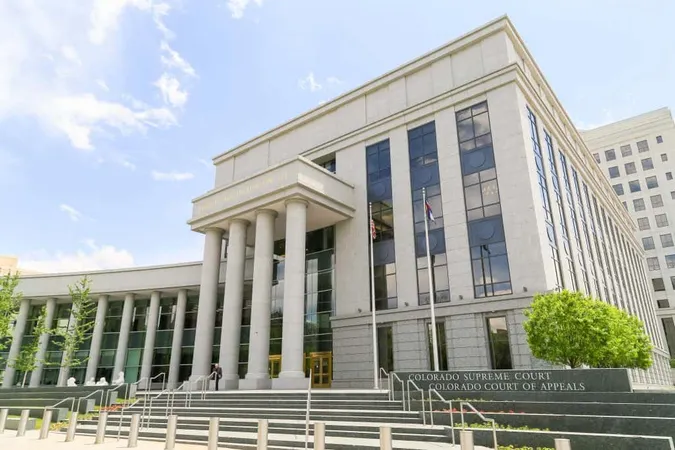
Colorado Bar Exam: Your Guide to CO Bar Test Success

Colorado Bar Exam Dates: Complete Schedule, Deadlines & Prep Guide

Colorado Bar Pass Score: Complete Guide to Scoring Requirements & What It Takes to Pass

Colorado Bar Exam Results: What to Expect, How to Read Them & What Comes Next
CO Bar Practice Test PDF (Free Printable 2026)
How this page was made: written with AI tools and published by Nathan Beja, founder of Practice Test Geeks, who is responsible for its content. Exam facts are checked against the official sources listed below. Not reviewed by a subject-matter expert. Editorial policy
Sources & references
Exam facts on this page (fees, format, dates, passing scores) are checked against these official sources; the date is our last check. Editorial policy
- coloradolegaladmissions.com — Fees, late registration, registration deadline, registration, retake fee, score validity, test delivery, exam format, passing score, retake policy · verified Oct 2026
- ncbex.org — Fees, passing score · verified Oct 2026