
Colorado Bar Pass Score: Complete Guide to Scoring Requirements & What It Takes to Pass
Colorado bar pass score explained: UBE scaled scores, MBE minimums, transfer rules & study tips. Know exactly what you need to pass. 🎯
The colorado bar pass score is 266 on the Uniform Bar Examination (UBE), placing Colorado in the mid-range among UBE-adopting states. Understanding this number — and exactly how it is calculated — is the single most important piece of information you need before sitting for the exam. Whether you are a first-time taker mapping out your study plan or a re-sitter recalibrating your approach, knowing the target score changes how you allocate your preparation time across the Multistate Bar Examination (MBE), the Multistate Essay Examination (MEE), and the Multistate Performance Test (MPT).
Colorado adopted the UBE in 2011, joining a growing coalition of states that use a standardized, portable score. The 266 passing threshold has remained consistent since adoption, giving candidates a stable benchmark to work toward. Unlike some jurisdictions that have recently raised their passing scores in response to concerns about minimum competency, Colorado has maintained 266 — a score that translates to roughly 131 correct MBE answers out of 200 questions when combined with strong written component performance.
The UBE is a 400-point exam, meaning a 266 represents about 66.5 percent of the total possible points. This might sound approachable, but the combination of a two-day testing format, time pressure, and the breadth of subjects tested makes it genuinely challenging. Colorado's first-time pass rate typically hovers around 70 to 75 percent for ABA-accredited law school graduates, while the overall pass rate — which includes repeat takers — generally lands in the 54 to 58 percent range depending on the exam cycle.
One of the most significant advantages of a UBE score is portability. If you score 266 on the Colorado bar exam and later decide to practice in another UBE state, you can transfer that score without retaking the exam — provided the receiving state accepts your score and the score is within the transfer window (typically five years). States like New York require 266, while others such as Alaska require 280. Knowing the Colorado threshold also helps you plan if you intend to transfer your score elsewhere.
The exam is divided across two days. Day one includes the MEE and MPT, which together account for 50 percent of your total UBE score. Day two is the MBE, which accounts for the other 50 percent. Both components are scored on a scaled basis, meaning raw points are converted to account for exam-to-exam difficulty variation. This scaling process is administered by the National Conference of Bar Examiners (NCBE) and ensures that a 266 in February means the same thing as a 266 in July.
Preparation strategy must account for this 50/50 split. Many candidates over-index on MBE multiple-choice practice because it feels more measurable, while underinvesting in the written components that carry equal weight. A balanced approach — one that treats MEE essays and MPT tasks as seriously as MBE drilling — consistently produces better outcomes. For additional context on the full exam structure and what to expect on test day, review our guide on the colorado bar passing score requirements and exam overview.
This article walks through every dimension of the scoring system: how each component is weighted, how raw scores are converted to scaled scores, what happens when you fall short, how transfer scores are evaluated, and what study strategies are most effective for hitting 266. By the time you finish reading, you will have a complete picture of what the Colorado bar passing score means in practice and exactly what you need to do to reach it.
Colorado Bar Exam by the Numbers
Colorado Bar Exam Format & Scoring Structure
| Section | Questions | Time | Weight | Notes |
|---|---|---|---|---|
| Multistate Essay Examination (MEE) | 6 | 3 hours | 30% | Day 1 morning; 30 min per essay |
| Multistate Performance Test (MPT) | 2 | 3 hours (90 min each) | 20% | Day 1 afternoon; practical lawyering tasks |
| Multistate Bar Examination (MBE) | 200 | 6 hours (3 hr each session) | 50% | Day 2; 175 scored + 25 unscored pretest |
| Total | 209 | 2 Days (approx. 12 hours of testing) | 100% |
The Colorado bar exam uses a scaled scoring methodology designed to produce a total UBE score on a 400-point scale. Reaching a scaled score of 266 or higher means you pass. The key word here is scaled — the raw points you earn on each component are converted through a statistical process before they are combined into your final total. This conversion exists to ensure fairness across different exam administrations, accounting for slight differences in difficulty from one testing cycle to the next.
On the MBE, you answer 200 multiple-choice questions across two three-hour sessions. Of those 200, 175 are operational (scored) questions and 25 are unscored pretest items included for future exam development purposes. You will not know which questions are unscored, so you must treat every question as if it counts. Your raw MBE score — the number of operational questions you answer correctly — is then converted to a scaled MBE score using a process called equating, administered by the NCBE.
The MBE scaled score is reported on a scale that has historically ranged from roughly 60 to 160, with a national mean typically landing near 135 to 138 depending on the administration. Your MBE scaled score is then multiplied and weighted to contribute 50 percent of your total UBE score. To earn a 266 UBE score, candidates typically need an MBE scaled score of approximately 133 to 136, combined with solid MEE and MPT performance. A very strong MBE score can compensate for weaker written performance, and vice versa.
The MEE consists of six 30-minute essay questions drawn from a rotating pool of subjects including Contracts, Torts, Constitutional Law, Civil Procedure, Evidence, Real Property, Criminal Law, Family Law, Agency and Partnership, Corporations, Conflicts of Law, Secured Transactions, Trusts and Estates, and Negotiable Instruments. Each MEE essay is graded by Colorado-trained graders using NCBE model answers as a reference. Raw MEE scores are scaled and combined with MPT scores to form the written component, which makes up 50 percent of the UBE total.
The MPT presents two 90-minute tasks requiring you to complete a realistic lawyering assignment — drafting a memo, a brief, a client letter, a contract clause, or another document — using a closed universe of provided materials. You do not need outside legal knowledge for the MPT; the task tests your ability to read, organize, and apply the law contained in the file. MPT scores are graded by the same pool of Colorado graders and are scaled into the written component alongside MEE scores.
Colorado weights the written component at 50 percent of the total UBE score, broken down as 30 percent MEE and 20 percent MPT. This weighting means that a candidate who scores in the 75th percentile nationally on the MBE but performs poorly on essays can still fail — and conversely, a candidate with exceptional written skills can compensate for a below-average MBE performance. The best preparation strategies optimize for both halves of the exam rather than treating one as primary and the other as secondary.
Score reporting in Colorado follows a standard NCBE timeline. After the July exam, results are typically released in mid-October. After the February exam, results arrive in mid-April. The Colorado Supreme Court Office of Attorney Registration posts results online, and candidates also receive a score report showing their total UBE score, their MBE scaled score, and their written scaled score. If you fall short of 266, this breakdown is invaluable for identifying where to focus remediation before your next attempt.
Scoring by Component: MBE, MEE & MPT Breakdown
The Multistate Bar Examination is the backbone of your UBE score, contributing 50 percent of your total. You must answer 200 questions across two three-hour sessions, but only 175 count toward your score — the remaining 25 are unscored pretests. Historically, candidates need to answer roughly 130 to 135 of those 175 operational questions correctly to reach a scaled MBE score strong enough to support a 266 UBE total. The NCBE equating process adjusts for difficulty, so your scaled score reflects true ability rather than lucky or unlucky question selection.
To hit that target, most successful candidates aim for at least 65 to 68 percent accuracy on practice MBE sets before exam day. This requires drilling all seven MBE subject areas: Civil Procedure, Constitutional Law, Contracts, Criminal Law and Procedure, Evidence, Real Property, and Torts. Evidence and Contracts tend to be the highest-yield subjects by question count. Practicing in timed, mixed-subject sessions — not just subject-by-subject — replicates the mental stamina required on exam day and is consistently associated with higher scaled scores.
UBE in Colorado: Advantages and Challenges of the Scoring System
- +Score is portable — transfer a 266 to other UBE states without retaking the full exam
- +Clear, single numeric target (266) makes preparation goal-setting straightforward
- +Scaled scoring ensures fairness across July and February administrations
- +Score breakdown report identifies weak components for targeted re-examination prep
- +Five-year transfer window gives flexibility for candidates planning multi-state careers
- +Colorado's 266 threshold is accessible compared to higher-requirement states like Alaska (280)
- −Two-day format requires sustained mental performance over a long testing window
- −Written component (50%) is subjectively graded and harder to predict than multiple choice
- −MBE equating process is opaque — you cannot know your exact raw-to-scaled conversion
- −Score release takes 8 to 10 weeks, creating a lengthy period of uncertainty after testing
- −Overall pass rate near 54% means nearly half of all takers fall short each cycle
- −Transfer scores from other UBE states must still meet Colorado's 266 threshold to be accepted
Colorado Bar Pass Score Prep Checklist: 10 Steps to Hit 266
- ✓Calculate your target MBE scaled score (aim for 133+) and set a weekly accuracy benchmark.
- ✓Complete at least 1,500 to 2,000 MBE practice questions across all seven tested subjects.
- ✓Write a minimum of two full MEE essays per week under timed, exam-day conditions.
- ✓Practice both MPT task formats (objective memo and persuasive brief) using NCBE-released tasks.
- ✓Review your score breakdown from any prior attempt and allocate extra time to your lowest component.
- ✓Take at least two full simulated exam days (MEE/MPT morning, MBE afternoon) before sitting.
- ✓Study MEE subjects in priority order by frequency: Contracts, Evidence, Real Property, Torts.
- ✓Use released NCBE past exams for all essay and MPT practice — third-party questions vary in quality.
- ✓Track your MBE accuracy by subject weekly and reallocate study hours when accuracy drops below 60%.
- ✓Confirm your Colorado Supreme Court score report account is set up at least two weeks before results.
A 1-point MBE scaled score increase equals roughly the same UBE boost as a 1-point written scaled score increase — never neglect either half.
Because the MBE and written components each contribute exactly 50 percent of your UBE score, improvements on either side translate directly into total score gains. Candidates who focus exclusively on MBE drilling while ignoring essay practice consistently leave 10 to 20 UBE points on the table. The most efficient path to 266 is always a balanced preparation strategy that treats both halves of the exam as equally important from day one of your study schedule.
One of the most misunderstood aspects of the Colorado bar exam is the score transfer system enabled by the UBE. If you earned a UBE score of 266 or higher in a different UBE state, you may be eligible to transfer that score to Colorado rather than sitting for the exam again.
Colorado accepts transferred UBE scores that meet the 266 threshold, provided the score was earned within the past five years and in a jurisdiction that administered a standard UBE administration. This portability is one of the strongest arguments for the UBE format and is particularly valuable for candidates who passed the bar in one state and later relocated to Colorado.
To apply for score transfer in Colorado, you must submit an application to the Colorado Supreme Court Office of Attorney Registration, pay the applicable transfer fee, and provide official score verification from the NCBE. The process is generally straightforward if your score meets the threshold, but it is important to confirm that the administering jurisdiction used the standard UBE format — not a modified version — since some states made alterations to the UBE in early years of adoption that the NCBE does not recognize as portable.
The five-year transfer window is calculated from the date of the exam administration, not from when you first applied for transfer. If your UBE score is approaching the end of its transfer window and you have not yet applied to Colorado, prioritize filing your application immediately. Scores that expire during the review process are generally not grandfathered in, meaning a delay in filing could result in having to retake the exam even though your score was valid when you first inquired.
Candidates sometimes ask whether Colorado will accept a UBE score above 266 earned in a state with a higher passing threshold — for example, a score of 280 earned in Alaska. The answer is yes: Colorado cares only that the score meets or exceeds 266 and was earned within the transfer window. There is no bonus for exceeding the threshold, but a higher score does provide a wider safety margin if any scoring irregularities arise during the transfer review process.
Colorado also has a diploma privilege pathway for graduates of in-state law schools meeting certain criteria, and a limited license legal technician program under ongoing review. However, neither of these pathways produces a UBE score, and neither satisfies the admission requirements for full attorney licensure through reciprocity with other states. If multi-state practice is your goal, earning a full UBE score of 266 or higher remains the most efficient path to broad admission flexibility.
For candidates who passed the bar in a non-UBE state, Colorado offers admission by motion (reciprocity) for experienced attorneys who have been actively practicing for a specified period. Admission by motion does not require taking the bar exam but does require meeting experience and character requirements set by the Colorado Supreme Court. The specific requirements and any applicable fees are outlined on the Office of Attorney Registration website and should be reviewed carefully if you are considering this route instead of a UBE score transfer.
Understanding the full landscape of score transfer rules also helps you choose your initial testing state strategically. If you are a law student deciding between taking the bar in Colorado or in another UBE jurisdiction first, consider that a score of 266 passes in Colorado and transfers to most other UBE states, while a score of 280 or higher would open additional high-threshold states like Alaska and Washington. Testing in Colorado and achieving a score above your immediate needs can maximize long-term flexibility without requiring you to sit in a more demanding jurisdiction from the start.
UBE scores are only transferable for five years from the date of the exam administration. If you earned a qualifying UBE score in another state and are considering practicing in Colorado, submit your transfer application well before that window closes — delays in processing do not extend the validity period of your score, and an expired score means retaking the full exam.
Building an effective study schedule to reach a colorado bar pass score of 266 requires honest self-assessment, a realistic time budget, and disciplined weekly execution. Most full-time bar prep candidates spend eight to ten weeks of dedicated study before the exam, averaging 40 to 50 hours per week for a total of 350 to 450 study hours. Part-time candidates who are working during bar prep typically need 12 to 16 weeks to cover the same ground, though the total hours are similar. The duration of your preparation is less important than the quality and consistency of your daily practice.
The first two to three weeks of bar prep should focus primarily on content acquisition — learning or refreshing the black-letter rules for each MBE subject and the most commonly tested MEE topics. During this phase, passive reading of outlines is less effective than active recall techniques such as flashcards, self-quizzing, and brief rule summaries written in your own words. The goal is not to memorize every nuance of every subject but to build a reliable mental framework for each area of law that you can activate quickly under exam conditions.
Weeks three through six should shift toward application. This is when you begin drilling MBE questions in timed sets, writing full MEE essays, and completing MPT practice tasks. Your MBE practice should initially be subject-specific to identify weak areas, then transition to mixed-subject timed sessions replicating the actual exam format. Tracking your accuracy by subject each week allows you to identify deteriorating performance and redirect study hours before patterns become entrenched habits that cost you points on exam day.
In the final two to three weeks before the exam, shift into simulation and consolidation mode. Complete at least two full simulated exam days — a three-hour MEE session in the morning followed by a three-hour MPT session in the afternoon, then a full six-hour MBE the next day. These simulations build the stamina and pacing discipline that no amount of subject-specific drilling can replicate. Review your simulated exam results carefully, focusing on patterns in your errors rather than individual missed questions, which may reflect topic gaps or time management issues that are correctable before exam day.
Nutrition, sleep, and physical activity play a measurable role in cognitive performance during bar prep. Candidates who maintain a consistent sleep schedule of seven to eight hours per night during the study period consistently report better retention and lower anxiety than those who sacrifice sleep for additional study hours. Exercise — even 20 to 30 minutes of moderate aerobic activity three to four times per week — has been shown in multiple studies to improve memory consolidation and reduce cortisol levels. These are not soft recommendations; they are evidence-based performance optimizers that successful bar candidates regularly credit in post-exam reflections.
Practice test resources play a critical role in preparation, and quality matters more than quantity. The NCBE releases official past MBE questions, MEE prompts with model answers, and MPT tasks with grading guidance. These released materials are the gold standard for preparation and should form the core of your practice. Supplement with high-quality third-party question banks that clearly identify NCBE-aligned content, and be cautious about question banks that contain poorly written distractors or answer explanations that conflict with current black-letter law in tested subjects.
Commercial bar prep courses offer structured curricula, lecture content, and pre-built study schedules that work well for candidates who benefit from external organization and accountability. Self-directed study is equally viable for disciplined candidates who are comfortable building and executing their own schedules. Whichever approach you choose, the most important variable is consistency: candidates who study the same number of hours per day seven days a week dramatically outperform those who cram long sessions after days of minimal preparation. The bar exam rewards steady, sustained effort above all other preparation strategies.
On exam day itself, your score is determined not only by what you know but by how effectively you execute under pressure. Time management is the most commonly cited factor in unexpected failures among well-prepared candidates. On the MBE, you have 1.8 minutes per question across each three-hour session. Candidates who slow down on difficult questions and fall behind pace often rush through easier questions later, making careless errors on material they know well. Train yourself to flag difficult questions, move forward, and return to flagged items with remaining time rather than dwelling on any single question.
For the MEE, the 30-minute-per-essay constraint means you cannot afford a lengthy outlining phase. A two-to-three-minute outline identifying the major issues, the controlling rules, and the key facts to apply is sufficient. The bulk of your time — 24 to 25 minutes — should go to writing a clear, organized response.
Graders reward candidates who state the rule accurately, apply it to the specific facts given, and reach a clear conclusion. They do not reward length for its own sake, and padding a response with tangential rules that do not apply to the facts signals issue-spotting weakness rather than depth of knowledge.
MPT time management follows a similar discipline. The first 10 to 15 minutes should be spent reading the task memo carefully to understand exactly what you are being asked to produce, then skimming the library materials to identify which sources are most relevant. Many candidates make the mistake of reading every library document exhaustively before beginning to write, which leaves insufficient time for the drafting itself. A better approach is to identify the two or three most controlling authorities first, begin drafting your work product using those sources, and refer back to additional library materials as needed while writing.
Mental pacing across the two-day exam is often overlooked in pre-exam preparation. After completing the MEE and MPT on day one, many candidates feel exhausted and anxious about their essay performance. Allowing post-day-one rumination to undermine your confidence going into the MBE on day two is one of the most common causes of underperformance on the MBE among candidates who were otherwise well-prepared. Develop a transition routine — exercise, a good meal, limited social contact, and early sleep — that helps you mentally reset between exam days.
Re-examination candidates face a unique psychological challenge: they already know the anxiety of waiting for results and the disappointment of a score below 266. The most effective re-examination strategy starts with a careful analysis of the score report from the failed attempt. The report breaks your score into MBE scaled score and written scaled score components.
If your MBE was strong but your written score pulled the total below 266, your re-examination prep should weight MEE and MPT practice significantly more heavily than MBE drilling. Doing the same preparation you did before and expecting a different result is the most common re-examination mistake.
Colorado allows unlimited retakes of the bar exam with no waiting period beyond the next available administration date. There are two administrations per year — typically in February and July. If you fail in July, you can sit again in February. There is no cap on the number of attempts, though the character and fitness review process may examine patterns of repeated failure as part of the overall evaluation. Most re-examination candidates pass on their second or third attempt when they correctly identify and address the specific component that caused their initial failure.
Finally, do not underestimate the logistical preparation required in the days before the exam. Confirm your testing center location, review the ID requirements, familiarize yourself with permitted and prohibited items, and plan your travel to ensure you arrive early without rushing. Testing centers typically open for check-in 30 minutes before the examination begins, and late arrivals may not be admitted. A logistical failure on exam day can cost you months of hard work — treat the administrative preparation with the same rigor you bring to your substantive study.
CO Bar Questions and Answers
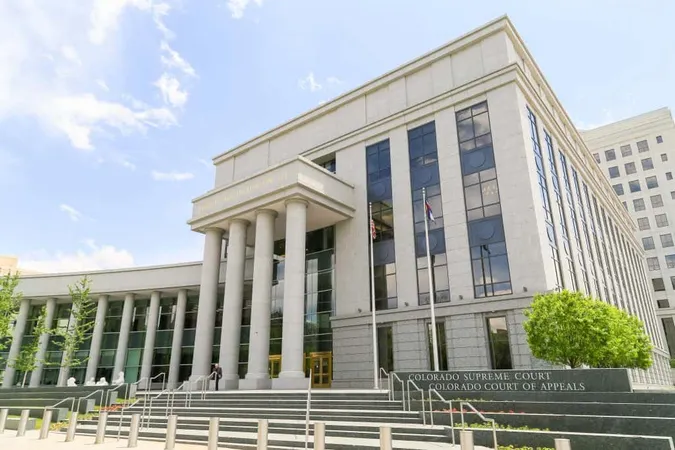
Colorado Bar Exam: Your Guide to CO Bar Test Success

Colorado Bar Exam Results: What to Expect, How to Read Them & What Comes Next

Colorado Bar Exam Dates: Complete Schedule, Deadlines & Prep Guide
CO Bar Practice Test PDF (Free Printable 2026)

Colorado Bar Swearing-In Ceremony: What to Expect After Passing the CO Bar
About the Author

Educational Psychologist & Academic Test Preparation Expert
Columbia University Teachers CollegeDr. Lisa Patel holds a Doctorate in Education from Columbia University Teachers College and has spent 17 years researching standardized test design and academic assessment. She has developed preparation programs for SAT, ACT, GRE, LSAT, UCAT, and numerous professional licensing exams, helping students of all backgrounds achieve their target scores.