
Swift CNG: Everything You Need to Know About Compressed Natural Gas for US Fleets and Drivers
Learn everything about swift CNG — benefits, fleet operations, costs, and careers. Your complete US guide. 💡

Swift CNG is rapidly becoming one of the most talked-about fuel alternatives for US fleets and commercial drivers. Compressed natural gas offers a cleaner, more cost-effective path forward compared to traditional diesel and gasoline, and fleet managers across the country are taking notice. Whether you are a driver curious about how CNG vehicles work, a fleet operator evaluating fuel costs, or a professional preparing for a CNG certification exam, understanding the fundamentals of swift cng is the essential first step toward making informed decisions.
The United States has seen a dramatic expansion in CNG infrastructure over the past decade. According to the Alternative Fuels Station Locator maintained by the Department of Energy, there are now more than 1,800 public CNG fueling stations operating across all 50 states. This growth reflects a broader national shift toward domestically produced, lower-emission fuels that reduce dependence on imported petroleum. For fleet operators running high-mileage routes, the economics of CNG are increasingly compelling compared to diesel alternatives.
CNG vehicles operate on methane stored at very high pressure — typically around 3,600 pounds per square inch — in specially designed cylinders. When the driver demands power, this compressed gas flows through a regulator that steps the pressure down before the fuel enters the engine. Modern CNG engines are electronically controlled and virtually identical in performance to their gasoline or diesel counterparts, with the primary difference being that combustion produces significantly fewer harmful pollutants including particulate matter and nitrogen oxides.
For professional drivers and fleet personnel, understanding CNG goes well beyond simply knowing how to fuel up. It encompasses knowledge of safety protocols, vehicle inspection procedures, emergency response guidelines, and the regulatory framework that governs CNG operations in commercial settings. The Federal Motor Carrier Safety Administration and the National Fire Protection Association both publish standards that fleet managers and drivers must understand and comply with on a daily basis throughout their professional careers.
One of the most compelling reasons fleets are switching to CNG is the fuel cost advantage. Historically, CNG has sold at a significant discount relative to diesel on a diesel-gallon-equivalent basis. Many fleet operators report savings of 30 to 50 cents per gallon equivalent, which translates into tens of thousands of dollars annually for high-mileage operations. Waste haulers, transit agencies, school districts, and long-haul carriers have all documented substantial return on investment after transitioning portions of their fleets to compressed natural gas.
Beyond fuel savings, CNG vehicles often benefit from reduced engine maintenance intervals. Natural gas burns more cleanly than diesel, producing less carbon buildup in the combustion chamber and on valve surfaces. Fleet managers frequently report extended oil change intervals and longer engine life compared to equivalent diesel powertrains. While the upfront cost of a CNG vehicle or a retrofit conversion is higher, the total cost of ownership over a typical five-to-ten-year fleet lifecycle often favors CNG when fuel and maintenance savings are properly accounted for in the financial model.
This comprehensive guide covers everything you need to know about CNG — from the environmental and economic benefits backed by real data, to fleet management best practices, safety regulations, career opportunities, and preparation strategies for CNG certification examinations. Whether you are brand new to compressed natural gas or looking to deepen your expertise, you will find actionable information and practical insights throughout each section below.
Swift CNG by the Numbers

Core Pillars of CNG Fleet Operations
Understanding the difference between fast-fill and time-fill CNG stations is critical for fleet planning. Fast-fill compressors deliver fuel in minutes at retail speed, while time-fill systems fill vehicles overnight at lower pressure, making them ideal for return-to-base fleets with predictable schedules.
CNG vehicles require specialized pre-trip inspections that cover cylinder condition, valve integrity, fuel line connections, and pressure gauge readings. Drivers must be trained to identify signs of fuel leaks using sight, sound, and approved gas detection equipment before operating any CNG-powered vehicle.
Fleet personnel must know emergency shutdown procedures, ventilation requirements for enclosed spaces, and how to respond to a CNG fuel leak or cylinder fire. NFPA 52 and OSHA standards govern workplace safety requirements for CNG vehicles and fueling stations across all US states.
CNG fleet operators must navigate overlapping federal and state regulations including EPA emission standards, DOT cylinder recertification schedules, and state-level alternative fuel incentive programs. Staying current on compliance requirements protects both the fleet operation and individual driver certification status.
Technicians servicing CNG vehicles need specialized training in high-pressure systems, fuel system diagnostics, and cylinder inspection procedures. Many states require specific certifications for CNG vehicle maintenance, and fleet managers must verify technician credentials before authorizing service work.
Understanding how compressed natural gas actually works inside a vehicle engine is fundamental knowledge for anyone operating or managing CNG-powered equipment. The fuel cycle begins at the storage cylinder, where methane is held at pressures between 3,000 and 3,600 PSI depending on the cylinder type and vehicle application. A high-pressure regulator mounted in the engine compartment steps this pressure down in two stages before the gas reaches the fuel injectors. The entire system is monitored by the vehicle's engine control module, which adjusts fuel delivery in real time based on driver demand, engine temperature, and altitude.
One area where CNG vehicles differ significantly from diesel counterparts is in cold-weather starting performance. Natural gas has a higher octane rating than gasoline — approximately 120 to 130 compared to 87 to 91 for pump gasoline — which allows CNG engines to run at higher compression ratios and achieve excellent thermal efficiency. However, at very low temperatures, the pressure inside CNG cylinders can drop, temporarily reducing the amount of fuel available for starting. Fleet operators in cold climates must account for this characteristic when planning routes and overnight parking locations during winter months.
The environmental case for CNG is supported by extensive data from the Environmental Protection Agency and independent research institutions. On a well-to-wheel basis — meaning the total emissions from extracting, transporting, and burning the fuel — CNG produces approximately 23 percent less carbon dioxide than gasoline and up to 30 percent less than diesel. Methane emissions during extraction and distribution remain a legitimate concern, but ongoing improvements in natural gas infrastructure have substantially reduced fugitive emissions over the past decade, strengthening the environmental argument for fleet CNG adoption.
For waste hauling fleets, transit agencies, and school bus operations, the air quality benefits of CNG are particularly significant. These vehicles operate in densely populated urban areas where diesel particulate emissions contribute to respiratory health problems. CNG combustion produces virtually zero particulate matter and dramatically lower levels of nitrogen oxides compared to even the most modern diesel engines equipped with selective catalytic reduction systems. Cities including Los Angeles, Houston, and New York have documented measurable air quality improvements in neighborhoods served by CNG transit and waste fleets.
Fleet managers evaluating a switch to CNG must conduct a thorough total cost of ownership analysis that accounts for vehicle purchase price premium, fueling station installation costs, ongoing maintenance expenses, and projected fuel savings over the fleet lifecycle.
A typical Class 8 CNG truck costs approximately $30,000 to $40,000 more than an equivalent diesel model, but fleets operating 100,000 or more miles per year can often recover this premium within three to five years through fuel and maintenance savings alone. Federal tax incentives including the Alternative Fuel Vehicle Refueling Property Credit can further improve the financial case for CNG infrastructure investment.
Driver training is a non-negotiable component of any successful CNG fleet deployment. Drivers who are familiar with diesel operations need to learn new fueling procedures, understand how to read CNG pressure gauges and low-fuel indicators, and know how to respond appropriately if the low-fuel warning activates while on a route. Most CNG engine manufacturers and fleet operators recommend that drivers maintain a minimum of 25 percent tank capacity as a buffer to ensure they can always reach a fueling station without running out of compressed gas mid-route.
The long-term outlook for CNG in the US fleet market remains positive despite growing interest in battery electric vehicles. For applications involving heavy payloads, long range requirements, and return-to-base operations, CNG offers a mature, proven technology with an established supply chain and service network. Renewable natural gas — biomethane produced from landfills, wastewater treatment plants, and agricultural waste — is increasingly available at CNG stations, offering fleets the ability to achieve carbon-neutral or even carbon-negative fuel status while using the same vehicles and infrastructure they already operate.
CNG Fleet Management and Driver Operations
Effective CNG fleet planning starts with a detailed route analysis to determine whether your operations are compatible with available fueling infrastructure. Fleets operating from a central depot are ideal candidates for time-fill stations, which allow vehicles to fuel slowly overnight at lower cost. High-pressure fast-fill stations are better suited for on-the-road fueling stops or fleets with unpredictable daily mileage that cannot guarantee a return-to-base every night.
When sizing a CNG fleet, managers should account for range limitations associated with cylinder capacity. Most Class 6 and Class 8 CNG trucks carry enough compressed gas for 300 to 400 miles of operation under typical load conditions, which is sufficient for the vast majority of regional distribution and refuse collection routes in the United States. Detailed mileage mapping using GPS fleet data can identify which existing routes fall comfortably within CNG range before any vehicle purchase commitments are made.

CNG vs. Diesel: Honest Comparison for Fleet Decision Makers
- +Fuel costs typically 30 to 50 cents per gallon equivalent lower than diesel, yielding significant annual savings on high-mileage operations
- +Dramatically lower particulate matter and NOx emissions improve local air quality in urban operating areas
- +Extended engine oil change intervals due to cleaner combustion reduce maintenance frequency and downtime
- +Domestically produced from US natural gas reserves, reducing exposure to volatile global oil price swings
- +Renewable natural gas options available at many stations, enabling carbon-neutral or carbon-negative fleet operations
- +Quieter engine operation reduces noise pollution, a significant benefit for early-morning residential refuse collection routes
- −Higher upfront vehicle purchase cost — typically $30,000 to $40,000 more than equivalent diesel for Class 8 trucks
- −CNG fueling station infrastructure is less widespread than diesel, limiting flexibility for over-the-road and long-haul operations
- −Cylinder inspection and recertification requirements add administrative complexity and periodic replacement costs
- −Reduced payload capacity on some vehicles due to the weight and volume of CNG storage cylinders
- −Cold weather performance can be affected by reduced cylinder pressure at very low temperatures, requiring operational adjustments
- −Technician training and specialized service equipment required, which can be a barrier for smaller fleets without dedicated maintenance facilities
Pros and Cons at a Glance
| Pros | Cons |
|---|---|
| Dramatically lower particulate matter and NOx emissions improve local air quality in urban operating areas | CNG fueling station infrastructure is less widespread than diesel, limiting flexibility for over-the-road and long-haul operations |
| Extended engine oil change intervals due to cleaner combustion reduce maintenance frequency and downtime | Cylinder inspection and recertification requirements add administrative complexity and periodic replacement costs |
| Domestically produced from US natural gas reserves, reducing exposure to volatile global oil price swings | Reduced payload capacity on some vehicles due to the weight and volume of CNG storage cylinders |
| Renewable natural gas options available at many stations, enabling carbon-neutral or carbon-negative fleet operations | Cold weather performance can be affected by reduced cylinder pressure at very low temperatures, requiring operational adjustments |
| Quieter engine operation reduces noise pollution, a significant benefit for early-morning residential refuse collection routes | Technician training and specialized service equipment required, which can be a barrier for smaller fleets without dedicated maintenance facilities |
CNG Daily Operations Compliance Checklist
- ✓Inspect all visible CNG fuel lines and connections for signs of wear, damage, or corrosion before each shift
- ✓Verify CNG cylinder pressure gauge reads within the normal operating range for your vehicle model
- ✓Check all cylinder mounting brackets and securing hardware for tightness and proper condition
- ✓Confirm all manual shutoff valves are in the correct open position before starting the engine
- ✓Verify the fuel system warning light and low-fuel indicator are functioning correctly during pre-trip startup
- ✓Use an approved combustible gas detector to scan the engine compartment and cylinder area for methane leaks
- ✓Check that the CNG fueling receptacle dust cap is properly installed and the nozzle connector is undamaged
- ✓Review the cylinder recertification date to confirm the cylinder is currently within its authorized service life
- ✓Confirm you know the location of the nearest CNG fueling station along your planned route for the day
- ✓Document all pre-trip inspection findings in the vehicle log and report any anomalies to fleet management immediately
Renewable Natural Gas Can Make CNG Vehicles Carbon-Negative
When fueled with renewable natural gas (RNG) derived from landfill gas or agricultural waste, CNG vehicles can achieve a carbon-negative lifecycle emission profile. The EPA's Renewable Fuel Standard allows RNG to generate Renewable Identification Numbers (RINs), which fleet operators can sell to generate additional revenue while demonstrating verified environmental stewardship to customers and regulators.
The economic impact of compressed natural gas adoption extends well beyond individual fleet fuel bills. At the national level, widespread CNG adoption in the commercial vehicle sector has meaningful implications for energy security, trade balances, and domestic job creation. The United States is now the world's largest natural gas producer, extracting more than 34 trillion cubic feet annually from shale formations across the Permian Basin, Marcellus Shale, and other productive regions. Every CNG gallon equivalent sold to a US fleet displaces a corresponding amount of imported petroleum, strengthening the domestic energy position and reducing the current account deficit.
State-level incentive programs have played a significant role in accelerating CNG fleet adoption across the country. California's Low Carbon Fuel Standard, Texas's Alternative Fuels Incentive Program, and similar initiatives in New York, Colorado, and Washington have provided millions of dollars in grants, tax credits, and rebates to fleets making the transition to lower-emission fuels. Fleet managers evaluating CNG should work with their state energy office to identify currently available incentives before finalizing capital expenditure plans, as these programs can meaningfully reduce the payback period for CNG infrastructure investments.
The job creation effects of CNG infrastructure development are substantial and often underappreciated in public policy discussions. Building a medium-sized fleet fueling station employing two to four high-speed compressor units requires skilled tradespeople including electricians, pipefitters, concrete contractors, and instrumentation technicians. Operating and maintaining these stations on an ongoing basis creates permanent local employment. Manufacturing CNG cylinders, pressure regulators, injectors, and fueling equipment supports factory jobs in states including Indiana, Texas, and California where this supply chain is concentrated.
Fleet operators considering CNG should pay close attention to total fueling cost, not just the per-gallon-equivalent price at the pump. On-site time-fill stations for return-to-base fleets typically offer the lowest cost per gasoline gallon equivalent, often in the range of $1.50 to $2.00 depending on the local natural gas commodity price and compression electricity costs. Public fast-fill stations are more convenient but typically price CNG at $2.00 to $2.50 per GGE or higher to cover the capital cost of high-speed compression equipment. Understanding this cost structure helps fleet managers accurately model the economics of different fueling strategies.
Large anchor customers play a particularly important role in CNG market development. When a major waste hauler, transit authority, or school district commits to converting a significant portion of its fleet, it creates the demand signal that justifies private investment in local fueling infrastructure.
This infrastructure then becomes available to smaller fleets in the same area, creating a virtuous cycle of adoption. The Department of Energy's Clean Cities program has documented dozens of these anchor customer success stories across the country, providing useful case studies for fleet managers who want to understand how CNG transitions have worked in practice in comparable operations.
Financing options for CNG fleet transitions have expanded significantly as lenders have become more comfortable with the technology's maturity and residual value. Equipment finance companies, commercial banks, and state green lending programs all offer products designed specifically for CNG vehicle and infrastructure purchases. Some natural gas utilities have created on-bill financing programs that allow fleet customers to repay fueling station installation costs through monthly gas bills, effectively eliminating the need for any upfront capital outlay for the infrastructure portion of a CNG transition project.
The long-term competitive position of CNG in the US commercial vehicle market depends partly on the trajectory of renewable natural gas supply. The RNG industry has grown rapidly since 2015, with production capacity expanding from a few dozen projects to more than 300 operating facilities by 2024. Analysts project continued strong growth as landfill operators, wastewater utilities, and agricultural enterprises increasingly recognize the revenue potential of capturing and upgrading biogas for use as a vehicle fuel. This expanding supply base strengthens the environmental and economic case for CNG fleet investments that will be on the road through the 2030s.

All CNG fuel cylinders have a mandatory service life limit set by the Department of Transportation — typically 15 to 20 years from the date of manufacture stamped on the cylinder. Operating a vehicle with an expired cylinder is a federal violation that can result in significant fines, immediate out-of-service orders, and serious safety hazards. Fleet managers must track cylinder manufacture dates for every vehicle and schedule replacement proactively before expiration.
Preparing for a CNG certification examination requires a structured approach that covers both theoretical knowledge and practical application of fuel system safety principles. Most CNG certification programs administered through the Natural Gas Vehicle Institute, vehicle manufacturers, or state workforce development agencies cover a core curriculum that includes fuel system fundamentals, cylinder inspection procedures, safety regulations, emergency response protocols, and environmental compliance requirements. Understanding the scope of the exam you will be taking is the essential first step in building an effective study plan that allocates your preparation time appropriately across all tested domains.
Multiple-choice questions on CNG certification exams often test situational judgment rather than simple recall of isolated facts. Examiners present realistic scenarios involving vehicle inspections, fueling procedures, or emergency situations and ask candidates to identify the correct course of action. Studying the NFPA 52 Vehicular Gaseous Fuels Standard and the applicable sections of 49 CFR Part 571 Federal Motor Vehicle Safety Standards provides the regulatory foundation needed to answer these scenario-based questions confidently. Candidates who limit their preparation to informal study guides without engaging the primary regulatory sources frequently find exam questions more nuanced than they expected.
Practice tests are one of the most effective preparation tools available to CNG certification candidates. Working through realistic practice questions under timed conditions accomplishes several important goals simultaneously. It familiarizes you with the question formats and phrasing conventions used by actual exam writers, identifies specific knowledge gaps that need additional review before test day, builds the mental stamina needed to maintain concentration through a full-length examination session, and provides confidence-building evidence of your readiness as you see scores improve with each practice attempt.
One area that surprises many CNG certification candidates is the emphasis on regulatory details that might seem overly technical at first glance. Questions about specific pressure ratings for different cylinder types, the required inspection intervals for various components, and the exact labeling requirements for CNG vehicles are all fair game on professional certification exams. The practical importance of these details becomes clear when you recognize that non-compliance with these specific requirements can result in DOT out-of-service violations, insurance coverage issues, and liability exposure in the event of an incident involving a CNG vehicle.
Time management during the examination is a skill that benefits from deliberate practice. Many candidates find that CNG certification exams include a subset of questions that are immediately clear and another subset that require careful reading and analysis. A productive exam strategy involves moving quickly through the straightforward questions to bank time for careful consideration of the more nuanced scenarios. Flagging difficult questions for review rather than spending excessive time on them during the first pass through the exam is a proven approach that maximizes overall score performance under real exam time pressure.
Study groups can be particularly effective for CNG certification preparation when participants come from different operational backgrounds within the CNG industry. A fleet driver, a fueling station technician, and a fleet manager studying together bring different practical experience bases that enrich discussion of the exam material. Explaining concepts to fellow study group members is also one of the most powerful ways to consolidate your own understanding and identify areas where your knowledge is still superficial rather than genuinely deep and reliable under exam conditions.
On the day before your examination, focus on reviewing your notes and practice test results rather than attempting to absorb large amounts of new material. Sleep and physical preparation matter more than last-minute cramming for tests that assess applied knowledge and judgment. Arrive at the testing center early, bring required identification, and remember that the certification you are working toward represents a genuine credential that employers, insurance carriers, and regulators recognize as evidence of professional competence in compressed natural gas vehicle and fueling system operations.
Building long-term proficiency in CNG operations requires more than passing a single certification exam. The most effective CNG professionals continuously update their knowledge as regulations evolve, new vehicle technologies emerge, and the renewable natural gas market matures. Subscribing to publications from the NGV America trade association, following updates from the Department of Energy's Alternative Fuels Data Center, and participating in regional Clean Cities coalition events are all practical ways to stay current with developments that affect day-to-day CNG operations and fleet management decision-making.
Mentorship from experienced CNG fleet managers and technicians is an invaluable resource that is often underutilized by newer professionals entering the industry. Finding a mentor who has navigated a full fleet CNG transition — including the challenges of staff training, infrastructure installation, regulatory compliance, and stakeholder communication — provides practical wisdom that no textbook or certification course can fully replicate. Many regional NGV America member organizations and Clean Cities coalitions can help connect newer professionals with experienced practitioners willing to share their knowledge through informal mentorship relationships.
Documenting your own operational experiences is another powerful development tool for CNG professionals. Keeping a structured log of incidents, near-misses, regulatory questions, maintenance findings, and fueling station issues creates a personal knowledge base that becomes increasingly valuable over time. When a cylinder inspection reveals an unusual condition or a fueling procedure question arises in the field, having documented reference material from your own experience helps you respond more confidently and consistently than relying solely on memory of training materials reviewed months or years earlier.
For fleet managers, building strong relationships with your CNG vehicle and fueling equipment dealers and manufacturers creates important support resources that pay dividends throughout the fleet lifecycle. OEM technical support lines, authorized service networks, and manufacturer training programs provide access to expertise that goes beyond what any internal team can maintain independently. When unusual diagnostic codes appear, when a cylinder approaches its recertification deadline, or when a new regulation creates uncertainty about compliance requirements, having established relationships with knowledgeable vendor partners means you can get authoritative answers quickly rather than navigating these challenges in isolation.
The growing availability of telematics data from modern CNG vehicles opens new opportunities for data-driven fleet management decisions. Real-time fuel level monitoring, cylinder pressure telemetry, and engine diagnostic data transmitted to fleet management software allow dispatchers to proactively manage range anxiety, schedule fueling stops efficiently, and identify vehicles that may be experiencing fuel system anomalies before those issues escalate into roadside breakdowns. Fleets that fully use available telematics capabilities typically report higher CNG utilization rates and lower unplanned maintenance costs than those relying on driver reports alone.
CNG career pathways have expanded significantly as the industry has matured. Beyond the traditional roles of CNG vehicle driver and fleet maintenance technician, growing demand exists for CNG fueling station operations managers, renewable natural gas project developers, alternative fuel program coordinators at state energy offices, and CNG vehicle sales specialists at commercial truck dealerships. Professionals who combine strong CNG technical knowledge with business, regulatory, or engineering expertise are particularly well positioned to advance into senior roles as the industry continues its growth trajectory through the coming decade.
Whether you are just beginning to explore the world of compressed natural gas or actively preparing for a CNG certification exam, the resources and practice tools available through PracticeTestGeeks.com provide a structured, effective path to building the knowledge and confidence you need. Regular practice with realistic exam questions, combined with deep engagement with the regulatory and technical content covered in this guide, will position you to demonstrate genuine CNG competence on your certification exam and in every aspect of your professional work with compressed natural gas vehicles and fueling systems.
Sample Compressed Natural Gas Practice Questions
Try these questions from our free Compressed Natural Gas practice tests. The correct answer and an explanation follow each question.
Which pre-trip inspection item is unique to CNG vehicles that gasoline vehicle drivers do not need to perform?
- A. Visual inspection of CNG cylinders and fuel lines for damage or leaks
- B. Checking tire pressure
- C. Inspecting windshield wipers
- D. Verifying brake fluid level
Answer: A. Visual inspection of CNG cylinders and fuel lines for damage or leaks
CNG drivers must visually inspect high-pressure cylinders and fuel lines for cracks, corrosion, or signs of leakage before each trip.
A driver pulls away from a CNG dispenser with the nozzle still connected to the vehicle. What safety device is specifically designed to mitigate this exact scenario?
- A. The emergency shutdown (ESD) button.
- B. A hose breakaway coupling.
- C. The pressure relief device (PRD) on the storage tanks.
- D. The dispenser's mass flow meter.
Answer: B. A hose breakaway coupling.
A hose breakaway coupling is a safety device installed on the dispenser hose. It is designed to separate at a designated pull force, automatically sealing both the hose and dispenser sides to prevent a large, uncontrolled release of high-pressure natural gas in a drive-away incident.
A fleet data system shows a CNG vehicle's average fuel consumption increased by 15% with no change in route. What is the most likely cause to investigate?
- A. A fuel system leak causing unaccounted gas loss
- B. Improved driver behavior reducing idle time
- C. A faulty odometer reporting shorter distances
- D. Decreased fuel prices reducing cost tracking accuracy
Answer: A. A fuel system leak causing unaccounted gas loss
An unexpected increase in fuel consumption without route changes may indicate a slow leak in the CNG system that is wasting fuel.
A technician needs to perform maintenance that requires depressurizing the low-pressure side of a CNG fuel system. After closing the manual cylinder valves, what is the next critical step in the procedure?
- A. Immediately open the bleed valve at the regulator.
- B. Disconnect the fuel line at the engine.
- C. Start and run the engine until it stalls from lack of fuel.
- D. Use a sniffer to check for leaks around the cylinder valves.
Answer: C. Start and run the engine until it stalls from lack of fuel.
After isolating the high-pressure cylinders by closing their manual valves, the correct procedure to depressurize the lines leading to the engine is to run the engine until it consumes the remaining fuel in the lines and stalls. This safely purges the low-pressure side of the system. Only after the engine has stalled and the ignition is secured should a technician proceed to bleed any minimal remaining pressure.
CNG Questions and Answers

What Is CNG Gas? A Complete Guide to Compressed Natural Gas for US Drivers and Fleets

CNG Jobs: Careers in the Compressed Natural Gas Industry
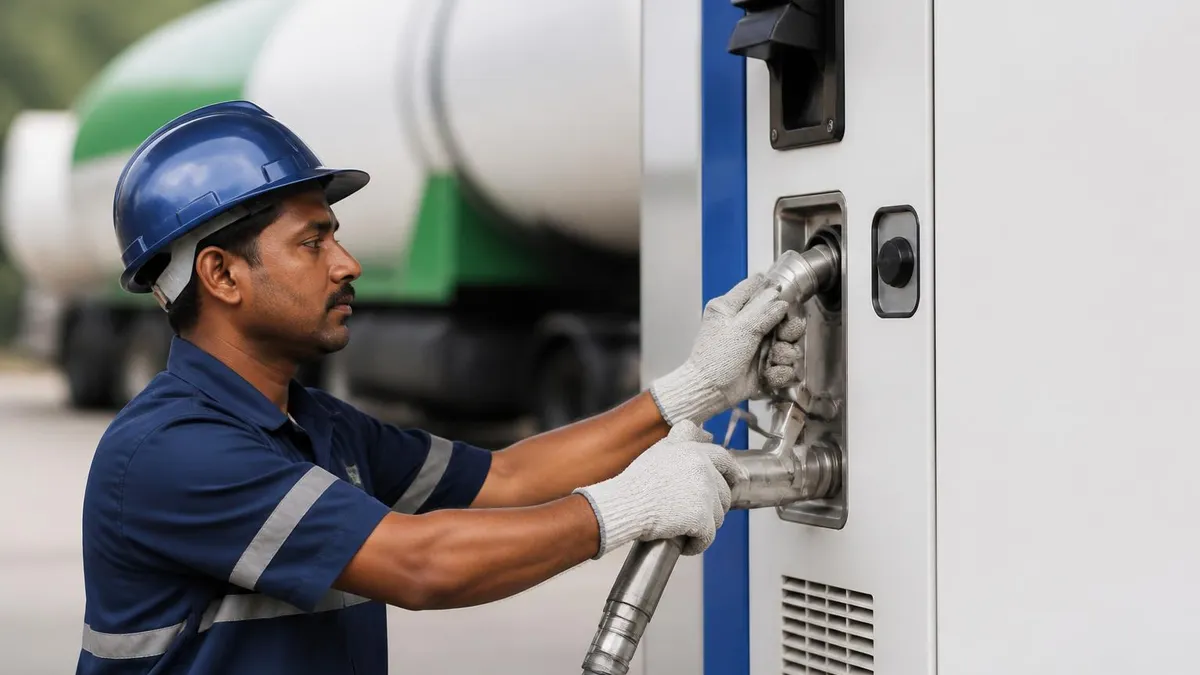
CNG Trucks for Sale: Complete Buyer's Guide to New and Used Compressed Natural Gas Vehicles

CNG Auctions: How to Find, Bid On, and Buy Compressed Natural Gas Vehicles at Auction

CNG Fuel Injectors: How They Work, Types, Maintenance, and What Every Fleet Owner Needs to Know
About the Author

Educational Psychologist & Academic Test Preparation Expert
Columbia University Teachers CollegeDr. Lisa Patel holds a Doctorate in Education from Columbia University Teachers College and has spent 17 years researching standardized test design and academic assessment. She has developed preparation programs for SAT, ACT, GRE, LSAT, UCAT, and numerous professional licensing exams, helping students of all backgrounds achieve their target scores.
Join the Discussion
Connect with other students preparing for this exam. Share tips, ask questions, and get advice from people who have been there.
View discussion (8 replies)