
CNG Meaning: What Compressed Natural Gas Is and Why It Matters 2026 October
Learn the full CNG meaning — what compressed natural gas is, how it works, its benefits, and why fleets across the US are switching to this cleaner fuel. ⏳

The CNG meaning is straightforward: CNG stands for Compressed Natural Gas, a fuel made primarily of methane that has been pressurized to about 3,600 pounds per square inch (PSI) so it can be stored in high-pressure cylinders aboard a vehicle. Unlike liquid fuels that slosh around in a tank, CNG is stored entirely as a gas under extreme pressure, which gives it a very different profile in terms of safety, refueling behavior, and energy density compared to gasoline or diesel.
CNG has been used as a vehicle fuel in the United States since the 1980s, but adoption accelerated dramatically in the 2010s as natural gas prices dropped and environmental regulations tightened. Today, more than 175,000 natural gas vehicles operate on American roads, and roughly 1,000 CNG fueling stations are open to the public across the country. The fuel is especially popular with transit agencies, school bus fleets, refuse trucks, and airport ground support equipment operators.
Understanding what CNG is matters whether you are a fleet manager evaluating alternative fuels, a driver considering a CNG-powered vehicle, a technician pursuing certification, or simply a curious consumer who wants to understand the fuel options beyond gasoline. CNG touches on environmental science, economics, vehicle engineering, and energy policy all at once, making it one of the more complex — and rewarding — topics in the alternative fuel space.
From a chemistry standpoint, natural gas is roughly 90–95 percent methane (CH₄), with small amounts of ethane, propane, and other hydrocarbons mixed in. When burned in an internal combustion engine, methane produces carbon dioxide and water vapor — the same basic combustion products as gasoline, but with significantly lower quantities of particulate matter, nitrogen oxides, and carbon monoxide. That cleaner combustion profile is a central reason why municipalities and fleet operators have embraced CNG over the past two decades.
The compression process itself is what makes CNG practical as a vehicle fuel. Natural gas straight from a pipeline is far too low in energy density to be useful without compression. At 3,600 PSI, however, a CNG cylinder stores enough energy to give most vehicles a driving range comparable to a tank of gasoline, though the physical volume of the cylinders is larger and heavier than a conventional fuel tank, which is one of the main tradeoffs engineers and fleet managers must account for.
If you are looking at cng meaning in the context of commercial vehicles, the economics become especially compelling. CNG typically costs 30–50 percent less per gasoline gallon equivalent (GGE) than diesel, and natural gas prices tend to be more stable than oil-derived fuels because the US produces the vast majority of its natural gas domestically. That price stability is a major budgeting advantage for fleets that operate thousands of vehicles and spend millions of dollars on fuel annually.
This article covers every dimension of the CNG meaning — from the basic chemistry and history of the fuel to how CNG vehicles work, the environmental and economic case for switching, safety considerations, refueling infrastructure, and the certification landscape for technicians and drivers. By the end, you will have a thorough, practical understanding of compressed natural gas and where it fits in the broader American energy picture.
CNG in the US by the Numbers
How CNG Vehicles Work: The Core Components
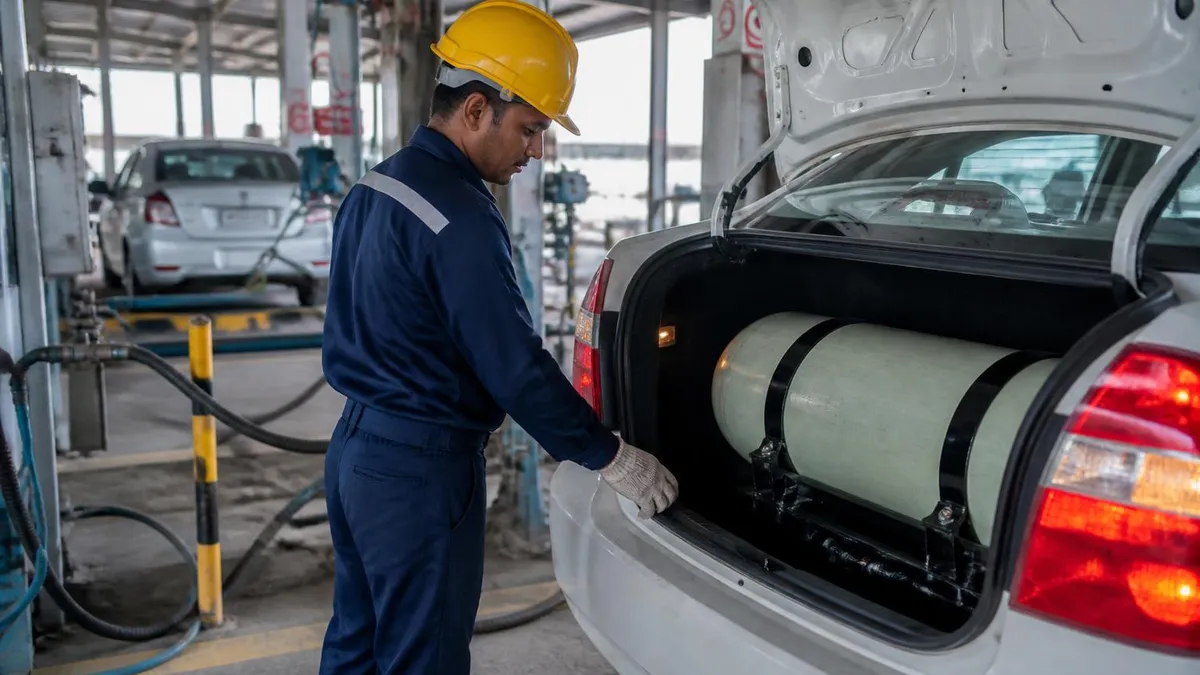
CNG is stored onboard in steel, aluminum, or composite cylinders rated to 3,600 PSI. These cylinders are mounted in dedicated locations — under the frame, in the bed, or on the roof — depending on vehicle type. They undergo rigorous testing and have mandatory replacement schedules.
A multi-stage pressure regulator steps down the 3,600 PSI cylinder pressure to the 3–10 PSI range the engine's fuel system can handle. Without this component, the engine would receive far too much pressure and be destroyed immediately.
Dedicated CNG injectors or a gas mixer delivers the precise air-fuel ratio needed for efficient combustion. Modern dedicated CNG engines use direct injection, while bi-fuel conversions often use a carburetion-style mixer upstream of the throttle body.
The ECU monitors oxygen sensors, throttle position, and engine temperature to optimize fuel delivery in real time. CNG-specific ECU calibrations account for the fuel's higher octane rating (120–130 RON) and different stoichiometric air-fuel ratio compared to gasoline.
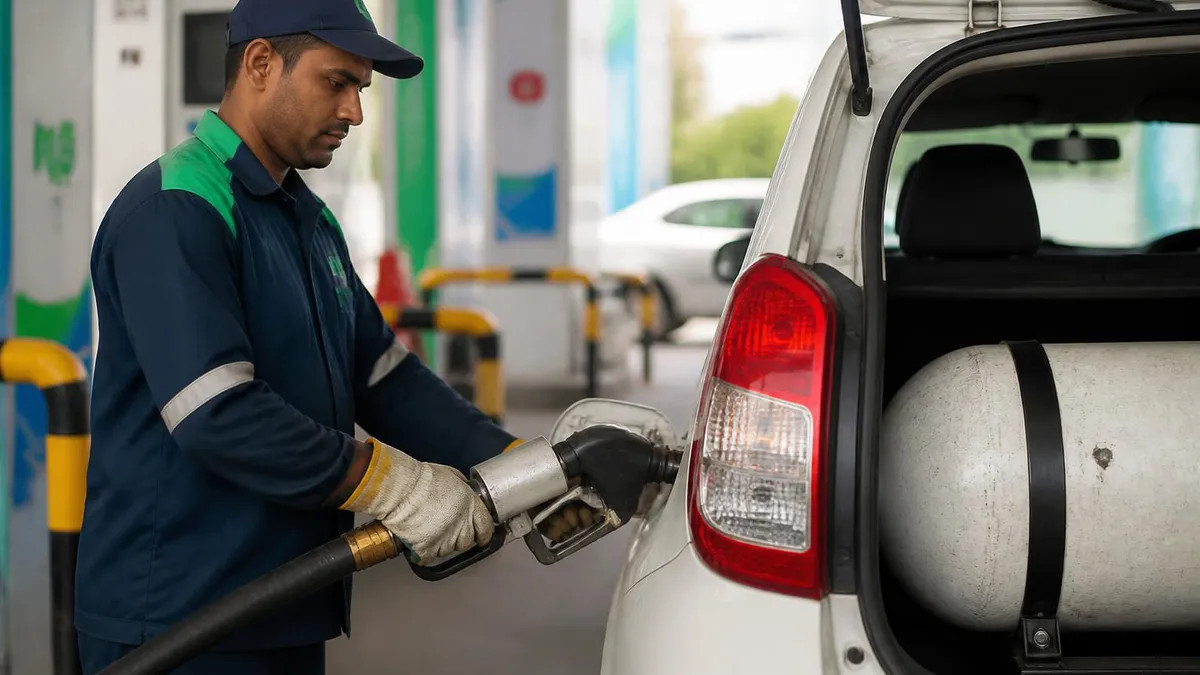
CNG vehicles use a standardized NGV1 or NGV2 nozzle receptacle. The NGV1 fitting is common on light-duty cars; the NGV2 is used on heavy-duty trucks and buses. Both include automatic shut-off features to prevent over-pressurization during refueling.
The environmental benefits of CNG are among the most well-documented in the alternative fuel field, and they represent a major reason why state and federal agencies have invested heavily in incentive programs to encourage adoption. When natural gas burns in a vehicle engine, it produces approximately 20–30 percent less carbon dioxide per mile than gasoline and 15–25 percent less than diesel, depending on vehicle type, engine calibration, and driving cycle. These reductions contribute meaningfully to state and regional greenhouse gas reduction targets.
Beyond CO₂, the particulate matter story is even more striking. Diesel engines — the workhorses of heavy-duty transportation — emit fine particulate matter (PM2.5) that is linked to respiratory illness, cardiovascular disease, and premature death. CNG combustion produces essentially zero particulate matter, which is why public transit agencies operating in dense urban areas have been among the most enthusiastic early adopters of natural gas buses. Replacing a diesel bus with a CNG equivalent removes a significant source of street-level particulate pollution in neighborhoods that have historically borne a disproportionate air quality burden.
Nitrogen oxide (NOx) emissions are another area where CNG performs well. NOx is a precursor to ground-level ozone, which triggers smog formation and exacerbates asthma and other respiratory conditions. CNG vehicles typically emit 60–80 percent less NOx than comparable diesel vehicles, which is why CNG fleets earn credits under air quality programs like California's Low Carbon Fuel Standard and the EPA's SmartWay program. These credits can have real dollar value for fleet operators, adding an economic layer to the environmental benefit.
Methane itself is a potent greenhouse gas — roughly 80 times more warming than CO₂ over a 20-year period — so critics of CNG often point to methane leakage during production, transmission, and refueling as an offsetting negative. This is a legitimate concern, and the industry has worked to reduce so-called fugitive methane emissions through better pipeline monitoring, improved compressor seals, and tighter fueling station standards.
Studies from the Rocky Mountain Institute and the Department of Energy suggest that when full lifecycle emissions are accounted for, CNG vehicles still deliver a net climate benefit over diesel in most heavy-duty applications, though the margin is smaller than tailpipe comparisons alone would suggest.
Renewable natural gas (RNG) — also called biomethane — represents the most compelling long-term environmental case for CNG infrastructure. RNG is captured from landfills, wastewater treatment plants, and agricultural digesters, then cleaned and compressed to vehicle-grade quality. Because the methane captured would otherwise escape into the atmosphere, RNG-fueled vehicles can achieve carbon-negative lifecycle scores — meaning they actually remove more greenhouse gases from the atmosphere than they emit. Several large US fleets, including UPS and Amazon, now run vehicles on 100 percent RNG, dramatically improving their environmental profile without changing a single component on the vehicle itself.
Water consumption is another environmental dimension that often gets overlooked in CNG discussions. Natural gas extraction, particularly from shale formations, requires water for hydraulic fracturing. However, on a per-mile-driven basis, CNG vehicles use less water than gasoline vehicles when the full fuel production cycle is considered, because conventional oil refining is also a water-intensive process. The comparison is nuanced, but CNG does not carry the large water footprint that some critics assume.
For fleet operators weighing CNG against battery electric vehicles, the honest answer is that both technologies have meaningful environmental advantages over diesel, but they serve different use cases well. CNG is particularly well-suited to high-mileage, weight-sensitive applications — heavy refuse trucks, long-haul semi-trucks, transit buses — where battery weight and charging time are still limiting factors. Electric technology is advancing rapidly, but for many heavy-duty fleets today, CNG remains the most practical path to significant emissions reductions at scale.
CNG Economics: Costs, Savings, and Payback Periods
CNG typically costs between $1.50 and $2.50 per gasoline gallon equivalent (GGE) at public stations across the US, compared to diesel prices that have frequently exceeded $4.00–$5.00 per gallon in recent years. For a fleet truck traveling 100,000 miles per year at 6 miles per GGE, this price differential translates to savings of roughly $12,000–$20,000 per vehicle annually — a figure that compounds dramatically across a fleet of dozens or hundreds of vehicles.
Natural gas prices are also substantially less volatile than petroleum prices because the US produces about 95 percent of its natural gas domestically. When oil prices spike due to geopolitical events or OPEC decisions, natural gas prices are largely insulated. Fleet managers who switch to CNG often report that budget predictability — not just the average savings — is one of the most valued outcomes, since it eliminates the financial shock of sudden diesel price spikes that can blow up carefully planned annual operating budgets.

CNG vs. Diesel and Gasoline: Advantages and Drawbacks
- +30–50% lower fuel cost per GGE compared to diesel at current US market prices
- +20–30% lower CO₂ emissions per mile, supporting sustainability and ESG reporting goals
- +Essentially zero particulate matter emissions, improving urban air quality significantly
- +Higher octane rating (120–130 RON) enables higher compression ratios and potentially better thermal efficiency
- +Domestic US supply reduces exposure to global oil price volatility and geopolitical supply shocks
- +Compatible with renewable natural gas (RNG), enabling carbon-negative lifecycle scores for forward-thinking fleets
- −Higher upfront vehicle purchase price — $5,000 to $50,000 premium over equivalent diesel models
- −Reduced cargo or passenger capacity due to large, heavy onboard CNG cylinders
- −Limited public fueling infrastructure — roughly 1,000 stations nationwide vs. 150,000+ diesel locations
- −Cylinders have mandatory replacement schedules (typically 15–20 years), adding a future capital cost
- −Methane is a potent greenhouse gas; fugitive emissions during production and distribution partially offset tailpipe gains
- −Longer refueling time at slow-fill stations (8–12 hours overnight) can disrupt operations if fueling planning is poor
CNG Safety: Key Rules and Best Practices
- ✓Inspect all CNG cylinder mounting hardware and support brackets for corrosion or looseness at each scheduled maintenance interval.
- ✓Check cylinder expiration dates — all CNG cylinders have a stamped manufacture date and must be removed from service at 15–20 years depending on type.
- ✓Never park CNG vehicles in enclosed, below-grade structures without confirmed ventilation rated for natural gas accumulation.
- ✓Ensure all refueling station hoses and nozzles are inspected daily for wear, cracking, or damage before the first vehicle is fueled.
- ✓Train all drivers to recognize the smell of natural gas (odorant added is mercaptan) and establish a clear protocol for suspected leaks.
- ✓Verify that fire suppression systems in CNG maintenance bays are tested and certified on the manufacturer-recommended schedule.
- ✓Keep cylinder valve area clean and dry — moisture accumulation can accelerate corrosion on valve threads and pressure relief devices.
- ✓Confirm that all CNG technicians working on fuel system components hold current certification from an accredited program such as AFVI or ASE.
- ✓Document all cylinder inspections, pressure tests, and service events in a dedicated CNG maintenance log for each vehicle.
- ✓Post visible CNG fuel system identifier placards on all four sides of every CNG vehicle to alert first responders in the event of an accident.
CNG Is Actually Safer Than Gasoline in Many Crash Scenarios
Natural gas is lighter than air, so in the event of a fuel system leak, it disperses upward and dissipates rather than pooling on the ground the way liquid gasoline does. CNG also has a much narrower flammability range (5–15% concentration in air vs. 1.4–7.6% for gasoline vapor), meaning it is harder to accidentally ignite. These physical properties, combined with strong cylinder standards enforced by NGV2 and DOT regulations, make properly maintained CNG vehicles among the safest fuel-carrying vehicles on the road.
The CNG fueling infrastructure landscape in the United States is more developed than many people realize, but it is still heavily concentrated in specific regions and vehicle categories. As of 2025, the Alternative Fuels Station Locator maintained by the Department of Energy lists approximately 950–1,050 public CNG stations, with the highest density in California, Texas, Oklahoma, Utah, and along major Interstate corridors in the Midwest.
California alone accounts for more than 200 public CNG stations, reflecting the state's aggressive clean air mandates and the large natural gas vehicle fleet operated by agencies like LA Metro and the Bay Area Rapid Transit system.
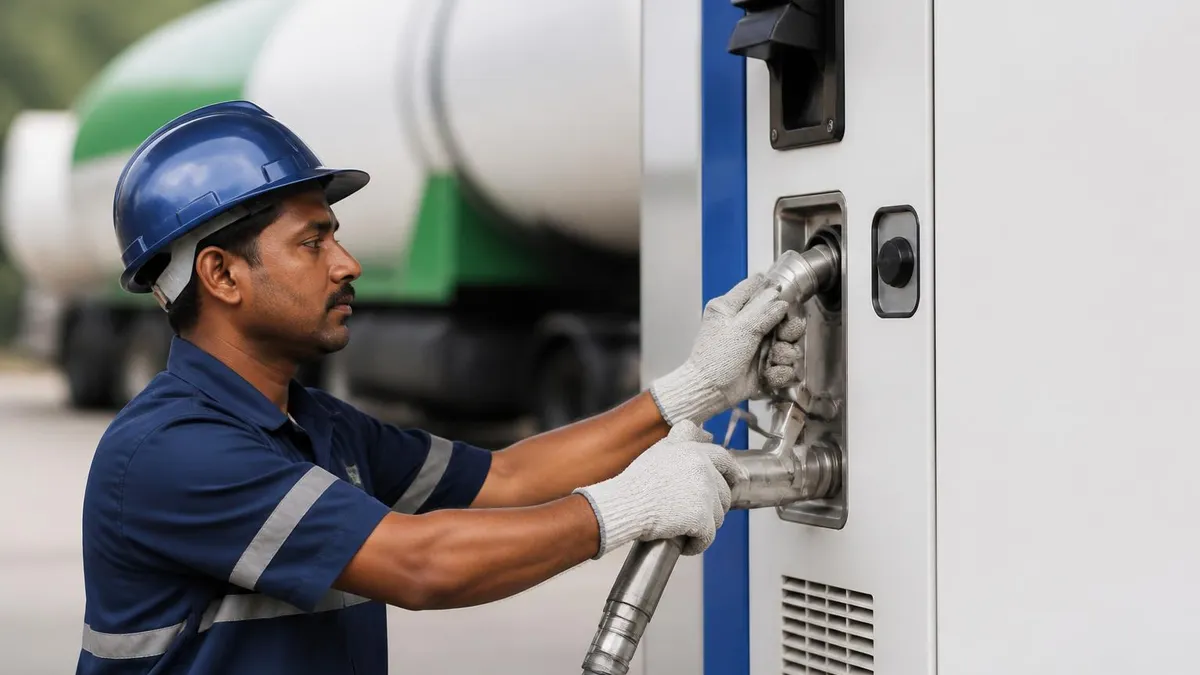
Public CNG stations fall into two broad categories based on fueling speed. Fast-fill stations work much like a conventional gasoline pump — a vehicle pulls up, the nozzle is connected, and the tank fills in 3–5 minutes for a light-duty vehicle or 10–20 minutes for a heavy-duty truck.
Fast-fill stations are preferred for fleet operations where vehicles need to be turned around quickly, and for public access locations where customer wait time matters. The pressure in a fast-fill station's storage cascade is maintained at around 4,500 PSI — higher than the vehicle's 3,600 PSI working pressure — so the pressure differential drives fast gas flow into the onboard cylinders.
Slow-fill stations, also called time-fill stations, are almost always private, installed at fleet depots for overnight fueling. A vehicle parks and is connected to a low-flow dispenser that fills the tank over 6–12 hours using a small compressor drawing directly from the utility gas line.
The hardware cost for a slow-fill station is substantially lower than a fast-fill station — sometimes under $50,000 for a small installation — which is why transit agencies, municipalities, and corporate fleets often choose this approach when vehicles return to a central location each night. The economics of time-fill are excellent because the compressor runs during off-peak hours, often benefiting from lower electricity rates for overnight operation.
Home refueling was briefly available to light-duty CNG vehicle owners through a product called the Phill unit, manufactured by BRC FuelMaker. The Phill connected to a residential natural gas line and slowly filled a vehicle's CNG tank overnight. Honda offered the Civic GX natural gas sedan in the US from 1998 through 2015, and it was the primary vehicle for which home fueling made sense. However, the Civic GX was discontinued, and home CNG fueling has essentially disappeared from the US market, leaving light-duty CNG adoption largely stalled while heavy-duty fleet applications continue to grow.
The geographic distribution of public CNG stations has been a persistent barrier to CNG adoption beyond fleet applications. Unlike gasoline, where a driver can count on finding a station within a few miles almost anywhere in the country, CNG drivers must plan routes carefully to avoid running out of fuel — a condition sometimes called range anxiety, though the term is more commonly applied to electric vehicles.
Several smartphone apps and web tools, including the DOE's Alternative Fuels Station Locator and apps like GasBuddy and PlugShare, now include CNG station data, making route planning easier than it was a decade ago.
Liquefied natural gas (LNG) is a related but distinct fuel used for long-haul trucking where CNG's weight and volume disadvantages become prohibitive for achieving the 600–800 mile ranges that Class 8 over-the-road trucks require. LNG is natural gas cooled to -260°F, which liquefies it and dramatically increases its energy density. A few hundred LNG stations exist at truck stops along major freight corridors, operated primarily for dedicated fleet customers. Understanding the distinction between CNG and LNG is important for anyone entering the alternative fuels field, as the two systems require different vehicle equipment, station infrastructure, and handling training.
Looking at the future of CNG infrastructure, the passage of the Infrastructure Investment and Jobs Act in 2021 included funding for alternative fuel corridors, and the DOE's Clean Cities Coalition continues to support regional planning for CNG and RNG deployment. Industry analysts project modest but steady growth in CNG station count through 2030, driven primarily by heavy-duty fleet demand.
The wildcard is renewable natural gas availability — as more municipalities and agricultural operations develop RNG from organic waste streams, the carbon intensity of the CNG fuel supply will continue to decline, making existing infrastructure more valuable from an environmental standpoint even without building additional stations.

Every CNG cylinder has a stamped manufacture date and a service life limit — typically 15 years for Type 1 steel cylinders and 20–25 years for composite cylinders, depending on the manufacturer's certification. Operating a vehicle with an expired cylinder is illegal under DOT regulations and voids the vehicle's insurance coverage. Fleet managers should track cylinder expiration dates in their maintenance management systems and budget for cylinder replacement well in advance of the deadline to avoid unexpected downtime.
CNG certification and training represent a growing professional field as compressed natural gas vehicles become more common in US fleets. Unlike gasoline or even diesel, CNG fuel systems operate at pressures that can be immediately dangerous if improperly handled — 3,600 PSI is enough to cause serious injury or death if a fitting fails during service. Recognizing this, the natural gas vehicle industry developed formal certification programs to ensure that technicians who work on CNG fuel systems have demonstrated the knowledge and skills to do so safely.
The most widely recognized CNG technician certification in the US is offered through the Natural Gas Vehicle Institute (NGVi), which provides training at multiple levels — from basic awareness for drivers and fleet managers to advanced technician certification for individuals who perform fuel system inspections, repairs, and component replacements. NGVi courses cover cylinder inspection procedures, pressure testing, leak detection using electronic detectors and soap solution, valve and regulator service, and the regulatory framework governing CNG vehicle maintenance under NFPA 52 and applicable DOT standards.
ASE (Automotive Service Excellence) offers an Alternative Fuels certification (Test A9) that covers compressed natural gas along with other alternative fuel technologies. The ASE A9 is well recognized by fleet operators and repair shops, and it provides a credential that demonstrates broad alternative fuels competence rather than a single-technology specialization. Many fleet maintenance supervisors require ASE A9 for any technician assigned to work on CNG vehicles, particularly in fleets where CNG is just one of several alternative fuel technologies in use.
State-level requirements add another layer to the certification landscape. California, for example, requires that inspections of CNG vehicle fuel systems under the Bureau of Automotive Repair (BAR) smog inspection program be performed by certified technicians. Several other states with active clean air programs have similar requirements. Fleet operators working across multiple states need to be aware of the varying state-level requirements and ensure their technician workforce holds the appropriate credentials for each jurisdiction where vehicles are maintained.
Driver training is a distinct but equally important component of the CNG safety and compliance picture.
CNG vehicle drivers need to understand how to connect and disconnect refueling nozzles safely, how to recognize and respond to a suspected gas leak, what to do in the event of a traffic accident involving a CNG vehicle, and how to read the fuel gauge accurately (CNG gauges measure pressure, not volume, so the relationship between gauge reading and remaining range is different from a liquid fuel gauge). Most fleet operators deliver CNG driver training as part of new vehicle onboarding, using materials developed by NGVi, the Clean Cities Coalition, or vehicle manufacturers.
The regulatory framework for CNG vehicles draws from multiple sources. The National Fire Protection Association's NFPA 52 standard — Vehicular Fuel Systems Code — is the primary document governing CNG vehicle fuel system design, installation, and maintenance requirements. Federal Motor Vehicle Safety Standards (FMVSS) include specific provisions for compressed gas fuel systems. The Department of Transportation's Pipeline and Hazardous Materials Safety Administration (PHMSA) regulates CNG cylinder manufacture and qualification. Understanding which standard governs which aspect of CNG work is itself a component of professional competence in this field.
For those interested in entering the CNG field professionally, the career pathways are diverse. Technicians who earn CNG certification command premium wages — the Bureau of Labor Statistics notes that alternative fuel vehicle technicians earn 15–20 percent more than their conventional vehicle counterparts on average. Fleet managers with CNG expertise are in demand at transit agencies, waste management companies, and logistics providers. Natural gas fueling station operators, CNG system installers, and RNG project developers are additional career paths that all trace back to a foundational understanding of what CNG is and how it works.
For anyone preparing for a CNG-related exam, certification, or career transition, building a systematic study approach makes a significant difference in how quickly and confidently you can absorb the material. CNG knowledge spans chemistry, mechanical engineering, environmental science, regulatory compliance, and economics — a broad canvas that rewards structured learning over random reading. The most effective approach starts with a clear framework: understand the fuel itself first, then the vehicle systems, then the infrastructure, then the regulatory environment, and finally the economics and policy context.
Practice tests are among the most effective study tools available for CNG knowledge, and this is supported by decades of cognitive science research on retrieval practice. When you try to recall information under mild test conditions — even before you feel fully prepared — you strengthen the neural pathways associated with that knowledge far more than passive re-reading does. The CNG practice tests available on PracticeTestGeeks cover the environmental and economic benefits of CNG, fleet management and driver operations, safety protocols, and fueling infrastructure in a format that mirrors the question styles used on professional certification exams.
Spaced repetition is another high-impact study strategy for CNG exam preparation. Rather than cramming all your study into one or two long sessions, distributing your practice across multiple days — returning to material after a gap of 24–48 hours — significantly improves long-term retention. A practical approach for CNG certification candidates is to take one or two practice quizzes per day in the week leading up to an exam, reviewing incorrect answers each time rather than simply tallying your score. This turns each quiz session into a targeted learning event that strengthens your weakest areas most efficiently.
When studying CNG material, pay special attention to numbers and thresholds because these appear frequently on certification exams and in practical work. Key figures to memorize include: 3,600 PSI working pressure for vehicle cylinders; 3,000 PSI minimum required before a vehicle is considered adequately fueled for most applications; the 5–15 percent flammability range of methane in air; 120–130 RON octane rating; Type 1 cylinder service life of 15 years; and the GGE equivalency of 5.66 pounds of CNG per GGE. These numbers appear across multiple exam topics and form the quantitative backbone of CNG technical knowledge.
Understanding the regulatory hierarchy — NFPA 52, FMVSS, PHMSA cylinder standards, and state-level requirements — is another area where study investment pays off. Exam questions frequently test whether candidates know which standard governs which aspect of CNG work, and confusion between standards is a common source of incorrect answers. Creating a simple reference chart that maps each standard to its scope — fuel system design, cylinder manufacture, vehicle installation, fueling station construction — can help you keep these distinctions clear under exam conditions.
Real-world case studies and fleet examples are worth seeking out as study supplements because they help you see how abstract principles apply to operational decisions. The DOE's Alternative Fuels Data Center publishes detailed case studies from transit agencies, refuse haulers, and corporate fleets that have converted to CNG, including actual fuel cost savings, maintenance experience, and lessons learned. Reading two or three of these case studies will give you the kind of concrete context that makes exam answers feel obvious rather than arbitrary — you will have seen the principles in action, not just on paper.
Finally, connect your CNG study to the broader alternative fuels landscape. Examiners and employers alike value candidates who can articulate not just what CNG is, but how it compares to diesel, propane, LNG, hydrogen, and battery electric alternatives across the dimensions that matter most: cost, emissions, range, payload, infrastructure, and vehicle availability. This comparative perspective is what separates candidates who have memorized CNG facts from those who genuinely understand where CNG fits in the energy transition — a distinction that matters both on exams and in professional roles where fuel selection decisions have real financial and environmental consequences.
CNG Questions and Answers
CNG Trucks for Sale: Complete Buyer's Guide to New and Used Compressed Natural Gas Vehicles

CNG Stations: How They Work, Where to Find Them, and Real-World Fuel Costs

What Is CNG? A Plain-English Guide to Compressed Natural Gas
CNG Practice Test Video Answers
CNG Certification: Inspection Requirements, Training, and How to Get Certified to Work With Compressed Natural Gas Fuel Systems
About the Author

Educational Psychologist & Academic Test Preparation Expert
Columbia University Teachers CollegeDr. Lisa Patel holds a Doctorate in Education from Columbia University Teachers College and has spent 17 years researching standardized test design and academic assessment. She has developed preparation programs for SAT, ACT, GRE, LSAT, UCAT, and numerous professional licensing exams, helping students of all backgrounds achieve their target scores.
Join the Discussion
Connect with other students preparing for this exam. Share tips, ask questions, and get advice from people who have been there.
View discussion (8 replies)