
How to Get Certified as a Medical Assistant: Complete 2026 September Guide to Programs, Exams, and Career Launch
Learn how to get certified as a medical assistant in 2026 September. Compare programs, exams, costs, salary, and step-by-step requirements to launch your CMA career. 📗

Learning how to get certified as a medical assistant is the first concrete step toward a stable, growing healthcare career that does not require a four-year degree. In 2026, certification remains the single biggest differentiator between candidates who land clinical roles in physician offices, urgent care, and outpatient specialty clinics and those who stay stuck in entry-level support positions. The Bureau of Labor Statistics projects 14% job growth for medical assistants through 2032, far outpacing the average for all occupations, and employers increasingly require national credentials.
A certified medical assistant program typically combines roughly 600 to 900 hours of classroom instruction, hands-on lab work, and a supervised externship at a real medical practice. Programs are offered by community colleges, vocational schools, and accredited online providers, and most can be completed in 9 to 15 months depending on whether you study full time or part time. Choosing an accredited program is non-negotiable because the major certifying bodies require graduation from a CAAHEP- or ABHES-accredited school before you can sit for the exam.
Once you finish coursework and externship hours, you sit for one of five nationally recognized credentialing exams. The most respected option is the CMA (AAMA), administered by the American Association of Medical Assistants, but the RMA, NCMA, CCMA, and CMAA exams are also widely accepted by employers. Each test covers a similar blend of clinical skills, administrative procedures, pharmacology, infection control, and medical law. To get a feel for the question style, try a free certified medical assistant program sample test before you commit to a study plan.
This guide walks you through every milestone in plain English. You will see how programs are structured, what they cost, how long they take, which certification fits your career goals, and what realistic salary you can expect once you pass. We will also cover the difference between certified and non-certified roles, how to choose between in-person and online classes for certified medical assistant training, and the practice strategies that produce first-attempt passers.
The big idea to anchor on: certification is less about memorizing facts and more about proving you can safely perform tasks like venipuncture, EKGs, vital signs, sterilization, and electronic health record charting under pressure. Programs that emphasize externship hours and competency check-offs produce graduates who pass the exam and keep jobs once hired. We will show you how to spot those programs and avoid the diploma mills that take your money but leave you unprepared.
Whether you are switching careers at 40, finishing high school at 18, or upgrading from a non-certified medical assistant position you already hold, this roadmap is designed for you. Read straight through once, then bookmark the sections you need to revisit during enrollment, study, and exam scheduling. By the end, you will know exactly how to get certified as a medical assistant, what it will cost, and how soon you can be working in a clinic.
Medical Assistant Certification by the Numbers (2026)

Your Step-by-Step Path to CMA Certification
Meet Basic Eligibility
Enroll in an Accredited Program
Complete 600+ Classroom Hours
Finish a Supervised Externship
Apply for the Exam
Pass and Get Hired
Choosing the right program is the single decision that most affects whether you pass the certification exam on your first try. Begin by confirming the school holds programmatic accreditation from either the Commission on Accreditation of Allied Health Education Programs (CAAHEP) or the Accrediting Bureau of Health Education Schools (ABHES). Without one of these accreditations, you are ineligible for the gold-standard CMA (AAMA) exam and may also be locked out of federal financial aid, which can turn a $4,000 program into a $15,000 mistake.
Classes for certified medical assistant training fall into three main formats: diploma or certificate programs (9 to 12 months), associate degree programs (18 to 24 months), and fully online hybrid programs with local externship placement. Diploma programs are the fastest route to a paycheck and are ideal if you already have college credits or a prior healthcare background. Associate degrees cost more but include general education credits that transfer toward nursing school later, which matters if you plan to ladder up to LPN or RN within five years.
Cost varies dramatically by school type. Community colleges typically charge $3,000 to $7,000 total for a diploma program including books and uniform. Private vocational schools often charge $12,000 to $20,000 for the same credential, though they may offer more flexible evening and weekend schedules. Online programs through reputable nonprofits like Penn Foster or Purdue Global fall in the middle at $4,000 to $8,000 but require you to arrange your own externship site, which can be difficult in rural areas.
Pay close attention to externship quality when comparing schools. Ask the admissions counselor for a list of current externship partners, the average number of patient encounters students log, and whether students rotate through both clinical and administrative duties. Programs that place externs only at small single-physician offices may not expose you to enough variety to feel confident on exam day or in your first job. Top programs partner with hospital systems, urgent care chains, and multi-specialty groups that hire directly from their externship pool.
Review pass-rate data before signing any enrollment agreement. CAAHEP-accredited programs publish three-year average pass rates publicly, and any school below 60% should be a red flag. Schools with pass rates above 80% almost always have rigorous mock exams built into the curriculum, dedicated test prep weeks in the final term, and instructors who hold active CMA credentials themselves. Do not be afraid to call current students through the school's social media pages and ask blunt questions about workload, fairness of grading, and job placement support.
Finally, factor in the lifetime value of the credential. Graduates from accredited programs earn an average certified medical assistant salary that is roughly $4,000 to $7,000 higher per year than non-credentialed peers doing similar work. Over a 20-year career, choosing the cheaper unaccredited route can cost you over $100,000 in lost wages, missed promotions, and inability to relocate to states with stricter scope-of-practice laws. The right program pays for itself within the first 12 months on the job.
Before you commit, request a sample syllabus, sit in on a live class if possible, and meet with the career services team to verify their job placement rate within six months of graduation. A strong program will share these numbers proudly; a weak program will deflect or refuse. Treat the enrollment decision like the career investment it is.

CMA Practice Test Questions
Prepare for the Certified Medical Assistant Exam exam with our free practice test modules. Each quiz covers key topics to help you pass on your first try.
CMA Certified Medical Assistant Administra...
CMA Exam Questions covering Certified Medical Assistant Administrative Office Procedures. Master CMA Test concepts for certification prep.
CMA Certified Medical Assistant Clinical P...
Free CMA Practice Test featuring Certified Medical Assistant Clinical Procedures and Specimen Handling. Improve your CMA Exam score with mock test prep.
CMA Certified Medical Assistant Infection ...
CMA Mock Exam on Certified Medical Assistant Infection Control and Safety. CMA Study Guide questions to pass on your first try.
CMA Certified Medical Assistant Medical Bi...
CMA Test Prep for Certified Medical Assistant Medical Billing and Coding. Practice CMA Quiz questions and boost your score.
CMA Certified Medical Assistant Medical La...
CMA Questions and Answers on Certified Medical Assistant Medical Law and Ethics. Free CMA practice for exam readiness.
CMA Certified Medical Assistant Pharmacolo...
CMA Mock Test covering Certified Medical Assistant Pharmacology for Medical Assistants. Online CMA Test practice with instant feedback.
CMA Certified Medical Assistant Diagnostic...
Free CMA Quiz on Certified Medical Assistant Diagnostic Testing and Laboratory Procedures. CMA Exam prep questions with detailed explanations.
CMA Certified Medical Assistant Diagnostic...
CMA Practice Questions for Certified Medical Assistant Diagnostic Testing and Laboratory Procedures Questions and Answers. Build confidence for your CMA certification exam.
CMA Certified Medical Assistant Patient Co...
CMA Test Online for Certified Medical Assistant Patient Communication and Education. Free practice with instant results and feedback.
CMA Certified Medical Assistant Patient Co...
CMA Study Material on Certified Medical Assistant Patient Communication and Education Questions and Answers. Prepare effectively with real exam-style questions.
CMA Certified Medical Assistant Anatomy an...
Free CMA Test covering Certified Medical Assistant Anatomy and Physiology. Practice and track your CMA exam readiness.
CMA Certified Medical Assistant Knowledge
CMA Exam Questions covering Certified Medical Assistant Knowledge. Master CMA Test concepts for certification prep.
CMA Certified Medical Assistant MCQ
Free CMA Practice Test featuring Certified Medical Assistant MCQ. Improve your CMA Exam score with mock test prep.
CMA Certified Medical Assistant Medical Pr...
CMA Mock Exam on Certified Medical Assistant Medical Procedures and Techniques. CMA Study Guide questions to pass on your first try.
Comparing the Five Certified Medical Assistant Programs and Exams
The Certified Medical Assistant credential from the American Association of Medical Assistants is the oldest and most universally recognized MA certification in the United States. It requires graduation from a CAAHEP- or ABHES-accredited program and is administered as a 200-question computer-based test at Prometric centers nationwide. The exam costs $125 for AAMA members and $250 for non-members.
Employers in hospital systems, academic medical centers, and large physician groups frequently list CMA (AAMA) as preferred or required. The credential must be recertified every 60 months through either 60 continuing education units or by retaking the exam. Pass rates hover around 63% for first-time test takers, reflecting the depth of clinical and administrative content covered across three content domains.
Pros and Cons of Becoming a Certified Medical Assistant
- +Short training timeline of 9 to 15 months gets you earning quickly
- +Strong nationwide job demand with 14% projected growth through 2032
- +Lower tuition cost than nursing or radiology programs
- +Clear ladder to LPN, RN, or healthcare administration careers
- +Variety of work settings including clinics, hospitals, and specialty practices
- +Higher earning potential than non-certified medical assistant jobs
- +Portable credential accepted in all 50 states with minor variations
- −Physically demanding with long hours standing and frequent patient lifting
- −Exposure to infectious diseases, needles, and biohazardous specimens
- −Starting salary lower than nursing or sonography roles
- −Recertification required every 60 months with CEU costs
- −Externship hours are typically unpaid and can strain finances
- −High emotional load from patient deaths, difficult diagnoses, and family stress
- −Scope of practice varies by state, creating relocation challenges

Certified Medical Assistant Exam Eligibility Checklist
- ✓Confirm your program holds active CAAHEP or ABHES accreditation status
- ✓Complete all required didactic coursework with a passing grade
- ✓Finish 160+ hours of supervised externship at an approved clinical site
- ✓Request official sealed transcripts sent directly to the certifying body
- ✓Pass a federal and state background check with fingerprinting
- ✓Obtain current CPR and BLS certification through American Heart Association
- ✓Submit a complete exam application with all required signatures
- ✓Pay the application and exam fee, typically $125 to $250
- ✓Receive your Authorization to Test letter before scheduling
- ✓Bring two forms of valid government-issued ID to the testing center
Candidates who complete 1,000+ practice questions before exam day pass at nearly double the rate of those who only review textbook content.
The most predictive factor for first-attempt success is not GPA or program length, it is volume of timed practice questions completed in the final 30 days. Plan to work through at least three full-length 200-question mock exams under realistic time pressure, then review every missed item until you can explain why each distractor is wrong.
Understanding the financial picture helps you weigh whether certification is worth the time and tuition. Total out-of-pocket cost for a complete pathway, from program enrollment through passing your exam, typically lands between $5,000 and $20,000 depending on the type of school you choose. Community colleges sit at the low end, private career schools at the high end, and online accredited programs in the middle. Federal Pell Grants, Workforce Innovation and Opportunity Act funds, and employer tuition reimbursement programs can cover 50% to 100% of these costs for eligible students.
Salary expectations vary by region, employer type, and certification held. The national median for certified medical assistants in 2026 sits at roughly $42,000 per year, but top earners in metro areas like San Francisco, Boston, Seattle, and New York earn $58,000 to $68,000. Specialty practices in cardiology, dermatology, and orthopedics typically pay 10% to 20% above family medicine offices because the clinical skills required are more advanced. Hospital outpatient departments often pay best due to union contracts and benefits.
Certified medical assistant income is meaningfully higher than non-certified equivalents. The wage premium for holding an active credential averages $3.50 to $5.00 per hour, which translates to roughly $7,000 to $10,000 annually for a full-time employee. Over a 10-year career, this adds up to $70,000 to $100,000 in additional earnings, far exceeding the lifetime cost of any accredited program. Certified staff are also more likely to receive shift differentials, sign-on bonuses, and tuition assistance for further education.
Certified medical assistant jobs are concentrated in specific settings that account for over 70% of all positions. Physician offices employ the largest share, followed by outpatient care centers, hospitals, and specialty practices. Telehealth has emerged as a fast-growing employer of remote CMAs who handle triage, scheduling, prior authorizations, and patient education entirely from home. These remote roles typically require two years of in-person experience first but pay competitively and offer schedule flexibility that hard-to-fill in-person positions cannot match.
Career advancement opportunities are strong for credentialed assistants who continue learning. Common next steps include lead MA or charge MA roles, clinical supervisor, practice administrator, medical office manager, scribe, surgical assistant, and clinical research coordinator. Many CMAs use their healthcare exposure as a launching pad for LPN, RN, or PA school, where the hands-on patient experience boosts their applications. Employers frequently fund this education through tuition reimbursement, especially in nonprofit health systems facing nursing shortages.
Benefits packages should factor heavily into job evaluation, not just base pay. Look for employer-paid health insurance (worth $6,000 to $15,000 annually), 401k matches of 3% to 6%, paid time off starting at 15 days, CEU stipends, and free or discounted continuing education. Some large systems also offer student loan repayment assistance up to $5,250 per year tax-free, which can erase the cost of your original program within two to three years of employment.
Geographic mobility is another underrated perk. Because the credential is nationally recognized, you can move between states without retesting, though a few states require additional registration or scope-of-practice attestations. This portability makes the CMA credential ideal for military spouses, traveling professionals, and graduates who plan to relocate for family or lifestyle reasons within their first decade of working.
Several states including California, New Jersey, and Washington have stricter rules on which clinical tasks certified medical assistants may perform without direct physician supervision. Confirm your state's exact scope before accepting a job, especially for injections, venipuncture, and medication administration. Performing tasks outside legal scope can result in loss of your credential and legal liability for both you and your employer.
Landing your first job after certification requires a different skill set than passing the exam. Start building your resume during your externship by tracking specific competencies, procedure counts, and EHR systems you have used. Employers want to see concrete numbers like "performed 200+ venipunctures with less than 2% redraw rate" or "managed scheduling for a 4-physician practice averaging 80 patients per day." Generic phrases like "assisted with patient care" do not differentiate you from every other new graduate flooding the local job market each May and December.
Network aggressively while still in school. Attend the local chapter meetings of AAMA or AMT, follow recruiters from major health systems on LinkedIn, and ask every externship preceptor if their site or their colleagues are hiring. Roughly 60% of new graduate placements come through externship conversions or direct referrals, not online job boards. Treat your externship like a 240-hour job interview because that is exactly what hiring managers consider it. Show up early, volunteer for hard tasks, and leave a thank-you note for everyone who taught you something.
Tailor your application materials to each employer. Family medicine offices want generalists who can do everything from rooming patients to calling in prescriptions. Specialty practices want demonstrated interest in their niche, so highlight relevant rotations, electives, or volunteer hours. Urgent care chains prioritize speed and procedure volume, so emphasize multitasking and exposure to high-acuity scenarios. Hospital outpatient roles favor candidates with strong documentation skills and comfort with complex patients, so feature your EHR proficiency and any work with chronic disease management.
Prepare for interviews by practicing both behavioral and clinical scenario questions. Common questions include how you would handle an angry patient, what you would do if you witnessed a HIPAA violation, how you prioritize tasks when three patients need you at once, and how you handle being corrected by a supervisor. Practice your answers out loud until they sound natural, not rehearsed. Bring printed copies of your resume, exam score report, immunization records, and references to every interview, even if you applied online with all of these uploaded.
Negotiate your starting salary even as a new graduate. Many employers post a wage range and expect candidates to negotiate, but new CMAs accept the first offer roughly 80% of the time. Research local wage data on the BLS Occupational Employment Statistics page, compare with Glassdoor and Indeed salary tools, and ask for the top of the posted range if you have any of these advantages: bilingual ability, prior healthcare work, externship at a high-acuity site, or multiple credentials. A $2 per hour bump at hire compounds into $4,000 per year, which becomes $40,000 over a decade.
For a head start on study materials that mirror real exam content, work through structured practice sets that show you exactly certified medical assistant jobs employers are recruiting for and what skills the exams are now testing. Free question banks paired with one paid review course tend to be the highest-ROI combination, since paying for everything causes burnout and using only free material leaves gaps.
Once hired, focus your first 90 days on relationships and reliability, not speed. Learn every coworker's name, ask thoughtful questions about workflow, and never pretend to know something you do not. Trust earned early translates into better scheduling, faster promotions, and stronger references for the rest of your career. Certified medical assistants who treat their first job as a continuation of their education rather than the end of it tend to advance to lead and supervisor roles within three to five years.
Final exam prep deserves a structured 30 to 60 day countdown rather than a frantic week of cramming. Start by taking a full-length diagnostic exam under timed conditions to identify your three weakest content areas. The CMA (AAMA) blueprint weighs clinical competency at roughly 53%, general knowledge at 23%, and administrative at 24%, so prioritize clinical content if you must triage your study time. Most failed attempts come from underestimating pharmacology, medical law and ethics, and infection control questions, which are heavily represented but often glossed over in school.
Build a daily study rhythm of 90 to 120 minutes broken into two focused blocks separated by exercise, food, or sleep. The brain consolidates new information during rest, so two short sessions outperform one long session every time. Use spaced repetition flashcard apps like Anki for vocabulary, abbreviations, drug classes, and lab value ranges, which together represent roughly 40% of memorization-heavy questions. Reserve longer practice question sets for weekends when you can simulate full exam conditions.
Take a practice test for certified medical assistant exams at least every five to seven days during your final month. Track your scores in a simple spreadsheet by content domain so you can see your weakest area shrinking week over week. Aim for consistent scores above 80% on practice tests before booking your real exam date. Booking too early creates anxiety; booking too late lets motivation fade. The sweet spot is two weeks out, when your study is peaking but you still have time to address any last weak spots.
Sleep, hydration, and exercise are not optional during your final two weeks. Research on test performance consistently shows that candidates who sleep 7 to 9 hours the three nights before an exam score 10% to 15% higher than sleep-deprived peers. Stop studying entirely the night before your exam, eat a normal balanced dinner, lay out your ID and Authorization to Test letter, and go to bed at your usual time. Arrive at the testing center 30 minutes early to handle check-in calmly.
During the exam itself, use a marking strategy: answer every easy question on first pass, flag medium-difficulty items for second pass, and skip nothing. Most exams penalize blank answers identically to wrong answers, so always guess if time is running short. Eliminate two obviously wrong options first, then choose between the remaining two based on which answer is most clinically conservative, most patient-safety oriented, or most consistent with standard scope of practice. When in doubt, pick the answer that protects the patient.
After the exam, you will typically receive an unofficial pass-fail indication on screen immediately, with official results and your certification number mailed within 4 to 6 weeks. Begin job applications immediately rather than waiting for the physical certificate to arrive, since hiring managers accept the unofficial pass screen and your AAMA verification page as proof. The faster you move from passing the exam to your first paycheck, the more value you extract from the months of effort you just invested.
If you do not pass on the first attempt, do not panic. Roughly 37% of CMA (AAMA) candidates need a second try, and the certifying body provides a content-area score breakdown that tells you exactly where to focus. Most candidates pass on attempt two within 90 days of the first. Use the waiting period (typically 90 days) to take a focused review course, double your practice question volume, and address any test anxiety with breathing exercises or counseling. A delayed pass is still a pass, and employers care about the credential, not how many times it took.
CMA Questions and Answers

CMA Practice Exam: Free Questions, Format & 2026 Pass Strategy

Non-Certified Medical Assistant Jobs: Complete 2026 Guide to Entry-Level Healthcare Careers
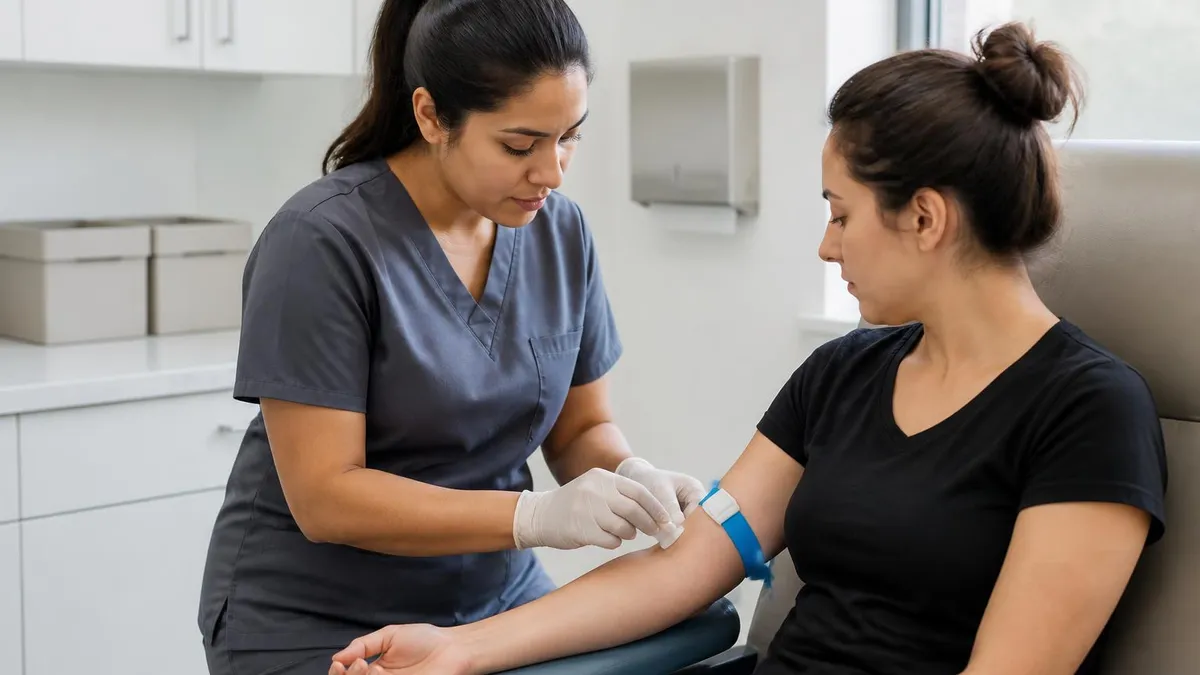
CMA Exam: Format, Content, Cost, and Pass Strategy (2026)

CMA Practice Test PDF (Free Printable 2026)
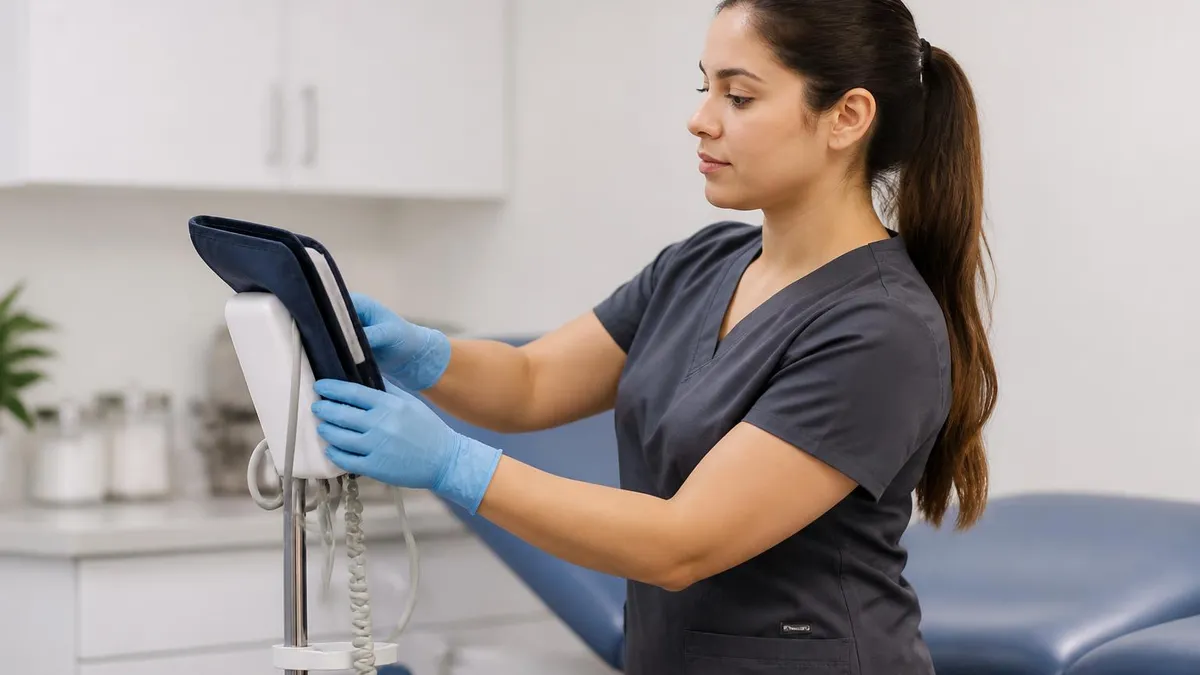
CMA vs RMA: Differences, Salary, and Which Certification Wins in 2026
About the Author

Educational Psychologist & Academic Test Preparation Expert
Columbia University Teachers CollegeDr. Lisa Patel holds a Doctorate in Education from Columbia University Teachers College and has spent 17 years researching standardized test design and academic assessment. She has developed preparation programs for SAT, ACT, GRE, LSAT, UCAT, and numerous professional licensing exams, helping students of all backgrounds achieve their target scores.