
Certified Medical Assistant Program: Complete 2026 September Guide
📗 Compare certified medical assistant programs: accreditation, cost, length, online vs in-person, top schools, and how to pick one that leads to the

Certified Medical Assistant Program: Complete 2026 Guide
A certified medical assistant program is the training course that prepares you to sit for the AAMA CMA (Certified Medical Assistant) credential. It is not a generic medical assisting class. To be eligible for the AAMA exam, your school must be accredited by either CAAHEP or ABHES on the day you graduate. Pick the wrong school and you cannot test, no matter how strong your transcript looks.
Programs come in three real lengths. A certificate or diploma runs 9 to 12 months. A one-year intensive bundles the same hours into a tighter schedule. An associate degree takes 18 to 24 months and adds general education credits that transfer if you later pursue nursing or healthcare administration. All three paths can lead to the same CMA exam seat, so the choice is about budget, timeline, and whether you want a stackable degree.
Tuition swings wildly. Community college certified medical assistant classes can cost $1,200 to $5,000 total. Private career schools charge $10,000 to $25,000 for the same credential. Online hybrid programs sit in the middle but add fees for proctored labs and the required clinical externship. The cheapest accredited path is almost always your local community college, and they often run evening cohorts for working adults.
This guide covers what a CMA program teaches, how to verify accreditation in 60 seconds, what the externship looks like, financial aid options that actually work for medical assisting students, and the five things to check before you sign an enrollment contract. We also clear up the confusion between CMA, CCMA, RMA, and NCMA — they sound similar but use different exams, different schools, and different employer recognition.
Certified Medical Assistant Program at a Glance
- Length: 9 months (certificate) to 24 months (associate degree)
- Cost range: $1,200 community college → $25,000 private career school
- Accreditation required: CAAHEP or ABHES (mandatory for AAMA CMA exam eligibility)
- Externship: 160–200 unpaid clinical hours, scheduled in your final term
- Outcome credential: CMA (AAMA) — the only ANSI-recognized Certified Medical Assistant credential
- Job outlook: 14% projected growth through 2032 (BLS), median pay ~$42K
Program Types: Length, Cost, Format
Length: 9–12 months full-time. Cost: $1,200–$15,000. Best for: students who want the fastest legal path to the CMA exam without general-education credits.
Certificate programs strip out English, math, and history requirements and run only the medical assisting core: anatomy, medical terminology, pharmacology, clinical procedures, administrative procedures, and the externship. Community colleges often run a CAAHEP-accredited certificate alongside their associate program — same instructors, same lab, lower price.

What You Learn in a Certified Medical Assistant Program
Every accredited certified medical assistant training course is built around the AAMA Content Outline, which is the same outline the CMA exam tests. That is why accreditation matters so much: the syllabus is not a school choice, it is a national blueprint. The three big buckets are general knowledge, clinical competencies, and administrative competencies.
General knowledge covers anatomy and physiology of all body systems, medical terminology (Greek and Latin roots, prefixes, suffixes), pharmacology basics (drug classifications, common generic and brand names, basic dosage math), psychology and patient communication, professionalism, and medical law and ethics including HIPAA, informed consent, scope of practice, and mandated reporting. This portion is heavy on memorization and runs across the first two terms.
Clinical Skills Taught Hands-On
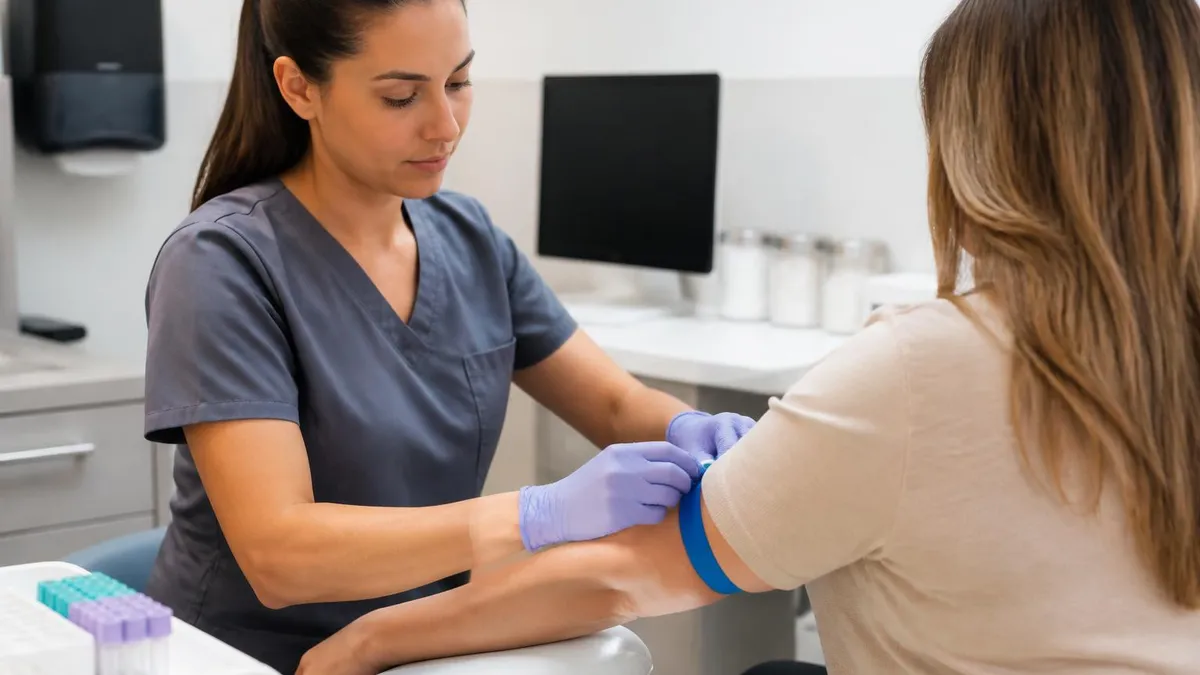
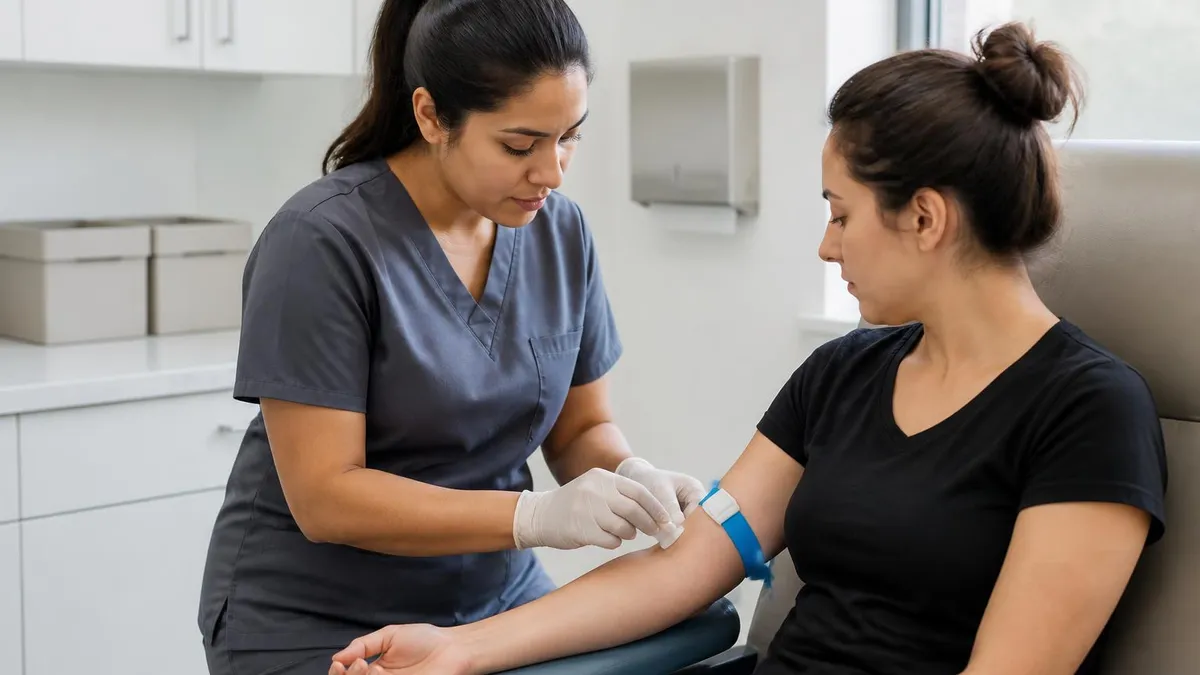
The clinical block is where you log lab hours. Expect to be tested live on vital signs (BP, pulse, respiration, temperature, pulse-ox), aseptic technique, sterilization and autoclave use, drawing up and administering intramuscular, subcutaneous, and intradermal injections, venipuncture and capillary blood draws, performing 12-lead EKGs, basic point-of-care lab tests (urinalysis, strep, glucose, A1c), assisting with minor surgery, wound care, and patient prep for physical exams.
Most accredited programs require students to pass a competency checklist before they touch a real patient on externship.
Administrative Skills Taught
Administrative training covers EHR systems (most schools teach on a simulated version of EpiC, Cerner, or Practice Fusion), CPT and ICD-10 medical coding fundamentals, insurance verification, appointment scheduling, patient intake, basic medical billing, telephone triage scripts, and front-office workflow. You are not training to be a certified coder, but employers expect you to enter charges, post payments, and run eligibility checks without supervision on day one.
5 Things to Verify Before Enrolling
Go to caahep.org or abhes.org, search the school by name, confirm the specific medical assisting program is listed. Do not rely on the school's website — verify on the accreditor's site directly.
- Time: 5 minutes
- Where: caahep.org or abhes.org
Accredited programs must publish their AAMA CMA exam pass rate. The national average is 64%. Pick a program scoring 70%+. Ask in writing if it is not on their site.
- Benchmark: 70% pass rate or higher
- National avg: 64%
Quality programs track 6-month and 12-month placement. Look for 80%+ placement in a medical assisting role (not 'related field'). Ask which employers hired last year's grads.
- Target: 80%+ in MA roles
- Window: Within 12 months
Ask for a written list of externship sites used in the last 12 months. A diverse list (hospitals, urgent care, family practice, specialty) means broader hiring exposure.
- Hours required: 160–200 unpaid
- When: Final term
Tuition is not the full price. Add fees, books, scrubs, malpractice insurance, background check, immunizations, AAMA exam fee ($125–$250), and graduation fees. Career schools sometimes hide $3K–$5K in fees.
- Hidden adds: $1,500–$5,000
- Ask for: Total cost of attendance
Accreditation: The One Thing You Cannot Skip
Only two accreditors qualify a graduate to sit for the AAMA CMA exam: the Commission on Accreditation of Allied Health Education Programs (CAAHEP) and the Accrediting Bureau of Health Education Schools (ABHES). Both maintain free public lookup tools. CAAHEP at caahep.org and ABHES at abhes.org. Search by school name and verify the specific Medical Assisting program is listed — schools sometimes accredit one program but not another. If the program does not appear, walk away.
The school may still be regionally accredited as an institution, but that is not enough for CMA exam eligibility.
The Externship Requirement
Every CAAHEP and ABHES program requires a 160–200 hour unpaid clinical externship at a real medical practice. This usually happens in your final term and runs 8–12 weeks. The school places you — you do not arrange it yourself. Strong programs partner with hospital systems, family practice groups, urgent care chains, and specialty clinics. Ask any school you are evaluating for their externship partner list.
A program that places students at a single chiropractor office is not preparing you for the same job market as one that rotates students through pediatrics, internal medicine, and cardiology.
The externship is also your hiring funnel. Roughly 40% of students get hired by their externship site. Treat it like a 200-hour job interview. After you finish externship and graduate, you have 30 months to pass the AAMA cma certification exam under the new-graduate eligibility category.
Common Clinical Lab Equipment You'll Train On
Walk into any accredited program's lab and you should see Welch Allyn or ADC manual sphygmomanometers and aneroid BP cuffs in three adult sizes, electronic vital-sign machines (Welch Allyn Spot or Connex), tympanic and oral thermometers, automated EKG machines (Burdick, Welch Allyn, or Mortara) with simulated rhythm strips, autoclaves with biological indicators, sharps containers at every station, mannequin arms for venipuncture practice, simulated injection pads, microscopes and centrifuges for urinalysis, and at least one fully stocked exam-room simulation.
Equipment quality predicts exam performance — the AAMA practical components test you on the same gear you used in school.
What Your Daily Schedule Looks Like
A typical day-cohort student attends 5 to 6 hours of class, Monday through Friday, with a mix of lecture, lab, and small-group skills practice. Mornings cover heavy theory — anatomy, terminology, pharmacology — and afternoons run clinical lab where the room of 12 to 20 students rotates through stations. Evening cohorts compress this into 3 nights a week plus Saturday lab, stretching the program from 12 to 18 months.
Online hybrids deliver lecture asynchronously and require students on campus for two full days per week of lab. Plan for 10 to 15 hours of homework, terminology drills, and pharmacology flashcards on top of class time. Students who put in the homework hit the 70%+ exam pass rate. Students who don't usually retake the exam.

Typical Cost by Program Type
Certificate vs Associate Degree
- +Certificate: finish in 9–12 months — fastest path to the CMA exam
- +Certificate: lower total cost (often under $5,000 at a community college)
- +Certificate: same AAMA exam eligibility as associate-degree grads
- +Associate: general education credits transfer to RN, BSN, healthcare admin
- +Associate: slightly higher starting pay at some hospital systems
- +Associate: stronger application for hospital-based jobs and federal employers
- −Certificate: no transferable credits if you later pursue nursing
- −Certificate: some hospital chains prefer associate-degree applicants
- −Certificate: limited financial aid (Pell is capped for sub-degree programs)
- −Associate: takes nearly twice as long (18–24 months)
- −Associate: gen-ed courses (English, math) feel unrelated to clinical work
- −Associate: higher opportunity cost — 12 months of lost MA wages
Pros and Cons at a Glance
| Pros | Cons |
|---|---|
| Certificate: same AAMA exam eligibility as associate-degree grads | Certificate: no transferable credits if you later pursue nursing |
| Associate: general education credits transfer to RN, BSN, healthcare admin | Certificate: some hospital chains prefer associate-degree applicants |
| Associate: slightly higher starting pay at some hospital systems | Certificate: limited financial aid (Pell is capped for sub-degree programs) |
| Associate: stronger application for hospital-based jobs and federal employers | Associate: gen-ed courses (English, math) feel unrelated to clinical work |
Financial Aid for Medical Assisting Students
Federal student aid works for any accredited certified medical assistant school. File the FAFSA at studentaid.gov as soon as the program decides to enroll you. Pell Grants up to $7,395 per year (2024–25 limit) cover most community college certificate programs in full and a meaningful chunk of career-school diplomas. Subsidized and unsubsidized Stafford loans cover the rest. Avoid private loans until federal options are exhausted.
The AAMA itself offers the Maxine Williams Scholarship — $1,000 awards for students currently enrolled in CAAHEP- or ABHES-accredited programs. Application opens each spring on aama-ntl.org. Many state allied health associations run smaller scholarships ($250–$1,000) with much lower applicant pools, so check your state chapter.
Employer Tuition Reimbursement
Hospital systems, urgent care chains, and large family practice groups often pay for current employees (front desk, scribes, CNAs) to upgrade to CMA. Common employers with this benefit: Kaiser Permanente, HCA Healthcare, Ascension, Banner Health, CVS MinuteClinic, and most academic medical centers. The trade-off is a 1–2 year work commitment after certification. If your current job is anywhere near healthcare, ask HR before paying out of pocket.
Workforce Innovation and Opportunity Act (WIOA)
WIOA funds at your local American Job Center can fully cover medical assisting training for unemployed and underemployed adults. Eligibility is income-tested but the cap is generous. Many community college MA programs are pre-approved WIOA training providers — ask the financial aid office.
Online vs In-Person Hybrid: What Actually Works
Fully online CMA training does not exist at any accredited school. The AAMA and both accreditors require in-person clinical lab hours and an in-person externship. Any program that claims you can earn CMA eligibility 100% online is lying about accreditation. What does exist is the online hybrid: lectures, quizzes, terminology, billing, and law/ethics happen asynchronously; clinical labs and externship happen at a local partner site, usually 1–2 days per week or in week-long intensives.
Hybrid works well if you are disciplined, work full-time, or live more than an hour from a community college. It works poorly if you struggle with self-paced learning or need hands-on practice to memorize. Penn Build, Herzing, and Rasmussen all run accredited hybrids. Verify accreditation on the accreditor's site, not the school's site.
Admission Requirements
Most accredited programs ask for: a high school diploma or GED, a passing score on a basic skills entrance exam (Wonderlic, TEAS, or HESI A2 for some schools), a criminal background check, a 10-panel drug screen, current immunizations (MMR, hepatitis B, Tdap, flu, COVID at most sites), proof of health insurance, and CPR/BLS certification (often earned in the first month of class). Community colleges are usually open enrollment, so the entrance exam is the only competitive piece.
Career schools are even more flexible. Selective programs at universities may require a 2.5+ GPA and prerequisite courses in biology or English.
CMA vs CCMA vs RMA vs NCMA — Don't Confuse Them
Four different organizations issue medical assistant credentials in the US. They are not interchangeable, and many programs train for one but not the others.
- CMA (AAMA) — Certified Medical Assistant by the American Association of Medical Assistants. The original credential, the only one ANSI-recognized. Requires graduation from a CAAHEP or ABHES program.
- CCMA — Certified Clinical Medical Assistant by the National Healthcareer Association (NHA). Wider exam eligibility (some on-the-job experience tracks qualify). More flexible but less prestigious in hospital settings.
- RMA — Registered Medical Assistant by American Medical Technologists (AMT). Similar prestige to CMA, accepted by most employers, slightly fewer accredited programs.
- NCMA — National Certified Medical Assistant by NCCT. Cheapest exam, least recognized. Some employers do not accept it.
If you want to maximize hiring options, target the CMA (AAMA). If you cannot find an accredited program nearby, the CCMA via NHA is a strong second choice. Make sure the program you enroll in trains for the credential you want — a school that prepares students only for the NCMA cannot get you to the CMA exam.

Certified Medical Assistant Program — By the Numbers
Application Checklist — Documents You'll Need
- ✓High school diploma or GED (official transcript)
- ✓FAFSA submitted (studentaid.gov) for financial aid eligibility
- ✓Passing score on TEAS, HESI A2, or Wonderlic (if program requires)
- ✓Clean criminal background check (state and federal)
- ✓10-panel drug screen (within 90 days of enrollment)
- ✓Current immunizations: MMR, hepatitis B, Tdap, varicella, flu
- ✓Health insurance coverage (school may require proof)
- ✓CPR / BLS certification (or enrollment in first-week course)
- ✓Two letters of recommendation (some programs only)
- ✓Personal statement or short essay (selective programs only)
12-Month Certificate Program Timeline
Month 1–2: Foundations
Month 3–4: Clinical Procedures I
Month 5–6: Clinical Procedures II
Month 7–8: Pharmacology & EKG
Month 9–10: Administrative Skills
Month 11–12: Externship
How to Pick the Right Program for You
Start with accreditation and budget, in that order. Pull the CAAHEP and ABHES lists for your state, cross-reference with the community colleges within commuting distance, and write down the total cost of each. Nine times out of ten, the right answer is the cheapest accredited program within reach, especially if you have a clean financial aid file. Career schools advertise heavily because they need to fill seats — that is not a reason to enroll.
Visit at least two programs in person before signing. Ask to sit in on a clinical lab for 30 minutes. A well-run program has real BP cuffs, real autoclaves, real EKG machines, and students practicing on each other. A poorly run program has outdated equipment, students watching videos, and lab time that ends in 20 minutes. The difference shows up in your CMA exam pass rate and your hireability on externship.
If you are juggling work and family, calendar the program against your real life. A 12-month certificate that runs Monday through Friday from 8am–3pm with a 200-hour externship in months 11–12 is not compatible with a full-time job. Evening and weekend cohorts exist — they take 16–20 months instead of 12, but they let you keep working. Online hybrids are even more flexible, but the clinical days are non-negotiable.
Finally, plan for the exam before you graduate. Most strong programs run a CMA exam-prep block in the last month, but you should also be using cma practice test questions across your final term. Walk into the AAMA test center within 60 days of graduation while the material is fresh. The new-graduate eligibility window is 30 months, but pass rates drop sharply after 6 months out.
What Happens After You Pass the CMA Exam
You become a CMA (AAMA) credential holder and can use the title legally. Starting pay nationally is around $36,000–$42,000 with a fresh certificate. Hospital systems, large group practices, and specialty clinics (cardiology, OB/GYN, dermatology) pay 10–20% more than solo physician offices. Travel and per-diem CMA work — through agencies like Medical Solutions, Aya, and CrossMed — pays $25–$38/hour after a year of experience.
The AAMA requires 60 CEUs every 5 years to maintain the credential, most of which are free through AAMA-NTL membership and webinars.
From CMA, the natural career ladder is up into nursing (LPN or RN), surgical technology, or healthcare administration. Many community college MA programs articulate directly into their nursing programs, so your credits stack. Others move laterally into medical coding (CPC), phlebotomy supervision, or EHR implementation roles. Whatever direction you take, the CMA credential is the cleanest 12-month entry point into US healthcare.
Red Flags That Mean Walk Away
Some warning signs are obvious — no listing on caahep.org or abhes.org, tuition that triples after enrollment, externship sites located 90 minutes from campus, refusal to share pass rates or placement data. Others are subtler.
A program that lets you skip lab competencies, an admissions rep who pressures you to sign on the first visit, a payment plan that adds interest before classes start, or a school that has changed names twice in five years are all signals to keep looking. The medical assisting field is desperately understaffed, so any accredited program will graduate you into a job market that wants to hire. There is no reason to settle for a low-quality school.
Final Word: The Decision Is Really About Three Things
Accreditation (CAAHEP or ABHES), price (community college beats private 9 times out of 10), and schedule (does the cohort fit your life). Everything else is marketing. If you do those three checks honestly, you will land in a program that prepares you for the AAMA exam, places you with a real externship, and graduates you into a 14%-growth career field with median wages near $42,000 and clear ladders into nursing, coding, and administration.
The credential travels with you across states, employers, and decades. Spend the 30 minutes now to verify the school properly, then commit to the 12 months that follow.
CMA Questions and Answers
Keep Learning
CMA Certification: Requirements, Exam & Career Guide
CMA Exam: Format, Content, Cost, and Pass Strategy (2026)

How to Become a Certified Medical Assistant (CMA) in 2026

Certified Medical Assistant Online Program: Complete Guide

Certified Medical Assistant Jobs: Salary, Roles, Travel Options, and How to Find Them

CMA Practice Test PDF (Free Printable 2026)
About the Author

Educational Psychologist & Academic Test Preparation Expert
Columbia University Teachers CollegeDr. Lisa Patel holds a Doctorate in Education from Columbia University Teachers College and has spent 17 years researching standardized test design and academic assessment. She has developed preparation programs for SAT, ACT, GRE, LSAT, UCAT, and numerous professional licensing exams, helping students of all backgrounds achieve their target scores.