
Definition of Civic Literacy: What It Means and Why the Florida Civic Literacy Exam Tests It
Learn the definition of civic literacy and how the Florida civic literacy exam tests it. 🏆 Free practice tests, tips, and a complete 2026 September prep guide.

The definition of civic literacy goes far beyond memorizing the names of the three branches of government. At its core, civic literacy is the knowledge, skills, and dispositions a person needs to understand how democratic systems work, participate meaningfully in civic life, and evaluate public issues with an informed perspective. For Florida college students, that definition has taken on a very practical meaning: the florida civic literacy examination is now a graduation requirement at all state universities and colleges, making civic knowledge a credential — not just a civic virtue.
When educators talk about the definition of civic literacy, they usually mean three overlapping competencies. First, foundational knowledge: understanding constitutional principles, the structure of federal and state government, landmark legislation, and the historical events that shaped American democracy. Second, civic skills: the ability to analyze primary sources, evaluate competing arguments, interpret election data, and engage constructively with controversial issues. Third, civic dispositions: the values of participation, deliberation, and respect for democratic norms that motivate a person to vote, serve on juries, contact elected officials, and stay engaged over a lifetime.
Florida codified its own version of this definition in 2021 through SB 1108, which created the Florida Civic Literacy Exam. The law requires every student pursuing an associate's or bachelor's degree at a Florida College System institution or State University System school to either pass the exam or demonstrate equivalent knowledge. The intent is to ensure that graduates entering Florida's workforce and civic life understand the U.S. Constitution, the Bill of Rights, landmark civil rights legislation, foundational documents of American democracy, and the historical context that gives those documents meaning.
Understanding the definition of civic literacy also means recognizing what it is NOT. It is not partisan political education. The exam does not test opinions about current policy debates, party platforms, or electoral preferences. Instead, it focuses on factual civics content that has broad bipartisan consensus: how a bill becomes law, what the First Amendment protects, how the Electoral College works, what Brown v. Board of Education decided, and why the Federalist Papers matter. The goal is shared democratic understanding, not ideological conformity.
For students preparing for the florida civic literacy exam, grasping this broader definition is actually a powerful study strategy. When you understand WHY the exam tests what it tests — because these are the building blocks of informed participation — the content stops feeling like random trivia and starts forming a coherent picture of American self-governance.
Knowing that the Fourteenth Amendment granted citizenship and equal protection helps you connect Reconstruction-era history to the civil rights movement decades later, which in turn helps you connect to landmark Supreme Court cases. Concepts reinforce each other once you see the civic logic underneath them.
The florida civic literacy exam practice test resources available at PracticeTestGeeks are designed with this integrated definition in mind. Rather than drilling disconnected facts, the practice questions are organized around conceptual clusters — constitutional foundations, rights and liberties, electoral processes, economic systems, foreign policy — that mirror how civic literacy actually works as an integrated body of knowledge. Students who study with this structural awareness consistently outperform those who try to memorize isolated facts, because the exam itself rewards the ability to apply concepts to novel scenarios rather than simply recall definitions.
Whether you are a first-generation college student at a Florida state college or a transfer student finishing your degree at a state university, the civic literacy exam will be on your path to graduation. The good news is that with focused preparation — understanding what civic literacy actually means, what the exam tests, and how to study strategically — most students can pass on their first attempt. The sections below walk through every dimension of the topic, from exam format to study strategies to the deeper historical content you need to master.
Florida Civic Literacy Exam by the Numbers

Florida Civic Literacy Exam Format
| Section | Questions | Time | Weight | Notes |
|---|---|---|---|---|
| U.S. History & Founding Documents | 25 | ~30 min | 25% | Declaration of Independence, Constitution, Federalist Papers |
| Federal & State Government Structure | 25 | ~30 min | 25% | Branches of government, Florida Constitution, separation of powers |
| Rights, Liberties & Civil Rights History | 25 | ~30 min | 25% | Bill of Rights, amendments, landmark civil rights legislation |
| Civic Participation & Democracy | 25 | ~30 min | 25% | Electoral processes, voting rights, economic systems, foreign policy |
| Total | 100 | 2 hours | 100% |
The florida civic literacy exam tests knowledge across several interconnected content domains, and understanding what each domain covers is the first step toward effective preparation. The exam draws on Florida's Civic Literacy Course Standards, which were developed by the Florida Department of Education in consultation with historians, political scientists, and civic education experts. These standards define civic literacy in operational terms — not as an abstract concept, but as a specific set of demonstrable competencies organized around U.S. history, government structure, constitutional rights, and civic participation.
The founding documents domain covers the Declaration of Independence, the U.S. Constitution, the Bill of Rights, the Federalist Papers, and other primary sources that form the intellectual foundation of American self-governance. Students are expected to understand not just what these documents say but why they were written, what historical problems they were responding to, and how their principles have been applied — and contested — over time. Questions in this domain often ask students to read a short excerpt and identify which constitutional principle or amendment it illustrates, which rewards reading comprehension as much as memorized content.
The government structure domain covers how federal, state, and local governments are organized, how they interact through federalism, and how the separation of powers and checks and balances prevent any single branch from becoming tyrannical. Florida-specific content is significant here: students need to understand the structure of Florida's state government, how the Florida legislature operates differently from the U.S. Congress, and what powers are reserved to the states under the Tenth Amendment. This state-level focus is one of the things that distinguishes the Florida civic literacy exam from generic civics tests.
Civil rights history is tested with particular depth on the Florida exam. Students should be familiar with landmark legislation including the Civil Rights Act of 1964, the Voting Rights Act of 1965, the Fair Housing Act of 1968, and Title IX. Equally important are Supreme Court cases: Brown v. Board of Education (1954), Marbury v. Madison (1803), McCulloch v. Maryland (1819), Engel v. Vitale (1962), and Tinker v. Des Moines (1969) all appear with regularity in practice questions and have appeared on actual exams. Understanding what each case decided and its constitutional basis is essential preparation.
The civic participation domain is sometimes underestimated by students, but it accounts for a full quarter of the exam. This section covers how elections work at the federal, state, and local levels; the role of political parties; the Electoral College mechanism; voting rights history from the Fifteenth Amendment through the National Voter Registration Act of 1993; and economic systems including free markets, mixed economies, and the government's role in regulating commerce. Taking a florida civic literacy exam practice test that emphasizes all four content domains will give you the most accurate picture of your current readiness.
One common misconception is that the Florida exam is essentially the same as the U.S. Citizenship Test (the USCIS naturalization exam). They overlap significantly but are not identical. The naturalization test has 100 questions from which 10 are asked orally, with a passing score of 6 correct answers. The Florida civic literacy exam has 100 multiple-choice questions administered on a computer, requiring 60 correct answers to pass.
The Florida exam goes deeper on civil rights history, Florida-specific government content, and civic participation skills. Students who passed a U.S. History or Government AP exam or who completed a dual enrollment civics course before college may be eligible for an exemption — check with your institution's registrar for the specific exemption policy.
Effective preparation for the civic literacy exam requires spending proportional time on each content domain based on your current knowledge gaps, not equal time on everything. Students with strong U.S. history backgrounds often need to focus more on Florida government and recent civil rights legislation, while students who are recent immigrants or who had gaps in their K-12 civics education may need to build foundational knowledge more broadly. Taking a diagnostic practice test before diving into content review is the most efficient way to identify where your preparation time will have the highest return on investment.
Florida Civic Literacy Exam: Study Strategies by Topic
Mastering the founding documents begins with reading the actual texts, not just summaries. The Declaration of Independence is short enough to read in 15 minutes; pay close attention to the natural rights language (life, liberty, the pursuit of happiness) and how it connects to Enlightenment philosophy. For the Constitution, focus on the Preamble's goals, the enumerated powers in Article I Section 8, and the amendment process in Article V. The Federalist Papers No. 10, 51, and 78 appear most often on the Florida civic literacy exam — No. 10 on factions, No. 51 on separation of powers, No. 78 on judicial review.
When studying amendments, group them thematically rather than memorizing numbers in sequence. The Civil War Amendments (13th, 14th, 15th) form a coherent cluster about abolition and equal citizenship. The Progressive Era amendments (16th through 19th) cover income taxes, Senate elections, Prohibition, and women's suffrage. Reconstruction-era and post-WWII voting rights amendments (15th, 19th, 24th, 26th) tell the story of expanding the franchise. Thematic grouping creates memory hooks that survive the stress of exam conditions far better than numerical sequences alone.
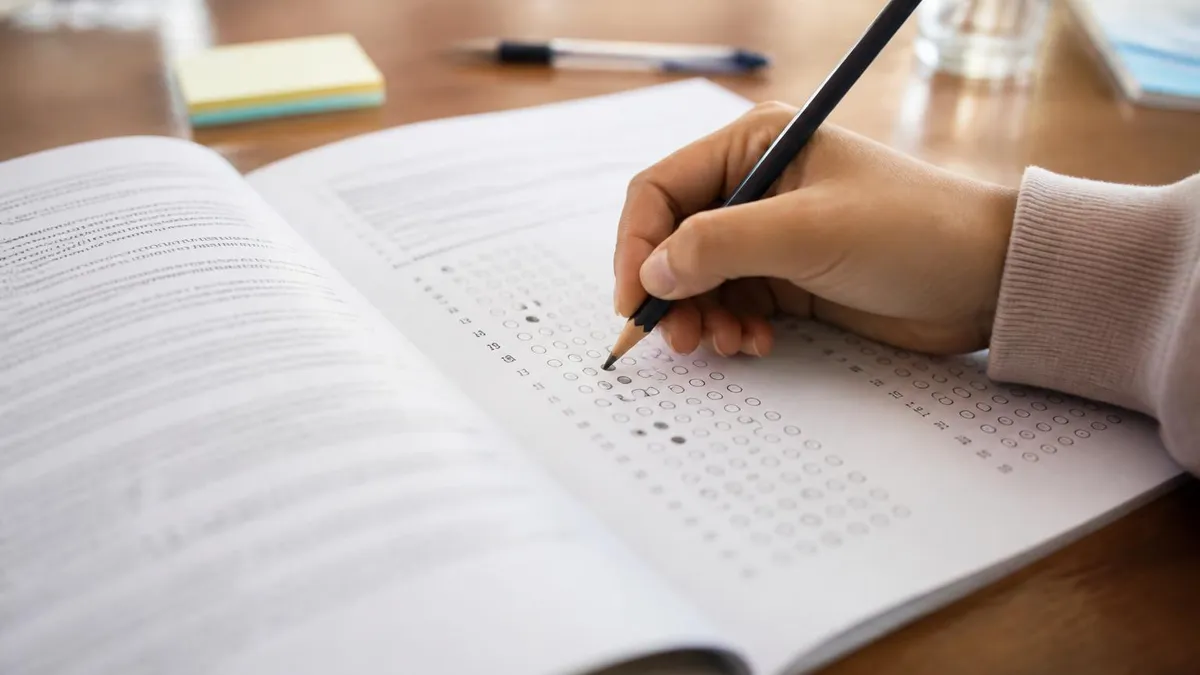
Florida Civic Literacy Exam: Benefits and Challenges for Students
- +Ensures all Florida graduates share a common foundation of democratic knowledge
- +Content is factual and nonpartisan — no opinions or political positions are tested
- +Passing score of 60% is achievable with focused preparation over 2-4 weeks
- +Multiple exemption pathways exist for students with prior civics coursework or AP credit
- +Practice resources including free online tests are widely available at no cost
- +Knowledge gained has lifelong value: voting, jury duty, community engagement
- −Students who had weak K-12 civics education face a steeper preparation curve
- −Florida-specific government content is rarely covered in nationally standardized prep materials
- −The exam must be passed before degree conferral, creating a potential graduation bottleneck
- −Some institutions offer limited retake scheduling, causing delays for students who do not pass initially
- −No partial credit — all 100 questions are equally weighted regardless of topic difficulty
- −International students or recent immigrants may find the depth of U.S. history content challenging
Florida Civic Literacy Exam Prep Checklist
- ✓Take a full-length diagnostic practice test before starting content review to identify knowledge gaps
- ✓Read the full text of the Declaration of Independence, the Preamble, and the Bill of Rights
- ✓Study all 27 constitutional amendments, organized by historical era rather than number
- ✓Learn the key holdings of at least 10 landmark Supreme Court cases including Brown v. Board and Marbury v. Madison
- ✓Review the structure of Florida state government: Governor, Legislature (Senate/House), and plural executive
- ✓Memorize the Electoral College formula and which states use winner-take-all versus district allocation
- ✓Study the Civil Rights Act of 1964, Voting Rights Act of 1965, and Fair Housing Act of 1968 by specific provisions
- ✓Practice reading comprehension with primary source excerpts — many exam questions include a short passage to interpret
- ✓Complete at least three timed full-length practice tests in the two weeks before your exam date
- ✓Check your institution's exemption policy to see if AP Government, AP U.S. History, or dual enrollment scores qualify you

The 60% Passing Threshold Is More Forgiving Than It Sounds
You need 60 correct answers out of 100 to pass the Florida civic literacy exam. That means you can miss up to 40 questions — nearly half — and still earn your diploma. Students who focus their preparation on the highest-frequency topics (Bill of Rights, civil rights history, and government structure) can often secure enough correct answers from those areas alone to cross the passing threshold, even if their knowledge in lower-frequency areas like foreign policy remains thinner. Strategic preparation beats comprehensive memorization every time.
Understanding your passing score and what to realistically expect on exam day can significantly reduce test anxiety and improve performance. The Florida civic literacy exam is administered on a computer at your institution's testing center or, at some schools, through a proctored online platform. You will have 120 minutes to complete 100 multiple-choice questions. There is no penalty for guessing, so you should always submit an answer for every question even if you are uncertain — leaving questions blank guarantees zero points, while guessing gives you at least a chance.
The exam is not adaptive, meaning all students receive the same type of question pool regardless of how they are performing mid-exam. Questions are presented in a fixed order organized loosely by content domain, though the specific sequence can vary by test version.
You may mark questions for review and return to them before submitting, which is a valuable strategy: if a question is taking more than 90 seconds and you are not making progress, mark it, move on, and return with fresh eyes after completing the rest. Time management matters — 120 minutes for 100 questions gives you about 72 seconds per question on average.
First-time pass rates for the Florida civic literacy exam vary by institution and by the preparation resources students use. State universities that have implemented mandatory civic literacy preparation modules have seen pass rates climb significantly compared to institutions where students are simply notified of the requirement and left to self-prepare. Students who use structured practice tests — particularly those that simulate the actual exam's format, timing, and question types — consistently outperform those who rely on passive review methods like re-reading notes or watching lecture videos.
If you are wondering whether the florida civic literacy exam quizlet-style flashcard tools popular on social media platforms are sufficient preparation, the answer is: they can help with vocabulary and factual recall but they rarely develop the reading comprehension skills the exam rewards. The actual exam frequently presents a paragraph-length excerpt from a primary source, a Supreme Court opinion, or a legislative text and asks you to identify which constitutional principle it illustrates or which historical event it references.
Flashcards do not train that skill. Full practice tests with explanations do. If you want a study tool more aligned with how students actually study for standardized tests like this one, searching for florida civic literacy exam quizlet-style resources alongside full-length practice tests gives you the best of both approaches.
Retaking the exam is allowed at most Florida institutions, though policies vary on how many attempts are permitted before additional coursework is required. Some institutions allow unlimited retakes before graduation; others cap attempts at three and then require completion of a remedial civic literacy course before additional testing is permitted. If you do not pass on your first attempt, the most productive response is to analyze your score report carefully (if one is provided), identify which content domains you struggled with most, and target those specifically in your next round of preparation rather than repeating the same general study approach.
Students who have disabilities or who require testing accommodations should contact their institution's Office of Accessibility Services well in advance of their planned exam date. Common accommodations include extended time (typically 1.5x or 2x), a separate testing room, screen reader access, and large print materials. These accommodations are available for the civic literacy exam under the Americans with Disabilities Act and Florida state law, but processing requests can take several weeks, so do not wait until the week of your exam to initiate the accommodation process.
The civic literacy exam also has an essay component at some Florida institutions, where students who score near the passing threshold on the multiple-choice section may be asked to demonstrate competency through a written response. If your institution uses an essay component, reviewing the civic literacy essay rubric and practicing with timed writing prompts is an important addition to your prep plan.
The essay typically asks students to analyze a civic issue, explain a constitutional concept, or compare two historical events — all skills that benefit from the same content knowledge required for the multiple-choice questions, applied in a writing context.
The Florida civic literacy exam must be passed before your degree can be conferred — it is not sufficient to simply attempt it. Students who discover this requirement in their final semester face scheduling stress that can delay graduation. Check with your academic advisor or registrar no later than the beginning of your junior year so you have time to prepare, take the exam, and retake it if necessary before your expected graduation date. Some institutions also have pre-registration deadlines for exam slots that fill up quickly near semester end.
For students who do not pass the Florida civic literacy exam on their first attempt, the path forward involves honest diagnosis and targeted remediation. Start by reviewing any score feedback your institution provides, which may break down your performance by content area. If you missed proportionally more questions in the civil rights history domain, that tells you where to invest your next study hours.
If your scores were relatively uniform but below passing overall, the problem is likely depth of knowledge across the board rather than gaps in specific areas, which points to a different remediation strategy — broader review with more practice testing rather than focused deep dives.
One of the most effective remediation strategies for students who did not pass is to work through a structured study guide that explains not just the facts but the reasoning behind them.
For example, instead of simply memorizing that the 14th Amendment's equal protection clause was used to strike down school segregation in Brown v. Board of Education, understanding WHY the Court reasoned that separate facilities were inherently unequal — and how that reasoning overturned the 1896 Plessy v. Ferguson decision — gives you a connected mental model rather than an isolated fact. Connected knowledge is far more resilient under exam conditions than disconnected memorization.
Group study can also be effective for the Florida civic literacy exam when structured around practice questions rather than passive review. A study group that works through practice questions together, discusses why wrong answers are wrong (not just why right answers are right), and explains concepts to each other in plain language is likely to see significant score improvement.
Teaching a concept to another person is one of the most reliable ways to discover gaps in your own understanding — if you cannot explain how the Electoral College works to a study partner without referring to notes, you probably cannot answer three related exam questions under timed conditions either.
Technology tools can supplement but should not replace structured practice. There are several well-designed mobile apps for civics review, and some students find audio podcasts about American history helpful for filling in narrative context around the facts the exam tests.
The American Government and U.S. History curriculum available through Khan Academy is free and covers most of the content domains tested on the Florida exam. However, none of these tools substitute for the experience of sitting with a timed, full-length practice test that mirrors the actual exam format — that specific experience builds the test-taking stamina and time management skills the real exam demands.
For students curious about how other Florida universities approach civic literacy preparation, the University of Central Florida has developed a dedicated civic literacy preparation program with study resources, workshops, and practice tests specifically aligned to the Florida state exam format. Students at other institutions can often access similar resources through their institution's tutoring centers or academic support offices — it is worth asking specifically whether your school offers civic literacy exam prep workshops, as many do but do not heavily advertise them.
International students studying in Florida face a unique challenge with the civic literacy requirement: the exam tests deeply U.S.-centric content that may be genuinely unfamiliar regardless of academic ability or English proficiency. International students are not exempted from the requirement at most institutions, though some schools have specific pathways or additional support resources for non-native students.
If you are an international student, starting your preparation early — at least a full semester before your target exam date — and working with a structured study guide rather than relying on general cultural familiarity is strongly advisable. The content is learnable; it simply requires more deliberate study when starting from less prior exposure.
The broader civic literacy movement in higher education is gaining momentum beyond Florida. Several other states including Texas, Arizona, and North Carolina have introduced or are considering similar graduation requirements, and there is growing discussion at the federal level about civic education standards. Students who invest time in genuine civic learning — not just passing a test — are likely to find that this knowledge serves them throughout their careers and community lives in ways that other graduation requirements do not. The civic literacy test is a checkpoint, but civic literacy itself is a lifelong asset.
Practical preparation tips make the difference between students who pass on their first attempt and those who need multiple tries. The single most important thing you can do in the weeks before your exam is complete timed full-length practice tests — not just review flashcards or read notes, but simulate the actual exam experience with a timer, in a quiet space, without looking anything up mid-test. This trains both your content knowledge and your test-taking stamina, and it gives you accurate data about your readiness rather than the false confidence that passive review often produces.
When reviewing practice test answers, spend at least as much time on questions you got right by guessing as on questions you got wrong. A correct answer reached by elimination or intuition is not reliable knowledge — if a similar question appears on the real exam worded slightly differently, you may not recognize it. For every question you are not 100% confident about, read the explanation carefully, find the relevant content in your study materials, and write a brief note connecting the question to the concept. This active processing converts uncertain knowledge into reliable knowledge much faster than passive re-reading.
Content-wise, the highest-yield study investments for most students are: (1) the Bill of Rights and its incorporation to the states through the 14th Amendment, (2) the major civil rights legislation of the 1960s and the constitutional amendments that preceded and followed it, (3) the structure and powers of all three branches of the federal government and their checks on each other, and (4) Florida state government structure including the powers and limits of the Governor and Legislature.
These four areas together account for a disproportionate share of exam questions relative to other content areas, so students who know them thoroughly have a meaningful structural advantage.
Time management on exam day follows a simple rule: spend no more than 90 seconds on any single question during your first pass. If you are stuck, mark the question and move on. Most students who run out of time do so because they spent 5-7 minutes on a single difficult question early in the exam while rushing through questions they would have answered correctly with more time at the end. A consistent 60-90 second pace through all 100 questions, followed by a focused return to marked questions, is the most reliable time management strategy for a 120-minute, 100-question exam.
In the 48 hours before your exam, shift from learning new content to consolidating what you already know. Review your notes on the highest-frequency topics, do one more short practice test (50 questions rather than 100 to avoid fatigue), and make sure the logistics are handled: you know where the testing center is, you know what identification to bring, and you have confirmed your appointment.
Sleep and nutrition matter more than late-night cramming at this stage — cognitive performance on a 120-minute exam is significantly better when you are rested and hydrated than when you stayed up until 2 a.m. trying to memorize more Supreme Court cases.
After passing the exam, consider using the civic knowledge you have developed as a foundation for deeper engagement with your community. Voter registration, attending local government meetings, following your state legislators' voting records, and participating in jury service are all ways that civic literacy becomes civic practice. The definition of civic literacy has always pointed toward action, not just knowledge — the exam certifies that you have the knowledge, but what you do with it in the decades ahead is entirely up to you.
Students who found civic literacy preparation more interesting than expected sometimes pursue civic education as part of their careers in teaching, law, public administration, or nonprofit management.
Florida's strong civic education infrastructure — including the Lou Frey Institute at the University of Central Florida, the Bob Graham Center at the University of Florida, and the LeRoy Collins Institute at Florida State University — offers internships, fellowships, and research opportunities for students who want to go deeper. The civic literacy exam may be the starting point of a much longer intellectual and professional journey into American democracy and the skills it demands of its citizens.
Civic Literacy Questions and Answers
Civic Literacy Practice Test PDF (Free Printable 2026)
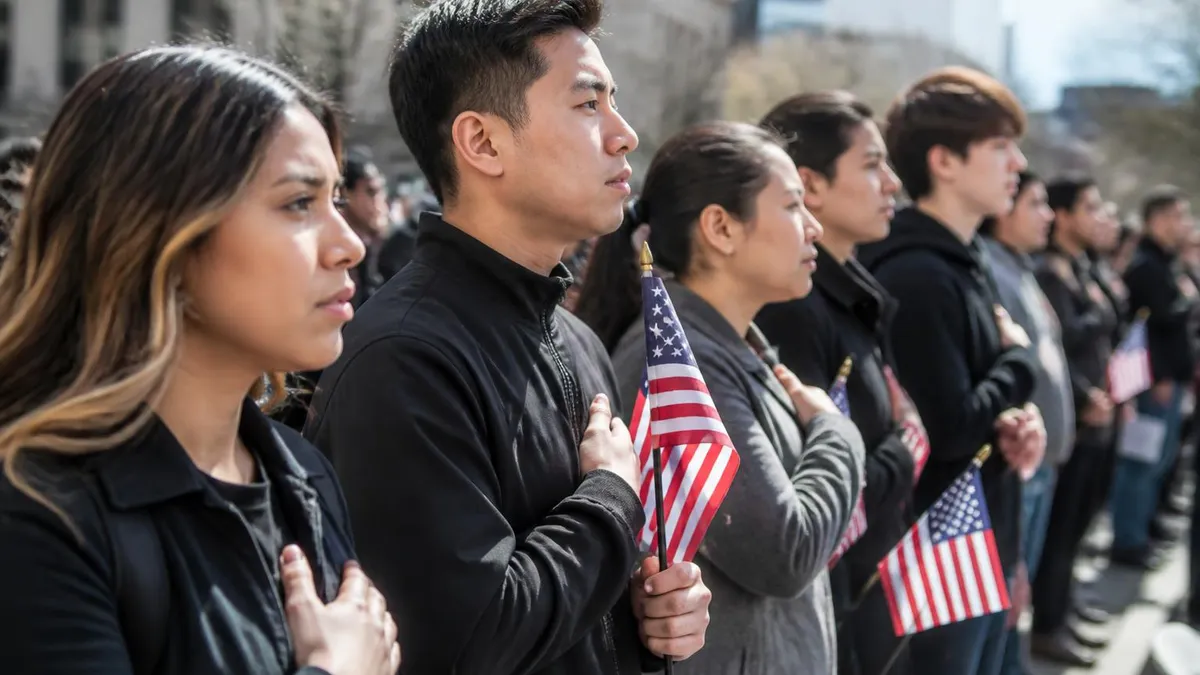
Civic Literacy Essay: How the Florida Civic Literacy Exam Tests Writing Skills

Florida Civic Literacy Exam: Complete 2026 Study Guide, Practice Tests & Pass Strategy

UCF Civic Literacy Exam: Complete Study Guide, Practice Tests & Pass Strategy

Civic Literacy Test: Complete 2026 Study Guide and Prep Hub
About the Author

Educational Psychologist & Academic Test Preparation Expert
Columbia University Teachers CollegeDr. Lisa Patel holds a Doctorate in Education from Columbia University Teachers College and has spent 17 years researching standardized test design and academic assessment. She has developed preparation programs for SAT, ACT, GRE, LSAT, UCAT, and numerous professional licensing exams, helping students of all backgrounds achieve their target scores.