
FL Civic Literacy Requirement: Complete Study Guide for the Florida Civic Literacy Exam
Master the FL civic literacy requirement 🎓 Exam format, passing score, study tips & free practice tests for Florida college students.

The florida civic literacy exam is a graduation requirement that every student at a Florida public college or university must satisfy before earning a degree. Known formally as the Florida Civic Literacy Examination (FCLE), this test measures whether students understand the foundational principles of American government, the Constitution, and the democratic institutions that shape everyday life. Meeting the fl civic literacy requirement is not optional — it is codified in Florida law under Senate Bill 1108, which took effect in 2021 and applies to all students enrolled in public postsecondary institutions statewide.
Understanding what the exam covers, how it is scored, and how to prepare effectively can make the difference between passing on your first attempt and needing to retake. The FCLE draws on material from U.S. history, government structure, civil rights, economics, and foreign policy — a broad scope that surprises many students who assumed a short civics quiz was all that awaited them. In reality, the exam is comprehensive and demands genuine preparation. A solid florida civic literacy exam practice test routine is one of the highest-use study strategies available.
Florida is not alone in pushing civic education to the forefront of higher education policy, but it has gone further than most states by mandating a standardized, high-stakes exam rather than relying on coursework alone. The law distinguishes between two pathways: pass the FCLE directly, or pass either American History or American Government at the high school or college level with a grade of C or better. Students who meet the course exemption still benefit from understanding the content, because the same knowledge applies to professional certifications, graduate admissions, and engaged citizenship.
The exam is administered through Florida's Assessment of Student Thinking (FAST) platform and is available at testing centers across every participating institution. Students typically have multiple opportunities to sit the exam during their enrollment, and there is no additional testing fee charged to the student beyond what is covered by institutional agreements. Scheduling is managed through your institution's office of testing services, and most campuses offer both weekday and weekend slots to accommodate working students.
One of the most common misconceptions is that the FCLE is essentially the same as the U.S. Naturalization Civics Test. While both exams share thematic overlap — the three branches of government, the Bill of Rights, the amendment process — the FCLE is significantly more detailed and requires application-level thinking rather than simple recall. You may be asked to interpret a primary source excerpt, analyze a political cartoon, or reason through a hypothetical policy scenario using constitutional principles you have studied.
Preparation resources range from official Florida Department of Education materials to third-party platforms with interactive practice questions. The key is consistent, active review rather than passive reading. Students who score highest typically spend at least eight to twelve weeks working through targeted practice sets, reviewing weak areas, and testing their knowledge under timed conditions. Using a variety of resources — including flashcard platforms, study guides, and full-length simulated exams — tends to produce better outcomes than relying on a single source.
This guide walks you through every dimension of the FL civic literacy requirement: the legal basis, the exam format, the full content outline, the scoring system, a week-by-week study schedule, and proven test-day strategies. Whether you are a first-year student planning ahead or a senior facing a graduation hold, the information here will help you build a focused, efficient study plan and approach exam day with confidence.
Florida Civic Literacy Exam by the Numbers
Key Facts at a Glance
| Item | Value | Details |
|---|---|---|
| Total Questions | 100 | Multiple-choice format |
| Exam Duration | 3 hrs | Timed sitting |
| Minimum Passing Score | 60% | 60 correct out of 100 |

Florida Civic Literacy Examination Format
| Section | Questions | Time | Weight | Notes |
|---|---|---|---|---|
| American History & Founding Documents | 25 | 45 min | 25% | Declaration, Constitution, Federalist Papers |
| Structure & Function of Government | 25 | 45 min | 25% | Branches, checks & balances, federalism |
| Civil Rights, Civil Liberties & Citizenship | 20 | 36 min | 20% | Bill of Rights, amendments, civil rights movement |
| Economics & Government's Role | 15 | 27 min | 15% | Fiscal policy, free markets, taxation |
| Foreign Policy & International Relations | 15 | 27 min | 15% | Treaties, alliances, global institutions |
| Total | 100 | 3 hours | 100% |
The content tested on the florida civic literacy exam spans five major domains, and understanding the weight of each domain is the first step toward a smart study plan. The largest two domains — American History and Government Structure — together account for half of all exam questions, making them the highest-priority areas for most students. If you divide your study time proportionally, you should spend roughly half of every study session on constitutional foundations, the three branches of government, checks and balances, and the historical context of the founding era.
American History on the FCLE is not a broad survey of all U.S. history from 1492 to the present. Instead, the exam focuses heavily on the founding period: the causes of the American Revolution, the Articles of Confederation and their failures, the Constitutional Convention of 1787, the ratification debates, and the Federalist Papers. Students are expected to identify authors, arguments, and the specific constitutional provisions that emerged from those debates. Knowing the difference between Hamilton's vision for a strong central government and Madison's arguments for a republic is exactly the kind of nuanced content the exam tests.
Government structure questions cover the three branches in depth — legislative, executive, and judicial — as well as the concept of federalism and the relationship between state and federal authority. Expect questions about how a bill becomes law, the presidential veto and override process, Senate confirmation of appointments, and landmark Supreme Court cases that redefined constitutional interpretation. Cases like Marbury v. Madison (establishing judicial review), McCulloch v. Maryland (implied powers), and Brown v. Board of Education (equal protection) appear frequently in practice questions and are highly likely to appear on the actual exam.
Civil rights and civil liberties content covers the Bill of Rights in detail — all ten amendments, their historical context, and how courts have interpreted them over two centuries. The First Amendment's five freedoms, Fourth Amendment search and seizure protections, Fifth Amendment due process rights, and Fourteenth Amendment equal protection guarantees are consistently tested.
Students should also know the major milestones of the civil rights movement: the 1954 Brown decision, the Civil Rights Act of 1964, the Voting Rights Act of 1965, and the Twenty-Fourth Amendment abolishing poll taxes. Taking a civic literacy test on these topics before your exam date is an excellent way to identify which amendments and cases still feel unfamiliar.
The economics domain tests foundational concepts about how markets work, the role of government in a mixed economy, fiscal versus monetary policy, and the basics of taxation and public budgeting. Students do not need college-level economics knowledge, but they do need to understand the difference between a free market and a command economy, the purpose of the Federal Reserve, what GDP measures, and how tariffs and trade agreements affect international commerce. These questions are often framed around policy scenarios rather than abstract definitions, so applying concepts to real examples during your studying will pay dividends on test day.
Foreign policy and international relations rounds out the content outline. This domain covers U.S. alliances and treaty obligations, the structure and purpose of international organizations like the United Nations and NATO, the history of U.S. foreign policy doctrines (Monroe Doctrine, Truman Doctrine, Reagan Doctrine), and the constitutional division of foreign policy authority between the president and Congress. Students are sometimes surprised to find that the president's commander-in-chief powers, the Senate's treaty ratification role, and the War Powers Resolution are all fair game on a civics exam — but they appear regularly.
Beyond content knowledge, the FCLE also tests document analysis skills. Several questions present a primary source excerpt — a passage from the Federalist Papers, a section of a Supreme Court opinion, or a historical speech — and ask students to identify the author's argument, recognize the constitutional principle at stake, or evaluate the historical significance of the document. Practicing document analysis alongside factual review is essential for earning a high score, because these questions reward students who can think critically about civic content rather than merely memorize it.
Civic Literacy Exam Study Strategies That Work
Active recall is the single most effective study technique for the florida civic literacy exam. Instead of re-reading your notes or highlighting passages, close the book and force yourself to retrieve information from memory. Use flashcard apps like Anki or physical index cards to quiz yourself on constitutional amendments, landmark cases, government processes, and founding-era dates. Research consistently shows that retrieval practice produces stronger, longer-lasting memory than passive review — students who use active recall score an average of 20 to 30 percent higher on standardized exams than those who only reread material.
Apply active recall specifically to the areas where the FCLE is most detailed: the amendment numbers and what each protects, the steps in the legislative process, the grounds for presidential impeachment, and the membership and powers of each branch. Create a self-quiz for every major topic you study. After a week of active recall sessions, you will know exactly which topics need more attention and which you have already mastered — allowing you to allocate your remaining study hours strategically rather than spending equal time on material you already know cold.

Pros and Cons of the FL Civic Literacy Requirement
- +Ensures every Florida college graduate understands basic democratic principles and government structure
- +Motivates students to engage with civics content they might otherwise skip in a purely elective environment
- +Produces graduates better prepared for civic participation, jury duty, and informed voting
- +Standardizes civic knowledge expectations across all 40+ Florida public postsecondary institutions
- +Multiple pathways to satisfy the requirement accommodate students with different academic backgrounds
- +Aligns Florida higher education with national trends toward civic competency standards
- −Creates an additional graduation barrier that can delay completion for struggling students
- −Test content may not reflect the full complexity of contemporary civic challenges and diverse civic traditions
- −Students who failed high school civics face a significant remediation burden without additional institutional support
- −Limited institutional resources at some campuses mean inadequate tutoring, prep materials, or retake scheduling options
- −The exam does not measure civic engagement or behavior — only knowledge, which critics argue is an incomplete metric
- −Students with test anxiety or learning disabilities may be disproportionately disadvantaged despite genuine civic knowledge
FL Civic Literacy Exam Prep Checklist
- ✓Confirm your institution's FCLE registration deadline and schedule your exam date at least 6 weeks out.
- ✓Download the official Florida Civic Literacy Examination content specification document from the FDOE website.
- ✓Create a weekly study schedule allocating time proportional to each domain's exam weight.
- ✓Memorize all 27 constitutional amendments, including the year ratified and the right or change each created.
- ✓Study at least 15 landmark Supreme Court cases and know each ruling's constitutional significance.
- ✓Complete at least one full-length, timed 100-question practice exam under realistic testing conditions.
- ✓Review the Federalist Papers, focusing on Nos. 10, 51, and 78, and practice explaining their arguments in your own words.
- ✓Practice document-based questions using primary source excerpts from the Declaration of Independence, Constitution, and key legislation.
- ✓Identify your two weakest content domains and dedicate an extra study session per week to those areas.
- ✓On exam day, arrive 30 minutes early, bring required identification, and plan for the full three-hour sitting.

The 60% Threshold Is Within Reach for Prepared Students
You need to answer at least 60 out of 100 questions correctly to pass the Florida Civic Literacy Examination. Students who complete 8 or more hours of structured practice — including at least two full-length timed tests — report pass rates significantly above the statewide average. Targeted preparation on your weakest two content domains in the final two weeks before the exam can add 5 to 10 percentage points to your score.
Scoring on the florida civic literacy examination uses a straightforward raw-score model: every correct answer counts as one point, there is no penalty for wrong answers, and the minimum passing score is 60 out of 100. This means that strategic guessing on questions you are uncertain about is always the right move — leaving a question blank can never help you, but a guess gives you a 25 percent chance of earning a point. Eliminating one or two clearly wrong answer choices before guessing improves those odds to 33 or even 50 percent.
The exam is computer-based and delivered at proctored campus testing centers. Most institutions use Pearson VUE or a similar secure testing platform. Results are typically available within a few business days of your exam sitting, and your score report will show both your overall percentage and a breakdown by content domain. This breakdown is extremely valuable if you do not pass on your first attempt, because it identifies exactly which areas need the most work before you retake.
Students who do not pass on their first attempt are not penalized academically — no grade appears on your transcript for a failed FCLE sitting. However, you cannot graduate until you satisfy the requirement, so repeated failures will delay your degree. Florida law does not cap the number of times you can attempt the exam, but your institution may impose a waiting period between attempts. Check with your academic advisor to understand your specific institution's retake policy and any mandatory preparation steps required before scheduling a second attempt.
Some institutions offer supplemental workshops, tutoring services, or online prep modules specifically designed for FCLE retakers. These resources are often underutilized because students are not aware they exist. Contact your campus testing center or student success office directly and ask what preparation support is available. Even a single three-hour workshop led by a faculty member who knows the exam content can meaningfully shift your score on a retake.
The exemption pathway is an important alternative for students who passed American History or American Government at the high school or college level with a grade of C or better. If you completed an eligible course at a Florida public school or accredited institution, your institution's registrar can verify your transcript and flag the requirement as satisfied without you ever taking the FCLE. This process is not automatic — you must initiate it by providing your transcript and completing any required paperwork. Do not assume the exemption has been applied; confirm it in your degree audit.
Transfer students face a unique challenge because exemption course equivalencies vary by institution. A course that satisfies the requirement at one Florida college may not be recognized at another if the course content does not meet the FDOE's definition of American History or American Government. If you transferred institutions and are uncertain whether your prior coursework qualifies, request a formal exemption determination from your registrar rather than assuming you are covered. Discovering a graduation hold during your final semester because of an unresolved FCLE requirement is a stressful and avoidable situation.
Graduate and professional students are generally exempt from the FCLE requirement if they already hold a bachelor's degree from an accredited institution — the law targets undergraduate degree completion at Florida public postsecondary institutions. However, if you are pursuing a second bachelor's degree at a Florida public university, you may be subject to the requirement again depending on when you enrolled and which institution you attend. Your academic advisor is the definitive source for your specific situation, and consulting them early in your enrollment is always worth the fifteen-minute conversation.
Florida public colleges and universities will place a graduation hold on any student who has not satisfied the civic literacy requirement before their final term. This hold cannot be resolved quickly — scheduling, sitting, and receiving results for the FCLE takes several weeks minimum. Students who discover this requirement for the first time in their graduation application review frequently face delayed degree conferral. Check your degree audit for the FCLE requirement at the start of your junior year, not the week before graduation.
The retake policy for the florida civic literacy examination is more student-friendly than many comparable standardized exams. Florida law does not limit the number of attempts a student can make, and institutions are required to provide reasonable access to retake opportunities throughout the academic year. Most campuses schedule FCLE sittings monthly or bimonthly, with additional dates added during peak graduation periods in December and May. If your campus has limited availability, inquire whether you can sit the exam at another Florida public institution through an interinstitutional testing agreement.
Between retake attempts, your score report's domain breakdown should drive every study decision you make. If you scored 80 percent or above in American History and Government Structure but only 45 percent in Foreign Policy and Economics, there is no value in spending equal time across all five domains during your prep period. Concentrate 70 percent of your retake study time on your two lowest-scoring domains and use the remaining 30 percent to maintain your strengths. This targeted approach is far more efficient than a broad review that treats all content areas equally.
Some students find that changing their study format dramatically improves retake outcomes. If your first attempt involved mostly passive reading and note review, switch to active recall with flashcards, timed practice sets, and study groups.
If you studied alone the first time, consider forming a study group with classmates facing the same requirement — explaining concepts to others is one of the fastest ways to discover gaps in your own understanding. The Feynman Technique — explaining a concept as if teaching it to a child — is particularly effective for complex topics like the amendment process or the separation of powers.
Institutional support for FCLE preparation has expanded significantly since the requirement took effect in 2021. Many Florida community colleges and state universities now offer dedicated FCLE prep courses — typically one-credit pass/fail courses that walk students through the entire content outline over eight weeks. These courses are not required, but students who enroll in them before their first exam attempt report higher first-time pass rates than those who self-study exclusively. If your institution offers such a course, enrolling the semester before you plan to sit the exam is one of the smartest preparation investments you can make.
Online preparation platforms have also proliferated since 2021. You can find comprehensive FCLE study guides, flashcard decks, and practice question banks through a variety of educational websites. When evaluating an online resource, look for materials specifically aligned to the Florida Civic Literacy Examination content specification — not generic civics content or naturalization test preparation, which overlaps but does not fully cover the FCLE outline.
The most reliable resources cite the FDOE content specification directly and update their question banks when the exam blueprint changes. Exploring the florida civic literacy examination official study materials on state education sites alongside third-party platforms gives you the broadest coverage.
Test-day logistics matter more than most students realize. Arrive at the testing center at least 30 minutes before your scheduled start time to complete check-in procedures without rushing. Bring your government-issued photo ID, your student ID, and any institutional documentation your campus requires. Leave prohibited items — phone, smartwatch, notes, food — in your car or a locker. Testing centers provide scratch paper for calculations and notes during the exam, so you do not need to memorize everything in working memory simultaneously. Use the scratch paper liberally, especially when analyzing document-based questions or working through multi-step reasoning problems.
Pacing yourself across the three-hour exam window is essential. With 100 questions and 180 minutes, you have an average of 1 minute 48 seconds per question. Most questions can be answered in 45 to 60 seconds; document-based questions may take 2 to 3 minutes.
Skimming the entire exam quickly at the start and flagging any questions that require longer analysis allows you to ensure you answer every straightforward question first, then return to the harder ones with whatever time remains. Never leave a question unanswered — the no-penalty guessing rule means every blank answer is a free pass to a 25 percent chance of a point.
You can continue preparing with the civic literacy practice test, which includes answer explanations for every question.
Practical preparation for the FCLE goes beyond content review — it requires building the right mental habits and test-taking skills alongside factual knowledge. One of the most powerful habits you can develop is reading primary source documents actively rather than passively.
When you read the First Amendment, do not just note that it protects five freedoms — ask yourself what each freedom means in practice, what exceptions the Supreme Court has recognized, and how the protection has changed over two centuries of interpretation. This depth of engagement with foundational texts is exactly what separates students who score in the high 70s and 80s from those who barely pass.
Creating your own summary notes is another high-use study strategy. Rather than relying exclusively on a pre-made study guide, write out one-page summaries of each major topic in your own words after you have studied it. The act of synthesizing what you have learned into a coherent written summary forces you to identify what you understand clearly versus what you are still fuzzy on.
Keep these summaries in a single notebook and review them in rotation throughout your prep period — they become an increasingly efficient review tool as your exam date approaches and you need to cover more material in less time.
Study groups work best when structured around quizzing rather than discussion. A session where four students take turns asking each other practice questions, explaining correct answers, and debating why wrong answers are wrong is far more productive than a session where the group reads through notes together. Assign each member a content domain to become the resident expert in, then have them create and lead a ten-question quiz for the group. This structure ensures full domain coverage, creates accountability, and gives everyone practice explaining concepts — a skill that deepens understanding and improves retention.
Mindset and stress management are underrated preparation components for any high-stakes exam. Students who approach the FCLE with excessive anxiety often underperform relative to their actual knowledge level because stress impairs working memory, narrows attention, and leads to misreading questions.
In the weeks before your exam, practice brief relaxation techniques: four-count breathing before starting a practice test session, a short walk between study blocks, and eight hours of sleep in the final week. On exam day, if you encounter a question that stumps you completely, mark it, move on, and return to it later with fresh eyes rather than letting it derail your momentum.
The night before your exam should be a light review day, not a marathon study session. Attempting to cram new material the evening before a major exam is counterproductive — your brain needs consolidation sleep to transfer information from short-term to long-term memory, and staying up late studying disrupts that process. Instead, spend 30 to 45 minutes reviewing your one-page summaries, glance through your amendment and landmark case flashcards, and then shift to relaxing activities. Eat a solid meal, get to bed at your normal time, and trust the preparation you have invested over the prior weeks.
After you pass the FCLE, the knowledge you built does not have to fade. The constitutional principles, government structures, and historical context you studied are directly relevant to understanding political news, evaluating policy proposals, serving on juries, and participating in local government. Florida's civic literacy mandate is ultimately about producing graduates who are not just credentialed but genuinely capable of exercising democratic citizenship — a goal that extends well beyond passing a single 100-question test. The habits of civic engagement you develop during your FCLE preparation are an investment that pays dividends for the rest of your adult life.
If you have younger siblings, friends, or colleagues who are beginning their Florida postsecondary education, share what you know about the FCLE requirement early. Many students are blindsided by the requirement because their academic advisors did not mention it prominently at orientation. Knowing about the exam in your first semester gives you the maximum amount of time to prepare, take advantage of institutional support resources, and satisfy the requirement well before graduation pressure arrives. Awareness is the first step — preparation is what follows.
Sample Civic Literacy Exam Practice Questions
Try these questions from our free Civic Literacy Exam practice tests. The correct answer and an explanation follow each question.
What are the constitutional requirements to be eligible for the presidency?
- A. Must be a natural-born citizen, at least 35 years old, and have been a resident of the United States for 14 years
- B. Must be a U.S. citizen, at least 30 years old, and have held a prior elected office
- C. Must be a natural-born citizen, at least 40 years old, and have served in the military
- D. Must be a U.S. citizen for at least 14 years, at least 35 years old, and born in the United States
Answer: A. Must be a natural-born citizen, at least 35 years old, and have been a resident of the United States for 14 years
Article II, Section 1 of the Constitution requires that the President be a natural-born citizen of the United States, at least 35 years of age, and have been a resident of the United States for at least 14 years.
Why is it necessary to understand Electoral Processes & Voting Rights as a citizen?
- A. It is only necessary for politicians.
- B. It is essential for engaging in the political process and defending personal and collective rights.
- C. It is unnecessary for active participation in society.
- D. It is only important for law enforcement.
Answer: B. It is essential for engaging in the political process and defending personal and collective rights.
As a citizen, understanding electoral processes and voting rights is vital for active participation in a democratic society. This knowledge empowers individuals to make informed decisions when voting, hold elected officials accountable, and advocate for policies that protect their personal freedoms and the collective well-being. It is the primary means by which citizens can shape their government and defend their interests.
What does 'diplomacy' primarily involve in U.S. foreign relations?
- A. Military force
- B. Economic sanctions
- C. Negotiation and communication between nations
- D. Congressional legislation
Answer: C. Negotiation and communication between nations
Diplomacy is the practice of managing international relations through negotiation, communication, and dialogue rather than military force.
How does Economic Systems & Government's Role relate to effective governance?
- A. It is irrelevant to the governing process.
- B. It informs the creation of laws and policies that reflect democratic principles and serve citizens’ needs.
- C. It only applies to emergency situations.
- D. It is not necessary for effective governance.
Answer: B. It informs the creation of laws and policies that reflect democratic principles and serve citizens’ needs.
This subject is crucial for shaping policies that reflect democratic values and for ensuring that government decisions serve the best interests of the people.
Civic Literacy Questions and Answers
Civic Literacy Practice Test PDF (Free Printable 2026)

Civic Literacy Quiz: Master the Florida Civic Literacy Exam with Practice Tests

Definition of Civic Literacy: What It Means and Why the Florida Civic Literacy Exam Tests It
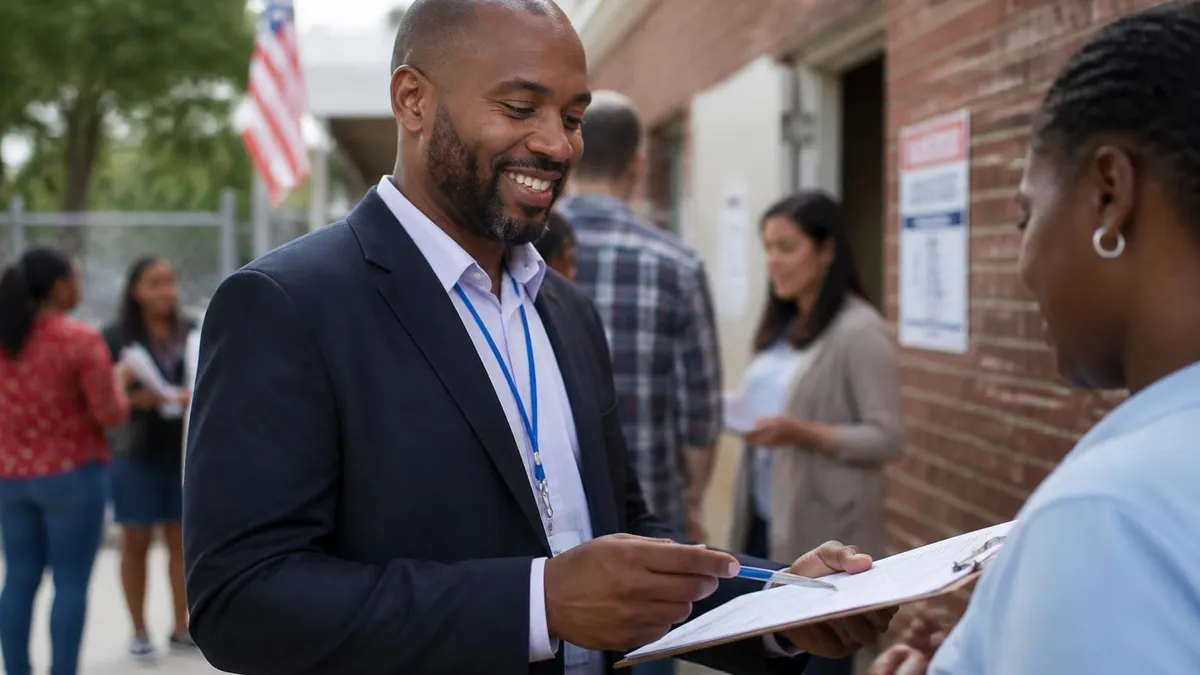
Florida Civic Literacy Exam: Complete 2026 Study Guide, Practice Tests & Pass Strategy

Florida Civic Literacy Exam Practice Test: FCLE Study Guide and Prep
About the Author

Educational Psychologist & Academic Test Preparation Expert
Columbia University Teachers CollegeDr. Lisa Patel holds a Doctorate in Education from Columbia University Teachers College and has spent 17 years researching standardized test design and academic assessment. She has developed preparation programs for SAT, ACT, GRE, LSAT, UCAT, and numerous professional licensing exams, helping students of all backgrounds achieve their target scores.