
Certified Instrument Specialist Study Guide: Complete CIS Exam Prep 2026 October
Master the CIS exam with our complete study guide. Covers cisa certification cost, practice questions, exam format, and proven prep strategies. 📚
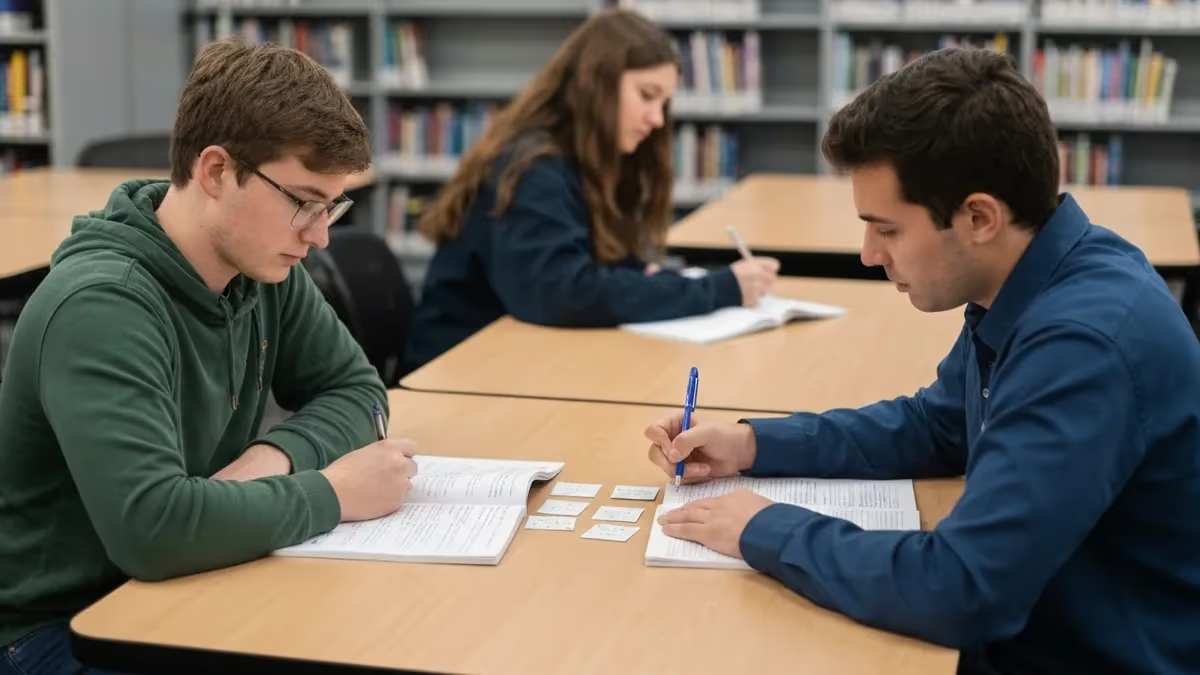
Finding the right certified instrument specialist book and study materials is the single most important decision you will make on your path to earning the CIS credential. The Certified Instrument Specialist exam, administered by the International Association of Healthcare Central Service Materiel Management (IAHCSMM), tests your knowledge across six critical domains that span the entire lifecycle of surgical instruments — from decontamination and cleaning through quality assurance and robotic systems. Without a structured study approach, even experienced sterile processing technicians can struggle to pass this rigorous exam on the first attempt.
The CIS credential sets you apart in the competitive healthcare sterile processing field. Unlike entry-level CRCST certification, the CIS designation signals advanced expertise in the care, handling, inspection, and maintenance of complex surgical instrumentation. Hospitals and surgical centers across the United States increasingly require or prefer CIS-certified technicians for their instrument room and scope processing roles, making this credential a genuine career accelerator. If you are serious about advancing in central service, understanding the full scope of the cisa exam is your first priority.
This study guide was designed to give you everything you need in one place: a breakdown of exam domains, a realistic study schedule, cost information, practice question strategies, and the best resources available in 2026. Whether you are starting your prep from scratch or looking to fill gaps before a retake, the sections below will walk you through each phase of preparation with concrete, actionable guidance. We have structured this guide to mirror the actual exam blueprint so your study time maps directly to tested content.
Before diving into content review, it helps to understand why so many candidates underestimate this exam. The CIS is not simply a harder version of the CRCST. It requires deeper conceptual understanding of instrument metallurgy, mechanical function, sterilization chemistry, and quality management systems. Questions frequently test your ability to apply principles to novel scenarios rather than simply recall definitions. This means rote memorization alone will not carry you — you need to understand the why behind every procedure and standard you study.
One of the most effective preparation strategies is combining a quality certified instrument specialist study guide with regular timed practice sessions. Research consistently shows that active recall through practice questions is more effective than passive re-reading of study materials. The spacing effect — reviewing material at increasing intervals — dramatically improves long-term retention of complex technical content. Both of these evidence-based learning principles should be built into your study plan from day one, not added as an afterthought in the final week before your exam date.
Cost is a legitimate concern for many candidates, and we address the cisa certification cost and cisa exam cost in detail later in this guide. Knowing the full financial picture up front — including application fees, study materials, and potential retake costs — lets you budget appropriately and avoid surprises. Many employers will reimburse CIS exam fees for employees who earn the credential, so check with your HR department before paying out of pocket. Some healthcare systems even provide paid study time or group review sessions for employees pursuing advanced certifications.
Throughout this guide you will find embedded practice quizzes, a weekly study schedule, a comprehensive checklist of exam-day requirements, and a FAQ section that addresses the questions candidates ask most often. Every recommendation here is grounded in the current IAHCSMM CIS exam blueprint and the most up-to-date sterilization standards, including AAMI, AORN, and The Joint Commission guidelines that form the regulatory backbone of this field. Let us get started building the prep strategy that gets you credentialed.
CIS Certification by the Numbers
Key Facts at a Glance
| Item | Value | Details |
|---|---|---|
| Exam Questions | 150 | Multiple choice format |
| Exam Duration | 3 hrs | Time limit for all questions |
| Passing Score | 60%+ | Scaled score of 400 or higher |
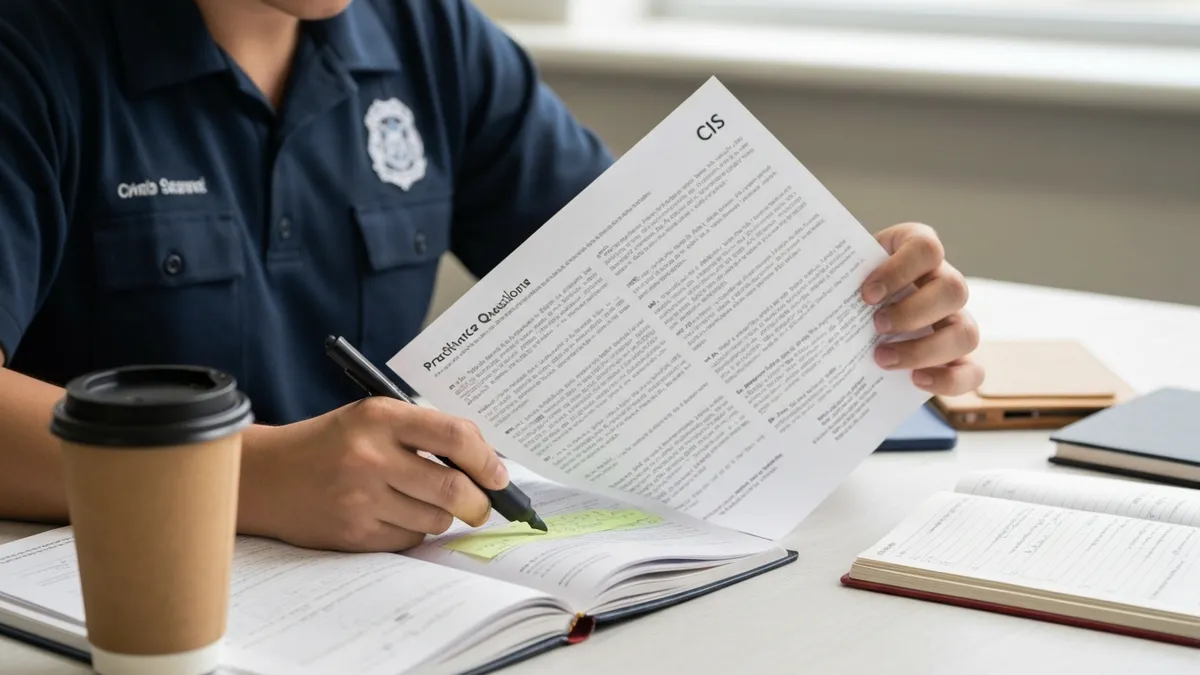
12-Week CIS Study Schedule
- ▸Review IAHCSMM CIS Study Guide chapters on decontamination
- ▸Learn water quality standards and detergent chemistry
- ▸Complete 25 practice questions on cleaning processes
- ▸Create flashcards for microbial terminology
- ▸Study visual inspection techniques and acceptance criteria
- ▸Review functionality testing for hinged instruments
- ▸Learn magnification and lighting standards
- ▸Complete 25 practice questions on inspection
- ▸Study stainless steel grades and passivation
- ▸Review titanium, chrome-plated, and aluminum instruments
- ▸Learn corrosion causes and prevention
- ▸Complete 30 practice questions on manufacturing
- ▸Study wrapping techniques and seal integrity testing
- ▸Review rigid container systems and filter maintenance
- ▸Learn shelf-life policies and event-related sterility
- ▸Complete 30 practice questions on packaging
- ▸Study biological, chemical, and mechanical monitoring
- ▸Review AAMI, AORN, and TJC standards
- ▸Learn recall procedures and documentation requirements
- ▸Complete 35 practice questions on QA
- ▸Study da Vinci and robotic instrument care protocols
- ▸Review powered handpiece cleaning and lubrication
- ▸Learn battery and cable management for powered tools
- ▸Complete 30 practice questions on robotic instruments
- ▸Take a full 150-question timed practice exam
- ▸Score and analyze weak domains
- ▸Re-study lowest-scoring content areas
- ▸Review all flagged flashcards
- ▸Study ISO 9001 and quality management principles
- ▸Review FDA 510(k) basics for instrument classification
- ▸Study sterilization cycle parameters in depth
- ▸Complete 40 targeted QA practice questions
- ▸Focus on high-yield decontamination process steps
- ▸Review common inspection failure points on exams
- ▸Study endoscope reprocessing distinctions
- ▸Complete 40 mixed practice questions
- ▸Complete a full 150-question timed exam under test conditions
- ▸Score within 5 points of passing benchmark
- ▸Review all incorrect answers with rationale
- ▸Identify final weak spots for Week 11 focus
- ▸Dedicate 80% of study time to lowest-scoring domains
- ▸Use spaced repetition flashcards daily
- ▸Complete 50 additional practice questions
- ▸Review IAHCSMM member study resources online
- ▸Complete one short 50-question practice quiz
- ▸Review key formulas and measurement standards
- ▸Confirm exam appointment and testing center logistics
- ▸Rest and avoid heavy studying the night before
The CIS exam is built around six primary content domains, and understanding the weight and scope of each domain is essential for efficient study. Domain 1 covers Decontamination and Cleaning Processes, which tests your knowledge of pre-cleaning protocols, manual and automated cleaning methods, water quality standards, and the validation of cleaning equipment. This domain accounts for approximately 18% of the exam and requires familiarity with ultrasonic cleaner parameters, washer-disinfector cycle validation, and the chemical properties of enzymatic detergents used in sterile processing.
Domain 2 focuses on Instrument Inspection and Testing, covering visual and tactile assessment techniques, acceptance and rejection criteria, and the use of magnification devices. Candidates must understand how to identify defects including pitting, cracking, burrs, and misalignment, as well as how to test the function of ratchets, box locks, and needle holders. This domain also includes evaluation of scissors sharpness, forceps alignment, and the integrity of insulated instruments used in electrosurgical procedures — a technically detailed area where many candidates lose points.
Domain 3, Instrument Manufacturing and Repair, digs into the metallurgical properties that determine instrument performance and longevity. You will be tested on the differences between grades of surgical stainless steel, how passivation protects against corrosion, and the appropriate handling of specialty materials like titanium and chrome-plated instruments. Understanding how improper cleaning agents, incompatible metals, and improper sterilization parameters cause instrument damage is critical for this domain. Our certified instrument specialist practice test content covers these technical nuances extensively.
Domain 4 examines Preparation and Packaging Methods, including set assembly, wrapping techniques, heat sealing parameters, and rigid container system maintenance. Candidates must know the differences between woven and nonwoven wrap materials, the performance standards for pouches and rigid containers, and the correct procedures for documentation and labeling. This domain also covers event-related versus time-related sterility concepts, which remain a source of confusion for many candidates who trained under older time-based policies still occasionally practiced in smaller facilities.
Domain 5 covers Quality Assurance Systems, which is one of the most heavily weighted domains and encompasses biological indicator monitoring, chemical indicator interpretation, mechanical monitoring documentation, and recall procedures. You need to understand the hierarchy of sterilization monitoring, the difference between Class 1 through Class 6 chemical indicators, and the specific protocols for handling a positive biological indicator result. Quality management principles, including documentation, corrective action, and preventive maintenance programs, are all tested within this domain and reflect the regulatory standards set by AAMI ST79 and related guidelines.
Domain 6 addresses Robotic and Powered Instruments, a relatively new domain addition that reflects the rapid adoption of robotic surgical systems in modern operating rooms. Questions in this domain test your understanding of da Vinci instrument care, cleaning adapter requirements, functional testing procedures, and the specific reprocessing limitations that manufacturers mandate for these high-cost, precision instruments. Powered handpiece care — including ultrasonic cleaning restrictions, lubrication protocols, and cable and cord management — is also covered. Many candidates underestimate this domain and allocate too little study time to it, which can cost valuable points on exam day.
Across all six domains, the cisa exam emphasizes application over memorization. Scenario-based questions will present a situation and ask you to identify the correct course of action, the most likely cause of a problem, or the appropriate standard that applies. Preparing with quality cisa practice questions that mirror this application-focused format will build the critical thinking skills you need to navigate these questions efficiently and accurately under timed exam conditions.
CISA Practice Exam Strategies That Work
Active recall is the most evidence-backed study strategy for professional certification exams. Rather than re-reading your certified instrument specialist book passively, actively retrieve information by closing the material and writing down everything you remember about a topic. Research from cognitive psychology shows that this retrieval practice strengthens memory traces far more effectively than passive review, improving both accuracy and speed on the actual cisa exam under timed pressure.
Implement active recall by converting your notes into question-and-answer flashcard pairs, then testing yourself daily. Apps like Anki use spaced repetition algorithms to schedule cards just before you are about to forget them, making your study sessions dramatically more efficient. Aim for at least 30 minutes of active recall practice every day during your 12-week prep period, and prioritize cards from your weakest domains — particularly quality assurance systems and robotic instruments — to close knowledge gaps systematically before exam day.
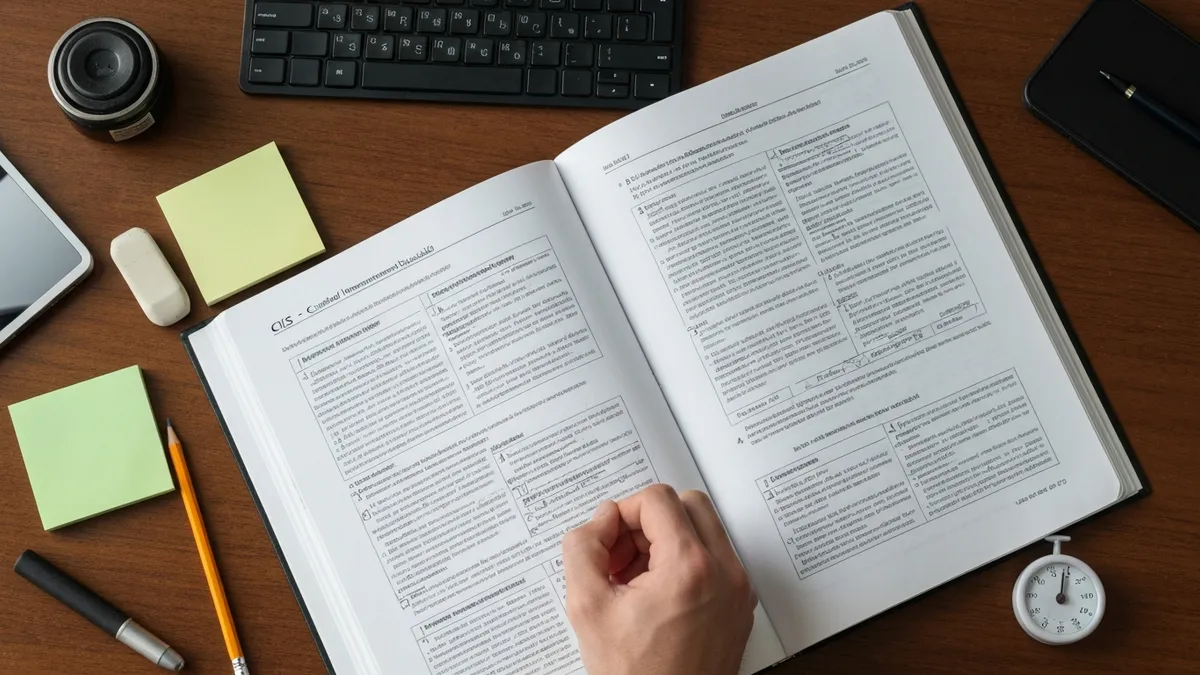
Is the CIS Certification Worth Pursuing in 2026?
- +Significantly higher earning potential — CIS-certified technicians earn 15-25% more than non-credentialed peers on average
- +Demonstrates specialized expertise that differentiates you from the large pool of CRCST-only technicians
- +Required or strongly preferred for supervisory and instrument room lead positions at major health systems
- +Provides comprehensive knowledge of robotic and powered instrument care, which is increasingly in demand
- +Credential is nationally recognized and portable across all 50 states without additional licensure
- +Recertification requirements keep your knowledge current with evolving sterilization standards and technologies
- −Cisa certification cost of $190-$250 plus study materials represents a meaningful upfront investment
- −Requires a minimum of two years of sterile processing experience before eligibility, limiting early-career access
- −Exam difficulty is significantly higher than CRCST, with a pass rate that challenges even experienced technicians
- −12-week study commitment is demanding for working professionals with family and schedule obligations
- −Recertification every five years requires ongoing CEU accumulation, adding a recurring time and cost burden
- −Content on robotic instruments evolves rapidly as new systems enter the market, requiring continuous self-education
CIS Exam Readiness Checklist
- ✓Confirm you meet the IAHCSMM eligibility requirements: minimum two years of full-time sterile processing experience
- ✓Submit your CIS application through the IAHCSMM website and pay the exam fee ($190 member / $250 non-member)
- ✓Purchase or borrow the current edition of the IAHCSMM Certified Instrument Specialist study guide
- ✓Create a 12-week study schedule that allocates time to all six CIS exam domains proportional to their exam weight
- ✓Complete at least three full-length timed practice exams (150 questions, 3 hours each) before your exam date
- ✓Review all six primary content domains using active recall flashcards with spaced repetition software
- ✓Study the key sterilization standards: AAMI ST79, AAMI ST58, AORN guidelines, and TJC Environment of Care
- ✓Schedule your Prometric testing center appointment at least four weeks before your desired exam date
- ✓Gather required identification documents: government-issued photo ID matching exactly the name on your application
- ✓Arrive at the testing center at least 30 minutes early and avoid heavy review the night before to prevent fatigue

Quality Assurance Is the Highest-Yield Domain
Domain 5 (Quality Assurance Systems) consistently accounts for the largest percentage of CIS exam questions and is the domain where candidates most frequently lose points. Allocate at least 20% of your total study time to biological indicator protocols, chemical indicator classification, sterilization load documentation, and recall procedures. Mastering this domain alone can be the difference between a passing and failing score.
Understanding the full financial picture of CIS certification helps you plan effectively and avoid surprises. The cisa exam cost begins with the application fee: IAHCSMM members pay $190, while non-members pay $250. If you are not currently an IAHCSMM member, it is worth calculating whether the membership dues — approximately $75 per year — are offset by the exam fee savings and the additional member benefits, including access to member-exclusive study resources, continuing education discounts, and the IAHCSMM journal. For most candidates who plan to maintain their certification long-term, membership is financially advantageous.
Beyond the exam fee itself, you need to budget for study materials. The official IAHCSMM CIS Study Guide, which is the primary reference for exam content, costs approximately $85-$110 for members and slightly more for non-members. Supplementary resources like practice question banks, flashcard apps, and review courses can add another $50-$150 to your preparation costs depending on which resources you choose. All-in, most candidates spend between $300 and $500 on their CIS exam preparation from application through credentialing — a modest investment relative to the salary premium the credential commands.
If you fail the CIS exam on your first attempt, IAHCSMM allows retakes after a mandatory 90-day waiting period. Each retake requires payment of the full exam fee, which makes passing on the first attempt both financially and logistically important. This is one of the strongest arguments for investing in thorough preparation rather than rushing to test before you are ready. Candidates who schedule their exam before completing their full study plan and fail are not saving time — they are adding cost, delay, and stress to their certification journey.
Eligibility requirements for the CIS exam extend beyond simply paying the application fee. Candidates must hold a high school diploma or GED equivalent and have a minimum of two years of full-time work experience in sterile processing or a closely related field. IAHCSMM also recommends — though does not universally require — that candidates hold the CRCST credential before attempting the CIS, as the foundational knowledge tested in CRCST forms the baseline upon which CIS content is built. Attempting CIS without CRCST knowledge is technically possible but significantly more difficult.
The cisa certification cost picture also includes the recertification component, which is often overlooked by first-time candidates. CIS credentials must be renewed every five years, and recertification requires accumulation of 12 contact hours of continuing education specifically related to instrument care and processing, in addition to the broader CRCST recertification requirements. IAHCSMM offers approved CEU courses through its online learning portal, annual conference sessions, and regional education events, most of which carry member pricing that makes ongoing education more affordable for active IAHCSMM members.
Employer support for CIS certification varies significantly across healthcare organizations. Large academic medical centers and integrated health systems frequently reimburse exam fees and study material costs for employees who earn the credential, and some provide paid study time or dedicated preparation sessions. Smaller community hospitals and ambulatory surgery centers may offer less formal support but are often willing to negotiate reimbursement for employees who demonstrate commitment to the certification process. Before assuming you must pay entirely out of pocket, have a direct conversation with your manager or HR department about available support programs — you may be pleasantly surprised.
Some states are beginning to consider or enact sterile processing technician licensing requirements, which could eventually mandate specific certifications like CIS for certain roles. Staying informed about regulatory developments in your state through IAHCSMM legislative updates is important for career planning. Even in states without current licensing requirements, demonstrating proactive credentialing is a strong signal to employers that you take professional standards seriously — a quality that directly influences hiring, promotion, and compensation decisions in the competitive healthcare labor market of 2026.
If you do not pass the CIS exam, IAHCSMM requires a mandatory 90-day waiting period before you can retest, and you must pay the full exam fee again for each retake attempt. Do not schedule your exam until you are consistently scoring 75% or higher on timed full-length practice exams — rushing to test before you are ready adds cost and delays your credentialing by at least three months per failed attempt.
The best study resources for the CIS exam combine official IAHCSMM materials with high-quality third-party practice question banks and standards documents. The IAHCSMM CIS Study Guide is your non-negotiable foundation — it is written to align directly with the exam blueprint, and every major topic on the exam traces back to content covered in this guide. However, using the study guide alone as your only resource is a common mistake. The guide explains concepts, but it does not give you nearly enough practice applying those concepts in the question format you will encounter on exam day.
Third-party cisa practice questions are essential for building the test-taking skills that complement content knowledge. Quality practice question banks explain not just why the correct answer is right but also why each distractor answer is wrong — this rationale-based learning is far more valuable than simply checking your answer and moving on.
Look for question banks that are organized by domain so you can target your weakest areas, and choose resources that clearly indicate when their content was last updated to reflect current AAMI and AORN standards. Outdated practice questions based on superseded standards can actually hurt your preparation by instilling incorrect information.
Online study groups and peer review sessions offer another layer of preparation that many successful candidates cite as highly valuable. IAHCSMM maintains an active member community with forums and regional chapter events where CIS candidates share study tips, discuss challenging concepts, and support each other through the preparation process.
Explaining concepts to peers is a powerful learning technique — if you can teach a topic clearly, you genuinely understand it. If you struggle to explain it, that is a signal that you need to study it further before exam day. Our comprehensive certified instrument specialist practice test resources are designed to complement these peer learning strategies with structured, domain-specific question practice.
Audio and video learning resources have expanded significantly in recent years and offer valuable supplementary preparation options for candidates who learn better from hearing and watching than from reading. IAHCSMM offers webinar recordings and online course modules through its member portal, and several experienced sterile processing educators publish instructional content on professional platforms. These resources are particularly effective for visual and auditory learners who find textbook study alone difficult to sustain across a 12-week preparation period. Mixing modalities — reading, watching, listening, and practicing — keeps study sessions engaging and reinforces learning through multiple cognitive pathways.
Physical flashcards remain one of the most portable and effective study tools, especially for the technical terminology, measurement standards, and classification systems that appear frequently on the CIS exam. Writing the cards by hand rather than simply typing them has been shown to improve retention, as the physical act of writing engages deeper cognitive processing than keyboard input.
Carry a small deck of cards focused on your weakest domain with you throughout the day — review during breaks, commutes, or any other idle moments. Over a 12-week period, these brief review sessions accumulate into substantial additional study time without requiring dedicated blocks of time you may struggle to find.
The week before your exam, shift your focus from learning new material to consolidating and reviewing what you already know. Attempting to cram new topics in the final days before your exam typically increases anxiety without meaningfully improving performance. Instead, review your flashcard deck, skim the key sections of your study guide, and complete one shorter practice quiz to maintain confidence. Ensure you know the logistics of your testing center — location, parking, check-in procedures, and permitted identification documents. A calm, confident, well-rested candidate consistently performs better than an exhausted one who studied frantically the night before.
Finally, remember that the cis practice test resources available through PracticeTestGeeks are designed to closely mirror the difficulty level and question style of the actual CIS exam. Regular use of these practice tools throughout your 12-week schedule — not just in the final days before your exam — builds the cumulative knowledge and test-taking confidence that consistently correlates with first-attempt exam success. Combine our practice questions with the official IAHCSMM study guide and the structured schedule outlined in this guide, and you will enter your exam date with every advantage in your favor.
On exam day, the technical preparation you have done over the previous 12 weeks is your primary asset, but how you manage the exam itself also matters. Begin by reading every question carefully before looking at the answer choices. The CIS exam is known for carefully worded questions where a single word — such as "first," "best," "most," or "except" — completely changes what is being asked.
Candidates who read quickly and assume they know what a question is asking before finishing it frequently select wrong answers on questions they actually knew the content for. Slow, deliberate reading is a skill worth practicing during your timed simulations.
Use a systematic elimination strategy when you encounter difficult questions. Even if you are not immediately certain of the correct answer, you can often eliminate one or two obviously incorrect distractors, which significantly improves your odds if you need to make an educated guess.
Never leave a question blank — the CIS exam does not penalize for incorrect answers, so a guess always gives you a chance at a point. Mark difficult questions for review using the exam interface's flagging tool, then move on without dwelling on them. Return to flagged questions only after you have worked through all remaining items.
Time management during the exam is crucial. With 150 questions in 3 hours, you have an average of 72 seconds per question. In practice, many straightforward knowledge-recall questions take 20-30 seconds, which gives you a time bank to spend on more complex scenario-based questions. In your timed practice exams, track how many questions you complete in the first hour to calibrate your pacing. If you reach question 50 after 60 minutes, you are on pace. If you are significantly behind that benchmark, you need to accelerate by being more decisive on straightforward questions where you know the answer.
After the exam, IAHCSMM delivers results electronically, typically within a few business days. The score report includes both a pass/fail determination and a domain-by-domain performance breakdown. If you pass, your CIS certificate and digital credential will be issued promptly, and you can begin using the CIS designation on your professional profiles, resume, and business cards immediately. If you do not pass, the domain breakdown is invaluable for targeting your retake preparation — focus your 90-day wait period entirely on the domains where your score was lowest.
Maintaining your CIS credential after earning it requires ongoing professional development. The five-year recertification cycle requires you to earn CEUs in instrument-specific content, which means you need to stay engaged with industry education throughout your career rather than viewing certification as a one-time event. IAHCSMM's annual conference, Central Service Week events, and online learning portal offer numerous approved CEU opportunities each year. Building continuing education into your annual professional development plan ensures you never face a recertification crunch at the end of your five-year cycle.
Career advancement opportunities for CIS-certified professionals have expanded substantially in recent years as healthcare facilities invest more heavily in surgical instrument sterilization infrastructure. Lead instrument technician, instrument room supervisor, sterile processing educator, and central service manager roles frequently list CIS certification as a preferred or required qualification. Many facilities offer salary differentials for CIS holders at every level, from staff technician through department director. In large health systems, CIS-certified professionals are also being recruited for instrument inventory management, vendor relations, and capital equipment evaluation roles that blend clinical knowledge with operational responsibility.
The CIS certification community is also a valuable professional network that grows in value over time. Fellow CIS holders in your IAHCSMM chapter and in online professional communities share expertise on challenging instrument processing problems, regulatory changes, emerging technologies, and career opportunities. Investing in these professional relationships during your preparation period — by participating in study groups, attending local chapter meetings, and engaging in online forums — creates a network that will serve you throughout your career, long after the memories of your exam preparation have faded.
Sample CIS - Certified Instrument Specialist Practice Questions
Try these questions from our free CIS - Certified Instrument Specialist practice tests. The correct answer and an explanation follow each question.
What is a best practice in Certified Instrument Specialist sterilization methods?
- A. A method or technique recognized as superior based on evidence and expert consensus
- B. Any practice that is easy to implement
- C. The cheapest available approach
- D. A practice used only by large organizations
Answer: A. A method or technique recognized as superior based on evidence and expert consensus
Best practices are methods, techniques, or approaches that are recognized through evidence, research, and expert consensus as producing superior results and are recommended for adoption.
In Certified Instrument Specialist, what role does continuing education play in sterilization methods?
- A. To keep professionals current with evolving standards, technologies, and best practices
- B. To prevent professionals from advancing in their careers
- C. To replace initial certification requirements
- D. To increase testing frequency for compliance purposes
Answer: A. To keep professionals current with evolving standards, technologies, and best practices
Continuing education ensures professionals stay current with new developments, evolving standards, and emerging best practices in their field, maintaining competence throughout their careers.
In Certified Instrument Specialist, why is sterilization methods knowledge important for professional certification?
- A. It demonstrates competence and ensures practitioners meet established standards
- B. It is only required for administrative purposes
- C. It has no practical relevance to daily work
- D. It is important only for entry-level positions
Answer: A. It demonstrates competence and ensures practitioners meet established standards
Professional certification in specific knowledge areas demonstrates that practitioners have met established competency standards, ensuring quality of service and public protection.
What information must be documented on a loaner instrument tracking form to ensure complete traceability?
- A. Vendor name only
- B. Patient name and procedure date only
- C. Vendor name, instrument details, sterilization cycle data, lot numbers, and patient identification
- D. Sterilization cycle number and date only
Answer: C. Vendor name, instrument details, sterilization cycle data, lot numbers, and patient identification
Comprehensive documentation linking vendor, instrument details, sterilization data, and patient information ensures full traceability and supports product recall response.
Take the full CIS - Certified Instrument Specialist practice test
CIS Questions and Answers

Associates in CIS & CISA Certification: Complete 2026 Guide
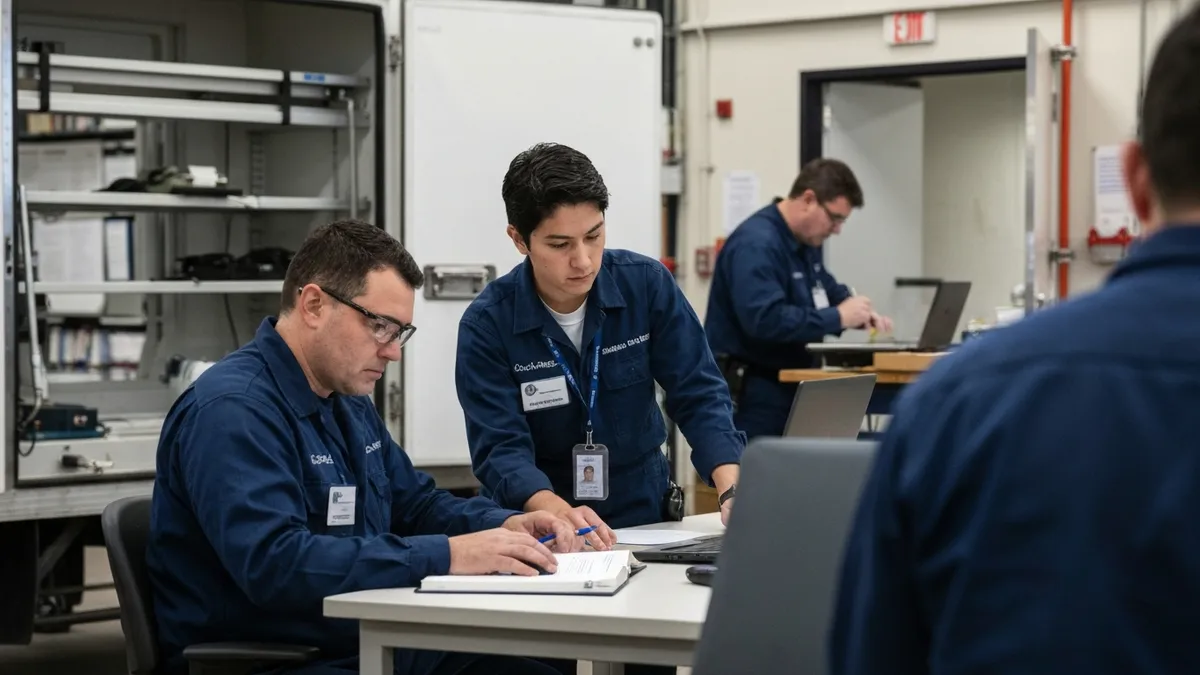
CIS Certification: Complete 2026 Guide to Becoming a Certified Instrument Specialist

CIS Test Practice: Complete Study Guide for the Certified Instrument Specialist Exam

CIS (Certified Instrument Specialist) Test | Official Guide
CIS Practice Test PDF (Free Printable 2026)
About the Author

Educational Psychologist & Academic Test Preparation Expert
Columbia University Teachers CollegeDr. Lisa Patel holds a Doctorate in Education from Columbia University Teachers College and has spent 17 years researching standardized test design and academic assessment. She has developed preparation programs for SAT, ACT, GRE, LSAT, UCAT, and numerous professional licensing exams, helping students of all backgrounds achieve their target scores.
Join the Discussion
Connect with other students preparing for this exam. Share tips, ask questions, and get advice from people who have been there.
View discussion (9 replies)