
CIS Test Practice: Complete Study Guide for the Certified Instrument Specialist Exam
Master the CIS exam with free cisa practice questions, study schedules, and tips. Cut cisa certification cost with smart prep. ✅

If you are preparing for the cis test medical professionals rely on to validate sterile processing expertise, you are joining a growing field where credential holders command higher salaries and greater career stability. The Certified Instrument Specialist (CIS) credential, administered by the International Association of Healthcare Central Service Materiel Management (IAHCSMM), is the premier benchmark for surgical instrument technicians across the United States. Understanding what the exam covers, how it is structured, and how to build an effective study plan is essential before you sit for this high-stakes assessment.
The CIS credential signals to employers that you possess the technical knowledge needed to handle, inspect, decontaminate, package, sterilize, and store complex surgical instruments safely and reliably. Hospitals, ambulatory surgery centers, and specialty clinics increasingly require this certification as a condition of employment or promotion. With patient safety regulations tightening every year, the demand for credentialed sterile processing professionals has never been stronger, making now an ideal time to invest in your preparation.
Many candidates underestimate the breadth of topics covered on the CIS exam. The test draws from instrument anatomy, decontamination chemistry, packaging science, sterilization physics, quality assurance frameworks, and even robotic-assisted surgical instrument protocols. A scattered study approach — reading random notes the week before — routinely leads to failure. A structured, domain-by-domain preparation strategy, backed by cisa practice questions that mirror actual exam language, produces dramatically better outcomes.
Cost is another major consideration. The cisa certification cost includes both the IAHCSMM application fee and any study materials you purchase. Many employers reimburse certification expenses, but you should confirm your facility's policy before enrolling. Even if you are self-funding, the return on investment is clear: CIS holders typically earn $4,000–$8,000 more per year than uncredentialed peers, and the credential opens doors to lead technician and supervisory roles that are otherwise inaccessible.
One of the most effective ways to prepare is through timed practice tests that replicate the pacing and question style of the real exam. Working through realistic questions reveals knowledge gaps early enough to address them, builds the mental stamina needed for a multi-hour seated exam, and reduces test-day anxiety through familiarity. Research consistently shows that retrieval practice — testing yourself rather than passively re-reading — produces stronger long-term retention of technical material.
This guide walks you through every aspect of CIS exam preparation: the exam's format and domain weights, a proven week-by-week study schedule, domain-specific content deep dives, essential test-taking strategies, and free practice resources. Whether you are a first-time candidate with six months to prepare or a re-taker with four weeks until your retake date, you will find actionable guidance here. Bookmark this page and return to it as a central hub throughout your study journey.
Throughout this article you will also find free quiz tiles covering every major CIS domain — decontamination, inspection, manufacturing, packaging, quality assurance, and robotic instruments. Each quiz is crafted to match the knowledge level and question style of the official exam, giving you the closest available simulation of the real test experience without paying for expensive third-party question banks. Let's begin building the study plan that gets you certified.
CIS Certification by the Numbers
Key Facts at a Glance
| Item | Value | Details |
|---|---|---|
| IAHCSMM Exam Fee | $139 | Member pricing; $189 non-member |
| Total Exam Questions | 150 | 125 scored + 25 unscored pilot |
| Exam Time Limit | 3 Hours | Avg. 72 seconds per question |
| Passing Score (est.) | 70% | Approximately 88 correct answers |

8-Week CIS Exam Study Schedule
- ▸Read IAHCSMM textbook chapters on decontamination principles and PPE requirements
- ▸Study cleaning agent classifications: enzymatic, neutral pH, alkaline, and acid detergents
- ▸Complete 30 decontamination practice questions and review all rationales
- ▸Memorize manual cleaning steps for lumened instruments versus solid instruments
- ▸Study inspection criteria for box locks, ratchets, jaws, and tungsten carbide inserts
- ▸Review functional testing methods: tip test, ratchet test, and tension test
- ▸Complete 30 instrument inspection practice questions
- ▸Create a reference card for common instrument defects and rejection criteria
- ▸Learn stainless steel grades (304, 316), titanium alloys, and their sterilization compatibility
- ▸Study instrument repair techniques: tip replacement, jaw realignment, and screw tightening
- ▸Complete 25 manufacturing and repair practice questions
- ▸Review OEM documentation and loaner instrument tracking requirements
- ▸Study wrapping techniques: sequential wrap, simultaneous wrap, and pouch packaging
- ▸Review sterilization wrap classifications and acceptable seal integrity standards
- ▸Complete 30 packaging practice questions and review rationales
- ▸Memorize tray assembly best practices: tip protection, weight limits, and instrument placement
- ▸Study biological, chemical, and mechanical monitoring requirements and documentation
- ▸Review AAMI standards and Joint Commission sterile processing requirements
- ▸Complete 30 quality assurance practice questions
- ▸Learn event-related versus time-related sterility maintenance policies
- ▸Study da Vinci robotic instrument reprocessing protocols and endoscope reprocessing
- ▸Review powered instrument lubrication, sterilization, and inspection requirements
- ▸Complete 25 robotic and powered instrument practice questions
- ▸Review manufacturer Instructions for Use (IFU) compliance requirements
- ▸Take two timed 150-question full practice exams under simulated test conditions
- ▸Score each exam and identify domains where accuracy falls below 75%
- ▸Re-read textbook sections corresponding to missed question categories
- ▸Complete targeted 20-question mini-quizzes on each weak domain
- ▸Review all flashcards, reference cards, and notes created in weeks 1–6
- ▸Complete one final 50-question timed practice quiz for confidence building
- ▸Confirm exam site location, required ID, and arrival time
- ▸Rest, hydrate, and avoid cramming the night before the exam
The CIS exam is divided into six content domains, each carrying a specific percentage weight that determines how many questions will address that topic area. Understanding the domain weighting is the single most important strategic insight you can bring to your preparation. Spending equal time on every domain is mathematically inefficient — you should proportionally weight your study hours to match the exam's own emphasis. Decontamination and Cleaning Processes typically carries the heaviest weight, followed closely by Quality Assurance Systems and Preparation and Packaging Methods.
Decontamination covers the complete workflow from receiving contaminated instruments in the soiled receiving area through manual and automated cleaning, rinsing, and preparation for the next processing step. Expect questions about the correct pH ranges for enzymatic detergents (typically 6.0–8.0), the required contact time for disinfectants, ultrasonic cleaner frequency specifications (typically 25–50 kHz), washer-disinfector cycle parameters, and the specific personal protective equipment required at each stage. Knowing not just the what but also the why behind each protocol is essential, because the exam frequently presents scenario-based questions that require you to apply principles rather than recall isolated facts.
Instrument Inspection and Testing is a domain that rewards hands-on experience, but candidates without extensive floor time can compensate with diligent study. Key concepts include the visual inspection sequence for scissors (blade alignment, cutting edge integrity, screw tension), hemostatic forceps (ratchet engagement, jaw closure with no gap), and needle holders (jaw grip, spring tension). You should also understand the difference between a functional test — verifying the instrument performs its intended task — and a cosmetic inspection that flags surface pitting, corrosion, or staining that may compromise sterilization efficacy.
Preparation and Packaging Methods tests your knowledge of how instruments are assembled into sets, wrapped, and sealed before sterilization. Topics include the two-layer sequential wrapping technique, the critical importance of proper pouch sealing (seal width, integrity checks), maximum tray weight guidelines (typically 25 pounds for rigid containers), instrument tip protection methods, and labeling requirements including lot control numbers. The exam also covers shelf-life policies, with questions distinguishing between event-related expiration — where sterility is considered maintained until the package is compromised — and time-related expiration policies some facilities still use.
Quality Assurance Systems is perhaps the most documentation-heavy domain. This area covers biological indicator (BI) testing protocols — including the difference between Class 1 and Class 5 chemical indicators — the required frequency for BI testing in each sterilizer type, and the corrective action protocol when a BI fails. Candidates should memorize that a failed BI requires immediate sterilizer shutdown and recall of all items processed since the last passing BI cycle. AAMI ST79, the primary standard for steam sterilization in healthcare, is the authoritative reference document and is frequently cited in exam questions.
Robotic and Powered Instruments represents the newest and most rapidly evolving domain on the CIS exam. Questions cover da Vinci robotic instrument reprocessing — including the specific cleaning tools required for the instrument's internal channels — as well as the unique sterilization compatibility requirements (most robotic instruments are only compatible with steam sterilization, not low-temperature methods). Powered instruments such as drills, saws, and shavers add complexity because each manufacturer's Instructions for Use (IFU) must be followed precisely, and these IFUs can differ significantly across brands and models.
For a comprehensive cisa practice exam experience that covers all six domains, organized practice is the most reliable preparation strategy.
Instrument Manufacturing and Repair rounds out the six domains and addresses the material science underlying surgical instruments. You need to understand the properties of 300-series stainless steel (used for most general instruments), 400-series stainless steel (used for cutting instruments due to its hardness), and titanium (lightweight and MRI-compatible). Common repair scenarios include re-tipping scissors, replacing box-lock pins, and addressing electrosurgical insulation damage on laparoscopic instruments. The exam may also include questions about the legal and liability considerations of repairing instruments outside of OEM-authorized channels, an area of increasing regulatory scrutiny.
CISA Practice Exam Strategies That Work
Active recall is the practice of testing yourself on material rather than passively re-reading notes or highlighting text. Research in cognitive science consistently shows that retrieval practice produces 40–60% better long-term retention than passive review. For CIS preparation, this means closing your textbook after reading a chapter and writing down everything you can remember about the topic before checking your accuracy. Flashcards, blank-page summaries, and practice questions all engage the active recall mechanism effectively.
The most powerful active recall tool for CIS candidates is the timed practice quiz. Set a timer for 72 seconds per question — the average pace required on the actual exam — and work through 30-question blocks without looking up answers. After each block, review every question: not just the ones you missed, but also the ones you got right. Understanding why a correct answer is correct deepens your conceptual understanding and prevents superficial pattern-matching that collapses under novel exam phrasing. Aim for at least 300 practice questions across all six domains during your preparation period.
Is the CIS Certification Worth the Investment?
- +Increases average annual salary by $4,000–$8,000 compared to uncredentialed technicians
- +Required or preferred by a growing number of hospital systems for sterile processing employment
- +Demonstrates verified competency in all six critical instrument handling domains
- +Provides professional credibility that strengthens promotion applications to lead technician roles
- +Credential is nationally recognized and transferable across healthcare systems and states
- +Renewing every five years keeps your knowledge current as technology and standards evolve
- −The cisa certification cost ranges from $139–$189 plus study materials, totaling $300–$600
- −Requires documented work experience in sterile processing before eligibility
- −Exam covers highly technical material that demands 60–80 hours of structured preparation
- −Must be renewed every five years with continuing education requirements
- −No partial credit — a single broad knowledge gap can push your score below the passing threshold
- −Exam scheduling requires planning ahead; test center availability varies by region
CIS Exam Readiness Checklist
- ✓Complete the IAHCSMM online application and verify all work experience documentation is submitted
- ✓Purchase or borrow the current IAHCSMM Central Service Technical Manual (latest edition)
- ✓Build a study schedule allocating time proportionally to each domain's exam weight
- ✓Complete at least 300 timed practice questions across all six CIS content domains
- ✓Score above 80% on at least two full-length 150-question practice exams before scheduling
- ✓Create domain-specific flashcard decks and review them daily using spaced repetition
- ✓Review AAMI ST79 and ST58 standards summaries for sterilization quality assurance content
- ✓Study manufacturer IFU compliance requirements for robotic and powered surgical instruments
- ✓Confirm your exam appointment date, location, required government-issued photo ID, and parking
- ✓Plan to arrive at the testing center at least 30 minutes early on exam day

Domain Weighting Changes Your Study Math
Spending equal time on all six domains is a common mistake that costs candidates points on low-weight sections while leaving high-weight domains underprepared. Allocate roughly 22% of your study time to Decontamination and Cleaning, 20% to Quality Assurance, and 18% to Preparation and Packaging — matching the exam's own emphasis. This targeted approach consistently improves pass rates among candidates who track their domain-level practice scores.
Understanding the full cost picture of CIS certification helps you budget accurately and avoid surprise expenses that derail your preparation timeline. The primary cost is the IAHCSMM examination fee: $139 for current IAHCSMM members and $189 for non-members at the time of this writing. Membership in IAHCSMM costs approximately $99 per year, meaning that if you are not already a member, joining specifically for the discounted exam fee still saves you money and provides access to the member-only study resources included in the membership portal. The cisa exam cost therefore depends meaningfully on your membership status.
Beyond the exam fee itself, budget for study materials. The IAHCSMM Central Service Technical Manual is the authoritative reference for all CIS exam content and costs approximately $75–$95 depending on format. Third-party study guides, practice question banks, and online courses range from $50 to $300 depending on depth and format. Many candidates find that a combination of the official textbook plus a high-quality free practice question resource covers the material more thoroughly than expensive all-in-one packages that sometimes lack question rationale depth.
Eligibility requirements are a separate consideration from cost. To sit for the CIS exam, you must hold a high school diploma or equivalent and have a minimum of one year of full-time work experience in sterile processing instrument-related functions. This work experience must be documented and verifiable — typically through a letter from your employer confirming your role, department, and tenure. Candidates who are still accumulating work experience can begin studying immediately, since the knowledge domains are stable and exam registration can proceed once eligibility is met.
The registration process begins on the IAHCSMM website, where you create an account, complete the application form, upload your work experience documentation, and pay the examination fee. After IAHCSMM approves your application — typically within 7–10 business days — you receive an Authorization to Test (ATT) letter that allows you to schedule your exam through Pearson VUE, IAHCSMM's testing partner. Pearson VUE operates testing centers in most major metropolitan areas and also offers online proctored testing options for candidates in remote locations.
Exam scheduling flexibility varies by location and time of year. Urban testing centers typically have availability within two to three weeks; rural areas may require more lead time. Online proctored testing has made scheduling significantly more flexible for candidates nationwide, though technical requirements — a stable internet connection, a private room, and a compatible webcam — must be verified before booking. Once scheduled, you can reschedule up to 24 hours before your appointment without penalty, though cancellations within 24 hours forfeit the exam fee.
For candidates who do not pass on the first attempt, IAHCSMM allows retakes after a mandatory 30-day waiting period. Each retake requires payment of the full examination fee, making the cisa exam cost a compounding concern for multiple-attempt candidates. This financial reality underscores the value of thorough preparation: investing 60–80 hours over eight weeks is far less expensive than paying the exam fee two or three times. Reviewing your score report after a failed attempt is critical — IAHCSMM provides domain-level feedback that identifies your specific weak areas, allowing you to target retake preparation precisely.
Many healthcare employers reimburse CIS exam fees and study material costs as part of professional development benefits. Before self-funding your certification, speak with your HR department or direct supervisor about available educational assistance programs. Some facilities also offer paid study time, access to institutional textbook copies, or peer study groups led by already-certified colleagues. Using these employer resources can reduce your out-of-pocket costs substantially and demonstrates initiative that hiring managers and department directors notice. Take the time to explore a cis practice test before your official exam date to confirm your knowledge level across all domains.
IAHCSMM verifies work experience documentation before issuing your Authorization to Test. Submitting incomplete or inaccurate employment records is the most common cause of application delays, sometimes pushing candidates' exam dates back by weeks. Ensure your employer letter specifies your exact job title, department, and dates of employment in a sterile processing instrument-handling role before submitting your application.
Walking into the Pearson VUE testing center well-prepared requires more than just knowledge — it requires strategic test-taking skills that help you maximize your score under time pressure and cognitive fatigue. The CIS exam's 150-question format across three hours means you have an average of 72 seconds per question, which is comfortable for straightforward recall questions but can feel tight when you encounter complex scenario-based items that require careful reading and elimination. Building the habit of disciplined pacing during practice is the single most important test-day skill you can develop.
The mark-and-review feature available in the Pearson VUE testing interface is a powerful tool when used correctly. If a question stops you for more than 90 seconds, mark it, select your best guess, and move forward. Spending three minutes on one difficult question while rushing through three easier questions at the end is a losing trade. Return to marked questions after completing the full exam — you will often find that questions later in the test provide contextual clues that help resolve earlier uncertainty, and your anxiety about a specific question diminishes once you have answered everything else.
Elimination strategy is particularly valuable on the CIS exam, which uses four-answer multiple-choice format. Even partial knowledge helps: if you can confidently eliminate two of four options, you have reduced a 25% random-guess probability to a 50% informed probability. Common elimination cues include answers that describe unsafe practices (always wrong), answers that contradict AAMI or manufacturer IFU guidance, and answers that use absolute language (always, never) applied to situations where exceptions logically exist. Calibrate your elimination judgment by reviewing answer rationales extensively during practice.
Managing cognitive load across a three-hour exam requires physical preparation as well as intellectual preparation. Hydration and nutrition matter more than most candidates realize. Dehydration equivalent to just 1–2% of body weight measurably impairs attention and working memory — both critical for scenario-based exam questions.
Eat a balanced meal two to three hours before your exam, avoid high-sugar foods that cause energy crashes mid-exam, and consider bringing a permitted snack for the break period if the testing center allows it. Sleep the night before is non-negotiable: sleep deprivation reduces exam performance by an average of 10–15% even when the candidate feels subjectively alert.
Anxiety management on test day begins with preparation confidence. Candidates who have completed 300+ practice questions and scored above 80% on multiple full-length practice exams consistently report lower test-day anxiety than those who relied primarily on passive reading. If anxiety persists despite strong practice performance, controlled breathing exercises — four counts in, hold four, out four — activate the parasympathetic nervous system and reduce the cortisol spike that degrades working memory. Practice this technique during your study period so it feels automatic on exam day rather than effortful.
After submitting your exam, Pearson VUE provides a preliminary pass/fail result immediately on the testing center screen. Official score reports from IAHCSMM typically arrive within two to three weeks and include domain-level breakdowns that are valuable regardless of whether you passed.
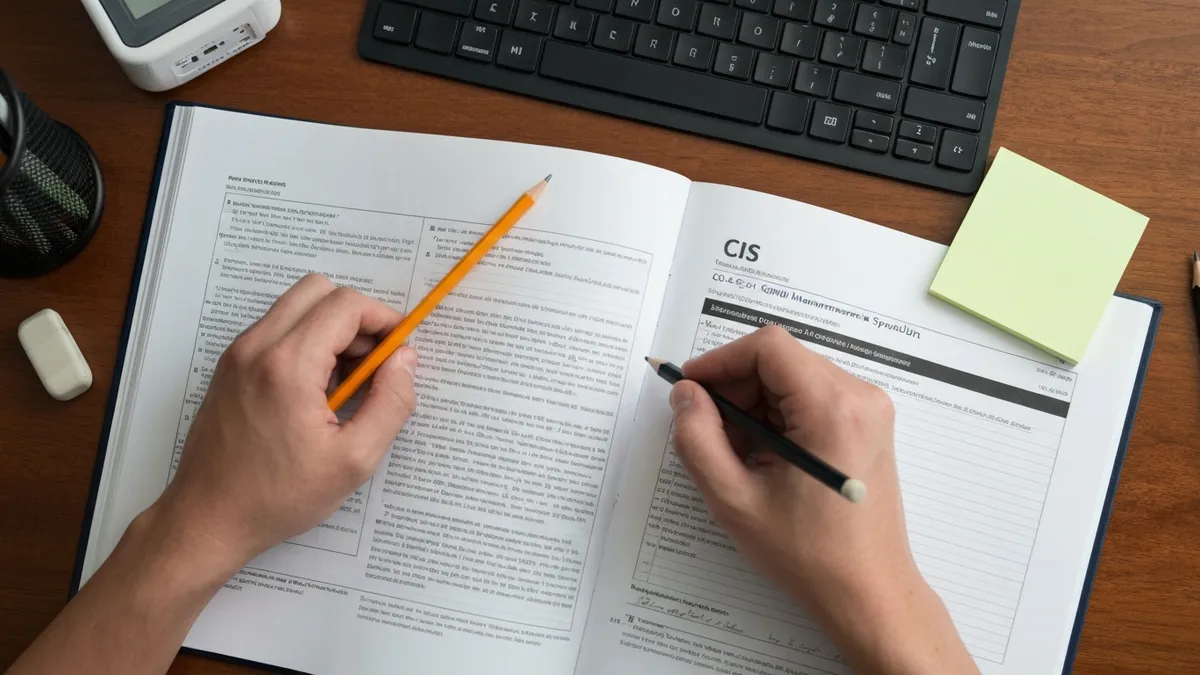
Passing candidates should request their physical certificate promptly and update their professional profiles — LinkedIn, hospital credentialing files, and any certification verification systems used by your employer — to document the new credential immediately. For candidates pursuing an even deeper understanding of exam strategy and content coverage, a cisa practice test in printable format can help you simulate paper-based review sessions and annotate complex question rationales by hand.
If your preliminary result is a fail, resist the impulse to schedule an immediate retake. The mandatory 30-day waiting period exists for good reason: use it to review your domain-level score report methodically, identify the two or three specific content areas that most significantly dragged your score below passing, and design a targeted four-week remediation plan that concentrates on those domains. Candidates who approach retakes with domain-specific remediation rather than general re-study improve their scores by an average of 8–12 percentage points, putting most in a strong position to pass their second attempt.
In the final weeks before your CIS exam, shifting your study approach from acquisition to consolidation produces the strongest results. During the first six weeks of an eight-week plan, you build knowledge domain by domain. In weeks seven and eight, the goal is integration — connecting concepts across domains, identifying the underlying principles that govern multiple content areas, and stress-testing your knowledge under realistic timed conditions. This consolidation phase is where the exam actually gets won or lost for most candidates.
Full-length timed practice exams are the centerpiece of the consolidation phase. Take at least two complete 150-question practice exams under conditions that mirror the actual test: sit at a desk, set a three-hour timer, use no reference materials, and do not pause. After each exam, score yourself immediately and calculate your domain-level accuracy rates. Any domain where your accuracy falls below 75% deserves targeted attention before exam day — work through 20–30 additional domain-specific questions and re-read the relevant textbook chapter before your second practice exam.
Error analysis is the highest-use activity during the final preparation phase. For every question you answer incorrectly, ask three follow-up questions: What did I misunderstand? What is the correct underlying principle? How might this principle appear in a differently worded question? Writing brief notes in response to these three prompts — rather than simply moving on — dramatically deepens your understanding and prevents you from making the same conceptual error on the real exam. Many candidates who fail the CIS exam report answering similar questions incorrectly multiple times across different practice sessions, which is a sign of insufficient error analysis.
Time management simulation is a practical skill that deserves deliberate practice. In your full-length practice exams, track how many questions you complete in each 30-minute block and note where you feel rushed. Most candidates find that decontamination and packaging questions are faster (strong conceptual understanding, clear answer) while quality assurance scenario questions are slower (require integrating multiple facts). Understanding your personal pace profile lets you build a pacing strategy: allocate slightly more time to your slower domains while banking time on your faster ones.
Peer study groups, whether in-person or virtual, provide learning benefits that solo study cannot fully replicate. Explaining a concept to another person — why a failed biological indicator requires a full load recall, or why titanium instruments cannot be processed in certain low-temperature sterilization systems — forces you to construct a clear mental model that reveals gaps in your own understanding. IAHCSMM's member community forums and social media groups connect candidates nationwide, and many local chapters organize study sessions in the weeks before popular exam dates.
Professional development resources beyond the standard textbook can add depth to specific domains. Instrument manufacturer websites publish free IFU documents for their product lines — reading the actual Stryker or Medtronic IFU for a powered drill system is more authoritative than a textbook summary and directly prepares you for questions involving manufacturer-specific protocols. AAMI publishes free summaries of key standards that capture the most exam-relevant content without requiring purchase of the full standard documents. Incorporating these primary source materials into your final weeks of study improves your preparation above the average candidate's reliance on secondary summaries.
Above all, trust the preparation process and avoid the common pitfall of second-guessing well-prepared answers on test day. Research on multiple-choice test performance consistently shows that first-answer changes — moving from a correct answer to an incorrect one because of momentary doubt — are more common than beneficial changes.
Only change an answer if you have a clear, specific reason based on information you noticed later in the exam, not because of vague anxiety about your original choice. Confidence built through thorough preparation is a performance asset; honor it on exam day by committing to your best-prepared answers and finishing the exam with the same disciplined approach you brought to every practice session throughout your study journey.
Sample CIS - Certified Instrument Specialist Practice Questions
Try these questions from our free CIS - Certified Instrument Specialist practice tests. The correct answer and an explanation follow each question.
How should box lock joints on hemostats and clamps be inspected?
- A. By verifying they open to exactly 90 degrees
- B. By checking for cracks, looseness, and proper alignment of the jaws
- C. By measuring the gap between the jaws with a feeler gauge
- D. By testing them under an ultraviolet light
Answer: B. By checking for cracks, looseness, and proper alignment of the jaws
Box lock joints should be inspected for cracks, looseness or wobble when jaws are closed, and proper alignment of jaw tips and serrations.
When inspecting serrations on a surgical instrument, the technician should look for:
- A. Uniform depth and pattern without bent, broken, or missing teeth
- B. A shiny, polished appearance indicating wear
- C. Serrations that are wider at the tip than at the base
- D. A brown oxide coating that protects the serration edges
Answer: A. Uniform depth and pattern without bent, broken, or missing teeth
Serrations must be uniform, intact, and undamaged to grip tissue or materials properly. Bent, broken, or missing serration teeth reduce the instrument's holding ability and may indicate the instrument needs repair or replacement.
What does CMS (Centers for Medicare and Medicaid Services) Condition of Participation require regarding reprocessing of surgical instruments in accredited hospitals?
- A. Only instruments used on Medicare patients must be sterilized
- B. Facilities must follow nationally recognized guidelines for sterilization and disinfection
- C. CMS delegates all reprocessing standards to individual state health departments only
- D. Flash sterilization is preferred and required by CMS for all instruments
Answer: B. Facilities must follow nationally recognized guidelines for sterilization and disinfection
CMS Conditions of Participation require accredited hospitals to follow nationally recognized infection control guidelines, which includes AAMI and CDC standards for instrument reprocessing.
What is the forging process in surgical instrument manufacturing?
- A. Casting molten steel into molds
- B. Shaping heated steel blanks under high pressure using dies
- C. Welding multiple steel pieces together
- D. Cutting instruments from flat sheet steel with lasers
Answer: B. Shaping heated steel blanks under high pressure using dies
Forging involves heating steel blanks and shaping them under extreme pressure in precision dies, producing instruments with superior grain structure and durability.
Take the full CIS - Certified Instrument Specialist practice test
CIS Questions and Answers


About the Author

Educational Psychologist & Academic Test Preparation Expert
Columbia University Teachers CollegeDr. Lisa Patel holds a Doctorate in Education from Columbia University Teachers College and has spent 17 years researching standardized test design and academic assessment. She has developed preparation programs for SAT, ACT, GRE, LSAT, UCAT, and numerous professional licensing exams, helping students of all backgrounds achieve their target scores.
Join the Discussion
Connect with other students preparing for this exam. Share tips, ask questions, and get advice from people who have been there.
View discussion (9 replies)