
How to Become a CST: Surgical Tech Certification Guide 2026 October
Pass the How to Become a CST: 🔎 Surgical Tech exam with confidence. Practice questions with detailed explanations and instant feedback on every answer.

How to Become a CST: Certified Surgical Technologist
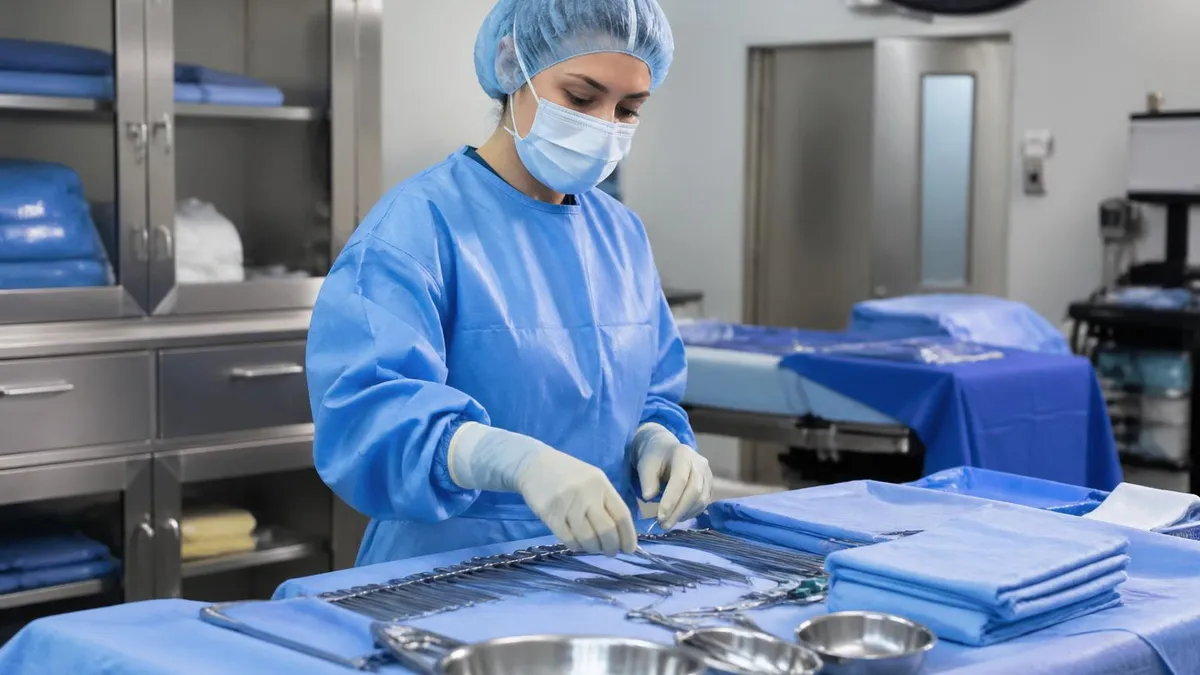
A Certified Surgical Technologist (CST) is a healthcare professional who works directly in the operating room — preparing sterile fields, passing instruments, and maintaining aseptic technique throughout surgical procedures. It's a high-responsibility, fast-paced role, and becoming certified is the standard pathway to practice in most healthcare facilities.
Here's the full path: from education to the NBSTSA exam to working as a CST.
Step 1: Complete an Accredited Surgical Technology Program
The foundation of CST credentialing is completing a surgical technology program accredited by the Commission on Accreditation of Allied Health Education Programs (CAAHEP) or the Accrediting Bureau of Health Education Schools (ABHES).
Why does accreditation matter? Because you can't sit for the NBSTSA CST exam unless you graduated from a CAAHEP or ABHES-accredited program. This isn't a suggestion — it's a hard eligibility requirement. Programs that aren't accredited through these bodies don't qualify you to take the exam, regardless of how many hours of training they offer.
Most accredited surgical technology programs are either:
Associate degrees (AAS) — Typically 2 years at a community college or technical school. This is the most common pathway. Programs cover anatomy, medical terminology, surgical procedures, sterile technique, instrumentation, and clinical rotations in actual operating rooms.
Certificate programs — Shorter programs (typically 12–18 months) that focus more tightly on surgical technology core competencies. These are often offered through vocational schools or hospitals. Some are CAAHEP-accredited; verify before enrolling.
During your program, you'll complete clinical rotations in surgical settings — typically at least 120 surgical cases across various specialties (general surgery, orthopedics, OB/GYN, cardiothoracic, etc.). Clinical hours are part of your NBSTSA exam eligibility, so you need to complete and document them properly.
You can find CAAHEP-accredited surgical technology programs at caahep.org. Don't enroll in any program without first confirming its current accreditation status — accreditations can lapse, and the school's claims on their website may be outdated.
Step 2: Meet NBSTSA Eligibility Requirements
The National Board of Surgical Technology and Surgical Assisting (NBSTSA) administers the CST exam. To sit for the exam, you must meet these eligibility criteria:
Education: Graduation from a CAAHEP or ABHES-accredited surgical technology program. This means you've completed all didactic (classroom) and clinical (hands-on) requirements and received your degree or certificate.
Clinical hours: Documented completion of the required surgical cases as part of your program. Your program director certifies your clinical completion on your exam application.
No program alternatives: Unlike some healthcare certifications, there is no work experience pathway to the CST exam. You must graduate from an accredited program. Military training with equivalent clinical experience is one recognized exception — check the NBSTSA website for the current military training policy.
The NBSTSA application is submitted online through their website. Your program director (or designee) verifies your graduation and clinical hours. Once your application is approved, you receive an Authorization to Test (ATT) and can schedule your exam.
The CST exam requirements guide covers the eligibility criteria and application process in more detail.
Step 3: Prepare for and Pass the CST Exam
The CST exam is a 175-question multiple-choice exam (150 scored, 25 unscored pilot questions) with a 3-hour time limit. It's administered by Pearson VUE at testing centers nationwide. Content areas include:
Perioperative Care (33%) — Surgical case preparation, sterile field setup, positioning, draping, instrument and supply handling during procedures, specimen management.
Basic Sciences (33%) — Anatomy and physiology relevant to surgical procedures, microbiology, pharmacology basics, wound healing, anesthesia basics.
Specialty Surgery (22%) — General surgery, OB/GYN, cardiovascular, thoracic, orthopedic, neurosurgery, ENT, ophthalmic, genitourinary, and plastic surgery procedures and instrumentation.
Administrative and Personnel (12%) — Professional standards, legal and ethical issues, health and safety regulations, documentation, communication.
Passing score is a scaled score of 700 (on a scale of 200–800). The scaled score accounts for slight variation in exam difficulty across different test versions.
For practice tests covering CST exam content, the certified surgical technologist exam guide provides structured practice across all content domains.
How to Study for the CST Exam
Most candidates who fail the CST exam on their first attempt don't fail because they lack clinical knowledge — they fail because they underestimated the Basic Sciences section. Anatomy and physiology, microbiology, pharmacology — these are tested at a level of detail that requires active study, not just recollection from program coursework.
Effective CST prep involves:
Using a dedicated review book. The most widely used are the NBSTSA's official practice materials and third-party books like "CST Exam Secrets" or "Surgical Technology Exam Review." Work through the content systematically, not randomly.
Practice questions, a lot of them. The CST exam is application-based — it tests your ability to apply knowledge to clinical scenarios, not just recite facts. Practice questions build the pattern recognition you need to handle scenario-based questions quickly and accurately.
Focus on weak areas. After working through a full practice test, identify your lowest-scoring content areas and double down on those. Most candidates are strong in perioperative care (their clinical experience shows) and weaker in basic sciences. Reverse that pattern in your study time.
Instrumentation knowledge. Know your instruments. The CST exam tests specific instrument knowledge — names, uses, which procedures they're used for. This is particularly true for specialty instruments used in less common procedures you may not have seen frequently in your clinical rotations.
Most candidates who study consistently for 4–8 weeks pass on their first attempt. The exam isn't designed to fail everyone — it's designed to confirm that you have the foundational knowledge to practice safely in the OR.
After the Exam: What Happens When You Pass
When you pass the CST exam, you'll receive your certification from NBSTSA. Your name appears in the NBSTSA certification registry — employers and facilities can verify your certification status at any time through the online lookup tool.
You're now eligible to use the "CST" credential after your name. Many healthcare facilities — particularly hospitals — require certification as a condition of employment in surgical technology roles. Some states have separate state-level surgical technology requirements; verify what your state requires in addition to NBSTSA certification.
The cst certification verification explains how employers check certification status and what the NBSTSA registry search shows.
CST Certification Renewal
CST certification is valid for four years. To renew, you must earn 30 continuing education (CE) credits during the four-year period through NBSTSA-approved activities. CE credits can be earned through:
NBSTSA-approved continuing education courses and webinars. Professional conference attendance. Publishing articles in peer-reviewed journals. Completing additional formal education in surgical technology or related healthcare fields. Teaching surgical technology students (qualified educators may earn credits for this).
You don't submit CE records to NBSTSA throughout the period — you accumulate them and report at renewal. However, you need to be able to document your CE activities if audited. Keep records of every completed CE activity throughout your certification period.
If your certification lapses, reinstatement requires additional steps beyond standard renewal. Staying current is considerably easier.
CST Career Outlook and What to Expect
Surgical technology is a high-demand healthcare field. The Bureau of Labor Statistics projects above-average job growth for surgical technologists, driven by an aging population requiring more surgical procedures and the expansion of surgical services generally.
Starting salaries for CSTs vary by geography and facility type. Hospital positions in metropolitan areas typically pay more than outpatient surgery centers in rural areas. Specialty experience — cardiovascular, neuro, robotics-assisted surgery — often commands higher pay. Certified technologists consistently earn more than non-certified ones, which is one of the practical return-on-investment arguments for pursuing the CST credential.
Career advancement from CST typically goes toward surgical technology education (becoming a program instructor or director), surgical assisting (a more advanced role requiring additional training and the CSFA credential), or facility leadership in surgical services.
Those who want to understand what the full certification pathway looks like — from program selection through career progression — will find the cst exam requirements gives context on both the credential itself and what healthcare employers expect.

- +Industry-recognized credential boosts your resume
- +Higher earning potential (10-20% salary increase on average)
- +Demonstrates commitment to professional development
- +Opens doors to advanced career opportunities
- −Exam preparation requires significant time investment (4-8 weeks)
- −Certification fees can be $100-$400+
- −May require continuing education to maintain
- −Some employers may not require certification
Sample Certified Surgical Technologist Practice Questions
Try these questions from our free Certified Surgical Technologist practice tests. The correct answer and an explanation follow each question.
Which of the following is the PRIMARY responsibility of the surgical technologist regarding the surgical consent form?
- A. Explaining the risks and benefits of the procedure to the patient.
- B. Obtaining the patient's signature on the form.
- C. Verifying that the signed consent form is in the patient's chart before the procedure begins.
- D. Determining if the patient is mentally competent to sign the consent.
Answer: C. Verifying that the signed consent form is in the patient's chart before the procedure begins.
While the surgeon is responsible for explaining the procedure and obtaining consent, the surgical technologist, as part of the entire surgical team, must verify that a valid and signed consent form is present in the patient's medical record before the surgery starts. This is a critical step in the preoperative verification process.
The primary reason for performing a surgical hand scrub is to:
- A. Achieve skin sterilization on the hands and forearms
- B. Remove transient microorganisms and reduce resident flora to a minimum
- C. Replace the need for sterile gloves during the procedure
- D. Eliminate the risk of surgical site infection entirely
Answer: B. Remove transient microorganisms and reduce resident flora to a minimum
The surgical hand scrub removes transient bacteria and significantly reduces resident flora; complete skin sterilization is not achievable, which is why sterile gloves are still worn.
Ethylene oxide (EO) gas sterilization is best suited for which type of surgical item?
- A. Metal instruments that tolerate heat
- B. Delicate heat-sensitive instruments and endoscopes
- C. Linen drapes and gowns
- D. Saline irrigation solution
Answer: B. Delicate heat-sensitive instruments and endoscopes
EO gas sterilizes at low temperatures, making it ideal for heat-sensitive items such as flexible endoscopes and delicate powered instruments.
A patient arrives in the preoperative holding area for a hernia repair. The surgical technologist's review of the patient's chart is an essential part of the preparation. Which of the following findings should be immediately reported to the surgeon and anesthesia provider?
- A. The patient has a documented allergy to latex.
- B. The patient's history and physical was completed yesterday.
- C. The patient reports taking their prescribed blood pressure medication with a sip of water this morning.
- D. The patient states they had a bowl of cereal two hours ago.
Answer: D. The patient states they had a bowl of cereal two hours ago.
Violating NPO (nothing by mouth) guidelines significantly increases the risk of pulmonary aspiration during anesthesia. Having solid food two hours before surgery is a major safety concern that must be communicated immediately, as it may lead to the delay or cancellation of the procedure. A latex allergy is important but managed with latex-free supplies. Taking essential medication with a sip of water is often permitted. A recent H&P is standard.




Starting Your Path to CST Certification
Becoming a certified surgical technologist is a defined, achievable goal. The pathway is clear: accredited program, documented clinical hours, NBSTSA application, exam, certification. What it takes is commitment to completing the educational requirements thoroughly — both the didactic work and the clinical hours — and focused exam preparation.
The operating room is a high-stakes environment, and the CST credential exists to confirm that you're prepared to work in it safely and effectively. Employers know what it means. Patients benefit from it. The credential isn't a formality — it's a real standard that distinguishes prepared professionals from unprepared ones.
Start with finding a CAAHEP-accredited program in your area. Verify accreditation status directly with CAAHEP, not just from the school's website. Enroll, commit to both the classroom and clinical components, and build your knowledge base systematically. The CST exam is well within reach for candidates who do the preparation work.
Practice tests are a critical part of that preparation. Working through CST-format questions builds the clinical reasoning and scenario-analysis skills the exam directly tests. The CST practice exam resources are organized by content domain — use them to identify gaps early so you can address them before exam day.
About the Author

Educational Psychologist & Academic Test Preparation Expert
Columbia University Teachers CollegeDr. Lisa Patel holds a Doctorate in Education from Columbia University Teachers College and has spent 17 years researching standardized test design and academic assessment. She has developed preparation programs for SAT, ACT, GRE, LSAT, UCAT, and numerous professional licensing exams, helping students of all backgrounds achieve their target scores.