

CPT Practice Test
Updated October 2026Facts verified Oct 20, 2026 against American Board for Certification in Orthotics, Prosthetics & Pedorthics
The field of prosthetics and orthotics is a vital component of modern healthcare, dedicated to enhancing the lives of individuals with limb loss or mobility challenges. At the forefront of this discipline is the role of the Certified Prosthetic Technician (CPT), a specialized professional trained in the design, fabrication, and fitting of prosthetic devices. With advancements in technology and a growing demand for customized care, certified technicians play a critical role in developing solutions that improve functionality and comfort for patients. As they work closely with healthcare teams and patients, these technicians not only contribute to physical rehabilitation but also help restore confidence and independence to those they serve. The journey to becoming a certified prosthetic technician is both rigorous and rewarding, offering a pathway to a fulfilling career that significantly impacts the lives of individuals and communities.
CPT: upcoming dates and official changes
- Dec 1, 2026: Applications for the February 1–13, 2027 ABC Certified Prosthetic Technician exam window are due by December 1, 2026. (American Board for Certification in Orthotics, Prosthetics & Pedorthics)
- Feb 1, 2027 – Feb 13, 2027: The next ABC Certified Prosthetic Technician (CTP) exam window still open for applications runs February 1–13, 2027, followed by windows on April 5–17, 2027, May 31–June 12, 2027 and August 2–14, 2027. (American Board for Certification in Orthotics, Prosthetics & Pedorthics)
Facts verified Oct 20, 2026 against American Board for Certification in Orthotics, Prosthetics & Pedorthics. Dates that have passed are removed automatically.
- The ABC Certified Prosthetic Technician (CTP) exam has 125 multiple-choice items on prosthetic fabrication techniques. (American Board for Certification in Orthotics, Prosthetics & Pedorthics)
- Retaking the ABC Certified Prosthetic Technician exam costs $210 per attempt. (American Board for Certification in Orthotics, Prosthetics & Pedorthics)
- Approved ABC Certified Prosthetic Technician candidates get four attempts to pass the exam within a three-year eligibility period and must re-register by the application deadline for each retake. (American Board for Certification in Orthotics, Prosthetics & Pedorthics)
- ABC Certified Prosthetic Technician certification runs on a five-year cycle and is renewed at the end of the cycle once the minimum continuing education credits are earned. (American Board for Certification in Orthotics, Prosthetics & Pedorthics)
- The ABC Certified Prosthetic Technician exam is computer-based and can be taken at more than 350 test centers nationwide or online with a live remote proctor, in English only. (American Board for Certification in Orthotics, Prosthetics & Pedorthics)
- To sit for the ABC Certified Prosthetic Technician exam, candidates must be 18 or older and either complete a CAAHEP/NCOPE-approved technician program or have a high school diploma or GED plus two years of supervised technical experience in prosthetics. (American Board for Certification in Orthotics, Prosthetics & Pedorthics)
- ABC Certified Prosthetic Technician candidates see a pass/fail result as soon as they finish the exam, and ABC posts the scores to their My ABC account within 24 hours. (American Board for Certification in Orthotics, Prosthetics & Pedorthics)
- Applications for the February 1–13, 2027 ABC Certified Prosthetic Technician exam window are due by December 1, 2026. (American Board for Certification in Orthotics, Prosthetics & Pedorthics)
Facts verified Oct 20, 2026 against American Board for Certification in Orthotics, Prosthetics & Pedorthics. Dates that have passed are removed automatically.
CPT Exam at a Glance
Facts verified Oct 20, 2026 against American Board for Certification in Orthotics, Prosthetics & Pedorthics. Dates that have passed are removed automatically.
Free Certified Prosthetic Technician Study Tools
Interactive Certified Prosthetic Technician resources on PracticeTestGeeks, free to start:
- CPT Prosthetic Components & Technology 1 — 7 questions with answer explanations
- Certified Prosthetic Technician flashcards — review key terms and concepts card by card
- Certified Prosthetic Technician study guide — topic-by-topic overview of what the exam covers
- Certified Prosthetic Technician cheat sheet — one-page printable summary for last-minute review
CPT Practice Test Questions
Prepare for the CPT - Certified Prosthetic Technician exam with our free practice test modules. Each quiz covers key topics to help you pass on your first try.
CPT Anatomy, Biomechanics, & Gait Analysis
CPT Exam Questions covering Anatomy, Biomechanics, & Gait Analysis. Master CPT Test concepts for certification prep.
CPT Anatomy & Physiology Fundamentals
Free CPT Practice Test featuring Anatomy & Physiology Fundamentals. Improve your CPT Exam score with mock test prep.
CPT Prosthetic Fitting & Alignment
CPT Mock Exam on CPT Prosthetic Fitting & Alignment. CPT Study Guide questions to pass on your first try.
CPT Residual Limb Management & Socket Design
CPT Test Prep for CPT Residual Limb Management & Socket Design. Practice CPT Quiz questions and boost your score.
CPT Documentation & Record Keeping
CPT Questions and Answers on Documentation & Record Keeping. Free CPT practice for exam readiness.
CPT Equipment Operation & Maintenance
CPT Mock Test covering Equipment Operation & Maintenance. Online CPT Test practice with instant feedback.
CPT Maintenance, Repairs, & Quality Assurance
Free CPT Quiz on Maintenance, Repairs, & Quality Assurance. CPT Exam prep questions with detailed explanations.
CPT Materials, Tools, & Safety in Prosthetics
CPT Practice Questions for Materials, Tools, & Safety in Prosthetics. Build confidence for your CPT certification exam.
CPT Medical Ethics & Patient Rights
CPT Test Online for Medical Ethics & Patient Rights. Free practice with instant results and feedback.
CPT Patient Assessment & Clinical Evaluation
CPT Study Material on Patient Assessment & Clinical Evaluation. Prepare effectively with real exam-style questions.
CPT Prosthetic Components & Technology
Free CPT Test covering Prosthetic Components & Technology. Practice and track your CPT exam readiness.
CPT Prosthetic Fabrication & Assembly Tech...
CPT Exam Questions covering Prosthetic Fabrication & Assembly Techniques. Master CPT Test concepts for certification prep.
CPT Regulatory Compliance & Standards
Free CPT Practice Test featuring Regulatory Compliance & Standards. Improve your CPT Exam score with mock test prep.
Key Takeaways
Free CPT Practice Test Online
Importance of Certification: Becoming a CPT is essential for anyone looking to excel in the prosthetic field.
Diverse Career Paths: The prosthetic and orthotic industry offers various career opportunities, from technician roles to clinical positions.
Technological Advancements: Innovations in prosthetic technology are enhancing the effectiveness of devices and improving patient outcomes.
Competitive Salary: Certified prosthetic technicians can enjoy a stable career with competitive salaries, influenced by experience, location, and specialization.
Understanding Prosthetics and Orthotics
Prosthetics and orthotics represent a vital field in healthcare, focusing on improving the quality of life for individuals with limb loss or musculoskeletal issues. Prosthetics refers to the design, fabrication, and fitting of artificial limbs, while orthotics pertains to the creation of supportive devices that aid in mobility.
In recent years, advancements in technology have significantly transformed this sector, leading to improved patient outcomes. A certified prosthetic technician (CPT) plays a critical role in this process by ensuring that prosthetic devices are tailored to meet the specific needs of each patient.
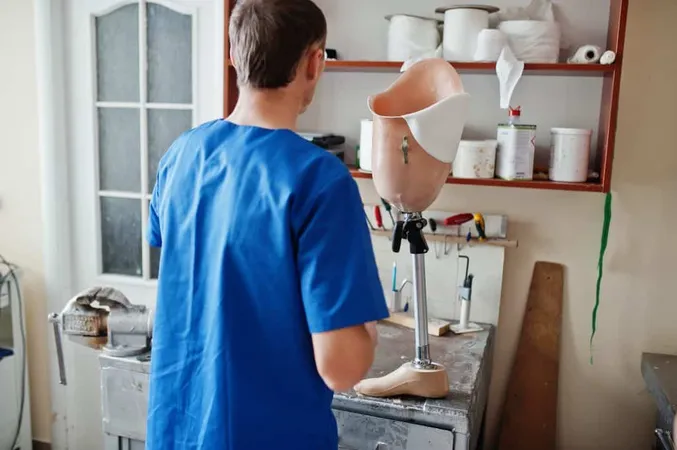
Key Responsibilities of a Prosthetic Technician:
- Assessing patient needs through consultations with healthcare providers.
- Designing and fabricating prosthetic devices using advanced materials and techniques.
- Collaborating with multidisciplinary teams to provide holistic care.
- Conducting follow-up fittings and adjustments to ensure optimal comfort and functionality.
The Role of a Certified Technician in Prosthetic Care
Becoming a certified prosthetic technician is crucial for those looking to establish a successful career in this specialized field. The certification is awarded by the American Board for Certification in Orthotics, Prosthetics & Pedorthics (ABC), which ensures that technicians meet industry standards and are equipped with the necessary skills.
Requirements for Certification
To become a certified prosthetic technician, candidates must:
- Complete an accredited program in prosthetics and orthotics.
- Gain practical experience through internships or apprenticeships.
- Pass the CPT examination, which evaluates knowledge in design, fabrication, and fitting.
Benefits of Certification:
- Enhanced credibility and recognition within the industry.
- Increased job opportunities and career advancement potential.
- Access to continuing education and professional development resources.
Exploring Prosthetic Careers
A career as a prosthetic technician can be both rewarding and fulfilling. The demand for certified professionals is on the rise due to an aging population and advancements in medical technology. This field offers various career paths, including:
- Prosthetic Technician: Focuses on designing and fitting prosthetic limbs.
- Orthotic Technician: Specializes in orthotic devices to support limb function.
- Clinical Orthotist/Prosthetist: Works directly with patients to evaluate needs and provide custom solutions.
Work Environments:
Prosthetic technicians can find employment in various settings, including:
- Hospitals and rehabilitation centers
- Private practices
- Research and development facilities
- Educational institutions
Innovations in Prosthetic Technology
Prosthetic technology has evolved significantly over the past few decades, leading to improved designs and functionalities. Key advancements include:
- Bionic Limbs: These devices use electronic sensors and actuators to mimic natural limb movement.
- 3D Printing: This technology allows for the rapid creation of custom prosthetic devices at a reduced cost.
- Smart Prosthetics: Integrated with sensors and software, these devices can adapt to different activities and environments.
These innovations not only enhance the physical capabilities of individuals with limb loss but also significantly improve their overall quality of life.
Salary Insights: How Much Does a Prosthetic Technician Make?
The compensation for prosthetic technicians can vary based on factors such as geographic location, years of experience, and level of education. On average, a certified prosthetic technician can expect to earn between $40,000 and $70,000 annually.
Factors Influencing Salary:
- Experience Level: Entry-level technicians may start at a lower salary, while those with years of experience can earn significantly more.
- Geographic Location: Salaries can vary by region, with urban areas typically offering higher pay.
- Specialization: Technicians with additional certifications or expertise in specific areas may command higher salaries.
Salary Range:
- Entry-Level: $40,000 - $50,000
- Mid-Level: $50,000 - $60,000
- Experienced: $60,000 - $70,000+
Conclusions
The role of a Certified Prosthetic Technician is crucial in the field of prosthetics and orthotics. With the ongoing advancements in technology and a growing demand for specialized care, this profession is set for significant growth in the coming years. Pursuing certification and continuing education can provide professionals with the necessary skills to thrive in this rewarding field.
As the healthcare landscape continues to evolve, certified prosthetic technicians will play a pivotal role in building better lives for individuals who rely on prosthetic devices to regain their independence and enhance their quality of life.
CPT: Pros and Cons
- +CPT certification validates expertise recognized by employers nationwide
- +Certified professionals typically earn 15-20% higher salaries
- +Opens doors to advanced positions and leadership roles
- +Demonstrates commitment to professional standards and ethics
- +Builds a strong professional network through certification communities
- −Exam preparation typically requires 2-4 months of dedicated study
- −Certification and exam fees can range from $150-$500+
- −Must complete continuing education to maintain active certification
- −Pass rates vary — thorough preparation is essential for success
- −Some certifications require prerequisite experience or education
Pros and Cons at a Glance
| Pros | Cons |
|---|---|
| CPT certification validates expertise recognized by employers nationwide | Must complete continuing education to maintain active certification |
| Opens doors to advanced positions and leadership roles | Pass rates vary — thorough preparation is essential for success |
| Demonstrates commitment to professional standards and ethics | Some certifications require prerequisite experience or education |
Sample Certified Prosthetic Technician Practice Questions
Try these questions from our free Certified Prosthetic Technician practice tests. The correct answer and an explanation follow each question.
A certified prosthetic technician is laminating a transfemoral socket using a pull-through technique. What is the correct order of lamination layers from innermost to outermost?
- A. Nylon, fiberglass, carbon fiber, nylon stockinette
- B. Carbon fiber, fiberglass, nylon stockinette
- C. Nylon stockinette, reinforcement layers, nylon stockinette
- D. Fiberglass, nylon, carbon fiber, nylon
Answer: C. Nylon stockinette, reinforcement layers, nylon stockinette
The standard pull-through lamination sequence uses a nylon stockinette as the innermost layer, followed by reinforcement layers (fiberglass/carbon), and a final outer nylon stockinette.
Which tool is most commonly used by a prosthetic technician to verify the angular alignment of a prosthetic foot relative to the socket?
- A. Alignment jig or alignment device
- B. Tape measure
- C. Caliper
- D. Torque wrench
Answer: A. Alignment jig or alignment device
An alignment jig or dedicated alignment device allows the technician to accurately set and verify the angular relationship between the socket and prosthetic foot.
A prosthetic technician needs to understand the cross-sectional anatomy of the residual limb. Which layer lies immediately deep to the skin and contains adipose tissue?
- A. Deep fascia
- B. Superficial fascia
- C. Periosteum
- D. Epimysium
Answer: B. Superficial fascia
The superficial fascia (hypodermis) lies directly beneath the skin and contains adipose tissue that cushions the residual limb.
Under HIPAA, a prosthetic technician shares a patient's fitting details with a colleague not involved in the patient's care. This is:
- A. Permitted for quality improvement purposes
- B. A violation of the minimum necessary standard
- C. Allowed if the colleague is credentialed
- D. Required for accreditation audits
Answer: B. A violation of the minimum necessary standard
HIPAA's minimum necessary standard prohibits sharing PHI with individuals not involved in the patient's direct care without proper authorization.
(CPT) Certified Prosthetic Technician Questions and Answers
How this page was made: written with AI tools. Exam facts are checked against the official sources listed below. Not reviewed by a subject-matter expert. Editorial policy
Sources & references
Exam facts on this page (fees, format, dates, passing scores) are checked against these official sources; the date is our last check. Editorial policy
- abcop.org — Score release, eligibility, test delivery, registration deadline, retake fee, test dates, score validity, retake policy, exam format, exam information · verified Oct 2026