

CHSP Practice Test
Updated for September 2026The Certified Healthcare Safety Professional (CHSP) credential is a benchmark of competence and professionalism in healthcare safety management. CHSP aligns with industry best practices to demonstrate mastery in risk assessment, regulatory compliance, incident control, and patient safety. Earning the CHSP designation demonstrates possession of the knowledge and skills required to design and implement robust safety programs in clinical and support environments. The CHSP exam evaluates proficiency across safety management systems, hazard identification, regulatory standards, psychological safety, emergency preparedness, and quality assurance. Test takers gain confidence in assessing risks, developing policy, training staff, and responding effectively to incidents or crises.
Safety professionals preparing for multiple credentials often benefit from cross-training, so after reviewing CHSP material consider working through the ASP practice test to reinforce hazard recognition and risk assessment fundamentals.
If your role extends into backcountry or outdoor worksite safety, pair your CHSP study plan with the ASC practice test to build competency in terrain evaluation and emergency response.
CHSP Practice Test Questions
Prepare for the CHSP - Certified Healthcare Safety Professional exam with our free practice test modules. Each quiz covers key topics to help you pass on your first try.
CHSP - Certified Healthcare Safety Profess...
CHSP Exam Questions covering - Certified Healthcare Safety Professional Emergency Preparedness and Response. Master CHSP Test concepts for certification prep.
CHSP - Certified Healthcare Safety Profess...
Free CHSP Practice Test featuring - Certified Healthcare Safety Professional Hazard Identification and Control. Improve your CHSP Exam score with mock test prep.
CHSP - Certified Healthcare Safety Profess...
CHSP Mock Exam on - Certified Healthcare Safety Professional Incident Investigation and Analysis. CHSP Study Guide questions to pass on your first try.
CHSP - Certified Healthcare Safety Profess...
CHSP Test Prep for - Certified Healthcare Safety Professional Patient Safety Culture. Practice CHSP Quiz questions and boost your score.
CHSP - Certified Healthcare Safety Profess...
CHSP Questions and Answers on - Certified Healthcare Safety Professional Regulatory Compliance and Standards. Free CHSP practice for exam readiness.
CHSP Compliance and Accreditation
CHSP Mock Test covering Compliance and Accreditation. Online CHSP Test practice with instant feedback.
CHSP Emergency Preparedness and Response
Free CHSP Quiz on Emergency Preparedness and Response. CHSP Exam prep questions with detailed explanations.
CHSP Emergency Preparedness & Incident Man...
CHSP Practice Questions for Emergency Preparedness & Incident Management. Build confidence for your CHSP certification exam.
CHSP Fire Safety and Life Safety
CHSP Test Online for Fire Safety and Life Safety. Free practice with instant results and feedback.
CHSP Hazard Control Practices
CHSP Study Material on Hazard Control Practices. Prepare effectively with real exam-style questions.
CHSP Hazard Identification and Control
Free CHSP Test covering Hazard Identification and Control. Practice and track your CHSP exam readiness.
CHSP Hazard Identification, Risk Assessmen...
CHSP Exam Questions covering Hazard Identification, Risk Assessment & Control. Master CHSP Test concepts for certification prep.
CHSP Hazardous Materials Management
Free CHSP Practice Test featuring Hazardous Materials Management. Improve your CHSP Exam score with mock test prep.
CHSP Incident Investigation and Analysis
CHSP Mock Exam on Incident Investigation and Analysis. CHSP Study Guide questions to pass on your first try.
CHSP Infection Prevention and Control
CHSP Test Prep for Infection Prevention and Control. Practice CHSP Quiz questions and boost your score.
CHSP Management and Leadership
CHSP Questions and Answers on Management and Leadership. Free CHSP practice for exam readiness.
CHSP Patient Safety Culture
CHSP Mock Test covering Patient Safety Culture. Online CHSP Test practice with instant feedback.
CHSP Regulatory Compliance and Standards
Free CHSP Quiz on Regulatory Compliance and Standards. CHSP Exam prep questions with detailed explanations.
CHSP Regulatory Compliance & Standards
CHSP Practice Questions for Regulatory Compliance & Standards. Build confidence for your CHSP certification exam.
CHSP Safety Management and Leadership
CHSP Test Online for Safety Management and Leadership. Free practice with instant results and feedback.
CHSP Safety Management Systems & Leadership
CHSP Study Material on Safety Management Systems & Leadership. Prepare effectively with real exam-style questions.
CHSP Compliance and Accreditation Question...
Free CHSP Test covering Compliance and Accreditation Questions and Answers. Practice and track your CHSP exam readiness.
CHSP Emergency Preparedness & Incident Man...
CHSP Exam Questions covering Emergency Preparedness & Incident Management Questions and Answers. Master CHSP Test concepts for certification prep.
CHSP Hazard Control Practices Questions an...
Free CHSP Practice Test featuring Hazard Control Practices Questions and Answers. Improve your CHSP Exam score with mock test prep.
CHSP Hazard Identification, Risk Assessmen...
CHSP Mock Exam on Hazard Identification, Risk Assessment & Control Questions and Answers. CHSP Study Guide questions to pass on your first try.
CHSP Hazardous Materials Management Questi...
CHSP Test Prep for Hazardous Materials Management Questions and Answers. Practice CHSP Quiz questions and boost your score.
Key Takeaways
Free CHSP Practice Test Online
Certified Healthcare Safety Professional (CHSP) credential reflects expertise in healthcare safety and risk management.
CHSP exam focuses on domains like hazard identification, regulatory compliance, emergency preparedness, and safety culture.
Understanding federal and state healthcare safety regulations is essential for passing the CHSP exam.
Mastery of risk assessment tools and safety metrics is vital for demonstrating competency.
Practical knowledge in incident investigation, root cause analysis, and corrective action planning is tested.
Certified professionals can lead safety training, quality improvement efforts, and organization-wide safety engagement.
CHSP eligibility supports career advancement in hospitals, long-term care, and healthcare consulting roles.

Certified Healthcare Safety Professional Exam Domains
The CHSP exam includes six core domains that reflect the full scope of healthcare safety responsibilities. Candidates are expected to demonstrate knowledge in:
Safety Management Systems & Leadership
Hazard Identification, Risk Assessment & Control
Regulatory Compliance & Standards
Emergency Preparedness & Incident Management
Safety Culture & Human Factors
Quality Improvement & Data Analytics
CHSP Study Tips
What's the best study strategy for CHSP?
Focus on weak areas first. Use practice tests to identify gaps, then study those topics intensively.
How far in advance should I start studying?
Most successful candidates begin 4-8 weeks before the exam. Create a structured study schedule.
Should I retake practice tests?
Yes! Take each practice test 2-3 times. Focus on understanding why answers are correct, not memorizing.
What should I do on exam day?
Arrive 30 min early, bring required ID, read questions carefully, flag difficult ones, and review before submitting.
Safety Management Systems & Leadership
Certified Healthcare Safety Professional candidates must understand how to develop, implement, and sustain organizational safety systems. This includes designing safety policies that align with institutional goals, establishing safety committees, and ensuring leadership commitment through regular reporting and metrics.
Leadership skills are fundamental. CHSP certification requires the ability to collaborate with clinical and administrative teams, communicate effectively, and lead by example. Safety professionals often spearhead initiatives such as new employee orientation, safety audits, and performance review programs. Demonstrated competence in change management and staff engagement ensures that policies are embraced and maintained long-term.
Performance evaluation is also critical. CHSP exam takers are expected to define key performance indicators, track progress, conduct management reviews, and implement action plans in response to data.
Hazard Identification, Risk Assessment & Control
CHSP candidates must be proficient in proactively identifying workplace risks. Hazards in healthcare may include chemical exposures, radiation, ergonomics concerns, workplace violence, and infection risks. The exam tests familiarity with hazard assessment methods such as job safety analysis (JSA), failure mode and effects analysis (FMEA), and root cause analysis (RCA).
Once hazards are identified, candidates should be able to design effective controls using the hierarchy of controls: elimination, substitution, engineering, administrative controls, and personal protective equipment. The Certified Healthcare Safety Professional exam emphasizes knowledge of risk scoring, control validation, and continuous monitoring to ensure effectiveness.
Regulatory Compliance & Standards
Regulatory knowledge is a cornerstone of CHSP. Candidates must be well-versed in national standards including Occupational Safety & Health Administration regulations, Centers for Medicare & Medicaid Services guidelines, Joint Commission requirements, and environmental safety standards.
The CHSP test includes understanding licensing requirements, reporting obligations for events like OSHA recordables and sentinel events, and conducting compliance inspections. Candidates need to know how to prepare for agency audits, correct deficiencies, and track compliance metrics.
Staying updated on regulatory changes and best practices is also required. CHSP professionals often participate in continuing education and professional forums to maintain expertise and produce safe environments.
Emergency Preparedness & Incident Management
Emergency readiness is another key domain. Certified Healthcare Safety Professional exam takers must be ready to design and implement emergency response plans including fire safety, active shooter protocols, evacuation procedures, and mass casualty events.
Incident management includes event notification, command center operations, resource allocation, and post-incident debriefing. The exam tests incident command roles, communication pathways, drills coordination, and simulation management.
Candidates are also evaluated on their knowledge of incident investigation methods. Understanding timeline reconstruction, evidence handling, root cause analysis, and developing corrective action plans are essential competencies.
Safety Culture & Human Factors
Promoting a positive safety culture is crucial in preventing incidents. CHSP candidates must demonstrate knowledge of human factors engineering, fatigue management, leadership behaviors, and communication protocols that support staff engagement and patient safety.
The exam covers incident reporting systems, just culture principles, feedback loops, teamwork, and error prevention strategies. Candidates should understand how workplace design influences safety—lighting, noise, workflow—and be able to propose ergonomic improvements.
By integrating human factors principles into policy design and training initiatives, CHSP holders become catalysts for sustainable safety behavior change and organizational improvement.

Quality Improvement & Data Analytics
Certified Healthcare Safety Professional exam takers must demonstrate how to use data effectively in safety program management. This includes collecting, analyzing, and presenting data related to incidents, near misses, safety observations, and compliance audits.
Familiarity with statistical process control charts, benchmarking tools, and safety performance scorecards is expected. Candidates need to explain how quality improvement methodologies like Plan-Do-Study-Act (PDSA) cycles or Lean Six Sigma are used to identify trends, test interventions, and track outcomes.
The CHSP exam tests the ability to measure the impact of safety initiatives quantitatively and revise processes based on performance feedback.

Conclusion
Certified Healthcare Safety Professional certification is a hallmark of excellence. It demonstrates advanced competency in safety systems, hazard control, regulatory compliance, emergency management, safety culture, and data-driven improvement.
Earning CHSP certification elevates career opportunities in hospitals, long-term care, outpatient facilities, and consulting. It also underscores employer trust in your ability to lead safety initiatives and manage complex healthcare environments.
Approach your preparation strategically—review the six exam domains, engage in active learning, practice scenario exercises, and use mock exams to reinforce understanding. With dedication and systematic study, achieving CHSP certification is a powerful way to showcase your expertise, promote workplace safety, and advance your professional trajectory.
CHSP Questions and Answers
- +Validates your knowledge and skills objectively
- +Increases job market competitiveness
- +Provides structured learning goals
- +Networking opportunities with other certified professionals
- −Study materials can be expensive
- −Exam anxiety can affect performance
- −Requires dedicated preparation time
- −Retake fees apply if you don't pass
CHSP Questions and Answers
About the Author
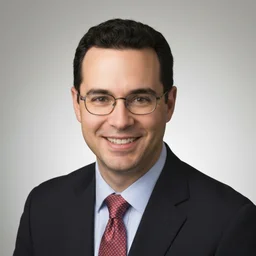
Certified Safety Professional & OSHA Compliance Expert
Indiana University of Pennsylvania Safety SciencesDr. William Foster holds a PhD in Safety Science from Indiana University of Pennsylvania and is a Certified Safety Professional (CSP) and Certified Hazardous Materials Manager. With 20 years of occupational health and safety management experience across construction, manufacturing, and chemical industries, he coaches safety professionals through OSHA certification, CSP, CHST, and safety management licensing programs.
Join the Discussion
Connect with other students preparing for this exam. Share tips, ask questions, and get advice from people who have been there.
View discussion (7 replies)