

CPST Practice Test
Updated October 2026Facts verified Oct 21, 2026 against Safe Kids Worldwide
Child safety in vehicles is a critical public health concern worldwide. The Certified Child Passenger Safety Technician (CPST) certification equips professionals with the expertise to educate and assist families in properly securing children in cars, reducing injury and fatality risks in crashes. This certification not only enhances a professional’s credentials but also opens pathways to meaningful careers in safety education, healthcare, and law enforcement. Practice with the free CPST - Certified Child Passenger Safety Technician practice test on PracticeTestGeeks (9 questions with answer explanations).
Key Takeaways
CPST certification enables professionals to enhance child passenger safety through education and hands-on assistance.
Training programs combine theory, practical skills, and examination to validate technician competencies.
CPSTs work in diverse settings, including healthcare, law enforcement, and community outreach.
Salaries vary widely but offer growth potential with experience and advanced roles.
Certification renewal every two years ensures adherence to current safety standards.
CPST: upcoming dates and official changes
- Updated Oct 21, 2026: Eligibility is now Age 18+ and pass the CPS Certification Course (previously Age 18+ and pass the CPS Certification Course).
Facts verified Oct 21, 2026 against Safe Kids Worldwide. Dates that have passed are removed automatically.
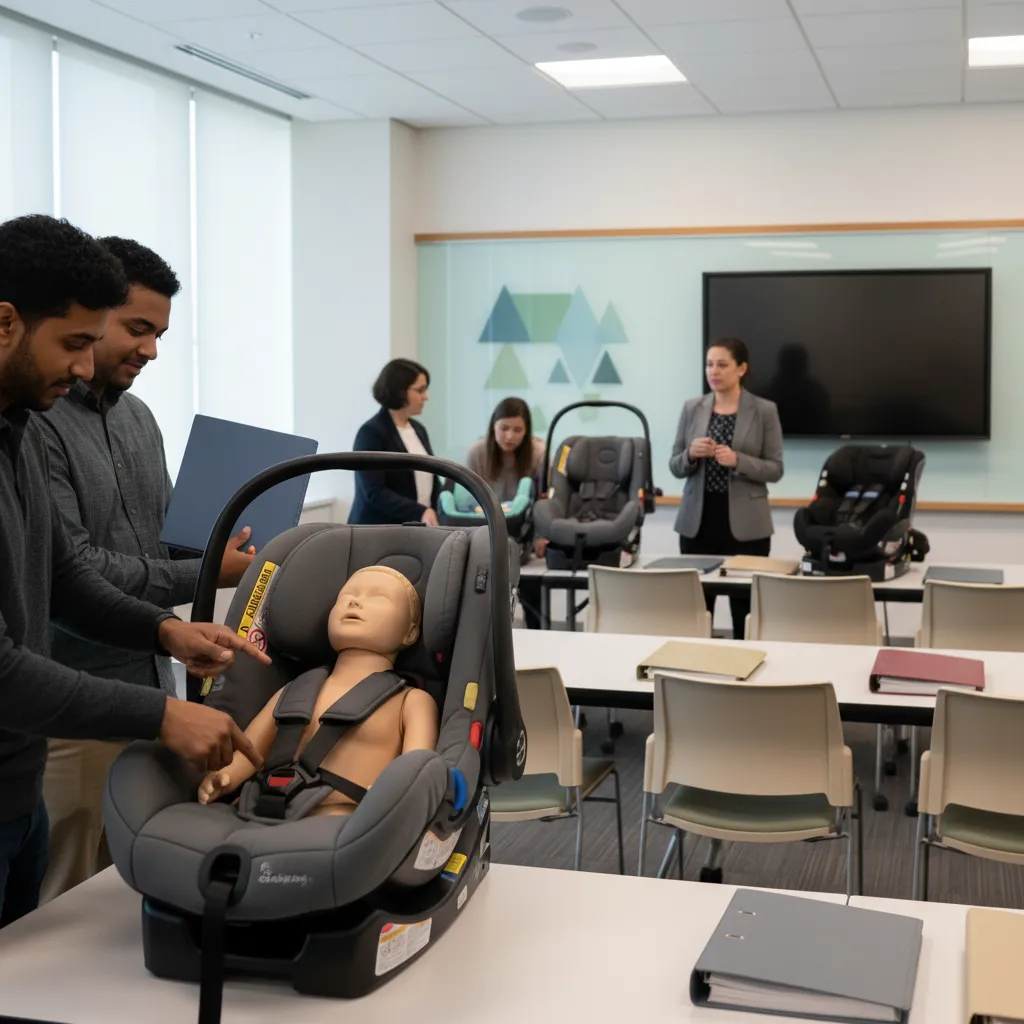
- The CPST Certification Course usually runs three to four days and combines classroom instruction, hands-on skills assessments and a community car seat checkup event. (Safe Kids Worldwide)
- To pass the CPST written quizzes, candidates must answer at least 42 of 50 questions correctly (84%), and they must also pass every hands-on skills assessment. (Safe Kids Worldwide)
- The national fee for the CPST Certification Course is $95, the same for the in-person and hybrid formats. (Safe Kids Worldwide)
- A CPST whose certification has expired can recertify through the one-day Renewal Testing Course for $95 or by repeating the full Certification Course. (Safe Kids Worldwide)
- In the one-day CPST Renewal Testing Course for expired technicians, candidates must score at least 84% on the written test and pass the skills test with no more than two attempts per station. (Safe Kids Worldwide)
- CPST certification is valid for two years and must be renewed before it expires. (Safe Kids Worldwide)
- To recertify, a CPST must complete all five types of seat checks, at least one community education activity and six CEUs, and pay a $55 fee ($60 for instructors), up to four months before expiration. (Safe Kids Worldwide)
- The CPST Certification Training is offered in person or as a hybrid course that combines self-paced e-learning, scheduled virtual meetings and mandatory in-person hands-on sessions and skills evaluations. (Safe Kids Worldwide)
- To become a Certified Child Passenger Safety Technician (CPST), a candidate must be at least 18 years old and pass the Safe Kids CPS Certification Course. (Safe Kids Worldwide)
Facts verified Oct 21, 2026 against Safe Kids Worldwide. Dates that have passed are removed automatically.
CPST Exam at a Glance
| Item | Detail | Official source |
|---|---|---|
| Time limit | Course usually 3–4 days | Safe Kids Worldwide |
| Passing score | 42 of 50 (84%) on written quizzes + pass all skills assessments | Safe Kids Worldwide |
| Exam fee | $95 national course fee | Safe Kids Worldwide |
| Retake fee | $95 Renewal Testing Course (expired techs) or repeat the full course | Safe Kids Worldwide |
| Retake policy (Certification Renewal Testing Course) | Expired techs, no limit on time since expiry; 84% written + max 2 attempts per skills station | Safe Kids Worldwide |
| Validity | 2 years | Safe Kids Worldwide |
| Renewal | 5 seat-check types, 1 community education activity, 6 CEUs; $55 fee ($60 instructors); up to 4 months early | Safe Kids Worldwide |
| Delivery | In-person or hybrid (self-paced e-learning + virtual meetings + mandatory in-person sessions) | Safe Kids Worldwide |
| Eligibility | Age 18+ and pass the CPS Certification Course | Safe Kids Worldwide |
| Score release | Notification letter within 20 business days after the course is finalized | Safe Kids Worldwide |
| Registration deadline (Hybrid course) | At least 7 days before the kick-off session | Safe Kids Worldwide |
Facts verified Oct 21, 2026 against Safe Kids Worldwide. Dates that have passed are removed automatically.
Free CPST - Certified Child Passenger Safety Technician Study Tools
Interactive CPST - Certified Child Passenger Safety Technician resources on PracticeTestGeeks, free to start:
- CPST - Certified Child Passenger Safety Technician flashcards — review key terms and concepts card by card
- CPST - Certified Child Passenger Safety Technician study guide — topic-by-topic overview of what the exam covers
- CPST - Certified Child Passenger Safety Technician cheat sheet — one-page printable summary for last-minute review
CPST Practice Test Questions
Prepare for the CPST - Certified Child Passenger Safety Technician exam with our free practice test modules. Each quiz covers key topics to help you pass on your first try.
CPST - Certified Child Passenger Safety Te...
CPST Exam Questions covering - Certified Child Passenger Safety Technician Booster Seat and Belt Positioning. Master CPST Test concepts for certification prep.
CPST - Certified Child Passenger Safety Te...
Free CPST Practice Test featuring - Certified Child Passenger Safety Technician Crash Dynamics and Misuse. Improve your CPST Exam score with mock test prep.
CPST - Certified Child Passenger Safety Te...
CPST Mock Exam on - Certified Child Passenger Safety Technician Forward-Facing Car Seat Use. CPST Study Guide questions to pass on your first try.
CPST - Certified Child Passenger Safety Te...
CPST Test Prep for - Certified Child Passenger Safety Technician LATCH System Installation. Practice CPST Quiz questions and boost your score.
CPST - Certified Child Passenger Safety Te...
CPST Questions and Answers on - Certified Child Passenger Safety Technician Rear-Facing Car Seat Use. Free CPST practice for exam readiness.
CPST - Certified Child Passenger Safety Te...
CPST Mock Test covering - Certified Child Passenger Safety Technician Seat Belt System Installation. Online CPST Test practice with instant feedback.
CPST - Certified Child Passenger Safety Te...
Free CPST Quiz on - Certified Child Passenger Safety Technician Special Needs Transportation. CPST Exam prep questions with detailed explanations.
CPST - Certified Child Passenger Safety Te...
CPST Practice Questions for - Certified Child Passenger Safety Technician Vehicle Systems and Airbags. Build confidence for your CPST certification exam.
CPST Child Restraint Registration, Recalls...
CPST Test Online for Child Restraint Registration, Recalls & Product Safety. Free practice with instant results and feedback.
CPST Use Systems and Use Fit
CPST Study Material on Use Systems and Use Fit. Prepare effectively with real exam-style questions.
CPST Infant & Newborn Transportation Safety
Free CPST Test covering Infant & Newborn Transportation Safety. Practice and track your CPST exam readiness.
CPST Education & Community Outreach Strate...
CPST Exam Questions covering Education & Community Outreach Strategies. Master CPST Test concepts for certification prep.
CPST Installation Techniques & Inspection ...
Free CPST Practice Test featuring Installation Techniques & Inspection Procedures. Improve your CPST Exam score with mock test prep.
Understanding the Role of a Certified Child Passenger Safety Technician
Certified Child Passenger Safety Technicians are specially trained to ensure that child restraints are installed and used correctly. They provide guidance on selecting appropriate car seats based on a child’s age, weight, and height. CPSTs conduct safety checks, teach caregivers about installation, and promote awareness of evolving safety regulations and technology.
Provide hands-on education to parents and caregivers.
Conduct inspections and consultations at community safety events.
Keep up to date with federal and state child passenger safety laws.
Collaborate with healthcare providers and law enforcement agencies.

Pathways to Becoming a Certified Child Passenger Safety Technician
To earn the CPST certification, candidates must complete a comprehensive training course that combines classroom instruction, hands-on practice, and a written exam. Typically, this course is offered by recognized organizations such as the National Highway Traffic Safety Administration (NHTSA) or Safe Kids Worldwide.
Meet eligibility criteria, usually including a background in health, education, or community service.
Complete the official 3-5 day CPST training program.
Pass the certification exam demonstrating knowledge and skills.
Engage in continuing education and recertify every two years.
Impact and Career Opportunities for CPSTs
Certified Child Passenger Safety Technicians hold vital roles in communities, hospitals, fire departments, and police agencies. Their work directly contributes to lowering childhood injuries and deaths from motor vehicle accidents.
Career opportunities for CPSTs include:
Child Passenger Safety Instructor or Coordinator.
Public health educator specializing in injury prevention.
Hospital-based safety educator.
Law enforcement child safety specialist.
Employers value CPST certification as a mark of credibility and commitment to child safety, often translating to enhanced job prospects and career growth.
- ✓Confirm your exam appointment and location
- ✓Bring required identification documents
- ✓Arrive 30 minutes early to check in
- ✓Read each question carefully before answering
- ✓Flag difficult questions and return to them later
- ✓Manage your time — don't spend too long on one question
- ✓Review flagged questions before submitting

CPST: Pros and Cons
- +CPST certification validates expertise recognized by employers nationwide
- +Certified professionals typically earn 15-20% higher salaries
- +Opens doors to advanced positions and leadership roles
- +Demonstrates commitment to professional standards and ethics
- +Builds a strong professional network through certification communities
- −Exam preparation typically requires 2-4 months of dedicated study
- −Certification and exam fees can range from $150-$500+
- −Must complete continuing education to maintain active certification
- −Pass rates vary — thorough preparation is essential for success
- −Some certifications require prerequisite experience or education
Pros and Cons at a Glance
| Pros | Cons |
|---|---|
| CPST certification validates expertise recognized by employers nationwide | Must complete continuing education to maintain active certification |
| Opens doors to advanced positions and leadership roles | Pass rates vary — thorough preparation is essential for success |
| Demonstrates commitment to professional standards and ethics | Some certifications require prerequisite experience or education |
Sample CPST - Certified Child Passenger Safety Technician Practice Questions
Try these questions from our free CPST - Certified Child Passenger Safety Technician practice tests. The correct answer and an explanation follow each question.
A caregiver brings a 6-year-old to a checkup event. The child is using a high-back booster seat. The technician notices the vehicle's shoulder belt is positioned on the child's neck. What is the appropriate FIRST step for the technician to take?
- A. Advise the caregiver to switch to a backless booster.
- B. Tell the caregiver the child is not ready for a booster seat.
- C. Check if the booster's headrest and shoulder belt guide are adjusted correctly.
- D. Recommend the child place the shoulder belt behind their back for comfort.
Answer: C. Check if the booster's headrest and shoulder belt guide are adjusted correctly.
High-back boosters have adjustable headrests that contain a shoulder belt guide. This guide is designed to position the shoulder belt correctly across the child's chest and collarbone, away from the neck. The first step is to ensure this feature is used correctly and adjusted to the proper height for the child, which should be just above their shoulder.
What is the main goal of community outreach in child passenger safety?
- A. To sell child safety seats.
- B. To educate about child safety
- C. To increase vehicle sales.
- D. To reduce seatbelt use.
Answer: B. To educate about child safety
The main goal of community outreach in child passenger safety is to raise public awareness and provide essential education to parents and caregivers. It aims to equip families with the knowledge and skills needed to properly use child restraints, thereby preventing injuries and fatalities. This educational focus is key to promoting safer practices.
How can social media be used in child passenger safety outreach?
- A. To post unrelated ads.
- B. To share educational content
- C. To ignore public questions.
- D. To discourage safety messages.
Answer: B. To share educational content
Social media platforms offer a powerful and widespread channel to disseminate crucial child passenger safety information. By sharing engaging and informative content, such as proper car seat installation tips, recall alerts, and updates on laws, organizations can reach a broad audience. This helps raise awareness and encourages safer practices among parents and caregivers effectively.
Which federal law supports child passenger safety through funding and education?
- A. Clean Air Act.
- B. Child Passenger Safety Law
- C. Affordable Care Act.
- D. Freedom of Information Act.
Answer: B. Child Passenger Safety Law
The 'Child Passenger Safety Law' (referring to various state and federal initiatives) is the specific federal legislation and framework dedicated to supporting child passenger safety. It provides the legal mandates, funding, and educational programs necessary to promote the correct use of child restraints. Other listed acts address different areas of public policy.
Take the full CPST - Certified Child Passenger Safety Technician practice test
CPST Questions and Answers
How this page was made: written with AI tools and published by Nathan Beja, founder of Practice Test Geeks, who is responsible for its content. Exam facts are checked against the official sources listed below. Not reviewed by a subject-matter expert. Editorial policy
Sources & references
Exam facts on this page (fees, format, dates, passing scores) are checked against these official sources; the date is our last check. Editorial policy
- cert.safekids.org — Test delivery, registration deadline, fees, retake fee, renewal, score validity, eligibility, passing score, score release, time limit · verified Oct 2026