
Noncitizen Truck Driver CDL Requirements: A Complete Guide for Green Card and Visa Holders
🟢 Noncitizen CDL requirements explained. Eligibility for green card holders, work visa drivers, EAD holders, plus hazmat, REAL ID, and state rules.
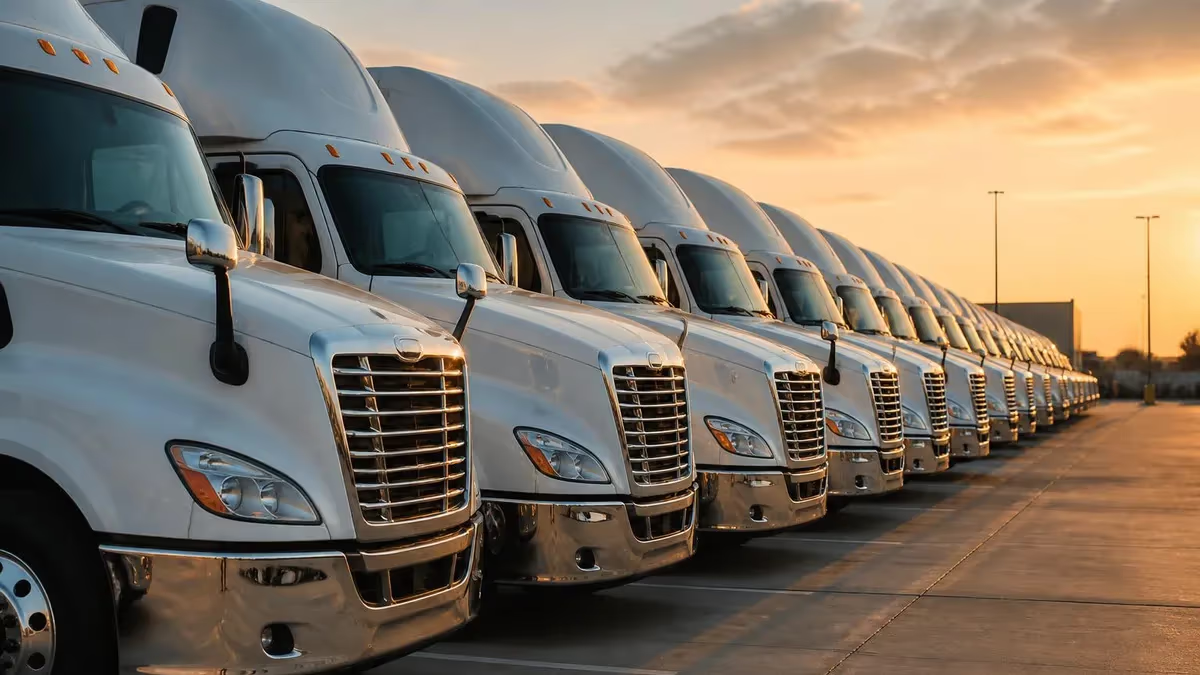
So you weren't born in the United States, but you want to drive a truck for a living. Maybe you've got a green card tucked in your wallet. Maybe you arrived last year on a work visa, or you're waiting on an asylum decision. Whatever your status, the question is the same: can you actually get a commercial driver's license here?
Short answer—yes, in most cases. Longer answer? It depends on what's printed on your immigration documents, which state you live in, and whether you want to haul gasoline across state lines or just deliver lumber across town.
Trucking has been a foothold industry for immigrants for decades. The pay is decent, the work is steady, and you don't need a four-year degree. But the rules around noncitizen CDL applications have tightened since 9/11, and they keep shifting. What worked for your cousin in 2015 might not fly in 2026. This guide walks through what federal regulators expect, what your local DMV will actually ask for, and the gotchas that trip up applicants who didn't know they needed to bring three forms of ID.
You're not alone in this. Nearly one in five long-haul drivers in the U.S. were born somewhere else. Mexican, Indian, Polish, Somali, Brazilian, Filipino—walk into any truck stop on I-40 and listen. The industry runs on immigrant labor, and the FMCSA knows it. The agency isn't trying to keep you out. It just needs paperwork that proves you're allowed to be here, drive here, and respond intelligibly to a state trooper at 3 a.m. on a shoulder in Oklahoma.

Noncitizen CDL by the Numbers
Federal law sets the floor for who can hold a commercial driver's license, and states build on top of that. The Federal Motor Carrier Safety Administration (FMCSA) requires every CDL applicant to prove lawful presence in the country. That's the baseline. You don't need to be a citizen, but you do need documentation showing the government knows you're here and has authorized you to stay—at least for now. Tourists can't get a CDL. Neither can people with expired status. The papers in your hand matter more than how long you've lived here.
Here's the thing most applicants miss. The CDL itself is a state-issued document. Pennsylvania doesn't have to follow California's playbook on noncitizen applicants, and Texas might want different paperwork than Illinois. Federal regulations create a minimum standard, but states layer their own residency rules, English-language requirements, and document checklists on top. That's why your buddy in Florida swears it took him 20 minutes and you're three weeks into the process in New York wondering what went wrong.
Residency matters too. Federal rules require that you apply in the state where you actually live. That sounds obvious until you realize many noncitizen workers have addresses in two places—the apartment they rent for work and a family home elsewhere. Pick one, and have utility bills, lease paperwork, and a bank statement that backs it up. Truck schools that promise to help you get a CDL in a state you don't live in are running a scam, and the state will catch it during the SAVE verification step. Don't pay for that nonsense.
The Bottom Line on Eligibility
If you have a green card (Form I-551), an Employment Authorization Document (EAD), or another federally recognized lawful status, you can apply for a CDL in any U.S. state. You'll need to prove identity, lawful presence, state residency, and pass the same knowledge and skills tests as everyone else. Citizenship is only required for one specific endorsement—hazmat.
Let's break down the main categories of noncitizens who routinely qualify. Lawful permanent residents—green card holders—have the easiest path. Your I-551 card serves as proof of identity and lawful presence in a single document. You can apply for any class of CDL (A, B, or C), pursue any endorsement except hazmat without extra steps, and renew on the same five-year cycle as citizens in most states.
Some states cap your CDL expiration at the date your green card expires, which trips people up when they renew their card late. Conditional green cards (the two-year variety issued through marriage-based applications) work the same way, though your CDL will only be valid until your conditional card expires.
Work visa holders sit in a slightly trickier spot. If you're on an H-1B, H-2B, TN, or similar employment-based visa, you can typically get a CDL—but the license expires when your visa expires. That makes sense. The state isn't going to hand you a five-year credential when your authorized stay ends in eight months. You'll need an unexpired passport, a valid I-94 arrival record, and often a copy of your visa stamp.
Some DMVs ask for your employer's I-129 petition approval notice, especially if your visa stamp is in a previous passport. H-2B seasonal workers in trucking-adjacent industries (landscaping, hospitality, food processing) sometimes pivot into CDL roles, but the visa change has to happen first—you can't drive commercially under an H-2B authorization tied to a landscape company.
EAD card holders—people with Employment Authorization Documents issued by USCIS—can also apply. This category covers a wide range of immigration statuses: pending green card applicants, certain spouses of visa holders, asylees, refugees, DACA recipients in states that allow it, and TPS beneficiaries.
Your EAD (Form I-766) functions as both your work permit and your proof of lawful presence at the DMV counter. Just like with work visas, your CDL validity will track your EAD expiration date. If you renew your EAD before it expires, you can usually have your CDL extended without retesting—though some states require a fresh document review at every immigration milestone.
CDL Paths by Immigration Status
Need I-551 (green card), Social Security card, two proofs of residency. CDL valid up to 5 years or until card expires. Can pursue hazmat with TSA approval.
Need unexpired passport with visa stamp, I-94 record, often employer petition copy. CDL expires with visa. Cannot get hazmat endorsement.
Need EAD card (I-766), SSN or ITIN, proof of address. CDL tied to EAD expiration. Cannot get hazmat unless also LPR or citizen.
Need I-94 with refugee/asylee designation, EAD if issued, SSN. State rules vary on intrastate vs interstate CDL eligibility.
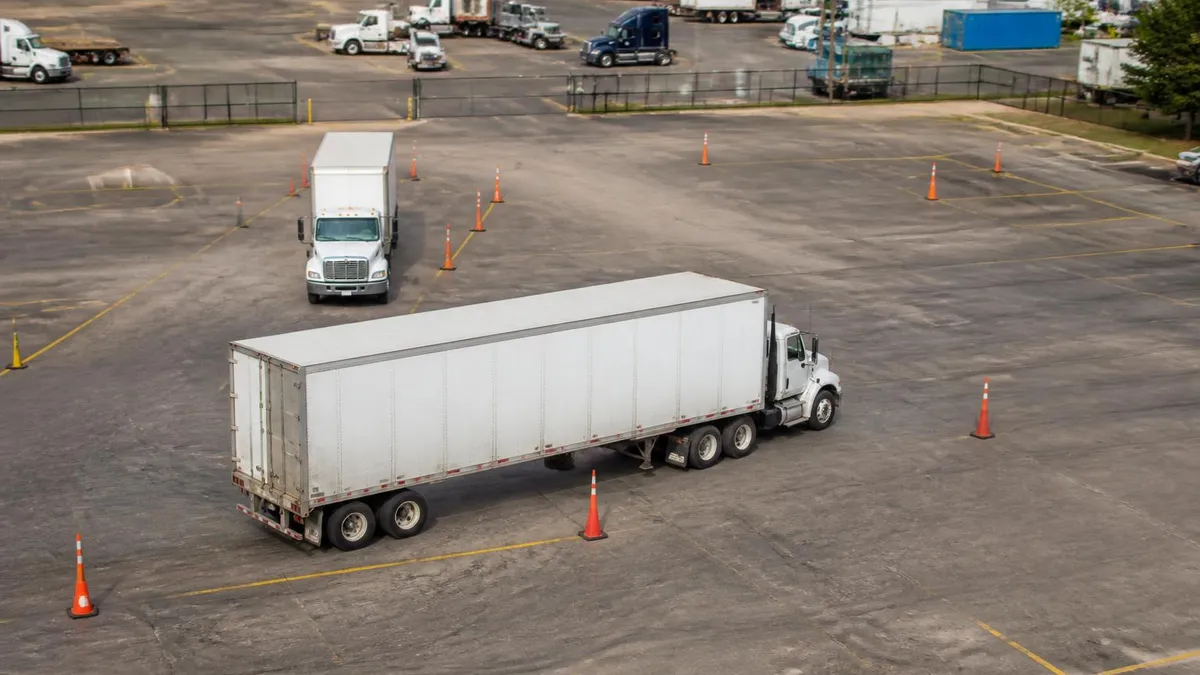
Now about asylum seekers, refugees, and DACA recipients—these groups face the most variation state to state. Refugees and asylees with approved status carry strong documentation: an I-94 with the proper status code and usually an EAD. Most states treat them the same as any other EAD holder. Pending asylum applicants are murkier. If USCIS has issued you an EAD based on a pending case (category c8), some states will issue a CDL and others will limit you to a regular driver's license. Call your DMV before paying for the medical exam.
DACA is its own animal. Recipients of Deferred Action for Childhood Arrivals have EADs and Social Security numbers, but the federal government doesn't classify them as lawfully present in the same way it does green card holders. Most states issue CDLs to DACA recipients without issue. A handful have refused, and the rules in some states have flipped two or three times in the last decade. If you're a DACA recipient pursuing trucking, check your state's most recent guidance—not what a forum post from 2019 said.
Federal, State, Hazmat, and REAL ID Rules
FMCSA requires every CDL applicant to demonstrate lawful presence under 49 CFR 383.71. The agency doesn't issue licenses directly—states do. But every state must verify your immigration status against SAVE (Systematic Alien Verification for Entitlements) before issuing a noncitizen CDL. You'll also need a valid SSN or proof you're not eligible for one, plus a DOT medical examiner's certificate.
Proof of identity is where applications get rejected. The DMV clerk isn't being difficult—they're following a federal checklist that says you need to demonstrate four things: who you are, that you're lawfully present, that you live in the state, and that you have a valid Social Security number (or an exemption). One document usually doesn't cover all four. Plan to bring at least three or four pieces of paper, and bring originals, not photocopies.
Your primary identity document will be your unexpired foreign passport, your green card, or your EAD. Secondary documents commonly accepted include your I-94, your visa stamp, a USCIS approval notice, or a Social Security card. For residency, two pieces of mail in your name dated within the last 60 days—utility bills, bank statements, a signed lease, a paycheck stub. PO boxes don't count. Internet bills usually do.
If you don't have an SSN because your current status doesn't allow one, you can still apply in most states using an SSA-issued denial letter. Get the letter first. Without it, the DMV computer will reject your application before the clerk even finishes typing. The denial letter itself is free—just walk into a Social Security office with your ID.
Federal law (49 CFR 1572) restricts the hazmat endorsement to U.S. citizens and lawful permanent residents. Even if you have a valid EAD and have worked in the country for a decade, you cannot transport placarded hazardous materials without first becoming a citizen or green card holder. This isn't a state rule—it's a TSA national security determination. Don't let a recruiter promise you a hazmat-required route until your status changes.
English-language proficiency is a federal requirement that hits some applicants harder than others. Under 49 CFR 391.11, every cdl c must be able to read and speak English well enough to converse with the general public, understand traffic signs and signals, respond to official inquiries, and make legible entries on reports and records. This isn't a one-time test—it's an ongoing job requirement that DOT inspectors can check during roadside stops.
In practice, the FMCSA has gone back and forth on enforcement. For years officers cited drivers for poor English at roadside inspections. Then non-English citations were paused. Then enforcement returned in updated form. The safe move? If you're studying for the CDL written exam, study in English. Most states offer the knowledge test in multiple languages, but the skills test (the actual driving portion) and any roadside inspection will be in English. A driver who can't communicate with a DOT officer during a stop creates problems for themselves and their employer.
REAL ID compliance adds another wrinkle. Since May 2025, REAL ID-compliant credentials are required to board domestic flights and enter many federal buildings. Your CDL can serve as a REAL ID if your state marks it with the small star in the corner.
To get that mark, you need to present the same documents you'd bring to apply—passport, green card, EAD, plus residency proof. If your underlying immigration document expires, your REAL ID-marked CDL may be downgraded to a standard credential at the next renewal. That's not a CDL issue per se, but it affects how you'll travel for work.
Documents to Bring to the DMV
- ✓Unexpired passport, green card (I-551), or EAD card (I-766) as primary identity document
- ✓Form I-94 arrival/departure record (print from cbp.gov/i94 if you have one)
- ✓Social Security card OR SSA-issued denial letter if ineligible for SSN
- ✓Two documents proving state residency dated within the last 60 days
- ✓DOT medical examiner's certificate from a certified medical examiner on the National Registry
- ✓Passed CDL knowledge test (general, plus any endorsement tests you're pursuing)
- ✓Commercial Learner's Permit (CLP) held for at least 14 days before taking skills test
Then there's the question of intrastate versus interstate driving. This matters more for noncitizens than you might think. Interstate CDLs let you cross state lines, haul federally regulated freight, and work for the major carriers. Intrastate CDLs limit you to driving within your home state. The federal medical standards, hours-of-service rules, and age limits (21 for interstate, sometimes 18 for intrastate) are stricter for interstate drivers.
Some noncitizens with shorter-term work authorization choose intrastate CDLs because the requirements bend a bit. A few states allow drivers with certain medical conditions or shorter visa durations to operate intrastate when they couldn't qualify interstate. But your career options shrink fast. Most over-the-road carriers won't hire intrastate-only drivers. If you want to work for a national fleet, you need an interstate-eligible CDL from day one.
TSA threat assessments come into play if you pursue hazmat or work at certain port facilities. The Transportation Worker Identification Credential (TWIC) is required if you regularly enter secure port areas. TWIC has its own immigration rules—again, citizen or LPR for most categories, though some refugees and asylees qualify with additional documentation. Both hazmat and TWIC involve fingerprinting at an enrollment center, a fee, and a wait of two to six weeks for clearance.
Noncitizen CDL Pros and Cons
- +Trucking offers strong wages and steady demand for noncitizen workers with valid status
- +Green card holders qualify for nearly every CDL job, including hazmat-required positions
- +No college degree required—training can be completed in 4 to 8 weeks
- +Many carriers help sponsor green card adjustments for valued employees
- +Pay scales are usually identical for citizens and noncitizens once licensed
- −CDL validity tracks your immigration status—visa expiration means license expiration
- −Work visa and EAD holders cannot pursue hazmat endorsement, limiting some routes
- −DMV documentation requirements are stricter and processing times are longer
- −Some states have inconsistent rules for asylum applicants and DACA recipients
- −English proficiency is a federal job requirement enforced during roadside inspections
How long does the whole process take? For a green card holder with all documents in hand, you're looking at four to eight weeks from start to finish. Two weeks for CDL school, the mandatory 14-day CLP holding period, plus scheduling time for the skills test. For work visa or EAD holders, add another week or two for DMV verification through the SAVE database.
The federal system has to confirm your status before the state will issue the credential, and the response time varies from instant to several business days. If SAVE returns a mismatch—wrong birthdate, wrong A-number, wrong middle name—your application sits in limbo until USCIS resolves it. That can take 30 to 90 days. Triple-check that your name and birthdate on the DMV application match exactly what's on your green card or EAD, including hyphens and spaces.
Costs add up quickly. CDL school runs $3,000 to $7,000 depending on the program and whether you're paying out of pocket or through an employer-sponsored arrangement. The DOT medical exam costs $75 to $150. CDL knowledge and skills test fees range from $50 to $250 depending on your state. Hazmat endorsement adds about $100 plus fingerprinting fees. Some states charge noncitizens an additional document verification fee—usually $25 to $50.
One last piece of advice. Photocopy everything before you walk into the DMV. Make duplicates of your green card, your EAD, your passport, your I-94, your medical card, your CLP. If your document gets lost, damaged, or expires during the process, having backups speeds up replacement enormously.
And keep a folder with your USCIS receipt numbers—those random alphanumeric codes are what trace your immigration history through federal databases. Lose them and you'll spend hours on hold trying to track down what should be a five-minute lookup. A simple manila envelope labeled “CDL paperwork” on the top shelf of your closet beats scrambling through phone photos at the DMV window.
One more practical note—most CDL schools have administrators who handle noncitizen paperwork all day every day. They know which DMV office in your area processes immigrant applications quickly, which clerks are friendly, and which days the SAVE system is fastest. Ask the school. They've shepherded hundreds of green card holders, EAD holders, and visa drivers through this process and they want you to pass because their job placement numbers depend on it. Lean on that experience. You don't have to figure this out alone, and you shouldn't try to.
Trucking remains one of the most accessible skilled careers in America for people who weren't born here. The rules can feel labyrinthine—federal, state, TSA, USCIS, DOT, DMV—but tens of thousands of noncitizens navigate them every year and end up behind the wheel of an 18-wheeler.
The key is matching your documents to your goals before you start spending money. A green card holder pursuing a Class A interstate CDL with hazmat is on a different track than an H-2B visa holder driving regional freight. Know which lane you're in, gather the right paperwork, and don't let a clerk's bad day derail your plans.
Practice tests help. The knowledge exam covers air brakes, combination vehicles, general knowledge, and any endorsements you're pursuing. Multiple-choice questions, state-specific quirks, federal regulations—all of it. If English is your second language, repeat practice exposes you to the vocabulary regulators use, which is different from everyday speech. Words like “placard,” “tandem,” “fifth wheel,” and “coupling” show up constantly. Build the vocabulary now and the actual test feels familiar instead of foreign. The job is waiting—but the test is what stands between you and the paycheck.
CDL Questions and Answers
About the Author

Licensed Driving Instructor & DMV Test Specialist
Penn State UniversityRobert J. Williams graduated from Penn State University with a degree in Transportation Management and has spent 20 years as a certified driving instructor and DMV examiner consultant. He has personally coached thousands of applicants through written knowledge tests, skills assessments, and commercial driver licensing programs across more than 30 states.
Join the Discussion
Connect with other students preparing for this exam. Share tips, ask questions, and get advice from people who have been there.
View discussion (7 replies)