
NJ CDL: Complete Guide to Getting Your New Jersey Commercial Driver License
Get your NJ CDL fast. Requirements, knowledge tests, ✏️ road test, ELDT, medical card, fees, and endorsements explained step by step.
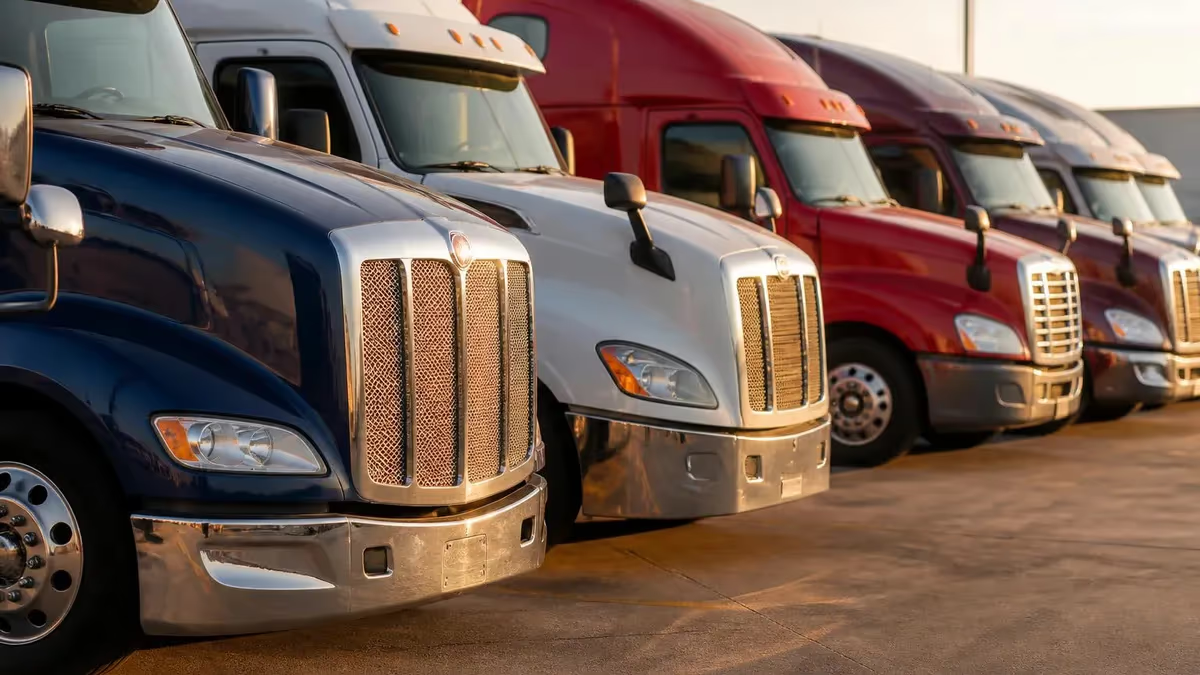
So you want to drive a big rig through the Garden State? Smart move. New Jersey sits on one of the busiest freight corridors in the country, and qualified commercial drivers are in serious demand here. But getting your NJ CDL isn't quite like grabbing a regular driver's license at the MVC. There are more steps, more rules, and yes—more fees. The trade-off? A career that pays well, travels well, and rarely runs short of work.
This guide walks you through every requirement the New Jersey Motor Vehicle Commission throws at you. Age limits, ELDT training, the medical card, knowledge tests, the road test in your own equipment—we cover it all. By the time you finish reading, you'll know exactly what you need, where to go, and how much it'll cost. No fluff. No guesswork. Just the real process for getting licensed in NJ.
One quick note before we dive in: the rules changed in early 2022 when the federal Entry-Level Driver Training mandate kicked in. If somebody hands you outdated advice from a friend who got their Class A back in 2019, ignore it. The path now looks different, and you'll save yourself a ton of headaches by following the current process. Outdated info is the number-one reason applicants get turned away at the MVC counter—don't be that person.
Whether you're aiming for over-the-road trucking, local delivery, school bus routes, or hazmat hauling, the foundation is the same. Get the basics right, and the specializations come fast. Let's break down what New Jersey actually expects from you.
NJ CDL by the Numbers

NJ CDL Classes Explained
New Jersey follows the federal CDL classification system, which means you'll pick from three classes based on what you plan to drive. Class A covers combination vehicles with a gross combination weight rating over 26,001 pounds—tractor-trailers, basically. If you see yourself running long hauls or pulling heavy freight, this is your ticket. Class A holders can also operate Class B and C vehicles, so it's the most flexible credential. Most career drivers start here for that very reason.
Class B is for single vehicles over 26,001 pounds. Think dump trucks, straight box trucks, large buses, and certain delivery vehicles. You can tow a trailer under 10,000 pounds with a Class B, but anything heavier needs that Class A upgrade. Many local NJ delivery jobs—garbage trucks, cement mixers, school buses—run on Class B credentials. The training is shorter, the test is simpler, and you can be working in weeks instead of months.
Class C is the smallest CDL category. It covers vehicles transporting 16 or more passengers (including the driver) or hauling hazardous materials in quantities requiring placards. The vehicle itself doesn't hit the weight thresholds for A or B, but the cargo or capacity bumps it into commercial territory. Shuttle drivers and hazmat couriers often hold Class C licenses. It's the most specialized of the three, and the right choice depends entirely on the kind of work you want.
Pick wrong and you'll be back at the MVC paying for an upgrade. Pick right and you've got a career-spanning credential.
One useful trick: even if you only need Class B today, consider going straight for Class A. The training cost difference is modest, the test is harder but doable, and you future-proof your license for every role you might want next. Hiring managers also tend to favor Class A applicants for Class B positions because the broader training shows commitment.
Quick Eligibility Check
Before applying for an NJ CDL, you must be at least 18 (intrastate only) or 21 (interstate, hazmat, or passenger transport), hold a valid New Jersey basic driver license for at least one year, be a New Jersey resident, and provide proof of US citizenship or legal presence. You'll also need a federal DOT medical examiner's certificate.
Age and Residency Requirements
Here's where folks get tripped up. New Jersey lets you get a CDL at 18, but only for intrastate driving—meaning you can't cross state lines. If you live in Newark and your route ends in Trenton? Fine. If your dispatcher sends you to Pennsylvania for a pickup? Not legal until you turn 21. That's a federal rule, not a state one, and there's no workaround. Plenty of new drivers think they can fudge it. They can't. ELD logs and DOT inspections catch underage interstate operators fast.
You also need to be a bona fide New Jersey resident. The MVC wants proof—a utility bill, a lease, bank statements, something that ties you to a physical address in the state. P.O. boxes don't cut it. If you recently moved here from another state, you'll need to surrender your out-of-state license and establish residency first. The MVC won't even start your CDL application until your basic NJ license is in hand.
Then there's the one-year rule. You can't walk into the MVC fresh off your basic license and demand a CDL the next day. New Jersey requires you to hold a valid Class D (regular) driver license for a minimum of one year before applying. This rule exists because the state wants commercial drivers to have some real-world experience behind the wheel before they're trusted with 80,000 pounds of cargo. It's not arbitrary—commercial vehicles are unforgiving, and a year of regular driving builds the road awareness you'll need.
Your Path to an NJ CDL
Gather 6 Points of ID, proof of NJ residency, your current driver license, and your DOT medical examiner's certificate. The MVC won't process your application without all of these.
Complete federally mandated Entry-Level Driver Training at an approved provider, then pass the general knowledge test plus any endorsement tests at an MVC agency.
After paying $125 and passing the knowledge tests, you receive your Commercial Learner's Permit. You must hold it for at least 14 days before taking the road test.
Pass the three-part skills test—vehicle inspection, basic control, and on-road driving—in your own qualifying equipment. Pay $40 for the upgrade to a full CDL. The license is mailed to your NJ address within 14 business days, though a temporary paper credential is issued immediately so you can start working right away while you wait.
The MVC Application Process
You'll start at a New Jersey MVC licensing center—not every MVC office handles CDLs, so check the state website before you drive across town for nothing. Bring everything. Seriously, everything. Six Points of ID documents, your basic NJ license, proof of residency, your federal medical certificate, your ELDT completion certificate, and proof of US citizenship or lawful presence. Missing a single document means starting over.
The 6 Points of ID system trips up first-timers. New Jersey uses a points-based ID verification process where different documents carry different point values. A US passport is worth 4 points. A Social Security card is worth 1 point. You need to hit 6 total points with at least one primary document. Check the MVC's official list before showing up—missing one document means a wasted trip. Build a folder, double-check it the night before, and bring originals only. Photocopies won't be accepted.
You'll also need your NJ Driver History Abstract. Some MVC agents pull it electronically, but it's smart to bring a printed copy showing your driving record from the past 10 years. If you've held licenses in other states during that period, you need certified abstracts from each one. Out-of-state violations follow you, and the MVC will check. Surprises here can delay your application by weeks while paperwork catches up.
Once your paperwork passes review, you pay the $125 permit fee and sit for the knowledge tests on the spot. Pass them, and you walk out with a Commercial Learner's Permit the same day. Fail one, and you can retest after a short waiting period—usually one day for the first retake.
Testing Requirements at a Glance
Every CDL applicant takes the General Knowledge test—50 questions on safe driving, vehicle systems, and federal regulations. Class A applicants also take the Combination Vehicles and Air Brakes tests. Endorsements require additional knowledge exams. You need 80% or higher to pass each one.
Knowledge Tests You'll Need to Pass
Before you ever touch a steering wheel, you're taking written tests. The General Knowledge exam is mandatory for everyone—50 questions covering vehicle inspection, basic operations, hazardous materials awareness, and federal hours-of-service rules. You'll find these questions pull directly from the NJ Driver Manual's commercial section. Read it. Don't just skim. Pay special attention to the pre-trip inspection chapter, because the skills test examiner is going to grill you on it later.
Class A applicants get two extra written exams: Combination Vehicles and Air Brakes. Class B drivers usually take the Air Brakes test too, since most large straight trucks run air systems. Each test costs nothing extra if you take them during your initial application, but if you fail and need to come back, schedule fees apply. Most folks who fail bombed the air brakes section—it's technical, it's procedural, and the questions feel oddly worded if you haven't studied properly.
Endorsement tests are where things get specialized. Want to drive a school bus? That's the (S) endorsement, and it requires both a written exam and a skills test. Hauling tankers? You need (N). Pulling doubles or triples? (T). Each endorsement has its own knowledge test, and you can stack them—a driver hauling hazmat in a tanker might hold the H, N, and X endorsements all at once. More endorsements means more job offers, plain and simple.
Since February 7, 2022, every new CDL applicant must complete Entry-Level Driver Training (ELDT) from a provider on the FMCSA Training Provider Registry before taking the skills test. This isn't optional, and it isn't waived for prior experience. If your training provider isn't on the federal registry, your certificate won't be accepted, and you'll have to repeat the training. Verify before you pay.
The Road Test: Bring Your Own Equipment
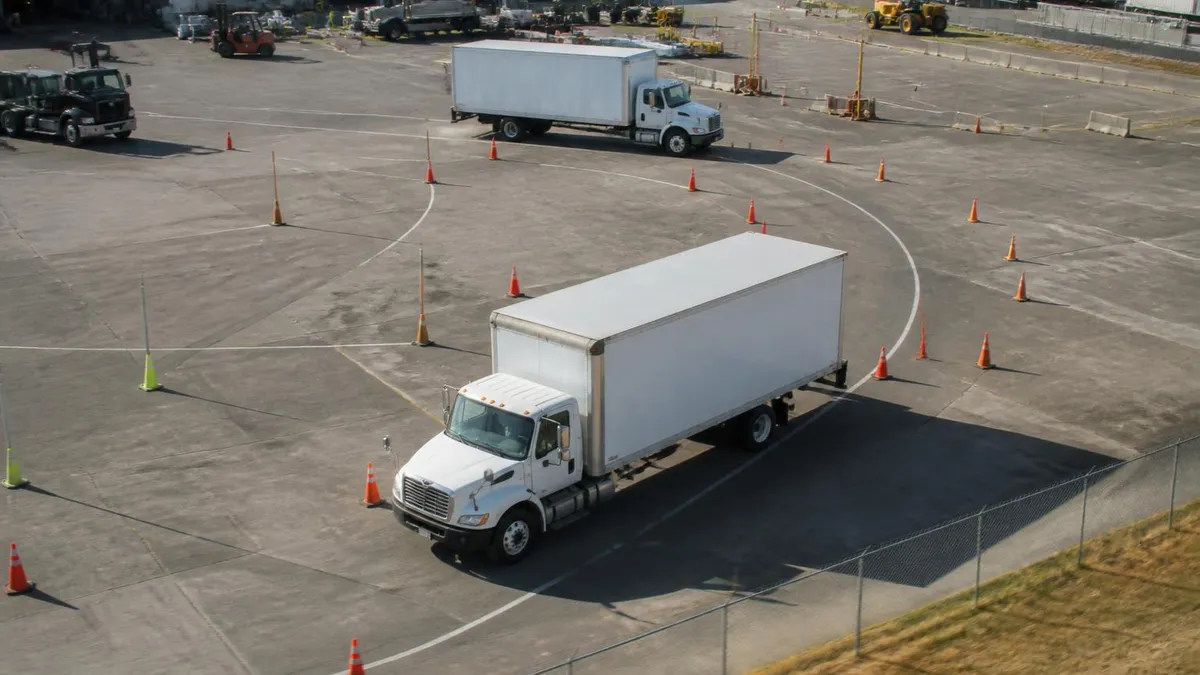
Here's something that catches a lot of folks off guard—New Jersey doesn't provide test vehicles. You have to bring your own qualifying equipment for the road test. That means if you're going for a Class A, you show up with a tractor-trailer combination representative of the equipment you'll actually drive. Class B? Bring a straight truck over 26,001 pounds. Class C? Bring whatever vehicle matches your intended use. The MVC isn't in the truck-rental business.
The equipment has to be road-legal and properly insured. The MVC examiner will check your registration, insurance card, and inspection sticker before the test even starts. Bald tires, broken lights, or an expired inspection means immediate cancellation. You don't lose your fee, but you lose your day—and rescheduling can take weeks during busy seasons. Inspect the truck yourself the morning of the test. Walk around it. Check everything.
Most CDL students rent equipment from their training schools for the test. Costs vary, but expect to pay anywhere from $250 to $500 for the day. Some employers will provide a company truck if they've already conditionally hired you. Either way, line up your vehicle situation before booking your road test slot. Showing up without equipment is the fastest way to waste a test appointment.
NJ CDL Application Checklist
- ✓Verify you are at least 18 (intrastate) or 21 (interstate) and a New Jersey resident with a basic NJ license held for one year or more
- ✓Schedule and pass a DOT physical with a certified medical examiner from the National Registry and obtain your medical card
- ✓Complete federally approved Entry-Level Driver Training (ELDT) at a Training Provider Registry-listed school
- ✓Study the NJ Commercial Driver License Manual and pass the General Knowledge test plus any class-specific or endorsement exams
- ✓Pay the $125 permit fee, hold your Commercial Learner's Permit (CLP) for a minimum of 14 days, then schedule the three-part skills test
- ✓Bring qualifying equipment to the road test, pass all three sections, and pay the $40 fee to upgrade to a full NJ CDL
- ✓Submit your CDL to your employer, register for the FMCSA Clearinghouse drug and alcohol testing program, and keep your medical card current—usually renewed every 24 months depending on your health profile
Endorsements: Adding Specializations
An endorsement is essentially permission to drive specific equipment or haul specific cargo. New Jersey recognizes the standard federal endorsement codes: P (passenger vehicles), S (school bus), T (doubles and triples), H (hazardous materials), N (tank vehicles), and X (combination of hazmat and tank). Each one widens your job options and—usually—your paycheck. Drivers with multiple endorsements stay employed even when the freight market slows down.
The H endorsement is the most regulated. Beyond passing the written hazmat exam, you'll undergo a Transportation Security Administration background check. The TSA fingerprints you, pulls federal records, and decides whether you're a security risk. The process takes 30 to 60 days and adds another $86.50 in fees. Hazmat haulers earn premium rates though, so the investment usually pays off. Tanker work pairs well with hazmat—fuel, chemicals, food-grade liquids—and that's where the highest mileage rates live.
School bus drivers (S endorsement) face their own screening. New Jersey adds state-level background checks, child abuse registry checks, and sometimes a separate physical examination on top of the federal requirements. The hiring process for school districts is intense, but the schedule is family-friendly—mornings, afternoons, summers off if you want them. Many retired truckers transition into school bus driving for exactly this reason.
Passenger (P) endorsement covers buses other than school buses—municipal transit, charter buses, airport shuttles. Doubles and triples (T) is for combination rigs pulling two or three trailers, common on long-haul logistics routes. The N tanker endorsement is required for liquid bulk cargo even if the contents aren't hazmat, which trips up a lot of milk and water haulers who didn't realize they needed it.
CDL Career Pros and Cons
- +Strong job demand across freight, transit, school bus, and construction sectors in New Jersey and the broader Northeast
- +Median commercial driver wages in NJ exceed national averages thanks to port traffic and dense metro freight
- +Multiple CDL classes and endorsements let you specialize and increase earning potential over time
- +Class A holders can operate equipment in all three CDL classes, maximizing job flexibility
- +Steady demand insulates CDL careers from economic downturns better than many other trades
- −Upfront costs add up fast—ELDT training alone can run $4,000-$8,000, plus testing and fees
- −Strict federal regulations on hours of service, drug testing, and medical certification add ongoing compliance work
- −Long hauls mean time away from home, and even local routes start before sunrise on most days
- −DOT medical disqualifications—uncontrolled diabetes, sleep apnea, vision issues—can end your career suddenly
- −Traffic violations carry harsher penalties for CDL holders, and a single serious offense can disqualify you for life
NJ-Specific Hours of Service and Third-Party Testing
Federal Hours of Service (HOS) rules apply to all interstate commercial drivers, but New Jersey adds wrinkles for intrastate operators. If you only drive within state lines, you can operate under modified HOS rules that allow a 16-hour driving window (versus the federal 14) and a 12-hour driving limit (versus the federal 11). The catch? Cross one state line and you're back under full federal rules, no exceptions. Most NJ-based drivers learn both rule sets, since the temptation to chase a Pennsylvania or New York run eventually comes up.
New Jersey also permits third-party CDL testing. Approved private companies and trucking schools can administer the skills test on the state's behalf, which often means shorter wait times than booking through an MVC agency. Third-party examiners follow identical scoring criteria—you're not getting an easier test, just a more convenient one. The MVC still issues the actual license once the third-party paperwork is submitted. If your ELDT school offers third-party testing, take advantage of it.
Want a final tip? Get your DOT medical card before you start training. The exam costs $80 to $150 in most NJ clinics, and you don't want to invest weeks in ELDT only to discover a vision issue or uncontrolled blood pressure problem disqualifies you. Knock out the physical first, then move forward with confidence. It's the single smartest order-of-operations decision you can make in this whole process.
And one more thing—keep copies of every certificate, fee receipt, and training record from day one. The MVC occasionally requests proof during audits, and rebuilding a paper trail years later is brutal. A simple folder or scanned drive works fine. You'll thank yourself when renewal time rolls around.
Final Steps and Ongoing Requirements
Once you've got the license in your wallet, the work doesn't stop. New Jersey requires CDL holders to maintain a current medical certificate on file with the MVC—usually every 24 months, sometimes more often depending on health conditions. Let it lapse, and your CDL gets downgraded automatically. Reinstatement is a hassle, so set calendar reminders well in advance. Two months out is the sweet spot for scheduling your next DOT physical.
You're also locked into the federal drug and alcohol testing regime as soon as you start driving commercially. Pre-employment screening, random testing throughout the year, post-accident testing if you're involved in a qualifying crash—it's all mandatory. A failed test goes into the FMCSA Clearinghouse database, and every employer who runs your number for the rest of your career will see it. There's no quietly moving on from a failed screen. The record follows you.
Renewals happen every four years in New Jersey. The renewal fee is $42.50, and you'll need to update your medical card and confirm your address. If you've added endorsements, those carry over as long as the underlying license stays active. Keep your record clean, pass your physicals, and a CDL becomes a lifetime credential that opens doors across the country—not just in the Garden State. The freight industry rewards consistency, and your NJ CDL is the foundation.
CDL Questions and Answers
About the Author

Licensed Driving Instructor & DMV Test Specialist
Penn State UniversityRobert J. Williams graduated from Penn State University with a degree in Transportation Management and has spent 20 years as a certified driving instructor and DMV examiner consultant. He has personally coached thousands of applicants through written knowledge tests, skills assessments, and commercial driver licensing programs across more than 30 states.
Join the Discussion
Connect with other students preparing for this exam. Share tips, ask questions, and get advice from people who have been there.
View discussion (7 replies)