
CDL Schedule, Jobs, and What Every Aspiring Truck Driver Needs to Know
Plan your CDL schedule, find truck driver jobs near you, and learn how much you can earn. ✅ Complete 2026 September guide for Class A CDL success.
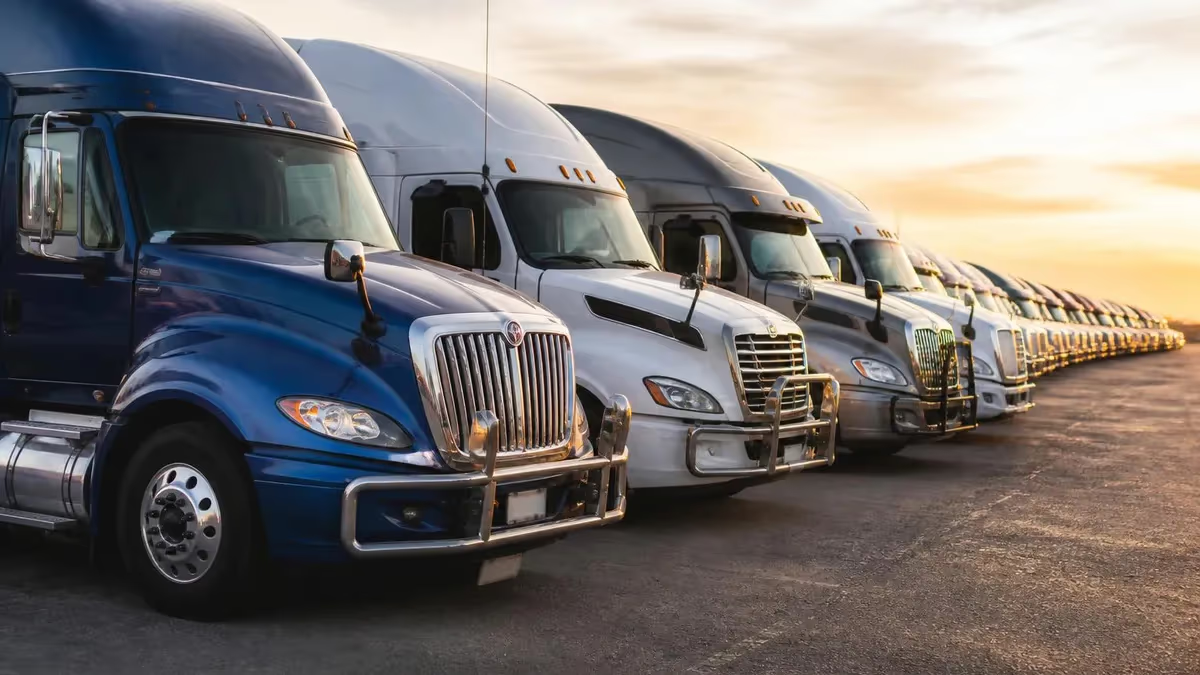
Understanding the CDL schedule is the first and most important step for anyone considering a career behind the wheel of a commercial vehicle. Whether you are researching used cdl trucks for sale, exploring training programs, or simply trying to figure out how long the licensing process actually takes, having a clear roadmap saves you weeks of confusion and costly missteps. A Commercial Driver's License opens doors to one of the most stable and well-paying blue-collar careers in the United States, but the path to earning it requires deliberate planning.
The commercial trucking industry employs more than 3.5 million truck drivers across the country, and the Bureau of Labor Statistics projects steady demand through the end of the decade. Driver shortages continue to push wages upward, with many experienced operators earning well above the national median. For career changers, recent high school graduates, and veterans transitioning to civilian life, the CDL represents a realistic and relatively fast route to financial independence without a four-year college degree.
Before you schedule your CDL test, you need to understand the licensing classes. A Class A CDL covers combination vehicles — trucks towing trailers with a gross combined weight rating of 26,001 pounds or more. A Class B covers single vehicles over 26,000 pounds. The class you pursue directly affects which jobs are available to you, how much you can earn, and how long your training will take. Building awareness of these distinctions early prevents expensive detours.
The CDL process itself involves several distinct phases: obtaining a Commercial Learner's Permit (CLP), completing behind-the-wheel training, passing a DOT physical, and finally clearing the CDL skills test. Each phase has its own timeline, fees, and eligibility requirements. Many states require applicants to hold a CLP for a minimum of 14 days before scheduling the skills test, so you cannot simply walk in and test on day one. Planning for these waiting periods matters.
Finding CDL jobs near me is easier than ever thanks to dedicated trucking job boards, carrier recruiting websites, and staffing agencies that specialize in placing commercial drivers. Many large carriers like Werner, JB Hunt, and Schneider offer tuition reimbursement programs that pay for your CDL training in exchange for a one- to two-year employment commitment. These programs can reduce your out-of-pocket training costs to nearly zero, making the career even more accessible.
The salary question is one every new driver asks: how much do truck drivers make? According to recent BLS and industry data, the median annual wage for heavy and tractor-trailer truck drivers is approximately $54,320, but experienced over-the-road (OTR) drivers with Class A credentials and endorsements routinely earn $70,000 to $90,000 or more per year. Owner-operators who purchase their own equipment — including used CDL trucks — can earn even more, though they also carry additional business expenses.
Taking a CDL practice test before your actual exam dramatically improves your chances of passing on the first attempt. The written knowledge test covers topics ranging from air brakes and combination vehicles to hazardous materials and pre-trip inspections. Familiarizing yourself with the format and question style through practice exams reduces test anxiety and helps you identify weak areas while there is still time to study. The sections below walk you through every stage of the process so you can approach your CDL journey with confidence.
CDL & Truck Driver Industry by the Numbers

CDL Classes, Endorsements, and Vehicle Types
Required for combination vehicles with a GCWR of 26,001 lbs or more when the towed unit exceeds 10,000 lbs. Covers tractor-trailers, flatbeds, tankers, and livestock haulers. Opens the widest range of job opportunities and typically commands the highest pay.
Covers single vehicles over 26,000 lbs GVWR and vehicles towing a trailer under 10,001 lbs. Includes straight trucks, city buses, school buses, and large dump trucks. A solid starting point for local driving careers with more predictable home-time schedules.
Required for vehicles designed to transport 16 or more passengers including the driver, or those transporting hazardous materials. Smaller vehicles that do not meet Class A or B size thresholds but require special licensing due to passenger or cargo risk.
Add specialized permissions to your base CDL. Common endorsements include H (hazardous materials), N (tank vehicles), P (passenger), S (school bus), T (double/triple trailers), and X (tanker with hazmat). Each requires an additional written or skills test, but endorsements substantially increase earning potential.
Some CDL holders carry restrictions that limit their operating authority. Common restrictions include E (no manual transmission), L (no air brakes), and Z (no full air brakes). Understanding restrictions before your skills test helps you avoid accidentally limiting your future job options.
Mapping out your CDL schedule before you begin training is one of the smartest moves a prospective truck driver can make. The licensing timeline is not a single event — it is a sequence of appointments, waiting periods, and tests spread across weeks or months. Most drivers who rush through the process without a plan end up wasting money on retakes or hitting unnecessary delays between steps. A structured approach keeps you moving forward efficiently.
The first step is visiting your state's Department of Motor Vehicles to apply for a Commercial Learner's Permit. You will need to pass a written knowledge test covering general CDL knowledge and any endorsement categories you plan to add. Bring your standard driver's license, proof of residency, your Social Security number, and your medical examiner's certificate (more on that below). Application fees vary by state but typically range from $20 to $50. Some states allow you to take the CLP knowledge test online.
After receiving your CLP, federal regulations require you to hold it for a minimum of 14 days before you can take the CDL skills test. Many training programs are designed around this waiting period — you spend those two weeks completing the behind-the-wheel hours you need, so by the time the waiting period ends, you are ready to schedule the final exam. Larger CDL schools often have dedicated testing examiners on site, which can shorten the scheduling process considerably.
The CDL skills test itself has three parts: the pre-trip vehicle inspection, the basic vehicle control test (backing, turning, and alley docking), and the on-road driving test. Plan for each portion to take 30 to 60 minutes, with a possible wait time at the testing center. Failing any one section requires you to retake only that section in most states, not the entire test — but each retake costs additional fees and time, reinforcing the value of thorough preparation.
Getting a DOT medical card is a non-negotiable part of the CDL process that many applicants underestimate. You must pass a DOT physical conducted by a licensed medical examiner listed on the Federal Motor Carrier Safety Administration (FMCSA) National Registry. The exam checks vision, hearing, blood pressure, and overall physical fitness. Drivers with certain medical conditions — including uncontrolled diabetes, severe sleep apnea, or a history of seizures — may face additional scrutiny or be disqualified temporarily.
Searching for a dot physical near me is straightforward using the FMCSA National Registry website. Many urgent care clinics, occupational health centers, and even some truck stops now have certified medical examiners on staff. The physical typically costs between $75 and $150 and takes about 45 minutes. A standard medical certificate is valid for two years, though drivers with certain managed health conditions may receive one-year or shorter certificates and must be re-examined more frequently.
Once you pass your DOT physical, complete your training hours, and clear the skills test, your state DMV will issue your CDL. Processing times vary — some states mail the license within a week, while others can take three to four weeks. During this window you can begin applying for driving jobs, as most employers are accustomed to hiring candidates who are awaiting final credential issuance. Having a copy of your test results and your CLP with you during this period helps demonstrate your qualification to potential employers.
How Much Do Truck Drivers Make? Salary by Career Path
Over-the-road (OTR) truck drivers travel long distances — often crossing multiple states on a single run — and are compensated accordingly. Entry-level OTR drivers with a fresh Class A CDL typically earn between $45,000 and $55,000 in their first year. After three to five years of experience, OTR drivers commonly push past $70,000 annually, with top earners at premium carriers exceeding $90,000 when factoring in bonuses, fuel performance incentives, and safety pay.
OTR driving involves extended time away from home — most drivers are out three to four weeks before returning for a few days. This lifestyle suits single drivers or those whose families can adapt to an irregular schedule. The trade-off for the time away is higher base pay, more consistent miles, and access to premium freight lanes. Many experienced OTR drivers also accumulate significant retirement benefits through 401(k) matching programs offered by major carriers.
Is a CDL Career Right for You? Honest Pros and Cons
- +High earning potential without a college degree — experienced drivers earn $70K to $90K+
- +Strong job security driven by persistent nationwide driver shortages
- +Many carriers offer paid CDL training, eliminating upfront education costs
- +Variety of job types — local, regional, OTR, tanker, flatbed, and more
- +Independence and autonomy on the road, especially in OTR and owner-operator roles
- +Clear career progression from company driver to trainer, dispatcher, or owner-operator
- −Long periods away from home for OTR drivers — weeks at a time on the road
- −Physical demands including loading, securing cargo, and long hours seated
- −Strict federal regulations around hours of service, logging, and drug testing
- −DOT medical requirements can disqualify drivers with certain health conditions
- −High upfront cost if self-paying for CDL training — $3,000 to $10,000 at private schools
- −Variable income for owner-operators depending on fuel prices and freight market conditions
DOT Medical Card & CDL Application Checklist
- ✓Locate a certified DOT medical examiner through the FMCSA National Registry website.
- ✓Schedule your DOT physical at least two weeks before your planned CLP application date.
- ✓Bring a complete list of current medications and their dosages to your DOT physical.
- ✓Disclose any medical conditions honestly — non-disclosure can result in license disqualification.
- ✓Gather required documents: standard driver's license, proof of state residency, and Social Security card.
- ✓Study and pass the CDL General Knowledge written test to receive your Commercial Learner's Permit.
- ✓Add endorsement knowledge tests (air brakes, hazmat, tanker) to your CLP application if applicable.
- ✓Hold your CLP for the mandatory 14-day waiting period before scheduling the skills test.
- ✓Complete all required behind-the-wheel training hours with a licensed CDL holder or school instructor.
- ✓Schedule your CDL skills test — pre-trip inspection, basic vehicle control, and on-road driving portions.
Failing the Air Brakes Test Costs You More Than Money
Many CDL applicants skip the air brakes endorsement to avoid an extra written test — then discover their job options are severely limited. Almost every Class A trucking job in the United States involves air-braked vehicles. If you receive a restriction code L on your CDL, carriers will screen you out automatically. Spend the extra hour studying air brakes before your CLP test and remove that barrier before it becomes a career obstacle.
Preparing for the CDL written and skills tests requires more than casual reading — it demands consistent, structured study over several weeks. The general knowledge test alone covers topics from shifting techniques and pre-trip inspections to weight limits, cargo securement, and hours-of-service regulations. Most test-takers who fail on their first attempt cite the same reason: they underestimated the breadth of material and studied only the sections they were already comfortable with.
Using a CDL practice test platform is one of the most effective study strategies available. Online practice tests replicate the actual exam format, expose you to the phrasing and style of official questions, and track your performance by category so you know exactly where to focus your remaining study time. Aim to complete at least three to five full practice tests in each knowledge category before your scheduled exam date. Scoring consistently above 85 percent on practice tests correlates strongly with passing the real exam.
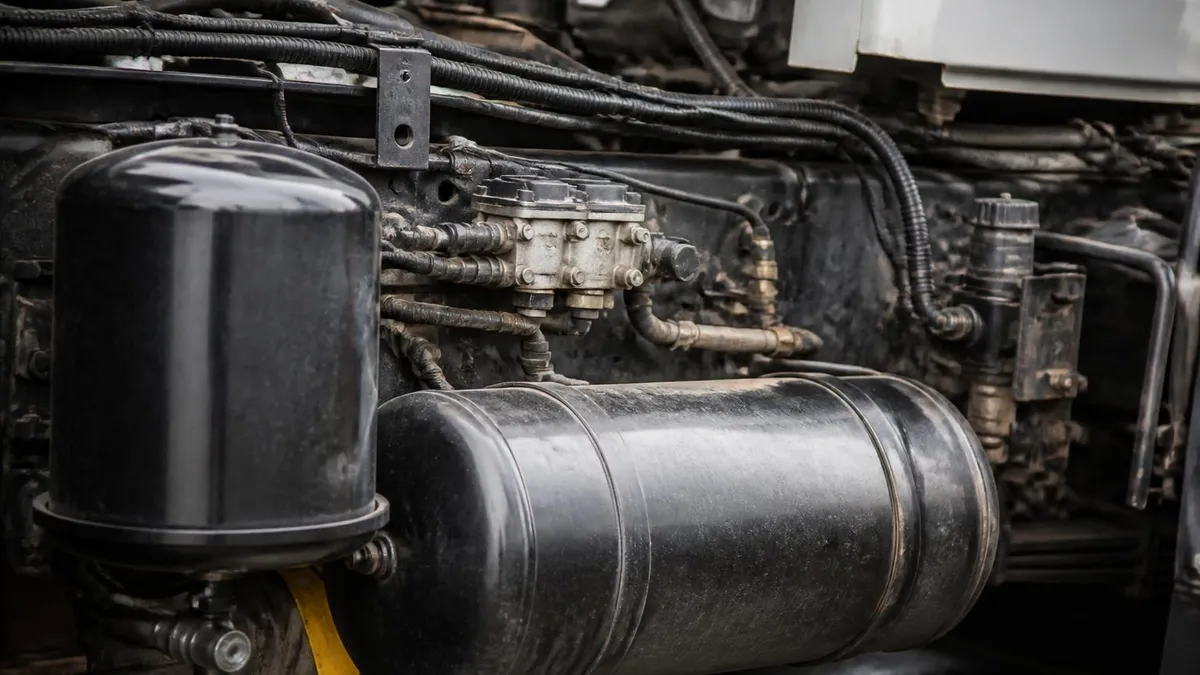
The air brakes section deserves special attention regardless of whether you plan to drive air-braked vehicles immediately. Air brakes knowledge is tested separately on the CDL written exam and is required to remove the L restriction from your license. The material covers brake lag time, adjustment procedures, dual-circuit systems, and emergency braking scenarios. Many drivers find this section counterintuitive at first because air brake systems work opposite to hydraulic brakes in several important ways — understanding this distinction is the key to mastering the content.
Combination vehicle knowledge is equally critical for anyone pursuing a Class A CDL. This section tests your understanding of coupling and uncoupling procedures, fifth-wheel inspection, pintle hooks, converter dollies, and the dynamic forces acting on a tractor-trailer during cornering and braking. The combination vehicles section has a higher failure rate than general knowledge among first-time test takers, likely because the physics and mechanical concepts feel abstract until you actually sit behind the wheel of a semi-truck for the first time.
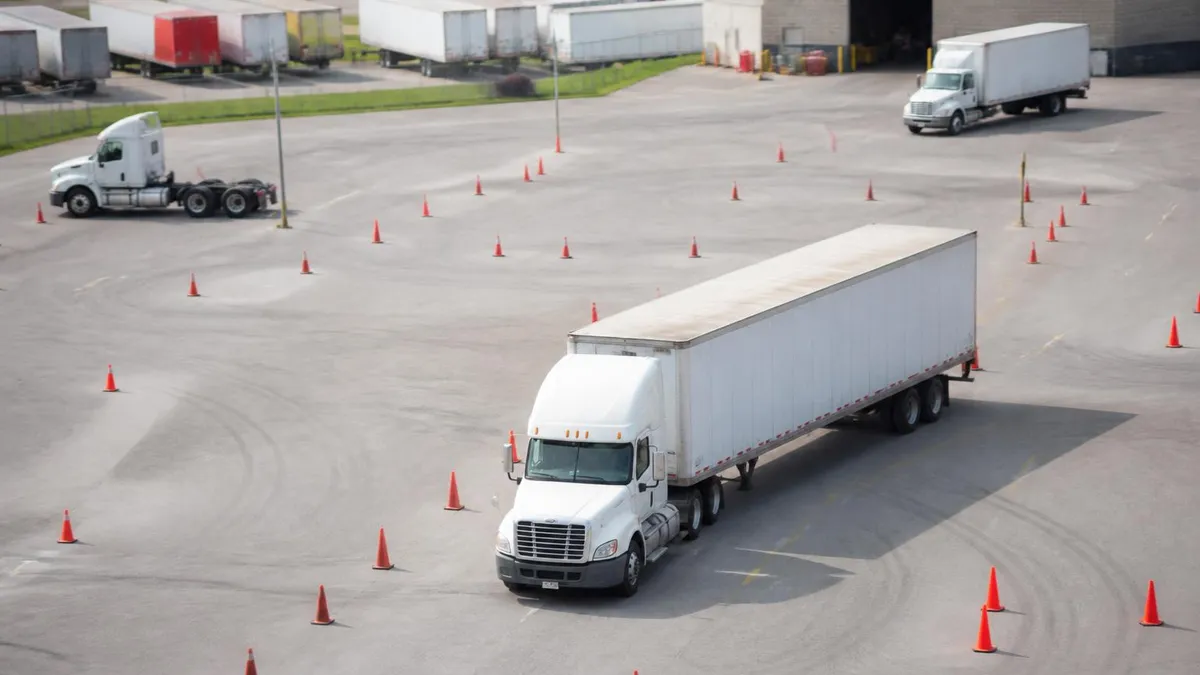
The skills test — the behind-the-wheel portion of your CDL exam — is where many candidates encounter their biggest surprises. The basic vehicle control section requires you to perform specific maneuvers including straight-line backing, offset backing (sometimes called alley docking), and parallel parking in a commercial vehicle. These maneuvers require precision and calm under pressure. Practice each maneuver at least 20 to 30 times before your test date. Muscle memory, not just intellectual understanding, is what gets you through the skills test reliably.
The pre-trip inspection is a structured walk-around of the vehicle that demonstrates to the examiner that you can identify defects before putting the truck on the road. The inspection follows a specific sequence — engine compartment, cab interior, external components, and trailer — and you must verbalize what you are checking and why. Many examiners deduct points for omissions even when the vehicle itself is in perfect condition. Practicing the inspection narrative out loud, ideally with a partner who can note what you miss, is the single best preparation for this segment.
On-road driving is typically the least stressful portion of the skills test for candidates who have completed adequate training, but urban driving scenarios — intersections, railroad crossings, highway merges — can still catch unprepared applicants off guard. Know your state's specific test route if possible; many CDL schools have this information because they send students to the same testing centers repeatedly. During the test, communicate your actions to the examiner, use proper mirror checks on a consistent cycle, and prioritize smooth, controlled operation over speed. Examiners notice confidence as much as technique.
Certain violations result in automatic CDL disqualification regardless of your driving record. These include a DUI or DWI conviction while operating a commercial vehicle, refusing a chemical test, leaving the scene of an accident involving a CMV, using a CMV to commit a felony, and causing a fatality through negligent operation. A first offense typically triggers a one-year disqualification; a second offense or a hazmat-related offense results in lifetime disqualification. Know these rules before you hold the wheel of a commercial vehicle.
Once you have your CDL in hand, the job search process moves quickly — especially in today's market, where the driver shortage has given qualified candidates genuine leverage in negotiations. Major carriers typically respond to online applications within 24 to 48 hours, and dedicated recruiters will call you directly if your profile meets their criteria. Having your CDL documentation, medical certificate, Motor Vehicle Record (MVR), and PSP (Pre-employment Screening Program) report ready before you start applying speeds up the hiring process considerably.
Understanding what to look for in a trucking job offer protects you from signing agreements that sound attractive but deliver less than you expect. Pay close attention to the cents-per-mile rate, whether the company counts empty (deadhead) miles in your pay calculation, the home-time policy, equipment age and maintenance standards, and the tenure of the freight relationships the carrier maintains. A carrier running consistent, dense freight in predictable lanes will almost always outperform a carrier with volatile spot-market loads, even if the per-mile rate looks similar on paper.
Many new CDL holders benefit from starting with a large carrier that offers structured onboarding, mentorship programs, and steady freight. Companies like Swift, Prime Inc., and Heartland Express are known for hiring new CDL graduates and providing the supervised miles new drivers need to build confidence and a clean safety record. After six to twelve months with a major carrier, your employment options broaden significantly — smaller carriers, specialty freight companies, and private fleets often prefer candidates with at least one year of verifiable OTR experience.
Specialty freight categories offer some of the highest-paying CDL jobs available once you have experience and the right endorsements. Flatbed hauling, tanker driving, oversized load piloting, and hazmat transport all come with higher pay premiums because they demand additional skill and carry higher liability. Many flatbed operators earn 10 to 20 cents per mile more than dry van drivers, and hazmat-certified tanker drivers can earn $80,000 to $100,000 annually with the right carrier and lane assignments.
If local driving is your priority, researching CDL jobs near me through platforms like CDLjobs.com, Indeed, and carrier-direct recruiting pages will surface a wide range of opportunities. Grocery distribution companies like Sysco and US Foods hire local CDL drivers aggressively, as do beverage distributors, fuel haulers, and concrete ready-mix companies. These positions often come with union benefits, set schedules, and predictable daily routes — trade-offs that many drivers with families find well worth the typically lower per-mile rate compared to OTR work.
Pay rates and job availability vary meaningfully by region. Drivers in the Midwest and Southeast often have more access to agricultural and manufacturing freight, while drivers in the Northeast and West Coast benefit from higher cost-of-living adjustments in their base pay rates. Urban areas generate high demand for local delivery drivers, while rural regions often favor OTR and regional operators who can handle long rural hauls to distribution centers. Researching regional freight patterns before committing to a geographic area can help you optimize your earning potential from the very first job.
For Spanish-speaking applicants navigating the CDL process, it is worth noting that CDL knowledge tests are available in Spanish in many states, and some CDL schools offer bilingual instruction. The term licencia de conducir commercial refers specifically to the CDL in Spanish-language contexts, and FMCSA regulations apply equally to all applicants regardless of the language in which they take their tests. Many carriers also actively recruit bilingual drivers for routes serving Spanish-speaking communities and cross-border freight corridors along the US-Mexico boundary.
The final stretch of CDL preparation is about building the right habits and mindset before you sit in the cab of a commercial vehicle for the first time professionally. New drivers who succeed long-term are not necessarily the ones with the fastest reflexes or the most natural aptitude — they are the ones who take safety culture seriously, maintain meticulous logs, and treat every pre-trip inspection as though their life and the lives of others depend on it. Because it does.
Hours-of-service regulations are among the most frequently misunderstood rules new CDL holders encounter on the job. Federal regulations limit property-carrying drivers to 11 hours of driving within a 14-hour consecutive window after coming on duty, with a mandatory 10-hour off-duty period between windows. Drivers are also subject to a 60-hour limit over seven consecutive days or a 70-hour limit over eight consecutive days. Violating HOS rules not only creates safety risks — it generates fines, affects your safety score, and can flag your carrier for audits.
Electronic Logging Devices (ELDs) have replaced paper logbooks as the mandatory recordkeeping method for most commercial drivers since the FMCSA's ELD mandate took full effect. ELDs automatically capture driving time, engine hours, vehicle movement, miles driven, and location information. Understanding how to use your carrier's specific ELD system — and knowing how to document on-duty but not-driving time accurately — is a skill new drivers should prioritize during orientation. Incorrect ELD entries can result in violation citations during roadside inspections.
Roadside inspections are a routine part of commercial trucking life, conducted by state enforcement officers at weigh stations, ports of entry, and random roadside checks. The most common inspection is a Level 1 North American Standard Inspection, which covers both the driver's documents and the vehicle's mechanical condition. Keeping your cab organized, maintaining a current medical certificate, and knowing where every required document is stored dramatically reduces stress during inspections and reduces the likelihood of receiving a vehicle out-of-service order.
Weight limits are a critical aspect of commercial vehicle operation that new drivers must internalize before their first load. Federal bridge law limits the maximum gross vehicle weight to 80,000 pounds on the Interstate Highway System, with individual axle and tandem axle weight limits that must also be respected. Overweight loads require special permits and in some cases route surveys. Learning to read a scale ticket, understand axle weight distribution, and legally position your sliding fifth wheel and trailer tandems to distribute weight correctly is a skill that protects both the road infrastructure and your CDL.
Fuel efficiency has become an increasingly important metric for both carriers and owner-operators as diesel prices remain volatile. Techniques like maintaining consistent highway speed (typically 62 to 65 mph delivers the best fuel economy for most Class 8 trucks), minimizing idle time, using engine braking (Jake brakes) on descents, and proper tire inflation management can meaningfully improve miles per gallon. Some carriers tie fuel performance bonuses directly to driver MPG metrics, making fuel-efficient driving a tangible income enhancement on top of its environmental benefits.
Investing in your CDL career means committing to ongoing education even after you have your license in hand. The trucking industry continues to evolve — autonomous vehicle technology, electric Class 8 trucks, changing regulations, and expanding intermodal freight options are reshaping what it means to be a professional driver. Drivers who stay informed, pursue additional endorsements, and build a record of safety and reliability consistently out-earn and out-last those who view the CDL as a destination rather than a starting point. The road ahead is long — and that is very much the point.
CDL Questions and Answers

CDL Class A vs Class B: Weight Limits, Vehicles, Pay, and Which to Get

Master Driving Class A And Class B Vehicles, Enroll In A CDL School Now!
CDL Jobs & Salary
Highest CDL Jobs Near Me - Earn Up to $70,000 A Year - Truck Driver Jobs
How to Schedule Your CDL Test: Appointments, Wait Times & What to Bring
About the Author

Licensed Driving Instructor & DMV Test Specialist
Penn State UniversityRobert J. Williams graduated from Penn State University with a degree in Transportation Management and has spent 20 years as a certified driving instructor and DMV examiner consultant. He has personally coached thousands of applicants through written knowledge tests, skills assessments, and commercial driver licensing programs across more than 30 states.
Join the Discussion
Connect with other students preparing for this exam. Share tips, ask questions, and get advice from people who have been there.
View discussion (7 replies)