
MSU BSN and University BSN Programs: Admission, Requirements, Costs and How to Prepare
🎓 MSU BSN guide: admission requirements, prerequisites, costs, clinicals, NCLEX results and how to compare university BSN programs before you apply.

If you are searching for the MSU BSN, you are probably comparing a state university nursing college against other options and wondering what it takes to get in, finish, and pass the NCLEX-RN. The abbreviation covers several schools, including Michigan State University and Montana State University. Each runs its own application, prerequisite list, and clinical model. This guide explains how those programs work, what admissions committees look for, and how to prepare. Practice with the free BSN - Degree Bachelor of Science in Nursing practice test on PracticeTestGeeks (7 questions with answer explanations).
A Bachelor of Science in Nursing is a four-year degree that prepares you for licensure as a registered nurse. The best university bsn programs pair classroom science with supervised hands-on practice. Most require roughly 120 credit hours, split between general education, nursing theory, and clinical rotations. Graduates sit for the NCLEX-RN, and strong programs publish first-time pass rates at or above the national average of roughly 88 percent.
University-based nursing programs differ from community college pathways in a few important ways. They award a bachelor's degree rather than an associate degree, they usually include coursework in research, leadership, and community health, and they open the door to graduate study. Many hospitals, especially those seeking Magnet recognition, prefer or require a BSN. That preference is one reason applicants accept the higher cost and longer timeline of a four-year university track.
Admission is the first real hurdle. Public universities often receive far more qualified applications than they have clinical seats, so a decent GPA is a starting point rather than a guarantee. Programs commonly look at prerequisite grades in anatomy, physiology, microbiology, and chemistry, plus entrance exam scores, healthcare experience, essays, and recommendation letters. Understanding which of these your target school weighs most heavily lets you spend your preparation time where it counts.
Program structure also varies. Some universities admit students directly as freshmen into the nursing major, which protects your seat if you maintain required grades. Others use a competitive pre-nursing phase, where you complete two years of prerequisites and then apply for the upper-division professional program. Knowing which model your school uses affects when you apply, how you plan your first two years, and how much risk you carry if your grades slip.
Cost and location matter just as much as reputation. In-state tuition at a public flagship can be less than half the sticker price of a private nursing school, but fees, lab charges, uniforms, background checks, and clinical travel add up. Students who live near a university's clinical partners often spend less on transportation and housing. Build a realistic four-year budget before you apply, and compare it against scholarships, grants, and employer tuition aid.
This article walks through the stats that define university BSN programs, a step-by-step application path, the requirements you should expect, and a realistic look at tradeoffs. You will also find a checklist, practical study advice, and answers to common questions. Use it as a planning document. Always confirm current deadlines, credit requirements, and fees on the official nursing college website, because these details change from one admission cycle to the next.
Free BSN - Degree Bachelor of Science in Nursing Study Tools
Interactive BSN - Degree Bachelor of Science in Nursing resources on PracticeTestGeeks, free to start:
- BSN - Degree Bachelor of Science in Nursing flashcards — review key terms and concepts card by card
- BSN - Degree Bachelor of Science in Nursing study guide — topic-by-topic overview of what the exam covers
- BSN - Degree Bachelor of Science in Nursing cheat sheet — one-page printable summary for last-minute review
University BSN Programs by the Numbers
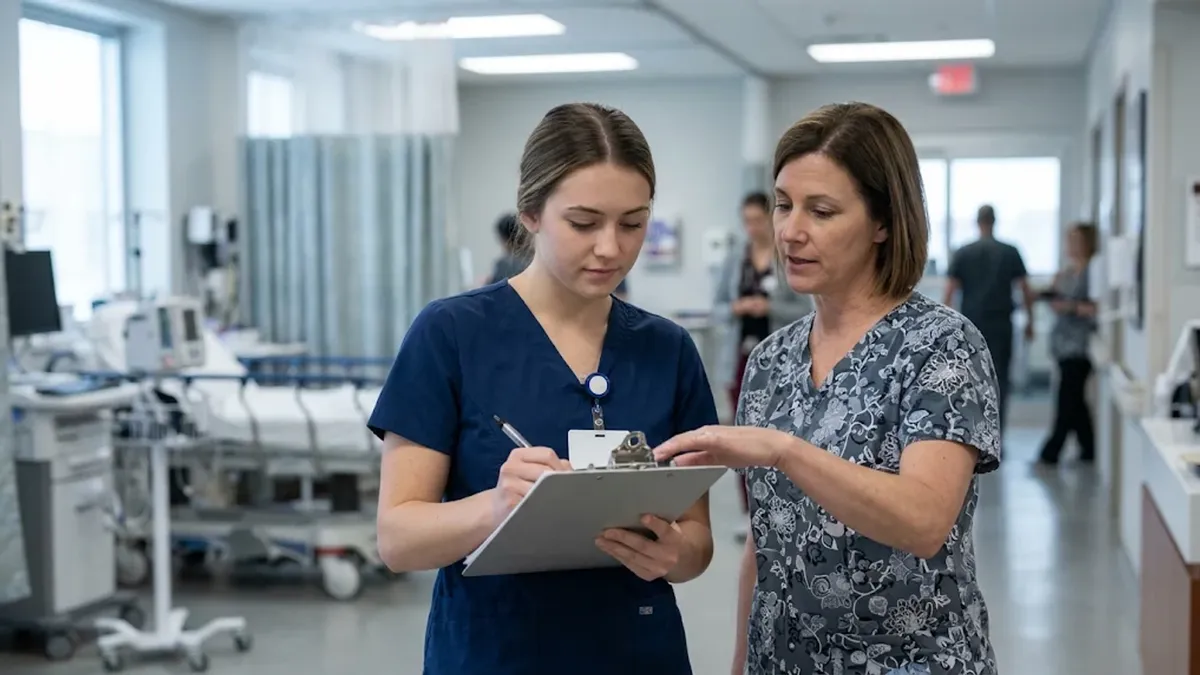
How to Apply to a University BSN Program Step by Step
Research Programs and Deadlines
Finish Prerequisite Courses
Take the Entrance Exam
Build a Strong Application
Complete Compliance and Enroll
Admission standards for a MSU BSN or any comparable public university program usually begin with a minimum GPA, often between 2.75 and 3.0 for cumulative and prerequisite coursework. Treat that number as a floor. Competitive cohorts frequently admit students averaging well above 3.5 because demand exceeds clinical capacity. Check whether the school publishes the average admitted GPA for its last class, and use that figure rather than the minimum as your realistic target.
Prerequisite courses deserve extra attention because they predict success in nursing school. Typical lists include anatomy and physiology with labs, microbiology, general or introductory chemistry, statistics, nutrition, and developmental psychology. Some universities require these to be completed within the last five to ten years. Grades below a B in the sciences can hurt, and many programs limit how many times you may repeat a course.
Entrance exams are common at programs that use a separate application to the nursing major. The TEAS tests reading, math, science, and English usage, while the HESI A2 covers similar areas plus optional sections. Schools set their own cutoff scores, and a high score can offset a middling GPA. Because many programs accept only the most recent attempt or limit retakes, treat your first sitting as the real exam.
Healthcare experience is rarely mandatory but often influences holistic review. Working as a certified nursing assistant, emergency medical technician, medical scribe, or hospital volunteer shows that you understand the physical and emotional demands of patient care. Even a few hundred hours helps. It also gives you material for your essay and credible recommenders who can describe your reliability, communication skills, and composure under pressure.
Essays and recommendations carry more weight when the numbers alone cannot separate applicants. A strong personal statement explains why nursing, not medicine or another health field, and backs that claim with a specific moment from your experience. Ask recommenders who know your work well, such as a science instructor or clinical supervisor, and give them your resume and deadline at least four weeks in advance.
Many applicants overlook technical standards and health requirements. Nursing programs expect students to perform essential functions such as lifting, standing for long shifts, communicating clearly, and making safe clinical judgments. You will also need current immunizations, including hepatitis B, MMR, varicella, Tdap, and an annual flu shot, plus a tuberculosis test. Convictions on a background check can block clinical placement, so discuss concerns with an advisor early.
Transfer and second-degree applicants face slightly different rules. Transfer students must confirm that science credits are accepted and still current, and they may need to complete the university's own general education requirements. Applicants who already hold a bachelor's degree in another field may qualify for an accelerated track that skips most general education courses. In every case, ask for a written degree audit before you commit time and tuition.
MSU BSN Program Formats: Traditional, Accelerated and RN-to-BSN
The traditional format is the standard four-year route for students entering university straight from high school or with limited college credit. The first one to two years focus on general education and science prerequisites, followed by two years of upper-division nursing courses. Students typically take fundamentals, pharmacology, medical-surgical nursing, maternal-newborn, pediatrics, mental health, and community health, with clinical rotations layered in each term.
This option suits students who want the full campus experience and a gradual ramp into clinical practice. It also tends to carry the lowest per-credit cost at public universities, particularly for in-state residents. The tradeoff is time. You will spend four years before earning your degree and license, and a few poor grades in prerequisite sciences can delay or block progression into the professional phase.
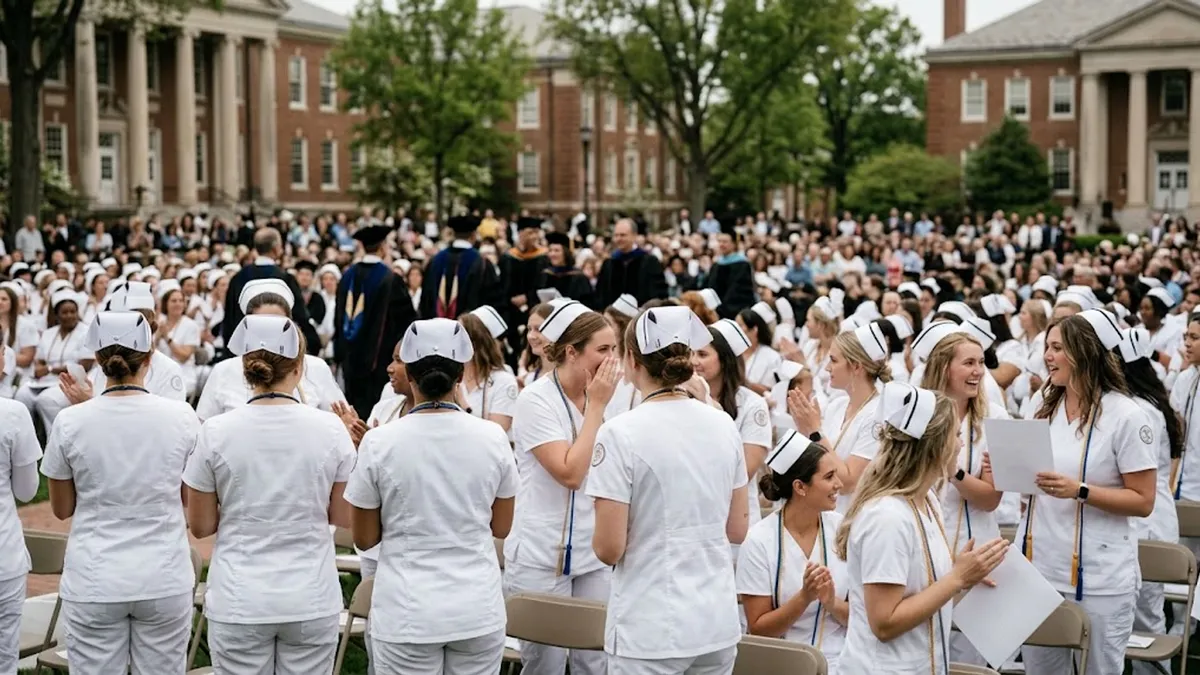
Is a University BSN Program Right for You?
- +Widely preferred by hospitals, including Magnet-designated systems
- +Opens the door to graduate study such as NP, CRNA, and nurse educator tracks
- +Broader training in leadership, research, and community health
- +Access to university labs, simulation centers, and academic advising
- +Strong in-state tuition value at public universities
- +Higher median pay and wider promotion options over time
- −Four years is longer than most associate degree routes
- −Competitive admission with limited clinical seats
- −Total cost can climb once fees, supplies, and housing are included
- −Rigorous schedule leaves little time for part-time work
- −Clinical placements may require travel to partner hospitals
- −Failing a nursing course can delay progression by a full year
Pros and Cons at a Glance
| Pros | Cons |
|---|---|
| Widely preferred by hospitals, including Magnet-designated systems | Four years is longer than most associate degree routes |
| Opens the door to graduate study such as NP, CRNA, and nurse educator tracks | Competitive admission with limited clinical seats |
| Broader training in leadership, research, and community health | Total cost can climb once fees, supplies, and housing are included |
| Access to university labs, simulation centers, and academic advising | Rigorous schedule leaves little time for part-time work |
| Strong in-state tuition value at public universities | Clinical placements may require travel to partner hospitals |
| Higher median pay and wider promotion options over time | Failing a nursing course can delay progression by a full year |
MSU BSN Application Readiness Checklist
- ✓Confirm the school's CCNE or ACEN accreditation status.
- ✓Review the published NCLEX-RN first-time pass rate.
- ✓Map every prerequisite course against your transcript.
- ✓Aim for science grades of B or higher.
- ✓Register for the TEAS or HESI A2 early.
- ✓Log healthcare, volunteer, or CNA hours as you earn them.
- ✓Request recommendation letters at least four weeks ahead.
- ✓Draft a personal statement with one specific patient-care story.
- ✓Gather immunization records and schedule missing vaccines.
- ✓Calendar every deadline, including financial aid and FAFSA dates.
Prerequisite GPA Often Counts More Than Overall GPA
Many nursing colleges rank applicants by prerequisite science GPA rather than cumulative GPA. A student with a 3.4 overall but straight A grades in anatomy, physiology, and microbiology can outrank someone with a 3.7 built on easier electives. Retake a weak science course before applying if the school allows it.
Once admitted, your nursing curriculum builds in layers. Early courses cover fundamentals of nursing, health assessment, and pharmacology, where you learn vital signs, hygiene, medication math, and documentation. Middle semesters move into medical-surgical, mental health, and maternal-newborn nursing. Final semesters add pediatrics, community health, leadership, and a capstone or preceptorship. Each course typically pairs lectures with simulation lab time and a supervised clinical rotation.
Clinical hours are where classroom knowledge becomes practice. Most university BSN programs require between 600 and 900 supervised hours, though state boards and individual schools set their own minimums. You may rotate through acute care units, long-term care, pediatrics, labor and delivery, psychiatric units, and community agencies. Expect early morning shifts, travel to partner facilities, and a clinical instructor who evaluates your safety, communication, and professionalism.
Simulation labs play a growing role. Many programs use high-fidelity mannequins that breathe, speak, and respond to medications, allowing you to practice rapid response situations without risk to patients. Under national guidance, some states allow a portion of clinical hours to be completed in simulation. Treat these sessions seriously, because debriefing after a scenario is where many students learn how to prioritize and communicate under pressure.
Grading policies in nursing are stricter than in most majors. Many programs require a C+ or B minimum in every nursing course, and a single failure may trigger dismissal or a required repeat year. Some also require a passing score on a standardized exit exam to graduate. Ask about progression policies during orientation, and build a study routine from the first week rather than waiting until exams approach.
The NCLEX-RN is the final gate to practice. It is a computer adaptive test with a minimum of 85 and a maximum of 150 questions, and it includes Next Generation NCLEX case studies. You apply for licensure through your state board, register with Pearson VUE, and receive an authorization to test. Most graduates test within six to ten weeks of finishing their degree.
A school's NCLEX results reveal how well it prepares students. Look for first-time pass rates that meet or exceed the national average, and check several years of data, since a single strong year can be an outlier. Boards of nursing and university websites often publish this information. Be cautious of programs with declining trends, because they may signal faculty turnover, weak advising, or admissions policies that do not match the rigor of the curriculum.
Preparing for the NCLEX is a skill in itself. Practice questions that mirror its format, particularly priority, delegation, and prioritization items, help you think the way the exam expects. Many successful candidates complete 1,000 to 2,000 practice questions and review rationales for every miss. Begin in your final semester, use a content review to patch weak areas, and schedule your test promptly while your knowledge is still fresh.

Many university nursing programs accept applications once per year and admit only a fixed number of students per cohort. Missing a deadline or a single missing document can push your start date back by a full year. Confirm dates directly with the nursing college each cycle, because published timelines can change.
Cost is often the deciding factor when students compare nursing programs. Public universities generally charge in-state undergraduates far less than private schools, but nursing students also pay program fees, lab fees, and testing fees on top of tuition. Annual in-state tuition at many public universities falls between roughly $10,000 and $20,000, while out-of-state and private options can exceed $40,000. Always request the current cost of attendance sheet from the school's financial aid office.
Hidden costs add up quickly. Expect to budget for scrubs, a stethoscope, a watch with a second hand, nursing shoes, textbooks or digital subscriptions, a background check, drug screening, immunizations, and liability insurance. Many programs also charge for standardized testing packages and NCLEX preparation. Together these items can total a few thousand dollars over the program, so build them into your plan rather than being surprised by them each semester.
Financial aid for nursing students is plentiful if you start early. Complete the FAFSA as soon as it opens, apply for university and college scholarships, and look for nursing-specific awards from hospitals, professional associations, and state nurse organizations. The federal Nurse Corps Scholarship Program and some state loan repayment programs reward service in underserved areas. Many hospitals offer tuition assistance or sign-on bonuses in exchange for a work commitment after graduation.
The return on investment tends to be strong. The Bureau of Labor Statistics reported a median annual wage of about $93,600 for registered nurses in 2024, with higher pay in states such as California, Hawaii, and Oregon, and in specialties like critical care and the operating room. Entry-level BSN graduates earn less than the median, but pay rises with experience, certifications, and shift differentials for nights and weekends.
Career options widen with a BSN. New graduates commonly start in medical-surgical, telemetry, emergency, pediatric, or labor and delivery units, and many hospitals run structured residency programs for the first year. Over time you can pursue charge nurse, nurse manager, informatics, public health, case management, or education roles. A BSN also satisfies the baseline requirement for military nursing commissions and many federal and public health positions.
Graduate study is the other major payoff. Nurse practitioner, clinical nurse specialist, nurse midwife, and nurse anesthetist programs all require a bachelor's degree, and most prefer a BSN with at least a year of clinical experience. Nurse practitioners earned a median wage well above $130,000 in recent BLS data. Starting at a university with strong graduate pathways can streamline later admission, since you may already know faculty and campus resources.
When you compare programs, weigh cost, pass rates, clinical access, and support services together rather than looking at one factor. A slightly pricier school with excellent NCLEX results, small clinical groups, and strong tutoring can be a better investment than a cheaper program with weak outcomes. Visit campuses, speak with current students, and ask how the school supports learners who struggle early. Those conversations often reveal more than any brochure.
Start preparing for nursing school long before your first lecture. Review basic anatomy, medical terminology, and dosage calculation over the summer, since these skills appear in your very first semester. Many students benefit from a short pharmacology primer on drug classes and common suffixes. Even a few hours each week of light review builds familiarity, so the pace of the first term feels challenging rather than overwhelming.
Build a study system that matches how nursing exams are written. Instead of memorizing isolated facts, practice applying them to patient scenarios, because exams focus on prioritization, safety, and clinical judgment. After every practice question, read the rationale for both right and wrong answers. Keep an error log that records the concept you missed, why you missed it, and the rule that fixes it, then review it weekly.
Time management separates students who thrive from those who struggle. A typical week may include 12 to 15 hours of class, 12 to 24 hours of clinical time, and 15 or more hours of study. Use a weekly planner, block study time like a work shift, and protect sleep. Study groups work best when they are small, prepared, and focused on teaching one another difficult concepts.
Treat clinical rotations as extended job interviews. Arrive early, prepare for your patients the night before, ask thoughtful questions, and accept feedback gracefully. Nurses on the unit often become references, and many students receive job offers from facilities where they completed rotations or preceptorships. Keep a small notebook with lab values, common medications, and skills checklists so you can review quickly between patient assignments.
Protect your wellbeing along the way. Nursing school is demanding, and burnout often starts early. Schedule exercise, meals, and time with friends, and use campus counseling or tutoring services before problems grow. If you fall behind, speak with your instructor right away, since many programs offer remediation, but only if you ask early. Asking for help is a professional skill, and nurses use it every day.
As graduation approaches, begin NCLEX preparation deliberately. Take a diagnostic assessment, identify weak areas such as pharmacology or management of care, and build a daily plan of 75 to 100 practice questions. Include Next Generation NCLEX case studies, which test clinical judgment across multiple steps. Aim to test within a couple of months of graduating, and keep a steady routine rather than cramming in the final week.
Finally, keep the long view. A university BSN is both a credential and a foundation for a career that can span bedside care, leadership, education, and advanced practice. Choose a program that fits your finances and learning style, show up consistently, and build relationships with faculty and peers. Use practice questions regularly, review mistakes honestly, and you will walk into your exams and your first nursing job with confidence.
Sample BSN - Degree Bachelor of Science in Nursing Practice Questions
Try these questions from our free BSN - Degree Bachelor of Science in Nursing practice tests. The correct answer and an explanation follow each question.
A child weighing 20 kg requires IV fluid maintenance. Using the Holliday-Segar method, what is the correct daily fluid maintenance requirement?
- A. 1,000 mL/day
- B. 1,500 mL/day
- C. 1,800 mL/day
- D. 2,000 mL/day
Answer: B. 1,500 mL/day
The Holliday-Segar method calculates: 100 mL/kg for the first 10 kg + 50 mL/kg for the next 10 kg = 1,000 + 500 = 1,500 mL/day for a 20 kg child.
A public health nurse is developing a program to reduce teenage smoking rates in a high school. Which intervention is most effective based on evidence-based practice?
- A. Peer-led education programs combined with school-wide policy changes
- B. A one-time assembly featuring a guest speaker about smoking dangers
- C. Distributing pamphlets on the health effects of tobacco to all students
- D. Requiring all students to write a report on tobacco-related diseases
Answer: A. Peer-led education programs combined with school-wide policy changes
Sustained peer-led programs combined with environmental policy changes (e.g., smoke-free campuses) have the strongest evidence for reducing adolescent smoking.
A postoperative patient who had abdominal surgery 2 days ago reports sudden onset of severe shortness of breath, chest pain, and apprehension. The nurse suspects pulmonary embolism. Which action takes priority?
- A. Administer oxygen and notify the provider immediately
- B. Encourage the patient to take slow, deep breaths
- C. Position the patient in Trendelenburg to improve perfusion
- D. Obtain a 12-lead ECG before calling the provider
Answer: A. Administer oxygen and notify the provider immediately
Suspected pulmonary embolism is a medical emergency; administering oxygen to treat hypoxemia and immediately notifying the provider are the priority actions.
A patient's ABG results are: pH 7.28, PaCO2 52 mmHg, HCO3 24 mEq/L. What is the correct interpretation?
- A. Metabolic acidosis
- B. Respiratory alkalosis
- C. Respiratory acidosis
- D. Metabolic alkalosis
Answer: C. Respiratory acidosis
Elevated PaCO2 with low pH and normal HCO3 indicates uncompensated respiratory acidosis.
Take the full BSN - Degree Bachelor of Science in Nursing practice test
BSN Questions and Answers

What Is a BSN in Nursing? Complete Guide to the Degree, Cost, and Career

What Does a BSN Nurse Do? Roles, Duties, and Career Overview

BSN to NP Programs: Pathways from Bachelor's of Nursing to Nurse Practitioner, Program Types, Costs, and Career Outcomes
BSN Nurse Salary: Complete 2026 Pay Guide by State, Setting & Specialty

BSN Requirements: Complete Guide to Admission, Prerequisites, and Graduation in 2026
How this page was made: written with AI tools and published by Nathan Beja, founder of Practice Test Geeks, who is responsible for its content. We have not yet matched this exam's facts to an official source, so confirm fees, dates and rules with the exam body. Not reviewed by a subject-matter expert. Editorial policy