
Top RN to BSN Programs: Complete Guide to Requirements, Costs, and How to Choose
Top RN to BSN programs compared — requirements, costs, timelines, and how to choose the right bridge program for your nursing career. 🎓

Choosing among the top rn to bsn programs is one of the most consequential decisions a working nurse can make. Whether you graduated with an Associate Degree in Nursing (ADN) or completed a hospital diploma program, earning your Bachelor of Science in Nursing unlocks higher-paying leadership roles, advanced practice pathways, and hospitals that increasingly require BSN credentials for hire and promotion. The landscape of bridge programs has expanded dramatically, meaning nurses today have more flexibility — and more complexity — than ever before when evaluating their options.
RN to BSN programs are specifically designed to honor the clinical experience you already have while building your competencies in areas like evidence-based practice, population health, nursing informatics, and leadership. Unlike a traditional four-year BSN, these bridge programs typically take 12 to 24 months to complete, and most are now offered fully online so working nurses can study around existing shift schedules. Tuition ranges widely from around $7,000 to over $20,000 depending on whether you choose a public in-state school, a private nonprofit, or a large for-profit university.
Accreditation is the single most important factor when evaluating any RN to BSN program. Programs accredited by the Commission on Collegiate Nursing Education (CCNE) or the Accreditation Commission for Education in Nursing (ACEN) have met rigorous standards for curriculum quality, faculty credentials, and student outcomes. Employers and graduate schools recognize these credentials, and your employer's tuition reimbursement benefit will almost always require you to be enrolled in an accredited program. Never enroll in a nursing program that lacks CCNE or ACEN accreditation, regardless of how convenient or affordable it appears.
The demand for BSN-prepared nurses continues to grow. The American Association of Colleges of Nursing (AACN) reports that a significant percentage of hospitals now either require or prefer BSN-level nurses, and Magnet-designated hospitals — widely considered the gold standard for nursing excellence — mandate that a majority of their nursing staff hold a BSN or higher. For nurses working in or aspiring to work in Magnet facilities, completing an RN to BSN program is not optional — it is a career necessity that directly affects employment eligibility and advancement.
Online RN to BSN programs have made participation accessible to nurses in rural areas, those with young families, and shift workers who cannot attend fixed class times. The majority of top programs now offer asynchronous coursework, meaning you watch lectures, complete assignments, and participate in discussions on your own schedule within a given weekly window. Most programs do require some form of clinical or community health practicum that you complete in your local area, often at your current employer, which minimizes disruption to your work schedule and personal life.
Financial aid options for RN to BSN students include federal grants and loans through FAFSA, state workforce development scholarships, employer tuition reimbursement (which can cover $2,500 to $10,000 per year at many hospital systems), and nursing-specific scholarships from organizations like the American Nurses Foundation and HRSA's Nurse Corps Scholarship Program. Understanding the full financial picture before enrolling — including any service commitment attached to scholarship funding — will help you make the most cost-effective choice for your specific situation.
This guide walks you through the top programs currently available, what separates the best from the rest, the admission requirements you need to meet, the costs you should budget for, and the practical strategies that will help you succeed while working full-time as a registered nurse. By the end, you will have a clear framework for selecting the right RN to BSN program and a realistic plan for completing it efficiently.
RN to BSN Programs by the Numbers

RN to BSN Admission Requirements
Every accredited RN to BSN program requires an unencumbered, current registered nurse license in the United States. Some programs require licensure in a compact state or the state where the school is located, so verify licensure portability before applying.
Applicants must hold an ADN from an accredited nursing program or a hospital diploma in nursing. Schools will request official transcripts. Some programs also accept internationally educated nurses who have passed NCLEX-RN and hold a credential evaluation.
Most programs require a cumulative GPA of 2.5 to 3.0 on a 4.0 scale in prior nursing coursework. Competitive programs at flagship state universities may set the bar closer to 3.0. Some schools allow conditional admission for applicants slightly below threshold.
Common prerequisites include college-level English composition, statistics, human anatomy and physiology, and microbiology. Many programs accept these credits if completed within the last 7 to 10 years. Online bridge courses can satisfy prerequisites before enrollment.
Applicants typically need two to three professional references from nursing supervisors, clinical instructors, or physicians who can attest to clinical competency and professional character. Personal references are usually not accepted in lieu of professional ones.
Selecting the right program from the many excellent choices available requires a systematic approach that weighs your personal priorities — schedule flexibility, cost, timeline, specialty focus, and the reputation of the degree in your region. Begin by confirming accreditation status through the CCNE or ACEN directories, then narrow your list based on format (fully online versus hybrid), credit transfer policies, and whether the program offers a dedicated academic advisor for working nurses. These practical details often matter more than a school's national ranking when you are completing a degree while employed full time.
Credit transfer policies vary enormously between programs and can dramatically affect both your total cost and your time to completion. Some programs, particularly at community college systems, accept the maximum possible nursing credits and only require 30 additional semester hours to complete the BSN. Others accept fewer transfer credits and require 60 or more hours of new coursework. Request a detailed articulation agreement before applying so you understand exactly which of your existing credits will count and which courses you will need to complete from scratch.
The reputation of the nursing school in your specific region and specialty can influence hiring decisions, especially if you plan to stay in the same geographic area. A BSN from your state's flagship public university may carry more weight with local hospital systems than a degree from a large national online provider, even if both programs are equally accredited. Talk to nurse managers and HR representatives at hospitals where you want to work to understand their preferences before making a final enrollment decision.
Student support services are another differentiator that is easy to overlook when comparing programs purely on price and timeline. The best RN to BSN programs assign each student a dedicated academic advisor who specializes in working nurses, provide writing support centers with nursing-specific tutoring, offer library resources with full-text access to nursing journals, and maintain active alumni networks. These services become critical when you hit a challenging assignment or need a letter of recommendation for a graduate school application after graduation.
Employer tuition reimbursement programs can effectively reduce your out-of-pocket cost to near zero if you plan strategically. The typical hospital system reimburses between $2,500 and $5,250 per year (the IRS tax-free maximum for education assistance), and some large health systems offer up to $10,000 annually for RN to BSN students. To maximize this benefit, choose a program whose payment schedule aligns with your employer's reimbursement cycle — many employers pay per semester after grade submission rather than upfront — and confirm that your chosen school qualifies under your employer's reimbursement policy before enrolling.
The curriculum content of RN to BSN programs typically expands on the clinical foundation you built during your ADN or diploma training with coursework in nursing research and evidence-based practice, healthcare policy and advocacy, community and public health nursing, nursing informatics and technology, and professional nursing leadership. These are exactly the competencies tested on BSN-level exams and evaluated in BSN nursing courses. Familiarizing yourself with these subject areas through practice tests and review resources before starting the program will give you a significant academic advantage.
Finally, consider the program's cohort model versus self-paced structure. Cohort-based programs move all students through the same courses at the same time, which fosters peer support and keeps everyone on track for a defined graduation date. Self-paced programs allow you to accelerate through material you already know and slow down on challenging content, which can shorten your timeline if you are a disciplined, self-directed learner. Neither model is universally superior — the right fit depends on your learning style and how much structure you need to stay motivated over 12 to 24 months of part-time study.
RN to BSN Program Formats: Online, Hybrid, and Campus
Fully online RN to BSN programs are the most popular format for working nurses because they eliminate commuting time and allow asynchronous participation from any location. Students log in to a learning management system — typically Canvas, Blackboard, or D2L — to watch recorded lectures, submit written assignments, post to discussion boards, and take quizzes on their own schedule within weekly windows. Most programs still require occasional live virtual sessions for group projects or faculty office hours, but these are usually scheduled with time-zone flexibility to accommodate nurses on varying shift rotations.
The clinical practicum component of online programs is typically completed at approved sites in your local community, often including your current employer. Community health assessments, leadership practicums, and capstone projects are designed to be embedded in your existing work environment, minimizing the logistical burden of finding separate clinical placements. Online programs from large public university systems like Western Governors University, University of Texas, and Indiana University are among the most recognized and frequently used by working nurses nationwide, offering competitive tuition rates and robust student support services.

Pros and Cons of Completing an RN to BSN Program
- +Unlocks higher-paying leadership, charge nurse, and management positions unavailable to ADN nurses
- +Required for Magnet hospital employment and advancement in many large health systems
- +Opens the pathway to MSN, DNP, or CRNA graduate programs that require a BSN for admission
- +Strengthens evidence-based practice skills that directly improve patient care quality and outcomes
- +Most programs are fully online and compatible with full-time nursing employment
- +Employer tuition reimbursement often covers a significant portion of total program cost
- −Adds 12 to 24 months of coursework on top of an already demanding full-time nursing schedule
- −Out-of-pocket cost ranges from $7,000 to $20,000 even with employer reimbursement factored in
- −Online learning requires significant self-discipline and time management that not all nurses find natural
- −Community health practicums require finding local placement sites, which can be logistically challenging
- −Some employers attach service commitments to tuition reimbursement, limiting job mobility during enrollment
- −The BSN degree alone does not increase clinical pay at all employers — salary impact varies by organization
RN to BSN Application Checklist: 10 Steps to Get Started
- ✓Verify your RN license is current, unencumbered, and eligible for the compact nursing licensure agreement if required by your target program.
- ✓Request official transcripts from every college or university you have attended, including your ADN or diploma nursing program.
- ✓Pull your unofficial transcript to identify which prerequisite courses you have already completed and which you still need.
- ✓Confirm CCNE or ACEN accreditation status for every program you are considering by checking the official accreditor directories online.
- ✓Contact your HR department to obtain written documentation of your employer's tuition reimbursement benefit, including annual cap and eligible school list.
- ✓Ask three nursing supervisors or clinical instructors if they are willing to write professional letters of recommendation before you formally request them.
- ✓Complete a FAFSA application to determine your federal financial aid eligibility, even if you plan to use employer reimbursement as your primary funding source.
- ✓Request a credit articulation evaluation from your top two or three program choices to understand exactly how many transfer credits they will accept.
- ✓Submit applications to at least two programs so you have options if one has a waitlist or higher admission standards than expected.
- ✓Set up a dedicated study space at home and schedule consistent weekly study blocks on your calendar before your first semester begins.
Your Clinical Experience Already Counts
Most top RN to BSN programs award academic credit for your prior clinical nursing experience through a process called Advanced Placement for RN Experience (APRE) or Portfolio Assessment. This can reduce your required credit hours by 15 to 30 credits, directly lowering both your tuition cost and your time to graduation. Always ask admissions advisors about experiential learning credit before comparing program costs — it can make an initially expensive program far more competitive.
Understanding the full cost of an RN to BSN program requires looking beyond the per-credit-hour tuition rate to account for technology fees, textbooks, clinical placement fees, and the opportunity cost of time spent studying instead of picking up additional nursing shifts.
The total cost of attendance at public in-state universities typically ranges from $7,000 to $12,000 for the entire program, while private nonprofit universities tend to fall between $12,000 and $18,000. Large for-profit providers like Grand Canyon University and Chamberlain University often publish competitive per-credit rates but add technology and program fees that push total costs closer to $15,000 to $22,000.
Textbook costs for RN to BSN programs have declined significantly as more programs transition to open educational resources (OER) and digital course materials included in technology fees. However, if your program still requires purchased textbooks, budget approximately $150 to $400 per semester for nursing texts, which tend to be specialized and expensive. Many students reduce textbook costs by purchasing previous editions, renting through campus bookstores, or accessing digital versions through their institution's library system — all of which are worth exploring before paying full price for a new nursing textbook.
Federal financial aid remains available to RN to BSN students through the same Title IV programs that funded undergraduate education, including Pell Grants (if income-eligible), subsidized and unsubsidized federal direct loans, and federal work-study programs. RN to BSN students who already carry significant undergraduate student loan debt from their ADN program should carefully evaluate whether additional borrowing is financially prudent, particularly if their employer's tuition reimbursement benefit can cover most of the program cost without incurring new debt.
Scholarships specifically targeted to RN to BSN students are available from several national organizations. The American Nurses Foundation's Nursing Scholarships program offers awards ranging from $2,500 to $10,000 for nurses pursuing advanced education. The Johnson & Johnson Future of Nursing Scholars program provides full tuition, fees, and a stipend for nurses pursuing BSN-to-PhD pathways. State nurses associations in nearly every state also administer scholarship funds that are often less competitive than national awards because the applicant pool is smaller and more geographically limited.
Loan forgiveness programs can further reduce the net cost of completing your RN to BSN degree if you plan to work in a qualifying setting after graduation. Public Service Loan Forgiveness (PSLF) forgives remaining federal student loan balances after 120 qualifying payments for nurses employed by government or nonprofit hospital systems — a benefit that applies to loans taken out for your RN to BSN program.
HRSA's Nurse Corps Loan Repayment Program offers up to 85% loan repayment over two years for nurses who commit to working in Health Professional Shortage Areas (HPSAs), which often include rural hospitals, federally qualified health centers, and tribal health facilities.
Return on investment calculations for RN to BSN programs are generally favorable. Bureau of Labor Statistics data shows that BSN-prepared nurses earn a median of $4,000 to $8,000 more annually than ADN-prepared nurses in equivalent positions, and the salary premium is larger in Magnet hospitals and large urban health systems where BSN credentials directly influence pay scale placement. At that differential, the total cost of a $10,000 RN to BSN program is recovered within two years of graduation — making the degree one of the highest-return educational investments available to practicing nurses.
Program length also has a direct financial implication that is easy to overlook: a 12-month accelerated program that costs $18,000 total may be a better financial decision than an 18-month standard program that costs $12,000, if the shorter timeline allows you to access a $5,000 annual salary increase six months earlier. Factor in both the upfront cost and the time value of the salary premium you will earn after graduation when comparing program options — do not evaluate cost in isolation from timeline and expected post-graduation earnings.
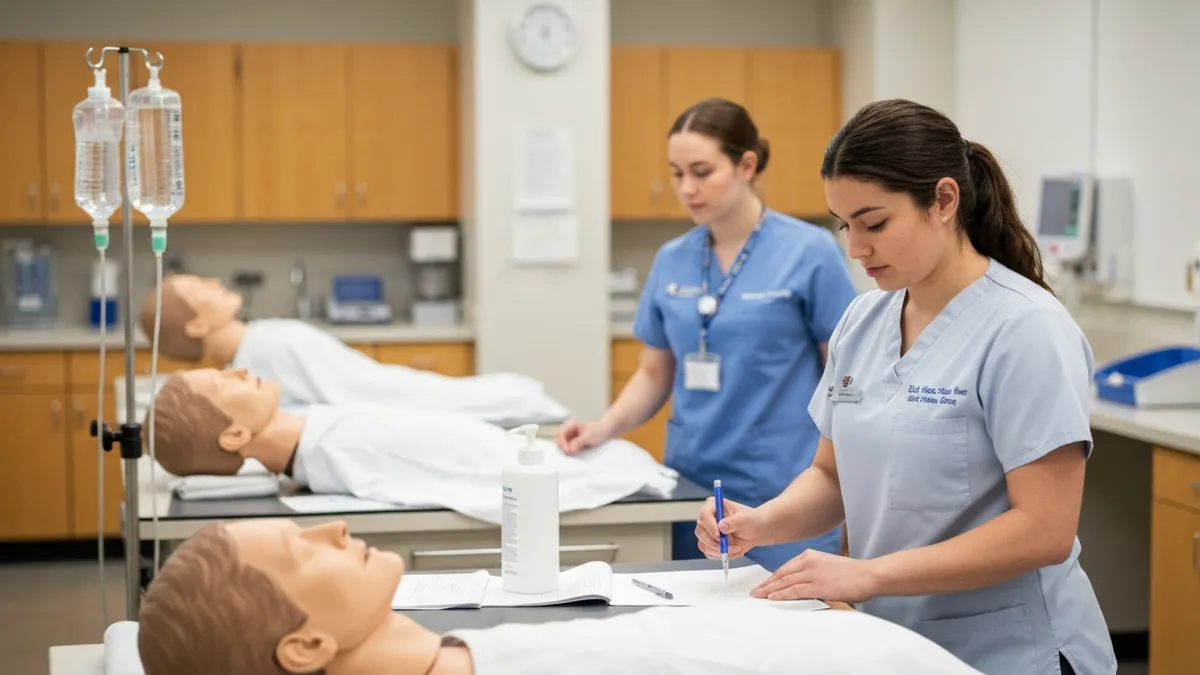
Before enrolling in any RN to BSN program, verify accreditation directly through the CCNE directory at aacnnursing.org or the ACEN directory at acenursing.org. Do not rely on a school's own website claims about accreditation status. Graduates of non-accredited programs may be ineligible for graduate school admission, employer tuition reimbursement, and certain state licensing endorsements — and there is no path to retroactively validate a degree from a non-accredited institution.
Succeeding in an RN to BSN program while maintaining full-time clinical employment is genuinely challenging, and nurses who thrive in these programs share several common habits and strategies. The most important is establishing a predictable weekly study routine before the first semester begins rather than trying to carve out study time reactively around an unpredictable nursing schedule. Block 10 to 15 hours per week on your calendar specifically for coursework, treat those blocks with the same commitment as scheduled shifts, and communicate your academic schedule to family members and close colleagues so they can support you through the program.
Academic writing is frequently identified as the most difficult adjustment for RN to BSN students who are returning to academia after years of clinical practice. Nursing programs at the BSN level emphasize scholarly writing in APA format, literature reviews using peer-reviewed nursing journals, and evidence-based practice papers that require synthesizing research findings rather than simply summarizing them. Invest in a current edition of the APA Publication Manual, take advantage of your program's writing center resources early in your first semester, and do not wait until you struggle to seek tutoring support — early prevention is far easier than late remediation.
Nursing research and statistics are the other commonly challenging content areas for returning nurses, particularly those who completed their ADN several years ago and have not worked with quantitative data since then. Many RN to BSN programs now offer an optional statistics bridge module or recommend taking an online statistics refresher before enrollment begins. Khan Academy's statistics curriculum and several free nursing research textbooks available through open access channels are effective review resources that can significantly reduce the learning curve when your required research methods course begins.
Building relationships with classmates — even in a fully online program — dramatically improves both the learning experience and completion rates. Form a virtual study group during your first week of enrollment, use your program's discussion board participation to connect with nurses who share your specialty or geographic area, and do not hesitate to reach out to faculty members during virtual office hours. RN to BSN faculty are typically experienced nurses who understand the competing demands of clinical work and academic study, and they generally provide significant accommodations and support when students communicate proactively about challenges rather than disappearing.
Time management tools that work well in clinical settings often translate effectively to academic settings. Use a physical or digital planner to map out every assignment due date for the entire semester during the first week of class — this single habit prevents the common experience of discovering a major paper is due the same week as a holiday shift rotation or a family obligation.
Breaking large assignments like evidence-based practice papers into incremental steps — outline, annotated bibliography, first draft, revised draft, final submission — and scheduling those steps on your calendar makes large projects feel manageable and eliminates last-minute panic that degrades the quality of your work.
Your clinical experience as an RN is one of your greatest academic assets in an RN to BSN program, and the best students use it intentionally throughout their coursework. When a nursing research paper requires a PICOT question, draw from a quality improvement problem you have observed on your unit.
When a leadership course asks you to analyze a management challenge, reflect on a situation from your own clinical practice. This approach produces more authentic and compelling academic work, reduces the cognitive load of generating artificial academic examples, and often impresses faculty who appreciate the real-world grounding that working nurses bring to theoretical nursing coursework.
Finally, maintain perspective on the temporary nature of the time investment. An RN to BSN program typically spans 12 to 24 months — a relatively short period in a nursing career that may span three to four decades. The short-term sacrifice of leisure time, reduced overtime shifts, and weekend study sessions will be offset many times over by the expanded career options, higher earning potential, and professional recognition that the BSN credential delivers throughout the remainder of your career.
Connecting with recent BSN graduates from your target program through alumni networks or social media can provide motivating real-world evidence of the professional impact the degree has had on their careers.
The capstone project or senior practicum is the culminating academic experience in most RN to BSN programs and deserves thoughtful planning well before it is assigned. Capstone projects typically require students to identify a clinical problem in their work setting, conduct a literature review of relevant nursing research, propose an evidence-based intervention, and present findings to faculty and sometimes to hospital leadership.
Starting to observe potential capstone topics in your clinical environment from your very first semester gives you months to identify a compelling problem, gather informal data, and consult with unit managers who may need to approve the project within your workplace.
Community health nursing is a core content area in virtually every RN to BSN curriculum and often surprises nurses who have spent their entire careers in acute care settings. The community health nursing coursework shifts the focus from individual patient care to population-level health assessment, epidemiology, social determinants of health, health disparities, and preventive interventions targeting entire communities or demographic groups.
Many acute care nurses find this perspective initially disorienting but ultimately enriching — it fundamentally changes how you think about the patients you see on your unit by contextualizing their health conditions within the broader social and environmental factors that influenced them before and will continue to shape them after discharge.
Nursing informatics has grown into a significant component of BSN curricula as electronic health records, clinical decision support systems, telehealth platforms, and artificial intelligence tools have transformed the practice environment. RN to BSN students without a strong technology background sometimes feel apprehensive about informatics coursework, but most programs design these courses for practical application rather than programming skill. You will learn to evaluate clinical software for usability and safety, analyze data dashboards to identify quality improvement opportunities, and advocate for technology implementations that support safe nursing practice — skills that are immediately applicable in virtually every contemporary nursing role.
Healthcare policy and advocacy coursework, another BSN requirement, equips nurses with the knowledge to participate in shaping the legislative and regulatory environment that governs their practice. You will study how healthcare legislation is developed and enacted, how nursing organizations like the American Nurses Association influence policy at state and federal levels, and how individual nurses can engage in advocacy through activities like testifying at legislative hearings, joining professional nursing organizations, and participating in workplace shared governance committees.
Many nurses who complete RN to BSN programs describe the policy coursework as unexpectedly empowering — it replaces a sense of helplessness about systemic problems with concrete tools for professional engagement.
Study strategies that are effective for NCLEX preparation and clinical competency maintenance translate well to RN to BSN academic success, with some important adjustments. The BSN level emphasizes critical analysis of research evidence, synthesis of multiple theoretical perspectives, and application of leadership frameworks — not just memorization of clinical facts. Practice generating PICOT questions from clinical scenarios, reading and summarizing peer-reviewed journal articles, and writing structured argument paragraphs that move from claim to evidence to analysis. These skills improve with deliberate practice, and investing time in them early in your program pays compounding dividends throughout every subsequent course.
Peer mentorship is an underutilized resource that can significantly improve your RN to BSN experience. Many programs pair incoming students with BSN alumni or current upper-division students who can share practical tips about specific courses, faculty expectations, and program-specific resources that are not obvious from official program materials.
If your program does not offer a formal mentorship component, seek out informal connections through your program's alumni LinkedIn group, your employer's nursing education department, or professional nursing organizations in your specialty. The insights of someone who recently completed the same program you are entering are invaluable guides that accelerate your adjustment and help you avoid common mistakes.
As you approach graduation, begin thinking about how you will leverage your new credential strategically. Update your resume and LinkedIn profile immediately after graduation to reflect your BSN and any academic achievements like Dean's List recognition or scholarly publications. Notify your HR department so your pay scale is adjusted if your employer applies a BSN wage differential.
Reach out to nurse managers or nursing education departments at facilities where you aspire to work, since many Magnet hospitals actively recruit BSN-prepared nurses and may have openings that are not publicly posted. Your BSN is not merely an academic credential — it is a professional signal that opens doors at every stage of your nursing career.
BSN Questions and Answers

Accelerated BSN Programs: Requirements, Cost, and Timeline
ADN to BSN Online: Bridge Programs and Costs Complete Guide

Accelerated BSN Programs by Location: Complete US Guide With Canada Comparison for 2026

Accredited BSN Programs: Complete Guide to CCNE and ACEN Nursing Degrees in 2026

BSN RN: What It Is, Salary, and Why It Matters in 2026
About the Author

Registered Nurse & Healthcare Educator
Johns Hopkins University School of NursingDr. Sarah Mitchell is a board-certified registered nurse with over 15 years of clinical and academic experience. She completed her PhD in Nursing Science at Johns Hopkins University and has taught NCLEX preparation and clinical skills courses for nursing students across the United States. Her research focuses on evidence-based exam preparation strategies for healthcare certification candidates.